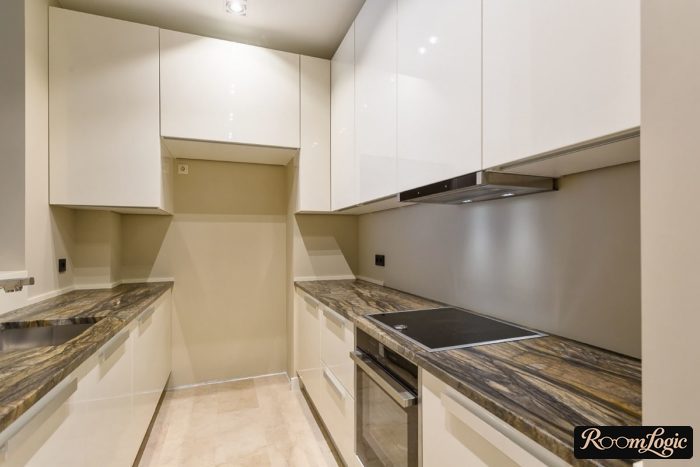
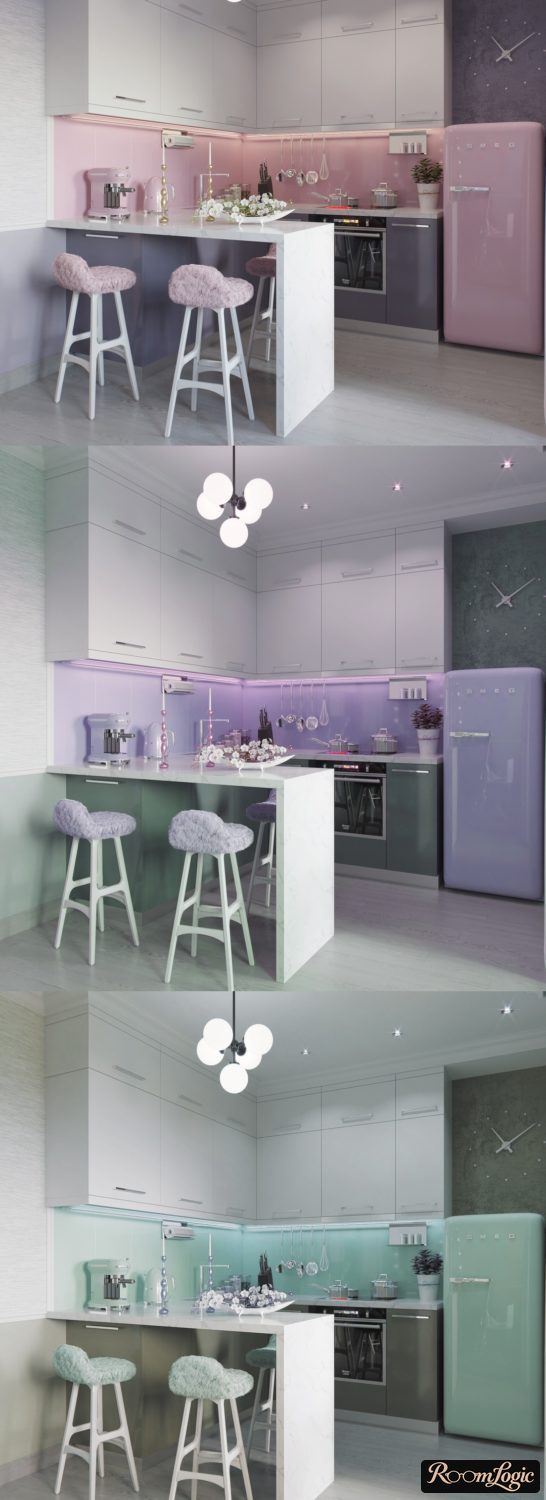
Let us clarify right away which style you are interested in:
- Just properly designed modern style
- High-tech
- Industrial with loft elements
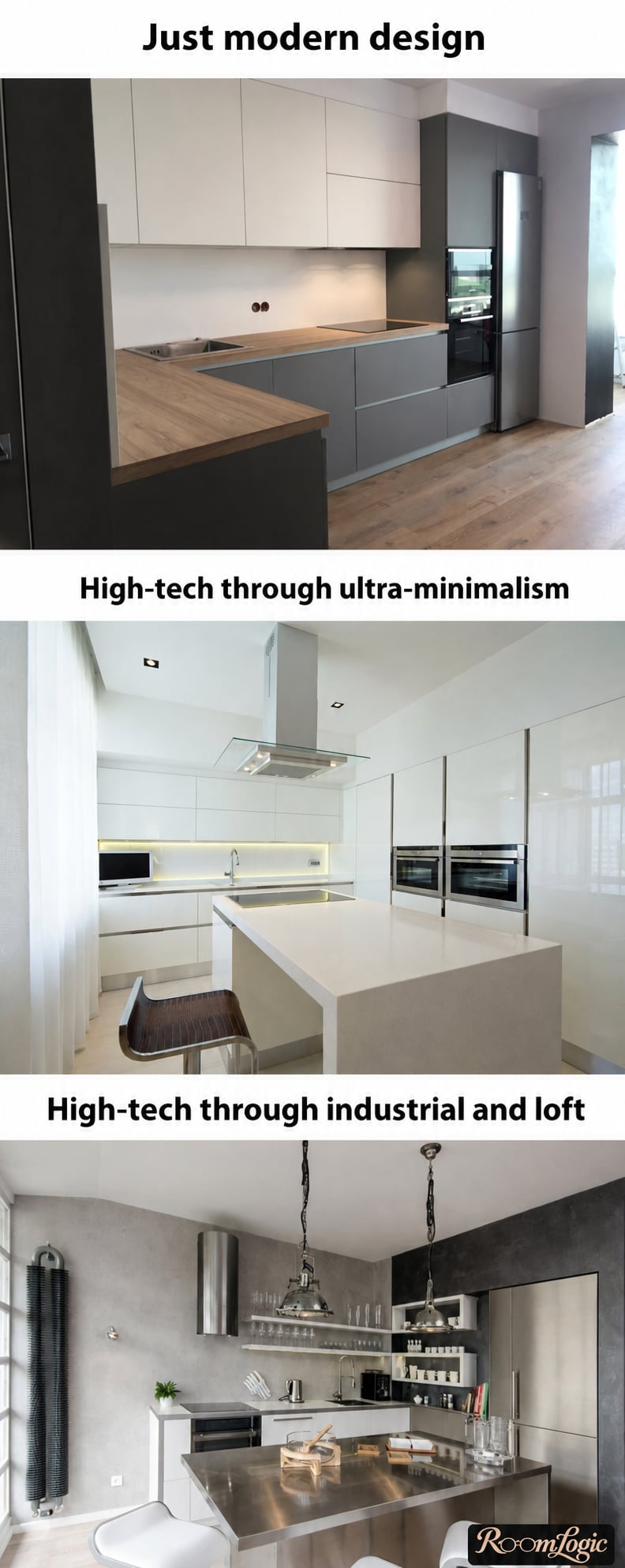
This article is specifically about a high-tech kitchen, meaning the last 2. If you need the first one, feel free to read any article on the site. They are all about the details of ordinary modern minimalist design, so choose what is closer to what you need:
- Kitchen design – 7 important details, followed by 120+ photos of unusual and stylish interiors
- Open-plan kitchen and living room
- Renovating a 65-square-foot kitchen
- Renovating a 100-square-foot kitchen.
I am a supporter of high-tech and minimalism myself, and I picked some really cool photos for this article. Save the ideas.
There is no point in fanatically following every rule of the style in a real home, but taking its general philosophy makes perfect sense.
Let us go!
2 High-Tech Kitchen Designs
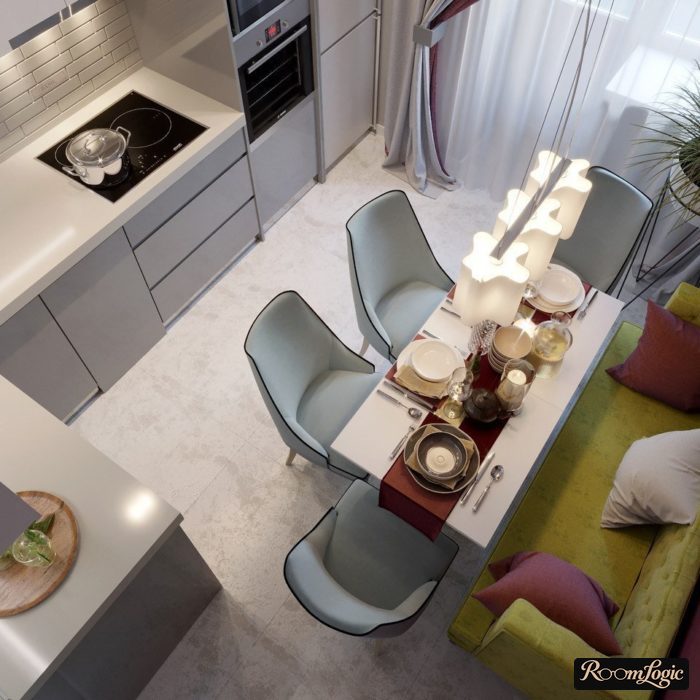
There are two fundamentally different approaches to design. They do not look alike at all, but both can be considered a high-tech kitchen:
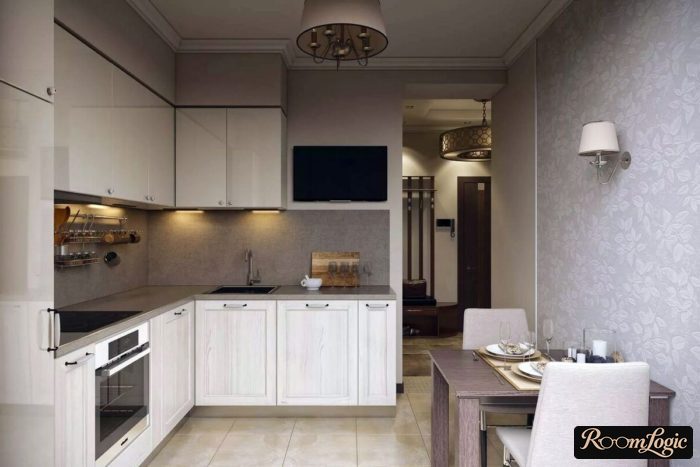
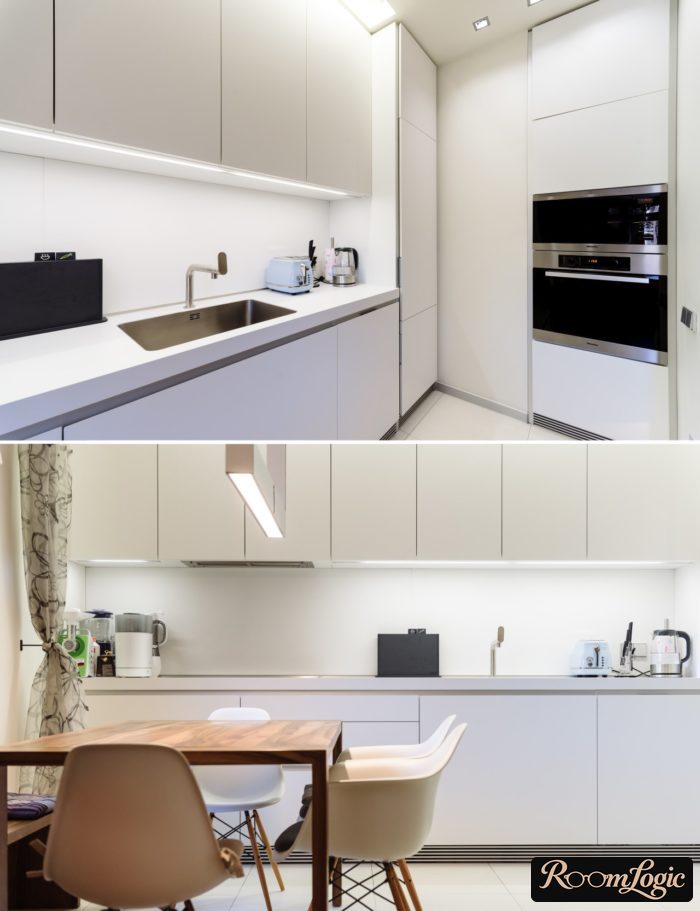
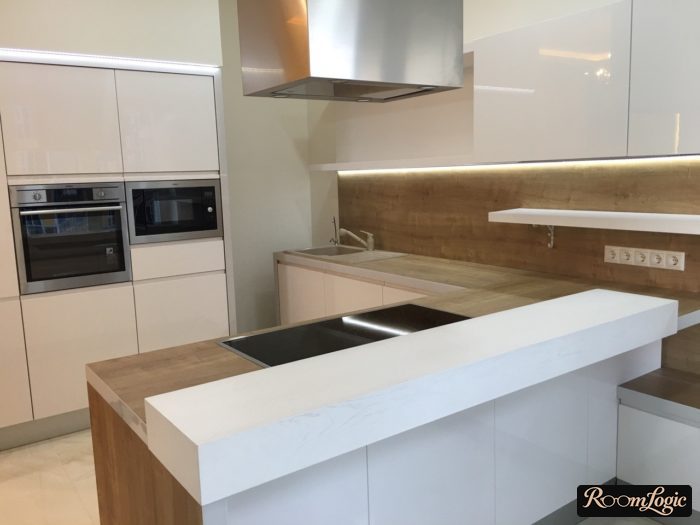
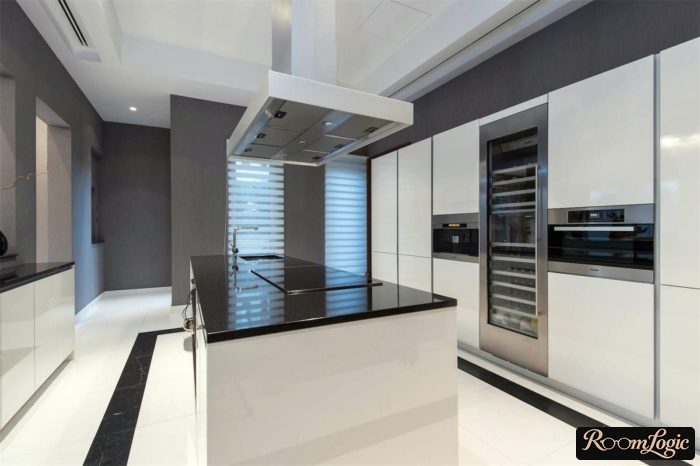
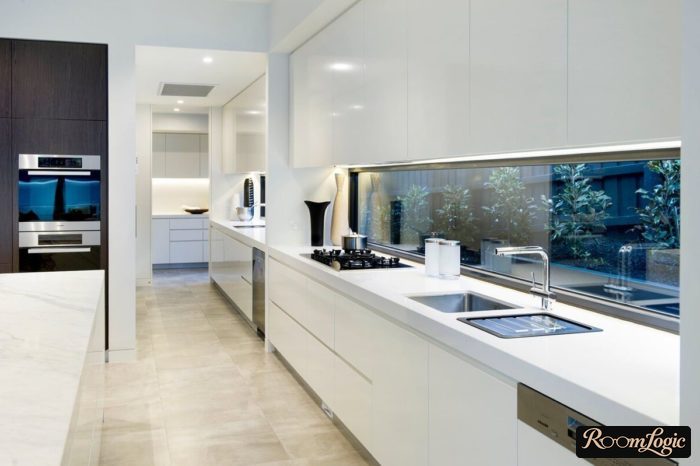
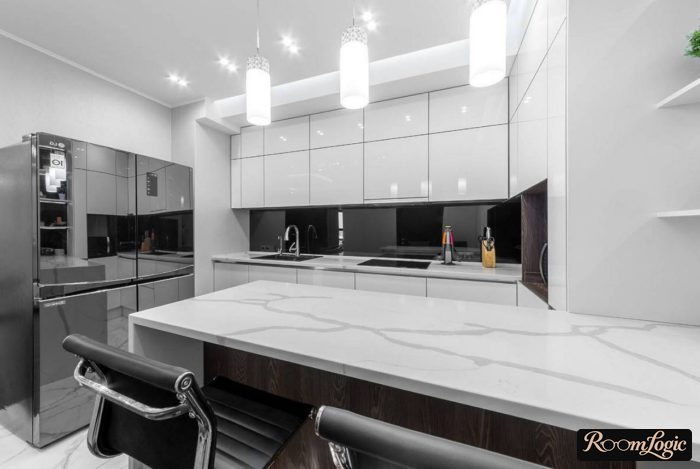
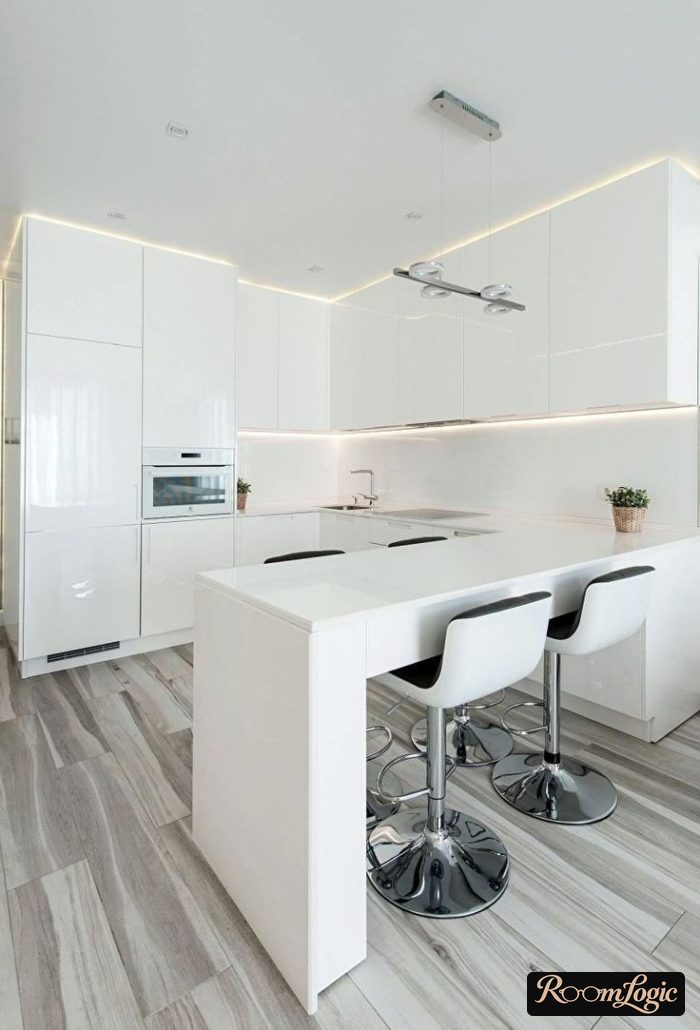
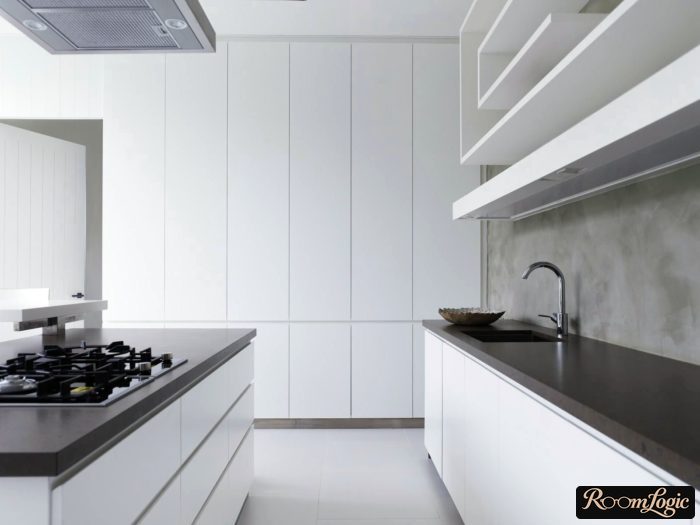
- Ultra-minimalism. Everything is built in and everything is hidden. Like an iPhone or any cool modern device. There are no piles of wires, antennas, lights, and sensors sticking out. It may be complex inside, but the design outside is super simple and minimalist.
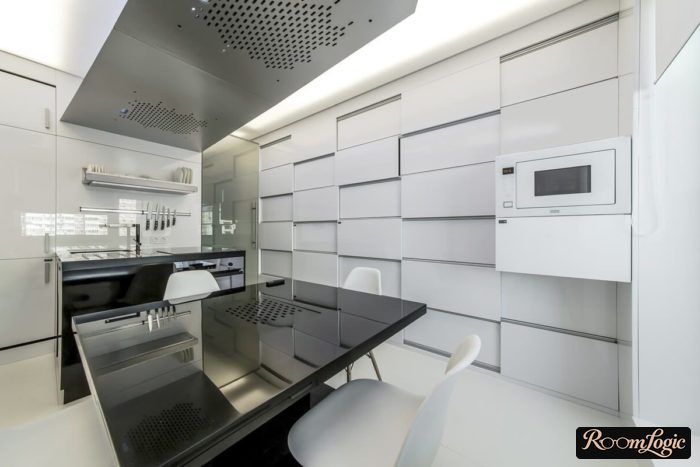
- Industrial or loft style in a modern variation. Stainless steel, chrome, glass, complex futuristic light fixtures and furniture – all of that.
We will go through both types, with an emphasis on the first one (in my understanding, that is the real one). Also read the overview of all interior styles.
An important warning:
A high-tech kitchen is expensive. No exceptions.
If someone tells you otherwise, run. Unlike traditional style, which imitates the past, high-tech imitates the future, and imitation is never cheap. Try to save money on something like a radiator or windowsill by leaving the builder-grade ones in place, and the whole look is ruined.
- You need a plan to work out every joint between materials and cabinets so that everything is completely built in. Figuring it out as you go is a bad idea. joke about high-tech
Modern Minimalism
Everything I recommend in every article, but in a radical form:
- Built-in cabinets up to the ceiling (lower the ceiling over the cabinets or add a stacked upper row).
- No visible cabinet handles at all.
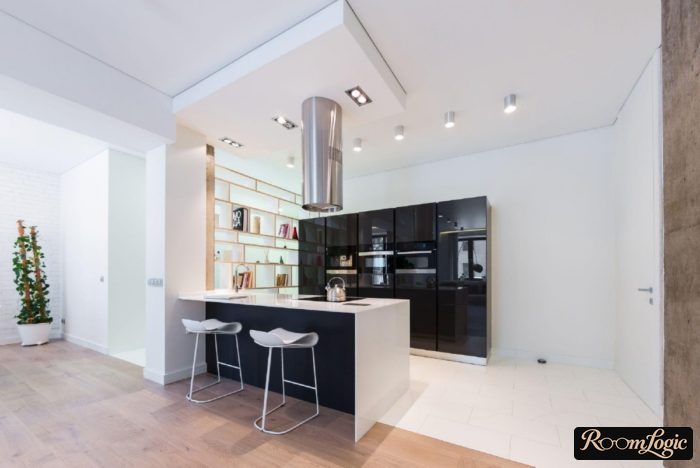
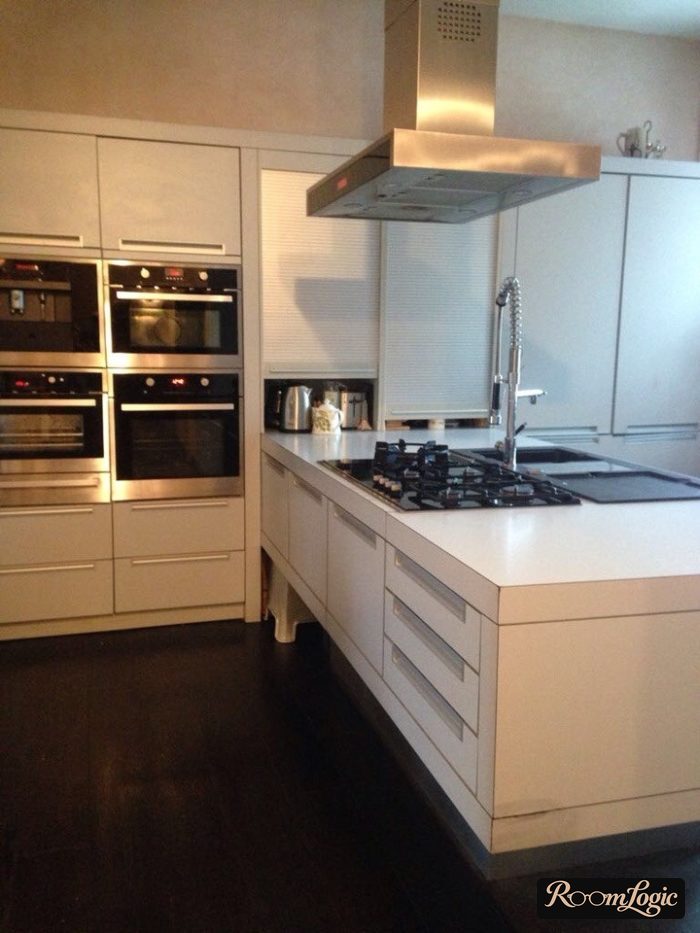
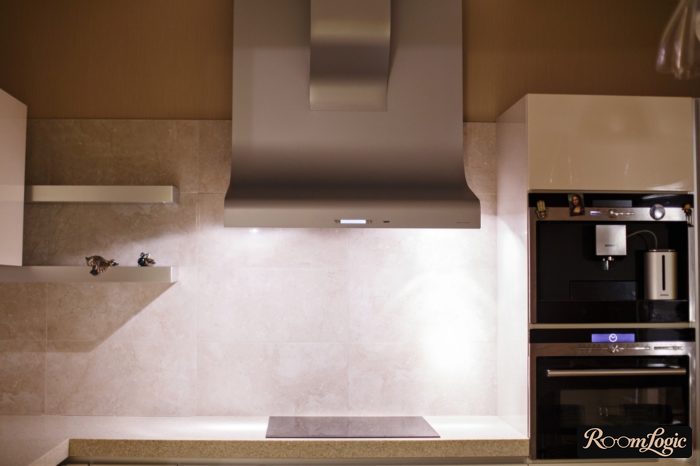
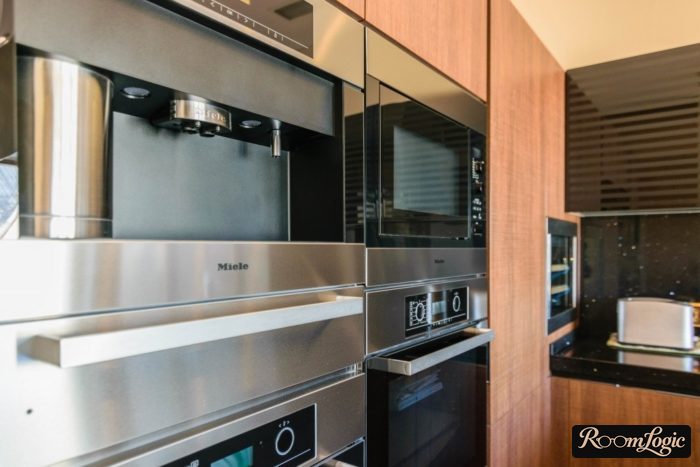
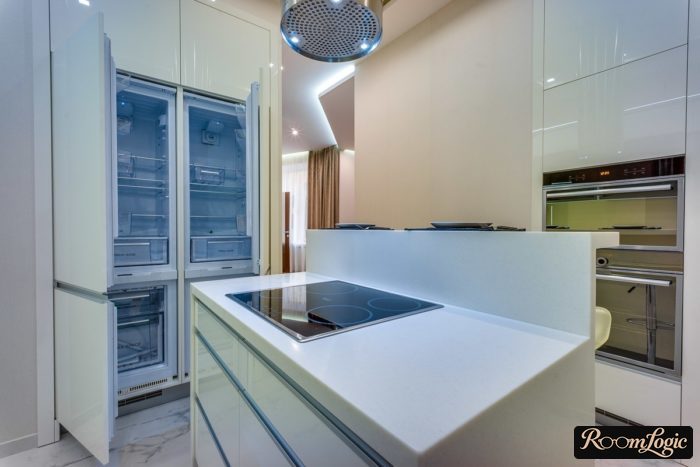
- The refrigerator, wall oven, range hood, and microwave are also built in. They can go into tall cabinets (2 floor-to-ceiling units next to each other).
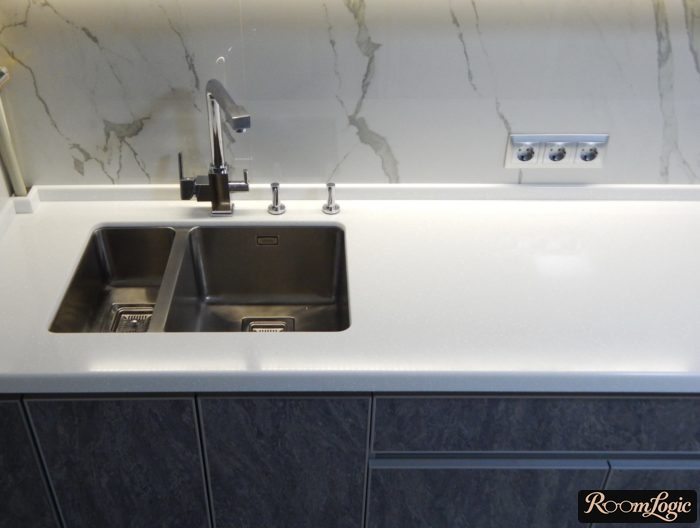
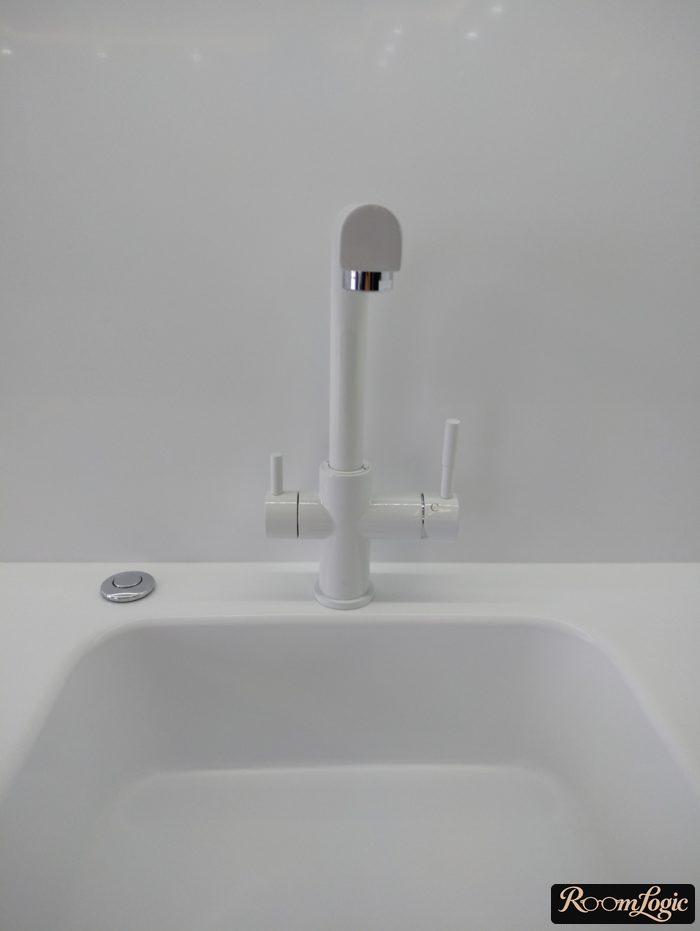
- The soap dispenser is mounted in the sink, and the faucet has 2 handles for regular and drinking water (connected to a reverse-osmosis filter under the sink).
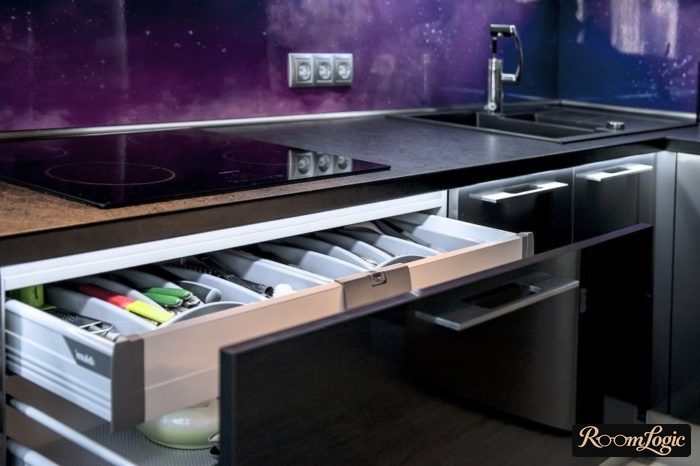
- Small appliances – the toaster, coffee maker, and blender – are hidden too.
- Monochrome. Shades from white to black plus wood. There will be a separate section on this below.
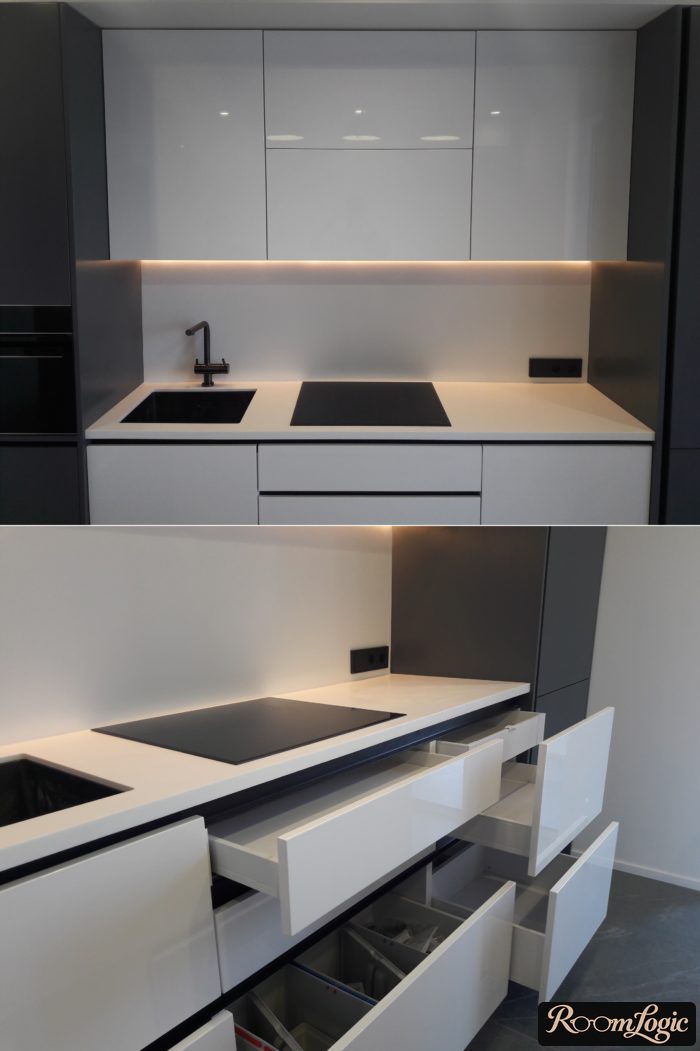
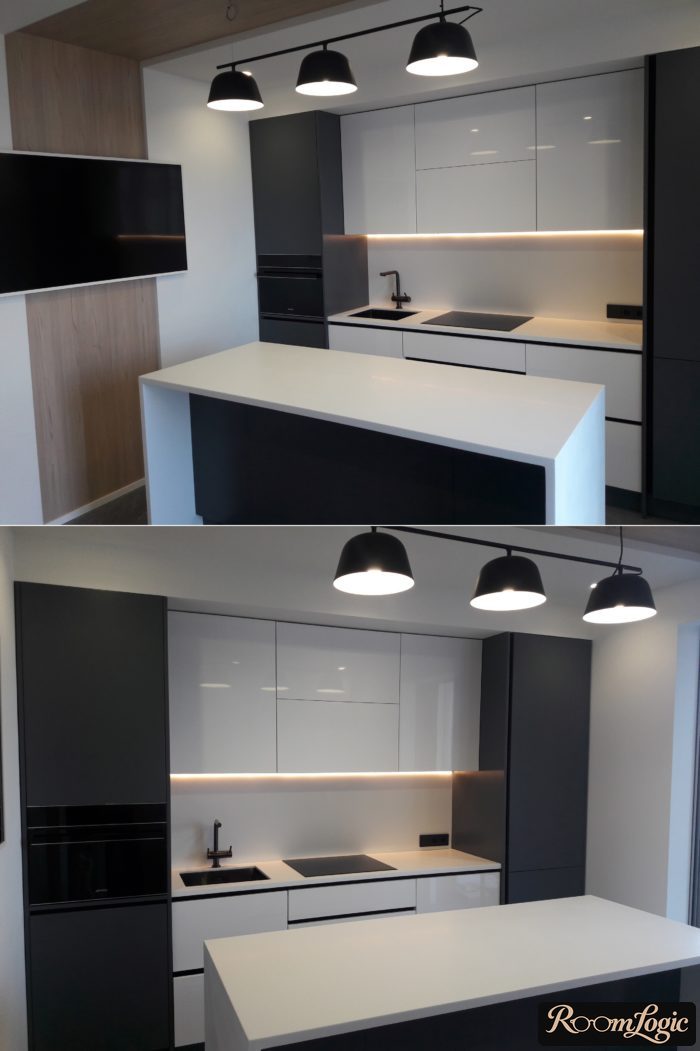
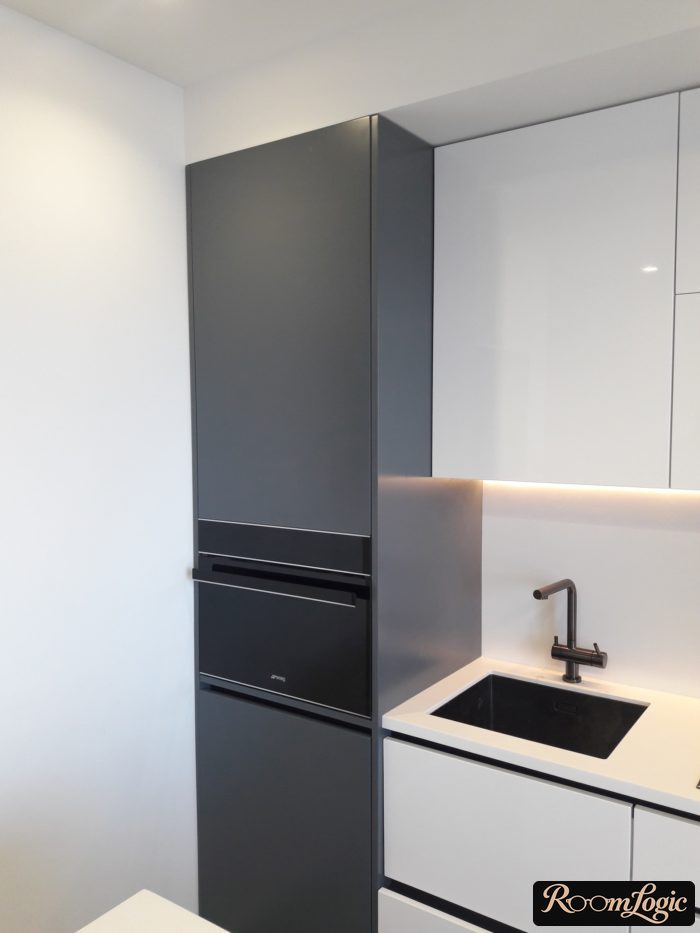
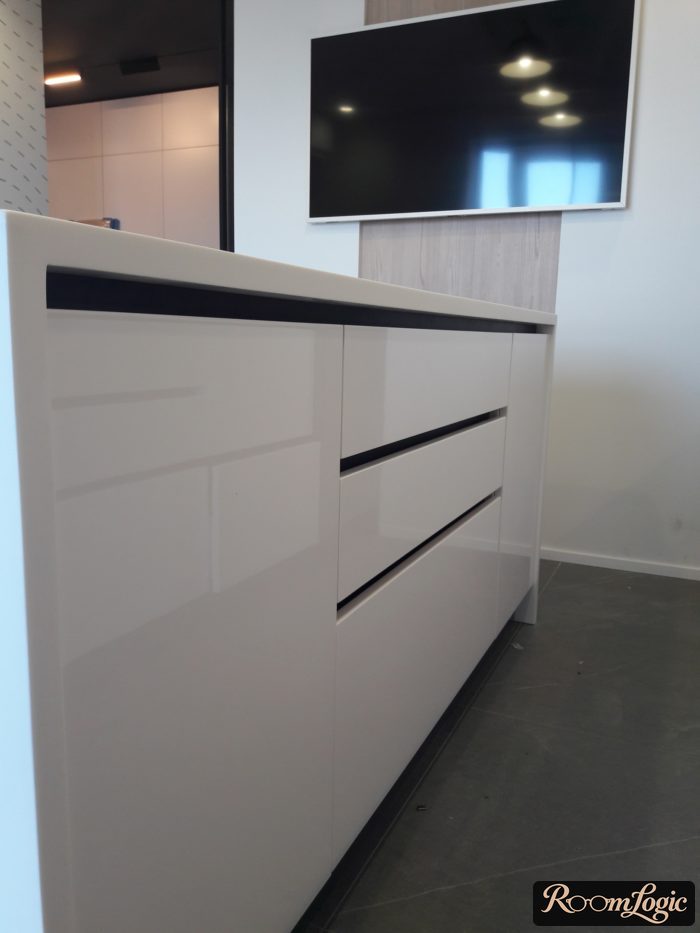
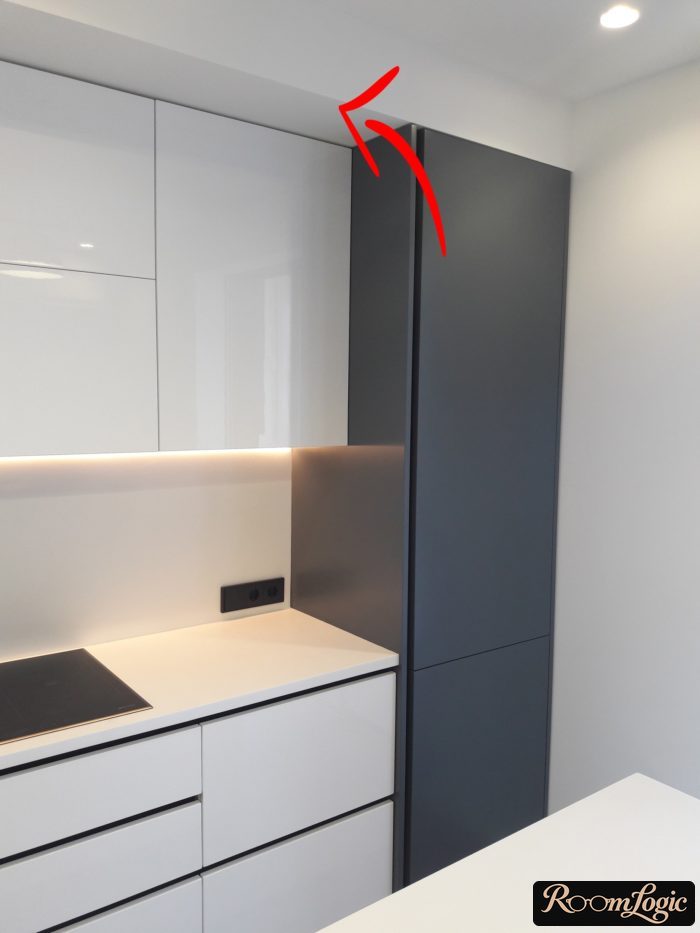
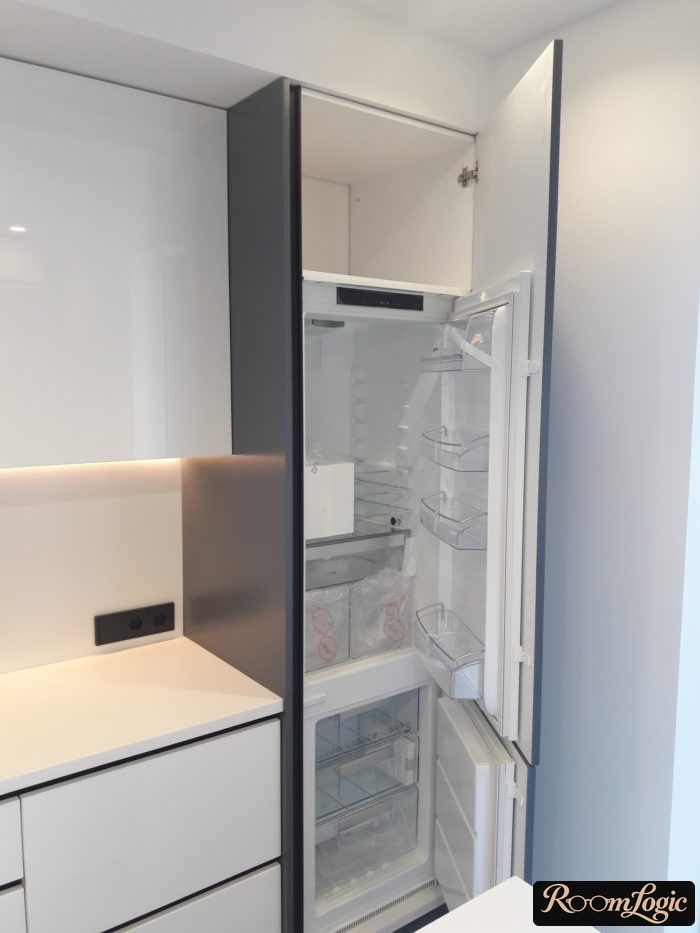
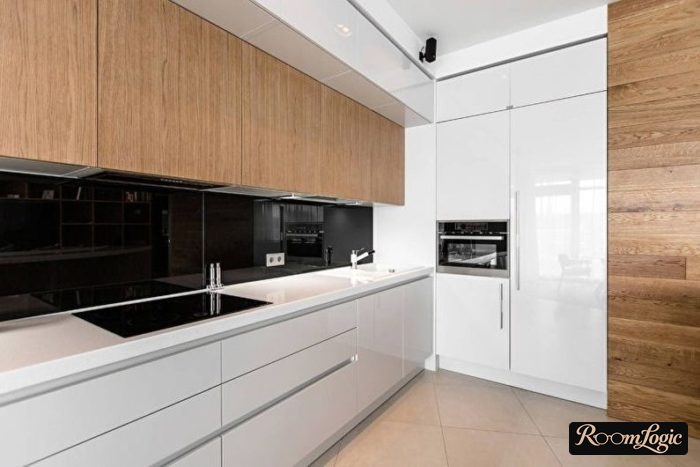
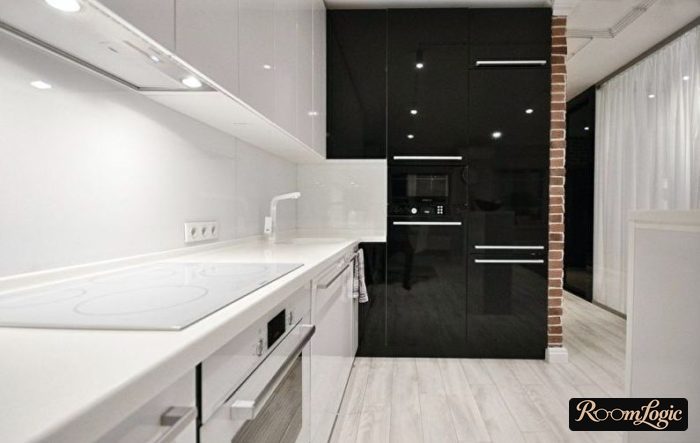
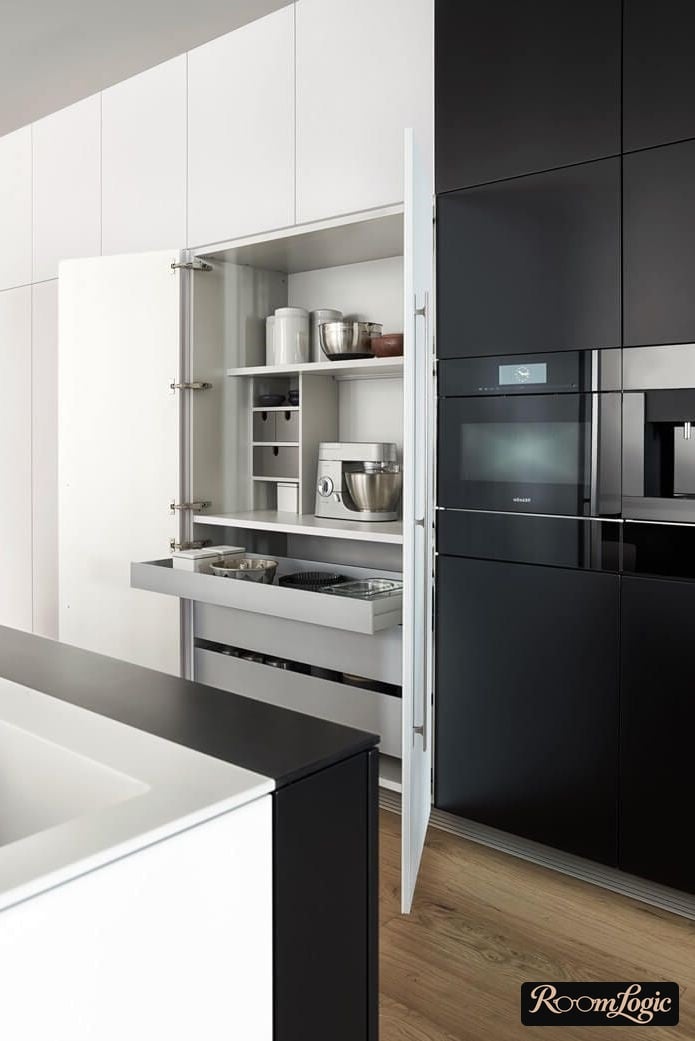
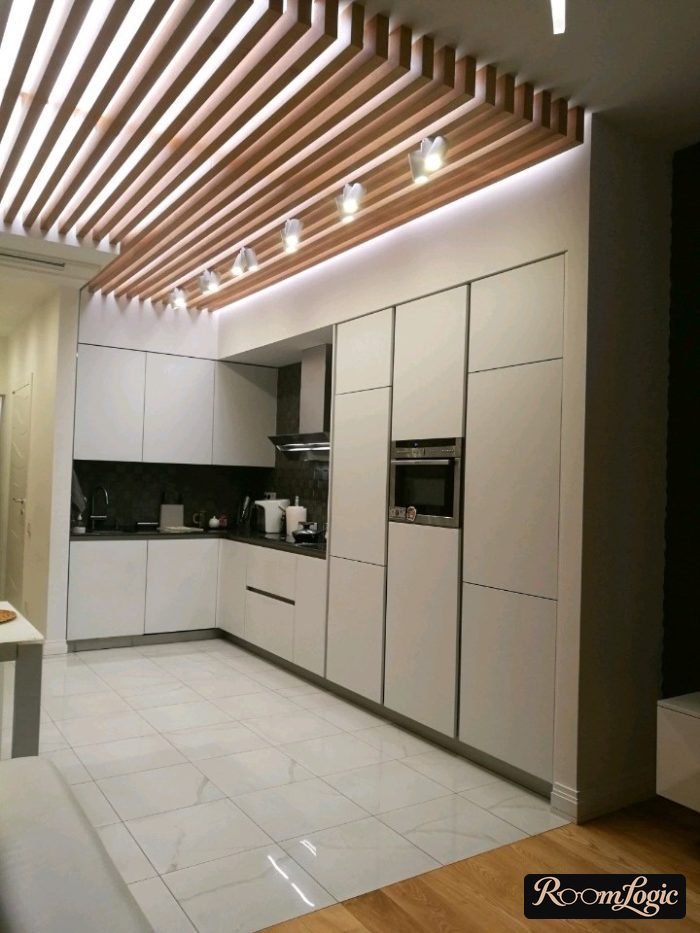
Despite its apparent simplicity, this is not easy or cheap to build, but it looks the part – expensive. That is not a problem. Even if the result is not high-tech, it will still be a solid modern kitchen.
The downside is that it is impractical. The interior looks great only when everything is perfectly tidy, and keeping it that way is difficult. But that is the price of imitation.
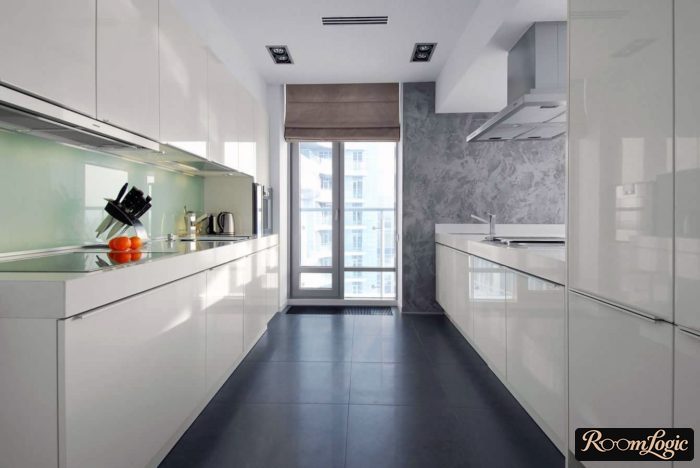
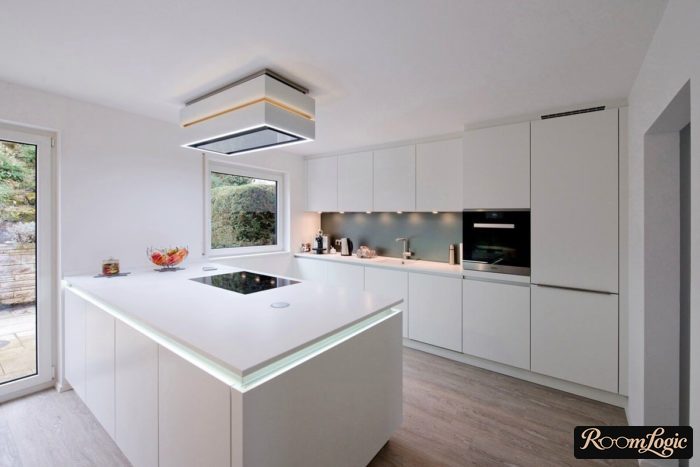
Industrial with Loft Elements
This type of high-tech looks more like visions of the future from old science-fiction movies. There is nothing wrong with that, and it can look cool too, but there is a risk of ending up with a tacky mess.
Read the article about a loft-style kitchen.
From here on, I will subjectively divide all the photos into cool and not cool. Unlike the first minimalist high-tech kitchen, where the design will still be decent even with a lot of mistakes, a deliberately technological style can turn out truly bad.
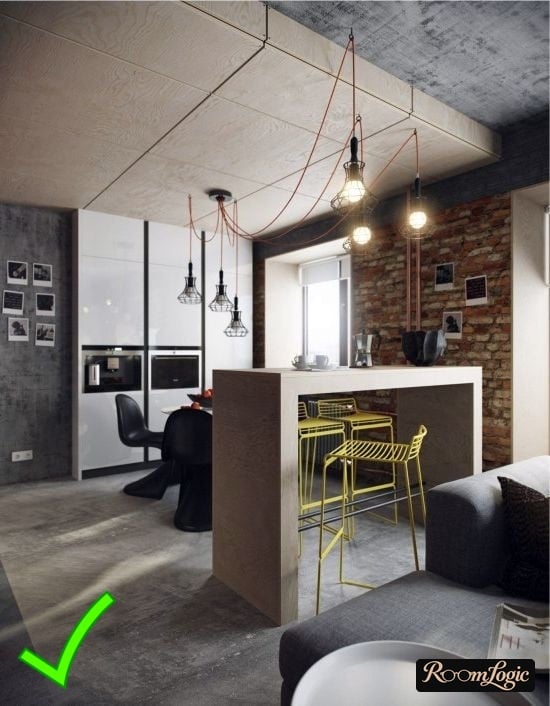
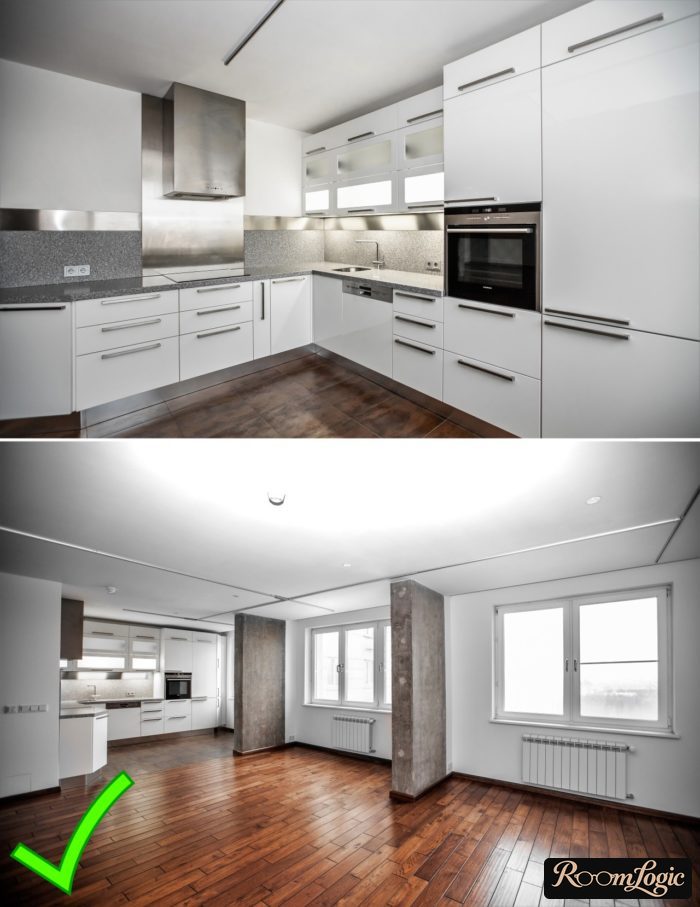
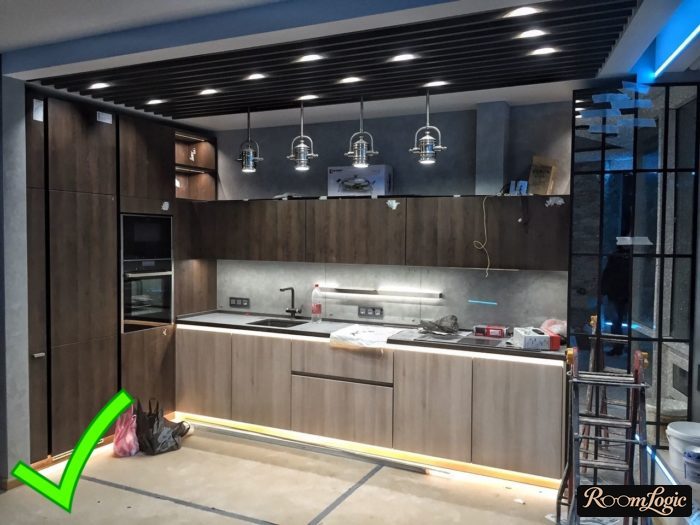
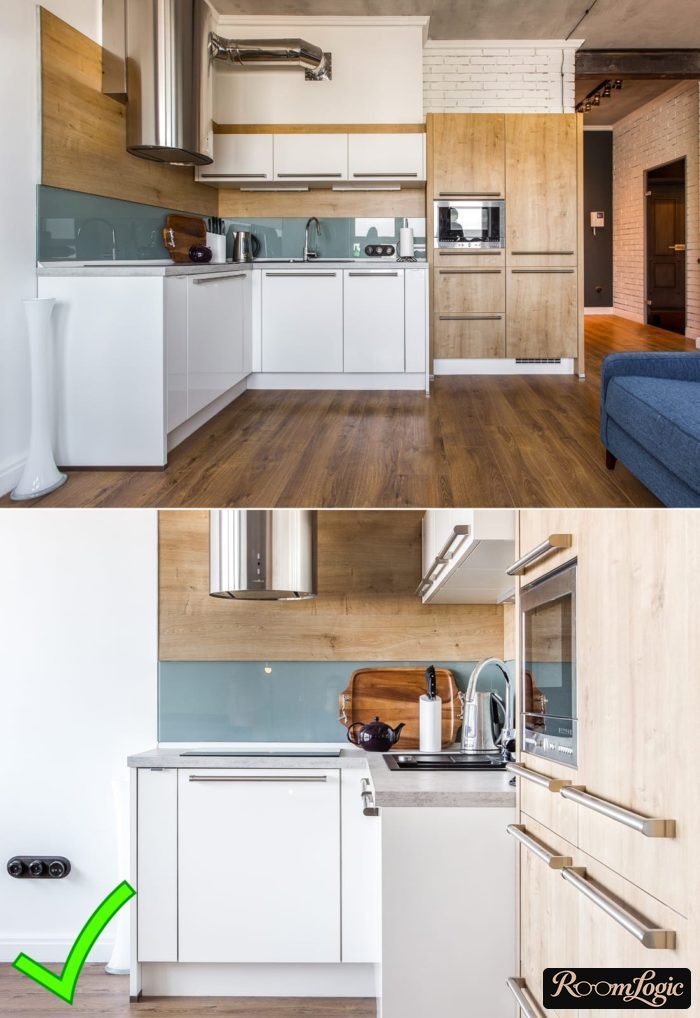
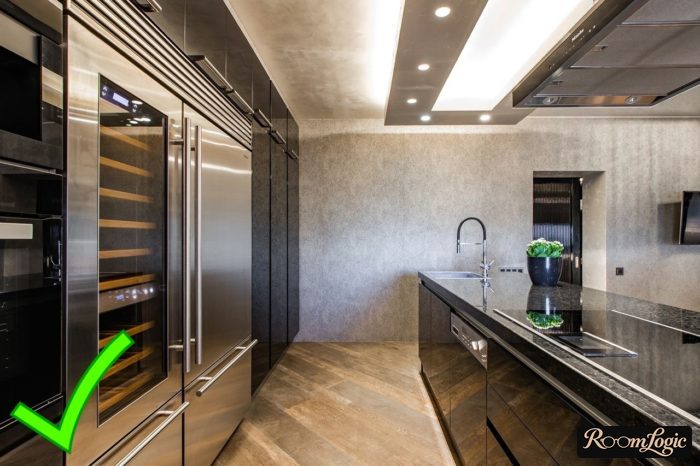
What are the mistakes (look at the photos):
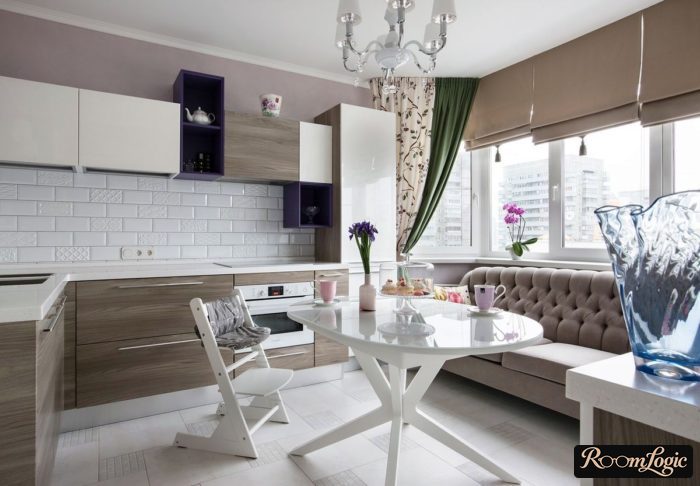
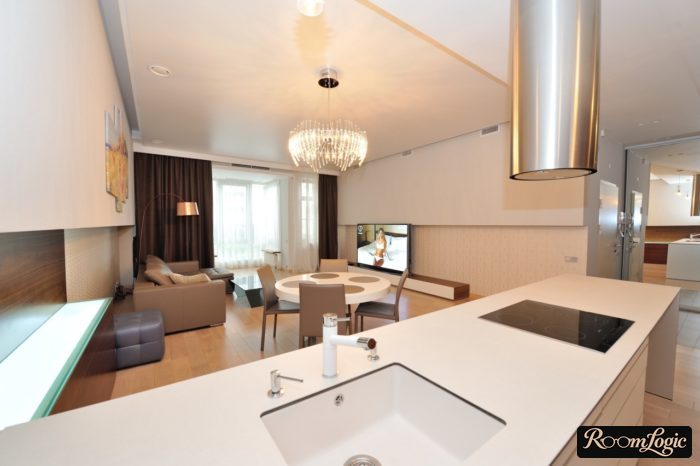
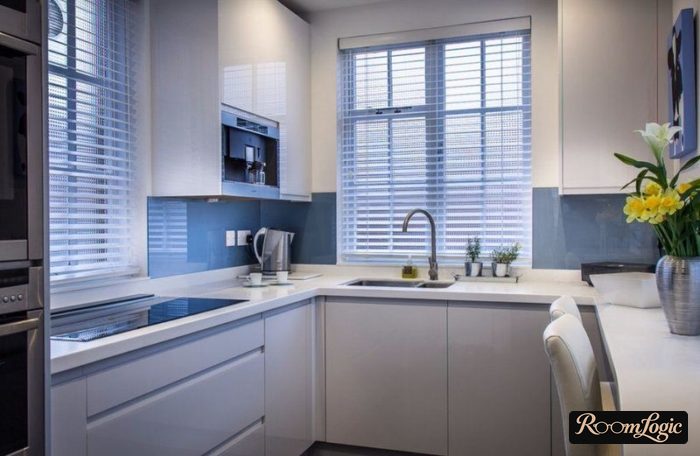
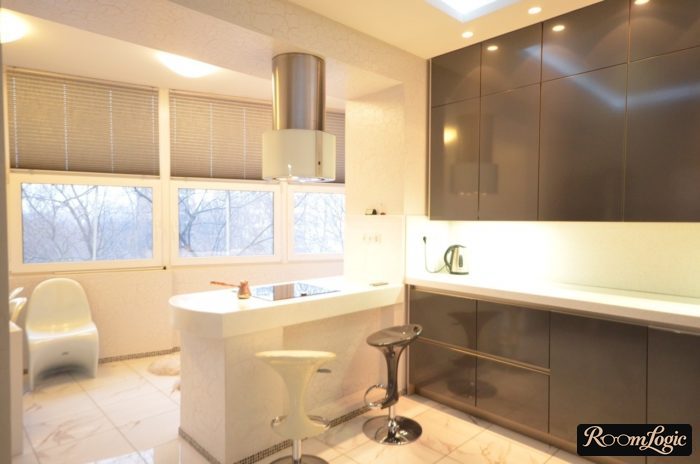
- Frosted or green glass does not work. Standard glass has a green tint, especially when seen from the edge or when lit. Only white and clear glass work.
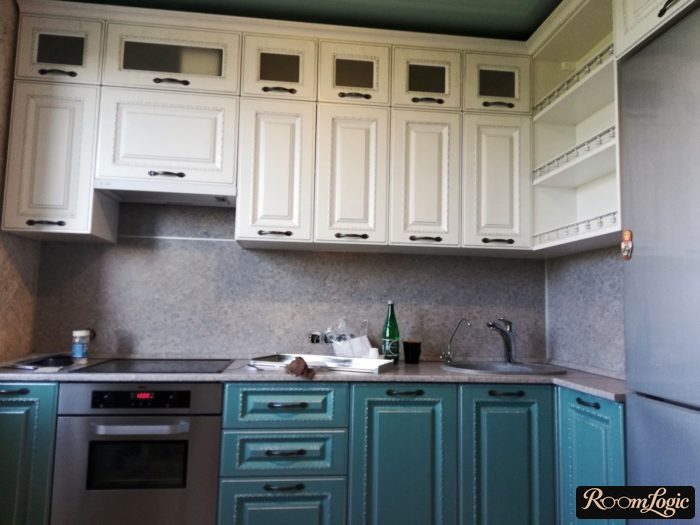
- The furniture is trying to make a statement, but the finishes are ordinary – a mismatch.
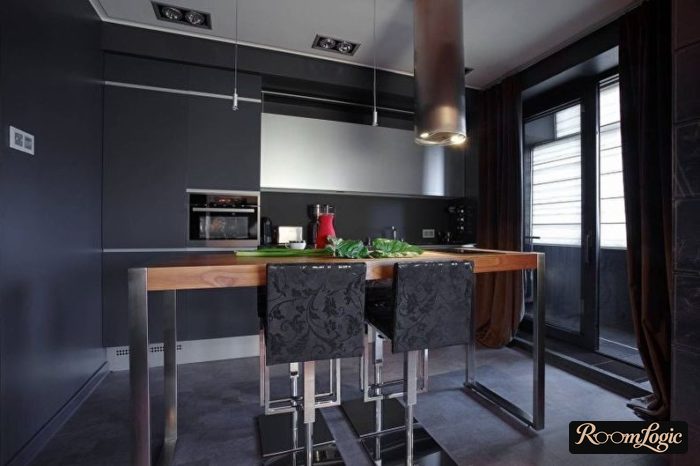
- Ordinary cheap items against a technological background drag the whole interior down to their level (the radiator and the wallpaper behind it in the first photo).
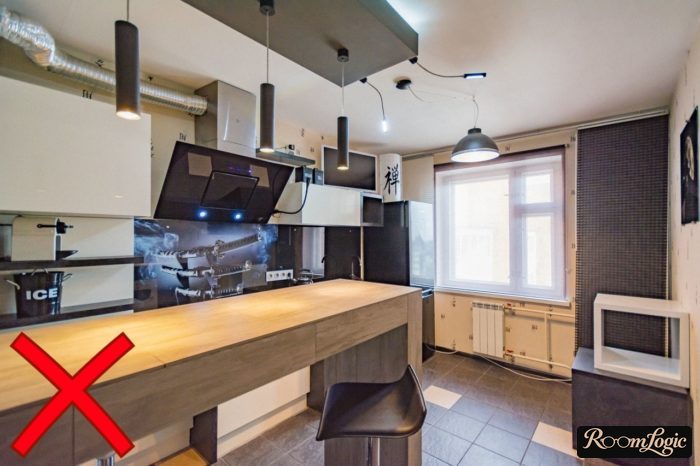
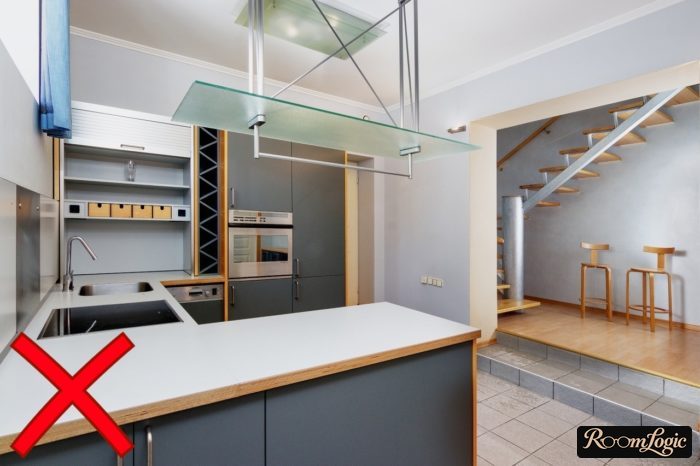
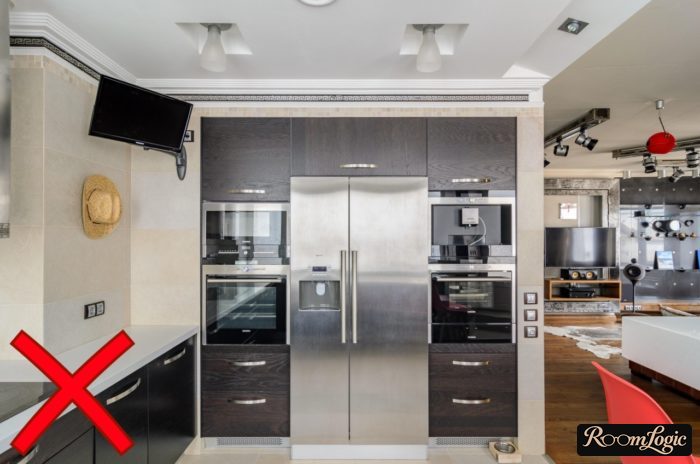
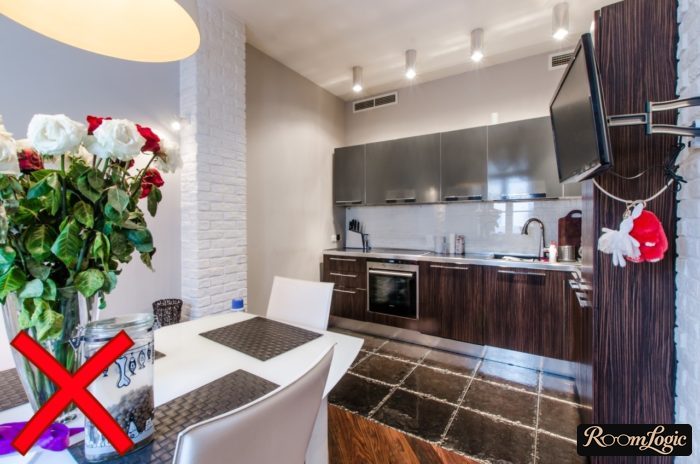
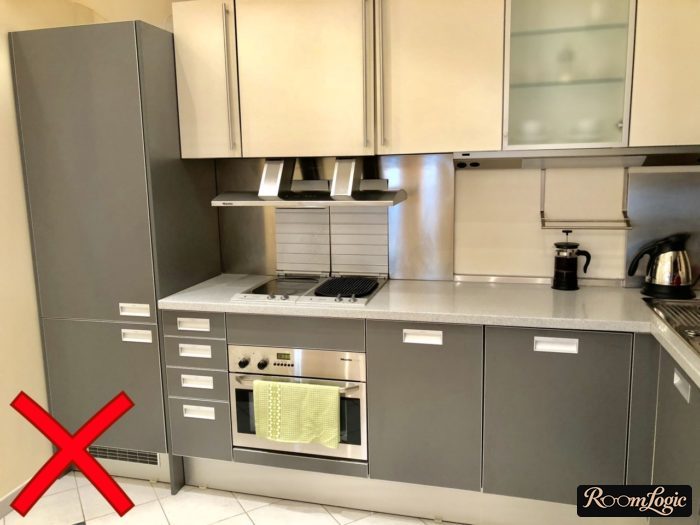
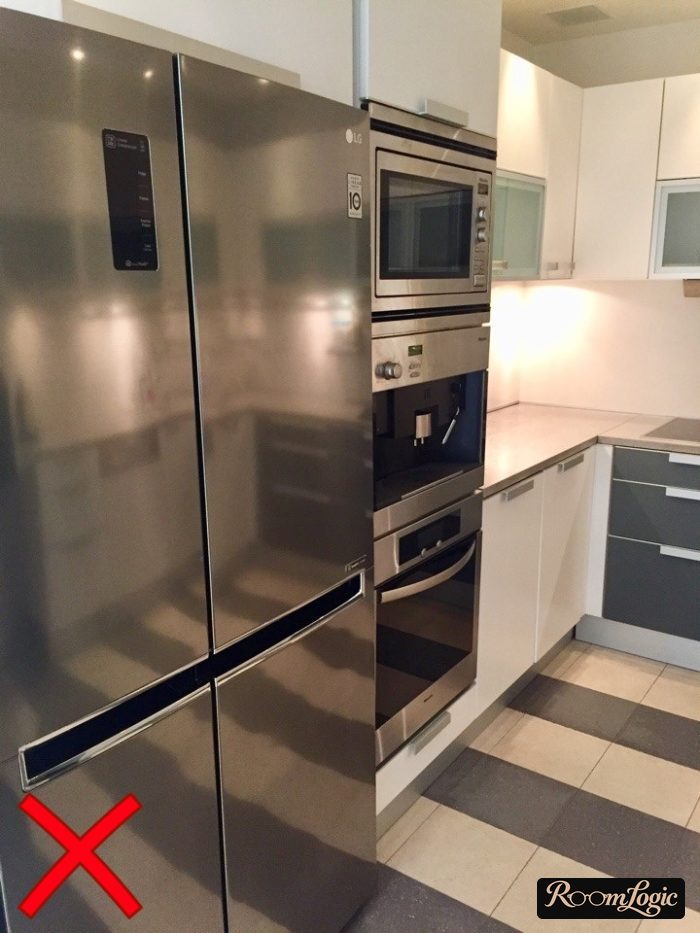
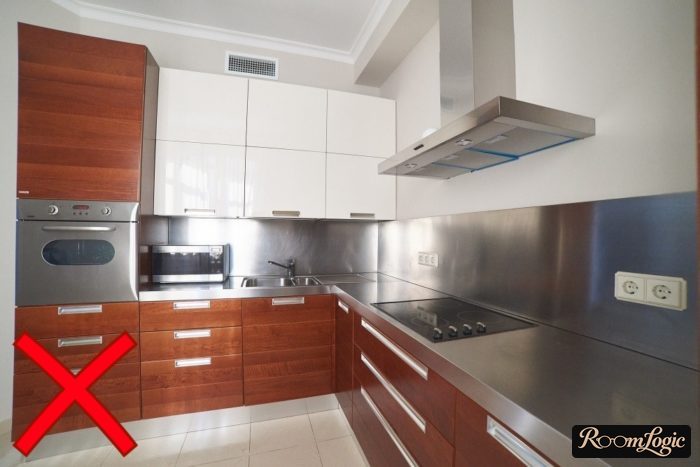
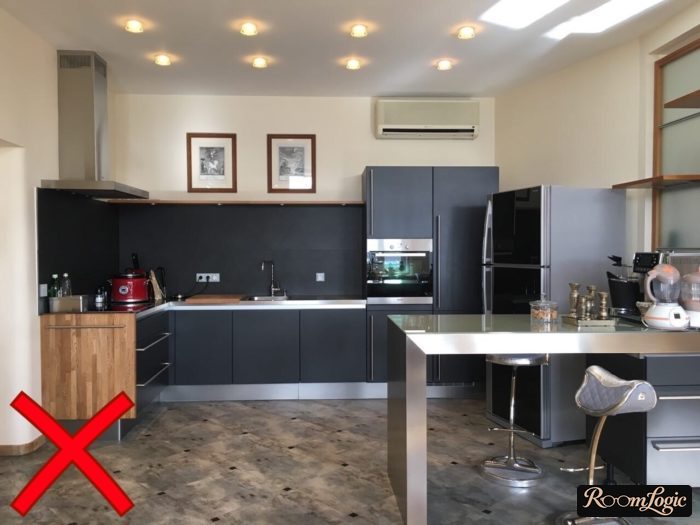
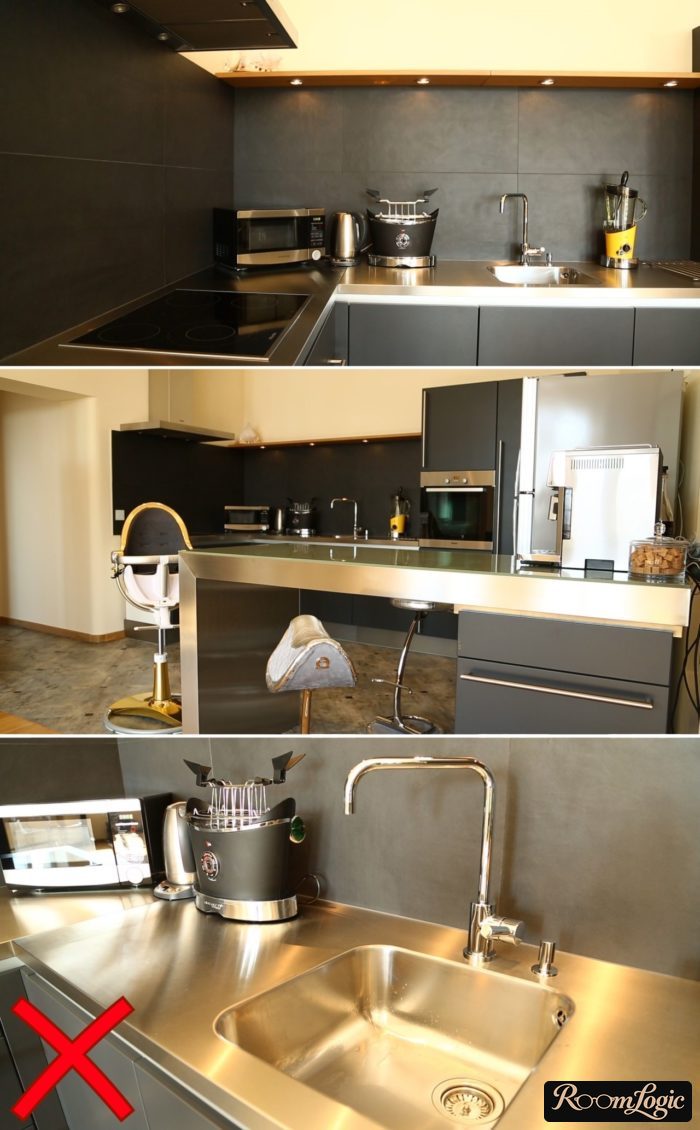
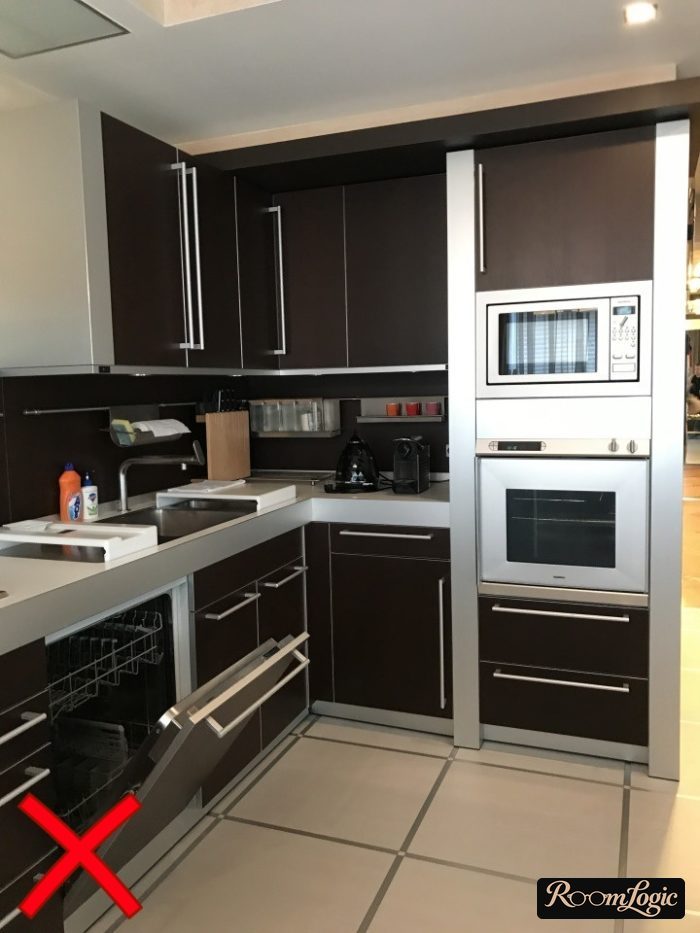
To be fair, some of the kitchens in the photos were done a long time ago and are now outdated, but that is exactly the danger of this kind of design.
High-Tech Finishes
As usual, the devil is in the details. Let us go through them.
1. Furniture and Layout
Briefly:
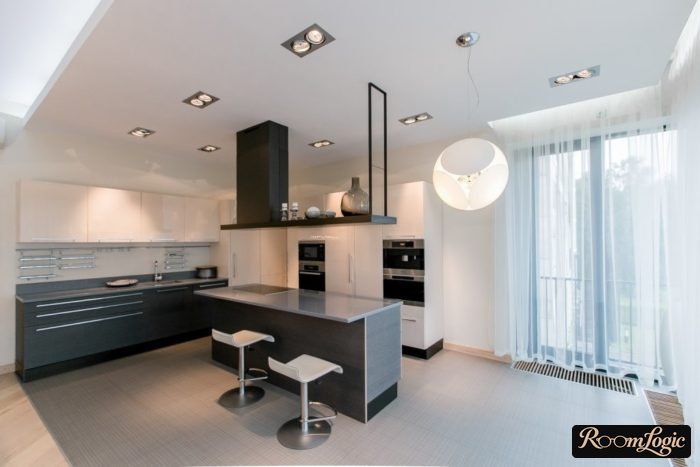
- Only right angles. Some high-tech fans like curves, but that is an unjustified risk. The result is almost always awful.
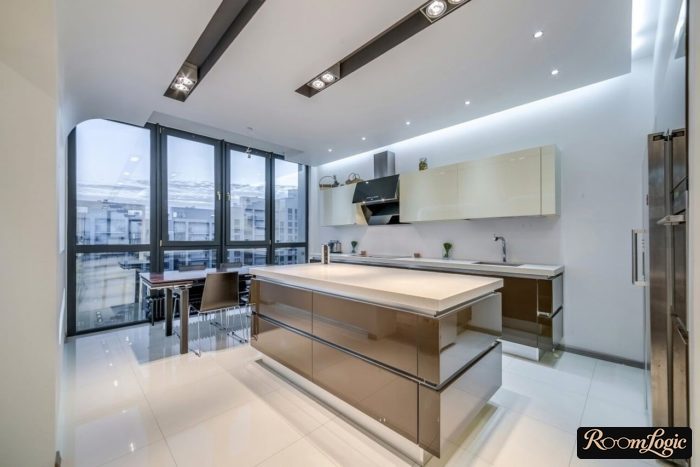
- Layouts with an island or breakfast bar. + Finding a good regular table, and especially chairs for it, is harder than finding bar stools for an island or bar.
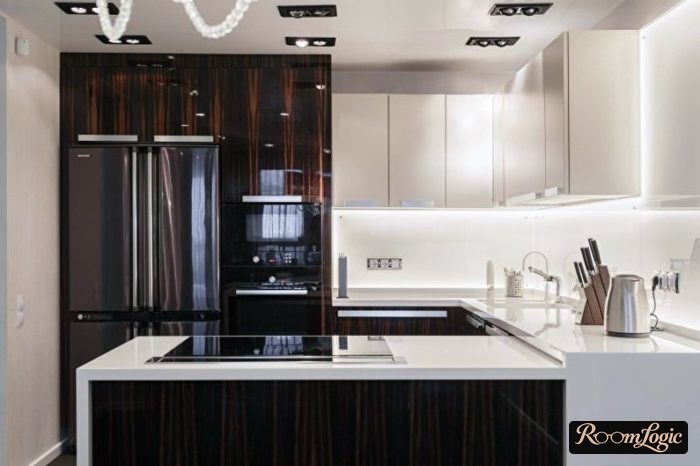
- You can do this in a small kitchen too. In that case, lean toward L-shaped layouts and even U-shaped ones. You need a lot of closed storage, and otherwise you will not get it.
- If you rarely use the kitchen and do not keep a stock of food, you can make at least 1 wall without upper cabinets. Either do that or go all the way to the ceiling.
- The cabinets can be installed without gaps at the walls and ceiling and without filler strips. If cabinetmakers tell you otherwise, find different ones. Naturally, measurements for this are taken after the finish is installed if it has thickness, such as tile or decorative plaster.
2. Color
I always say that white and gray kitchens are the best option, and high-tech style is no exception.
It can look cool in dark colors too, but that is much more difficult.
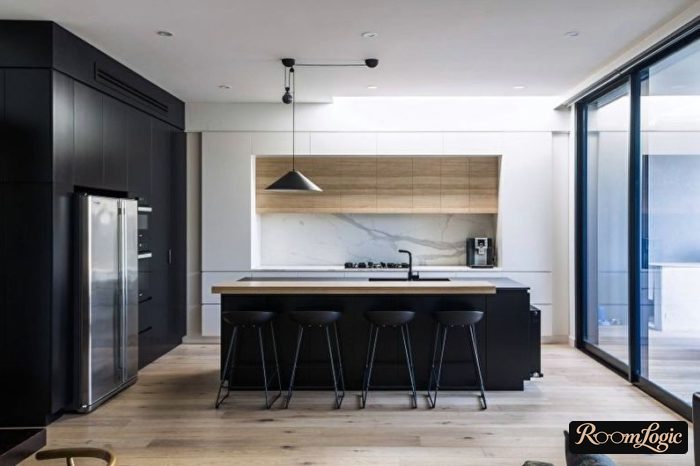
- White works in both glossy and matte finishes. Use dark colors only in matte finishes.
- Pure black is dangerous because the result is unpredictable. If you want to add something dark, use dark gray (graphite) in a matte finish.
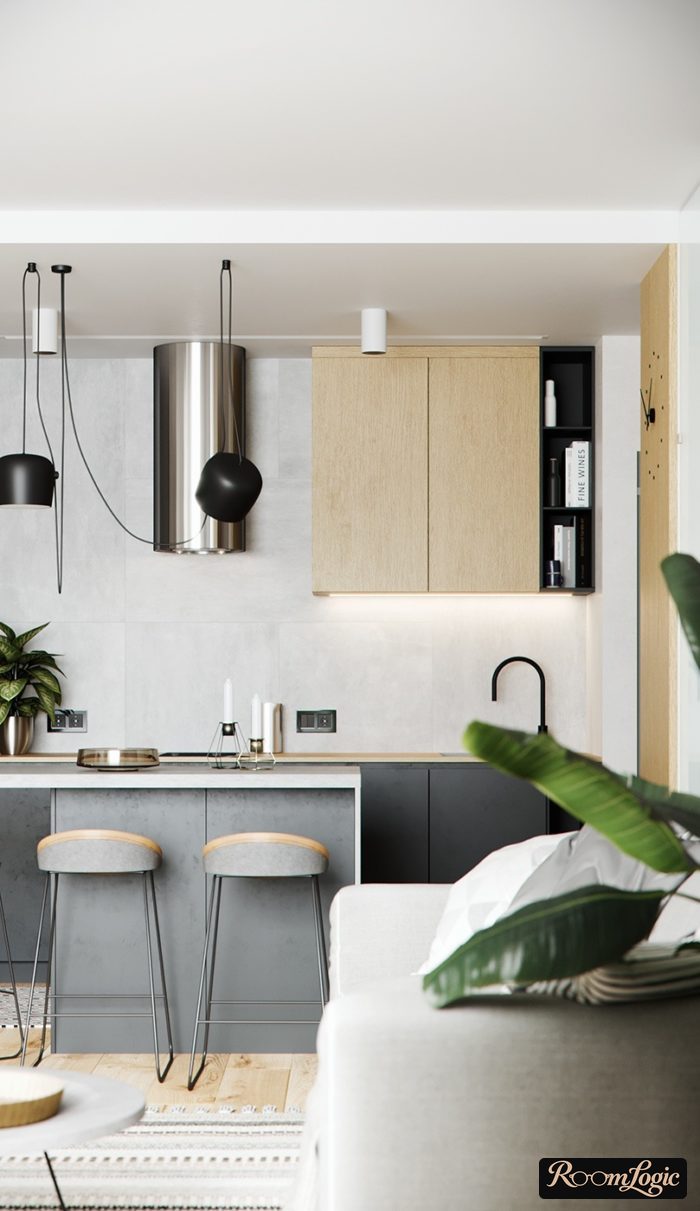
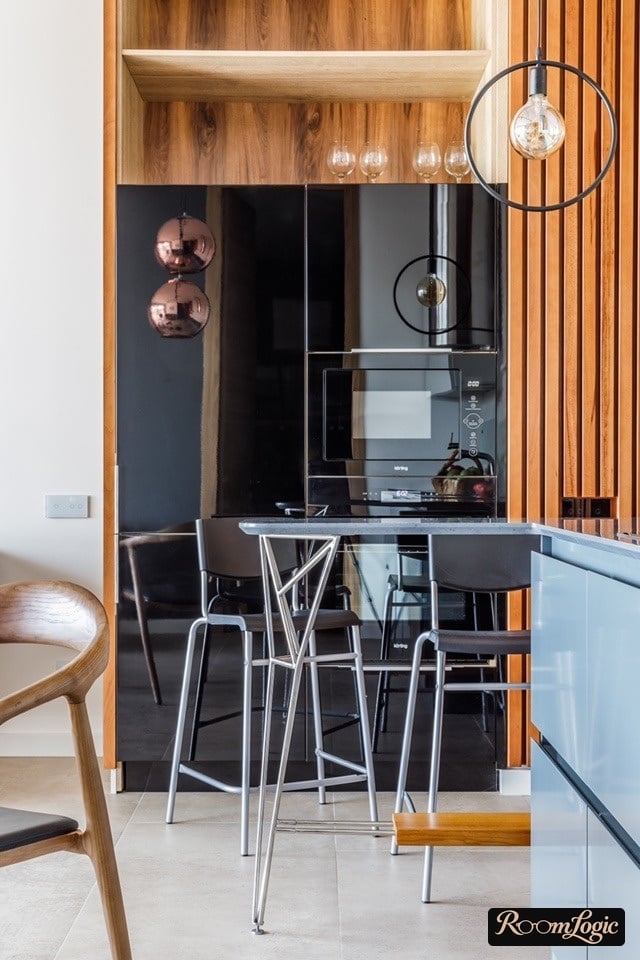
- Unusual wood works well. Wire-brushed solid wood (with a pronounced texture), glossy wood, or an unusual species like walnut. Standard options such as particleboard that imitates oak work well for Scandinavian style, but not for high-tech. Read about a white kitchen with wood countertops – I went through all the details of interiors with wood there.
- You can avoid accent colors entirely and use only shades of gray. A bunch of photos in this article prove that it will not be boring. If you do use them, too little is better than too much.
- White refrigerators and microwaves should have glass fronts. Enameled versions do not work with the design. Or use stainless steel.
3. Lighting
Light is beautiful not because of the source, but because it brings out the textures of the surfaces it illuminates.
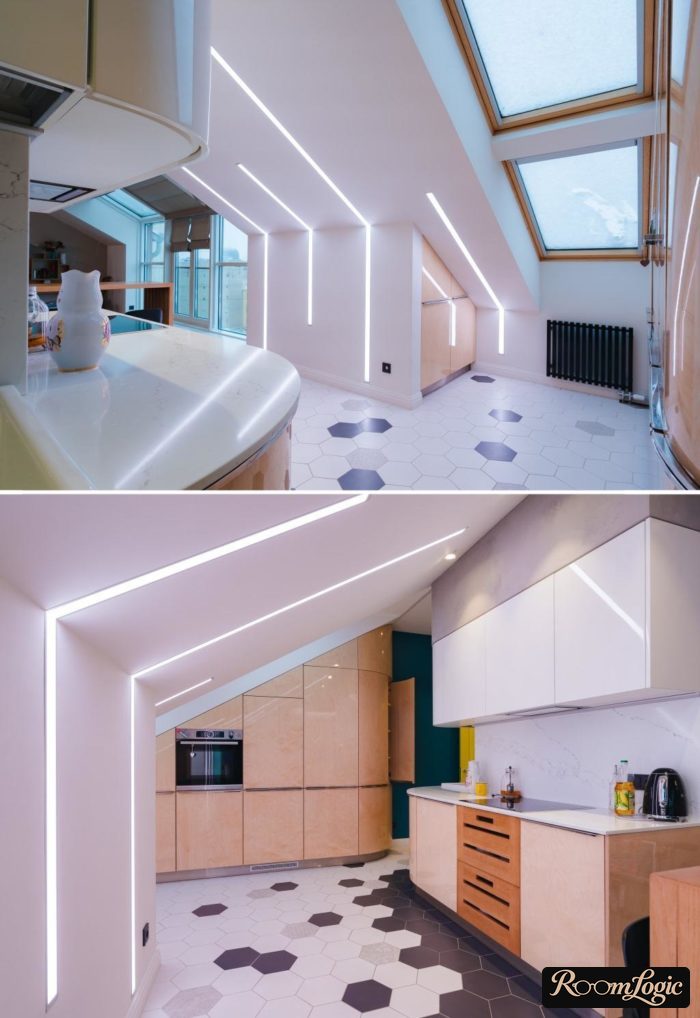
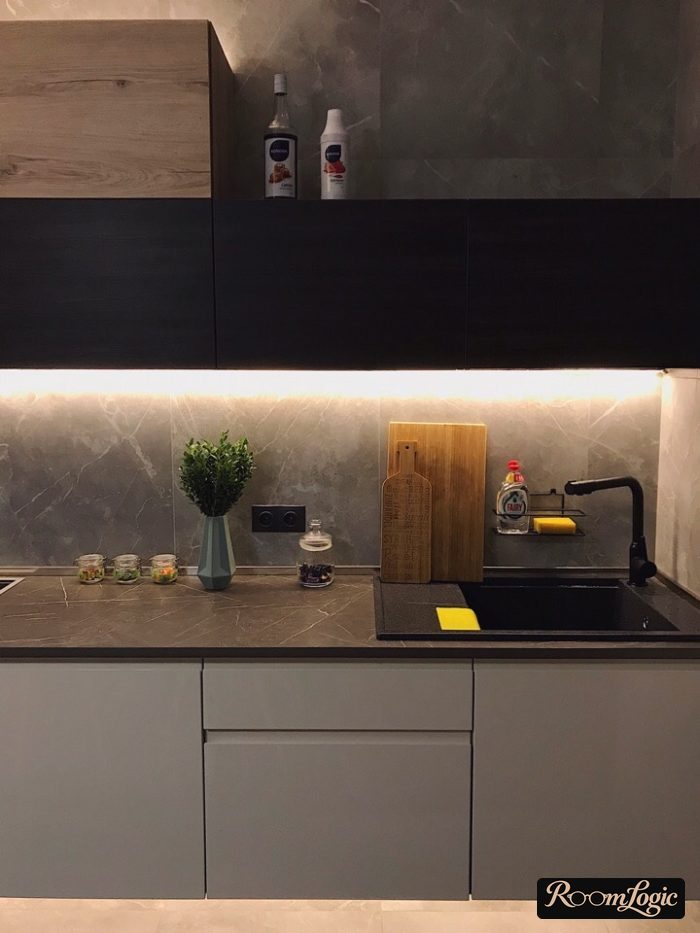
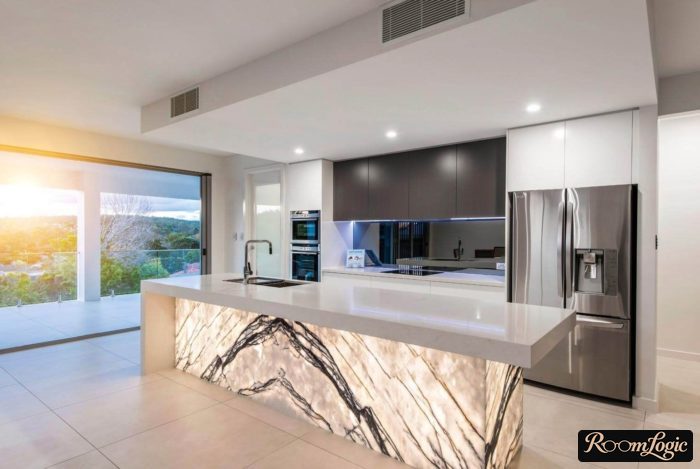
The best choice for a high-tech kitchen is hidden lighting. Fortunately, the selection and quality of LED strips are now good enough.
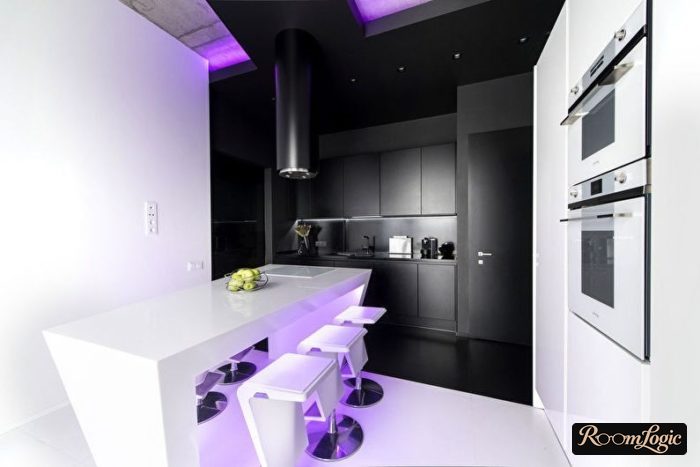
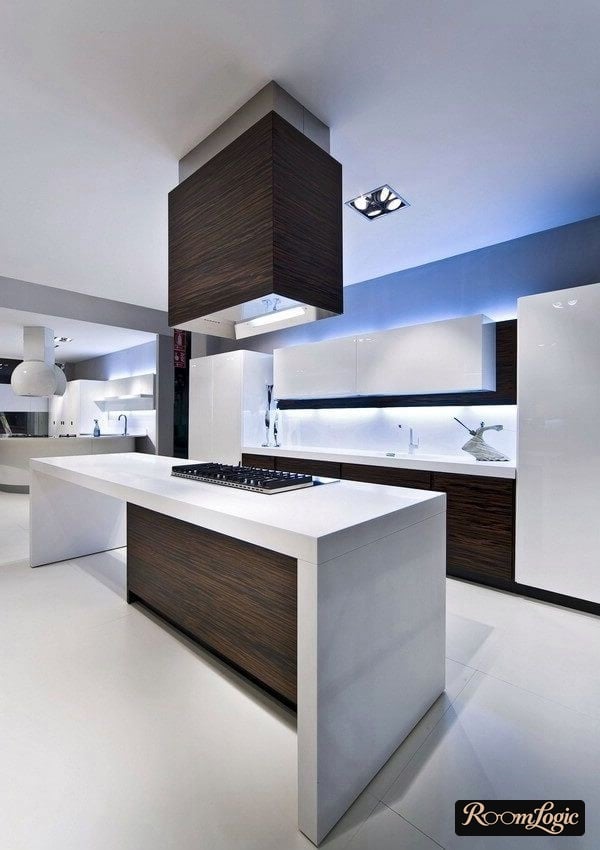
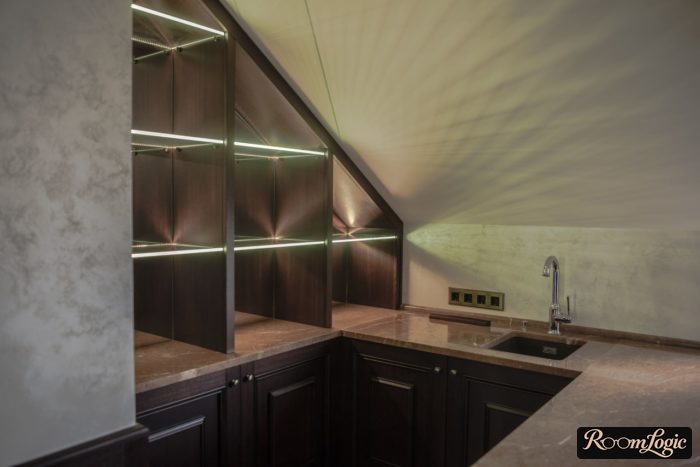
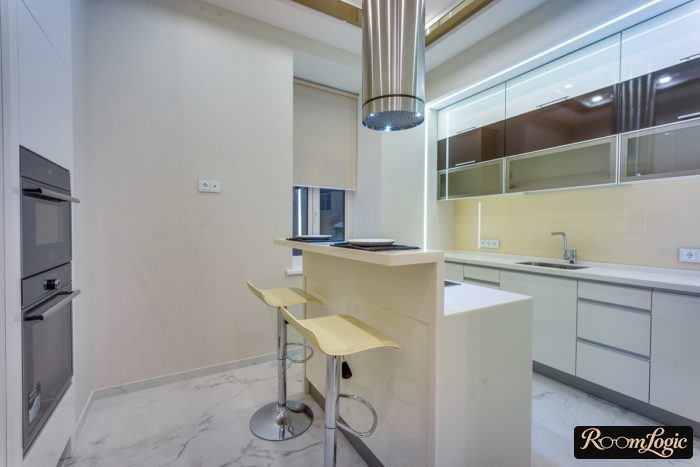
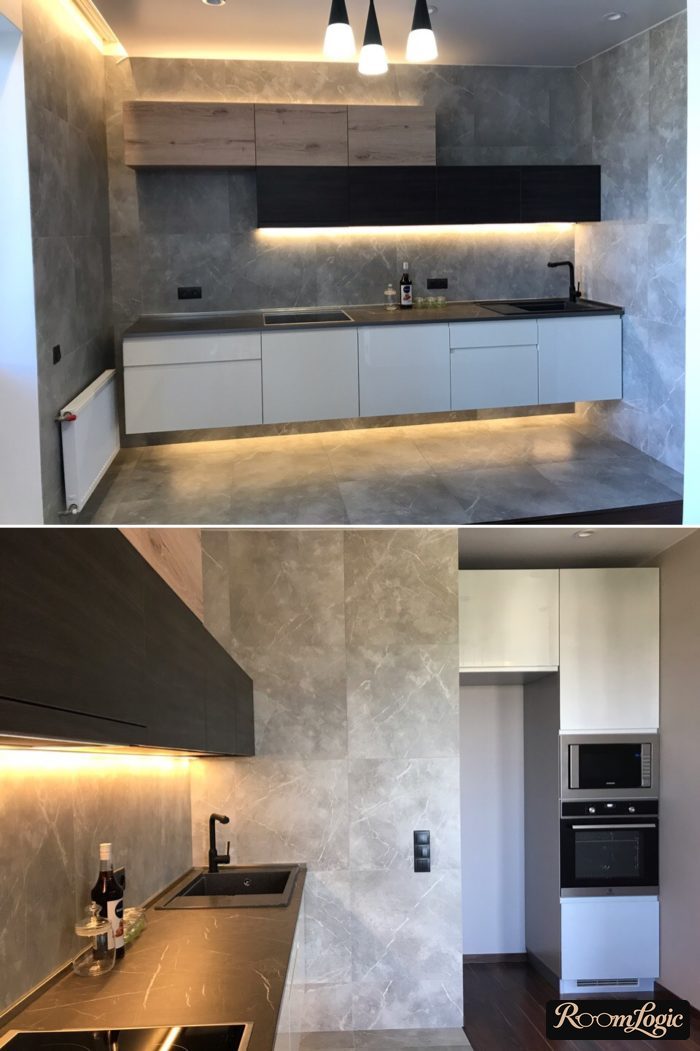
2 mistakes:
- People underestimate backsplash lighting and leave it to the cabinetmakers. The switch ends up on the cabinets. But this is the most important part of kitchen lighting. Plan the wiring and run it to a switch at the entrance, just like all the other lights.
- They light the bottom of the cabinets. It looks fine in a photo, but in real life it is a disaster. The floor next to the cabinets is almost always a little dirty, and there is no point drawing attention to it. Never light the floor.
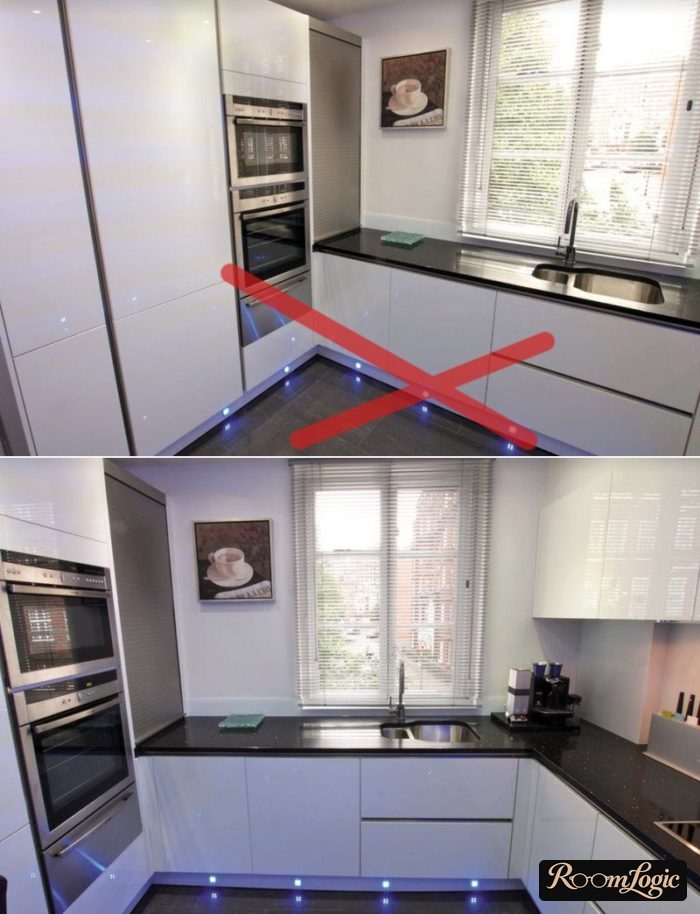
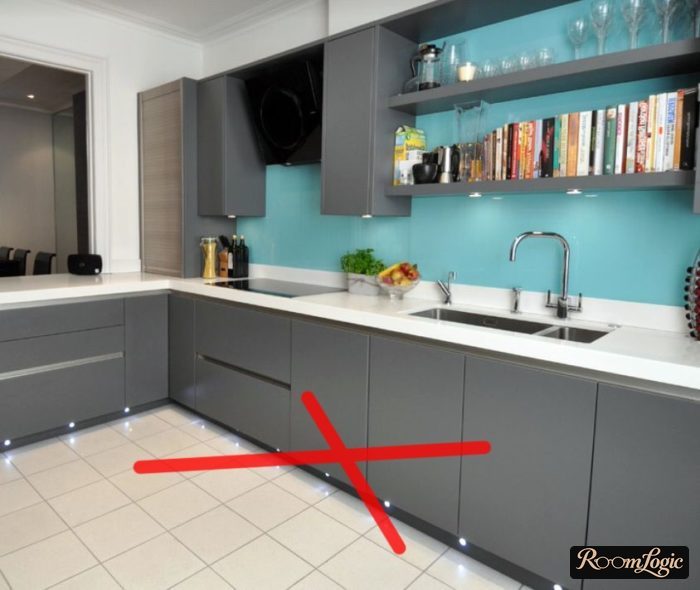
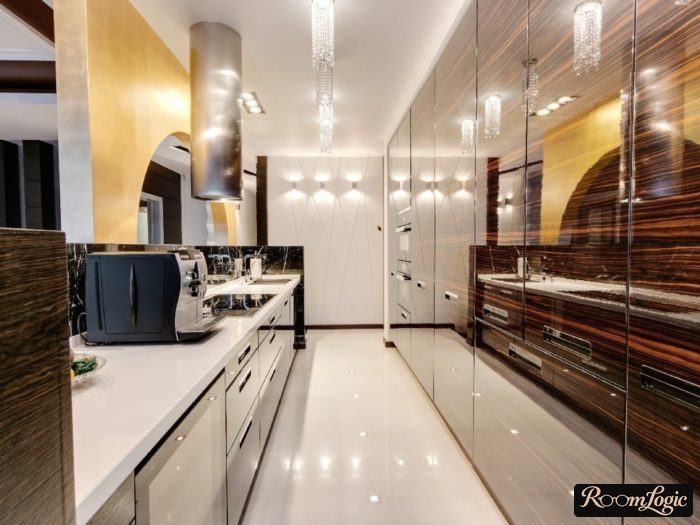
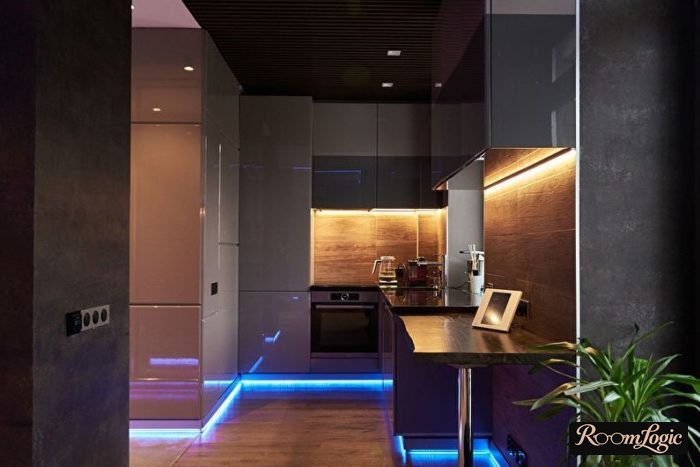
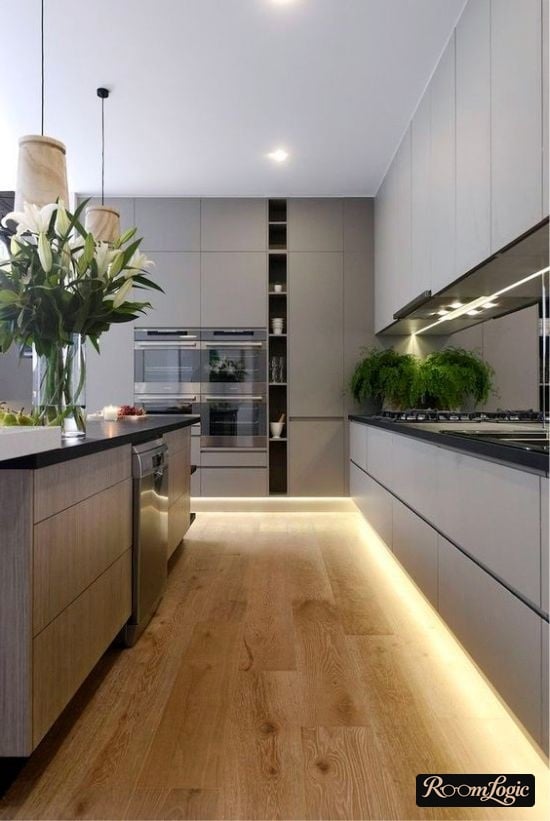
The ideal surface to light is an uneven one, such as concrete or an imitation of it. Shadows bring out the texture, and it looks great.
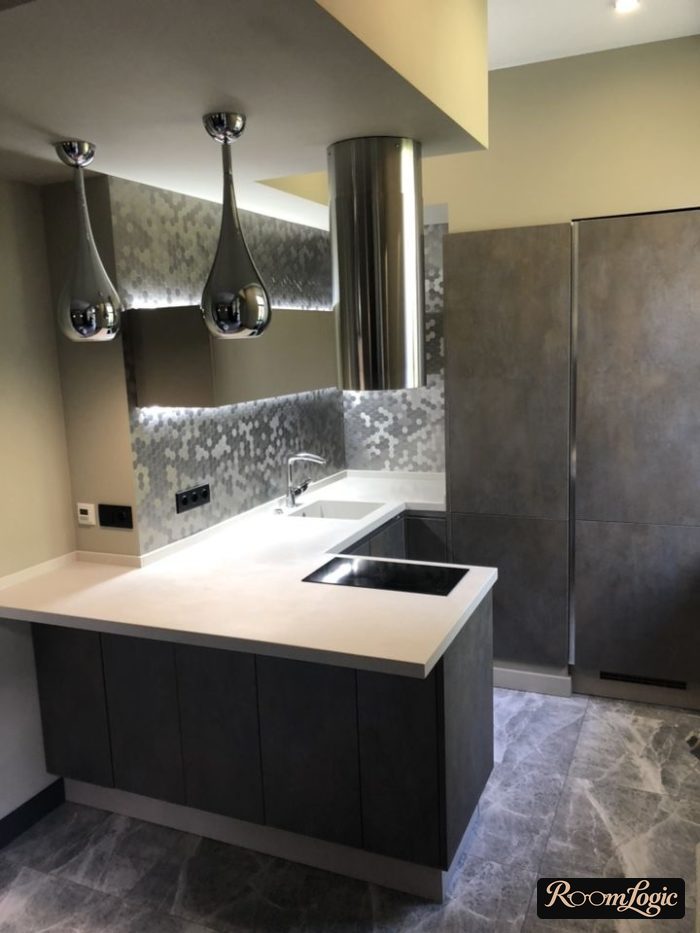
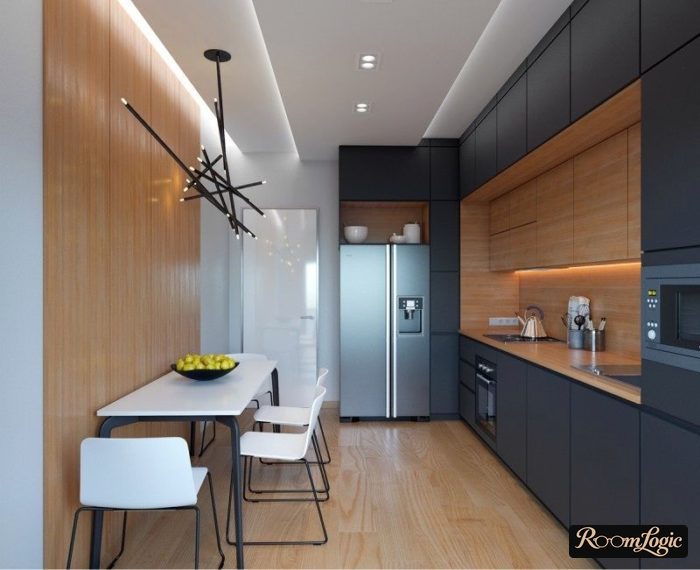
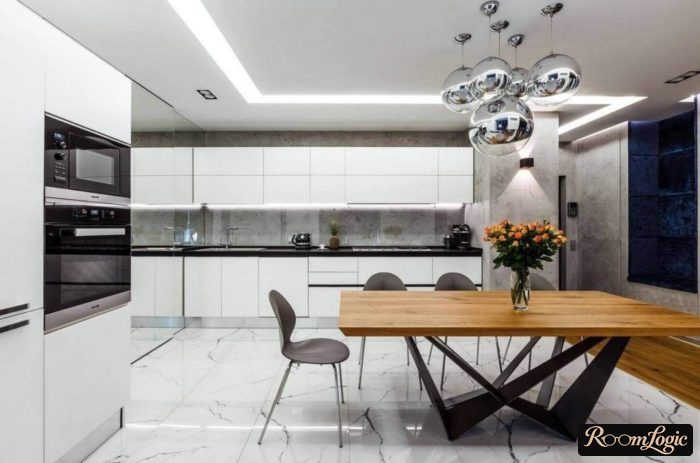
Designer high-tech light fixtures have a right to exist, although they are not required. Just do not overdo them.
4. Curtains
Many people get stuck on choosing curtains for a high-tech kitchen. And for good reason – there is a detail here: straight, heavy curtains still work, but only in shades of gray.
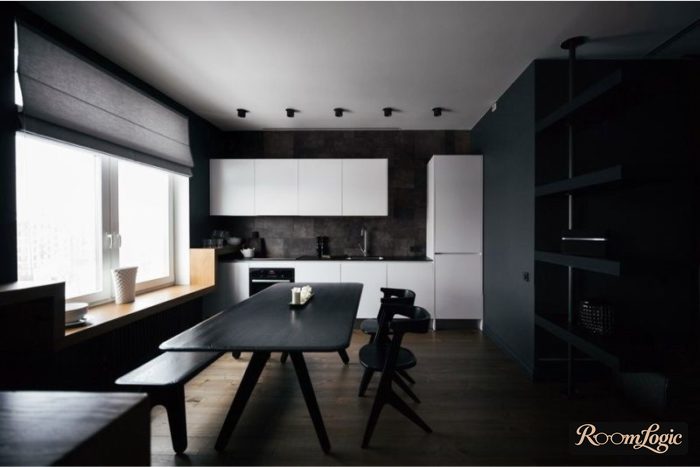
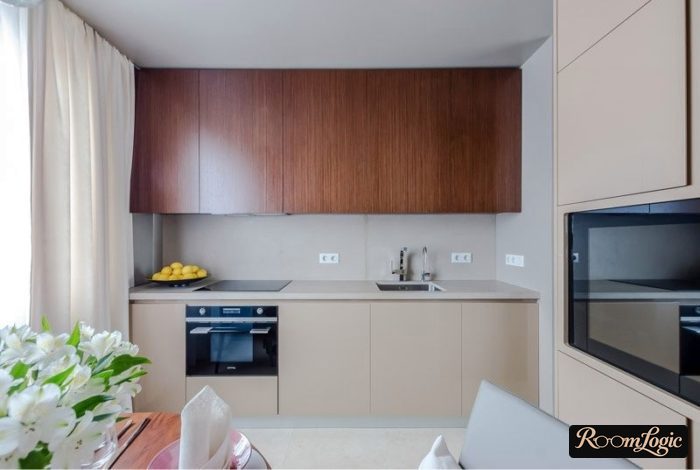
Dark blue ones, for example, often work well in other modern styles, but here they are always a risk.
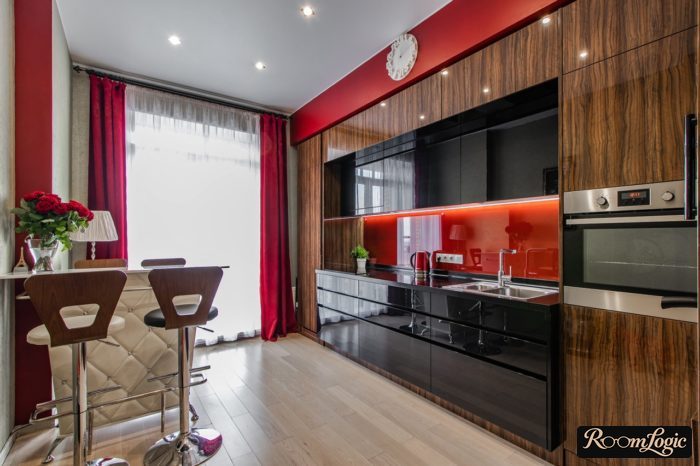
Read about kitchen curtains (a lot about short options) and kitchen curtains for patio doors (more about long ones).
5. Decor
A high-tech kitchen does not need separate decorations. Neatness, order, and lighting are the basis of the design. If you managed to make everything built in and hide all the jars and other kitchen utensils, the design is probably already cool, and extra decoration is not necessary.
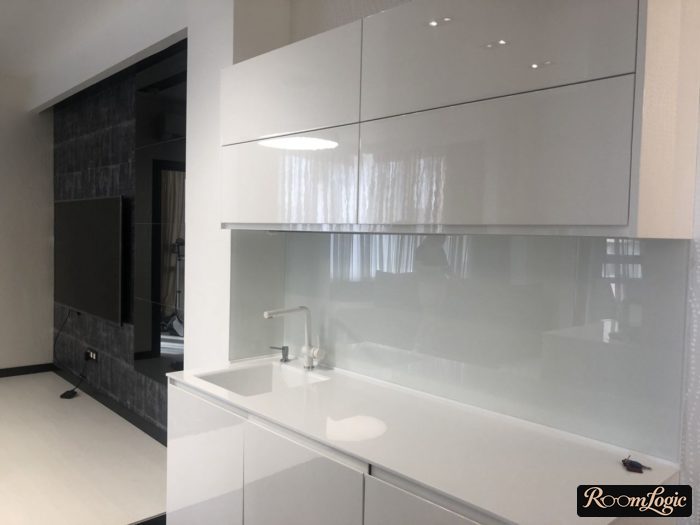
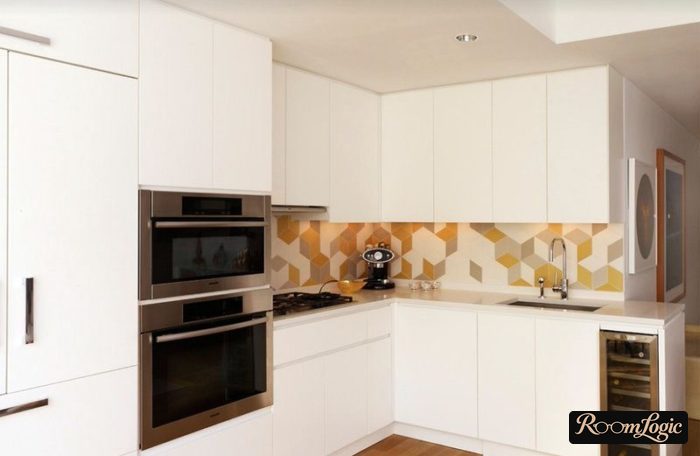
Some less obvious things that can serve as an accent:
- The window area. There are unusual, attractive radiators that, together with a dark-laminated window frame with good hardware and a non-plastic sill, can make it look so good that you will not even want to hide it behind curtains.
- Baseboards. Aluminum, painted MDF, or none at all (with hardwood and tile) immediately take the renovation to another level. More on choosing kitchen flooring and transitions.
- The table, chairs, and faucets – there are very futuristic designer models.
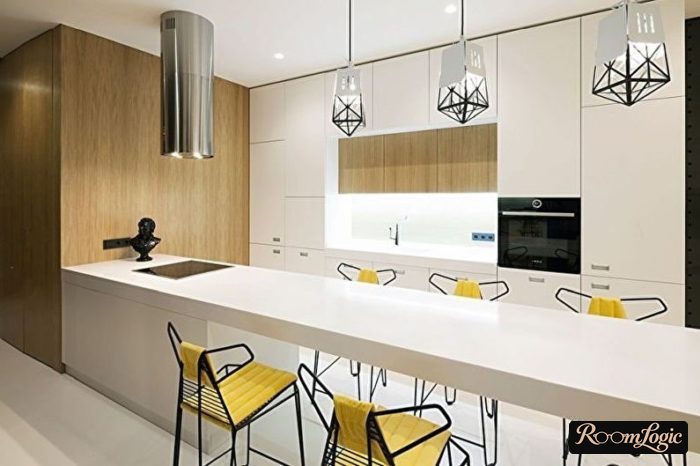
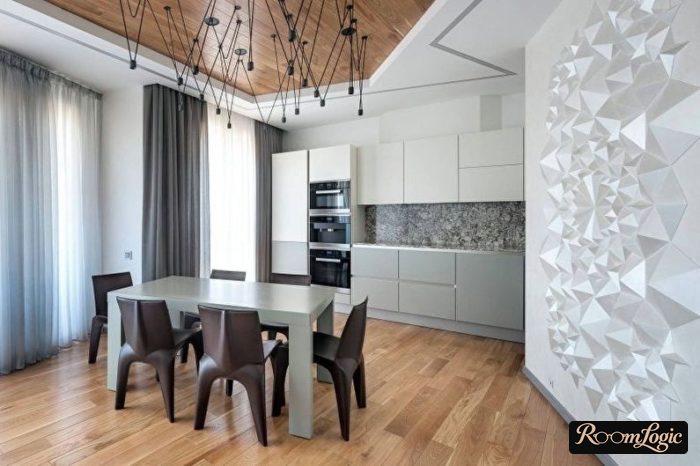
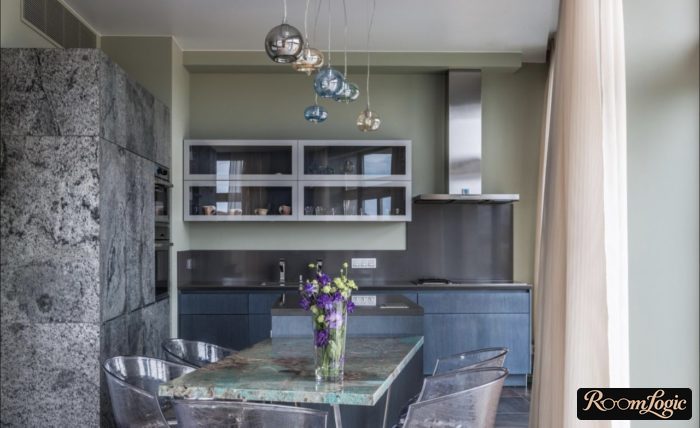
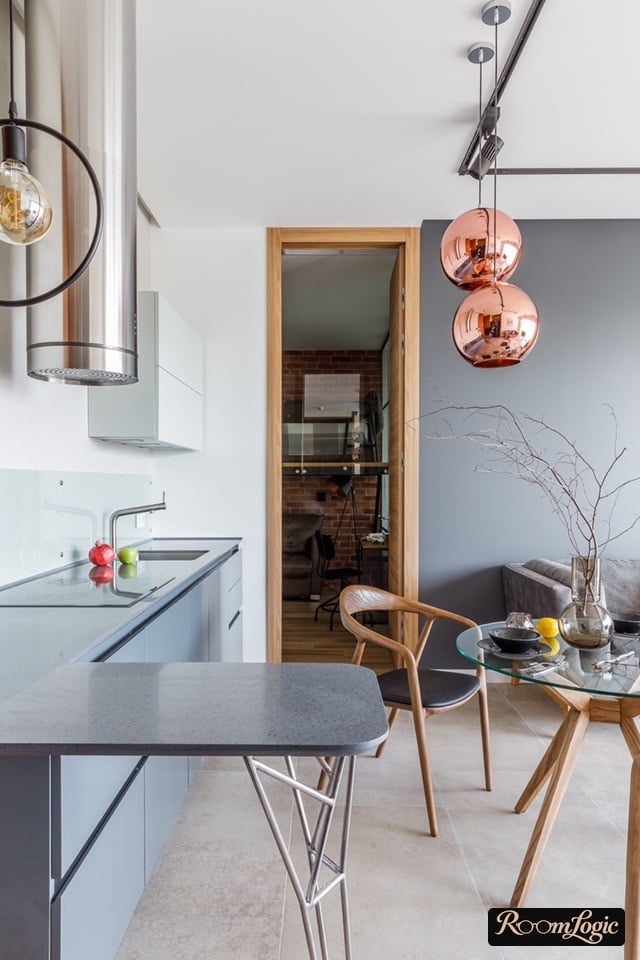
Naturally, all of this costs money, but I warned you.
I hope I did not scare you too much. As a last resort, use individual elements. In a real home, you do not have to follow 1 style strictly.
Read my article about small kitchen design. It uses similar modern examples to go through 7 rules and 4 common mistakes, but with a limited budget in mind.
Good luck with your renovation!