A complete guide to choosing kitchen curtains:
- What length and type to choose
- How to choose a color
- Asymmetrical options
- Curtains and tulle, plus combinations of different types
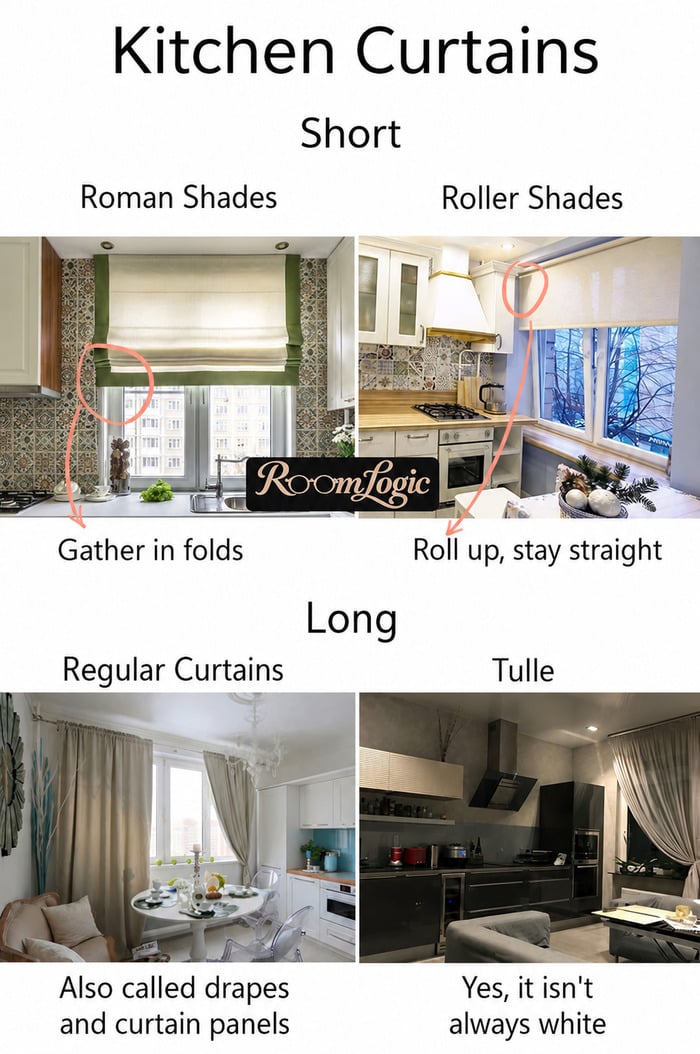
An infographic with every type of kitchen curtain so we are speaking the same language:
The main question is whether to choose short or long kitchen curtains. That is what you need to decide first.
Short or Long
There are 3 important functions (1 is not obvious) that NOT every type of kitchen curtain performs:
- Protection from the sun/from being seen outside – its importance is exaggerated.
- A decorative accent.
- Hiding 3 ugly things, as a rule: a vinyl window, the windowsill, and the radiator.
The last one is the most important. This is exactly why interiors with curtains look so much better.
Every curtain on the list handles the first point. There are no problems watching TV or working at a computer because this is a kitchen. Bright light does not wake us in the morning. There is no need to eliminate 100% of the sun. You will not be visible from outside with any type of curtain and any fabric except tulle.
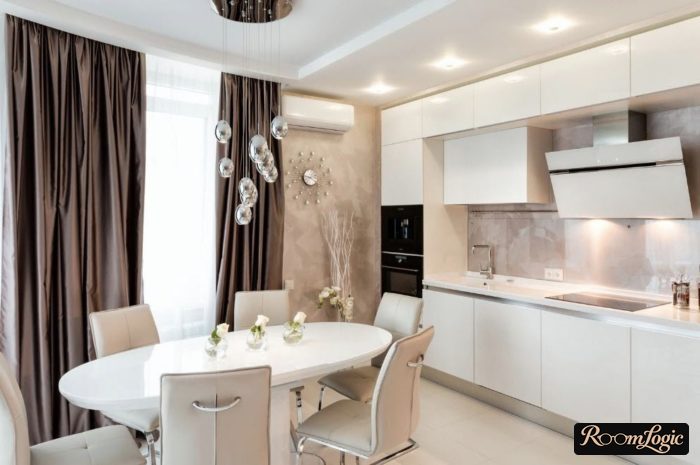
You can get any light transmission – it depends on the fabric, not the type, so do not get stuck on that.
A note: choosing curtains for a kitchen with a patio door is different – regular floor-length curtains become the rational choice there.
Short Kitchen Curtains
2 short curtain types that open vertically:
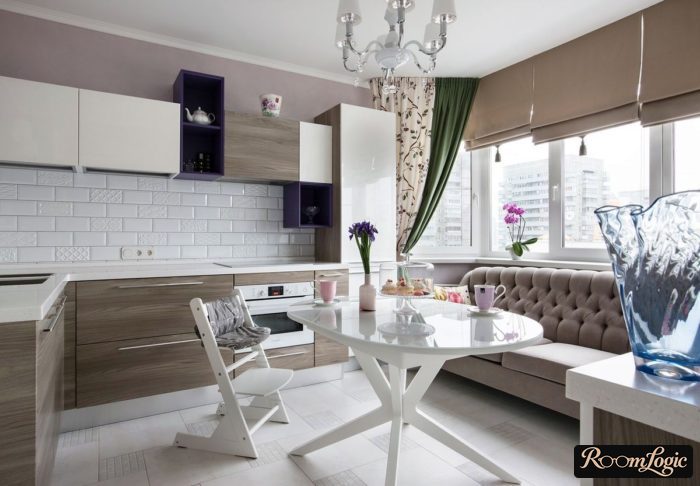
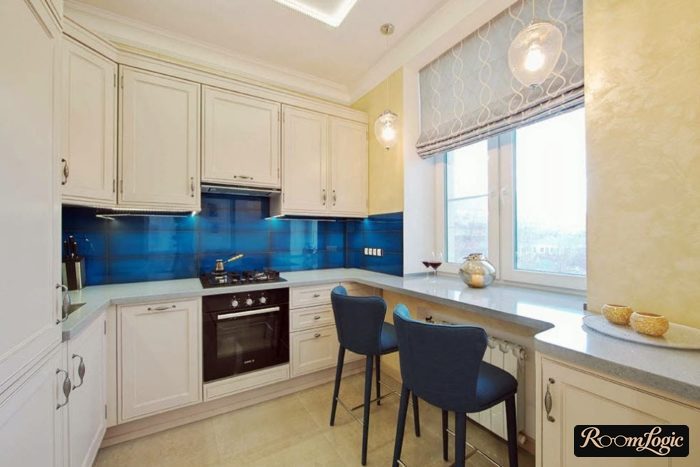
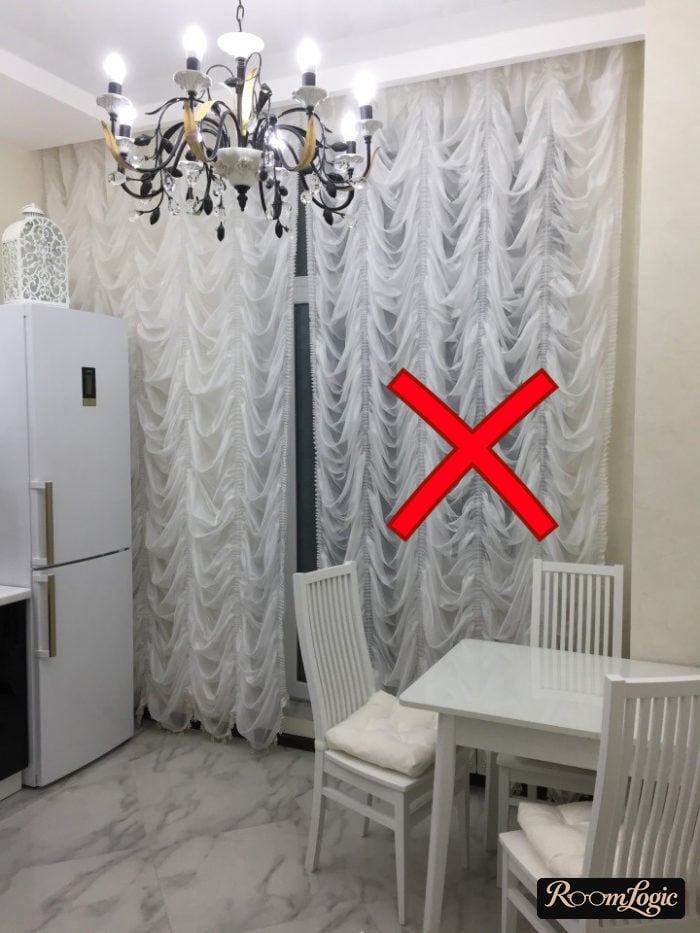
- Roman shades – the modern kitchen standard. The fabric gathers into folds and hangs freely when raised. The length reaches the windowsill. They can cover the entire window opening and hide a vinyl window. The fabric can be any color and let through any amount of light. They can be combined with other curtain types in a kitchen (there is a separate section about this below). Similar constructions with a different appearance when raised include flat Roman shades (a straight edge and straight folds – the best), Austrian shades (a wavy shape), and French shades (draped, with folds and waves both horizontally and vertically; they are not used in modern interiors even with traditional styles – an outdated option).
- Roller shades. They have a cylinder at the top that the fabric rolls onto when raised. Unlike Roman shades, the fabric is always flat. They can be installed on 1 window sash or over the entire window opening. If nothing holds the fabric at the sides, they are free-hanging. If the fabric moves in side tracks and stays tight against the window, they are cassette shades. In design, roller shades lose to Roman ones. Many people even consider them an office option, like blinds, and think kitchens with them are not cozy.
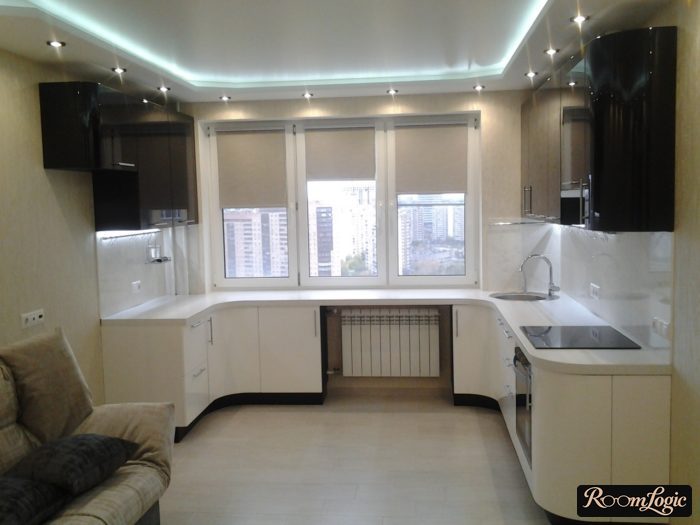
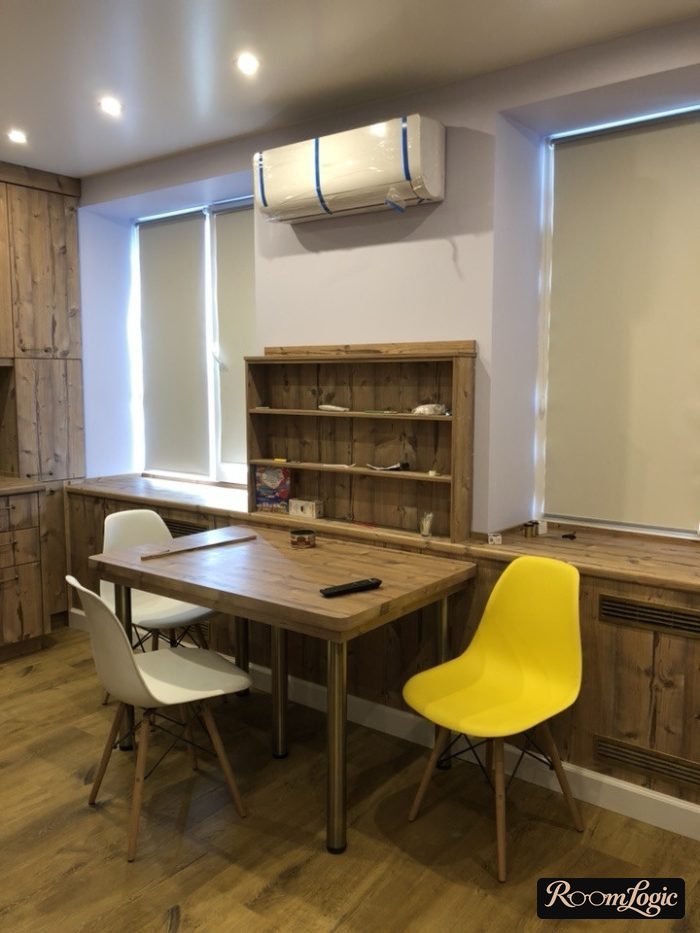
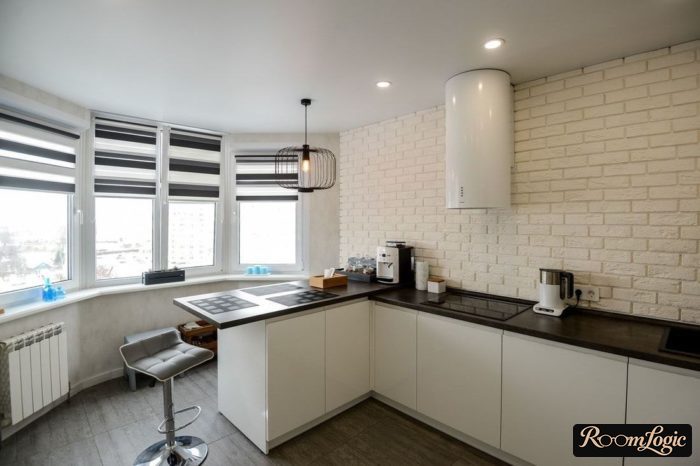
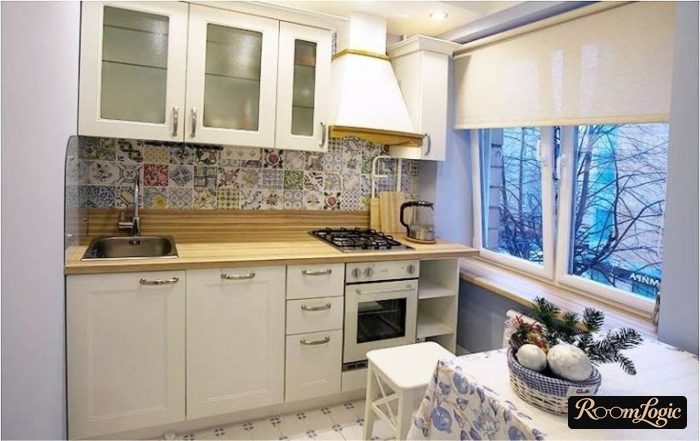
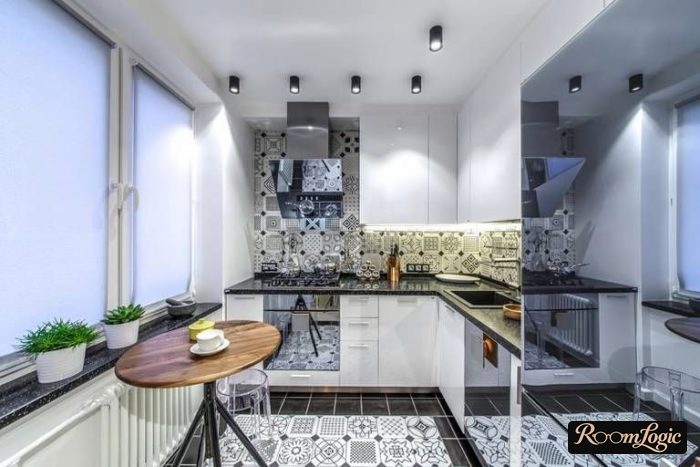
The general rule for when short, vertically opening curtains are better:
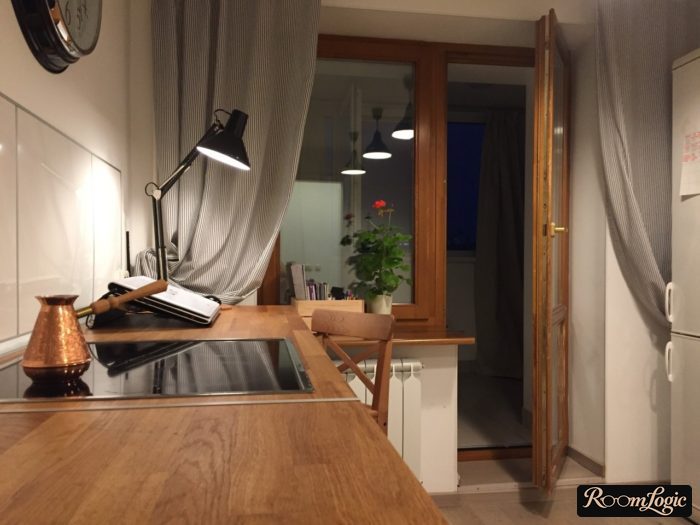
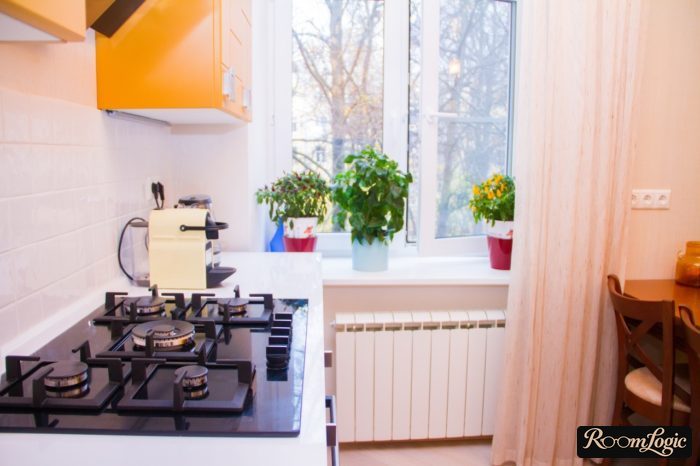
In a small separate kitchen, curtains that stop at the windowsill are almost always better than long ones.
This is mainly a concession to practicality and budget. Yes, long curtains look cool, and they are covered below. But often they are impossible to use at all (U-shaped kitchens with a window in the middle, an L-shaped kitchen with a countertop along the window wall, and so on).
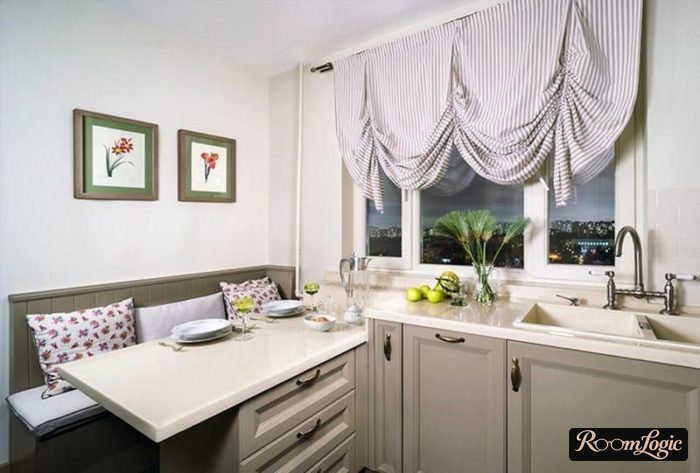
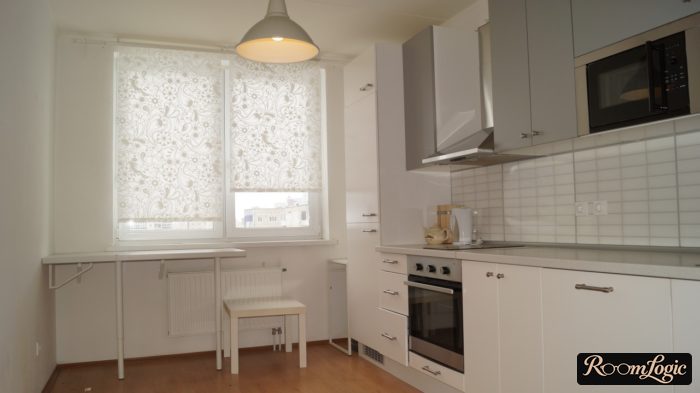
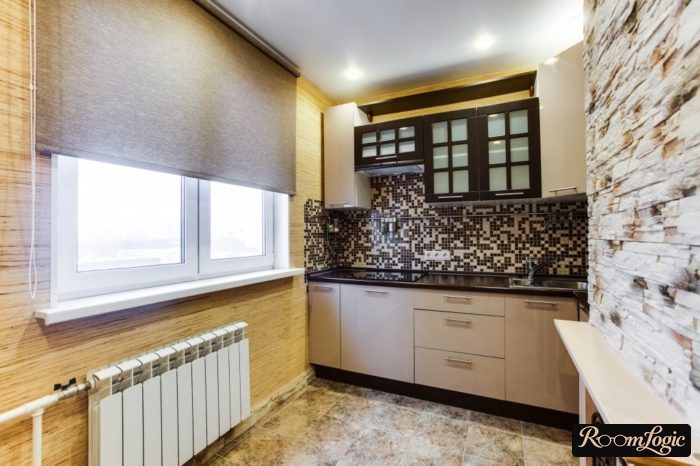
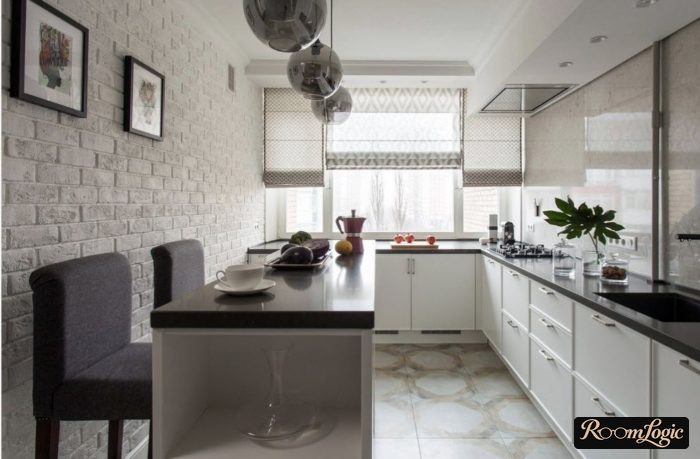
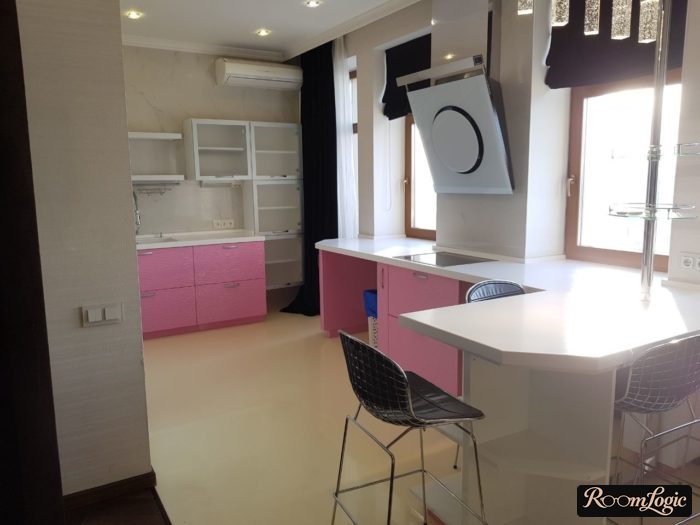
One of the ideas I covered in the articles on small kitchen design and remodeling a tiny square kitchen is to put a countertop in place of the vinyl windowsill. And use that windowsill area. Even if it is higher or lower than the countertop, it is still extra space.
In design, Roman shades and vertical opening are a current modern idea for small kitchens that works with every interior style because of the fabric choices.
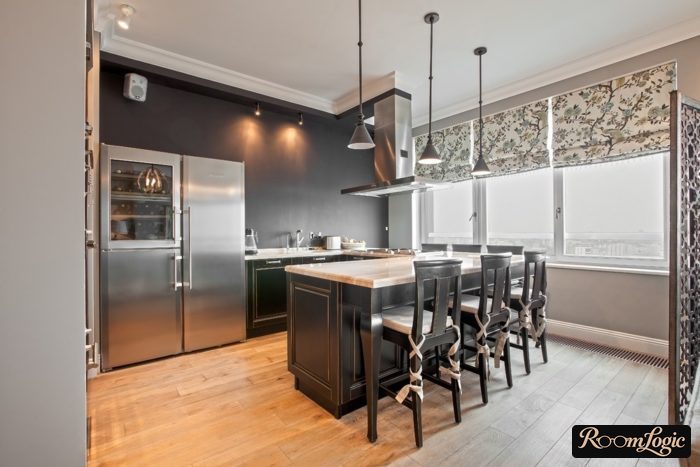
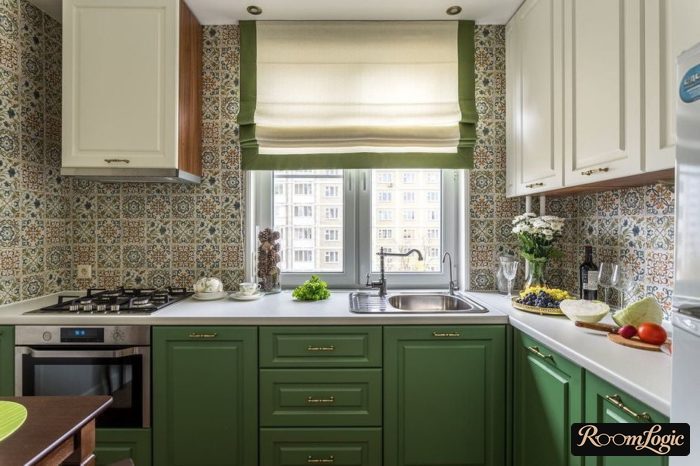
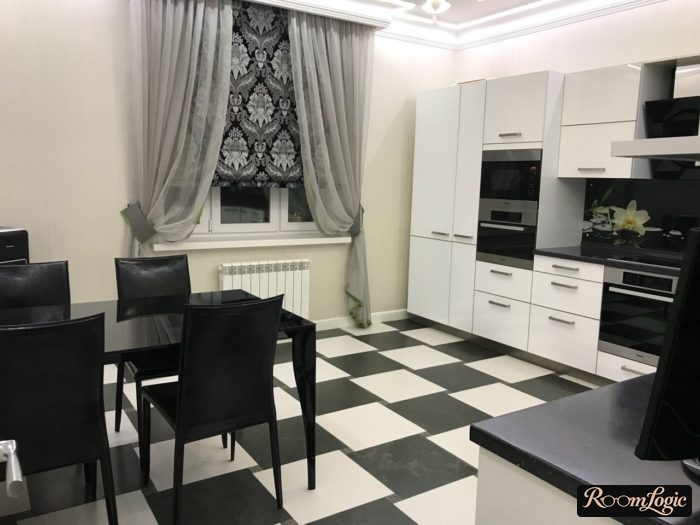
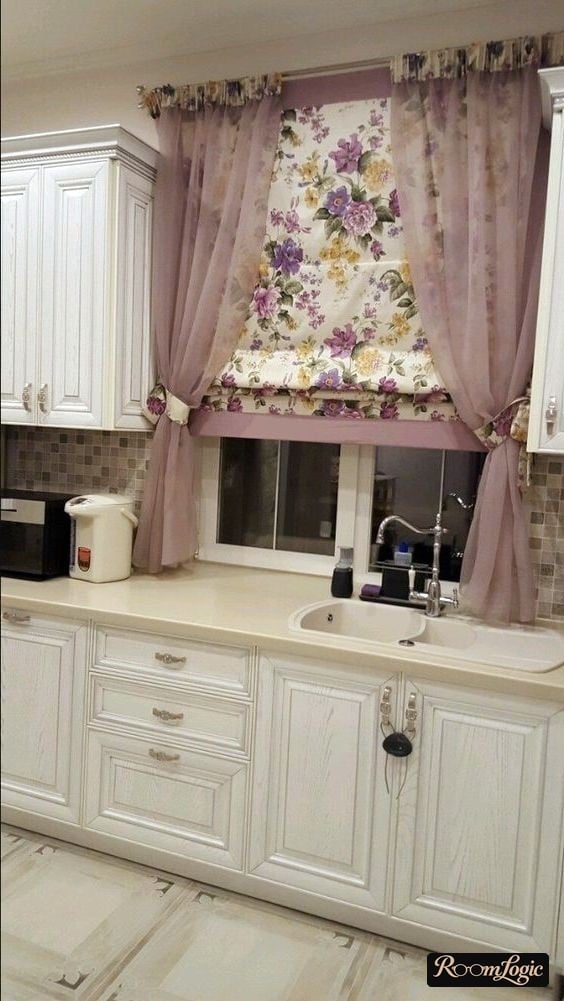
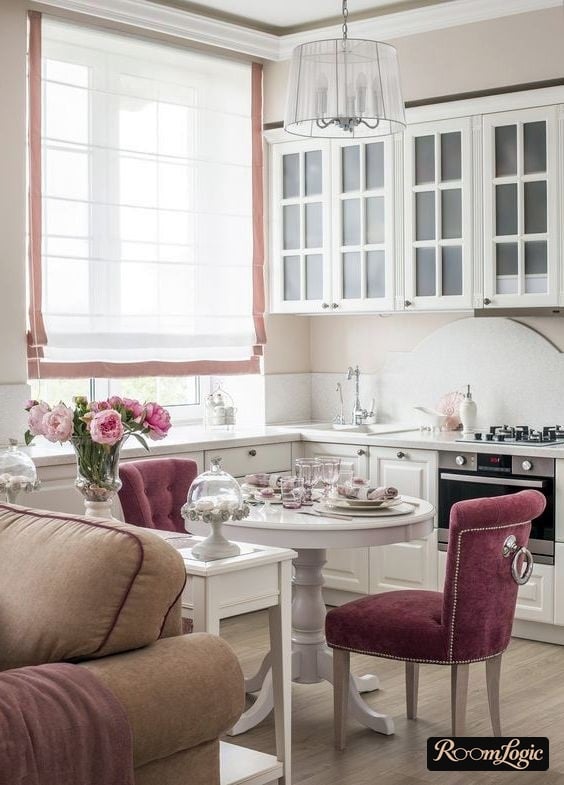
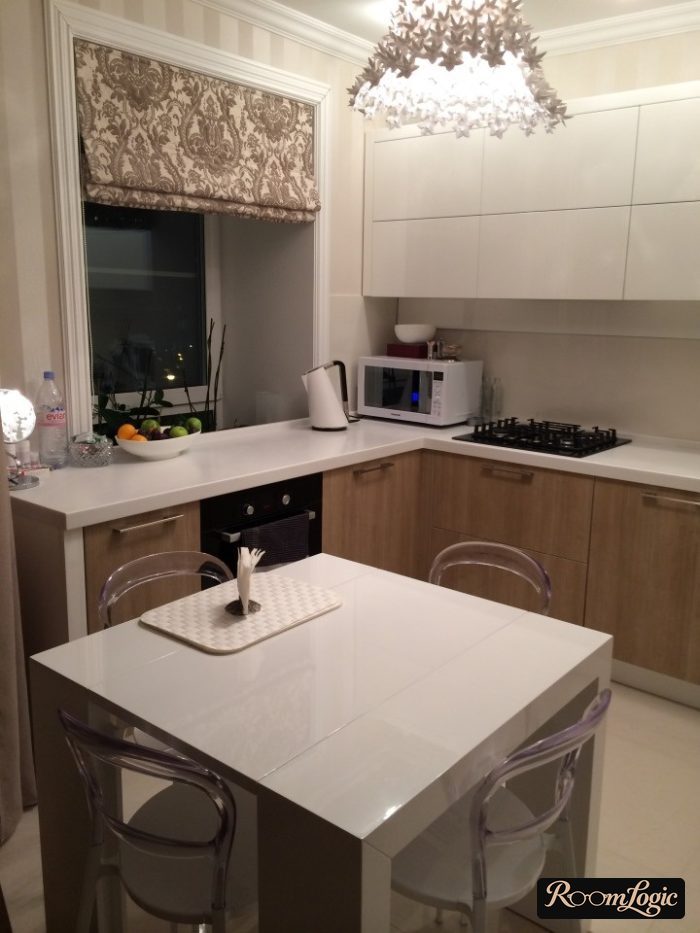
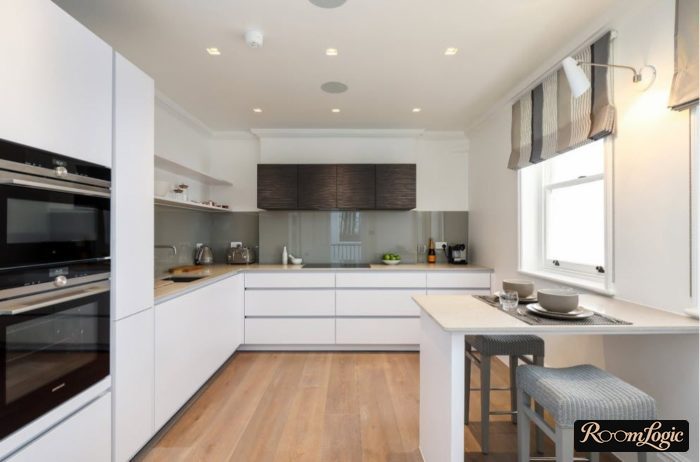
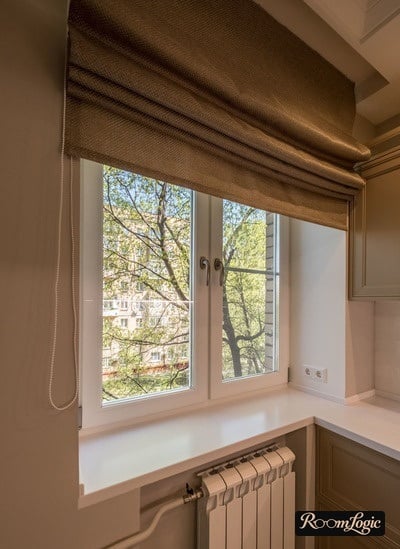
Short kitchen curtains that open horizontally exist too, but using the windowsill with them is harder.
Long Curtains
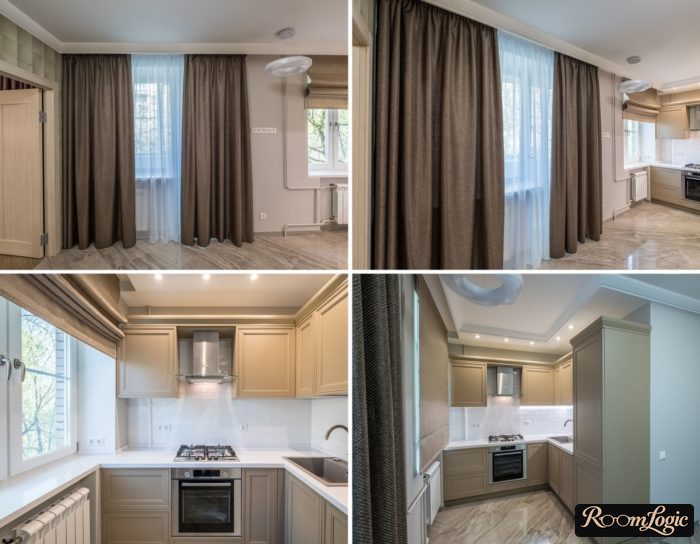
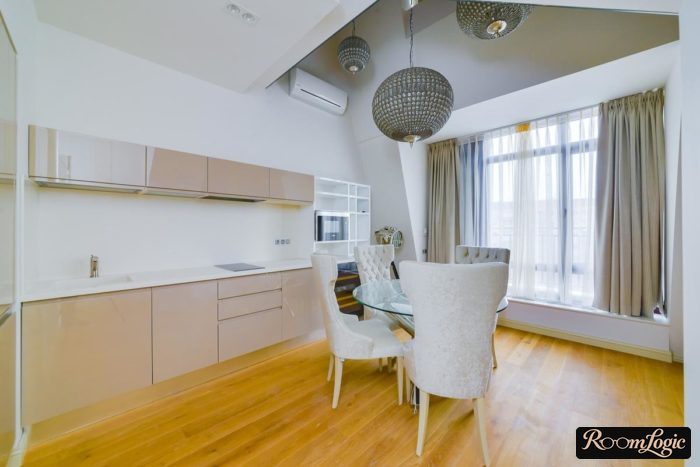
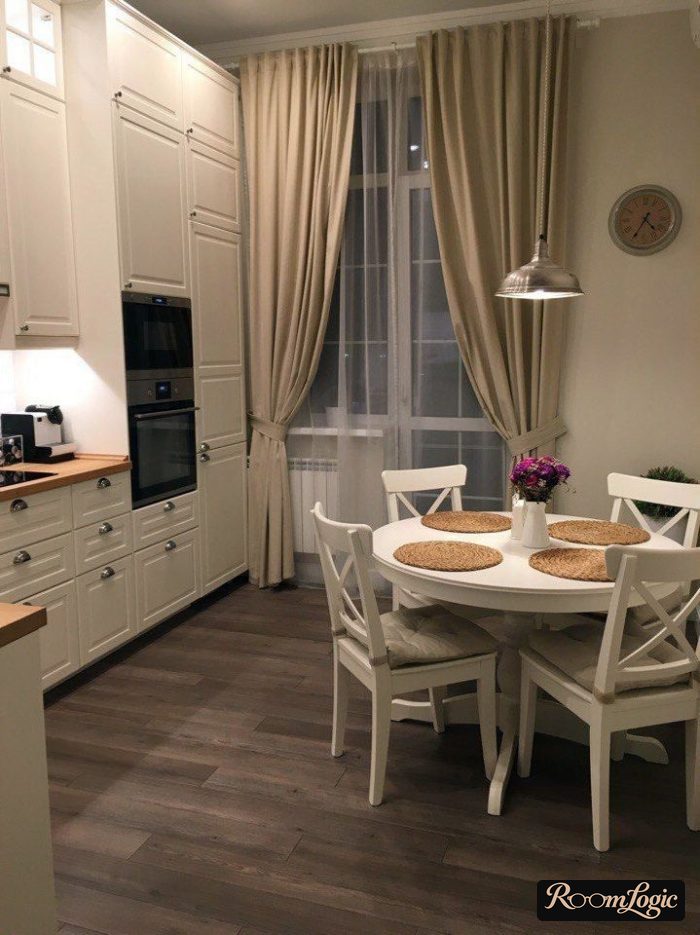
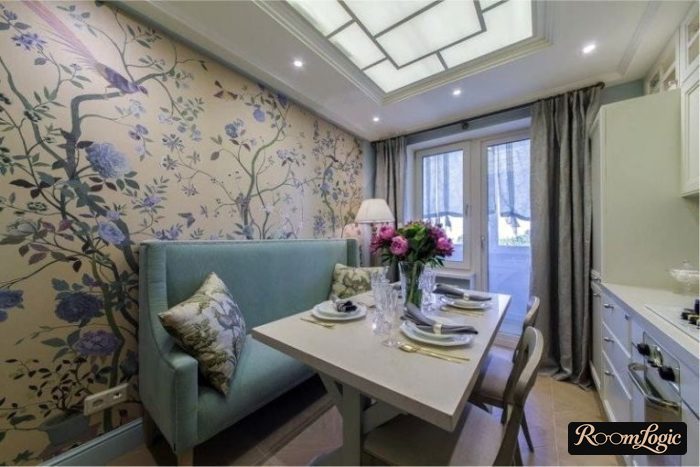
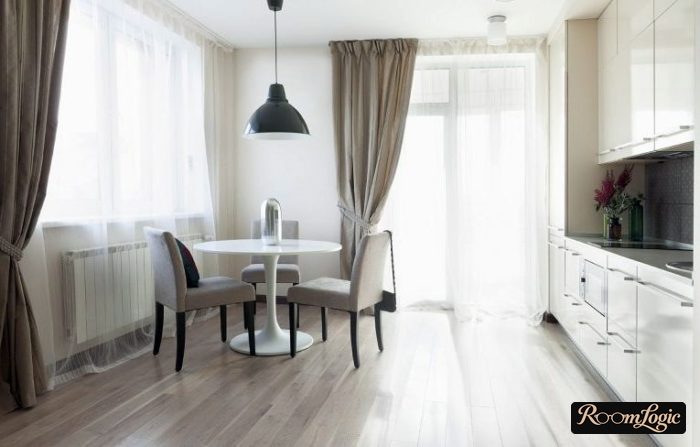
Floor-length curtains hide the radiator too.
From the standpoint of kitchen design, this is the coolest option. But it is also the least practical and the most expensive.
They are also called drapes or panels, but if we are not showing off, they are regular curtains.
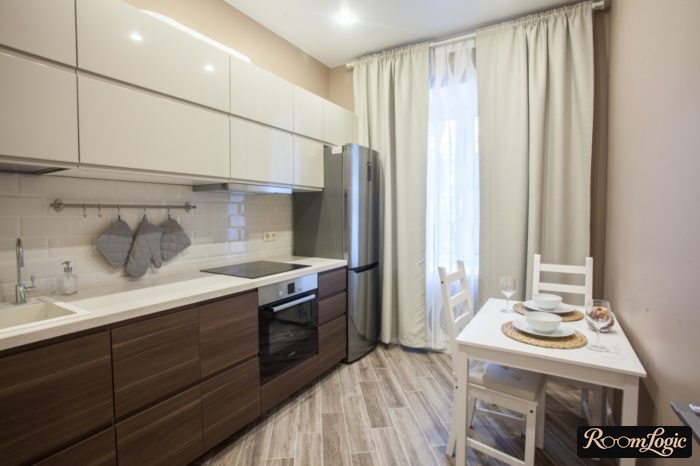
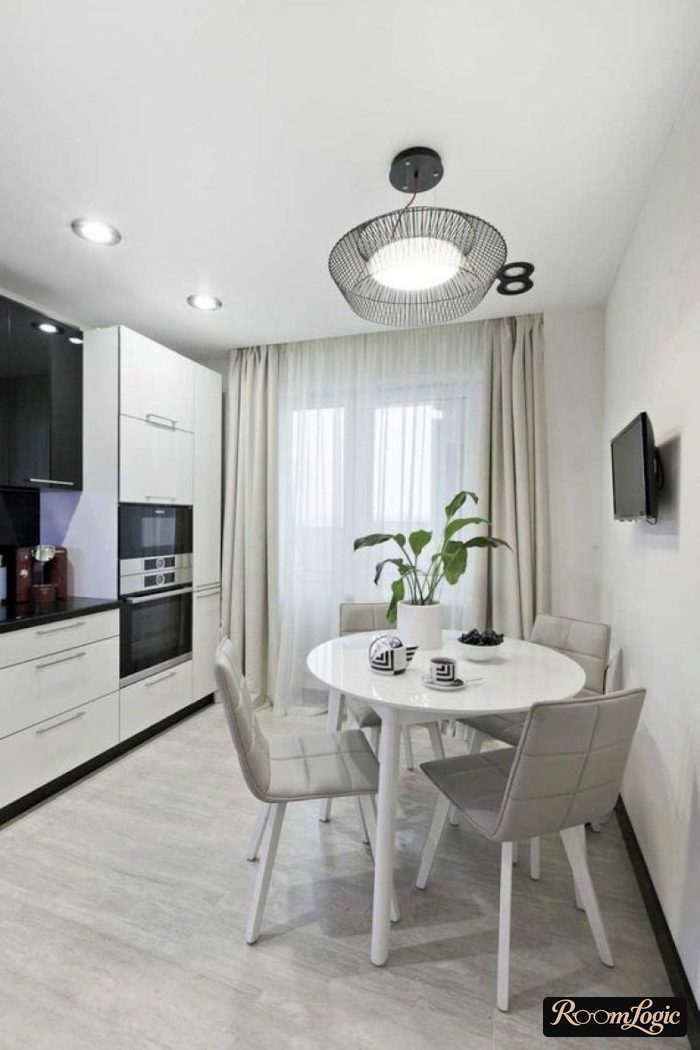
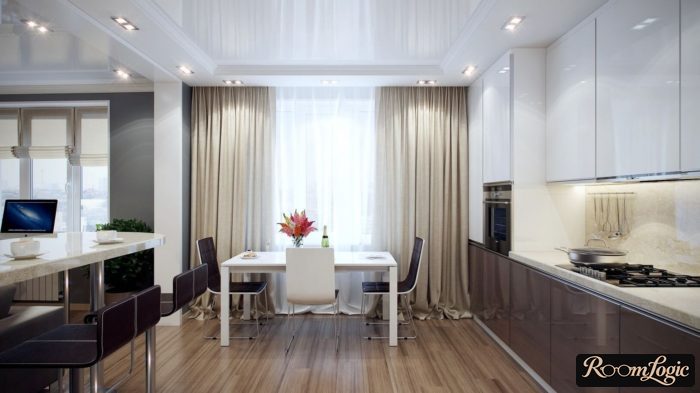
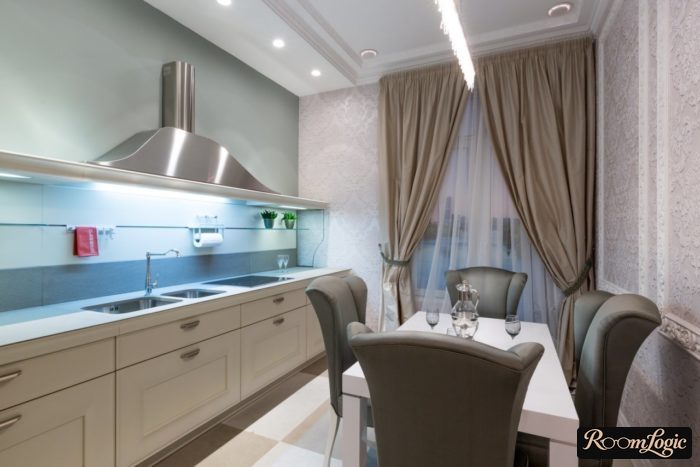
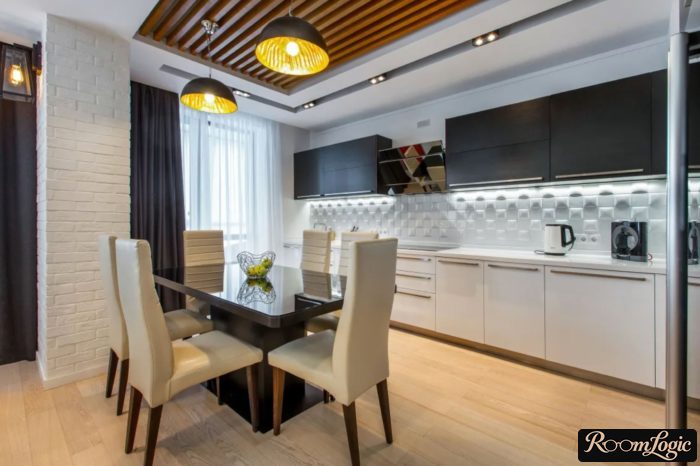
Short Roman shades look great on a regular small window. But attempts to use them on unusual large window openings with lots of sections, bay windows, and floor-to-ceiling windows always look like a failed compromise.
Draping means folds in the curtain created by using more fabric than the length of the support (the rod or track).
Every floor-length model has it. This matters so it does not look like a sheet stretched out to dry.
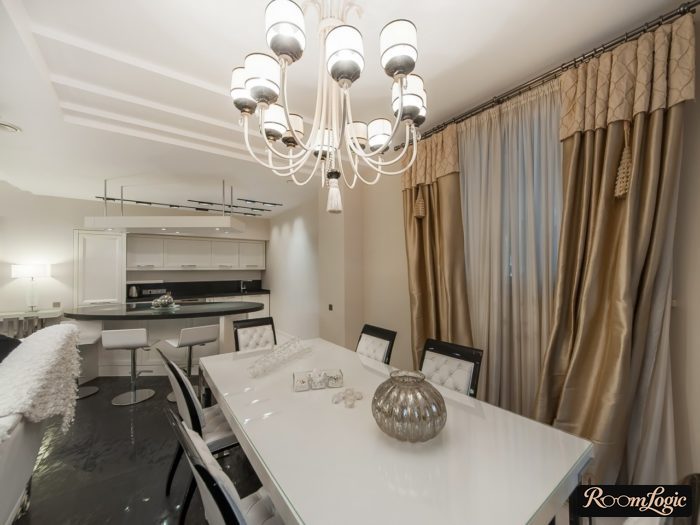
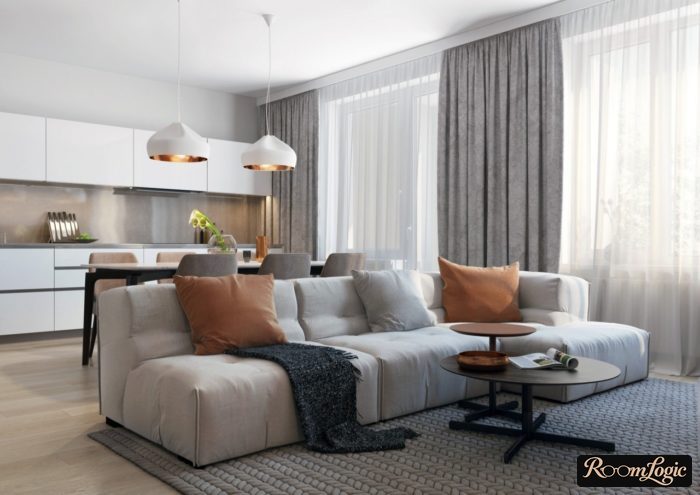
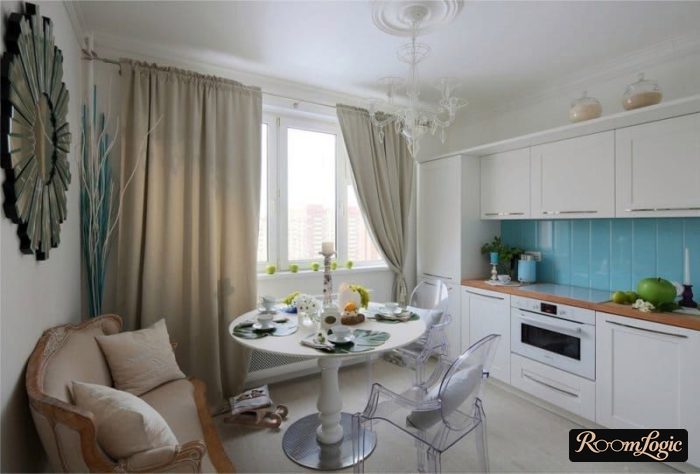
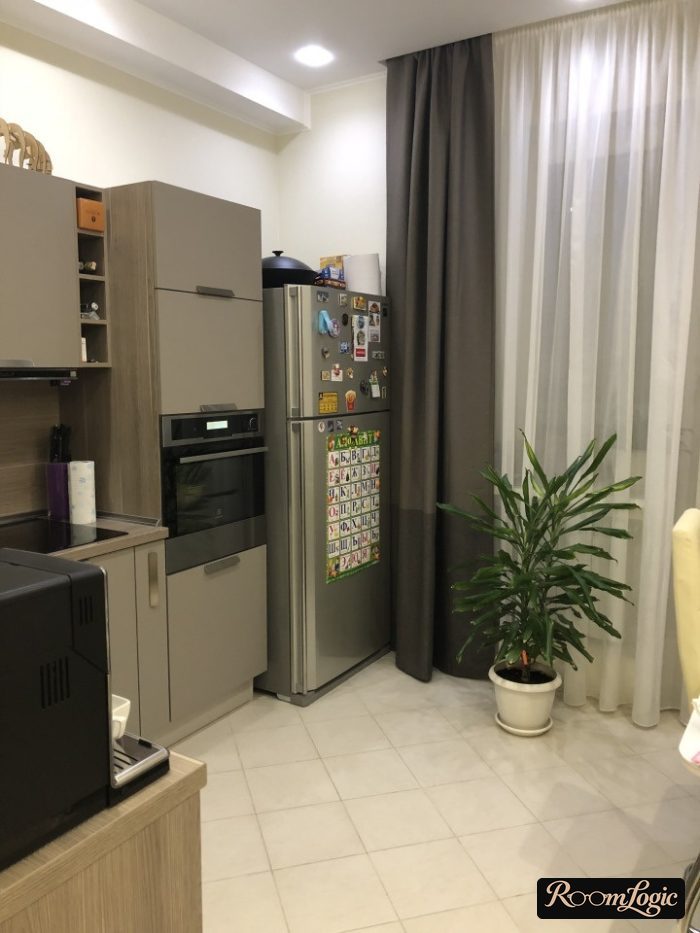
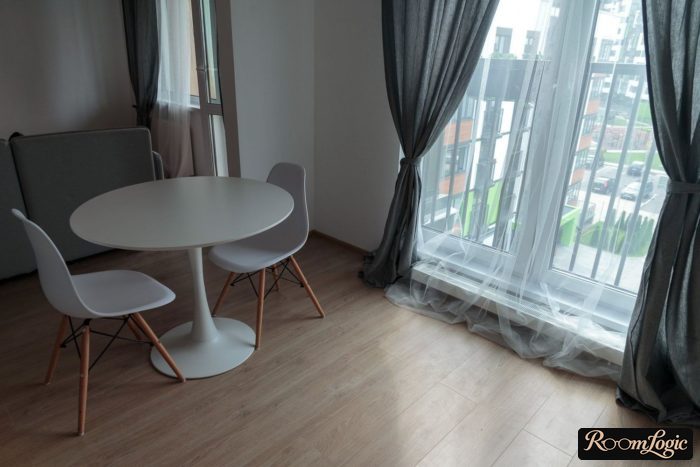
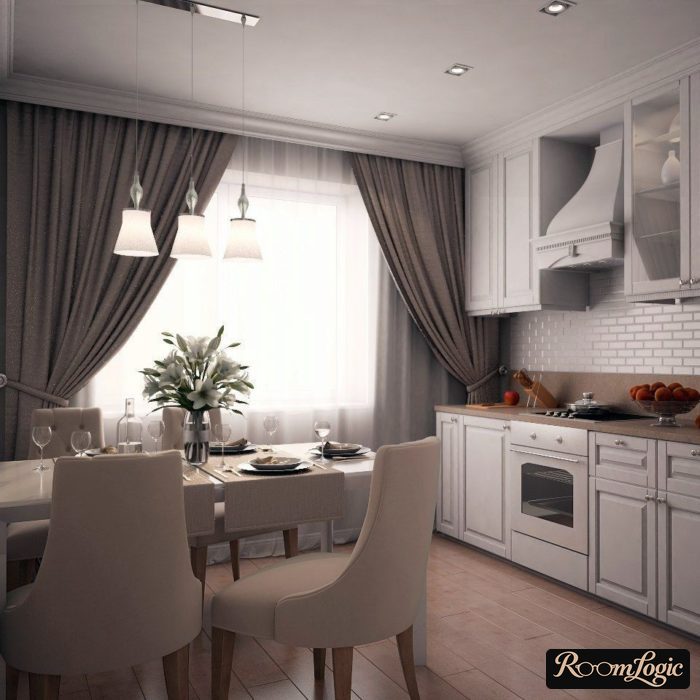
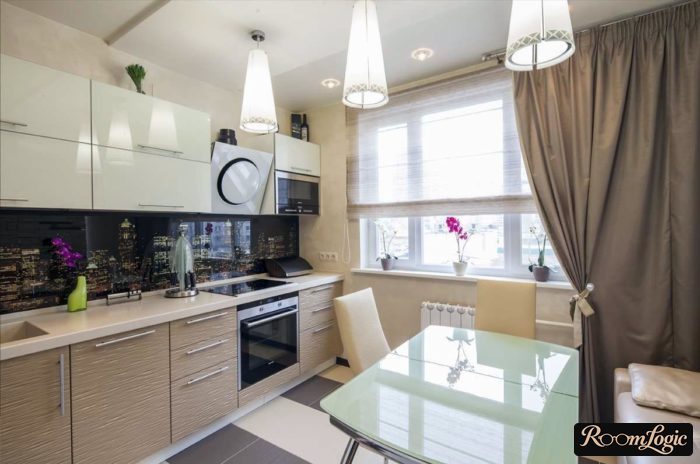
For the fabric-width ratio used for draping, fabric types, and washing, consult a specialist where you buy them. There are too many options, new products appear constantly, and not every store carries the full range. There is no point going into details that keep changing.
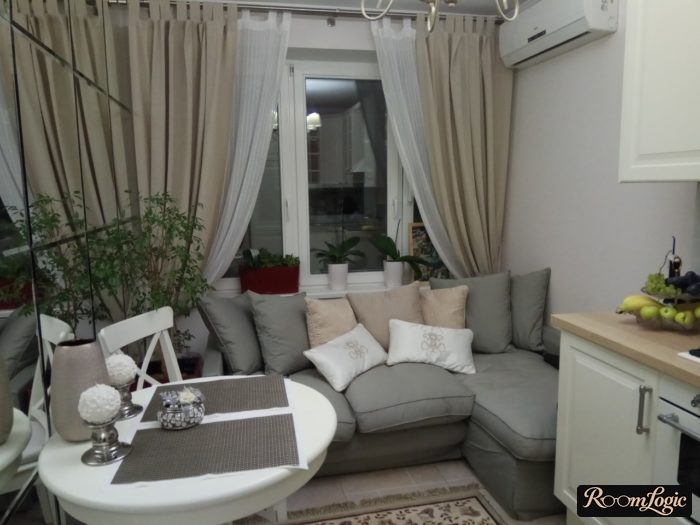
Long curtains combine beautifully with short ones, but that comes after choosing the color.
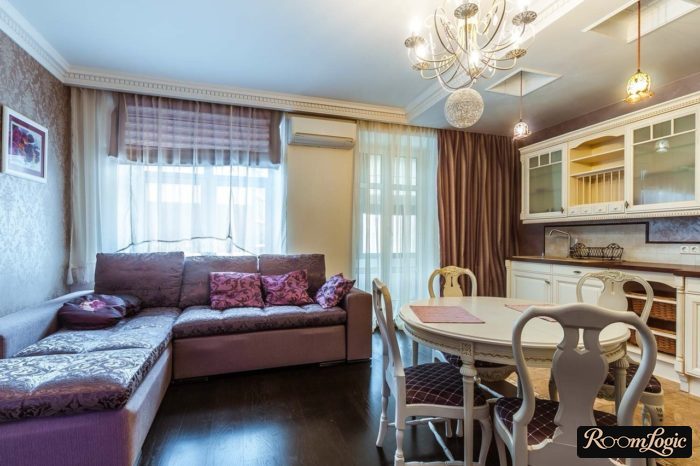
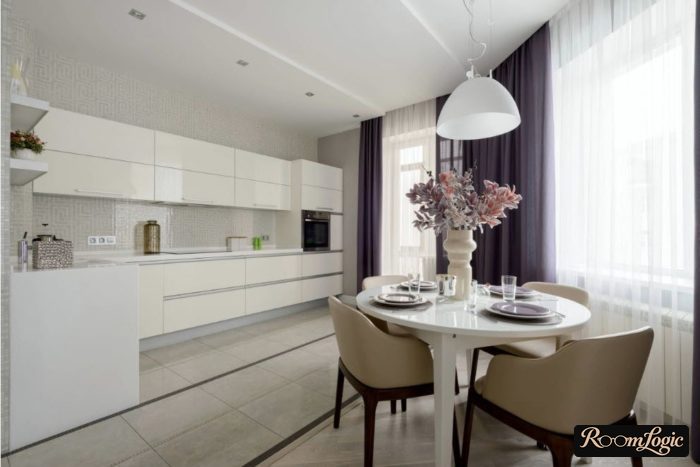
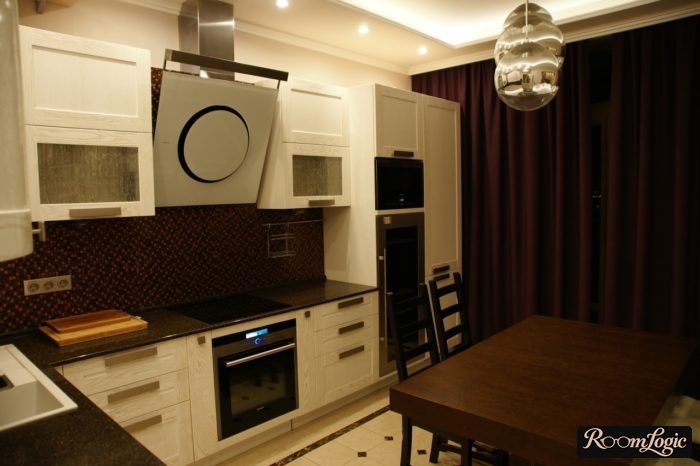
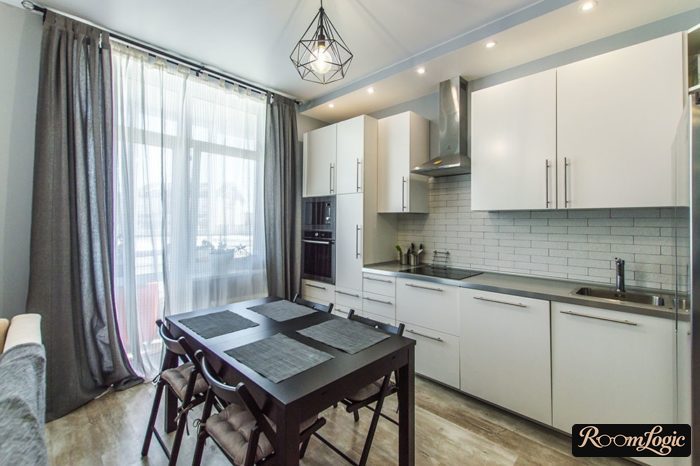
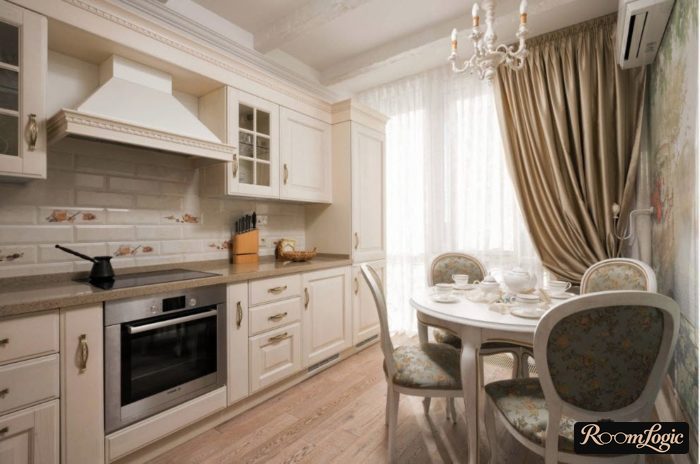
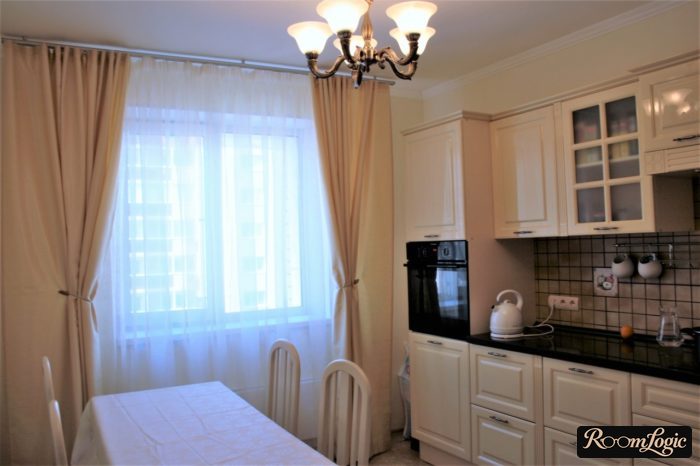
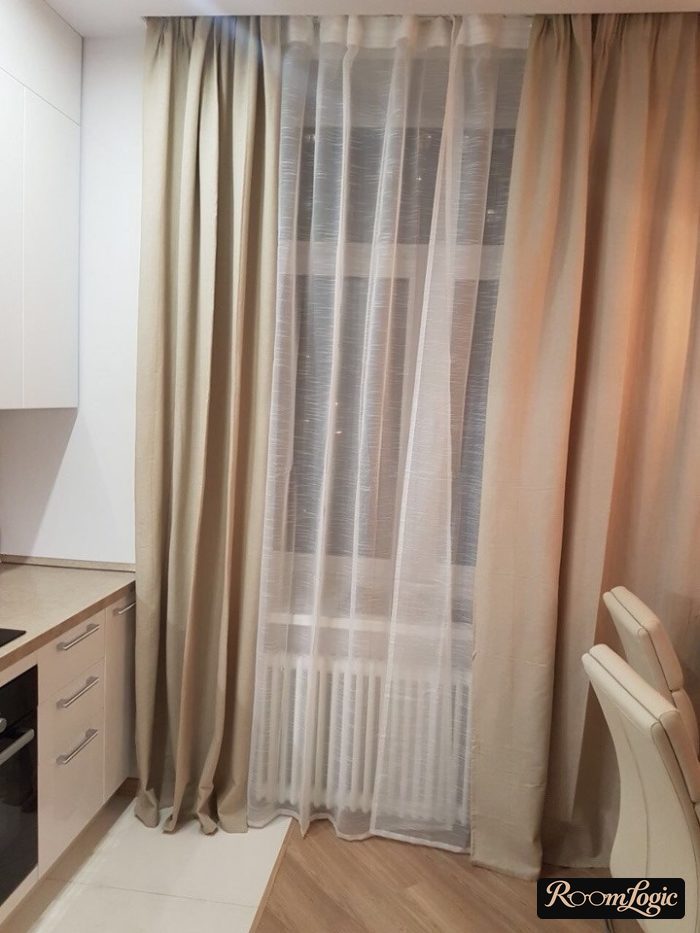
For a kitchen of 110 square feet or more, I would lean toward long curtains.
What to hang them from and how is in the last section.
How to Choose a Kitchen Curtain Color
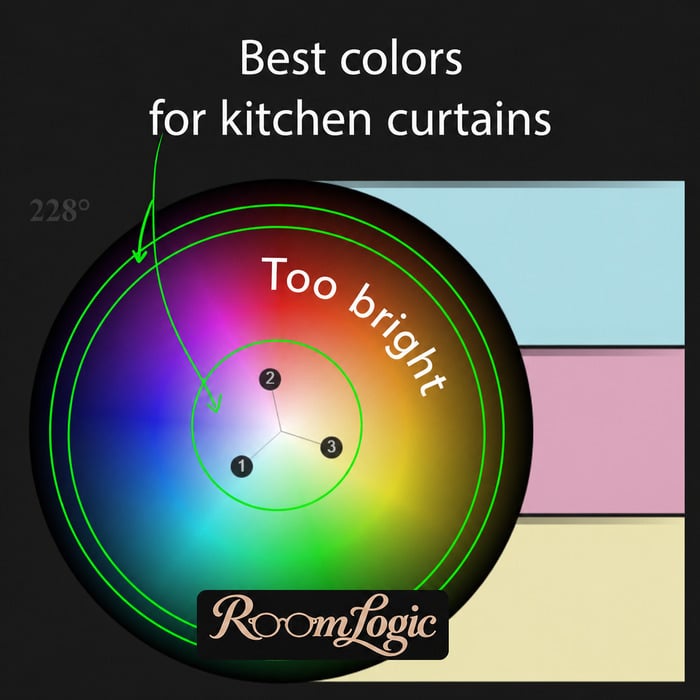
The photo below shows the part of the color wheel where it is better to choose kitchen-curtain colors to minimize risk:
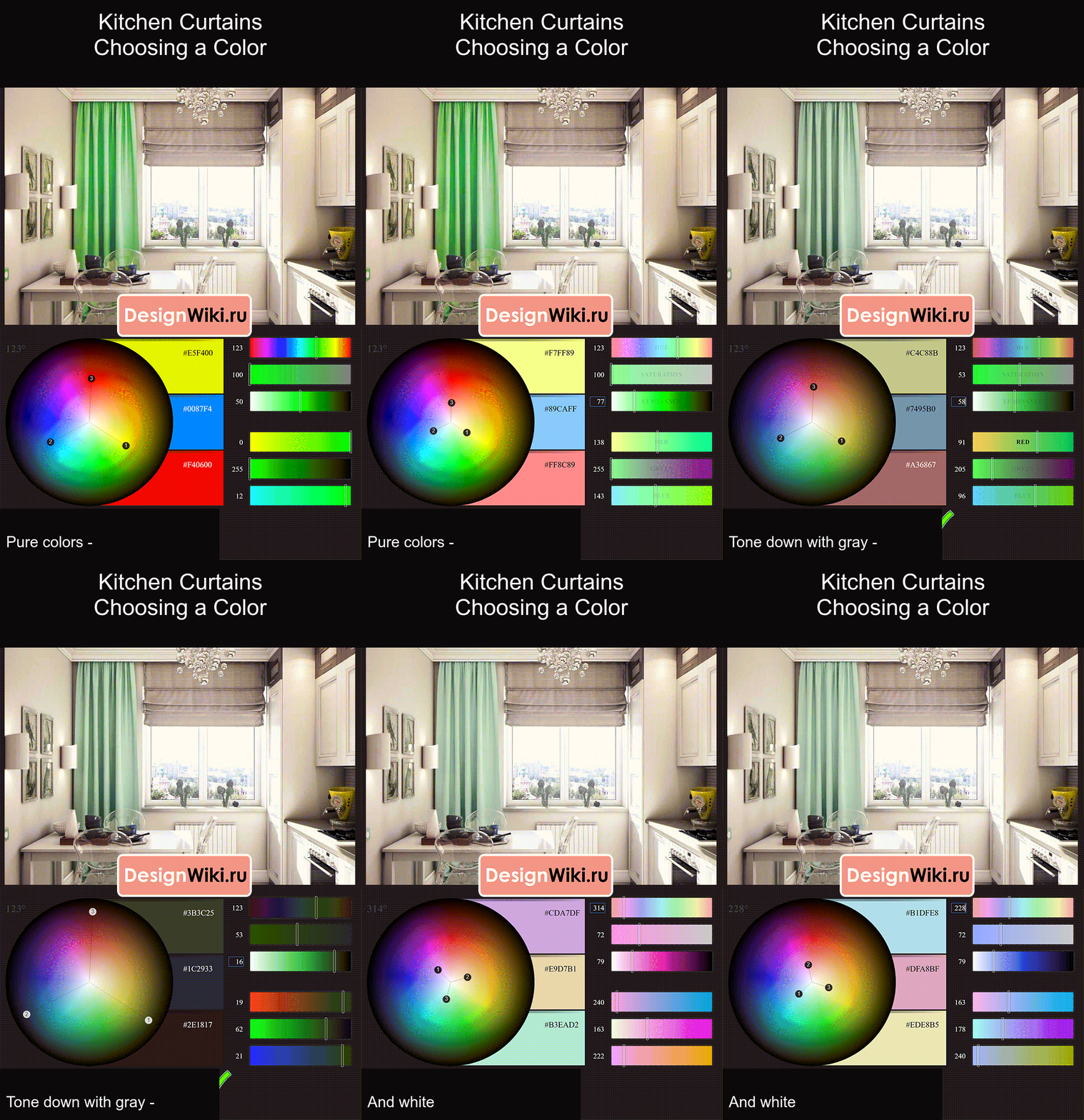
There are exceptions. Original ideas such as green or orange curtains can work fairly well. But are you ready to take the risk? In any case, I recommend reading my article about the rules for combining colors in an interior – it will greatly reduce your chances of making mistakes.
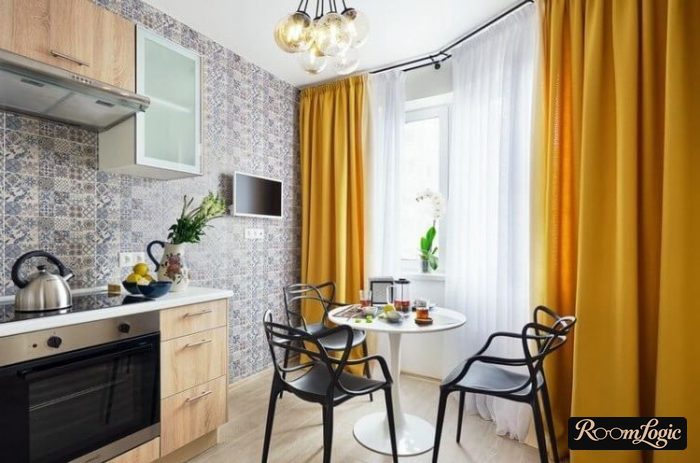
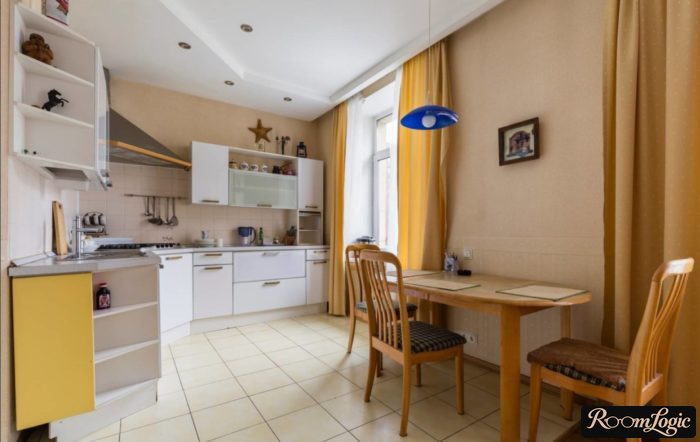
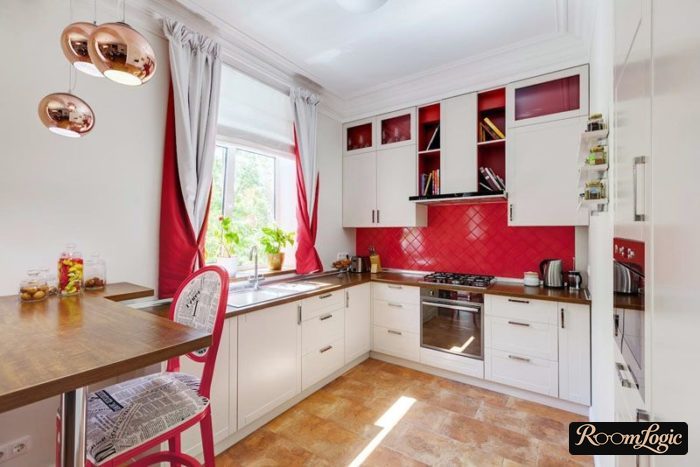
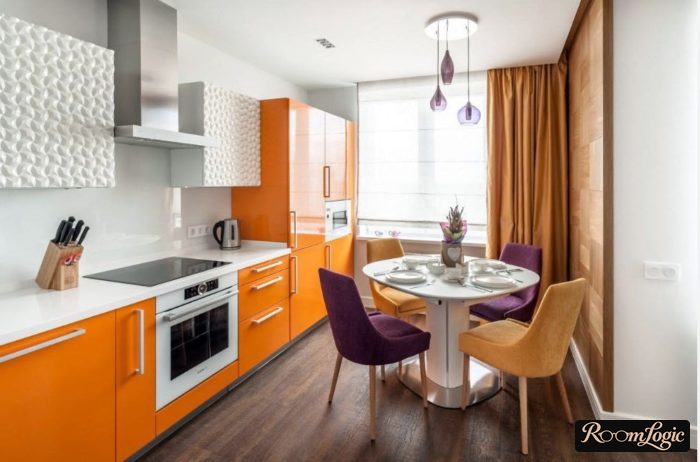
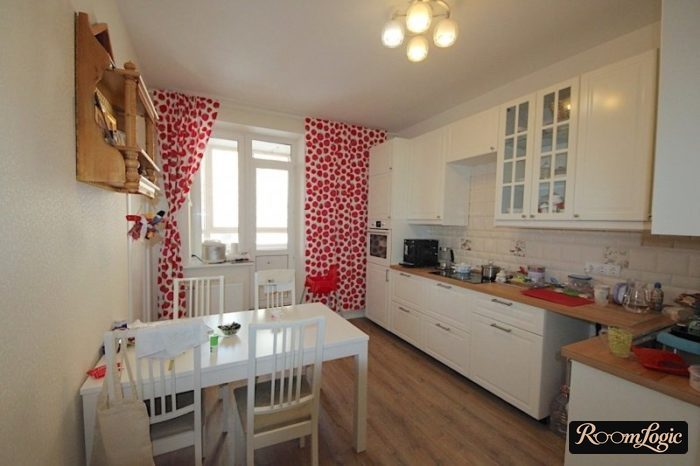
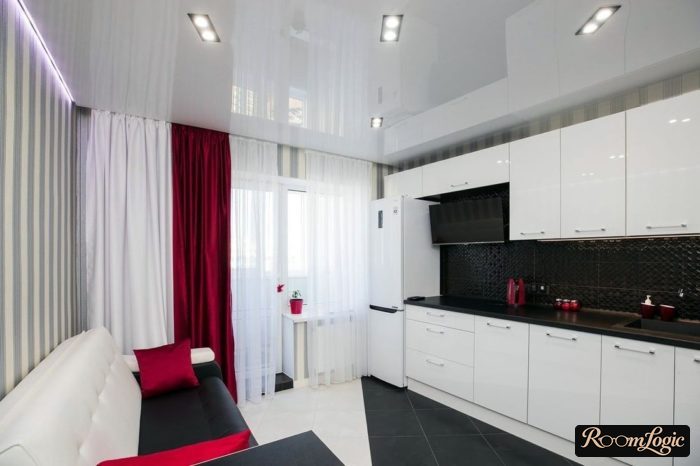
Just as there are 2 universal kitchen colors – white with wood and gray – there are also 2 universal neutral kitchen-curtain colors that are hard to get wrong: dark graphite gray (if you have any other dark colors) and beige (when the entire interior uses pastel colors).
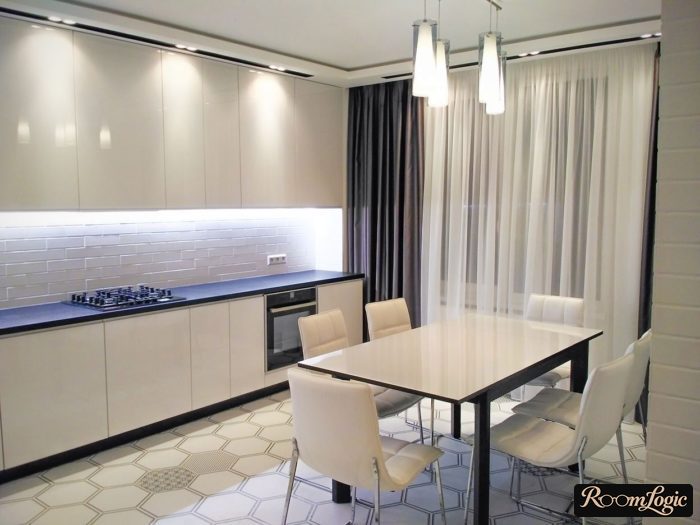
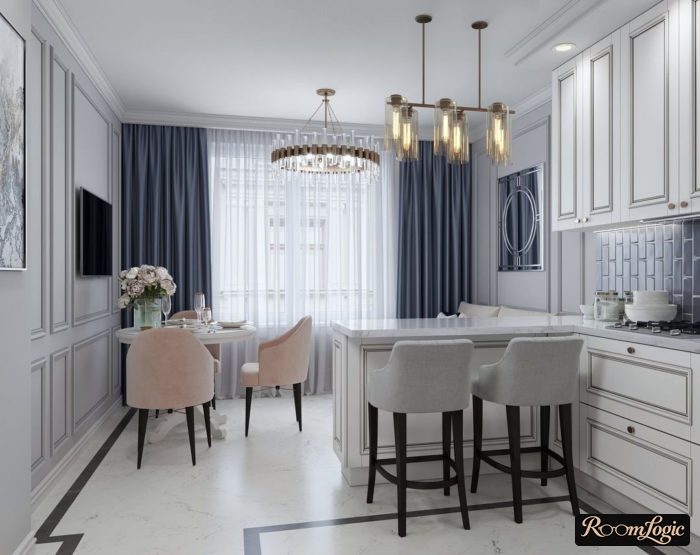
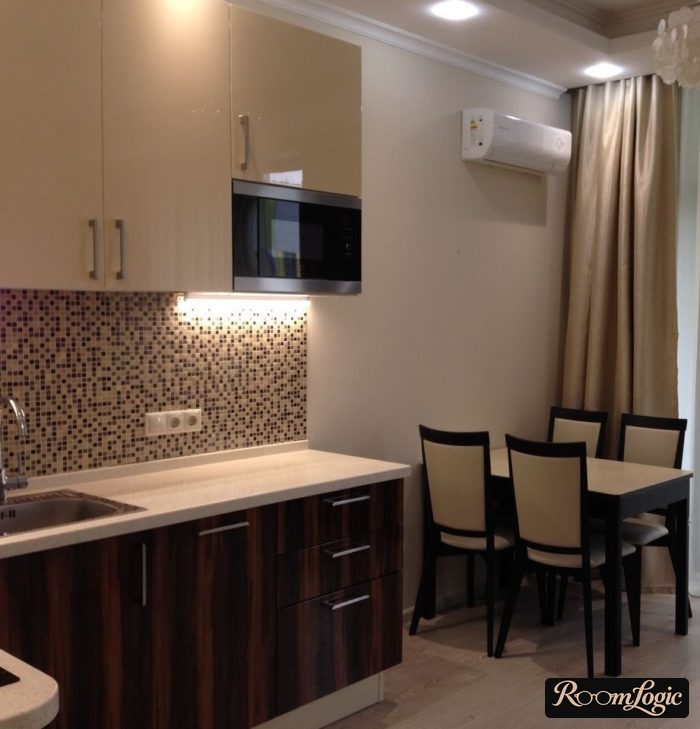
The universal accent color for curtains is blue (more precisely, muted blue in a pastel, low-saturation, or dark version). It works with most modern kitchen styles and with natural finish colors. In a sense, blue itself is in fashion.
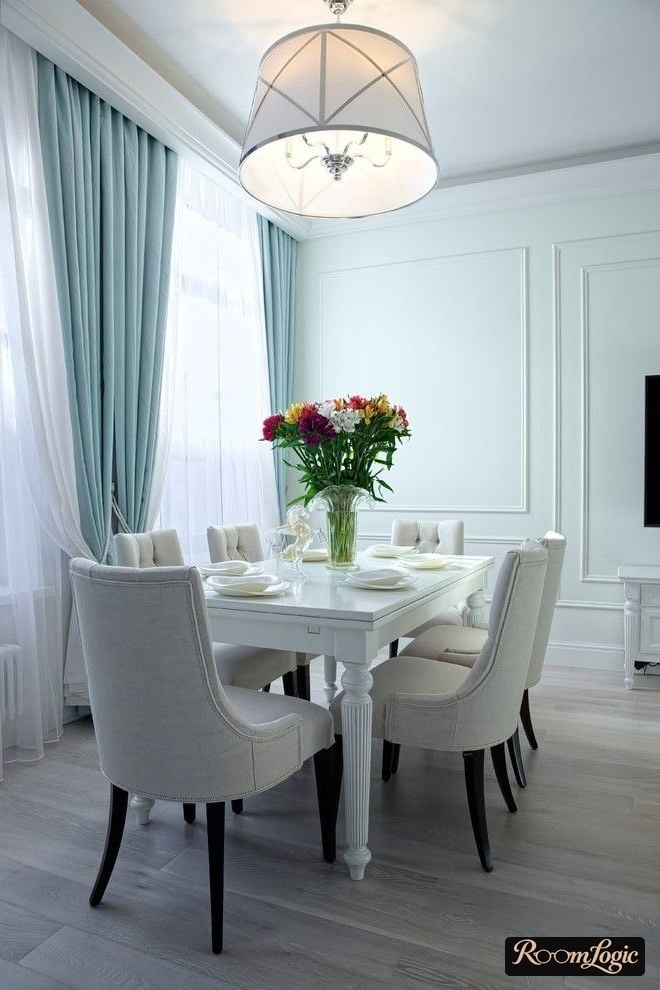
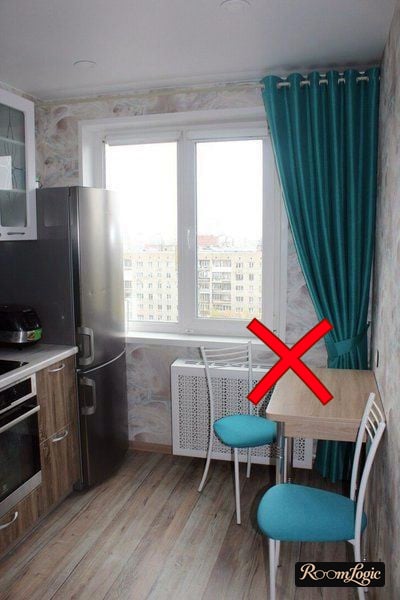
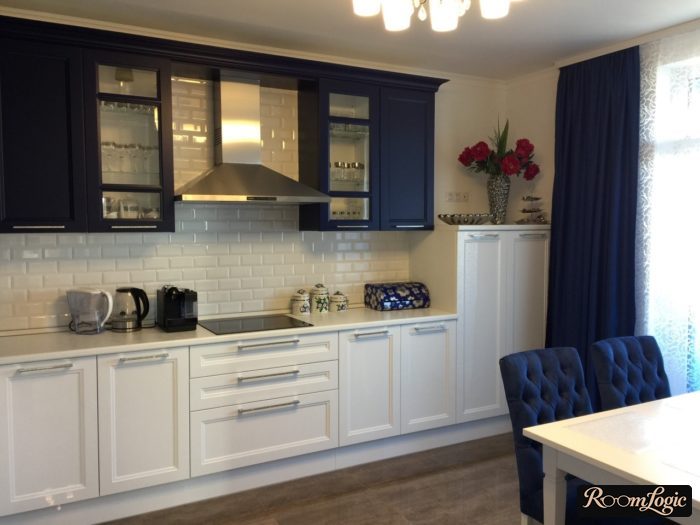
For an all-white monochrome kitchen without other color accents to work with, every shade of gray is suitable.
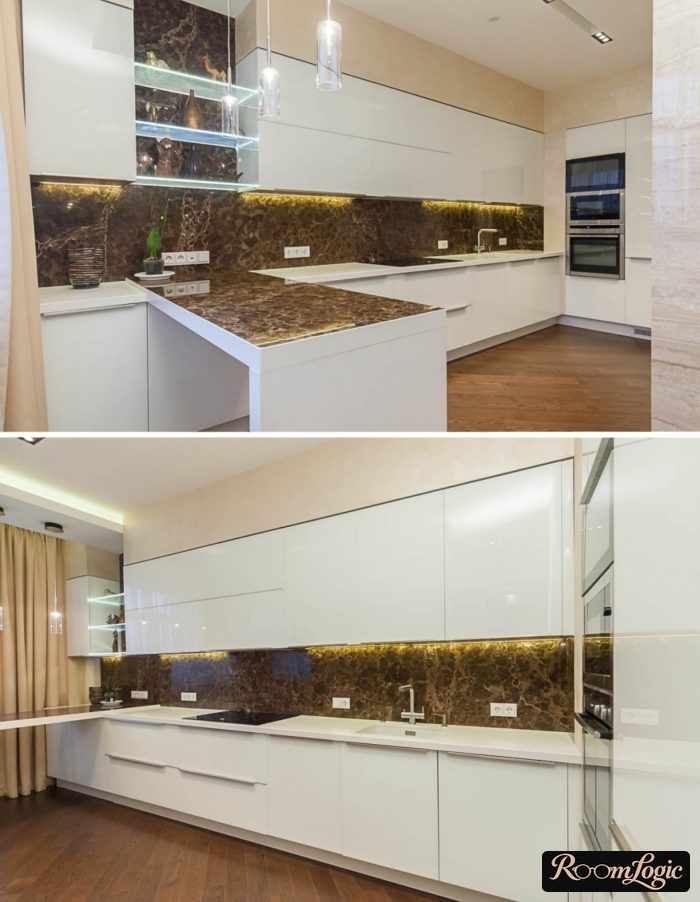
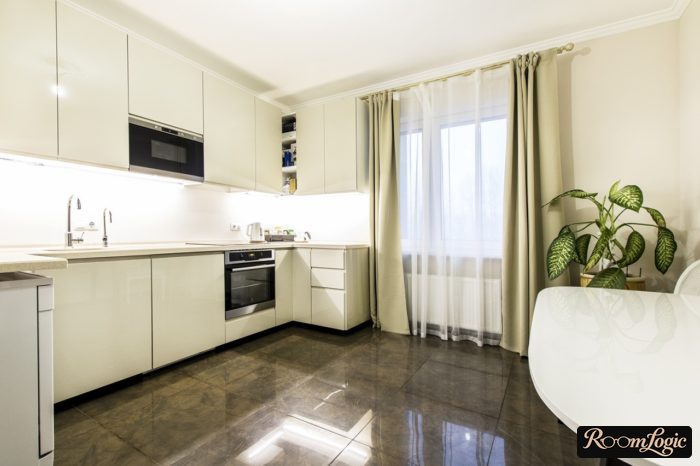
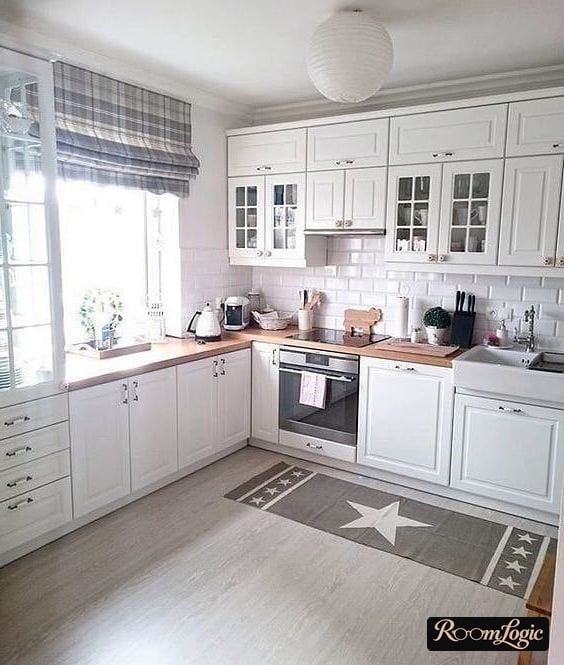
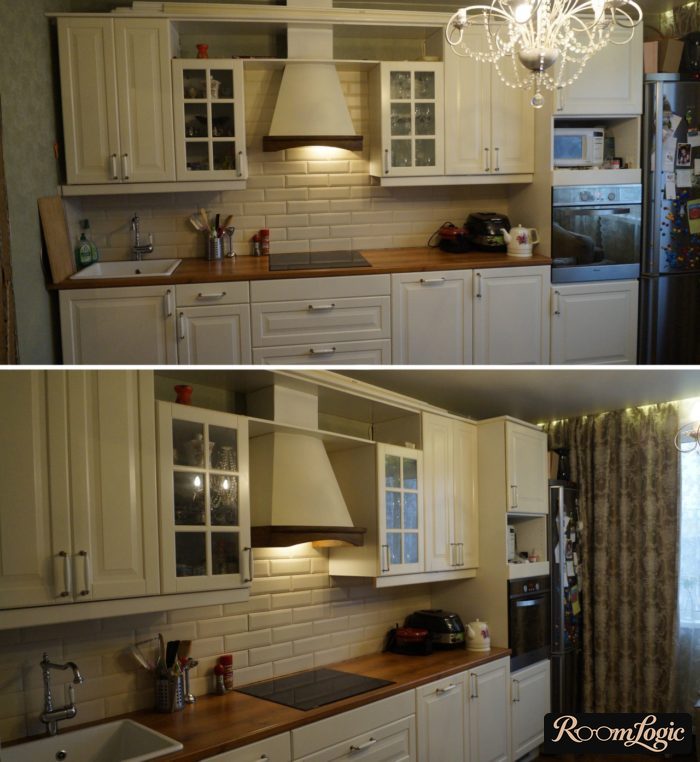
For a white kitchen with accent colors, use the same colors in a pale version (pastel, mixed with white) or complementary colors (opposite each other on the color wheel, such as yellow and blue; more detail is in the article about color combinations linked above).
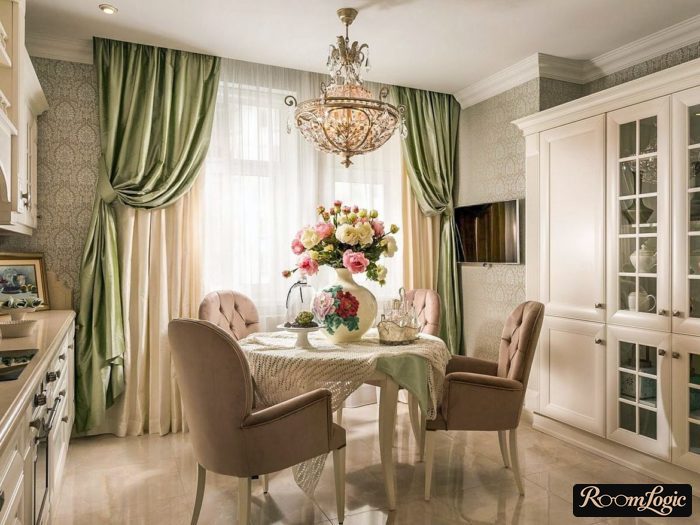
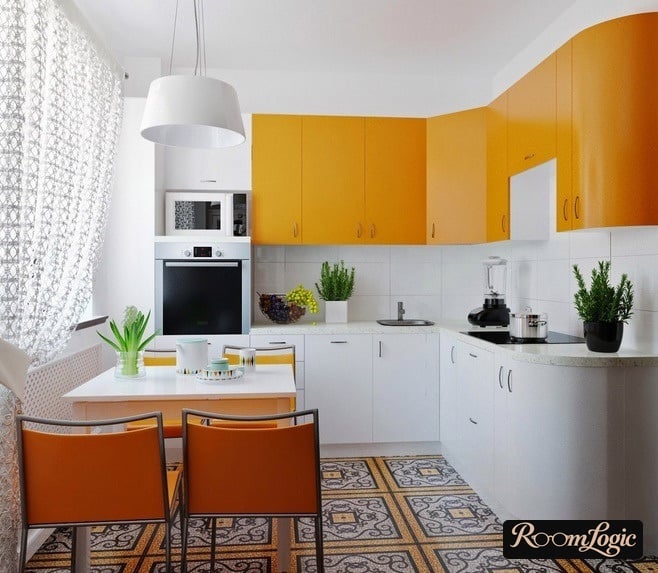
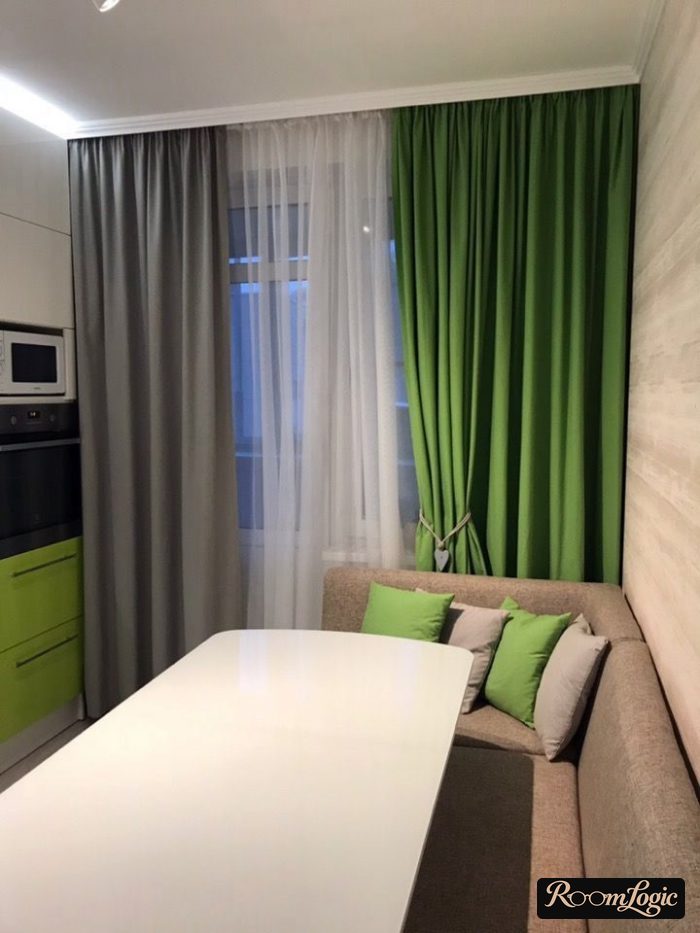
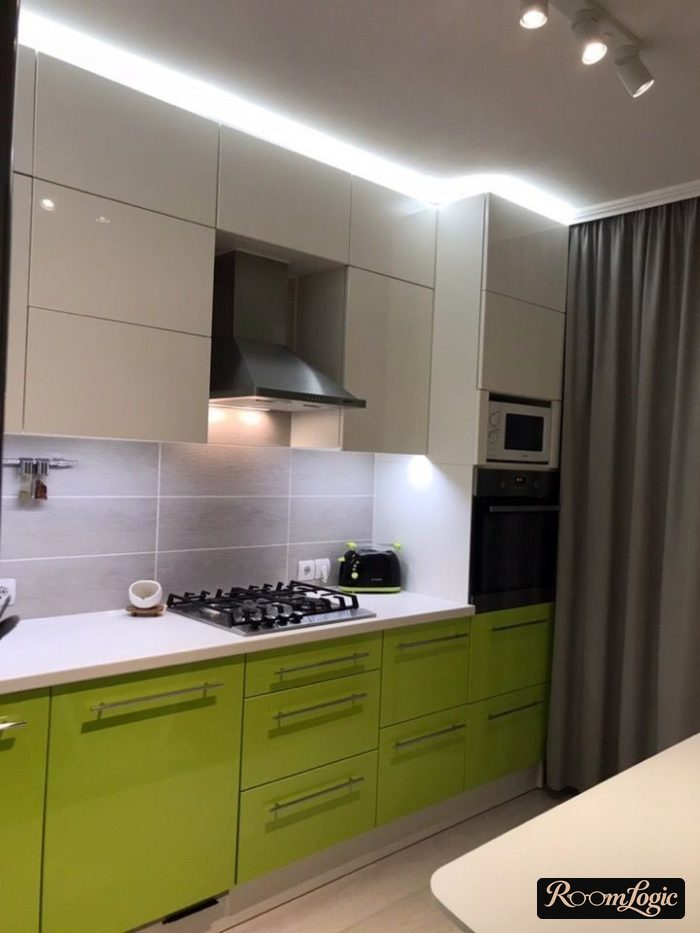
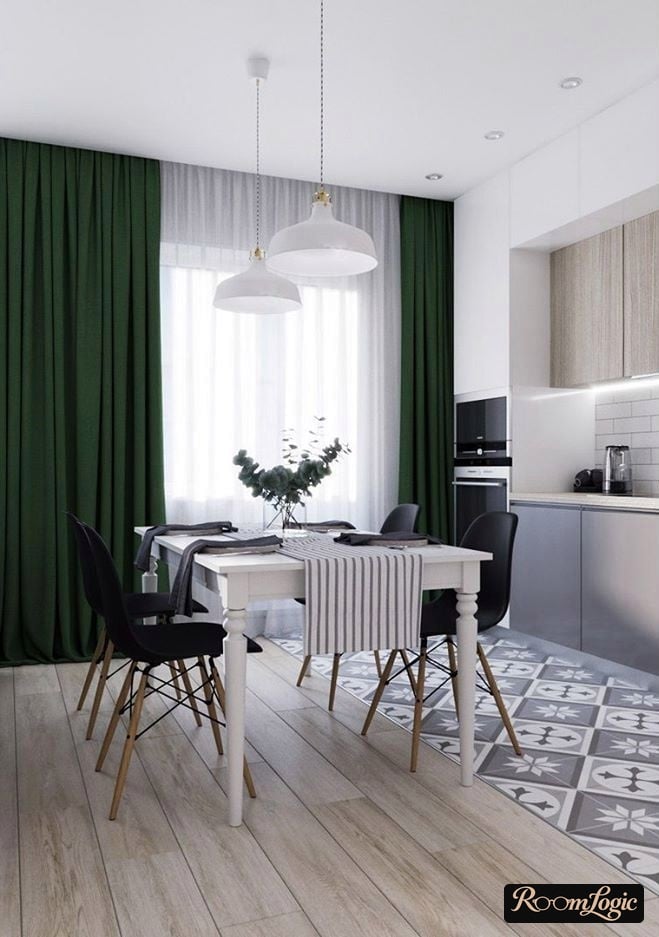
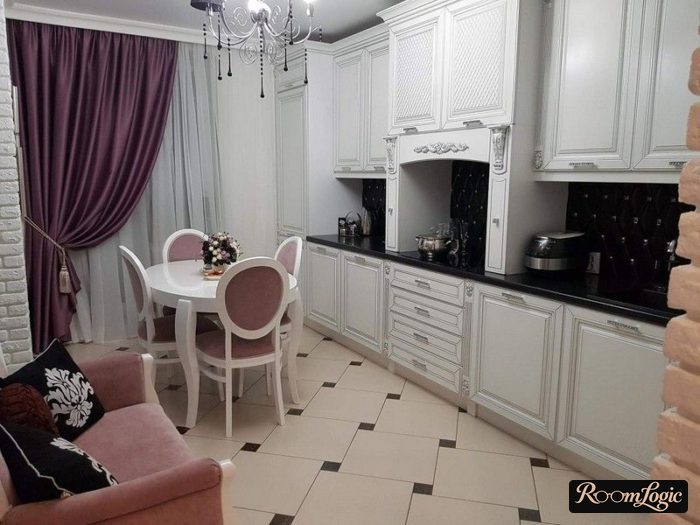
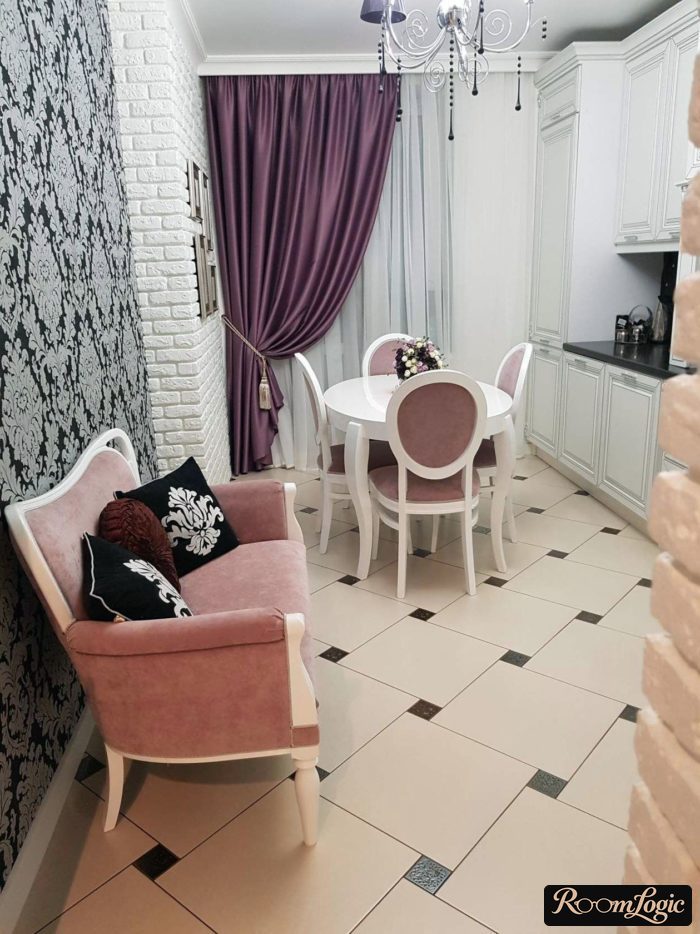
Also read about the Scandinavian kitchen, Provence-style kitchen, and neoclassical kitchen – there are many interesting combinations.
For a gray kitchen or gray walls (wallpaper or paint), warm-colored curtains work well, especially muted yellow (mixed with gray). And the universal colors, of course.
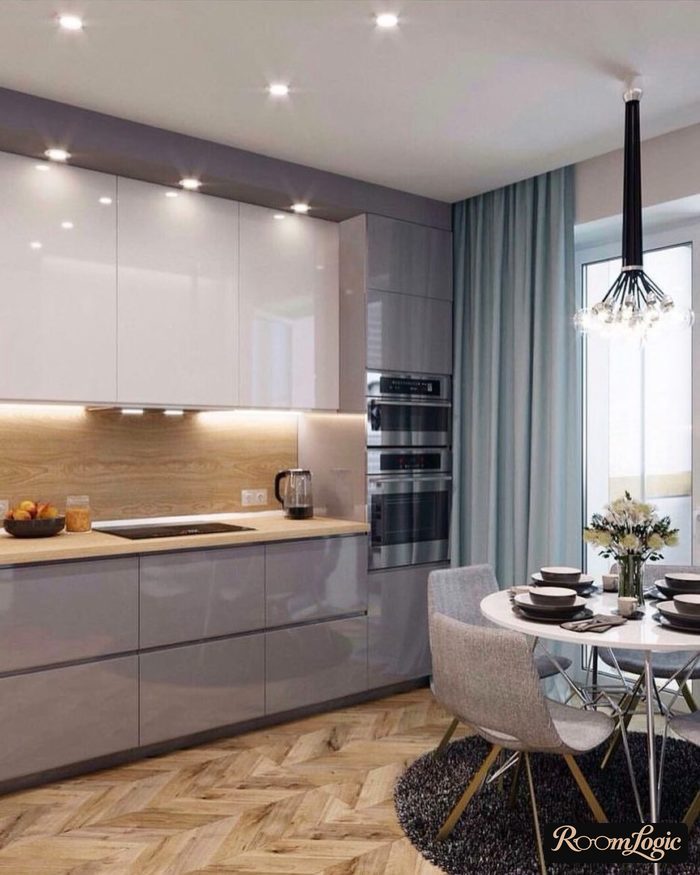
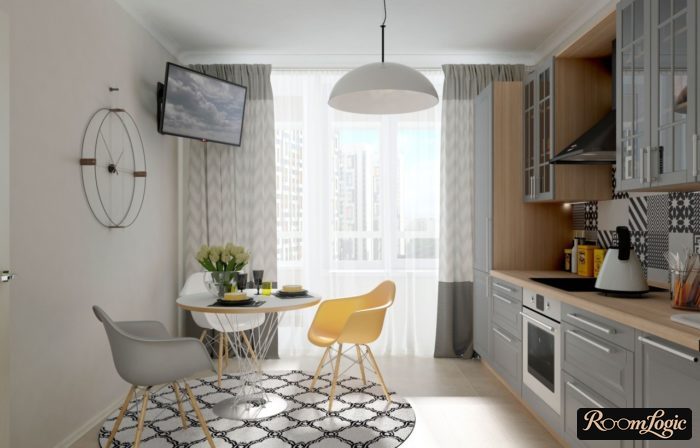
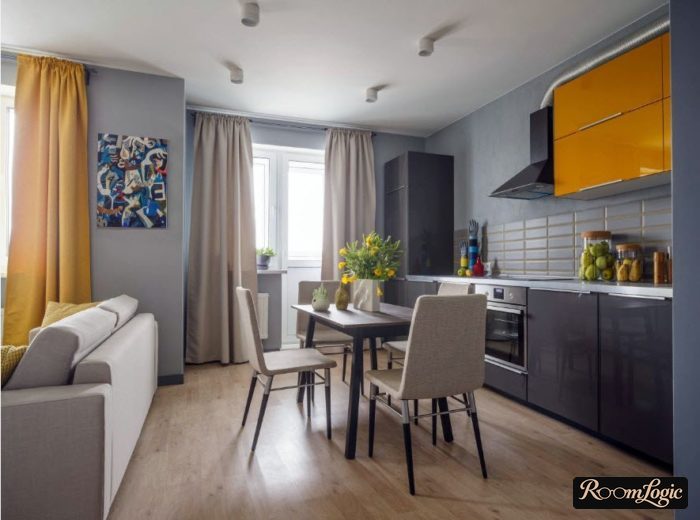
Modern styles call for solid-color curtains without pictures.
Curtain Design and Combinations
Suddenly,
there is such a thing as curtain design, and it matters in the kitchen too.
Let’s look at the ideas you can use.
On One Side
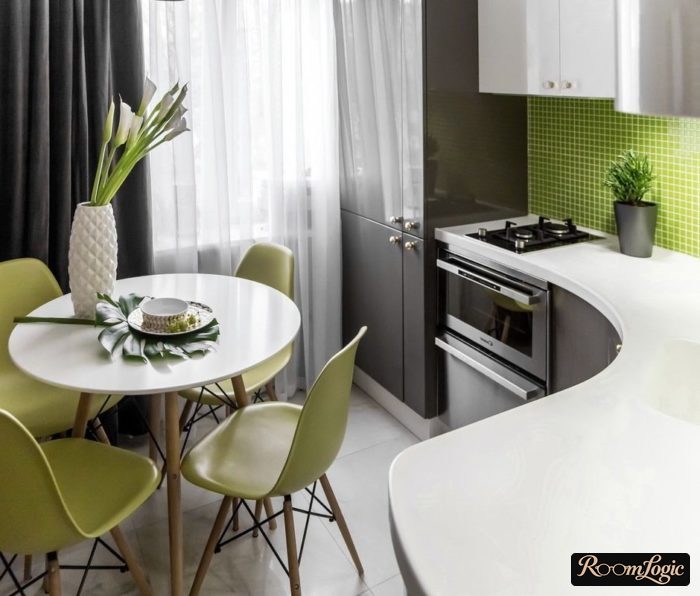
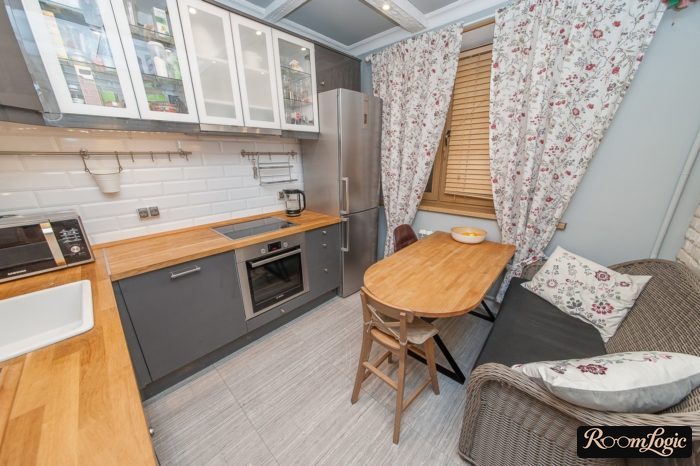
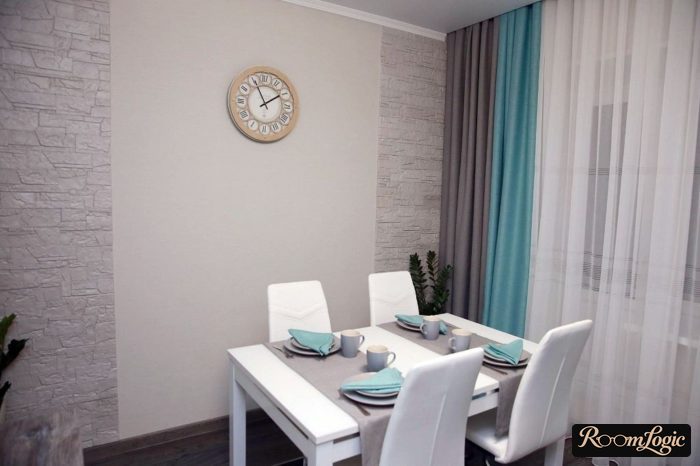
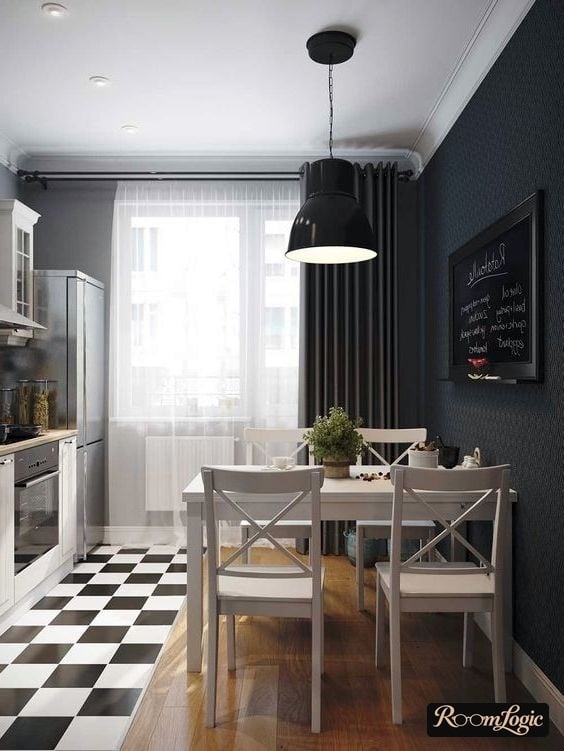
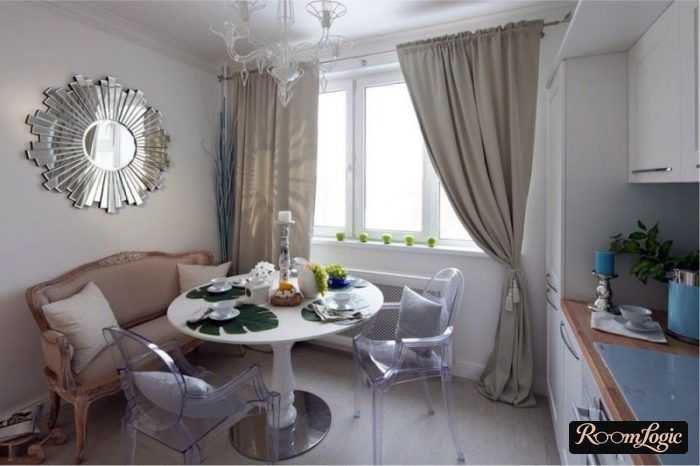
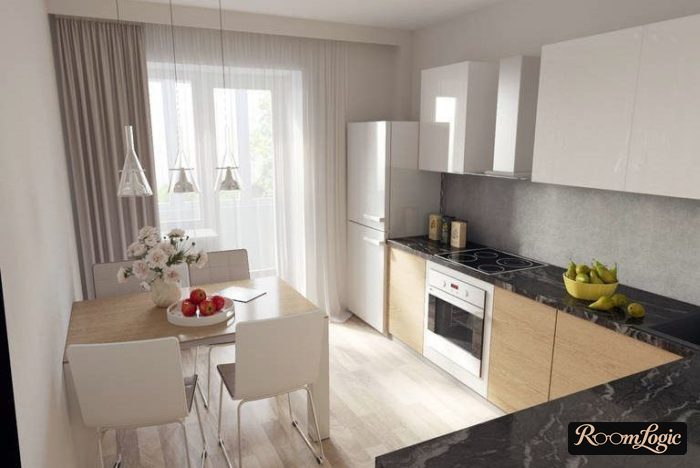
A kitchen is always asymmetrical in relation to the window. That is why hanging curtains asymmetrically is standard.
They can be on only one side, can have different widths, and can even be different colors (risky). All of these options have a right to exist.
Combining Different Types of Kitchen Curtains
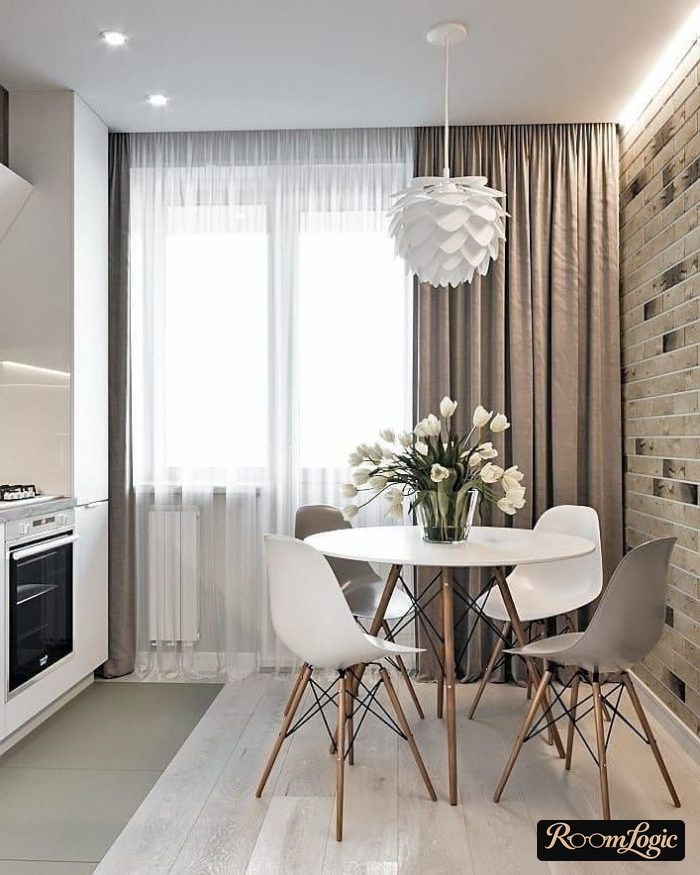
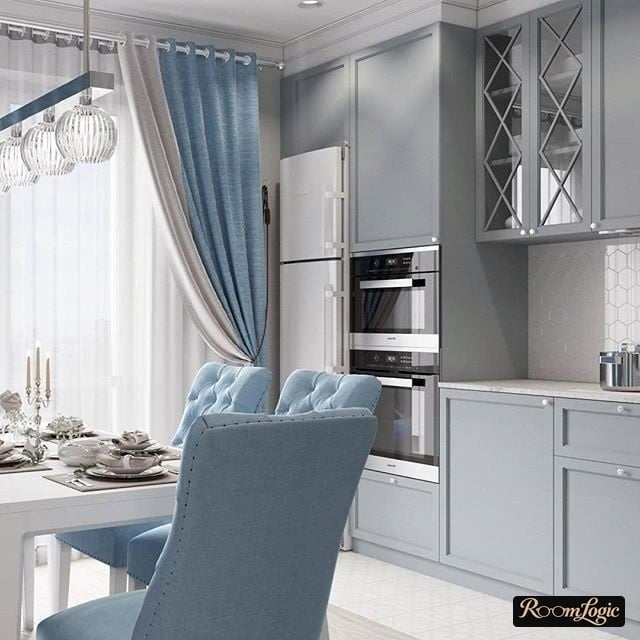
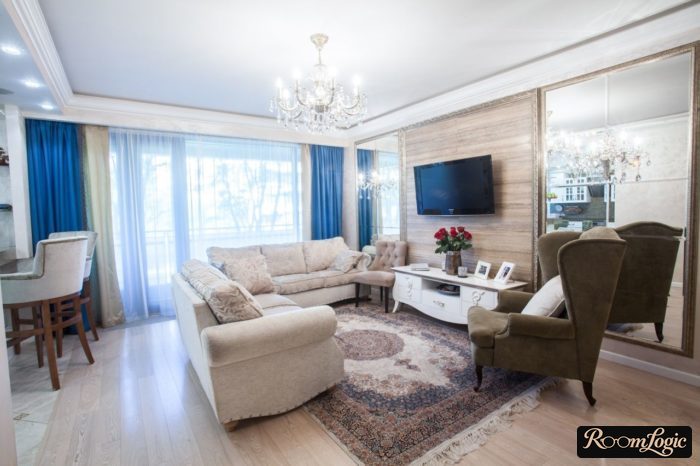
A set of different curtains can be sewn from 1 fabric (in one or two colors). Combining regular curtains with Roman shades, for example, is a classic.
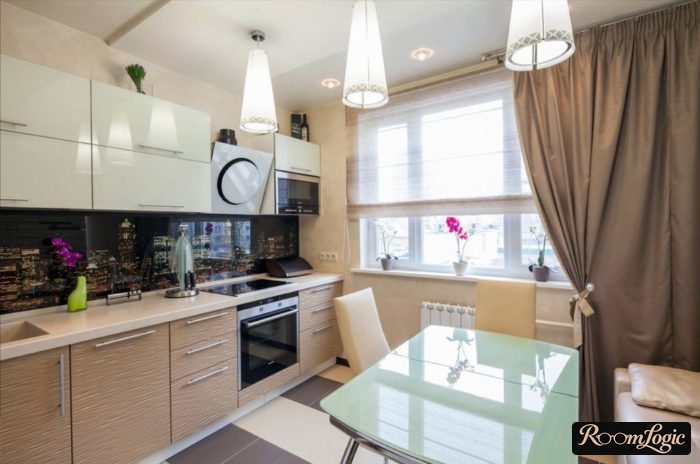
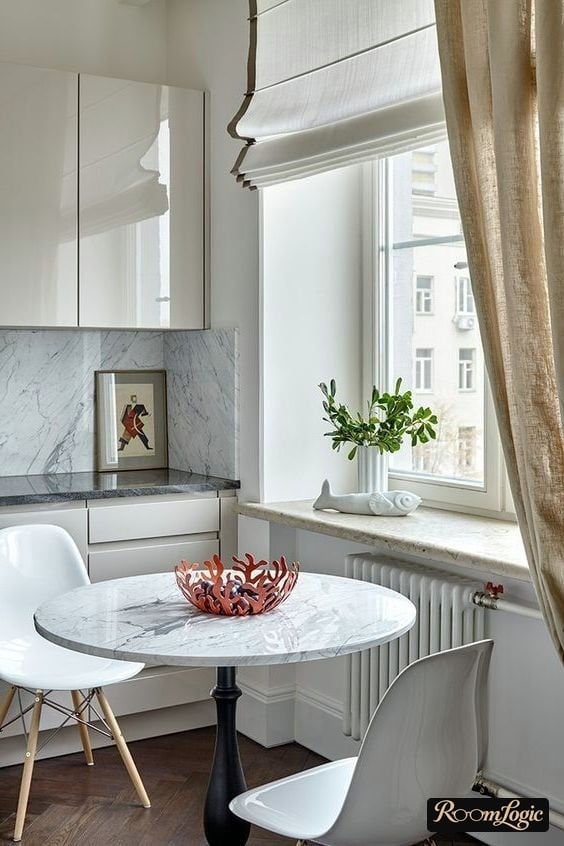
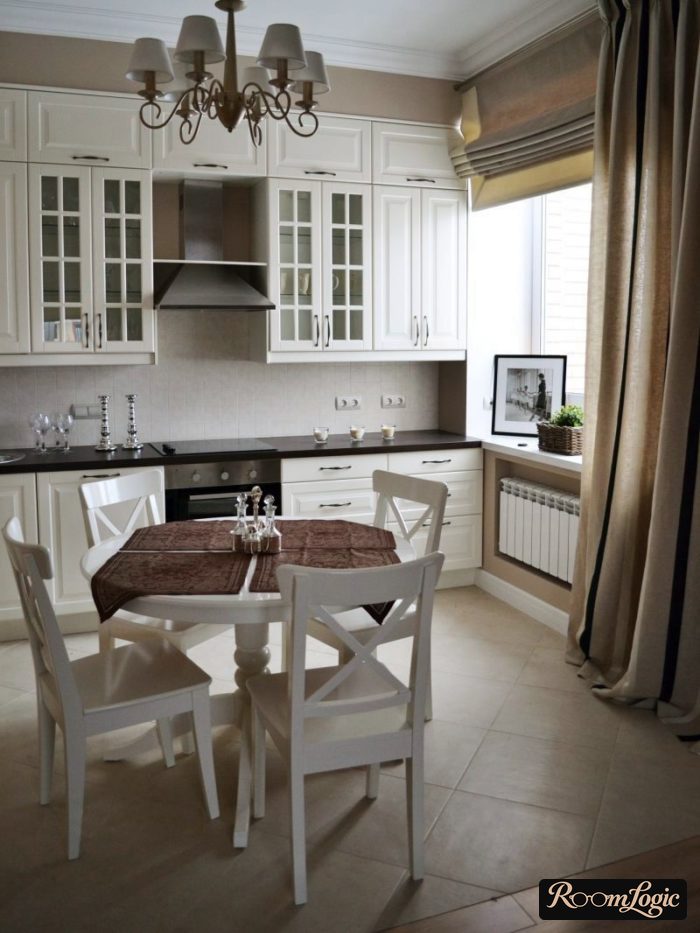
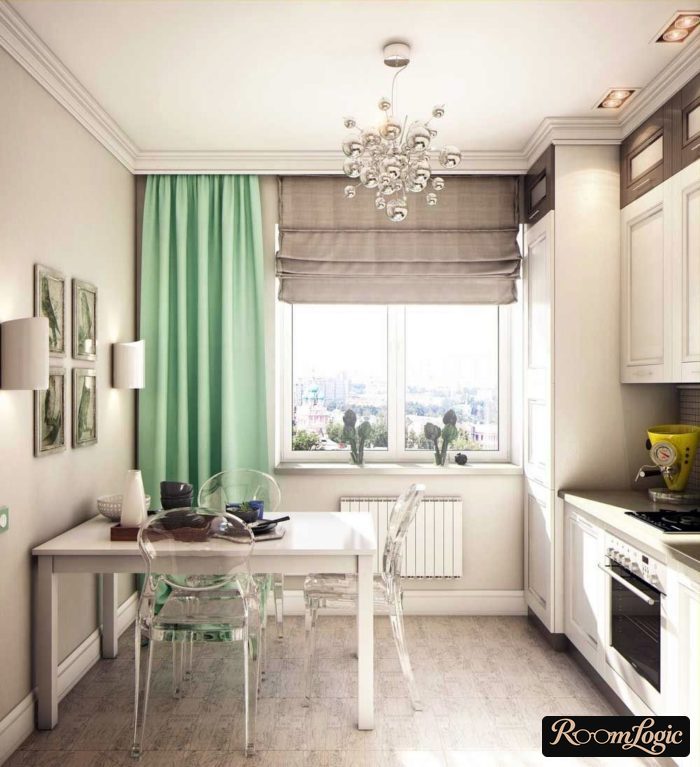
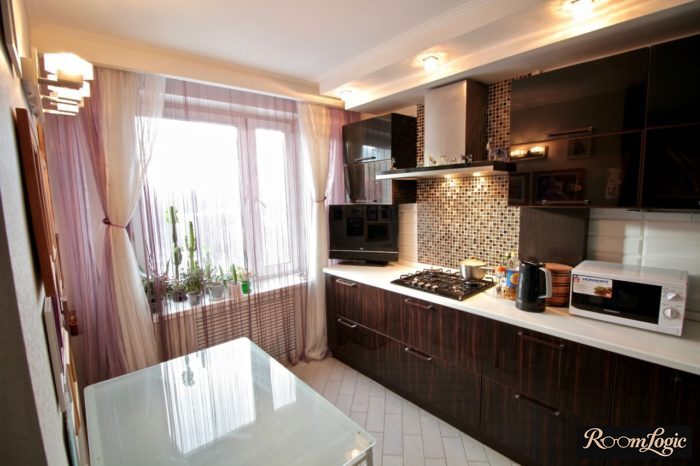
Tulle is still a relevant addition to a kitchen because it can hide the radiator without blocking the light when that is not needed.
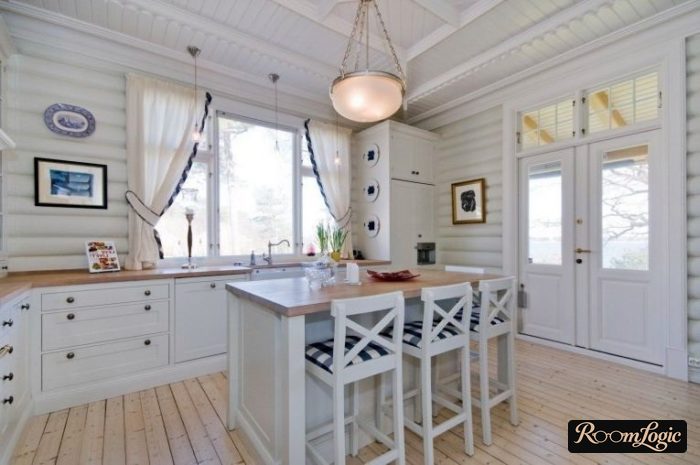
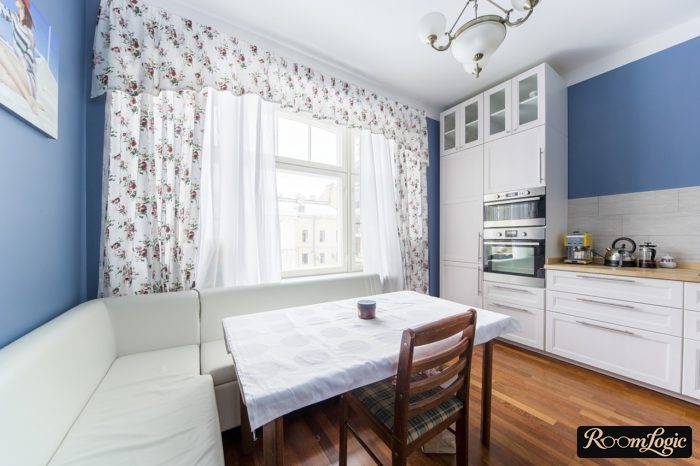
For Provence style, you can use kitchen curtains with valances (a short horizontal curtain at the top of the window). They are sometimes combined with two short tulle café panels.
Tulle
Classic tulle is white, sheer, and lace-trimmed.
Modern kitchens more often use stricter options without patterns, in gray and other colors. But, just as with choosing kitchen wallpaper, it depends on the goal.
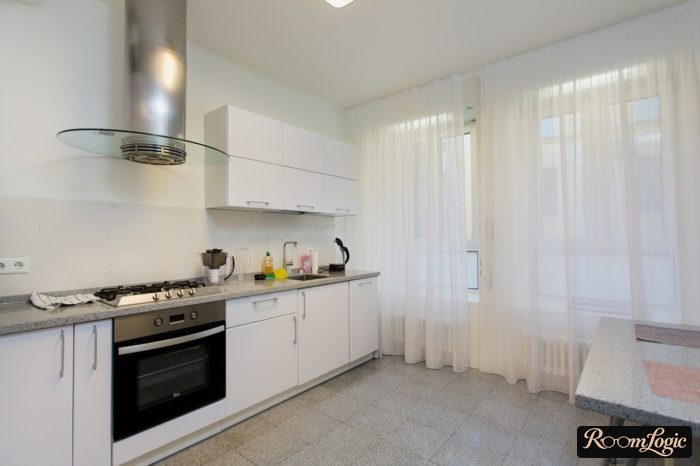
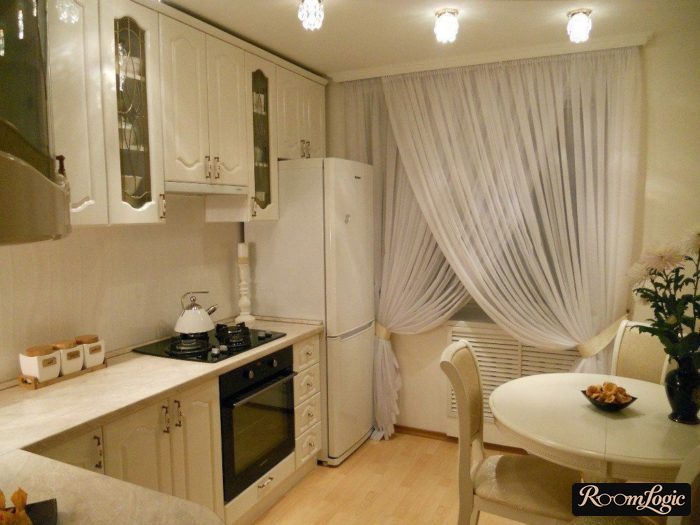
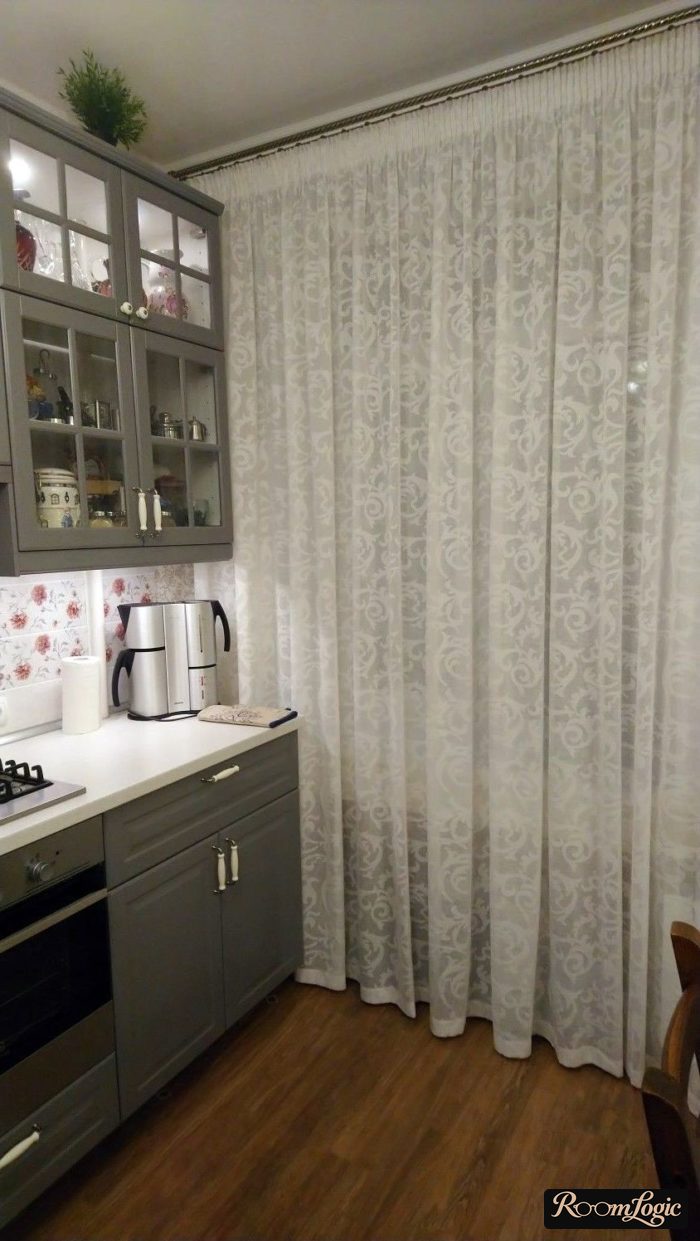
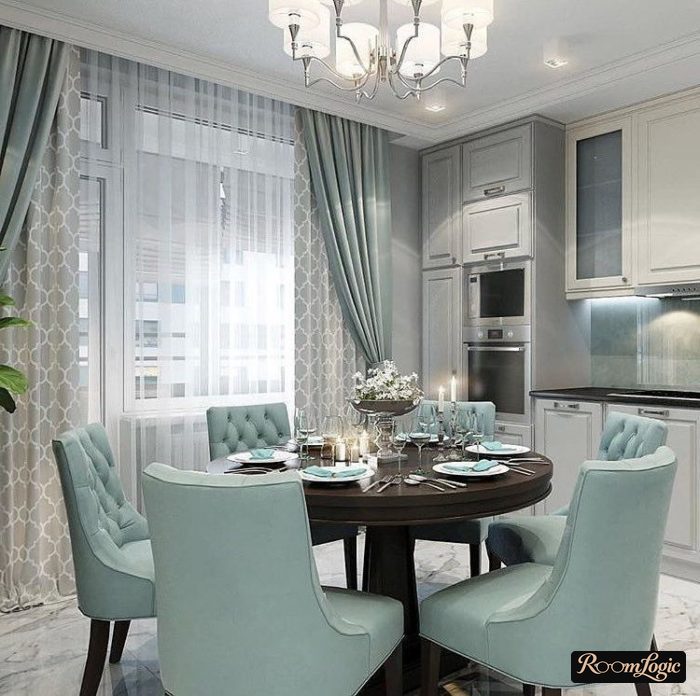
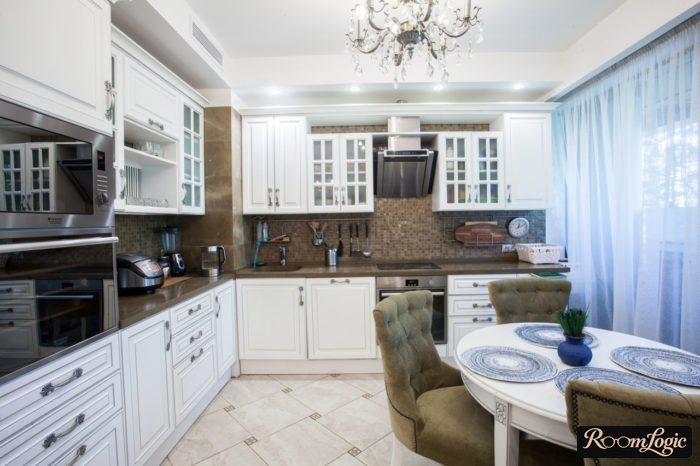
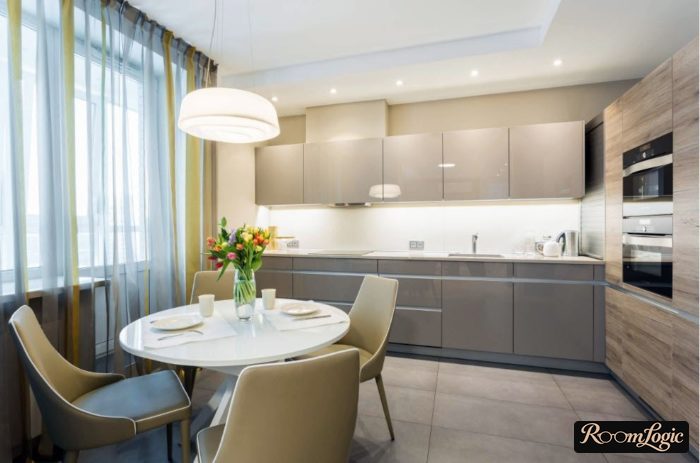
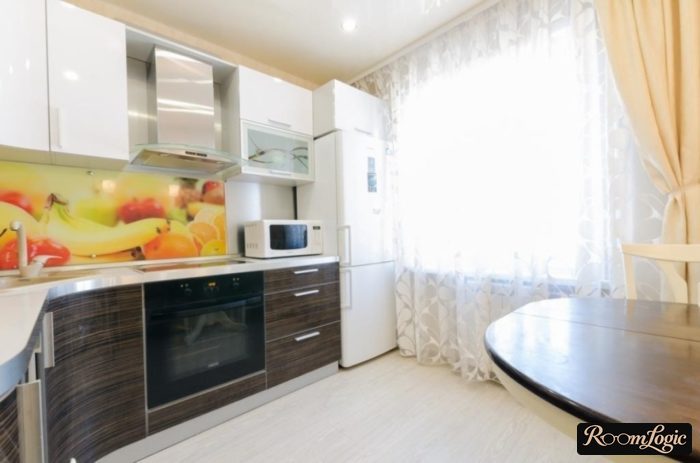
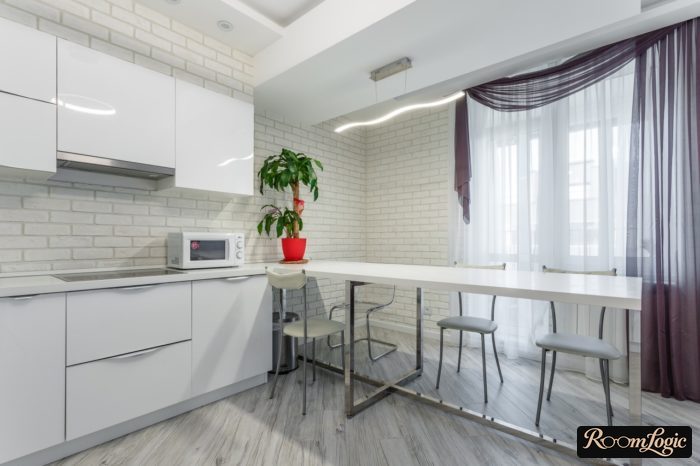
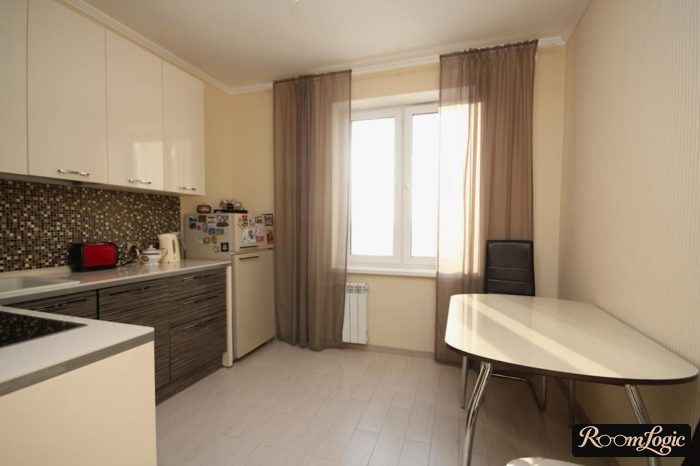
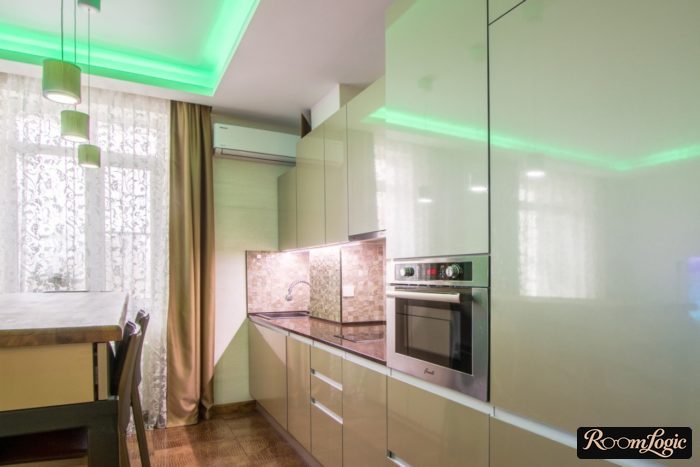
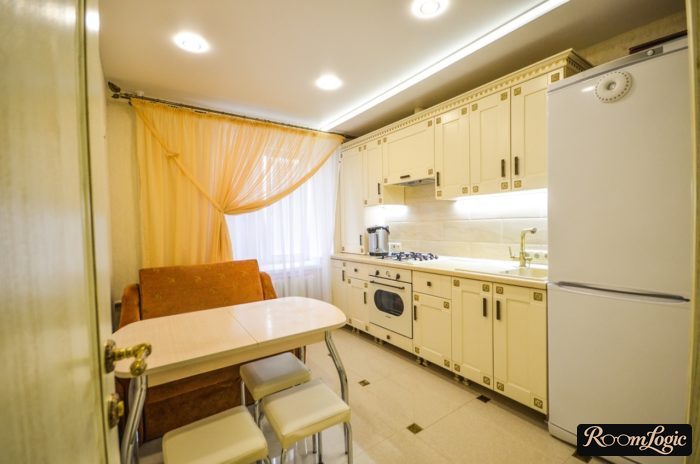
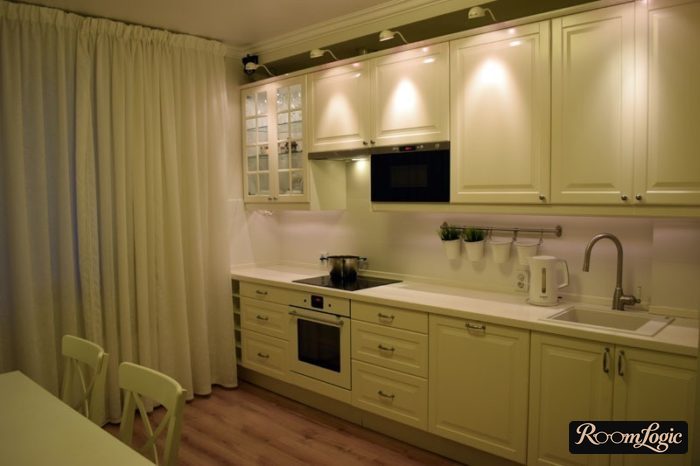
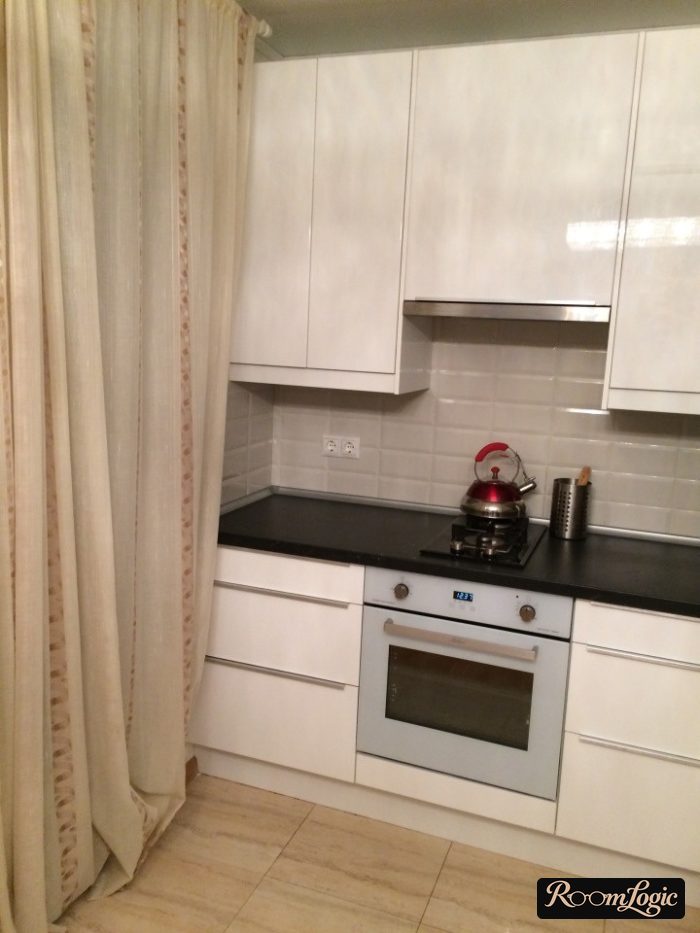
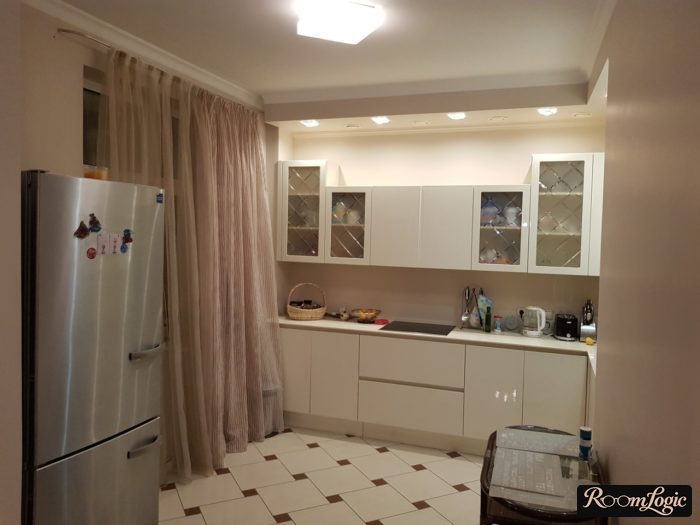
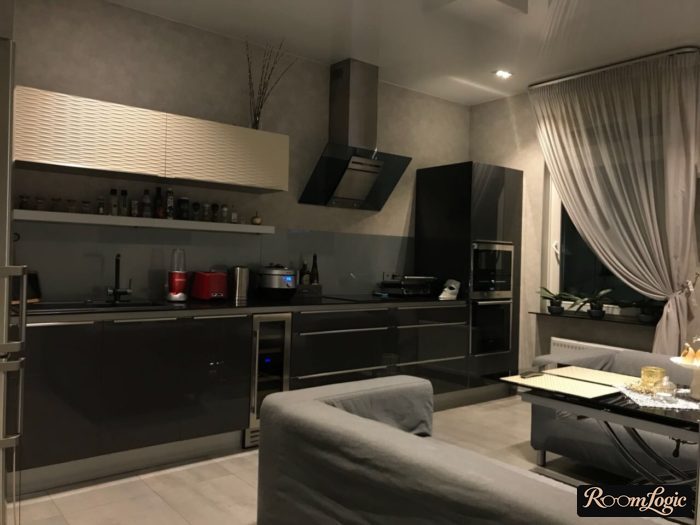
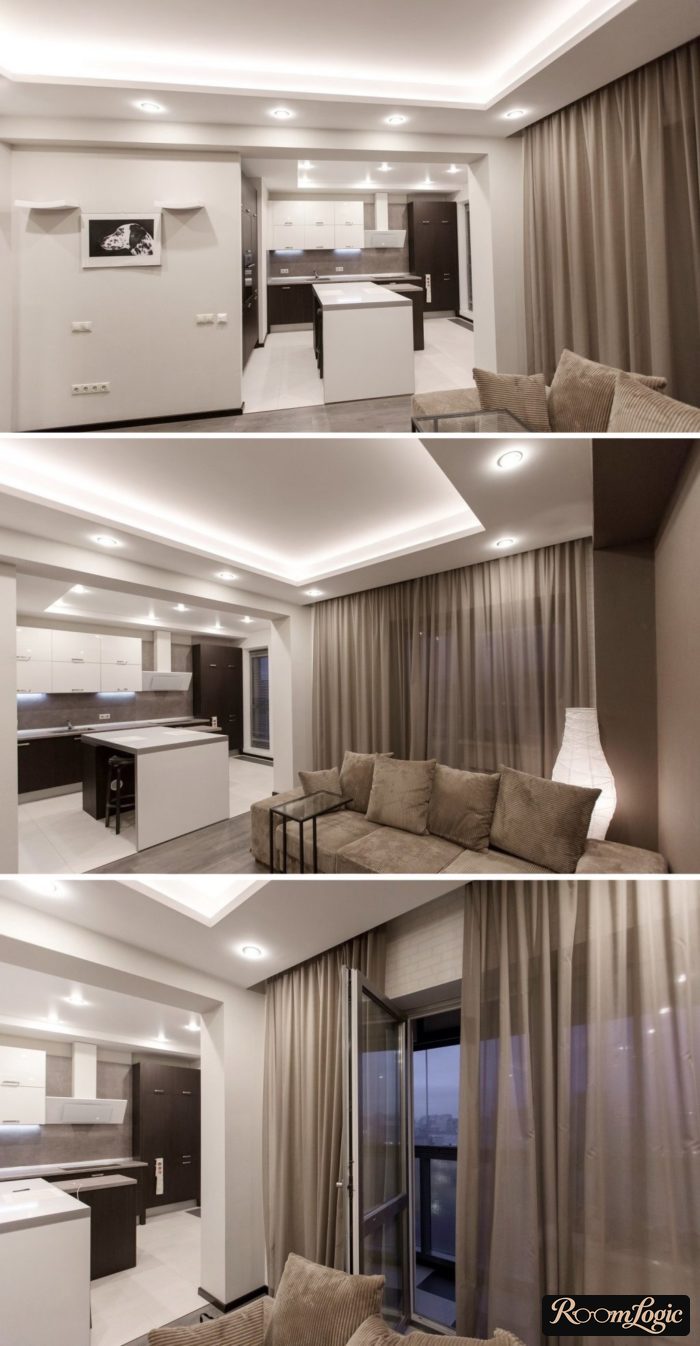
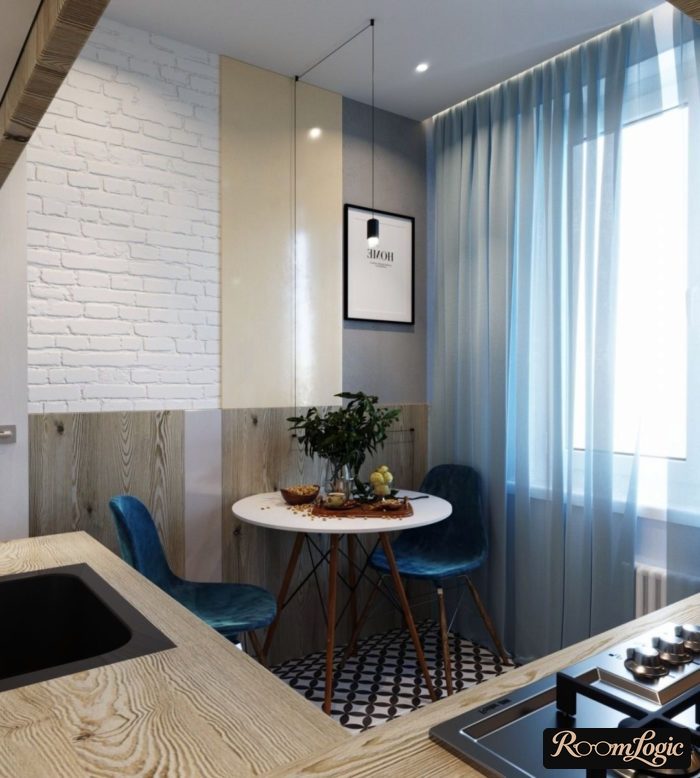
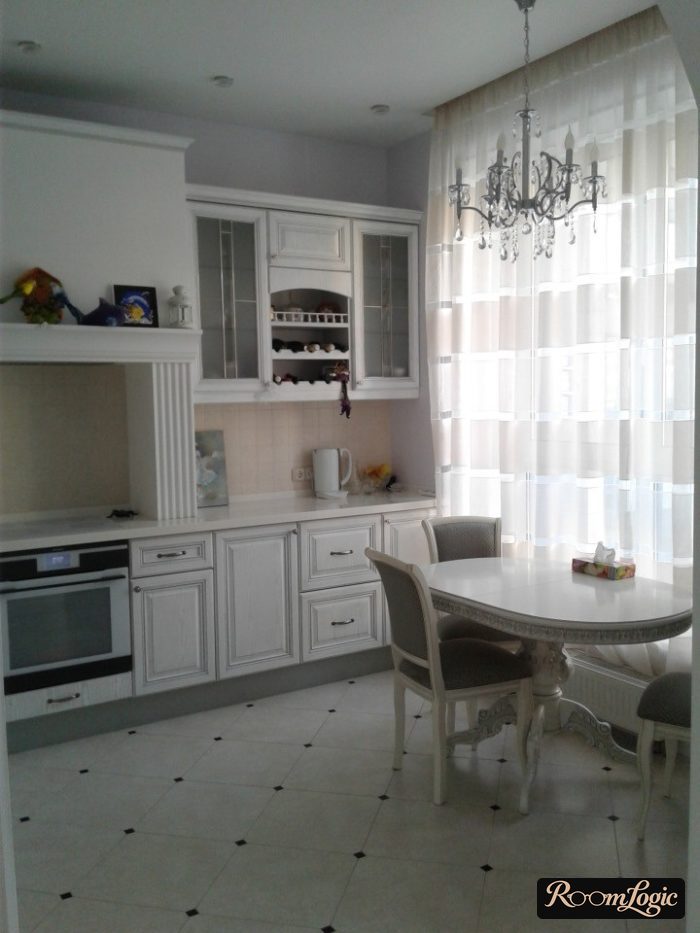
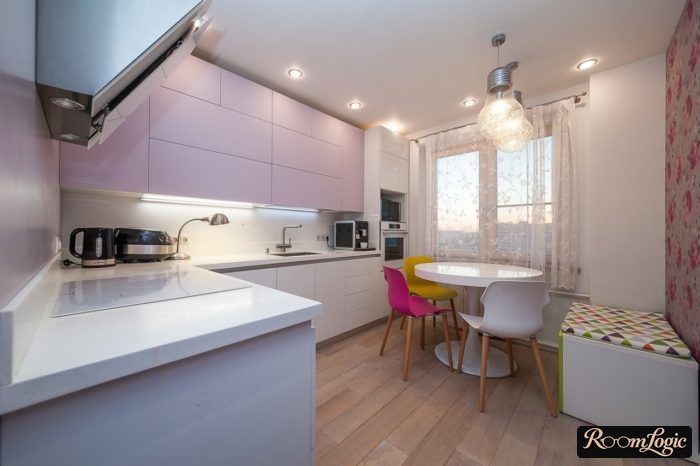
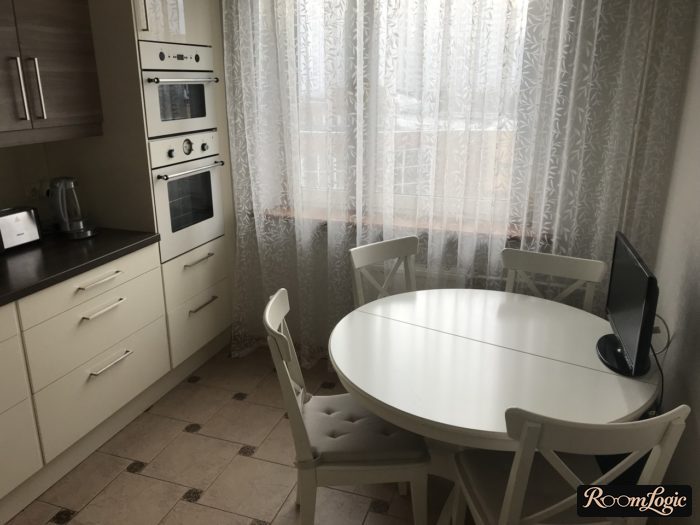
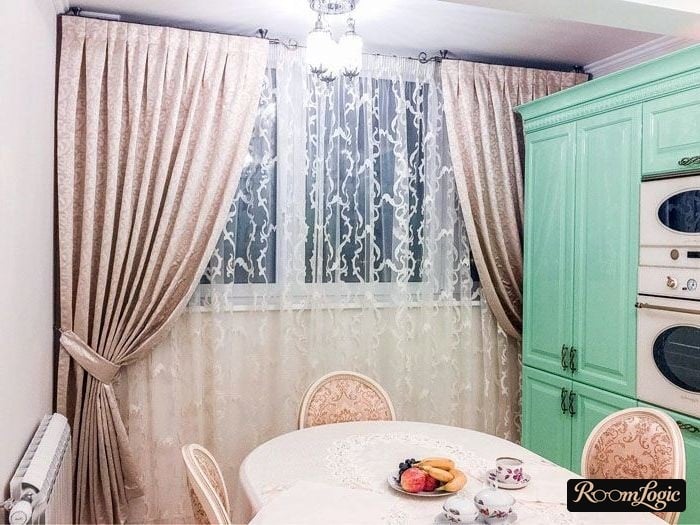
There are no rules here. If you like it, use it.
Modern Ideas
To sum up, plus a couple of modern ideas for choosing kitchen curtains:
- If you have a regular window and a small kitchen, Roman shades are a cool choice.
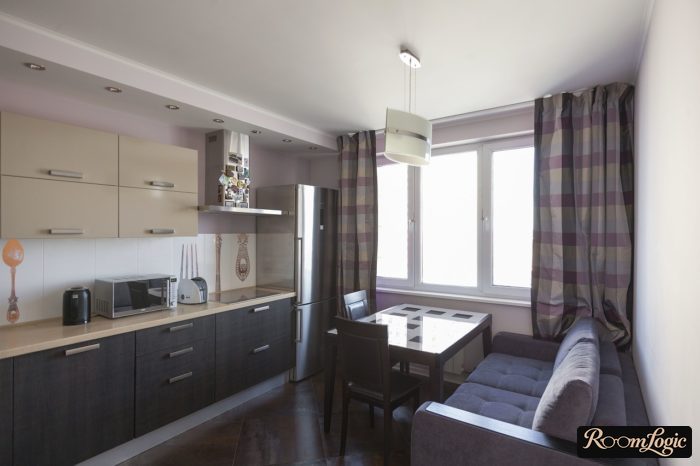
- If the window is large or complicated, or there is a patio door, use regular floor-length curtains. They can be on only 1 side or combined with Roman shades and tulle.
- Gray or pastel curtain colors will work with most kitchens.
- Think about what you will hang them from. If this is a full remodel and the ceiling is dropped drywall, you can make a recessed curtain track by stopping the ceiling short of the window wall (this is standard).
- If the fabric is heavy, you can mount Roman shades slightly higher and regular curtains slightly wider than actually necessary. This creates the illusion that they cover a larger window than the real one.
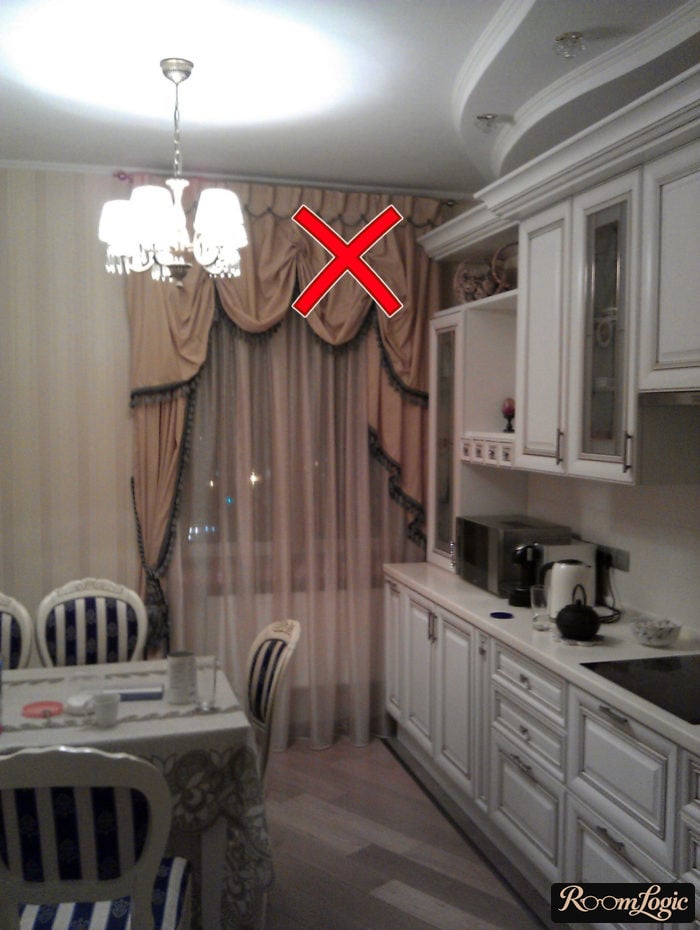
- Roughly the same curtains work for traditional and modern styles. Excessive complications, valances, and tiebacks look ridiculous even in a traditional kitchen.
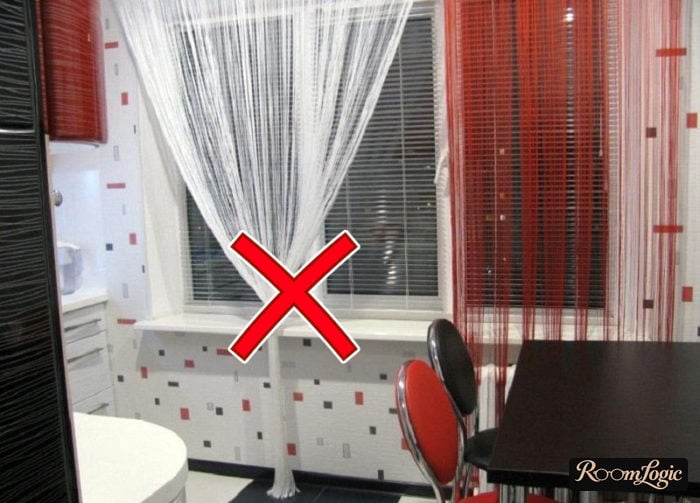
- String curtains look like a reference to the 1990s – do not use them.
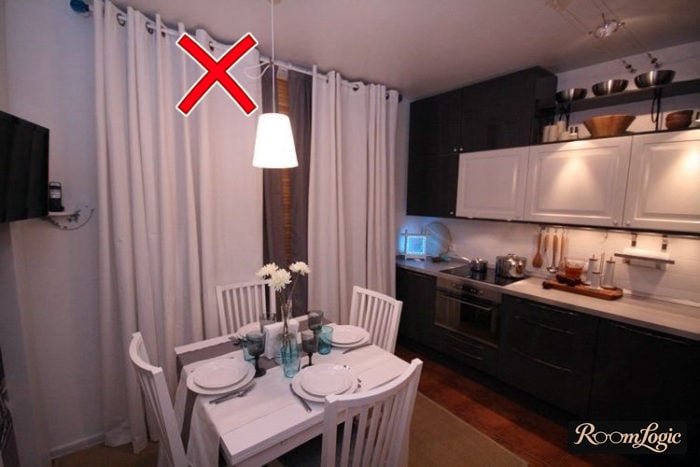
- Curtains with grommets (large round holes reinforced with plastic or metal that go over a rod) look bad. The less conspicuous the attachment, the better.
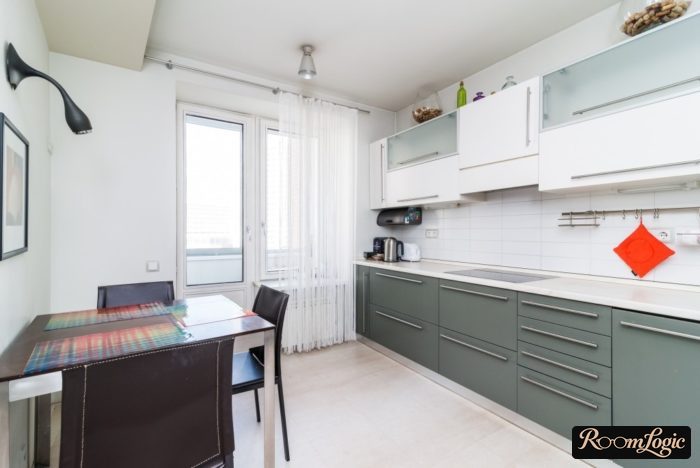
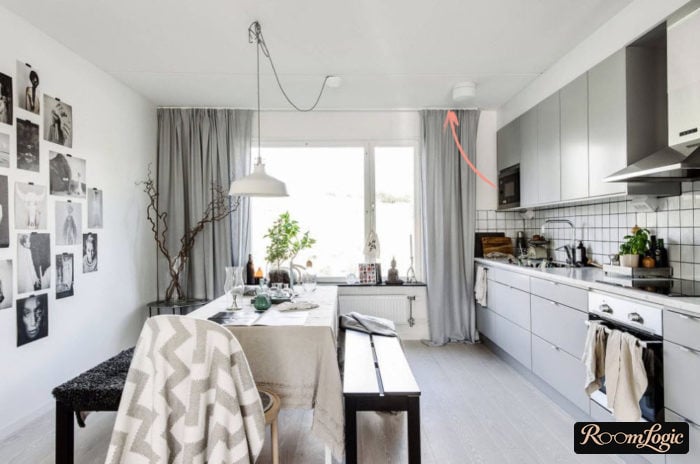
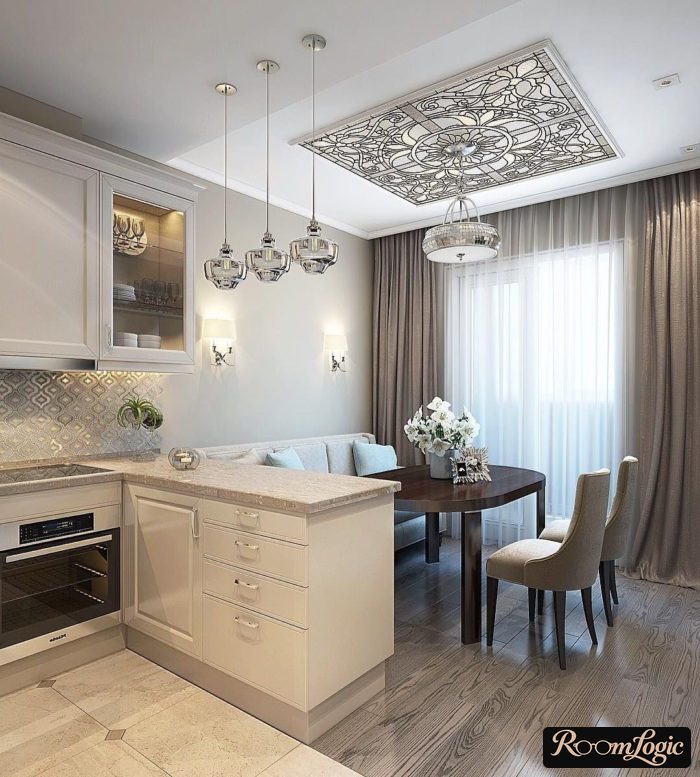
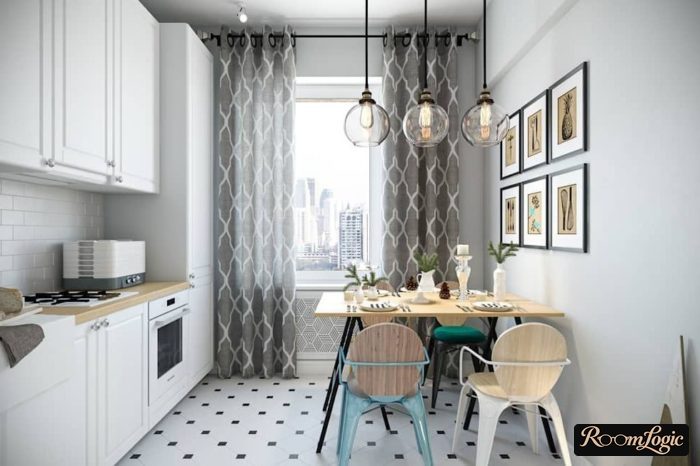
I hope you have decided what type of curtains you want in the kitchen. It is better to clarify the remaining details where you buy them. Good luck with your remodel!