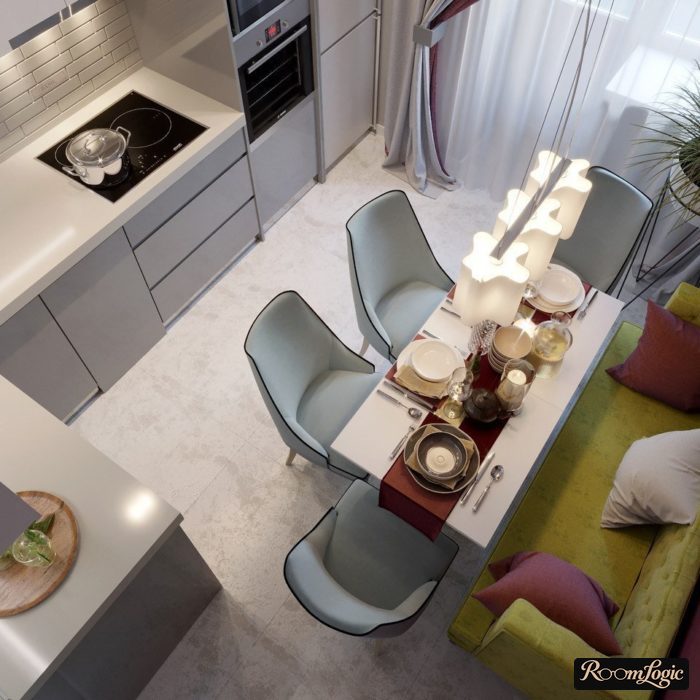
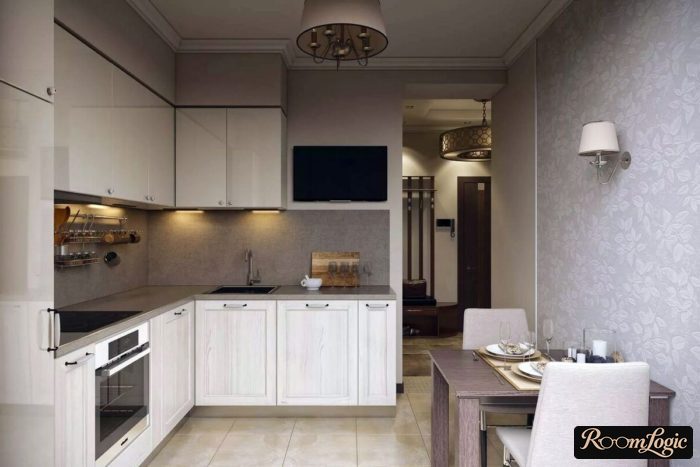
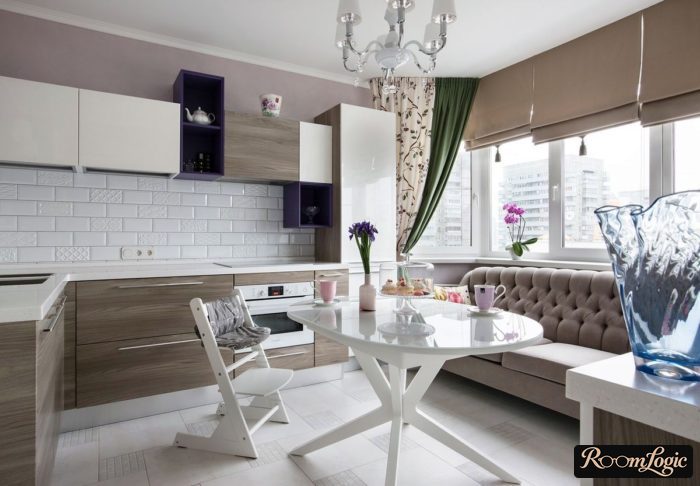
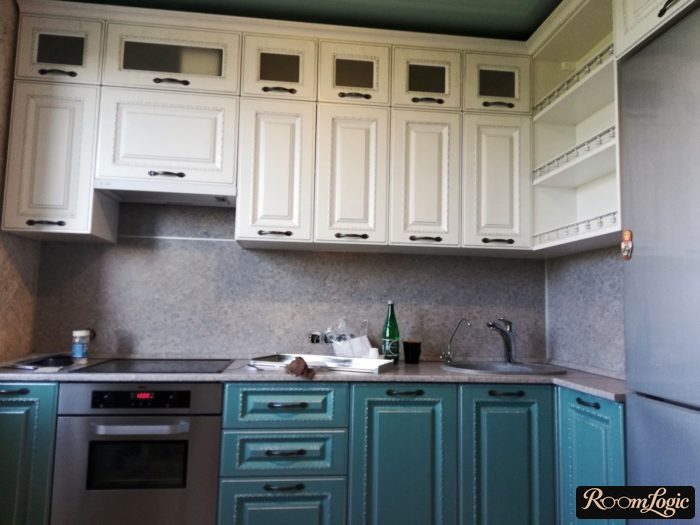
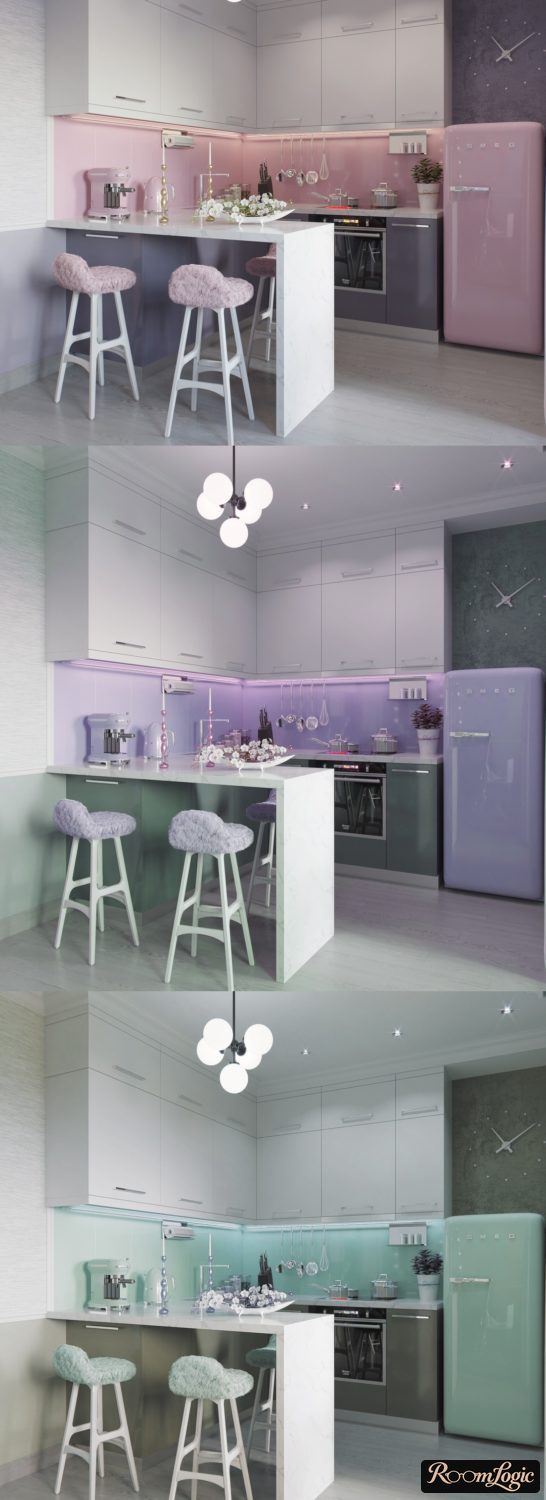
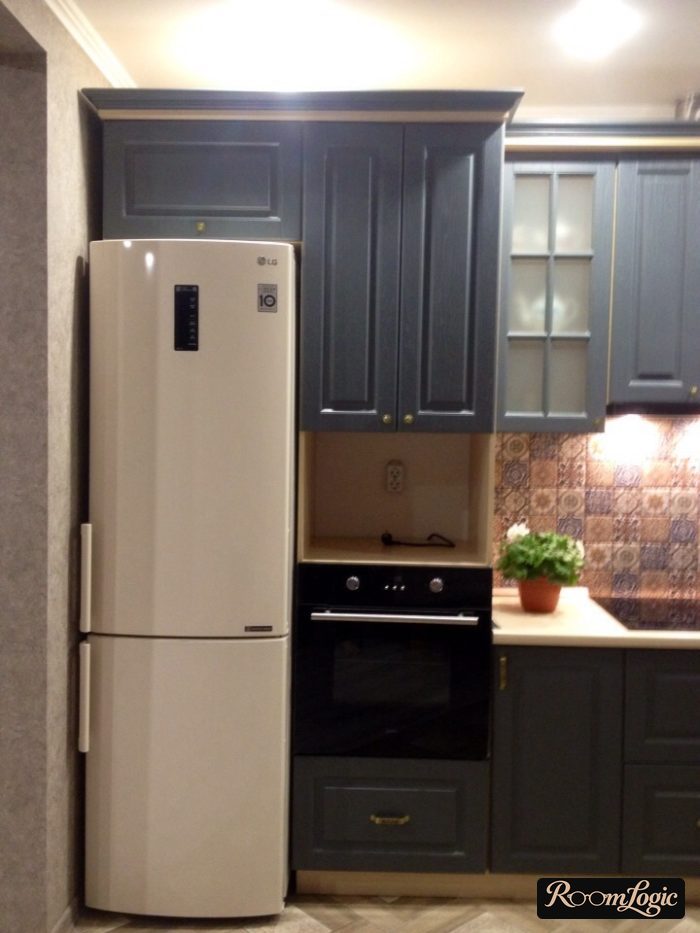
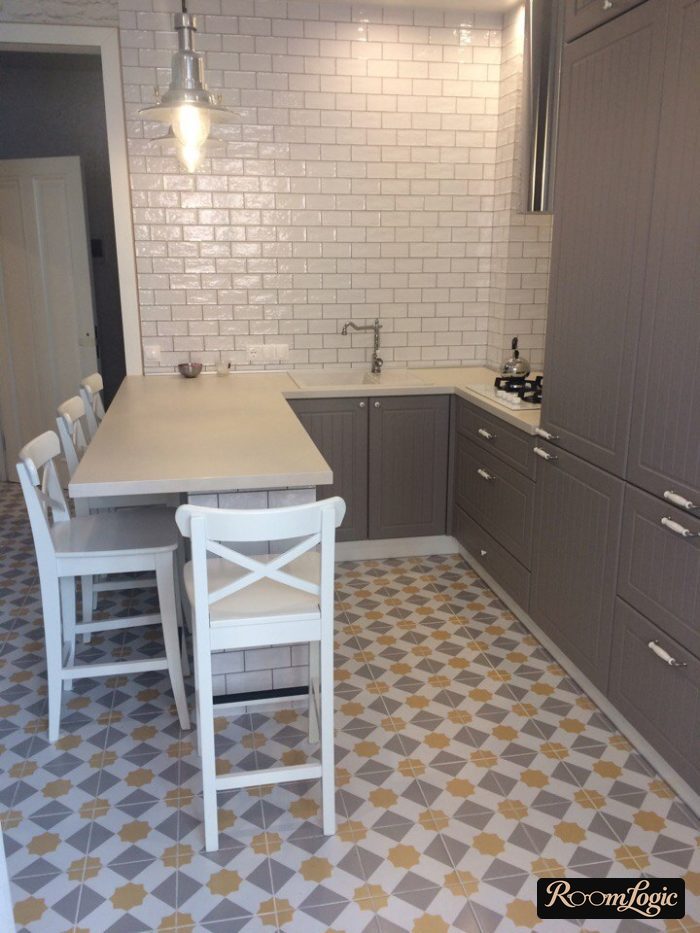
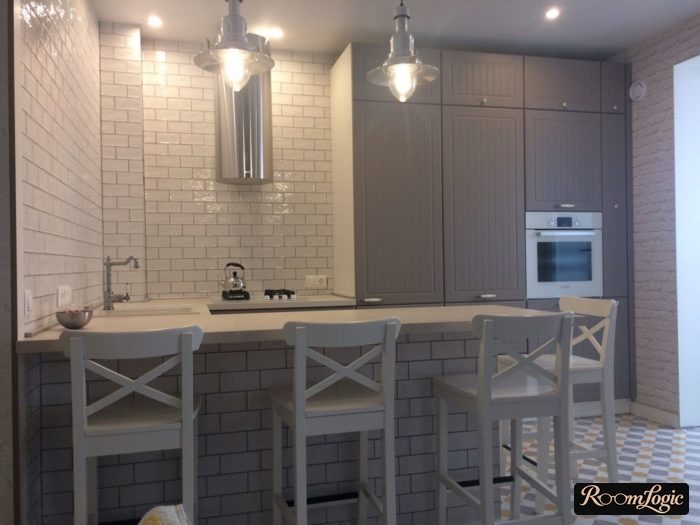
A gray kitchen is a cool alternative to a white one, but there are a couple of details in combining colors that we will cover. For that, we will use this digital magic:
This will not cover kitchen-planning rules; I have already described them in other articles:
- Kitchen interiors – basic rules and examples of unusual designs
- Small kitchen design – 7 rules and 4 common mistakes in small kitchens
- 7 tips for choosing kitchen cabinets
- L-shaped kitchens – 5 layout ideas
Gray Kitchen
Let’s start with options where the cabinets themselves are gray and sort out how to combine them with the backsplash, countertop, curtains, walls, and floor.
Combining It with Other Colors
The list is below.
Guess which other colors gray works with in a kitchen interior:
Gray and –
- green
- pink
- beige
- blue
- yellow
- light blue
- turquoise
- brown
- red
- purple
- white
- black
It was a trick question because the color itself hardly matters.
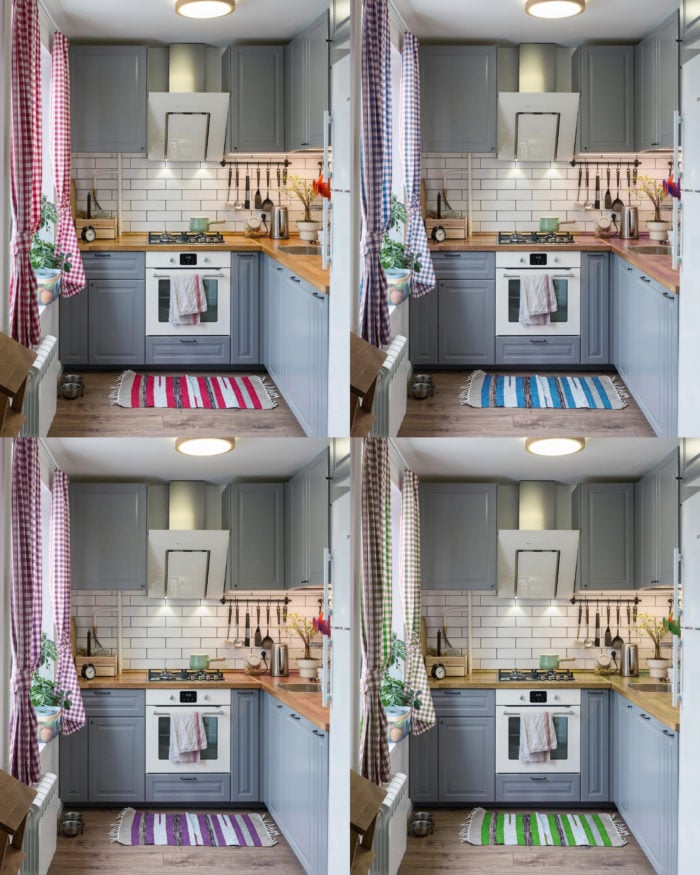
To make colors work together, you need to consider 3 parameters:
- Saturation (the amount of gray in the color) and brightness (the amount of white and black in the mixture)
- How much visual space the color occupies (the more there is, the less saturated and bright it should be)
- The contrast between them
And that gives us 2 approaches:
- A gray kitchen with bright accents
- A neutral palette of gray, white, black, and wood with any other low-saturation color added
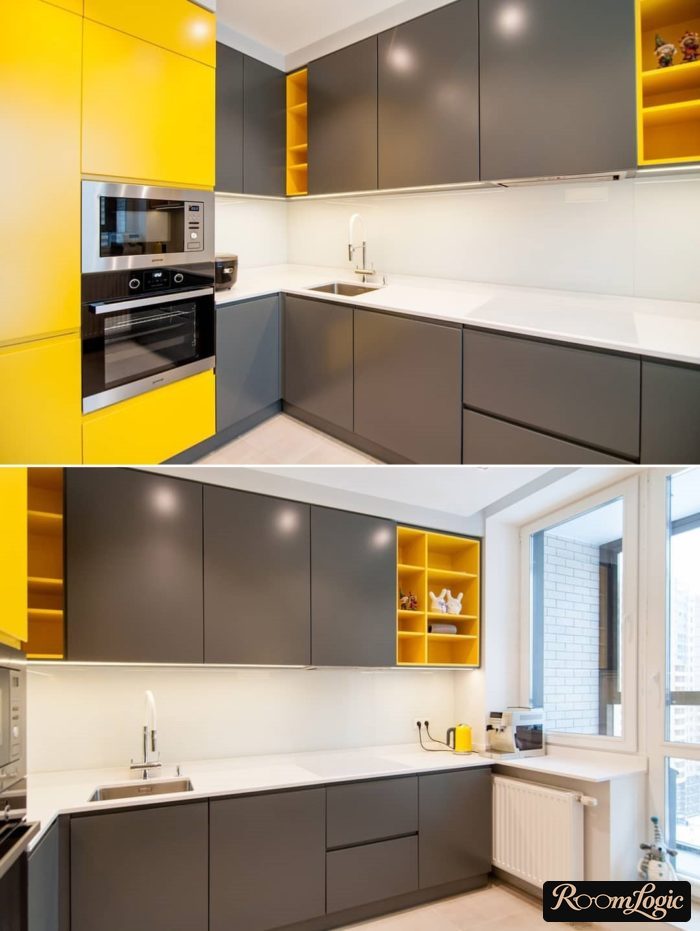
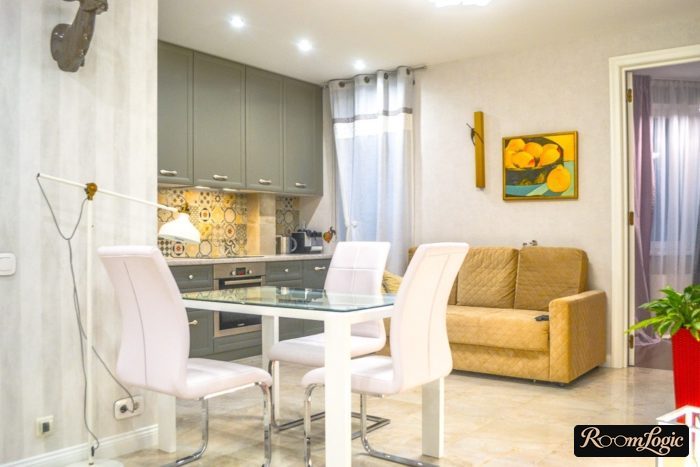
The first option with small bright accents was fashionable earlier. In other words, several spots of pure color were added to a gray kitchen interior and neutral color palette. You can still use this (with every color except red – seriously, do not use it at all).
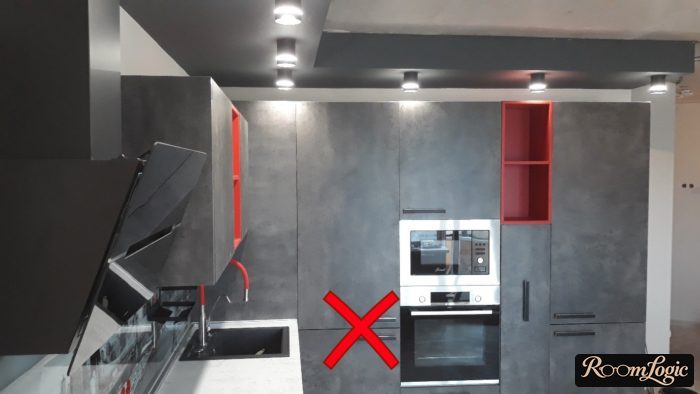
But modern design uses the second approach – pure colors are not used. If you have ever failed to understand why some designs look stylish while something is clearly wrong with others, the secret is low saturation (mixing the accent colors with gray).
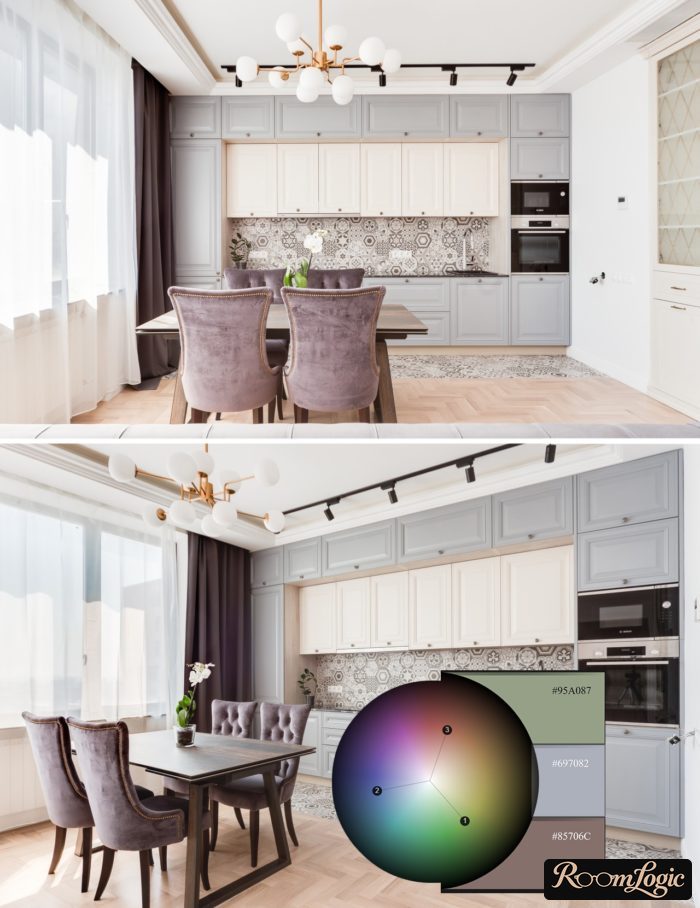
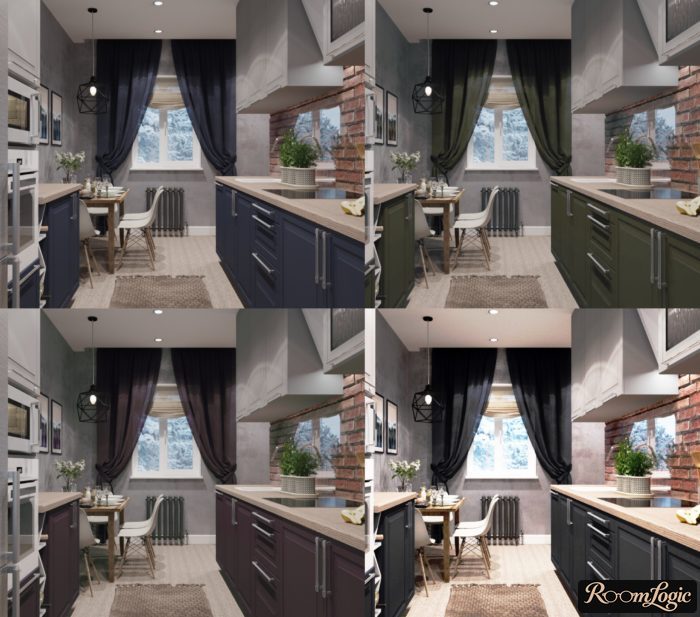
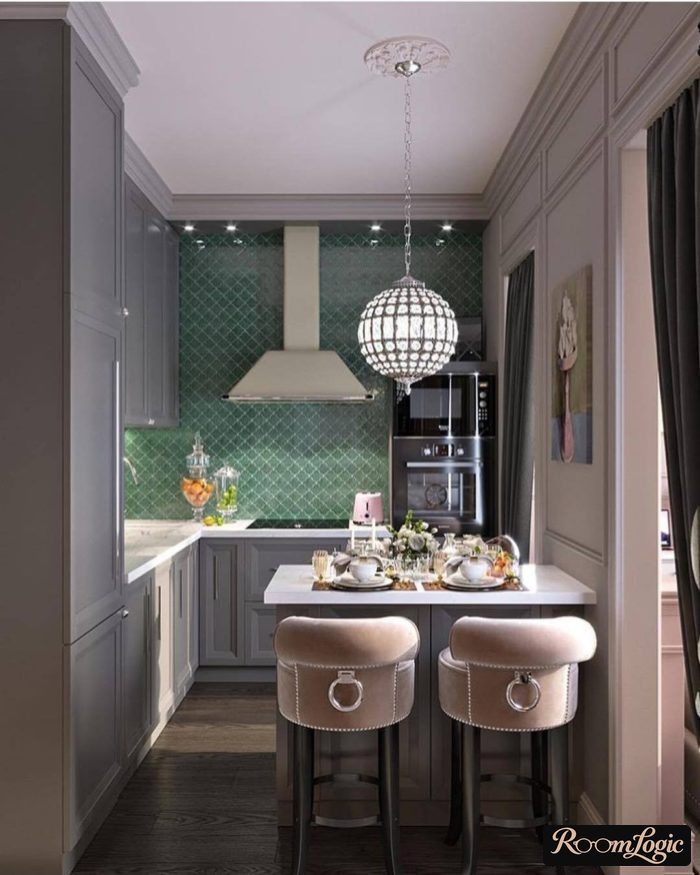
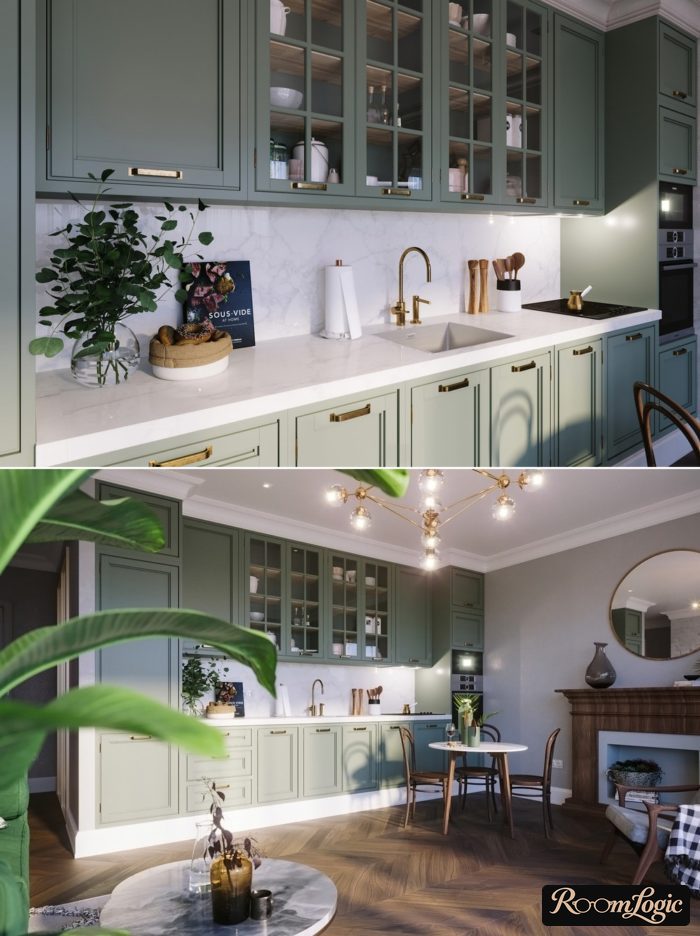
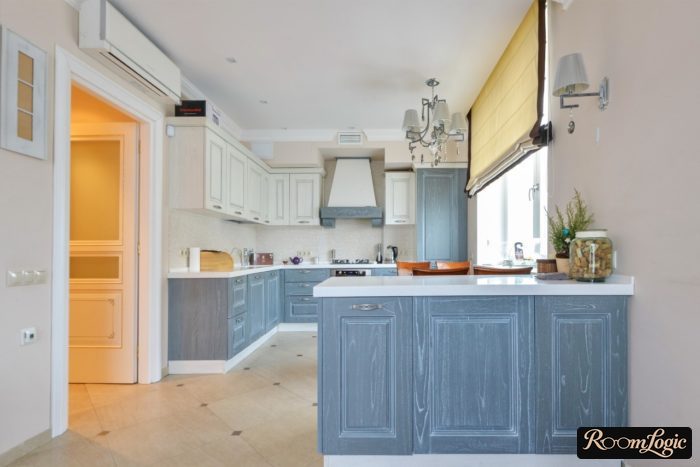
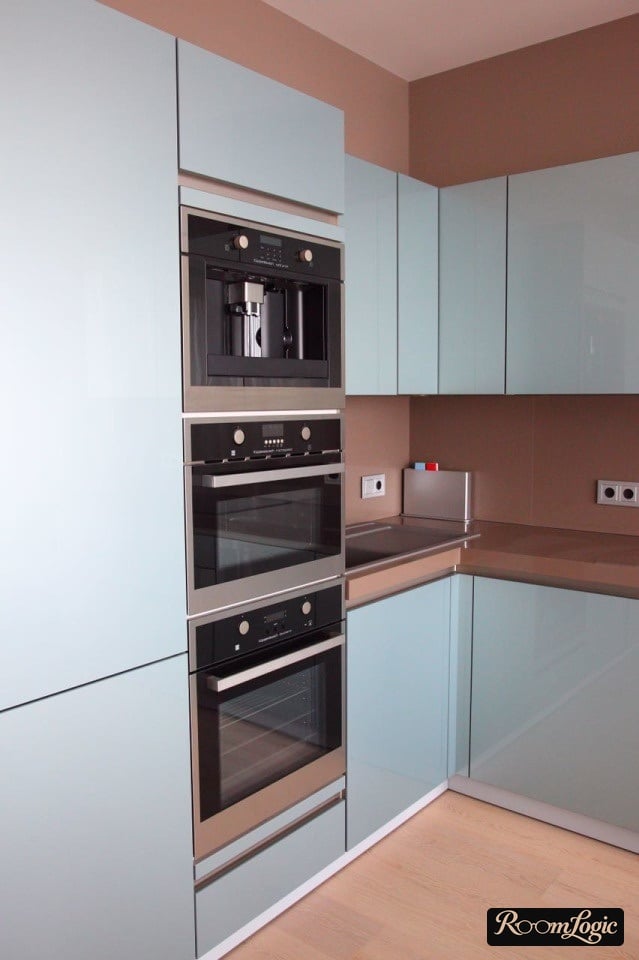
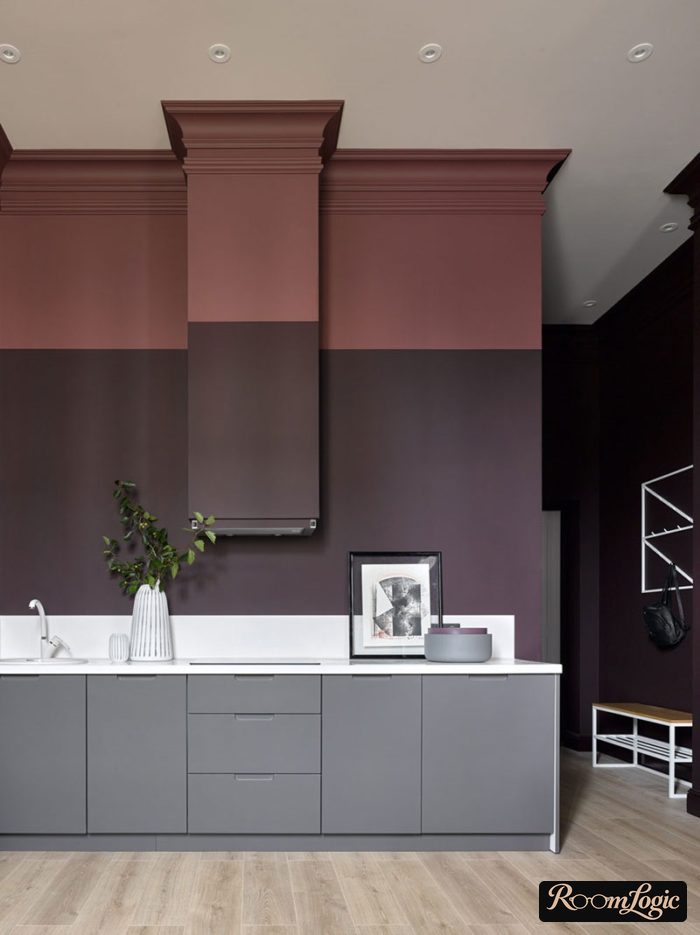
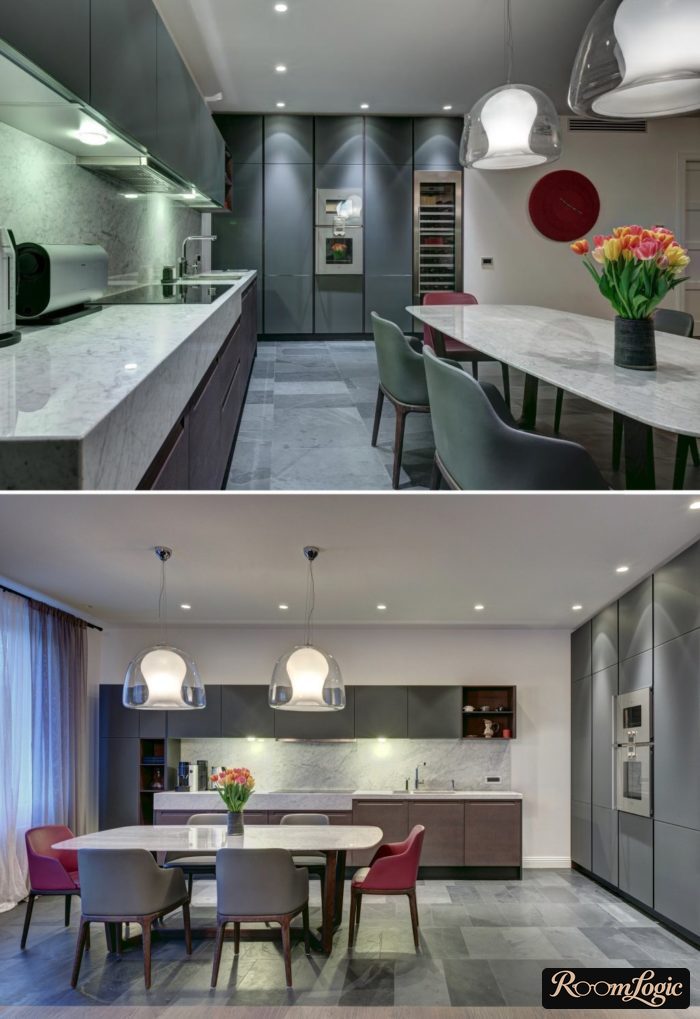
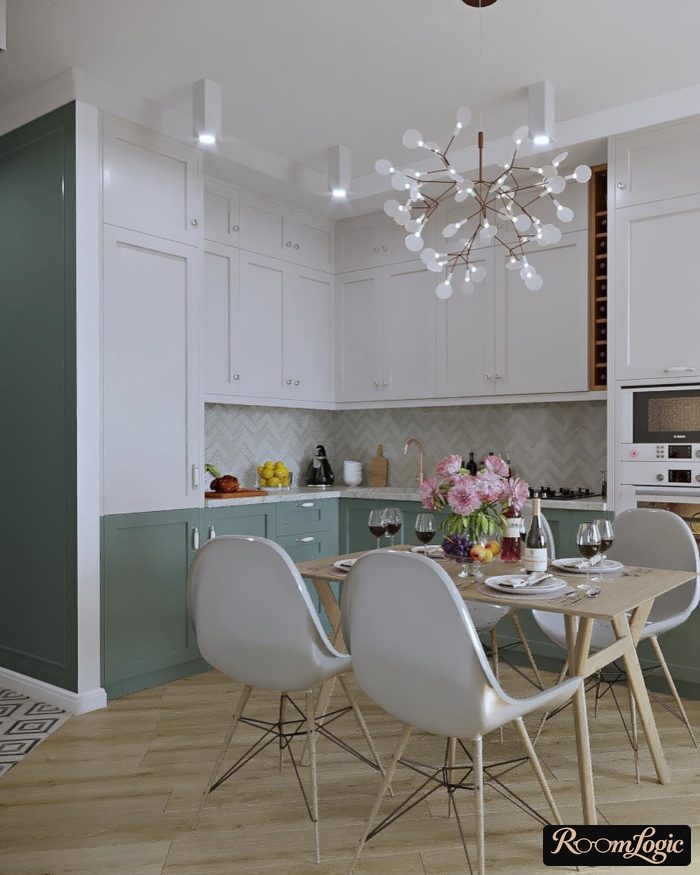
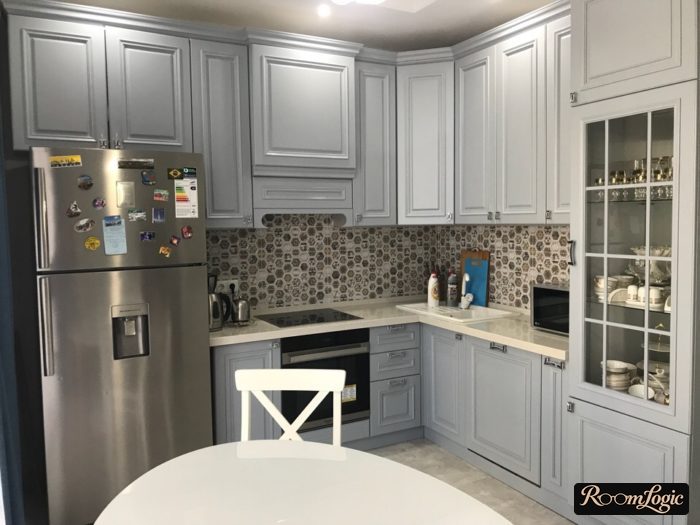
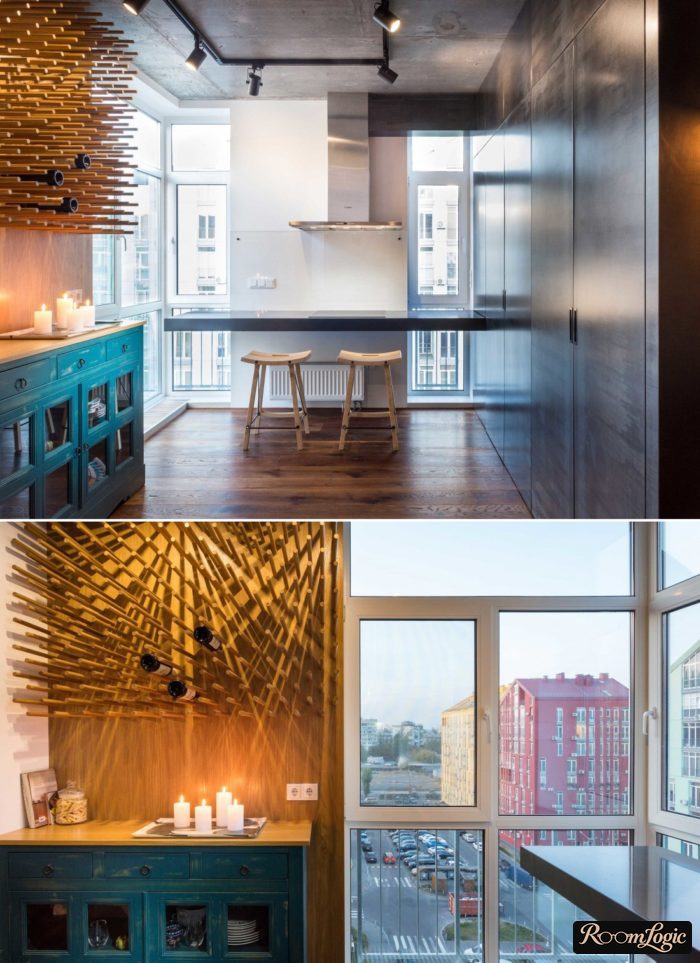
And no, it will not be boring. See the examples in Scandinavian style and loft style as proof.
And read my long article about combining colors in an interior.
With Wood
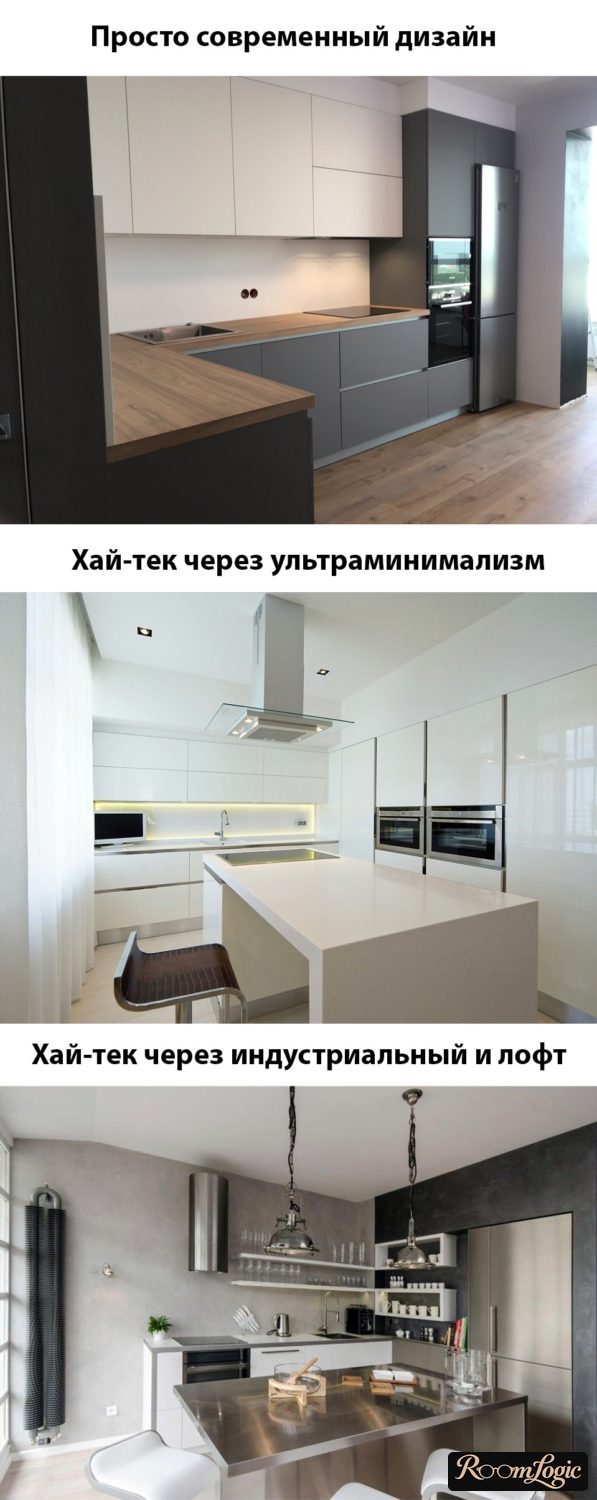
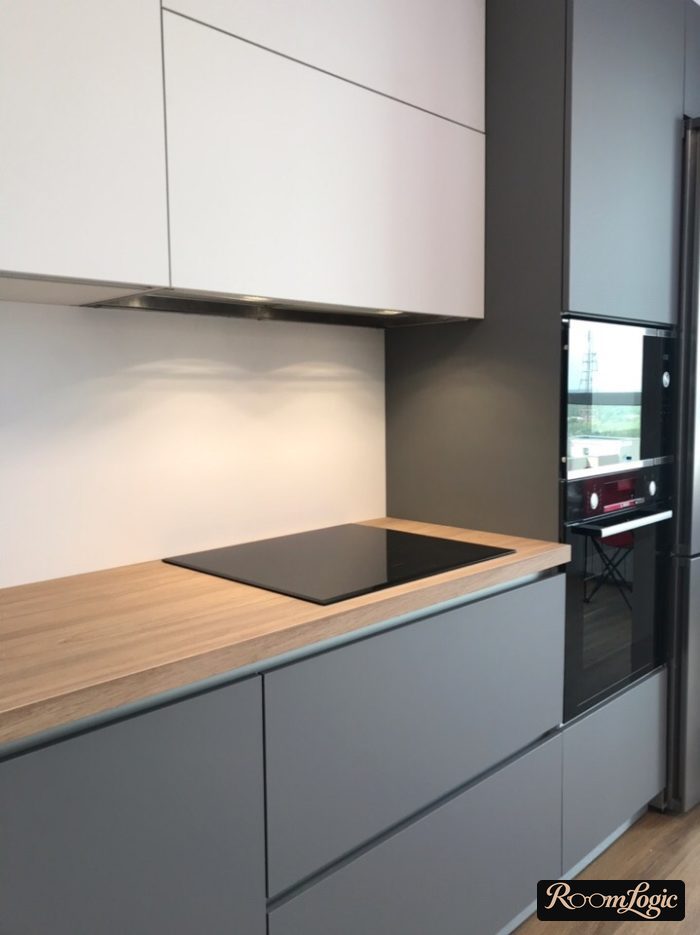
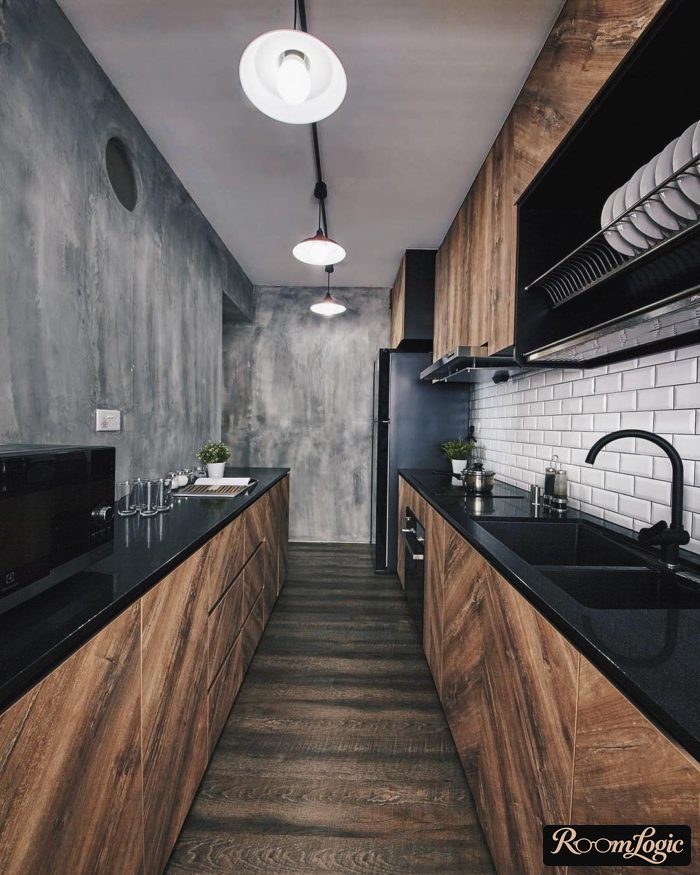
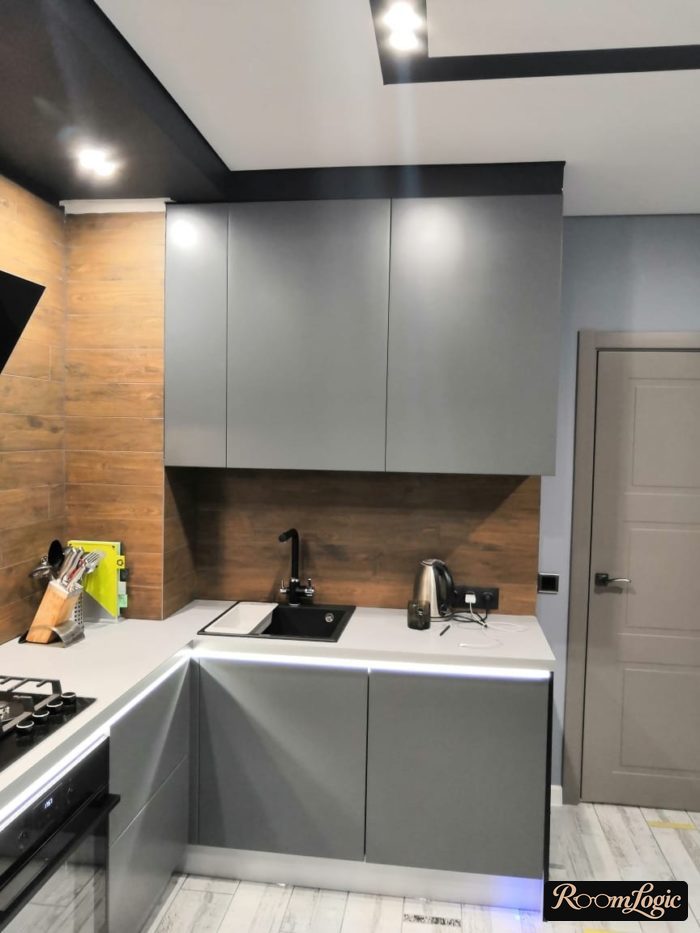
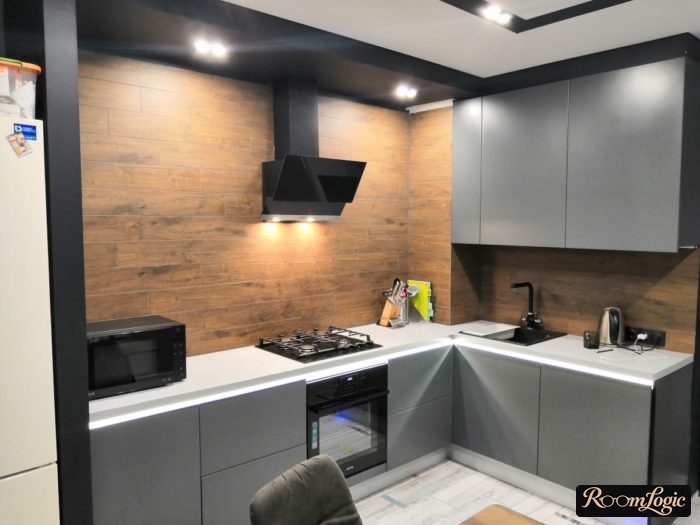
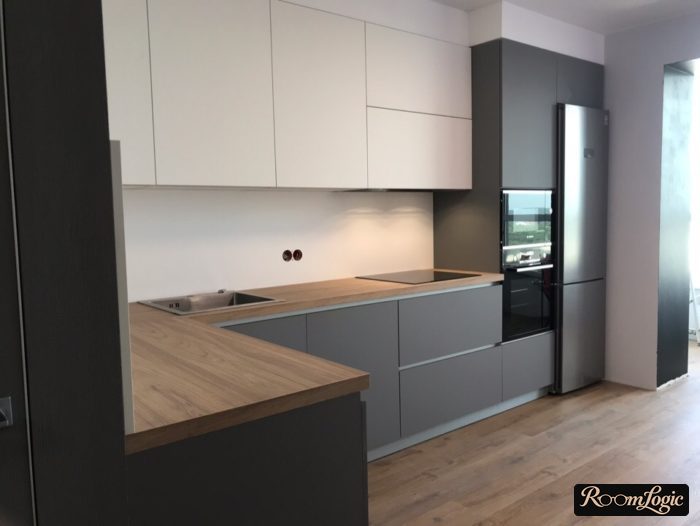
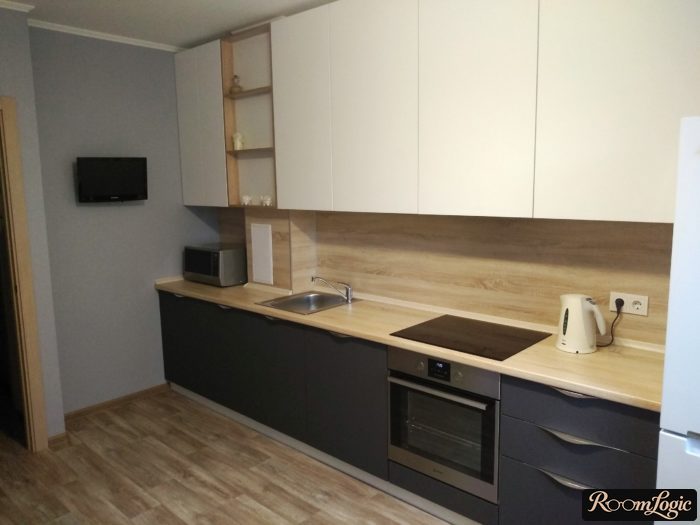
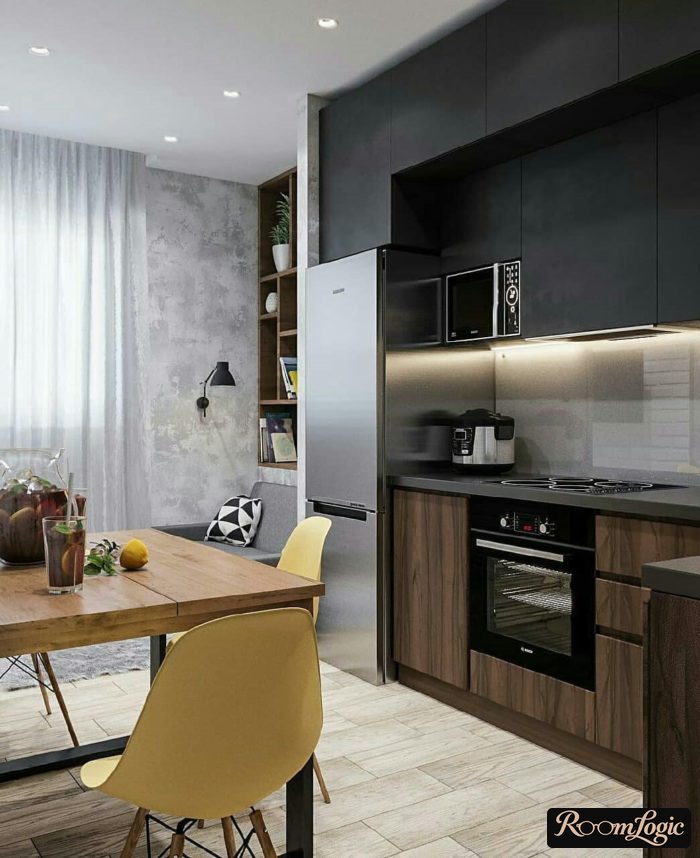
An example of a modern gray kitchen with matte cabinet fronts and a wood-look countertop:
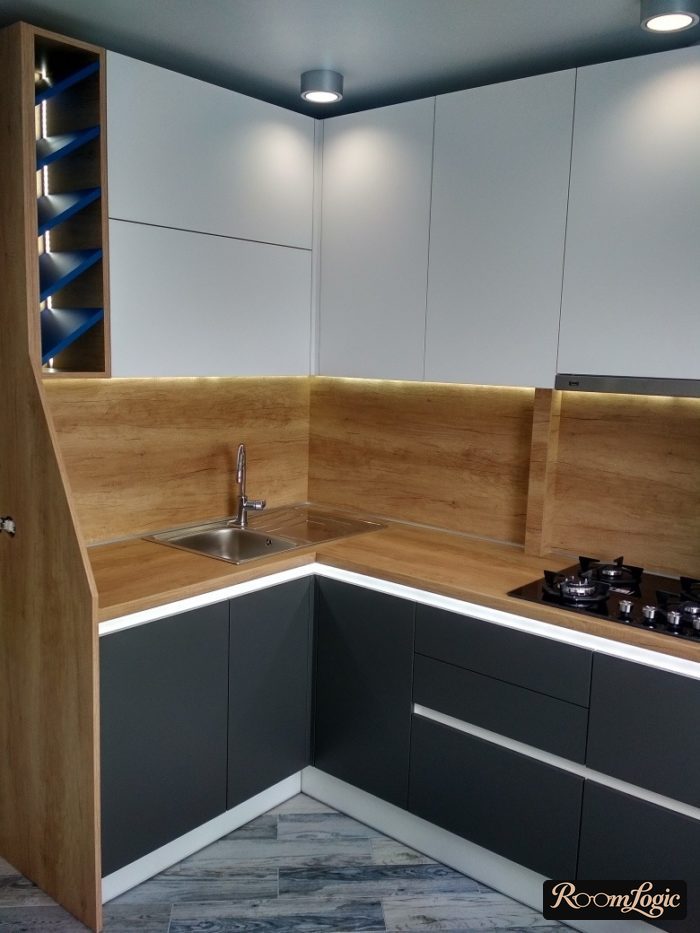
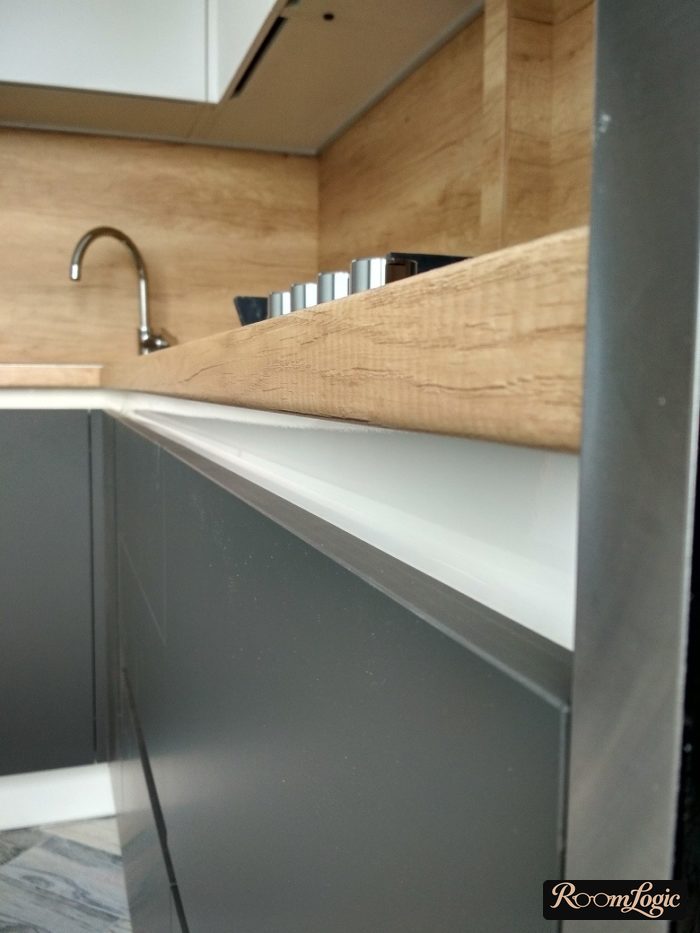
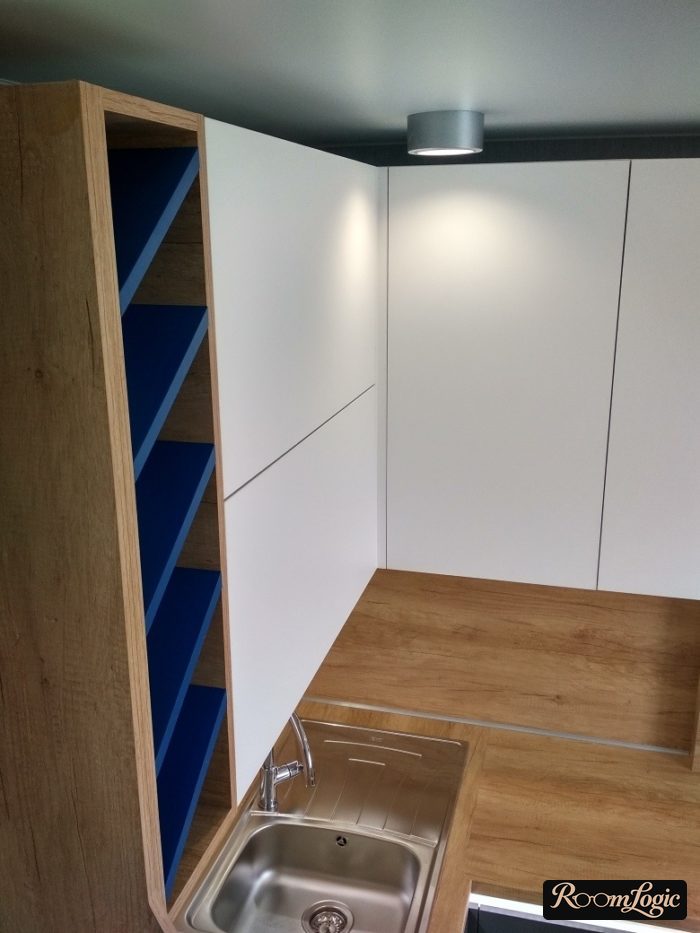
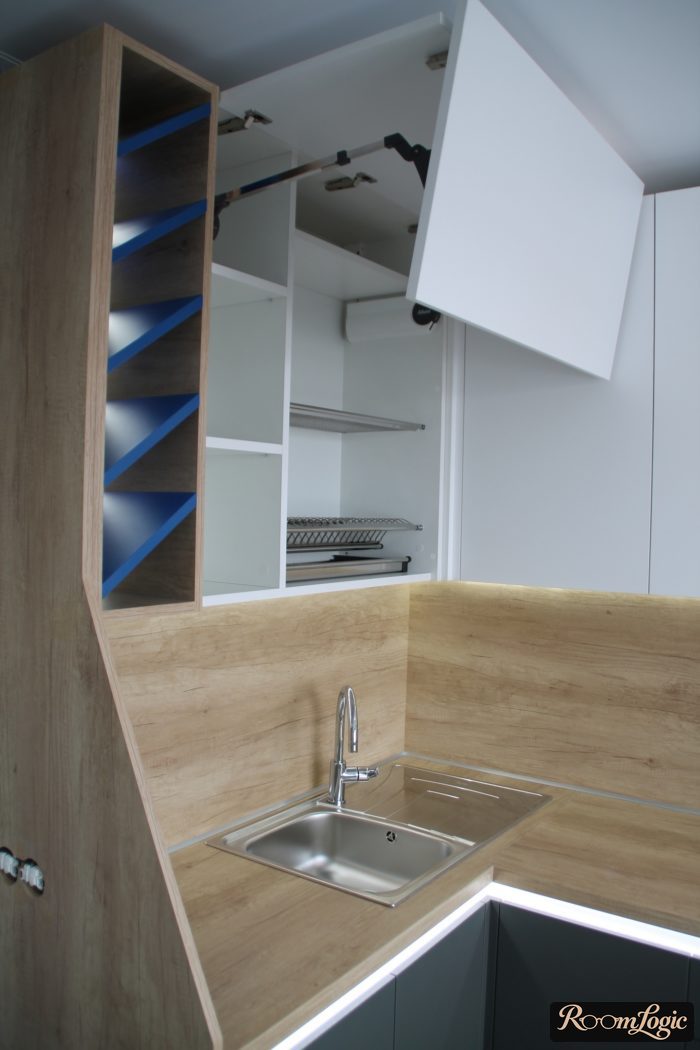
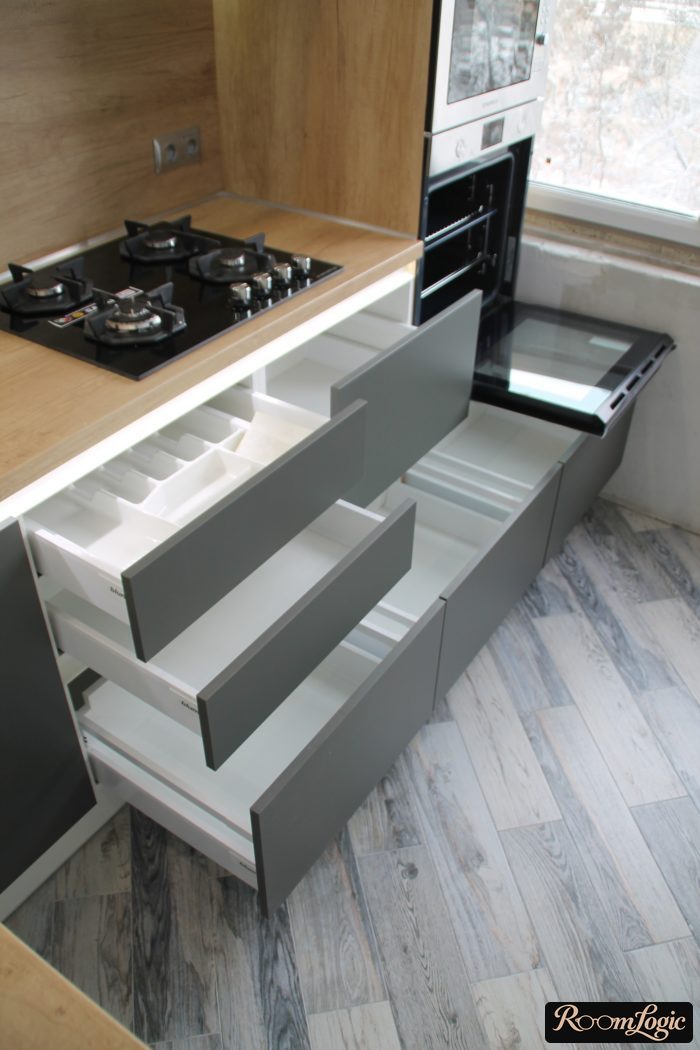
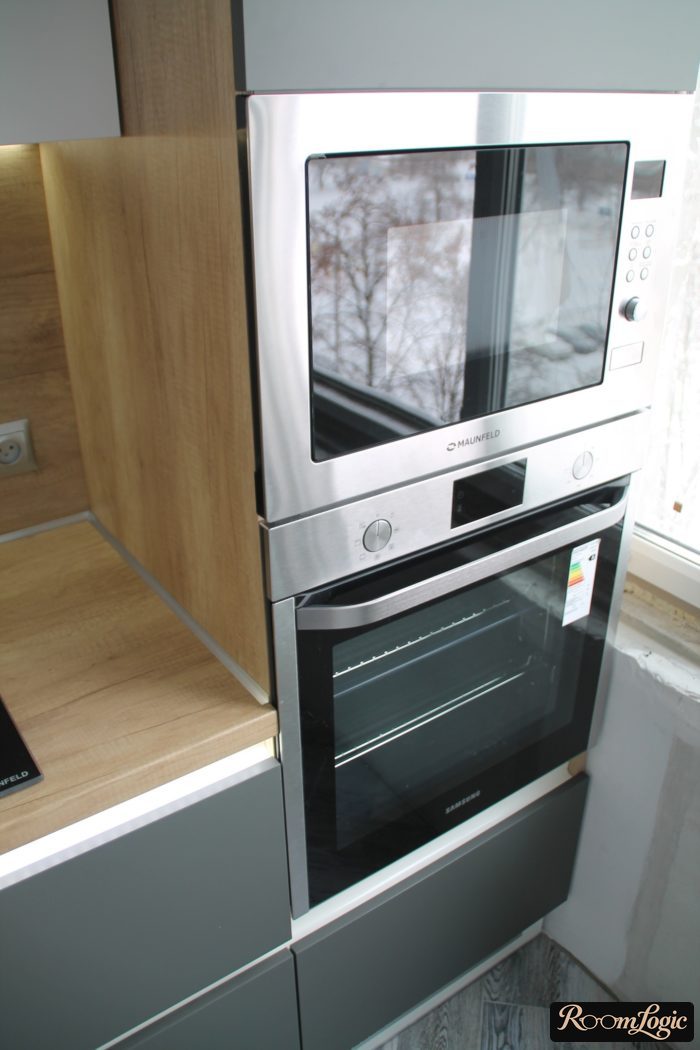
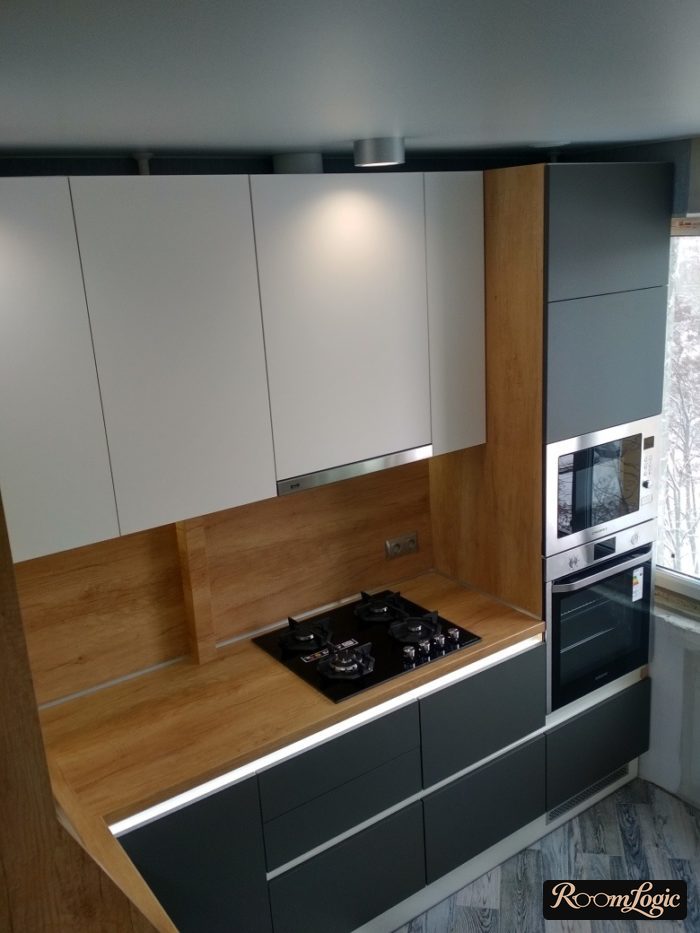
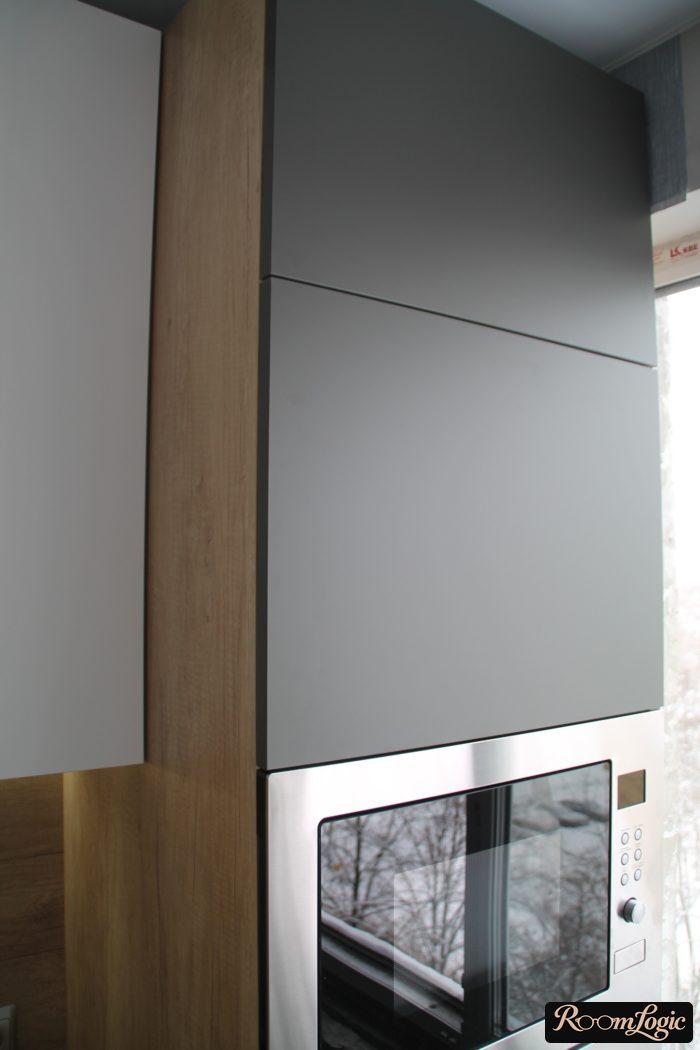
There are no accents, but a 65-square-foot kitchen does not need them.
3 ideas that will help you avoid mistakes:
- Do not use gray wood-look materials. In theory, gray imitation wood has a right to exist, but in practice, I do not know a single manufacturer that makes it successfully.
- It is better to contrast different materials and textures. A design plan may show a wood countertop matching the color of wood-look porcelain tile or laminate flooring perfectly, but that is hard to achieve in real life. Contrast is better – for example, concrete- or marble-look floor tile with a wood-look countertop. Below is an example of a good project and design where the matching effect was achieved after all.
- For a light gray kitchen, it is better to use light wood too. For dark gray, both light and dark wood work.
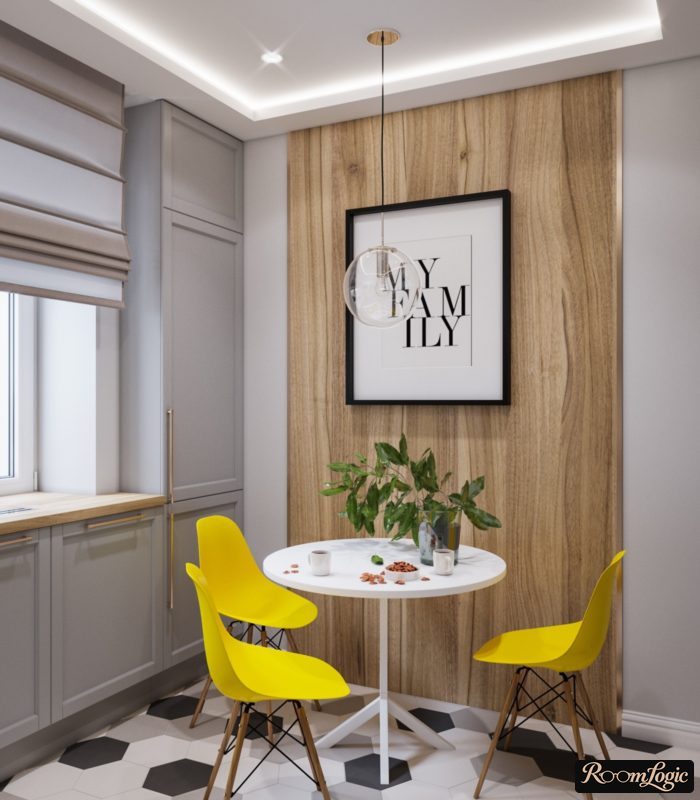
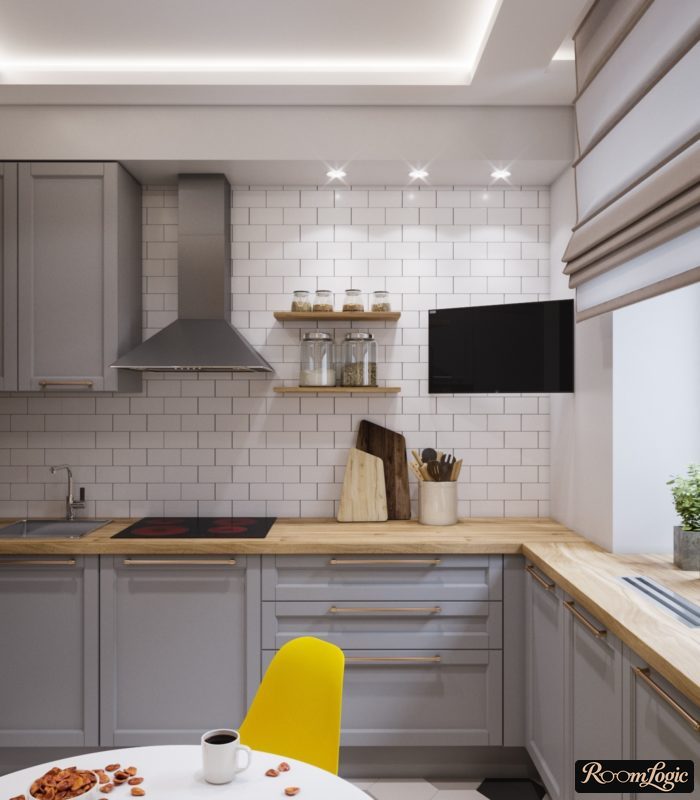
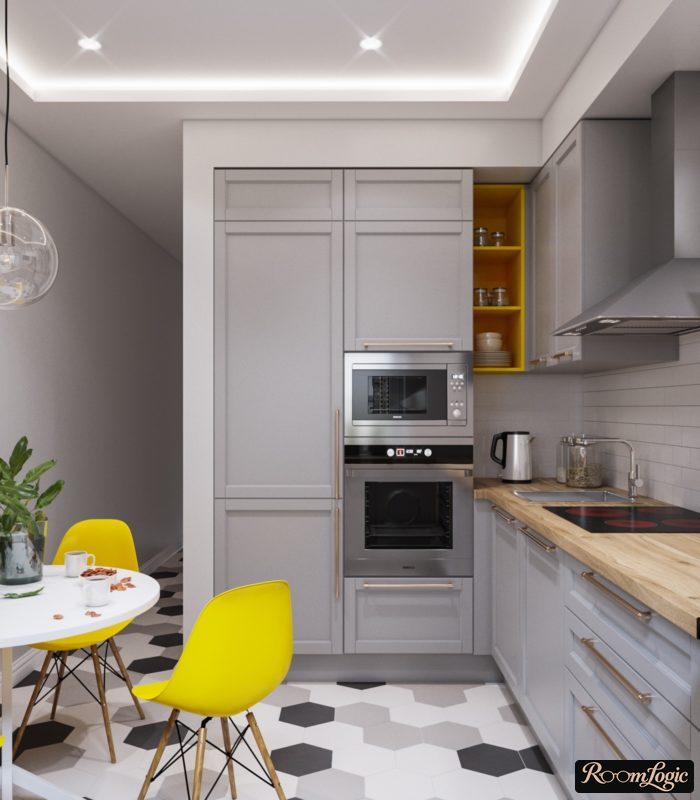
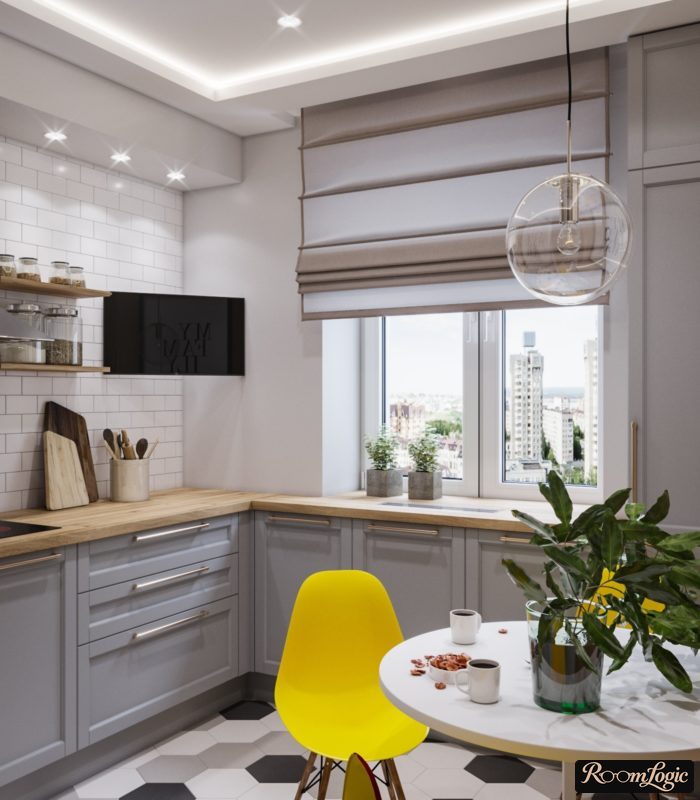
You can see many details in the article about white kitchens with wood countertops.
With White
Gray and white are neutral colors that work together in any amounts without special rules. Making a mistake here is almost impossible.
But here is what I would pay attention to:
- Do not create a mosaic effect, with white, gray, and black appearing in spots like a checkerboard. The points below help with that.
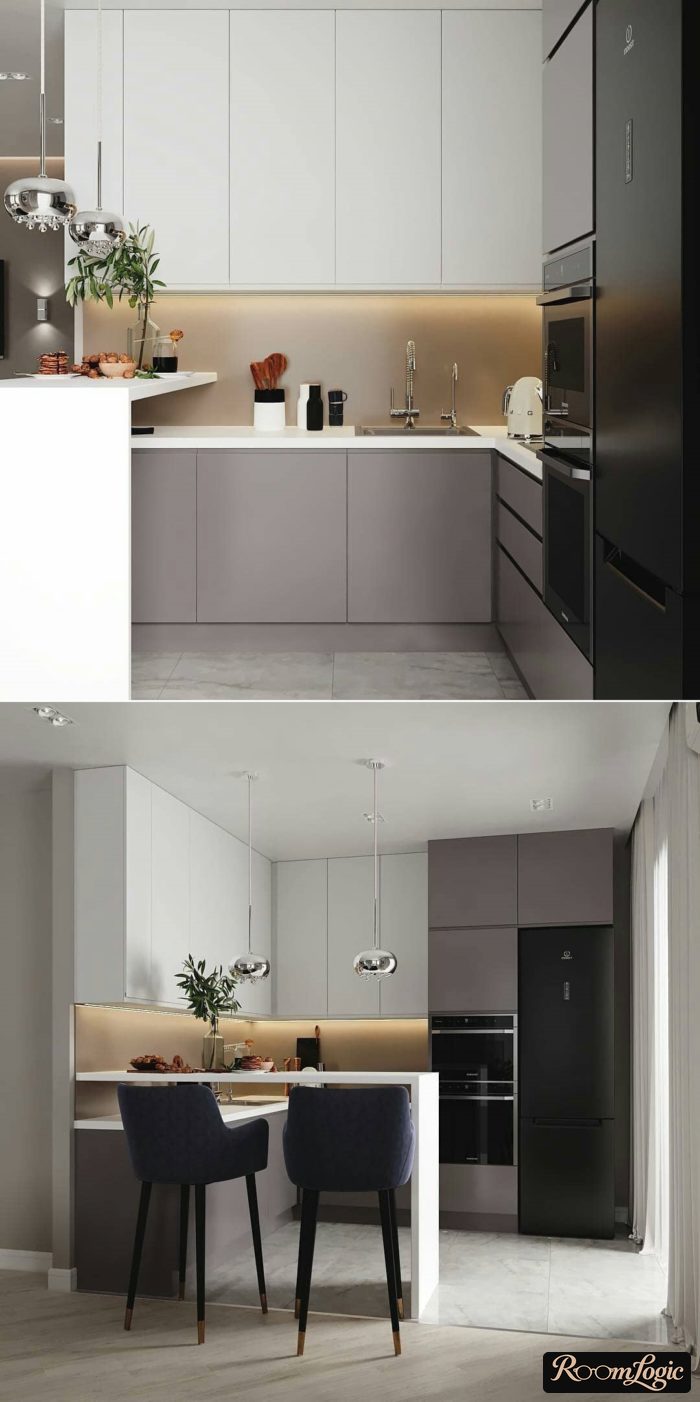
- Decide in advance on the color and models of every visible appliance: wall oven, microwave, cooktop, refrigerator. Stainless steel works with any cabinet fronts; white is better built into only white cabinets.
- If the refrigerator is not built in, you will most likely choose a stainless-look gray one – white options are either expensive or unattractive.
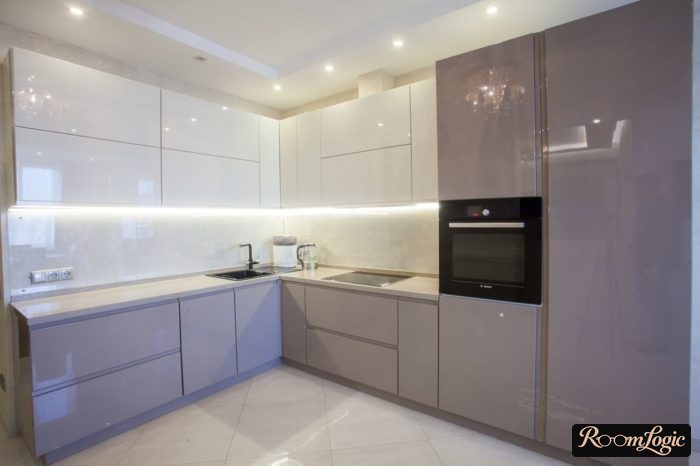
- It looks better when the lower part of the kitchen is darker. The standard is gray lower cabinets and white upper ones. The reverse is not terrible, just a little worse.
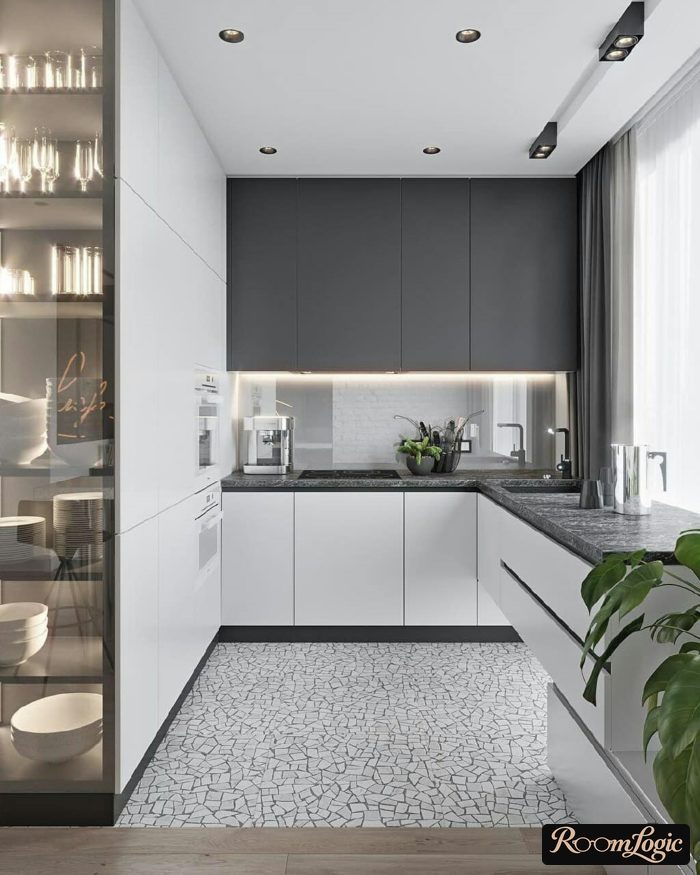
Glossy and Matte
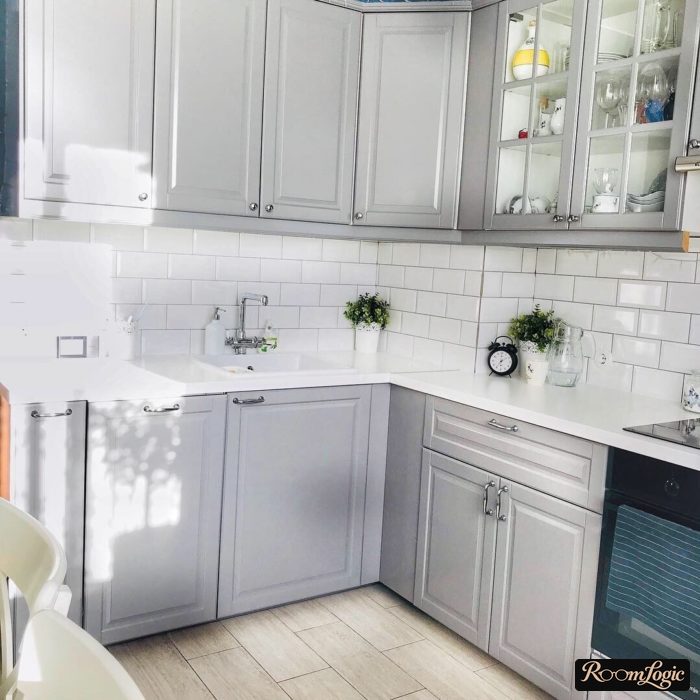
The 2 fundamentally different gray kitchen design options are matte and glossy.
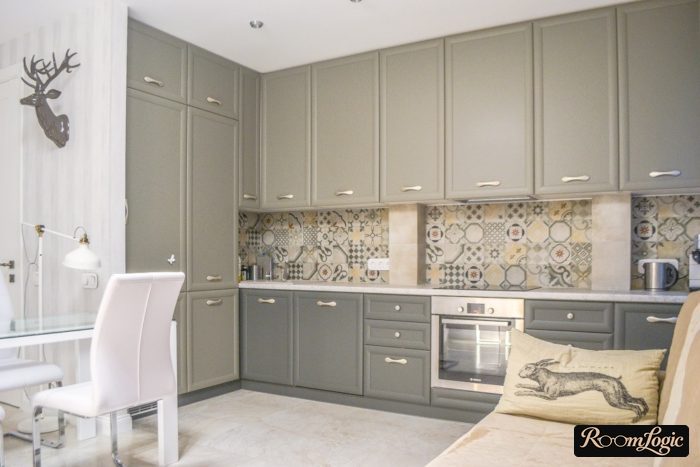
For a neoclassical, traditional, or other kitchen with milled or recessed-panel cabinet fronts, the choice is obvious – matte only.
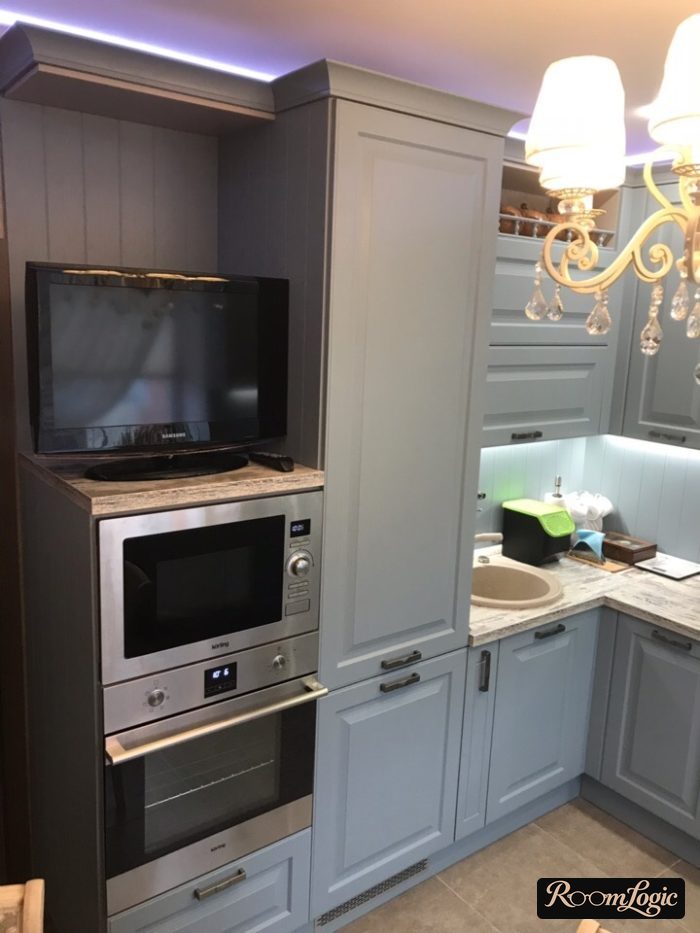
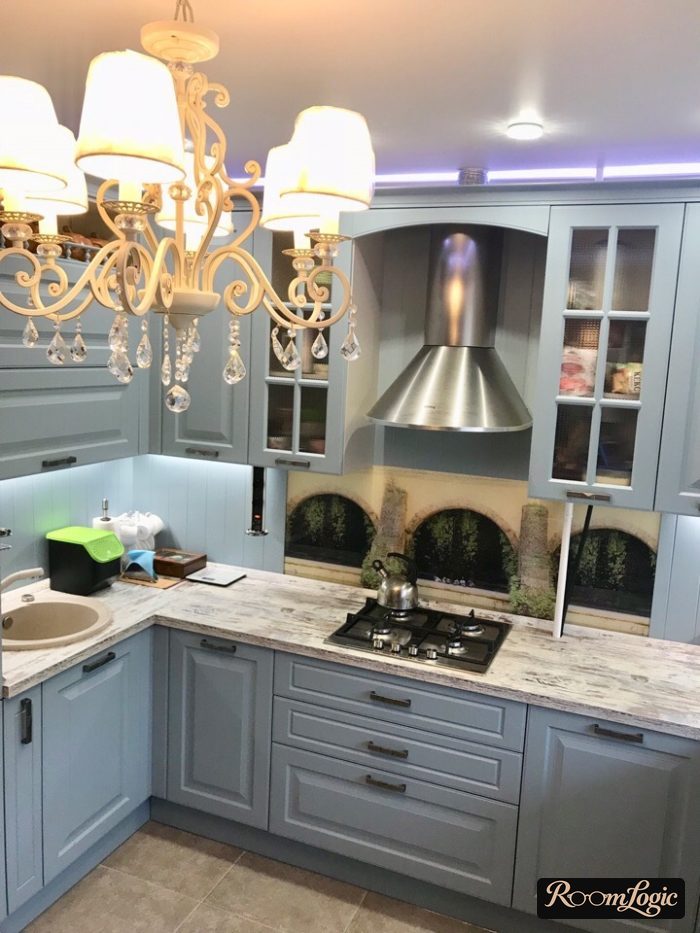
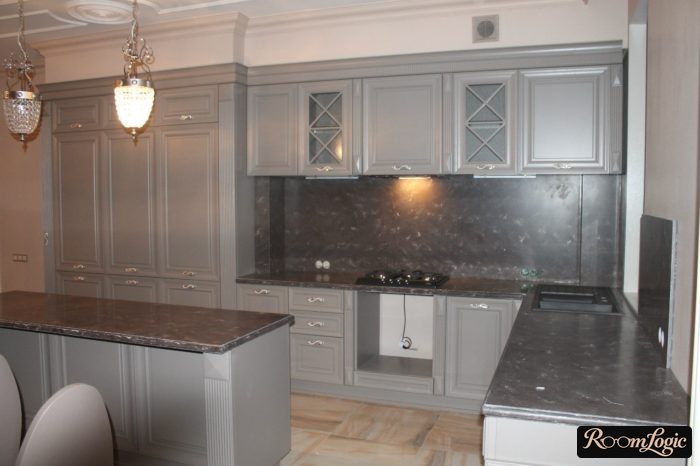
But modern styles and flat cabinet fronts add glossy options, and they can look very different depending on how light the gray is.
The darker a glossy cabinet front, the more fingerprints show. In other words, a light gray kitchen is more practical than a dark gray one.
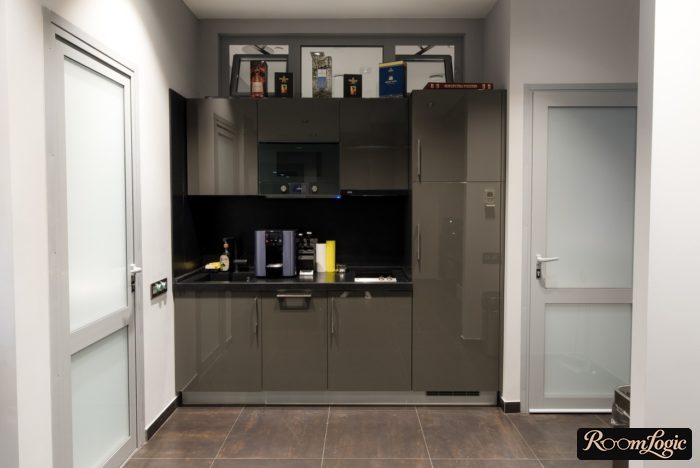
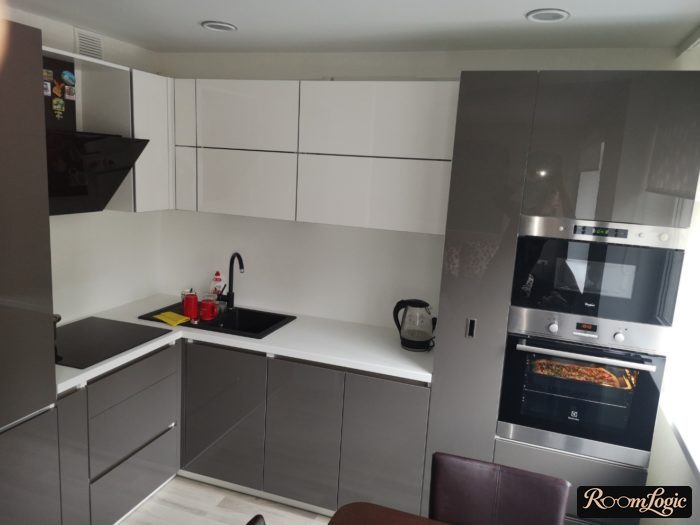
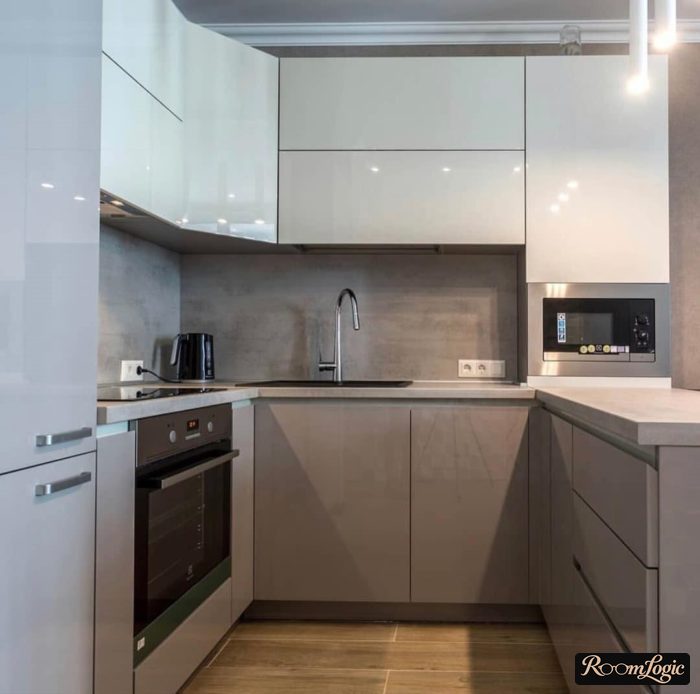
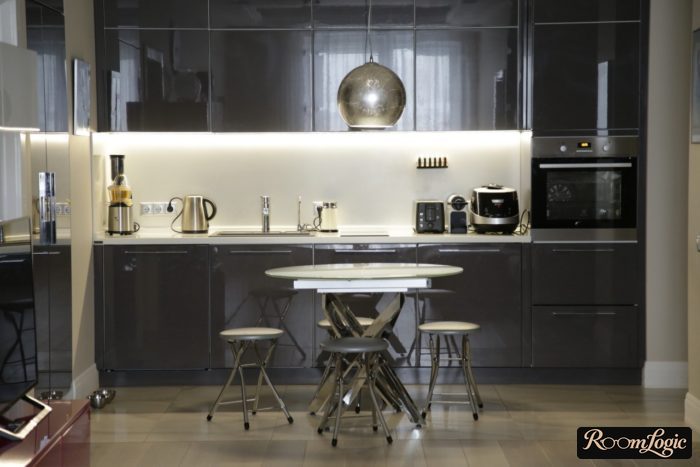
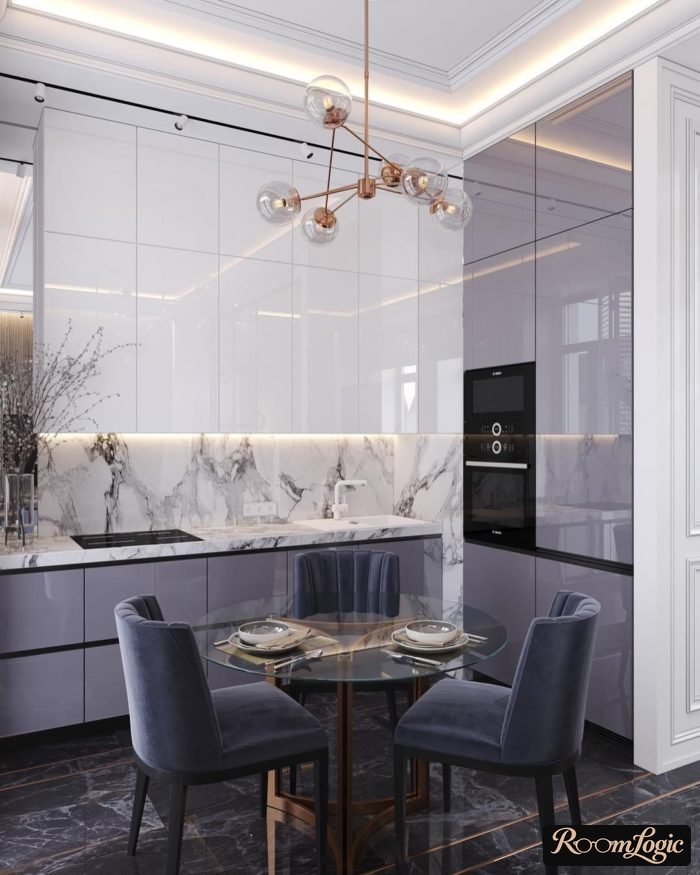
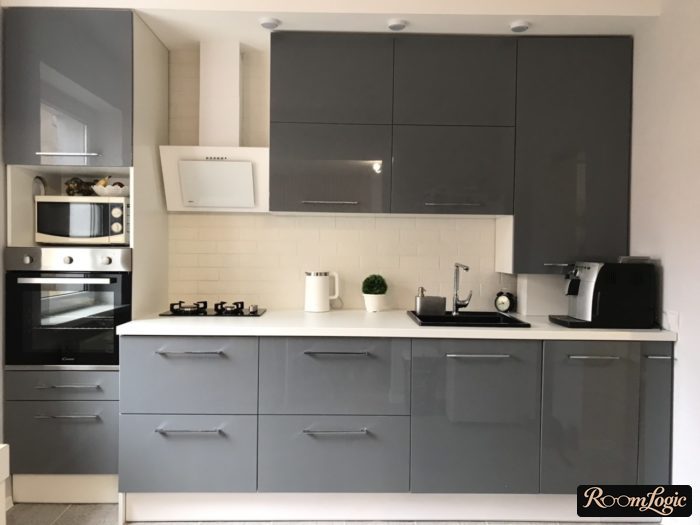
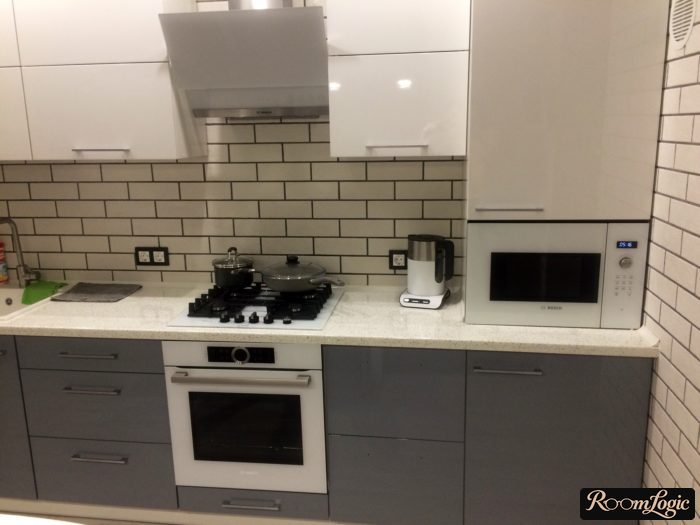
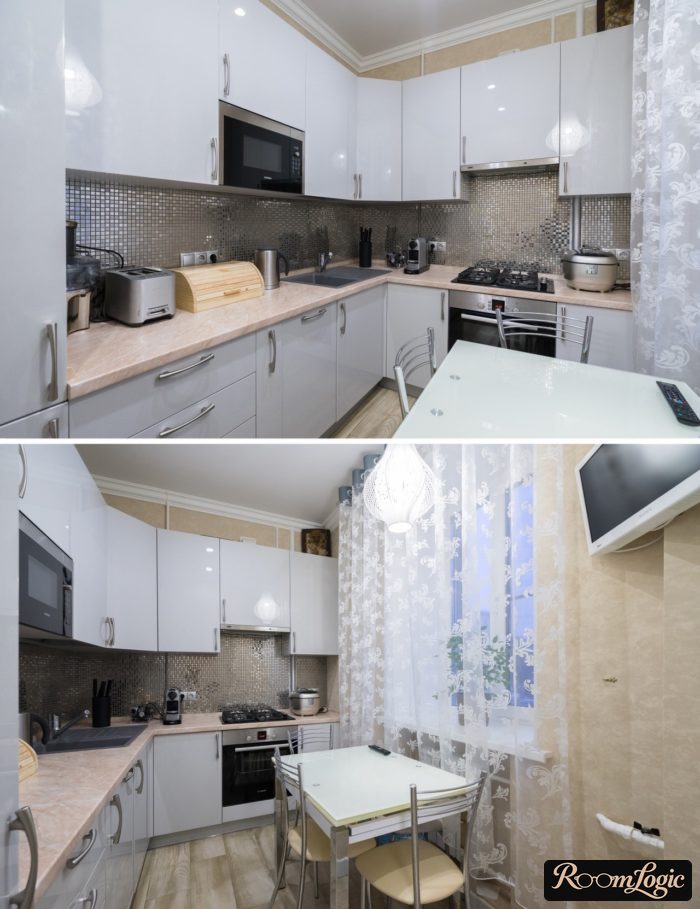
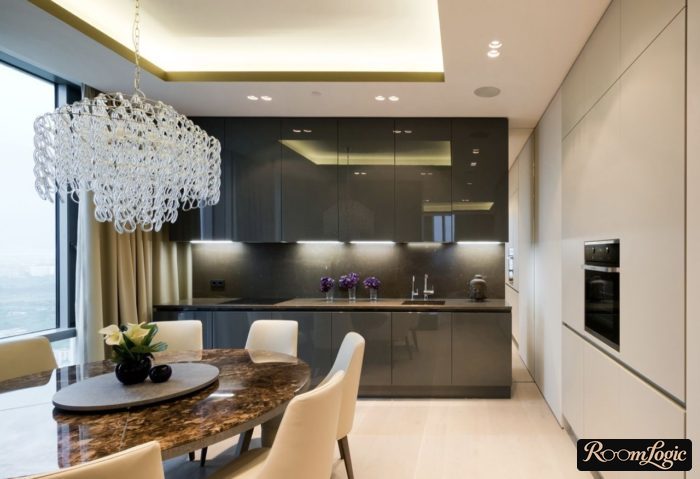
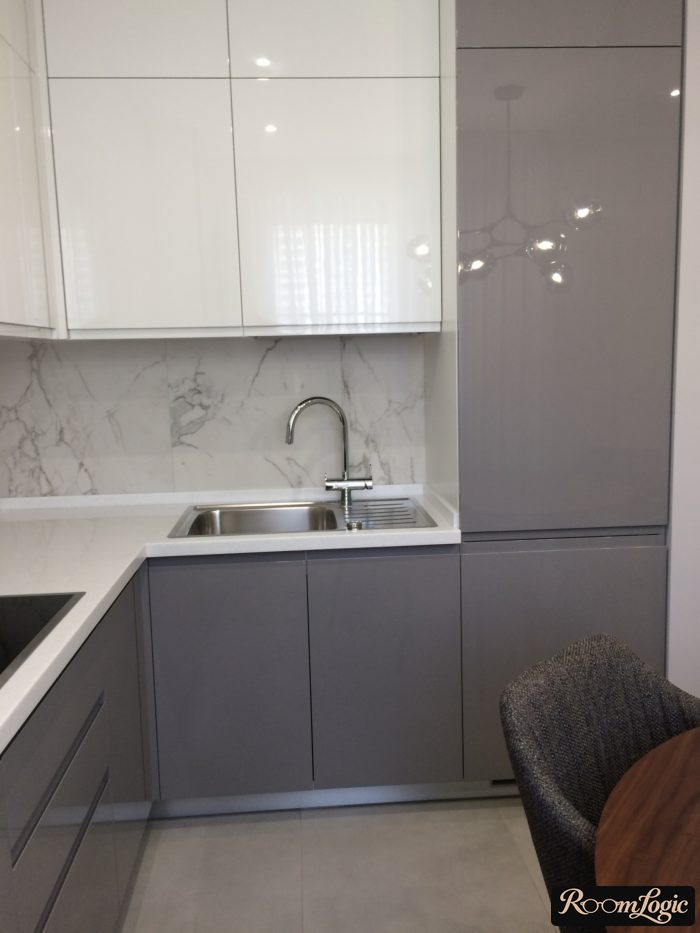
Glossy gray kitchen cabinets work well with white and light wood. Other shades are difficult – bright accents usually do not work with gray gloss. If you still decide to add them, use only colors with very low saturation.
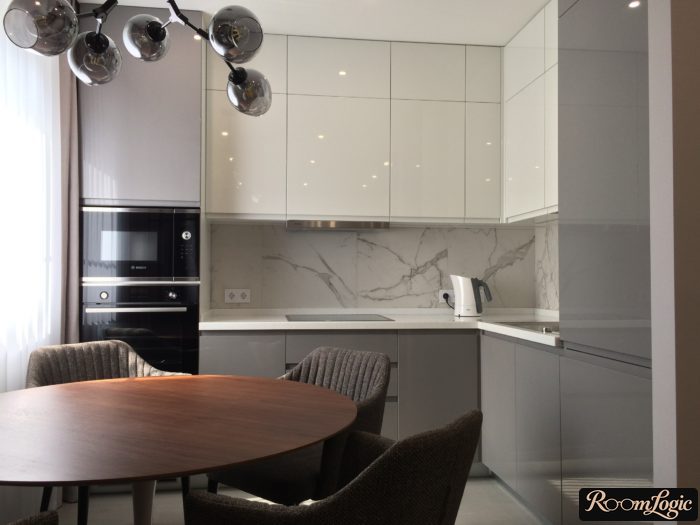
Textureless matte gray looks ultramodern and is often used for high-tech kitchens in graphite shades. But keep in mind that fingerprints show on dark gray.
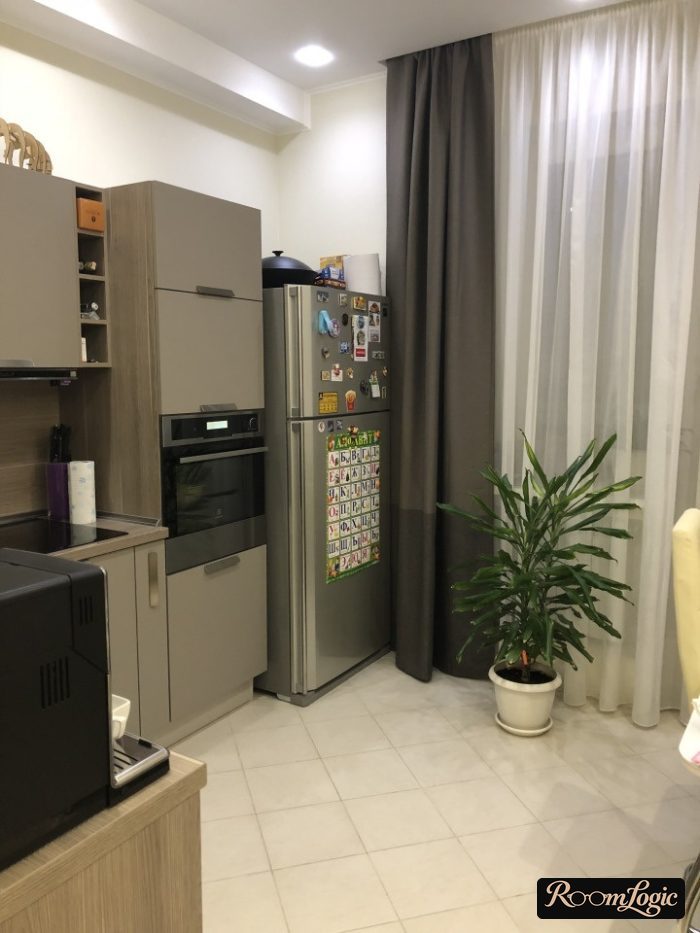
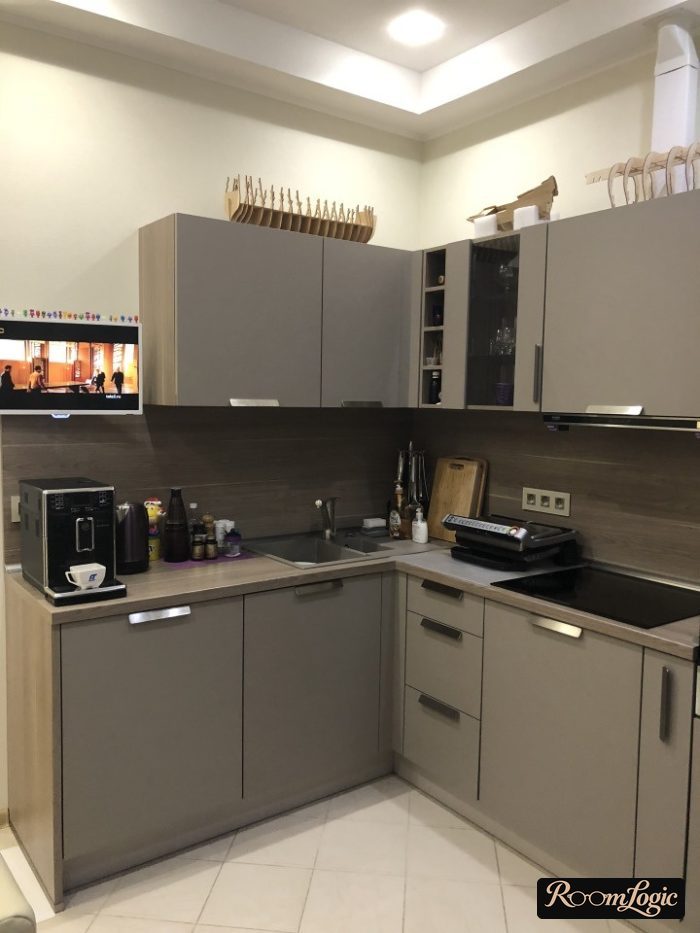
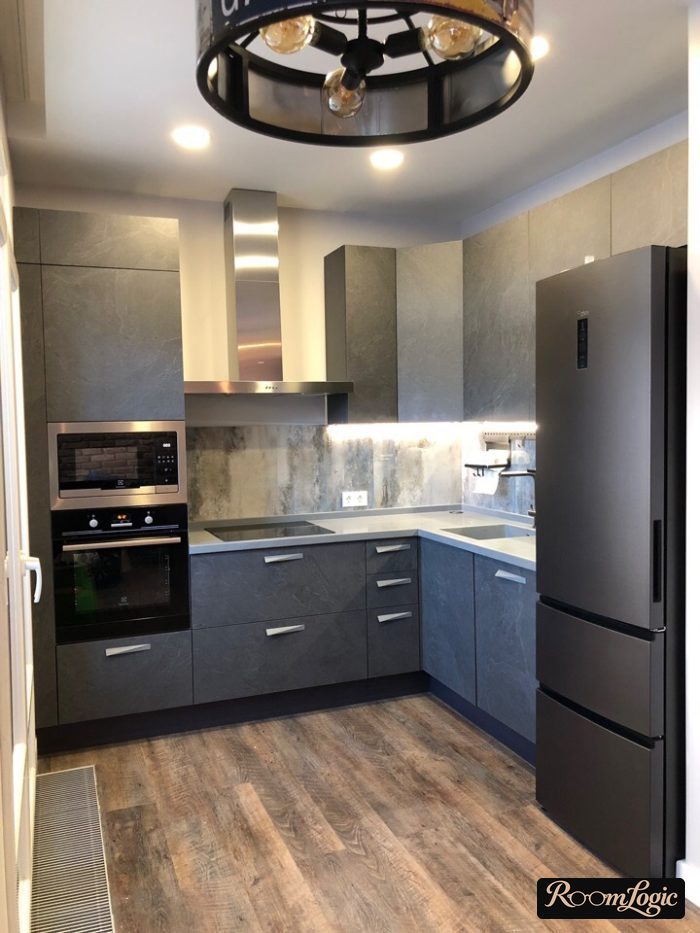
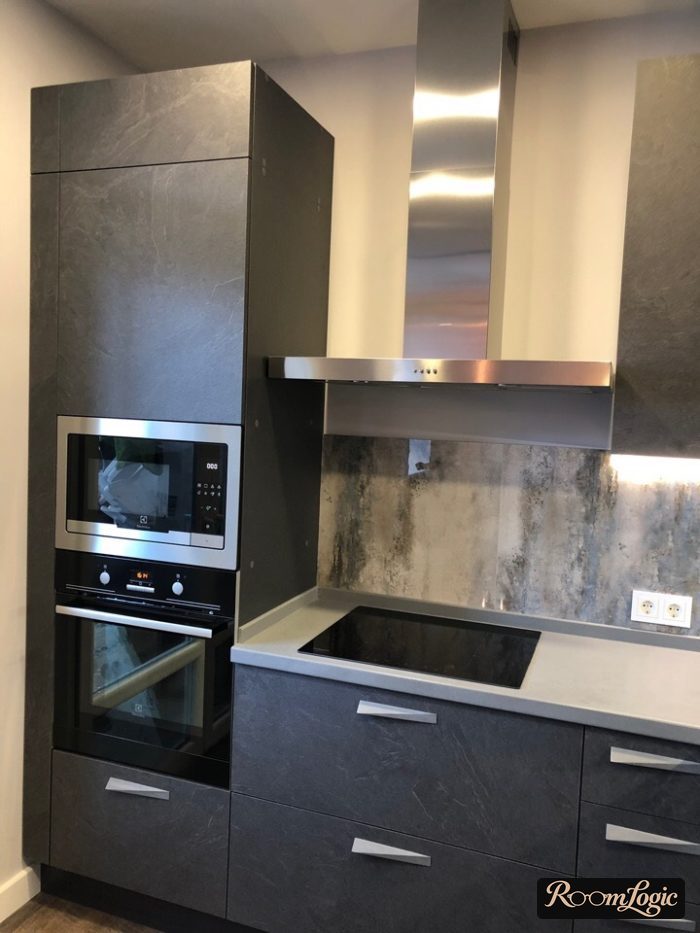
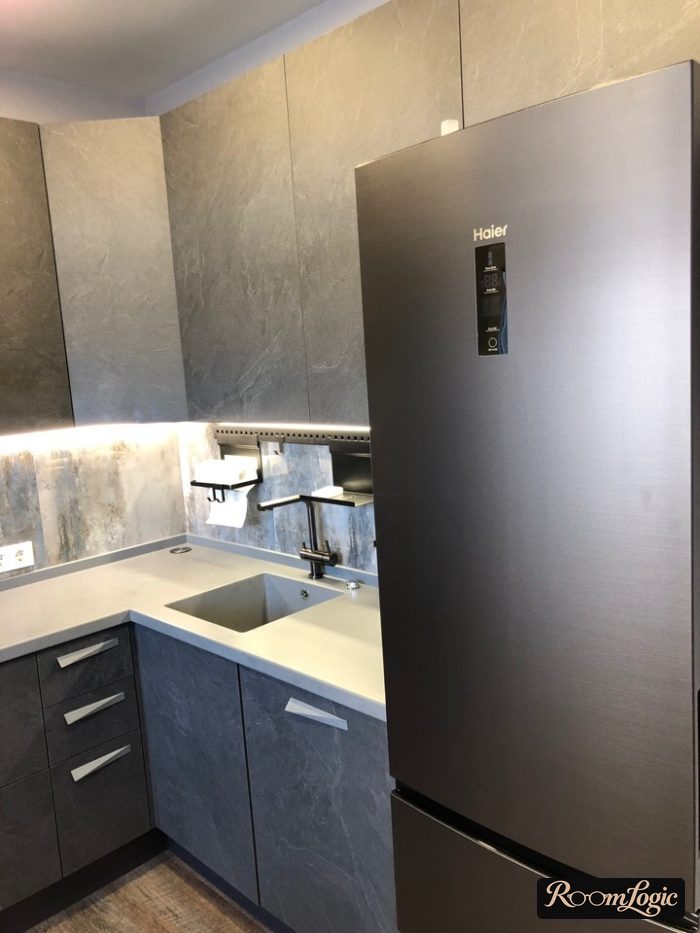
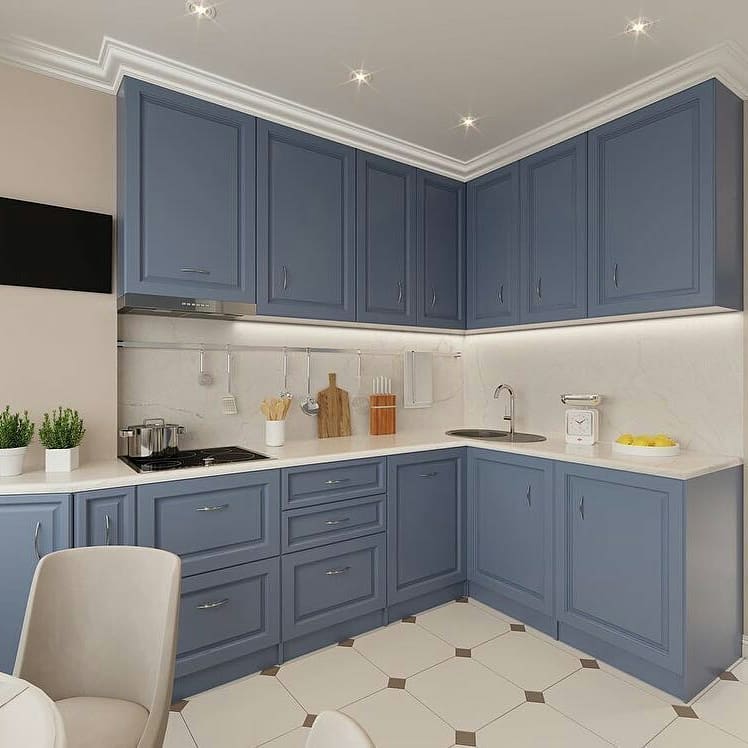
If you want painted matte gray cabinet fronts, you have an opportunity to take a small risk and use interesting colors from the RAL catalog. Ones where just a little of another color, such as blue or green, is added to gray. It looks very fresh.
Gray Finishes and Curtains
Everything except the cabinets themselves.
Walls and Lighting
An important point: even with a gray kitchen, accents on the walls are unnecessary. They should simply be a neutral background.
The reason is the very heavy load of objects plus the lack of open walls. I already wrote about this in the article on choosing kitchen wallpaper, but in short, there is usually at most 1 wall beside the dining table that can become an accent. The others have a window and radiator, cabinets, or an interior door.
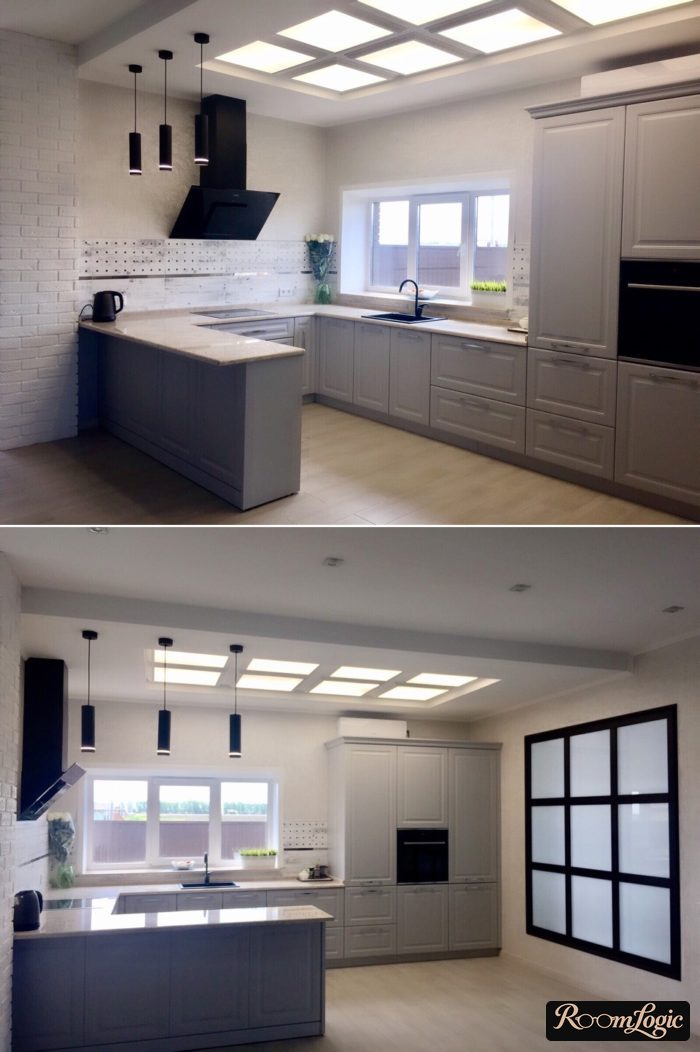
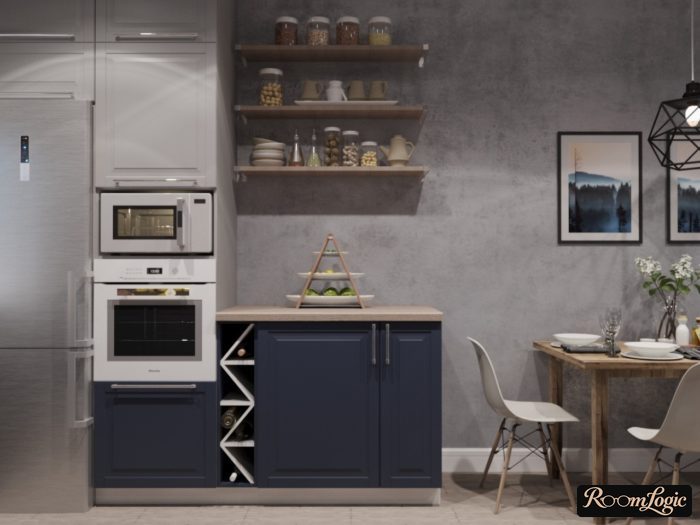
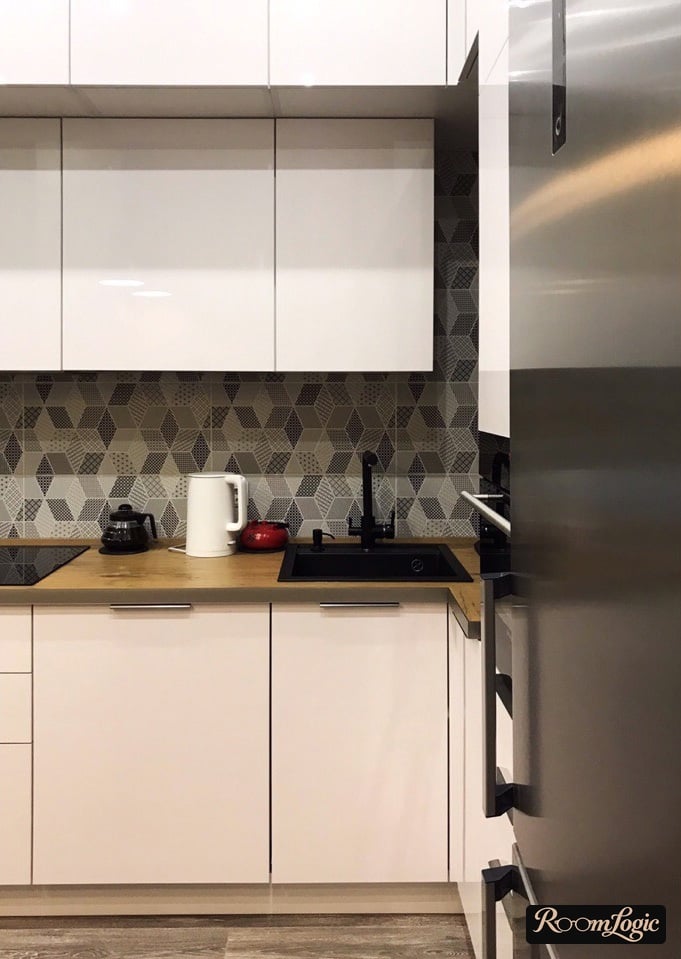
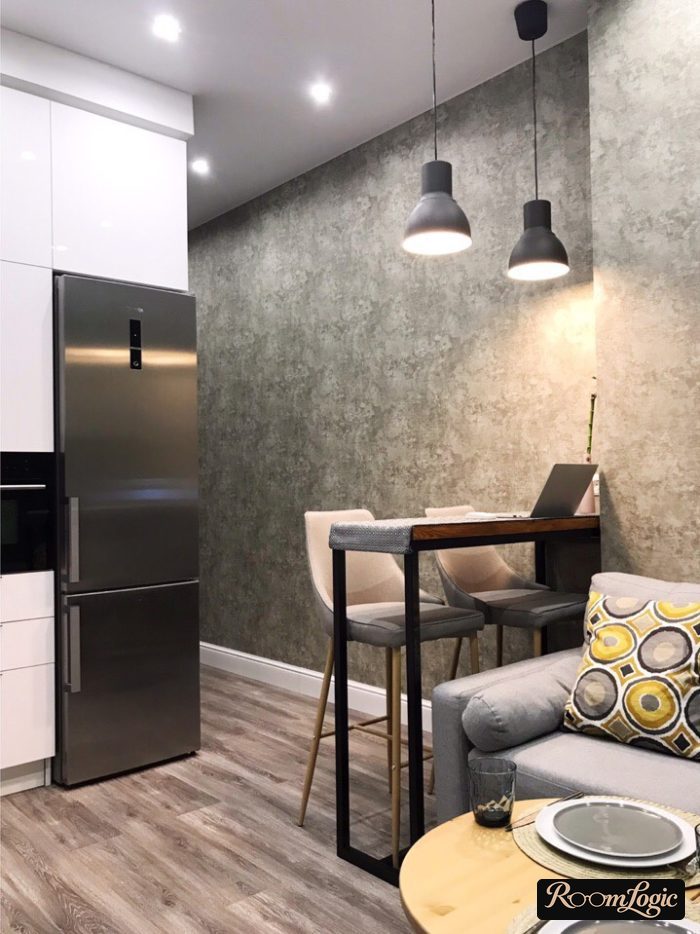
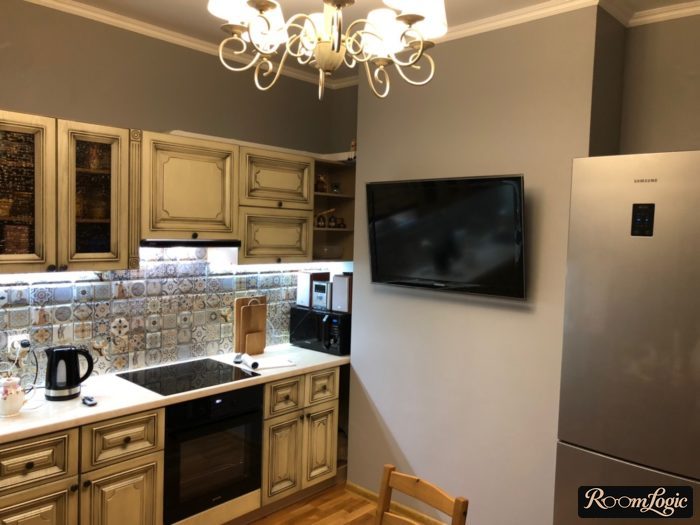
That is why the best walls for a gray kitchen are solid-colored or have an unobtrusive texture, in white or gray. You can do this with paint, paintable wallpaper, or a decorative wall finish.
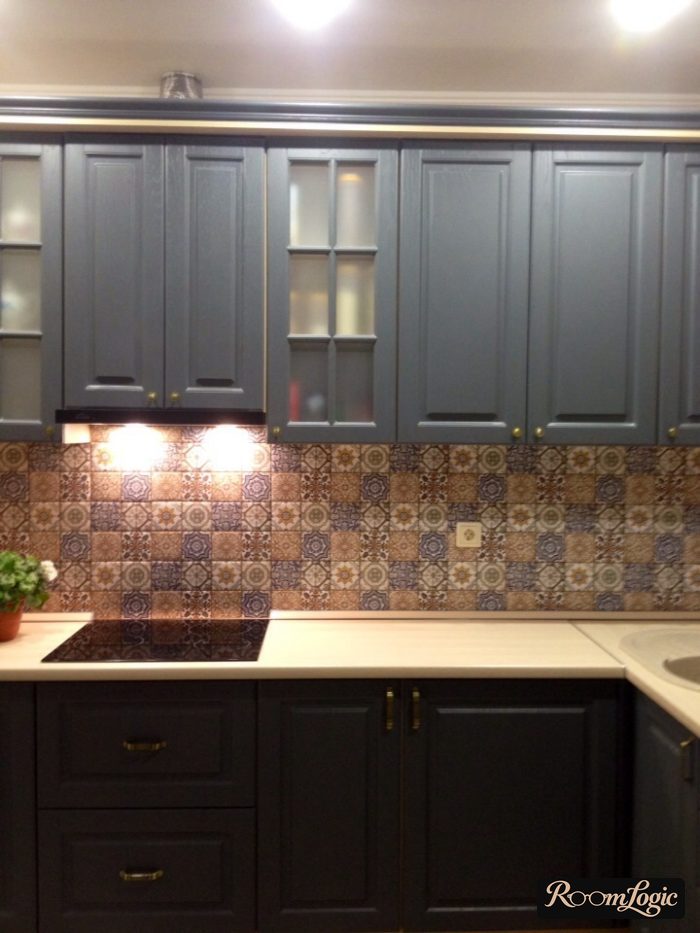
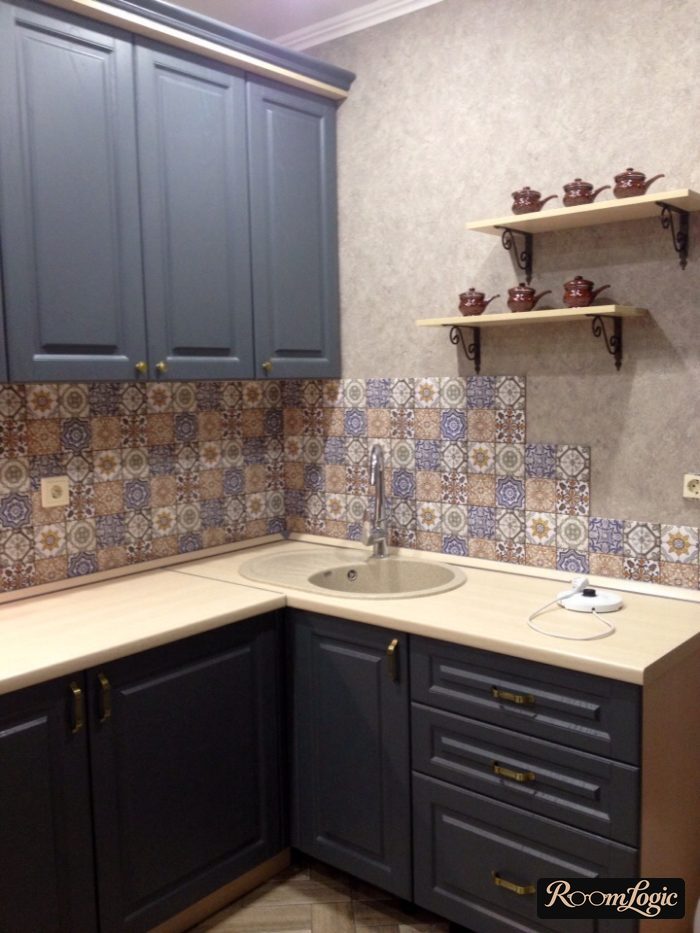
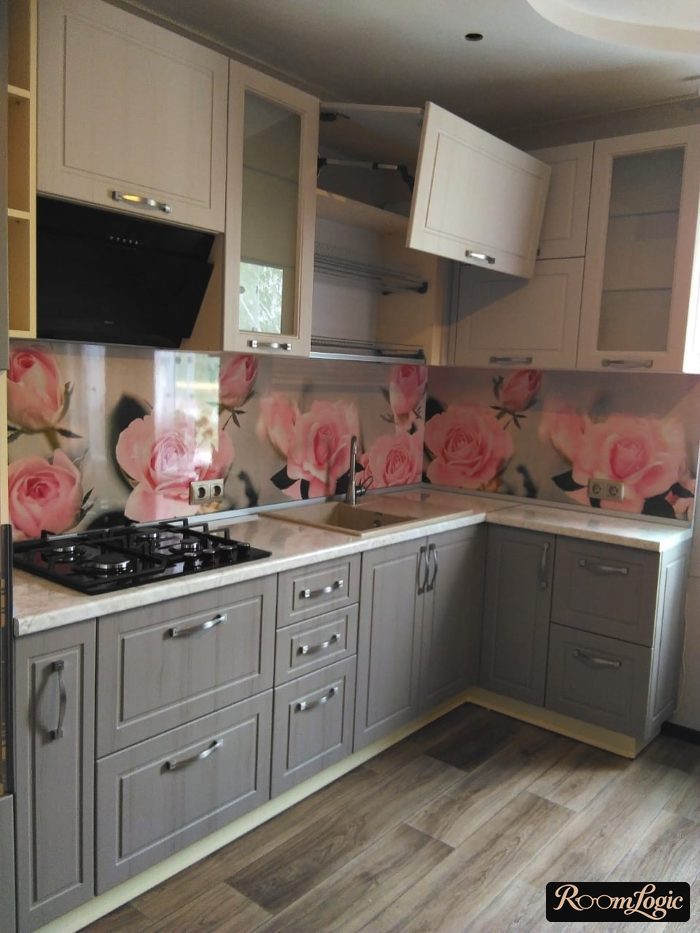
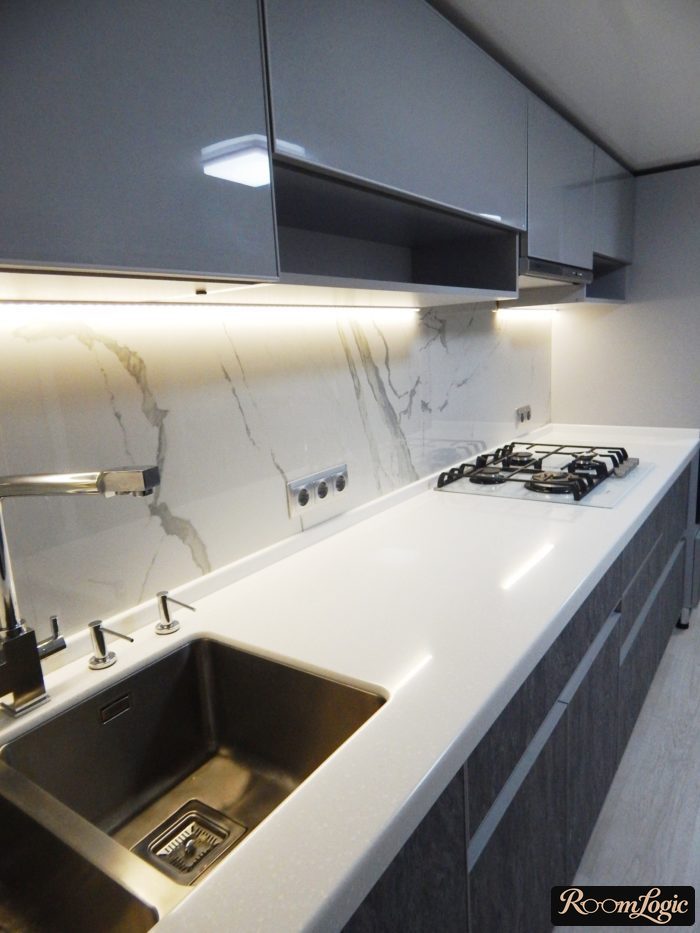
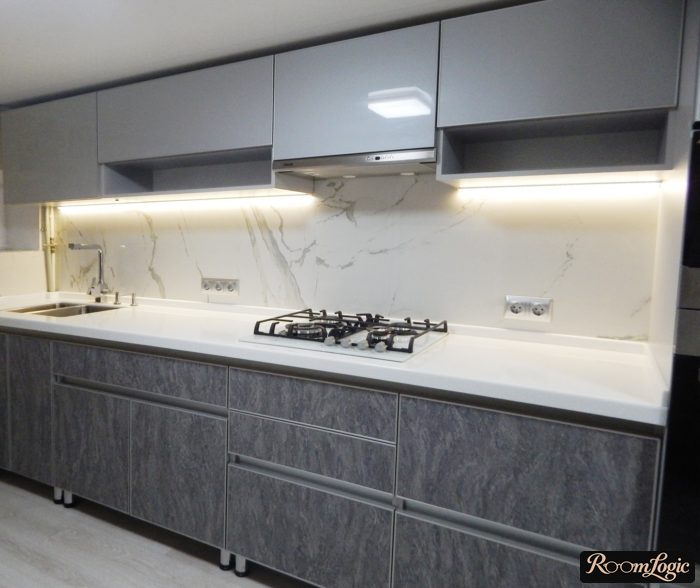
The only exception, if you really want something bright, is the backsplash. Patterned or marble-look tile fits gray interiors fairly well.
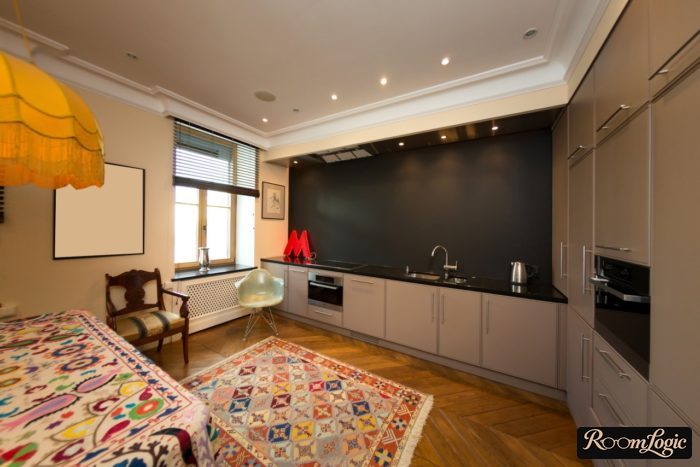
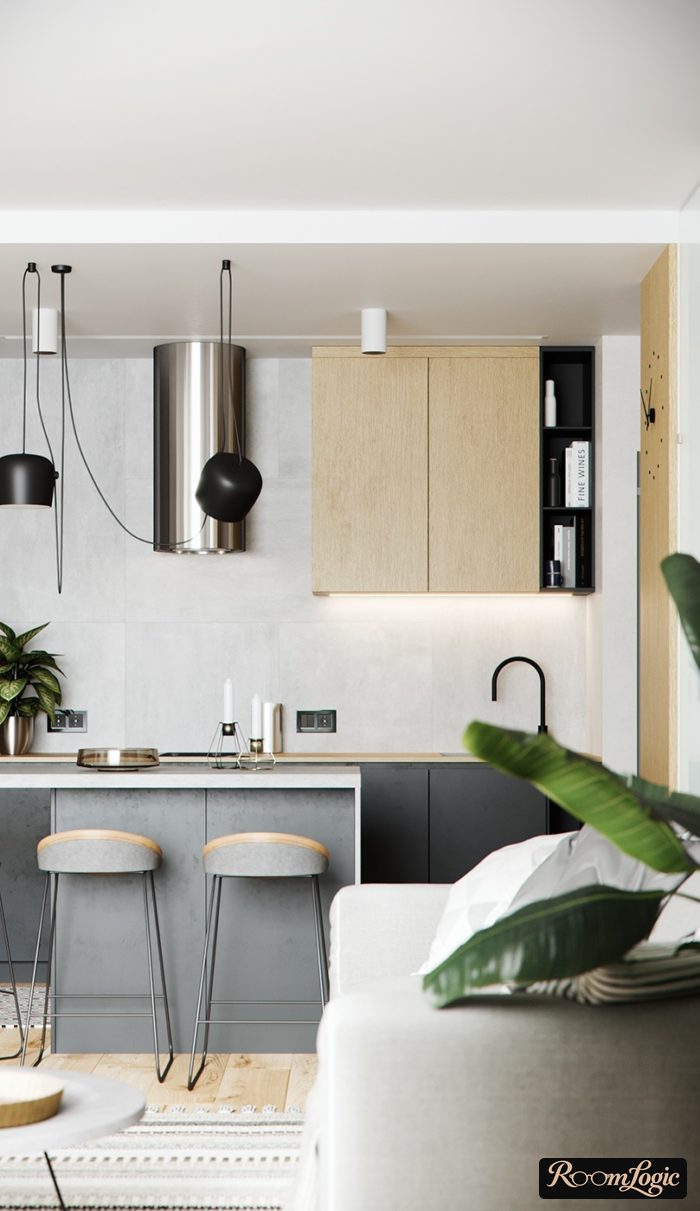
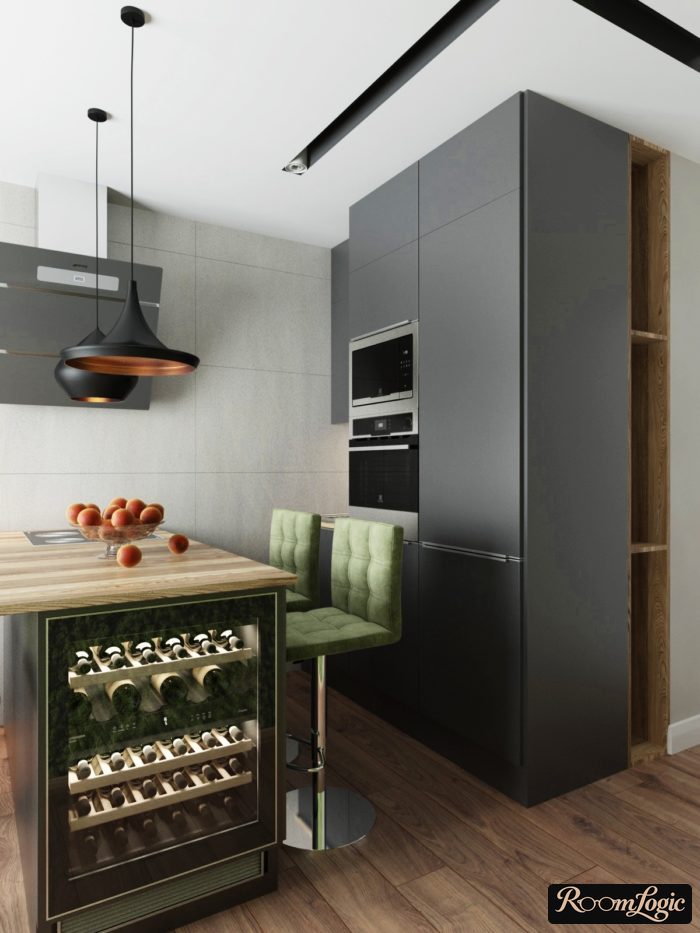
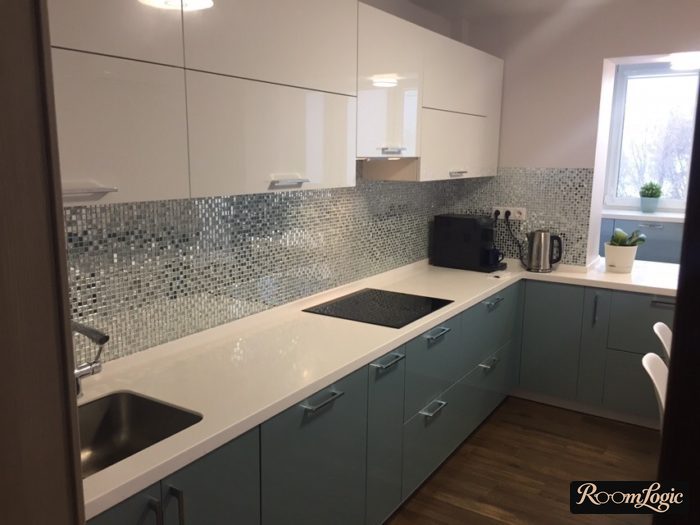
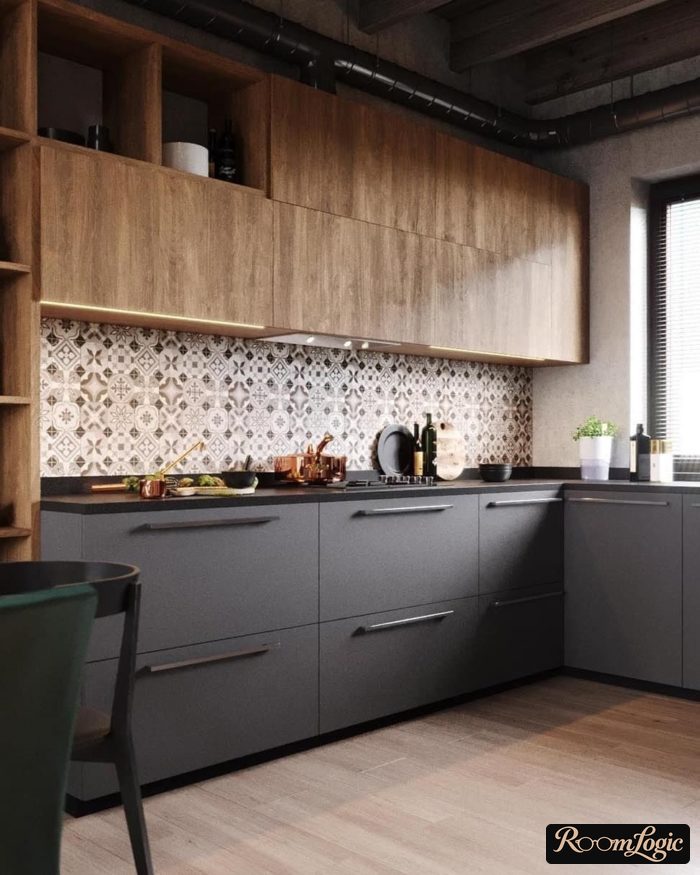
Afraid it will be boring?
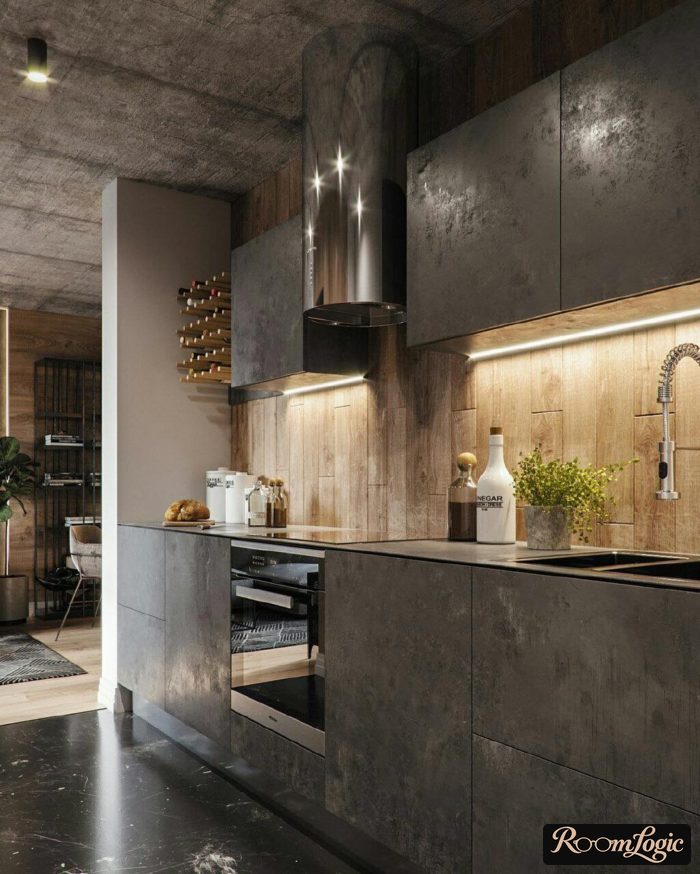
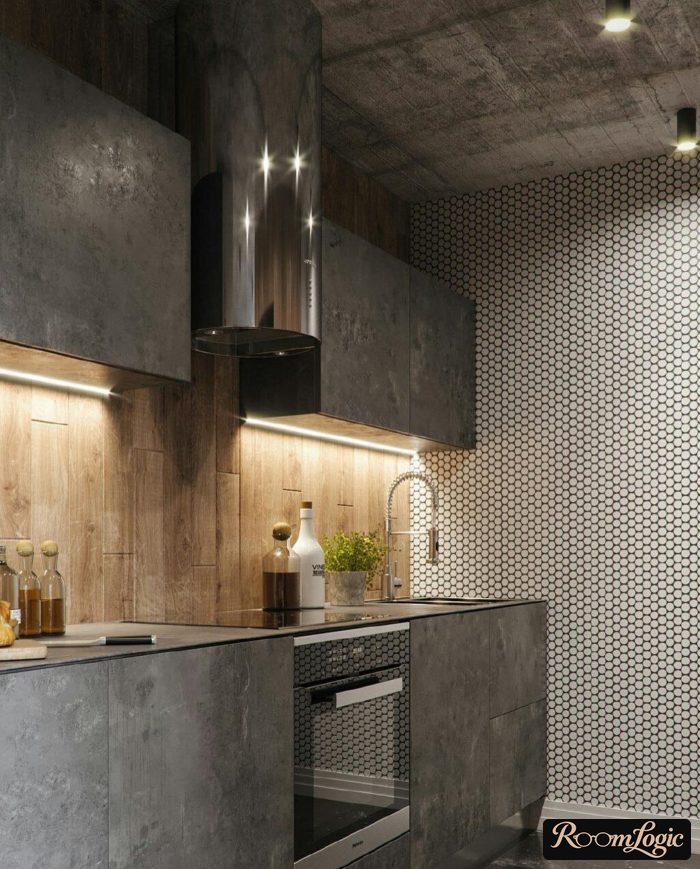
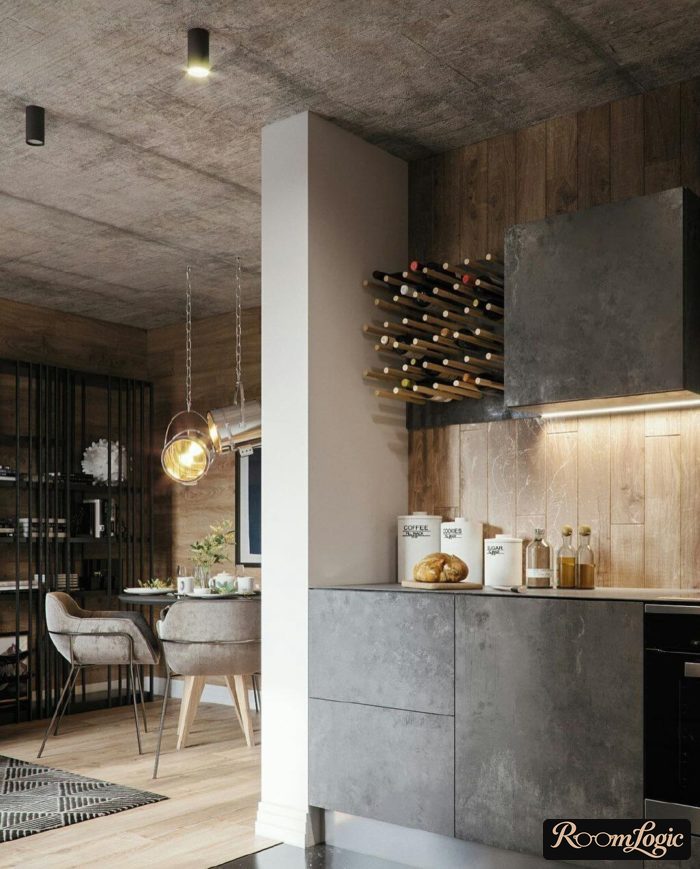
The answer for modern remodels is, as usual, lighting.
Lighting is exactly the basis of stylish design.
A kitchen needs at least backsplash lighting. And it should turn on with a separate switch at the entrance, not on the backsplash itself.
When you are not cooking or cleaning and simply come in to get a snack or make coffee, there is no need to use the bright overhead light.
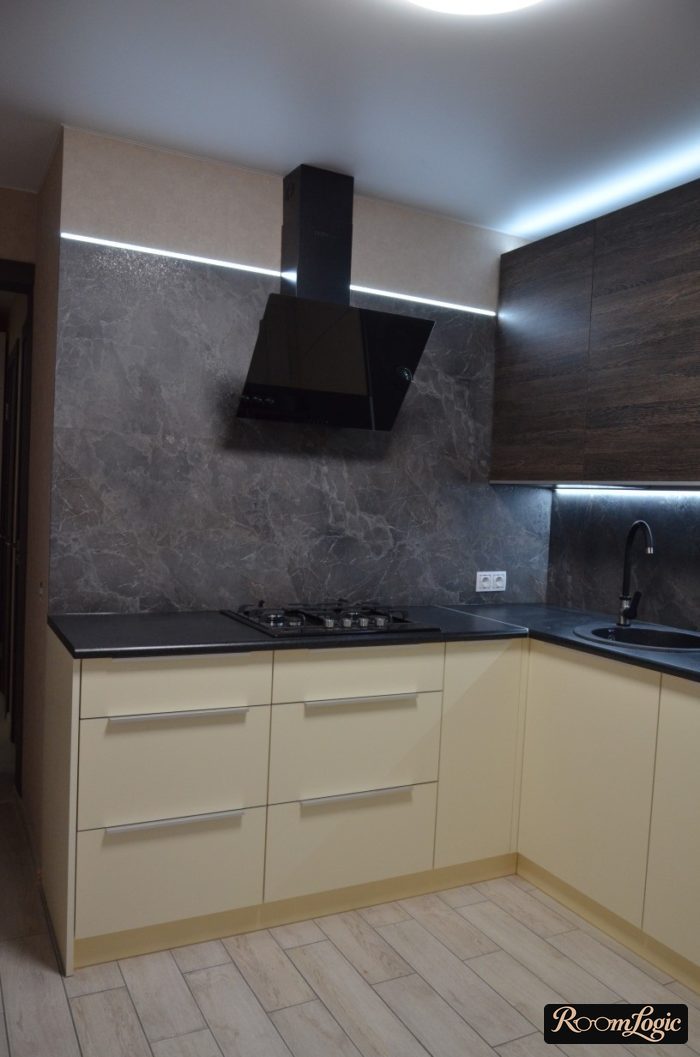
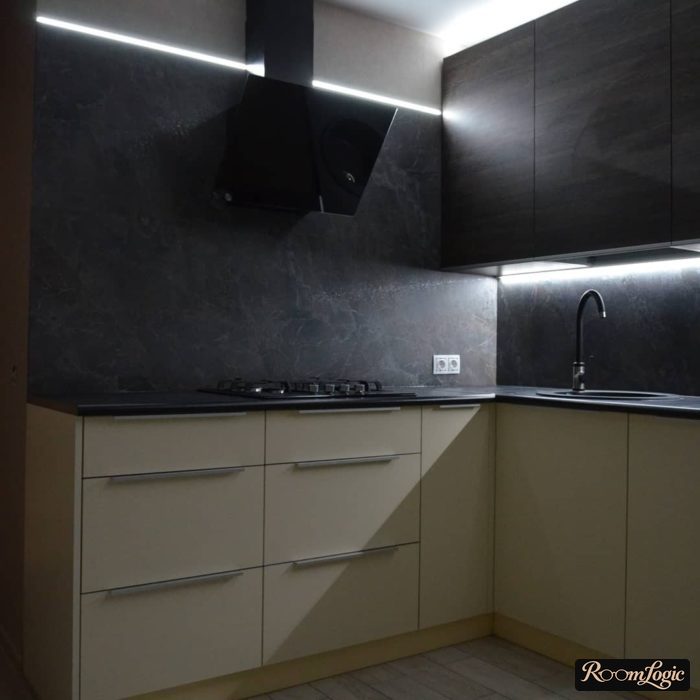
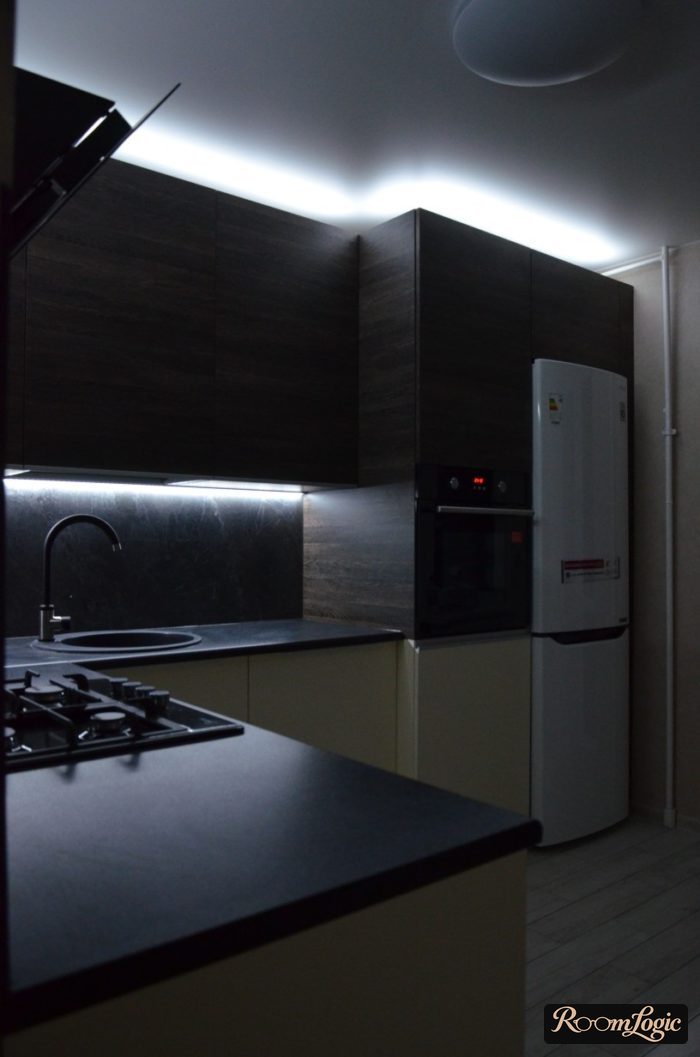
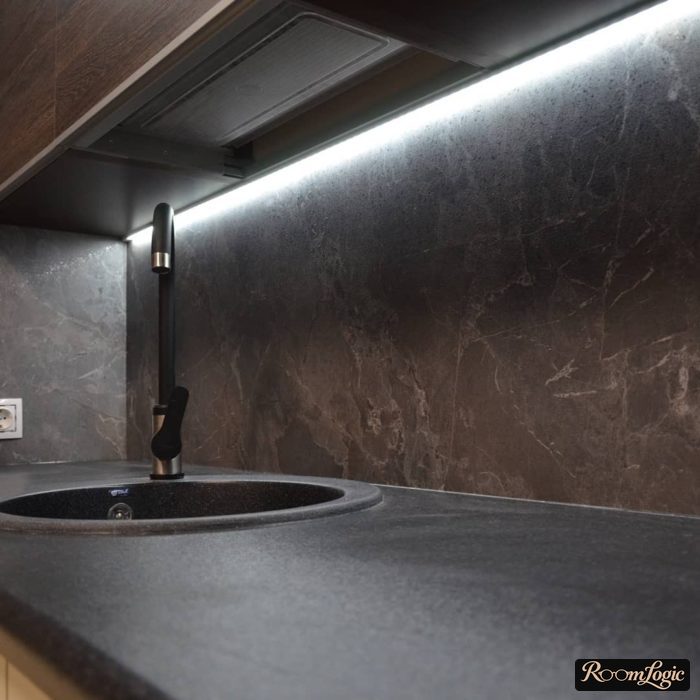
Make the additional lighting easy to switch on at the entrance, and you will use it more often than the main light.
The second important place is the dining table or breakfast bar. It is pleasant to eat when the food is well lit but the room itself is not bright (have you noticed that every restaurant does this?). So if there is a dining area, pendant lights above it are required.
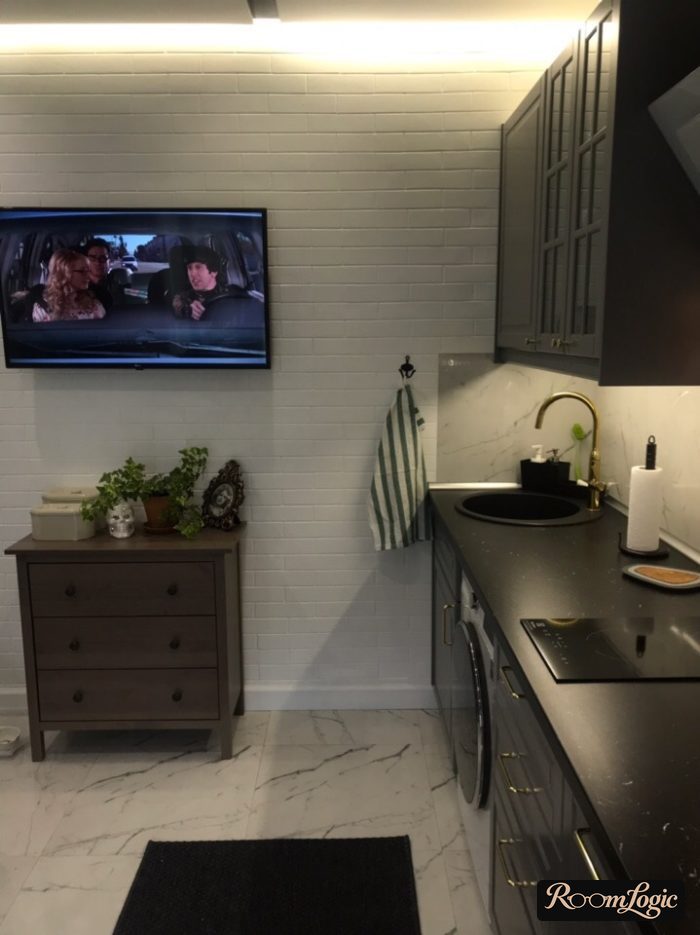
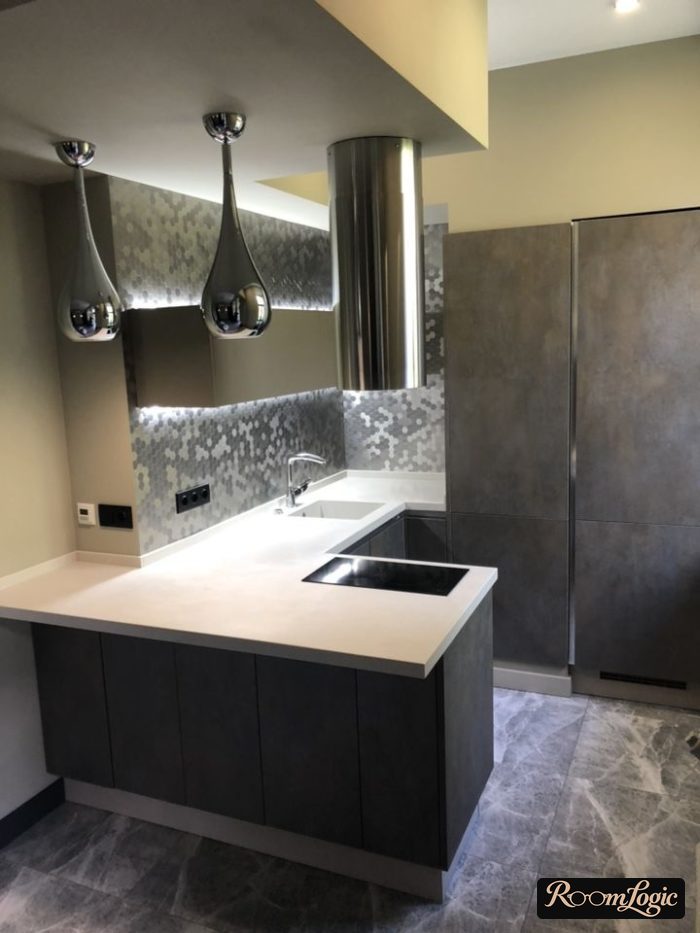
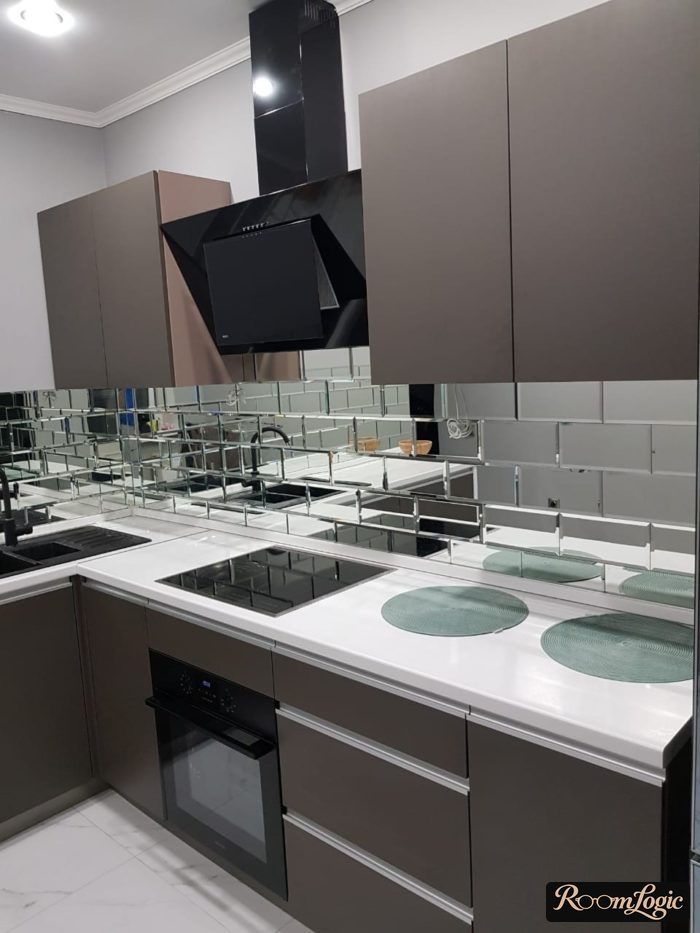
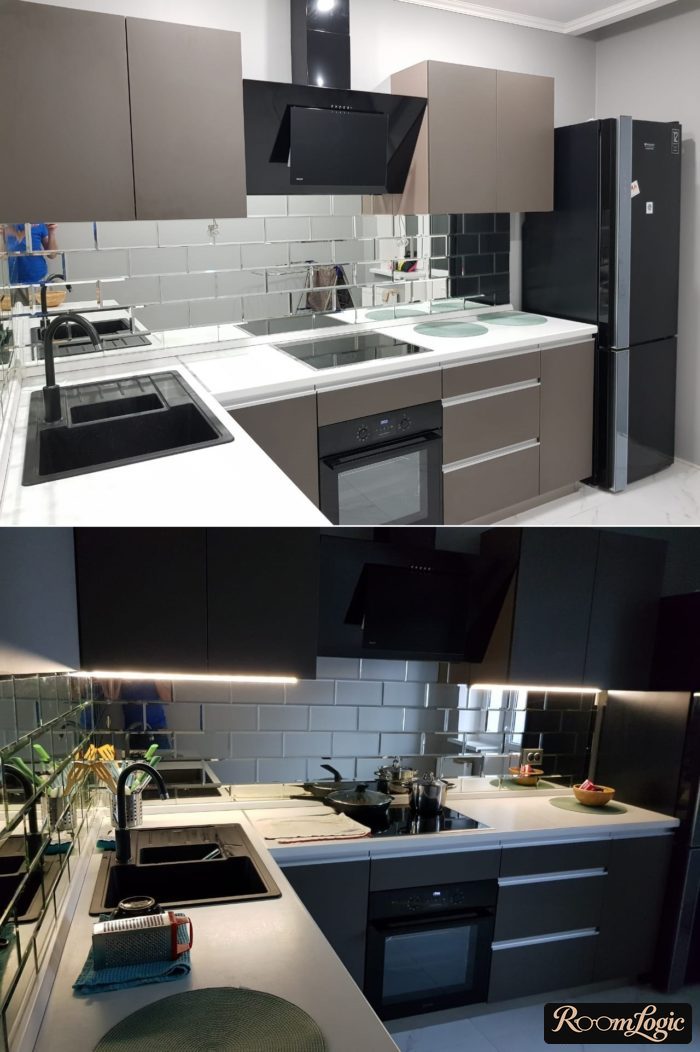
That is already at least 3 lighting setups, thanks to which even a monochrome gray kitchen will not be boring.
Ceiling and Floor
The ceiling is as simple for a gray kitchen as for any other:
- White, matte, smooth – do not overthink it
- It is ideal when the upper cabinets reach the ceiling
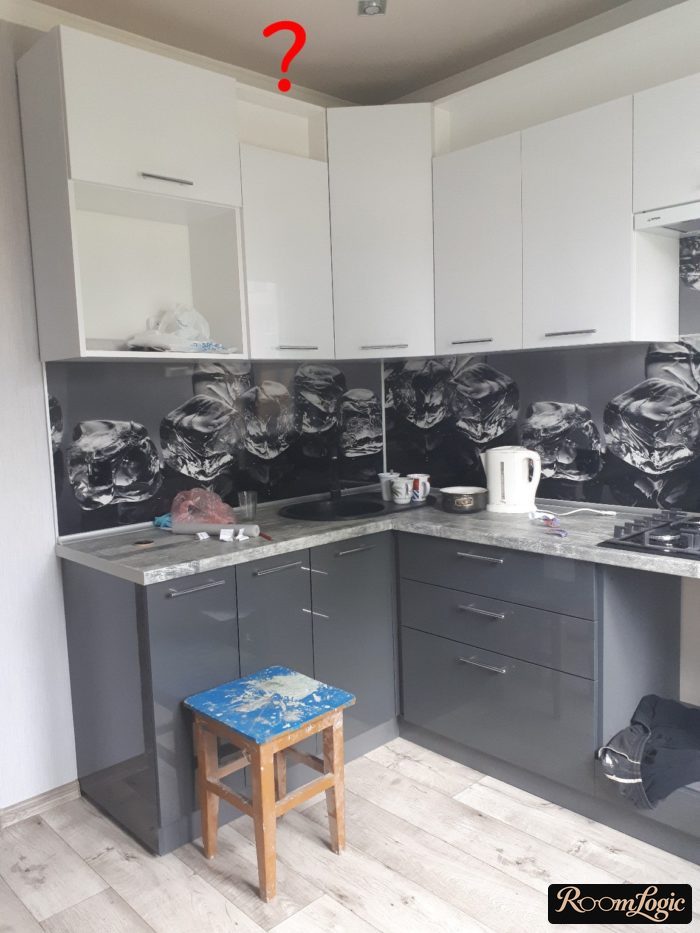
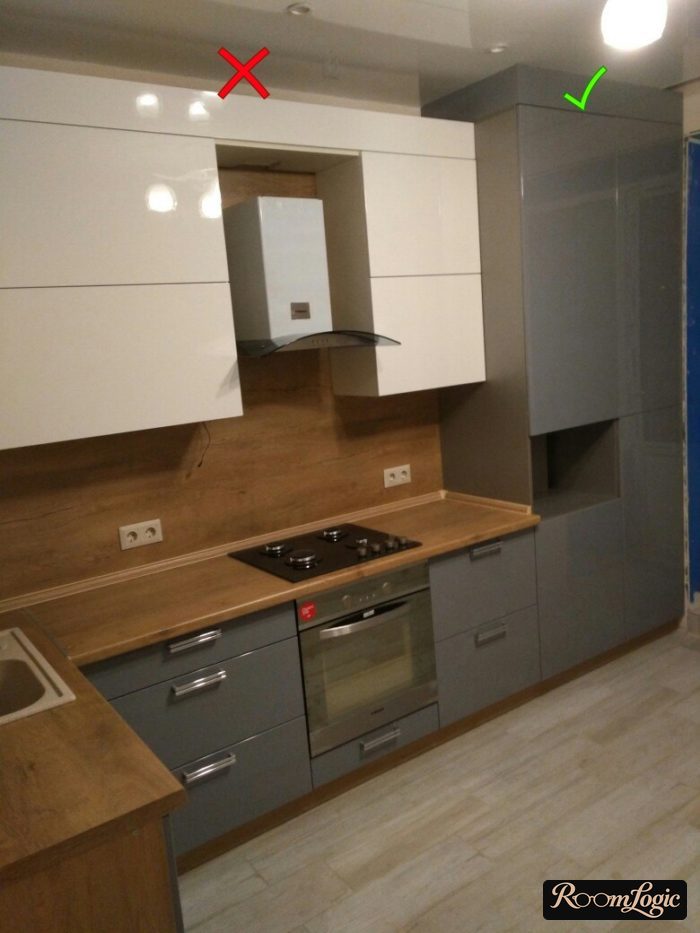
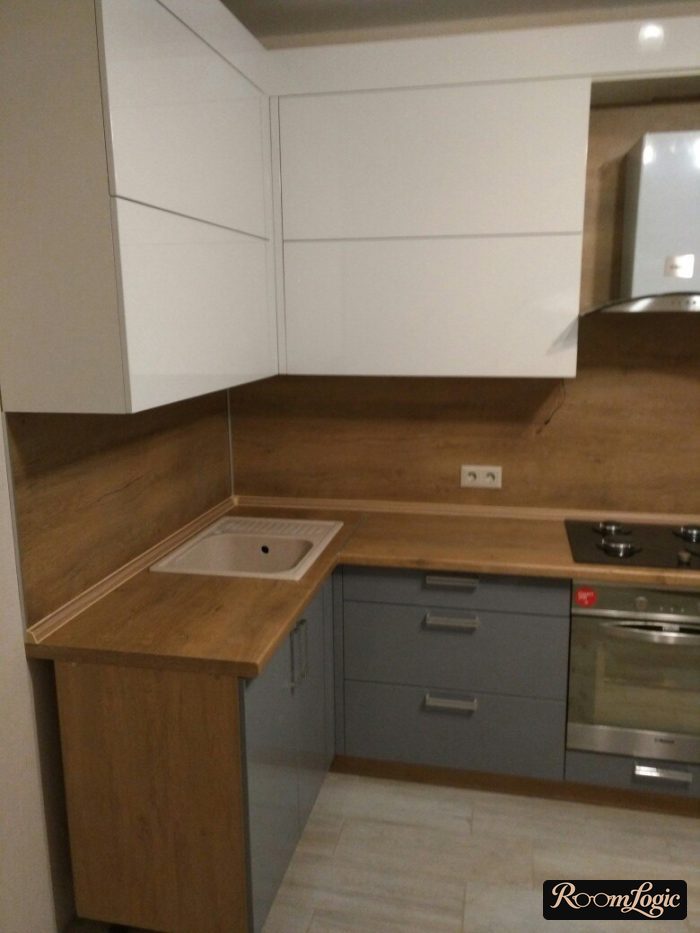
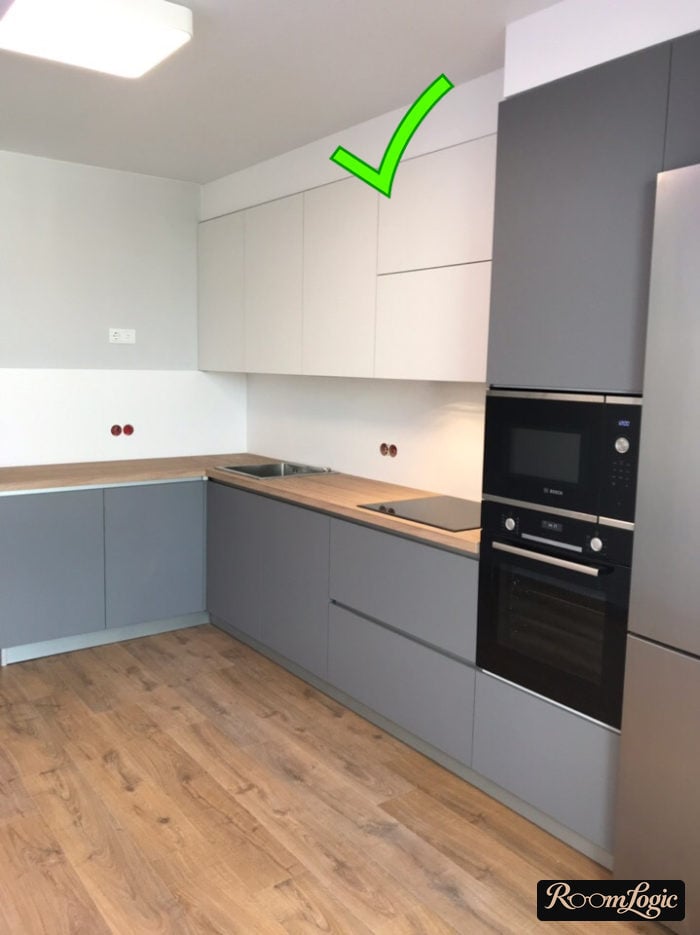
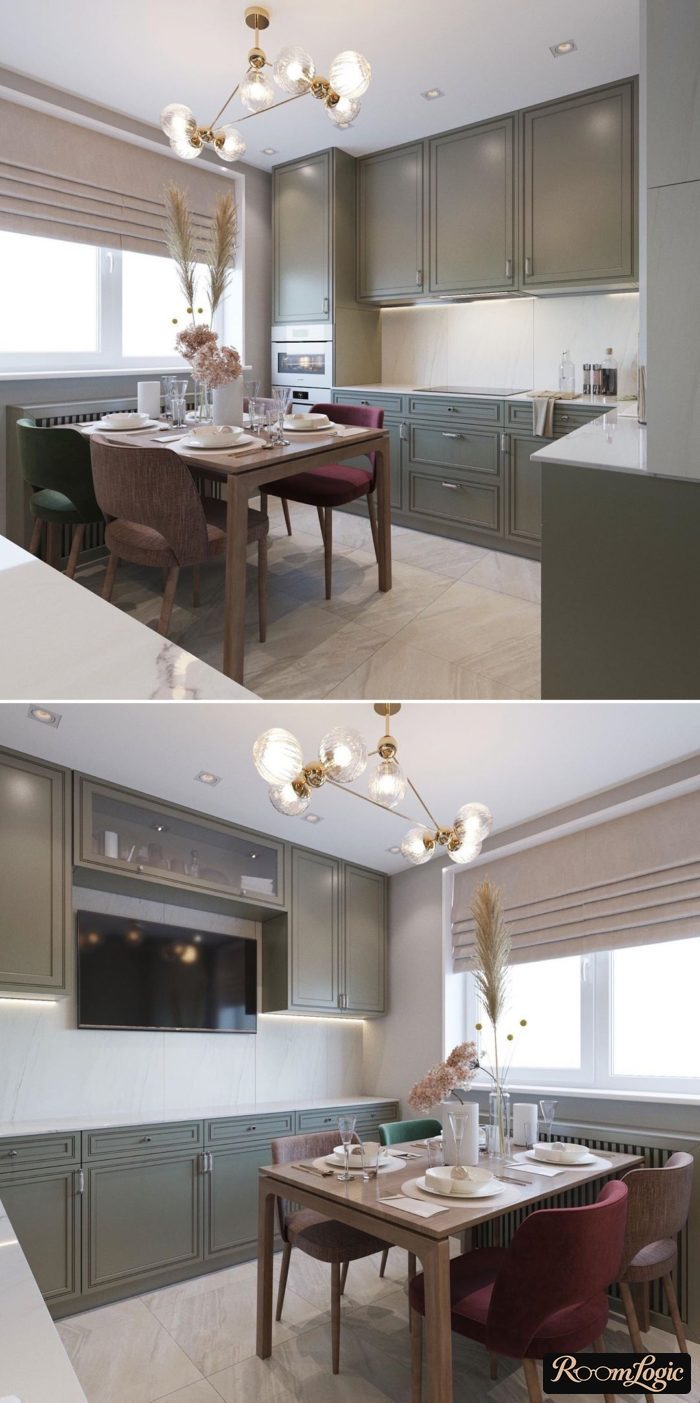
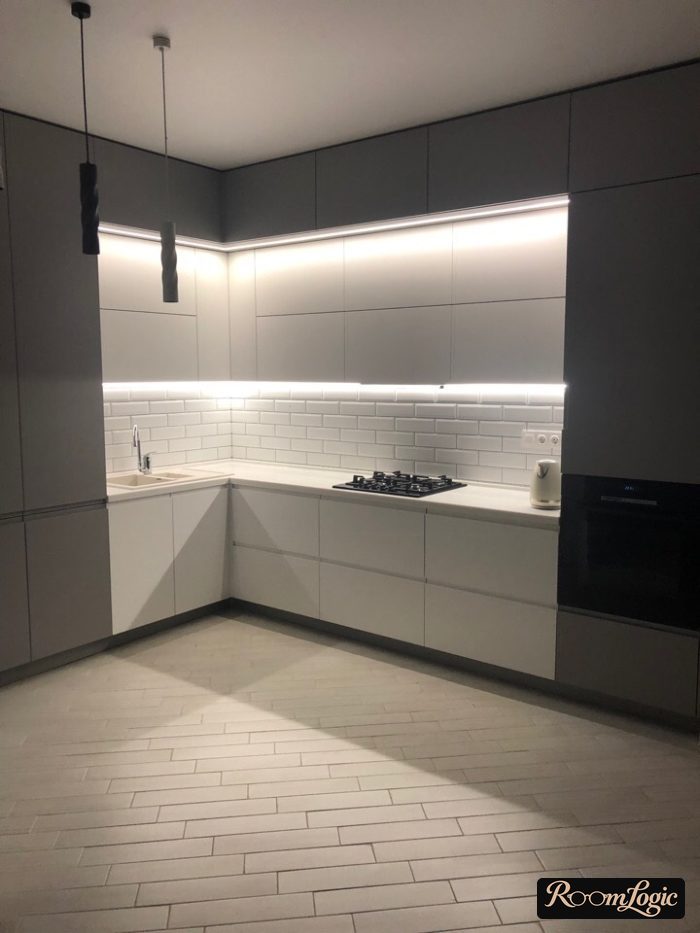
With a low ceiling, you can achieve the second point by making the upper cabinets taller. With ceilings of 8.5 feet or more, either add 1 more level of cabinets like a soffit cabinet, install a filler panel, or lower the ceiling directly over the cabinets.
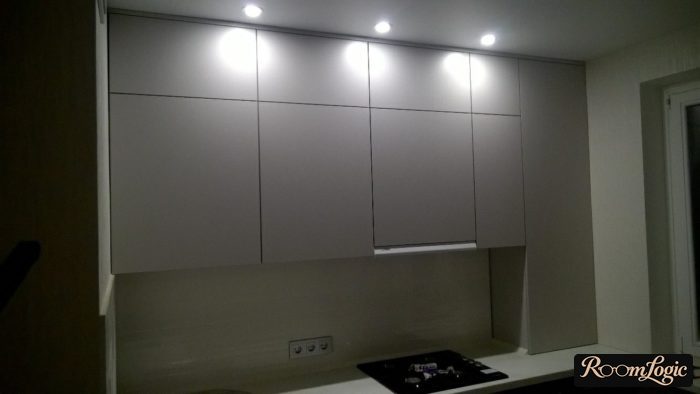
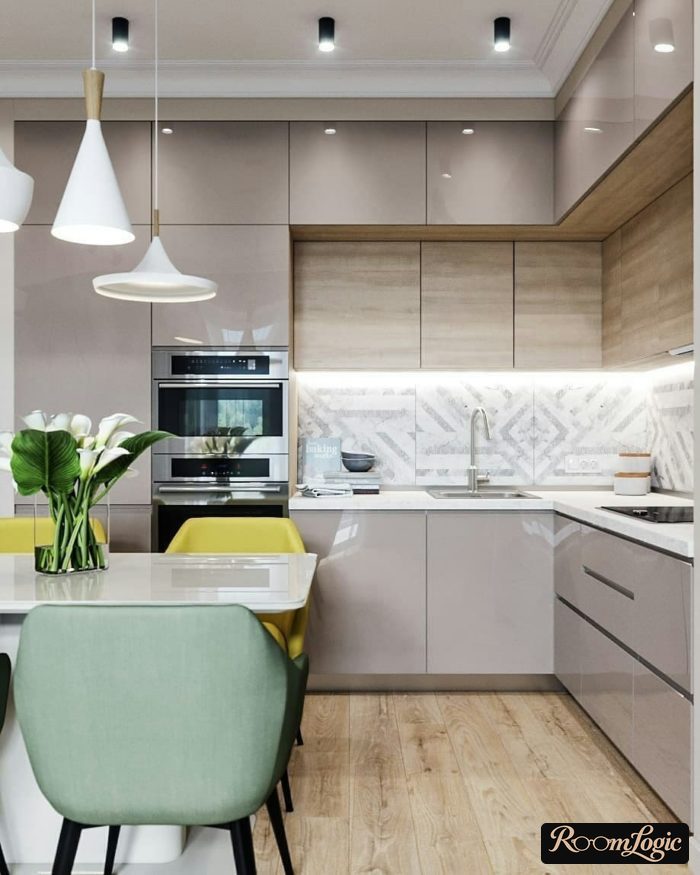
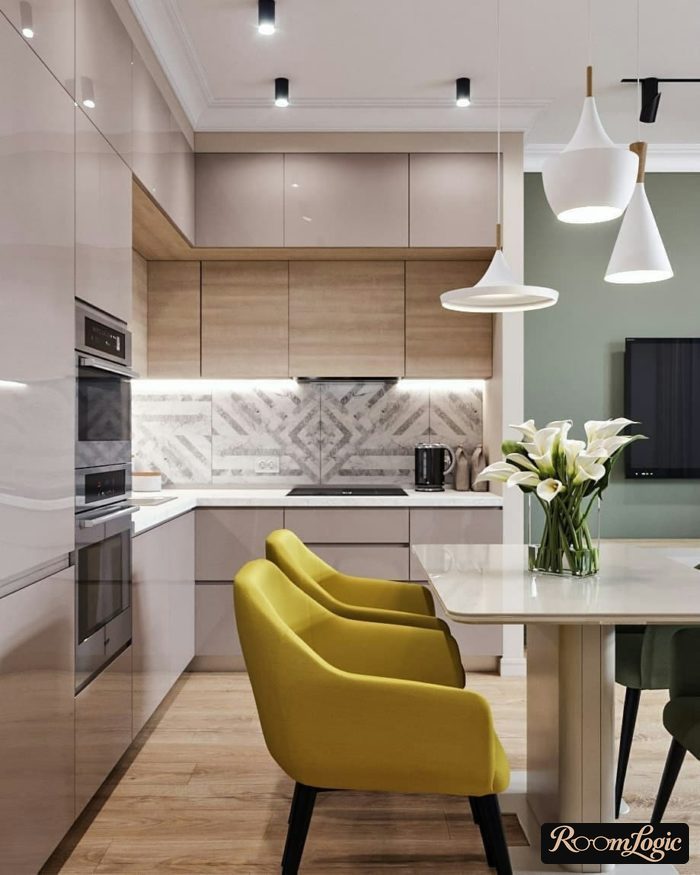
Flooring options for a gray kitchen:
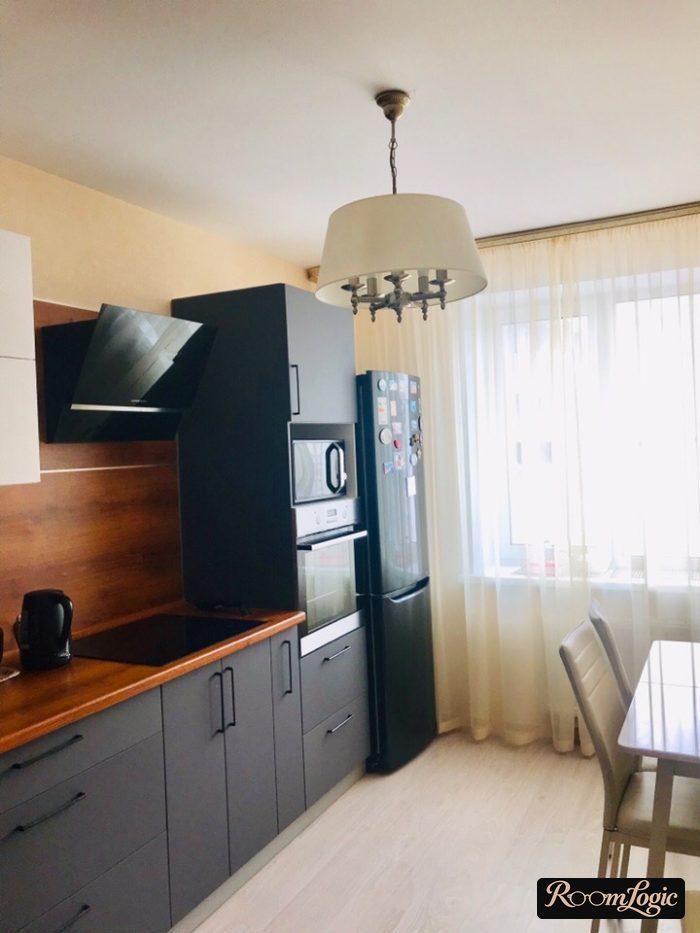
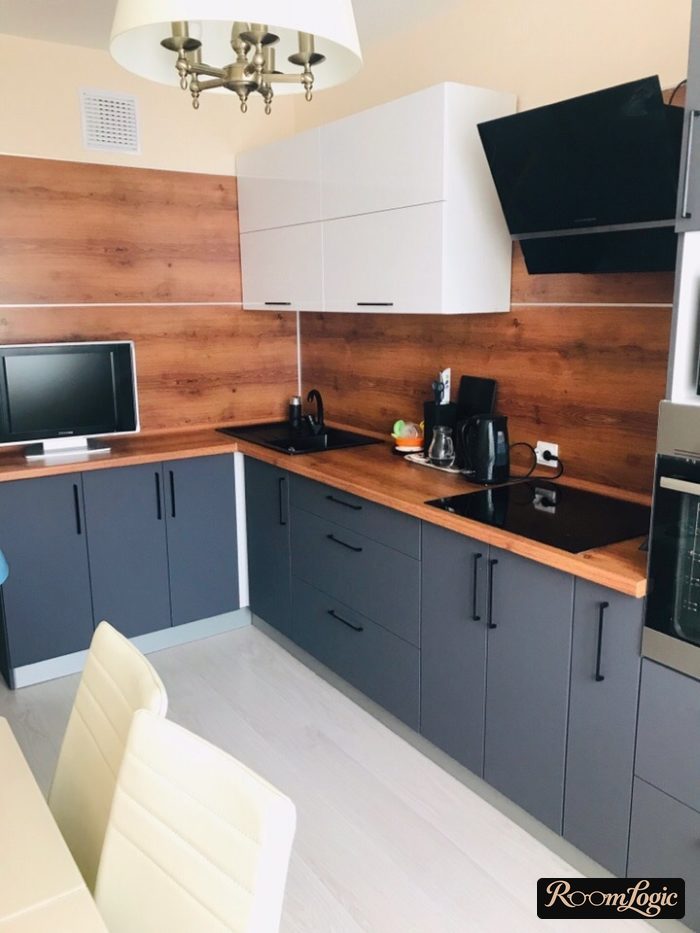
- Contrast with the countertop and backsplash (the brightness should correspond – not too bright and not too pale).
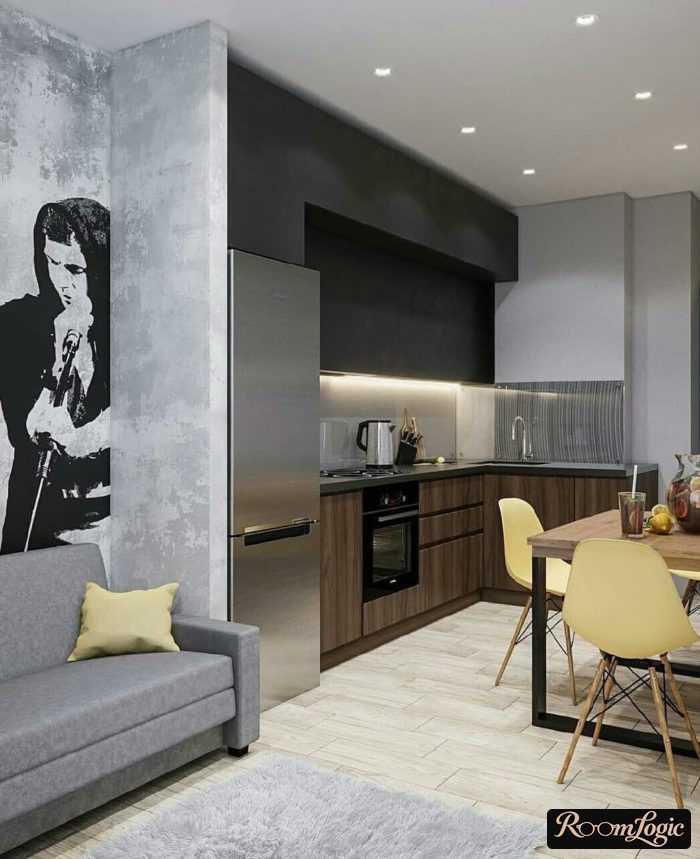
- A gray floor with a different texture (concrete, stone, marble).
- It looks interesting when the same porcelain tile is used on the floor and backsplash, such as the same marble or concrete look. The drawback is that you will have to pay extra for holes in the porcelain tile (it is hard to drill).
- Standard wood-look laminate. In short, it can be used in a kitchen, but wipe up puddles rather than leaving water standing.
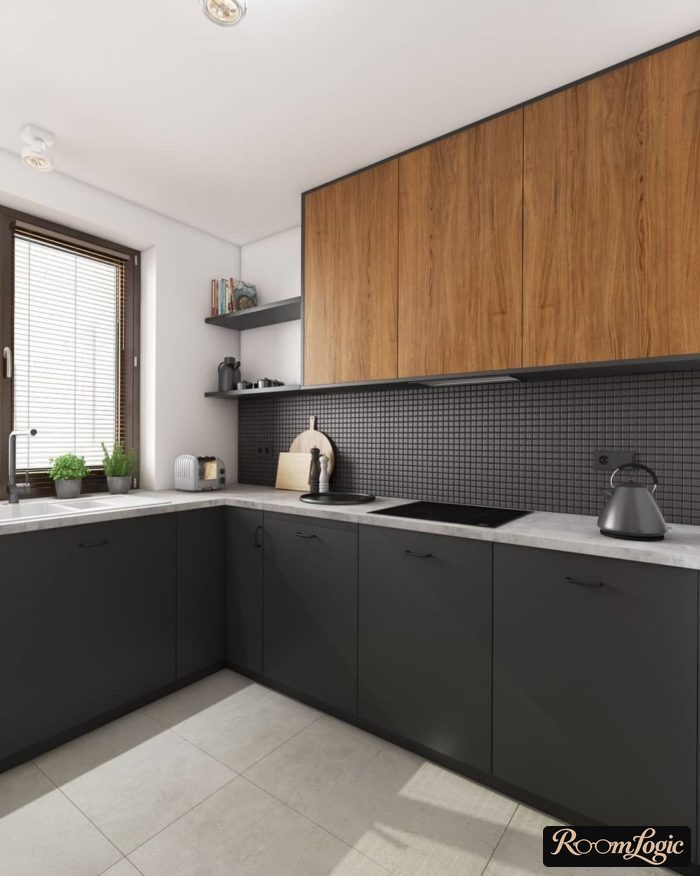
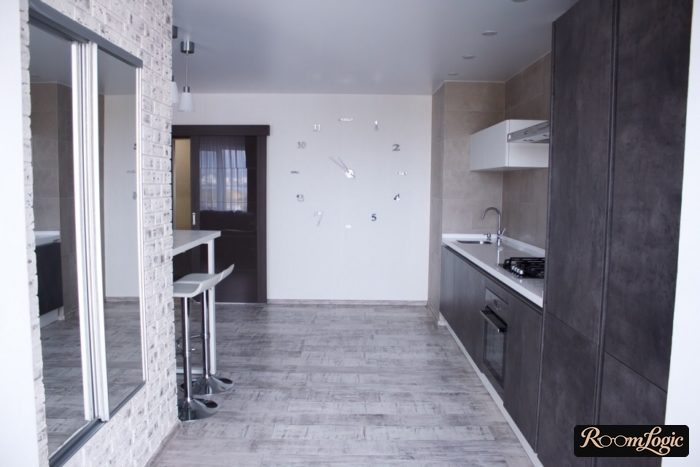
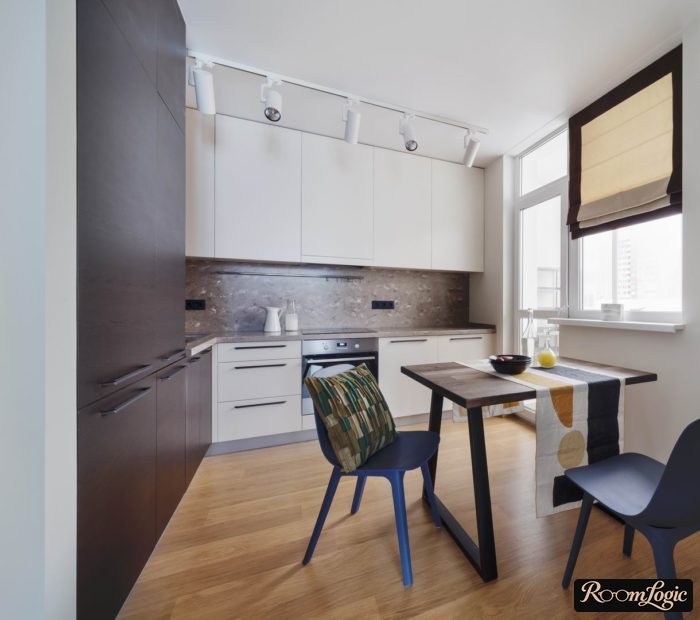
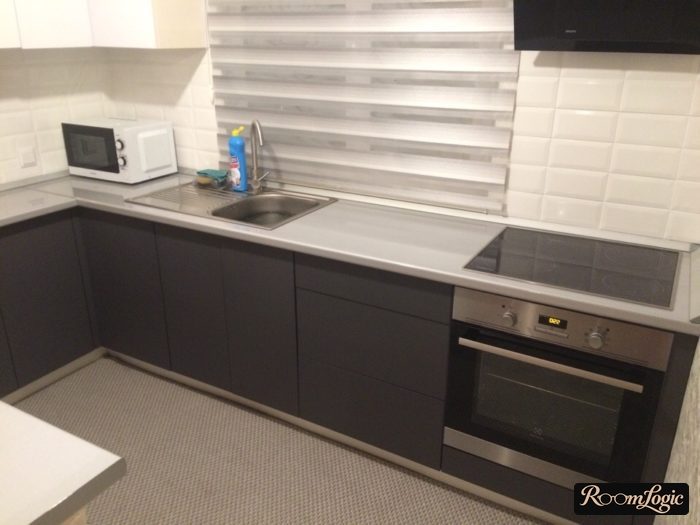
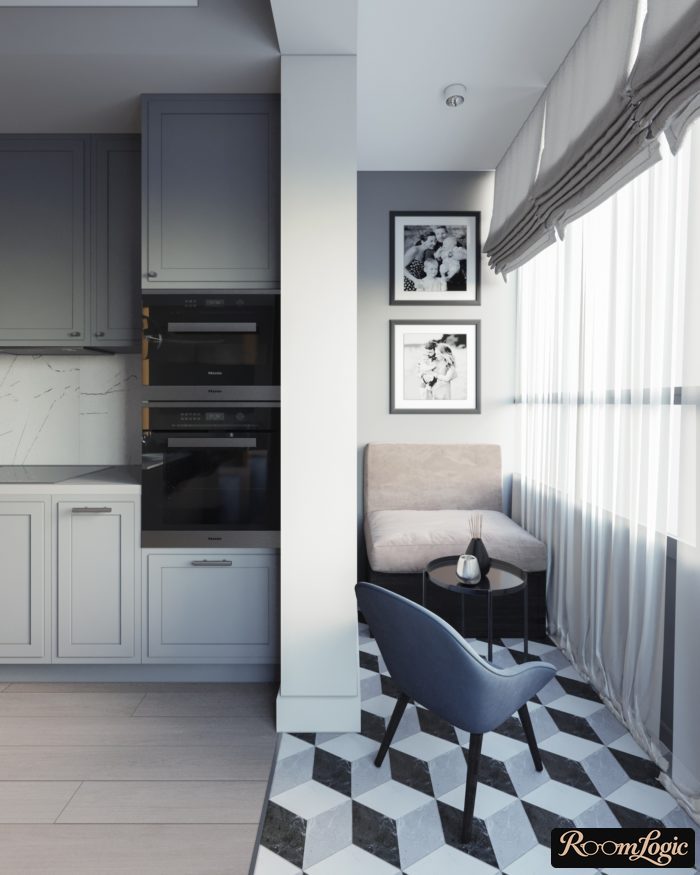
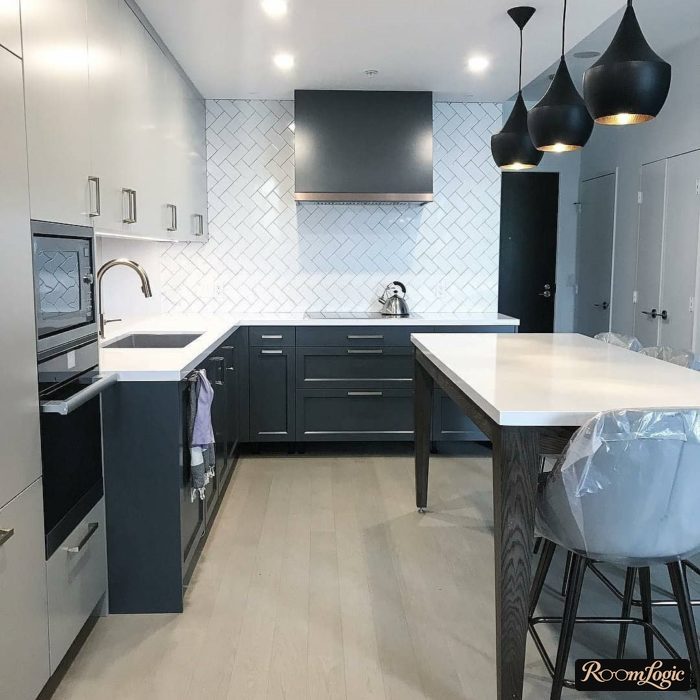
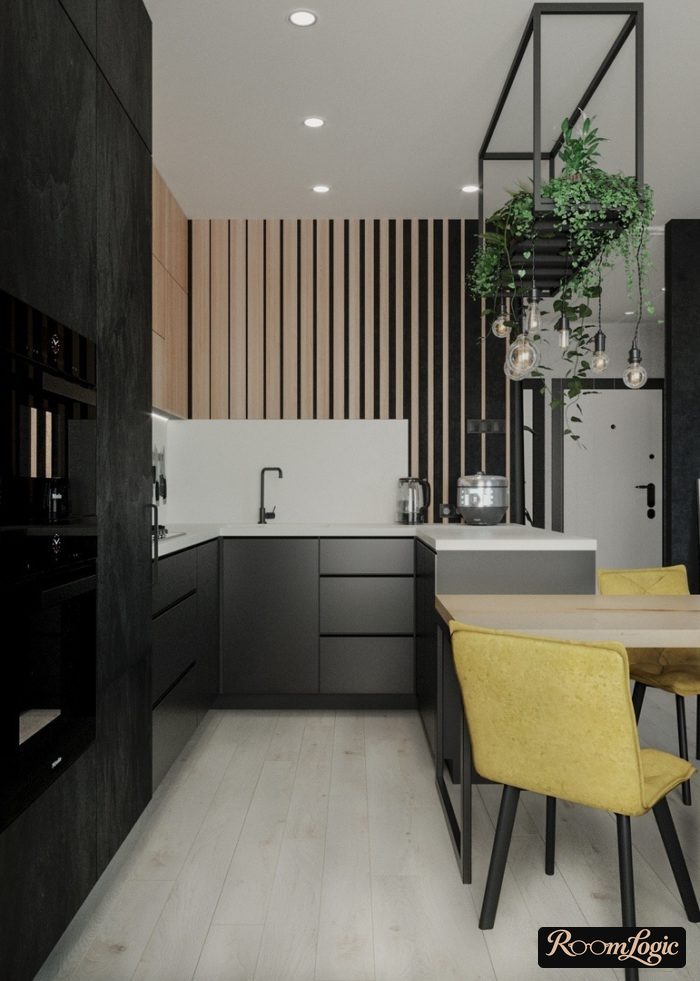
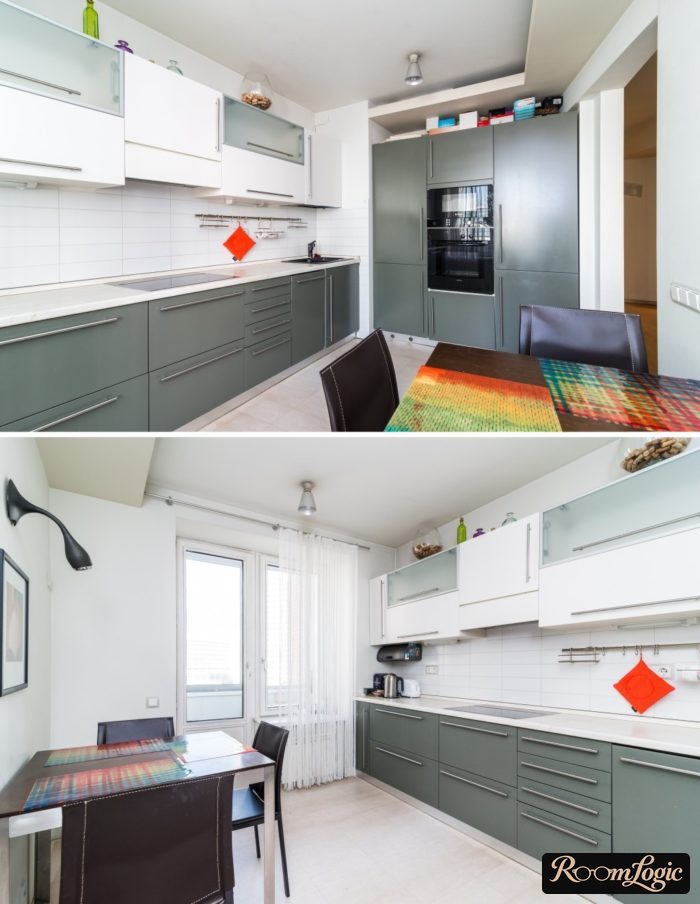
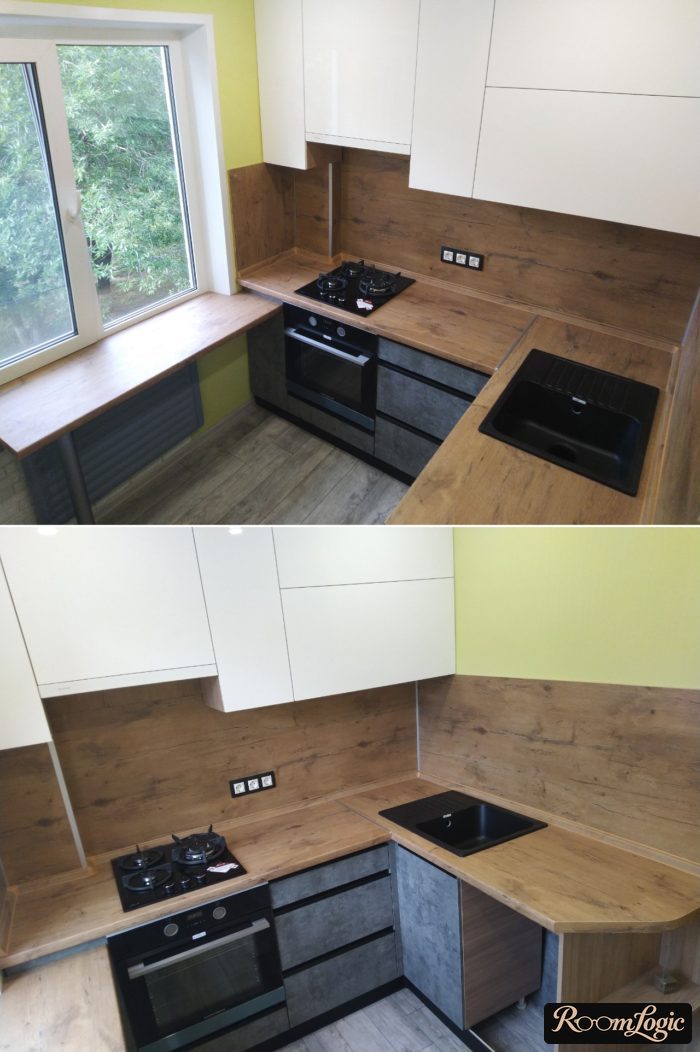
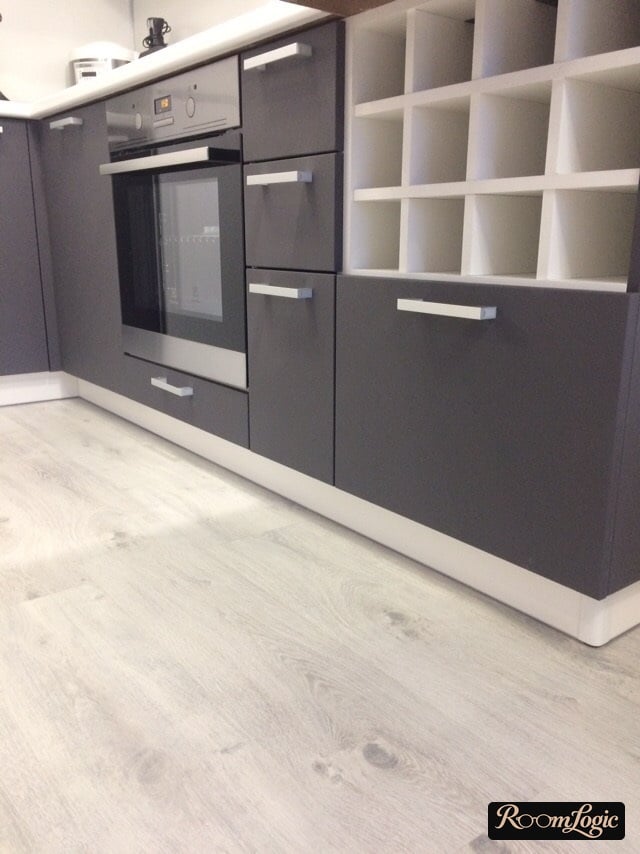
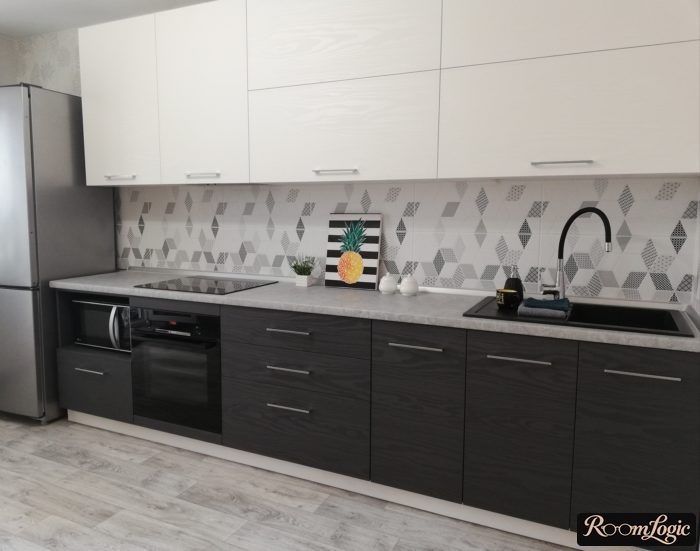
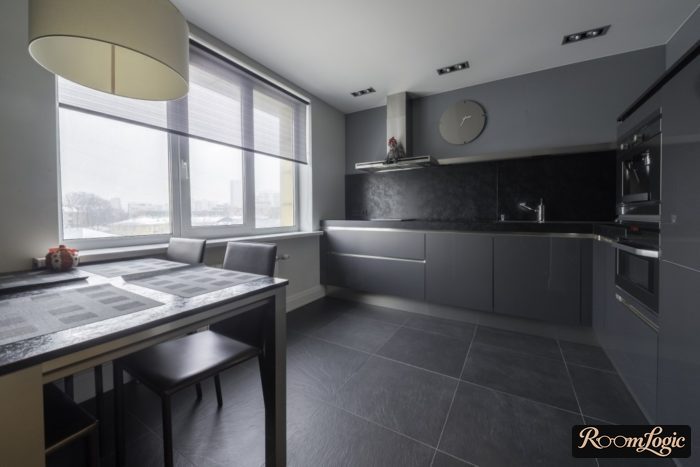
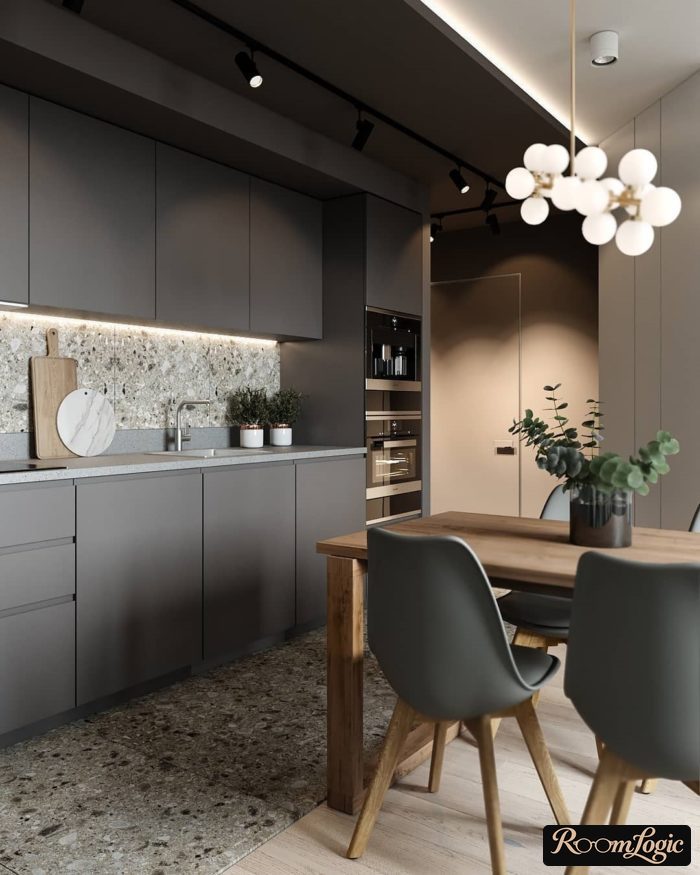
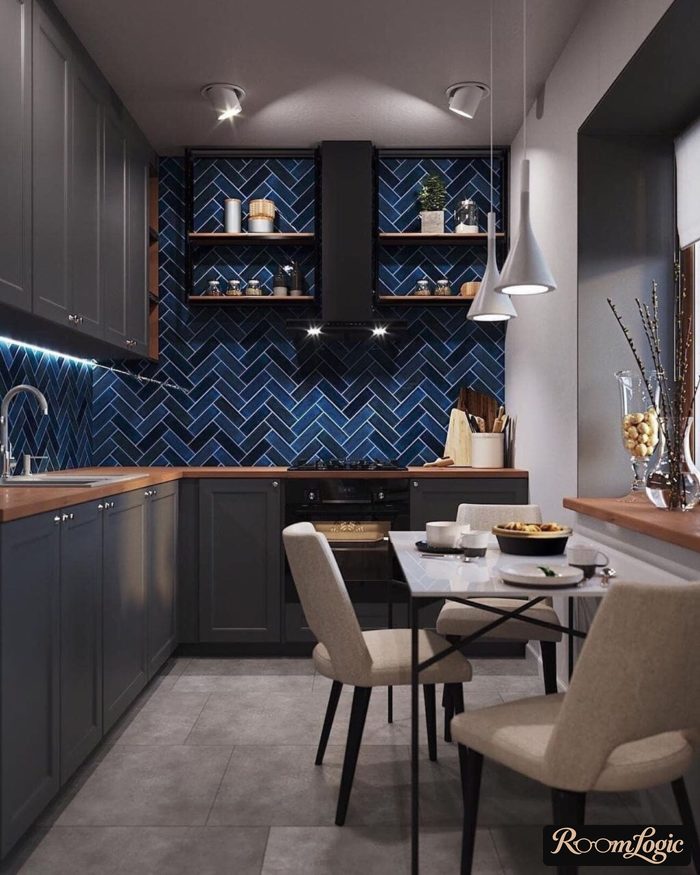
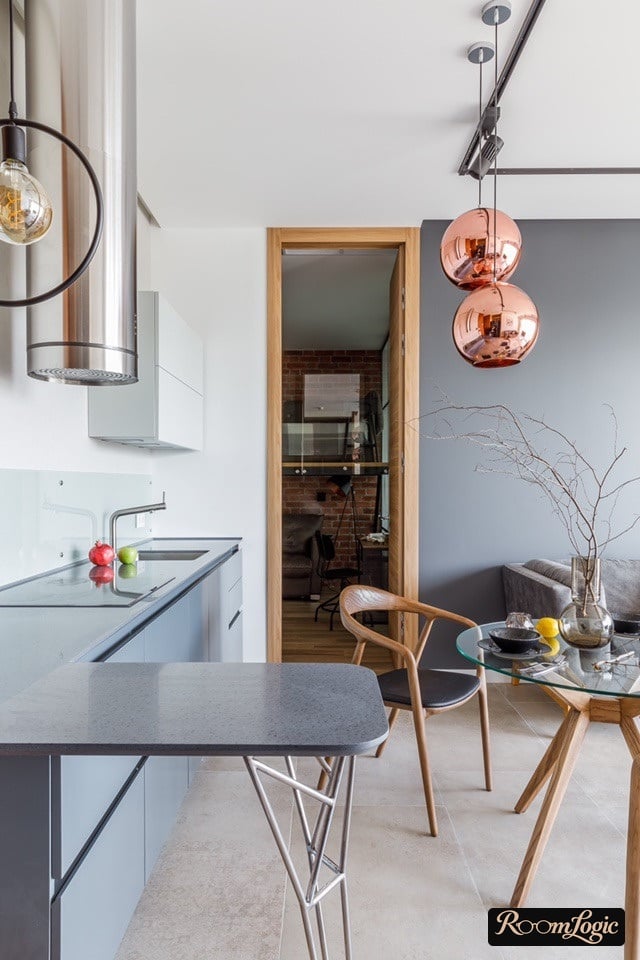
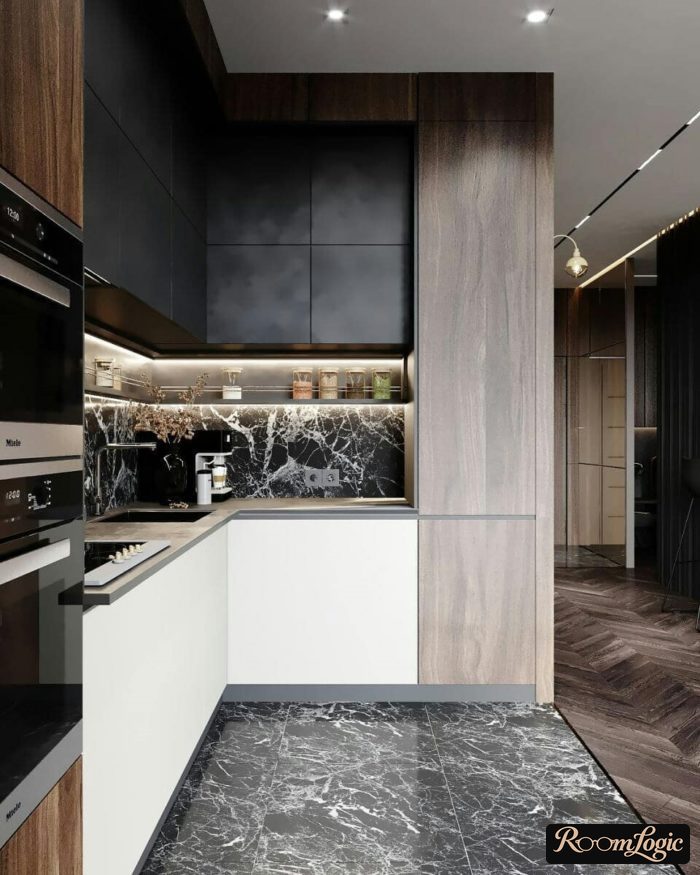
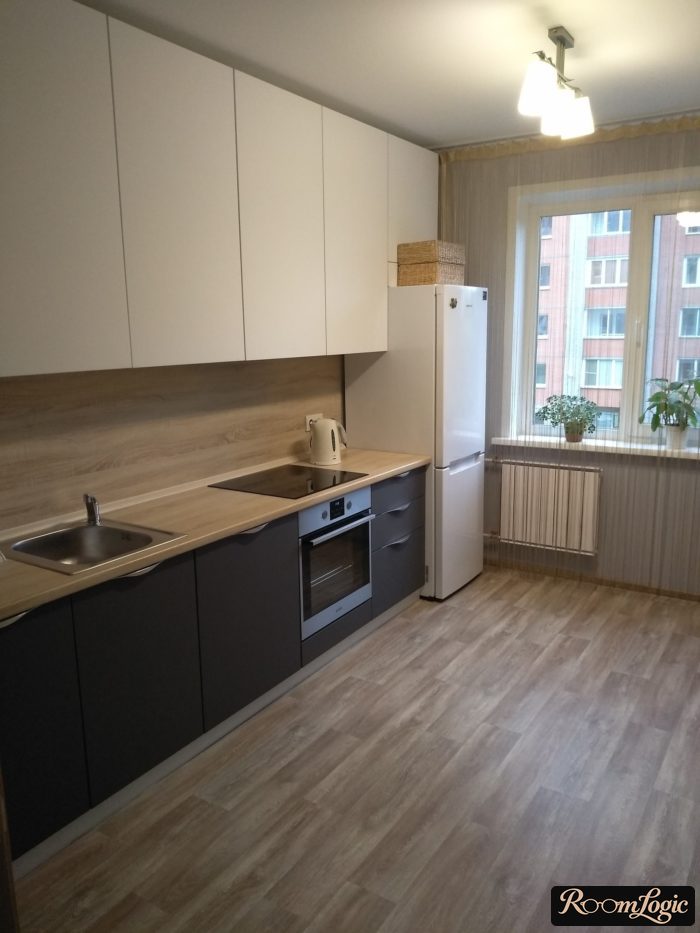
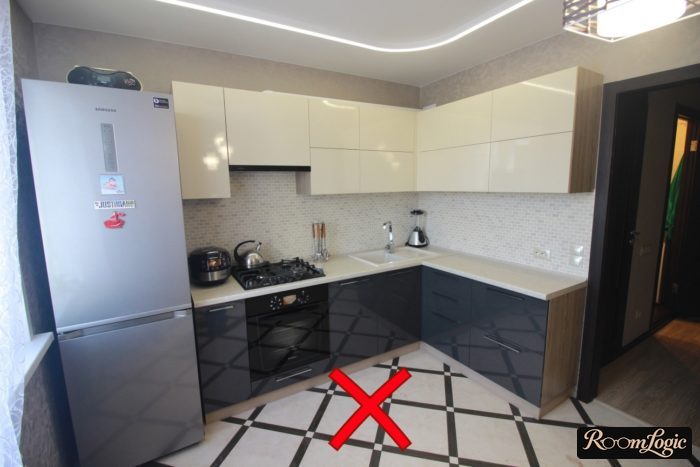
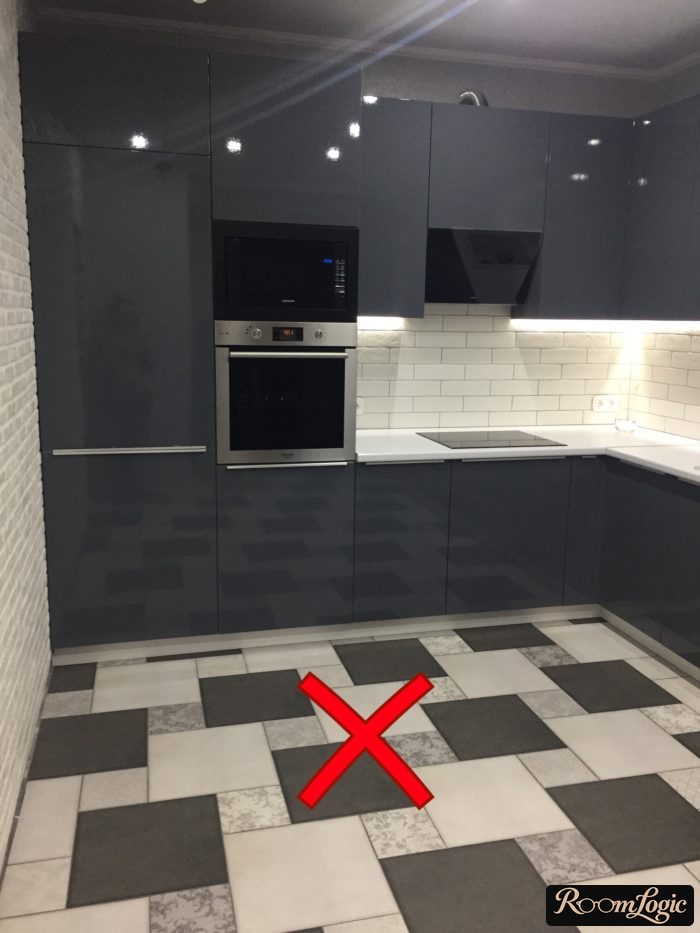
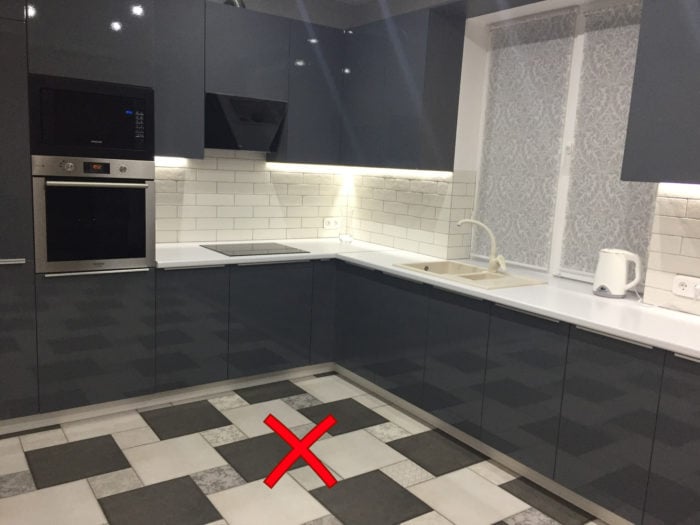
What not to do: combine different types of tile and lay patterns with them. That is last century.
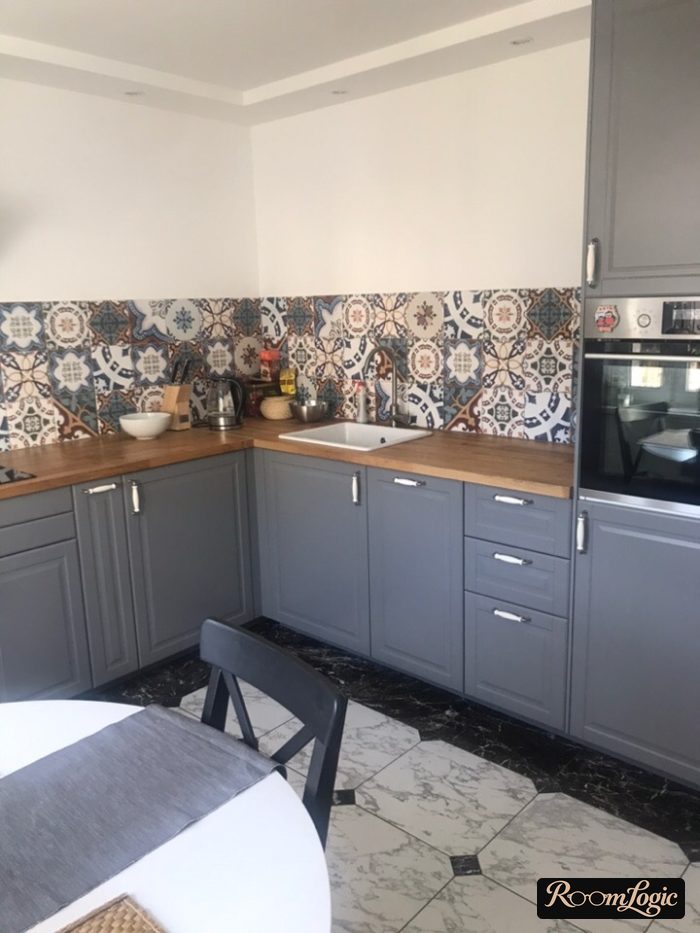
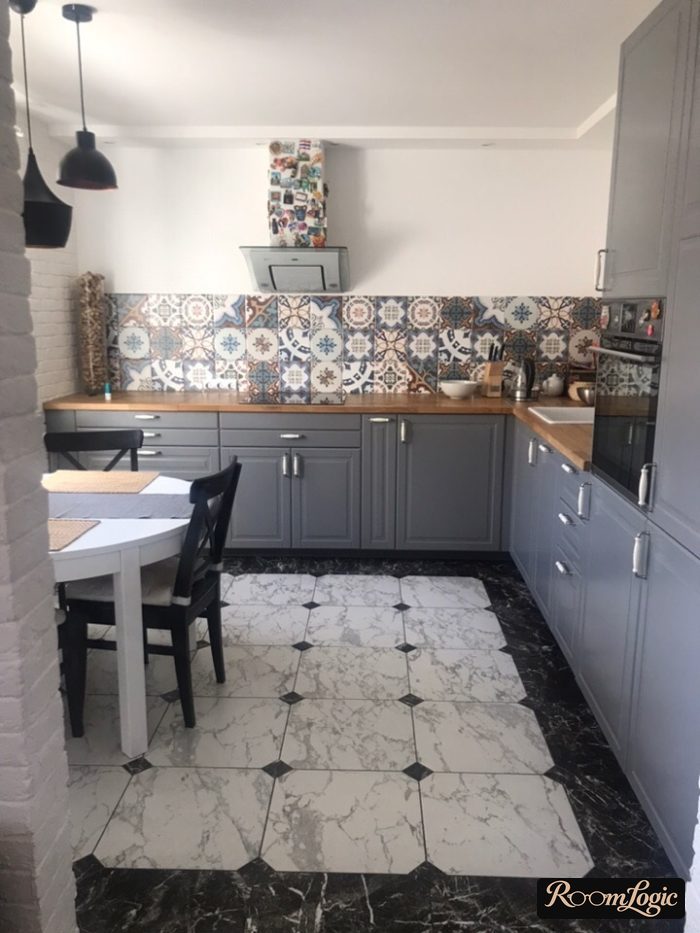
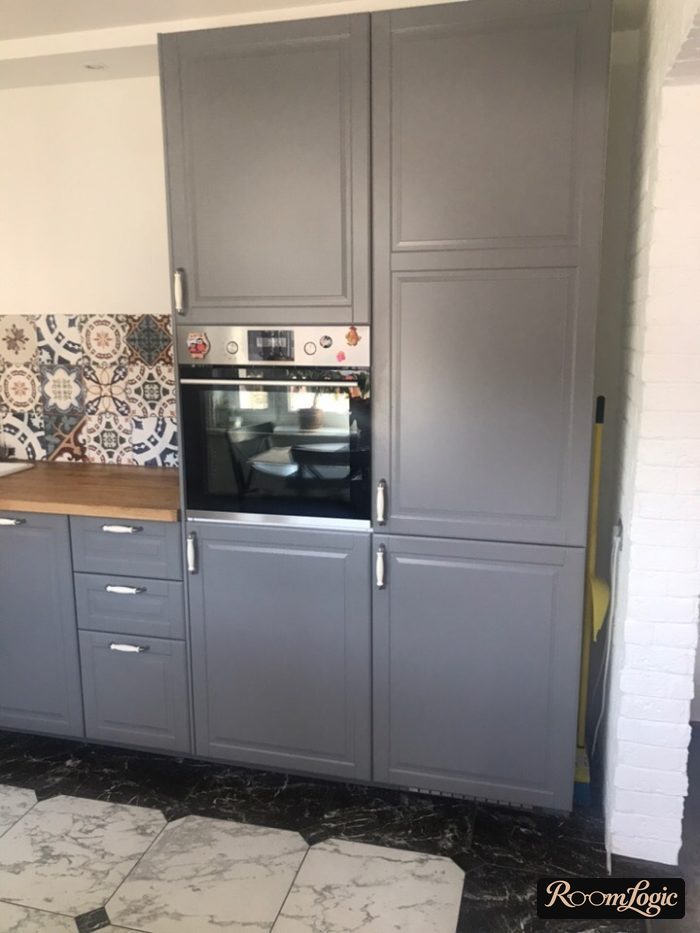
More about choosing kitchen flooring.
Curtains
The standard curtain color that fits absolutely every interior design style and color palette is dark graphite gray.
Because of that, many people wonder whether a gray kitchen can have gray curtains too.
It can.
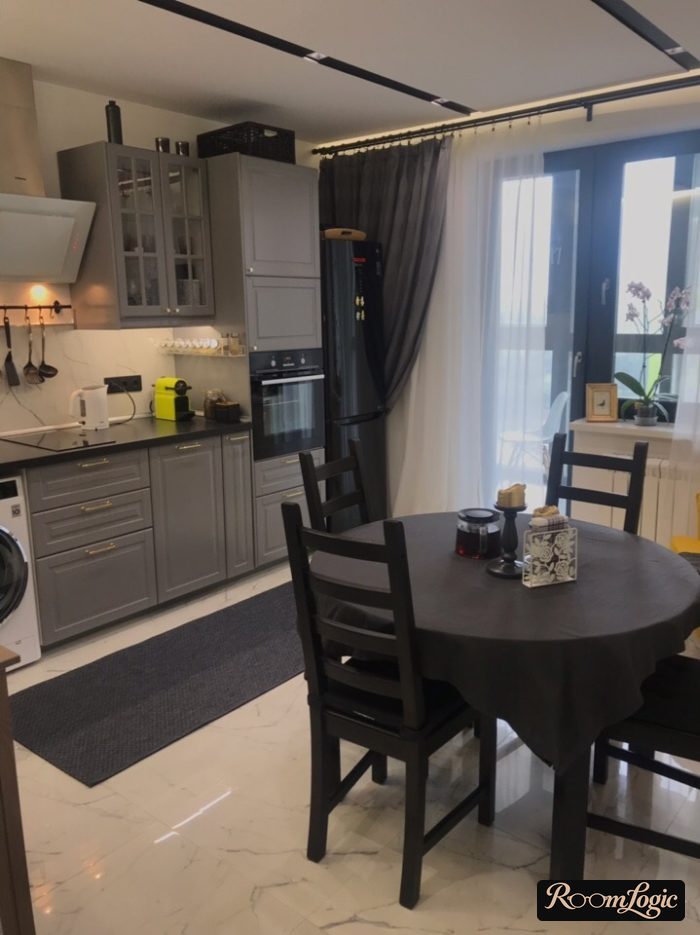
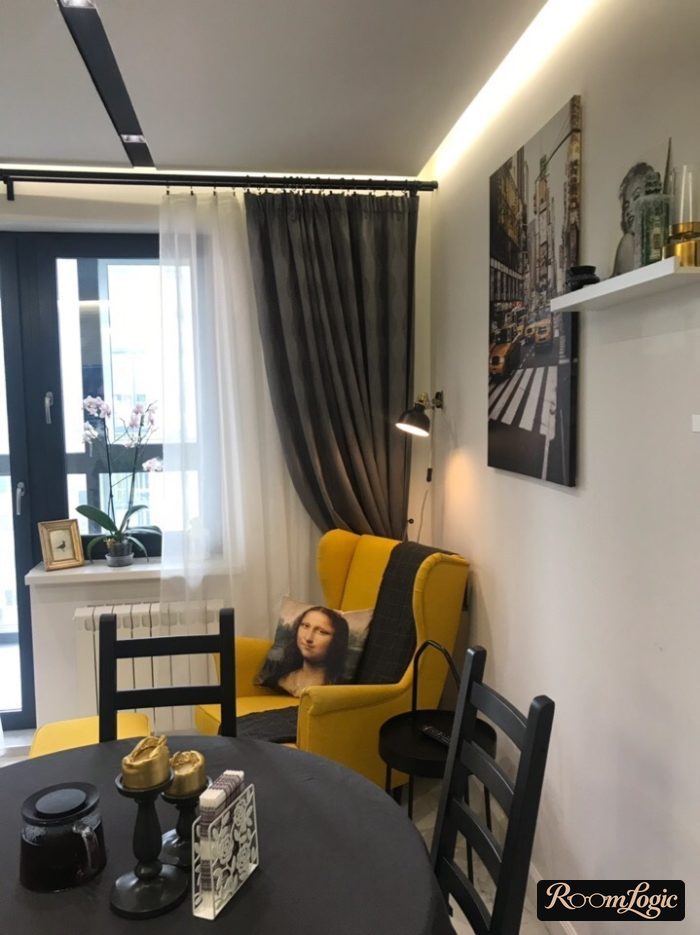
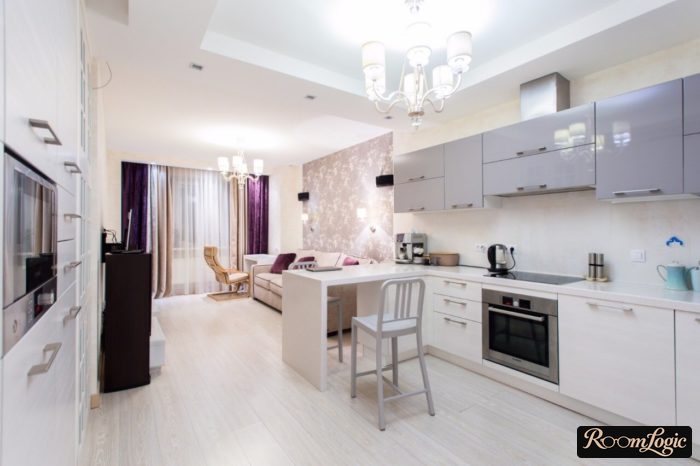
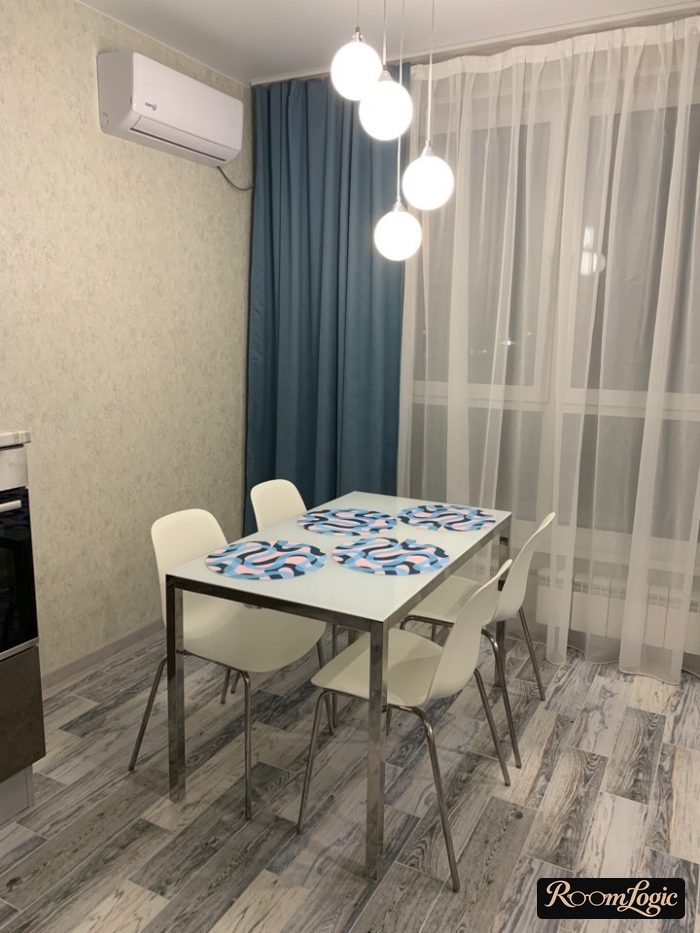
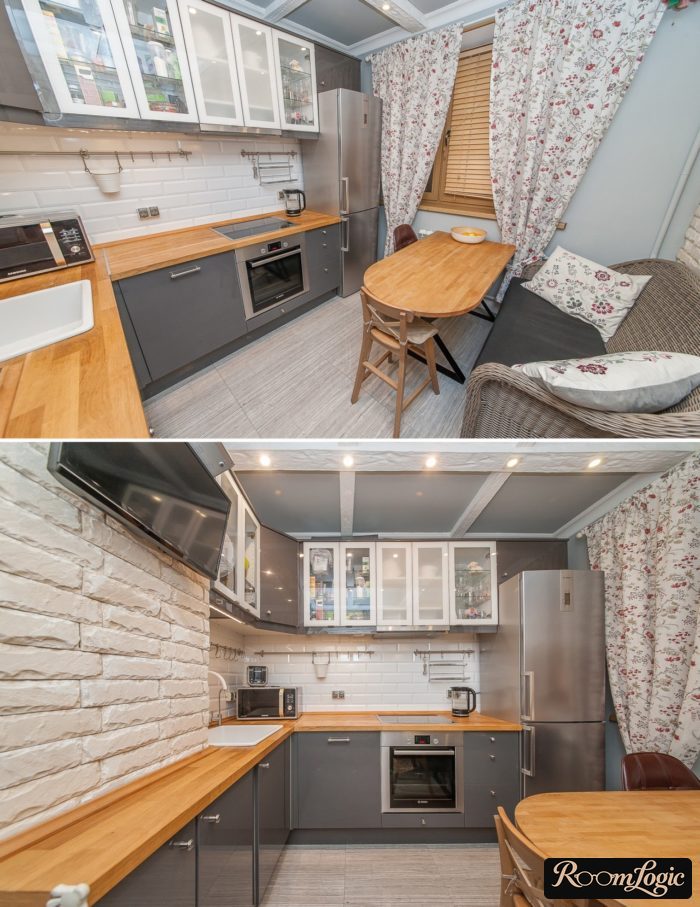
But any other color can work too – the main thing is not to use bright colors, only low saturation. In that sense, it is impossible to choose a low-saturation curtain color that does not work with a gray kitchen, so if you want a color accent, go for it.
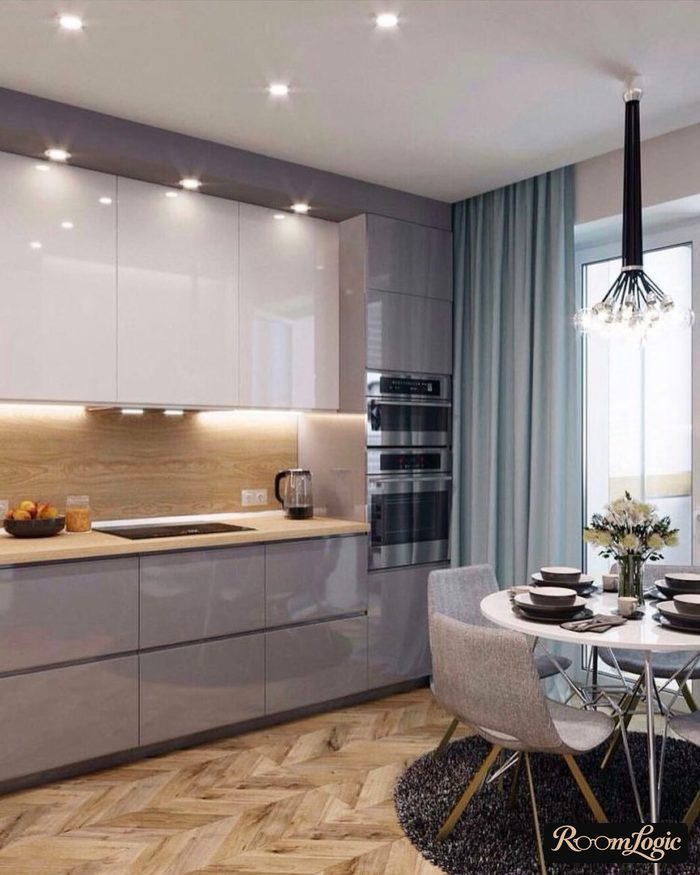
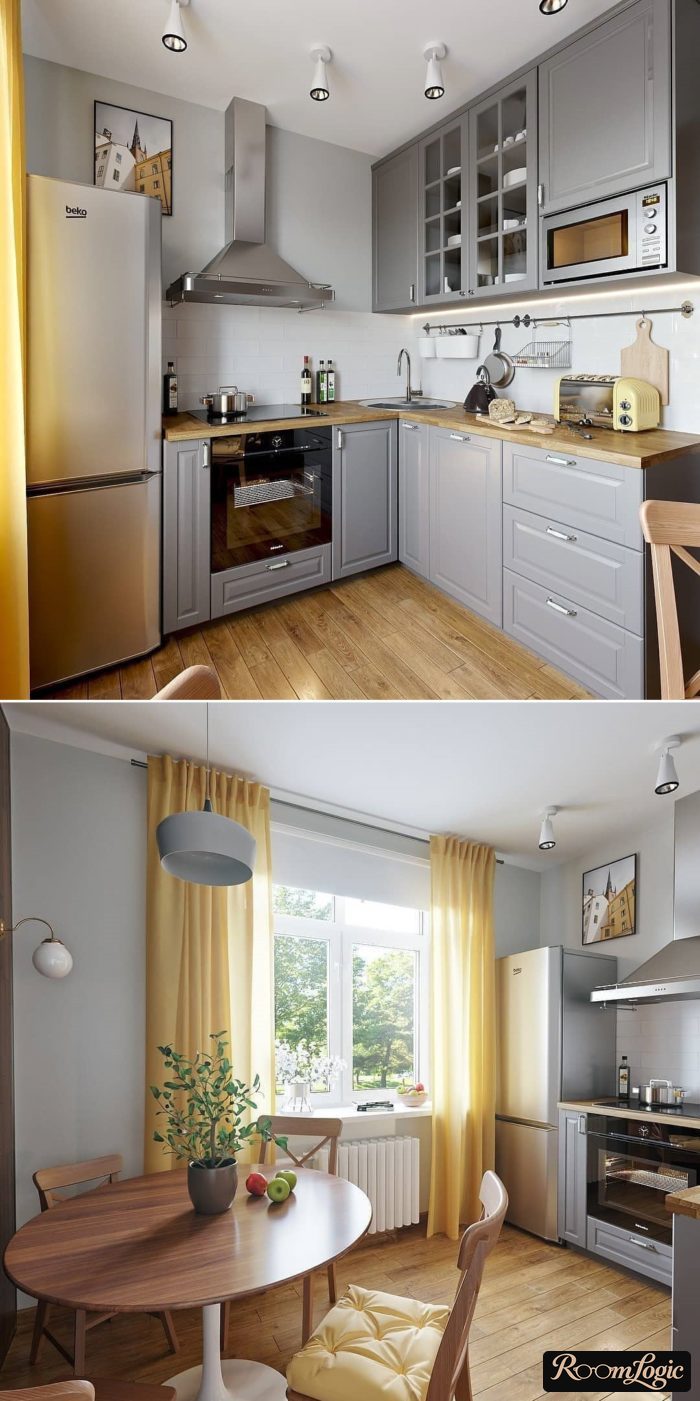
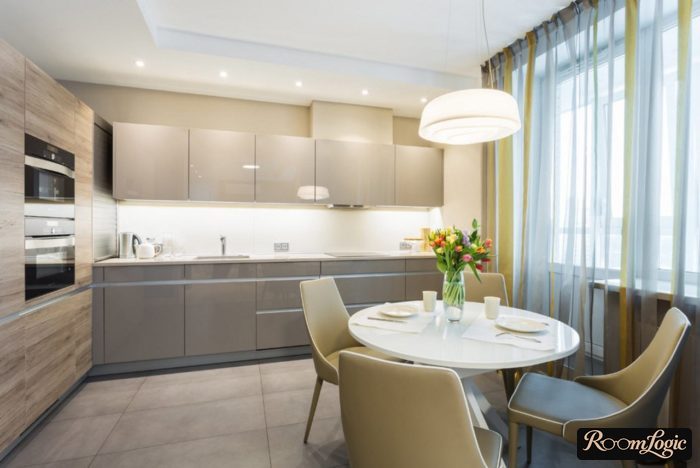
More about kitchen curtains (short and long) and when there is a patio door (mostly drapes).
To sum up: a gray kitchen is a modern option with a low risk of mistakes. Mix it with white, wood, and low-saturation accent colors, and you will get a design that stays current for years.
Good luck with your remodel!