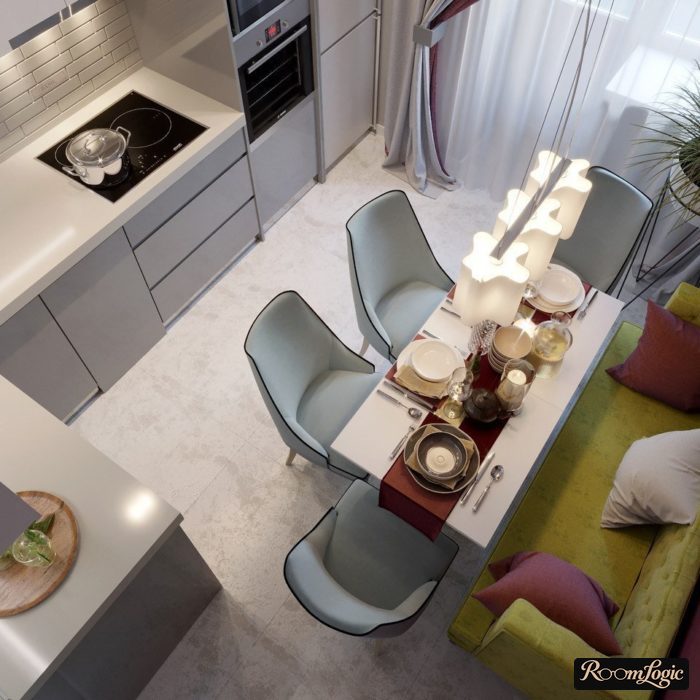
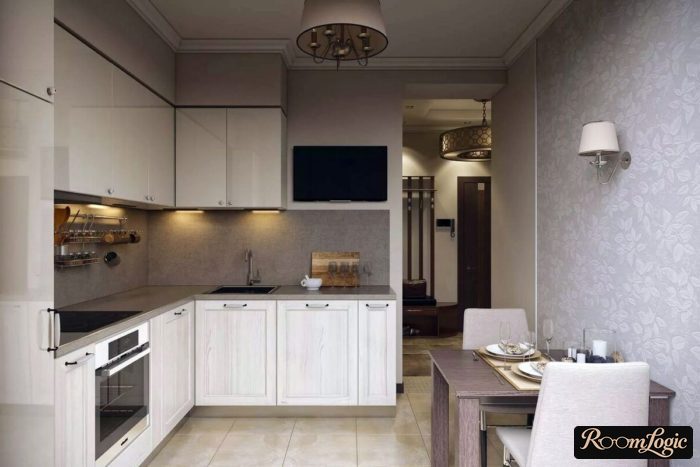
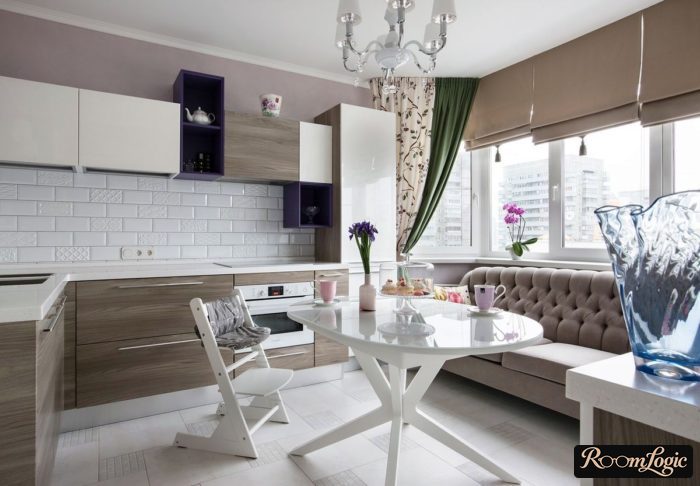
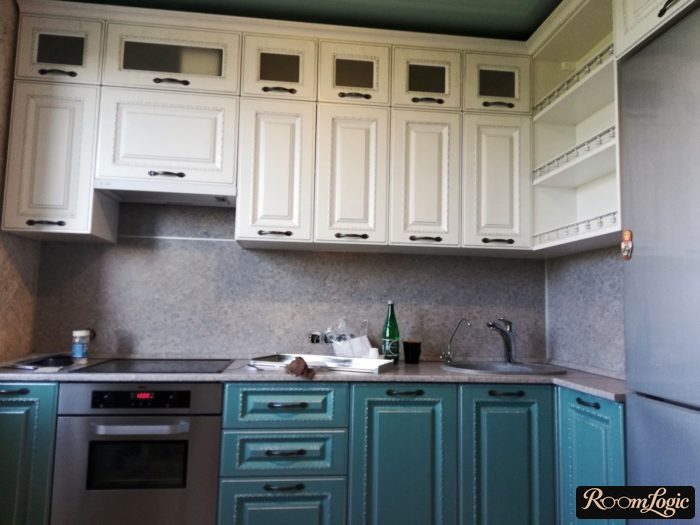
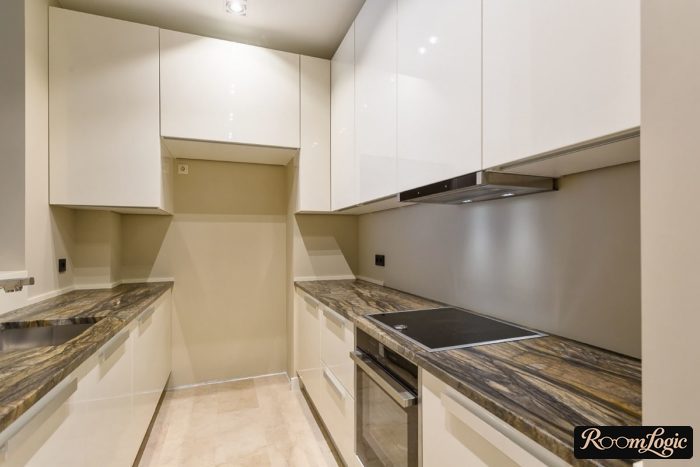
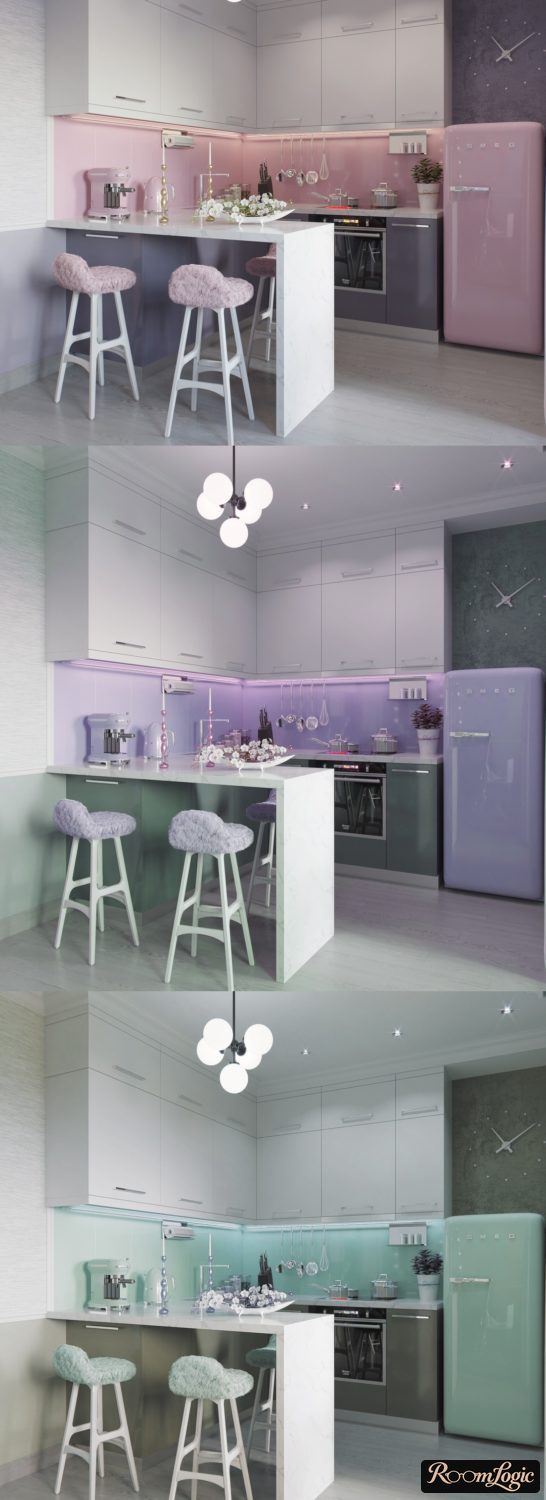
It is easy to keep a kitchen in neoclassical style because, in reality, that style does not exist. It is simply a sensible adaptation of traditional style to modern materials, furniture, and appliances, with an emphasis on practicality.
We will quickly go through the design details and then look at many attractive photos in different colors.
Neoclassical Kitchen Interior
Modern classic kitchens, in the sense used here, resemble American transitional interiors, but in a heavily adapted form.
Furniture and Accessories
The main points:
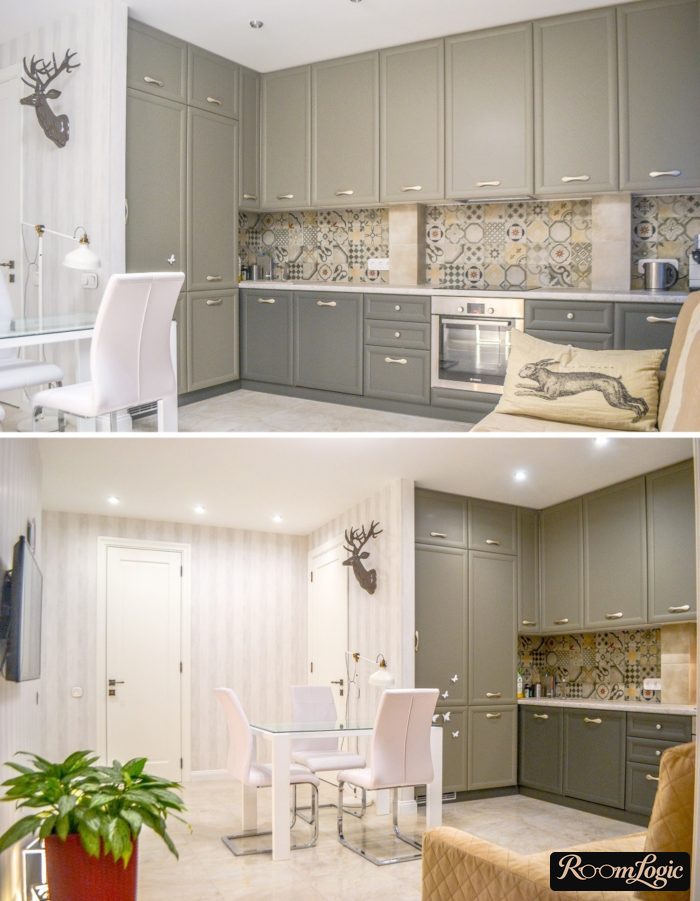
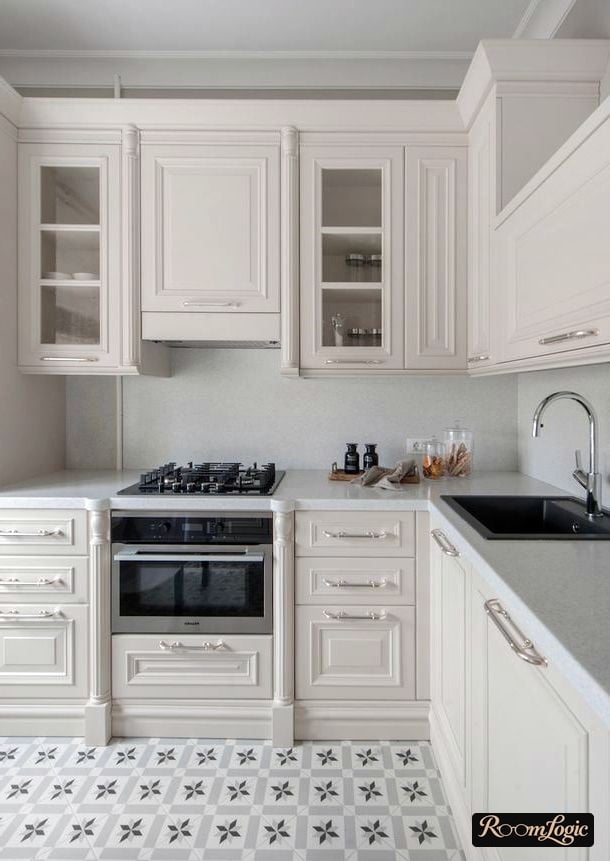
- Matte fronts with routed details are the foundation of neoclassical style in a kitchen. Remove the routed details and the interior becomes simply modern. Gloss is difficult to fit in, so it is better not to risk it.
- Current built-in appliances without vintage imitation. There is more choice, the price is lower, and they look natural. There is no point pretending they are traditional.
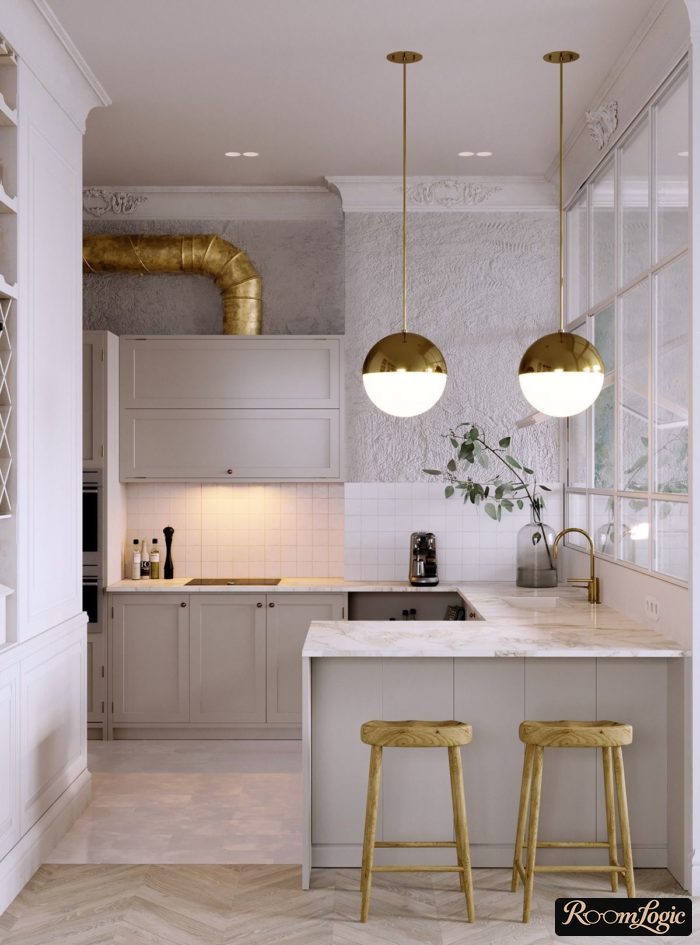
- Upper cabinets up to the ceiling. Making cabinets up to the ceiling is already standard. In neoclassical style, you can do this with additional stacked sections, glass doors like a hutch (I do not recommend it), or simply by lowering the ceiling over the cabinets. This also hides the range hood duct.
- Every cabinet layout works for neoclassical style: L-shaped, U-shaped, or straight. It makes no difference. But do not put the sink in the corner. It looks like the 1990s.
- Light colors and furniture that looks built in and solid – get rid of dark corners. This is another way to create a cozy feeling through cleanliness instead of a bunch of “cute” accessories.
- A natural- or engineered-stone countertop (expensive). If you want to save money without losing the result, use wood-look laminate. Also read about a Scandinavian kitchen and a white kitchen with wood countertops (yes, it has a separate article because this is the best combination).
- Cabinet and door handles, the faucet, light fixtures, chairs, and table can all be either modern or lightly traditional. They cost the same. This doubles the range you can choose from – that is the trick of a neoclassical kitchen.
- Use solid-color modern curtains. No valances or anything else like that. Roman shades are fine. More detail on choosing kitchen curtains, and separately if there is a patio door.
I strongly recommend reading my articles:
- How to choose and equip kitchen cabinets – which hardware is worth paying extra for, which should be the cheapest, how to choose cabinetmakers, and so on.
- Small kitchen design – relevant to everyone because it has all the ideas for maximizing practicality.
If you like brighter and less strict interiors, look at the article with a bunch of photos of Provence-style kitchens. They have a lot in common.
Finishes
Backsplash for a Neoclassical Kitchen
Good options:
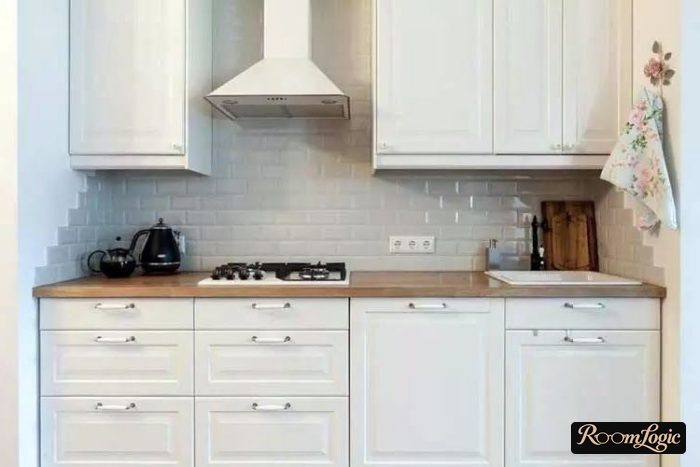
- White subway tile (white bricks)
- Marble-look tile
- The same material as the countertop (inexpensive with laminate, expensive with stone)
- Solid-color glass (without a photo behind it)
- Large stone-look tile
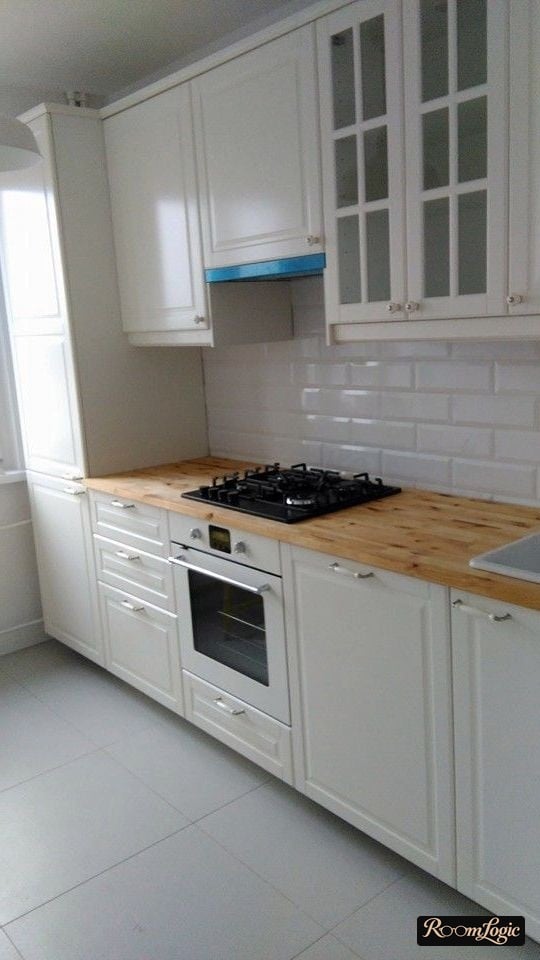
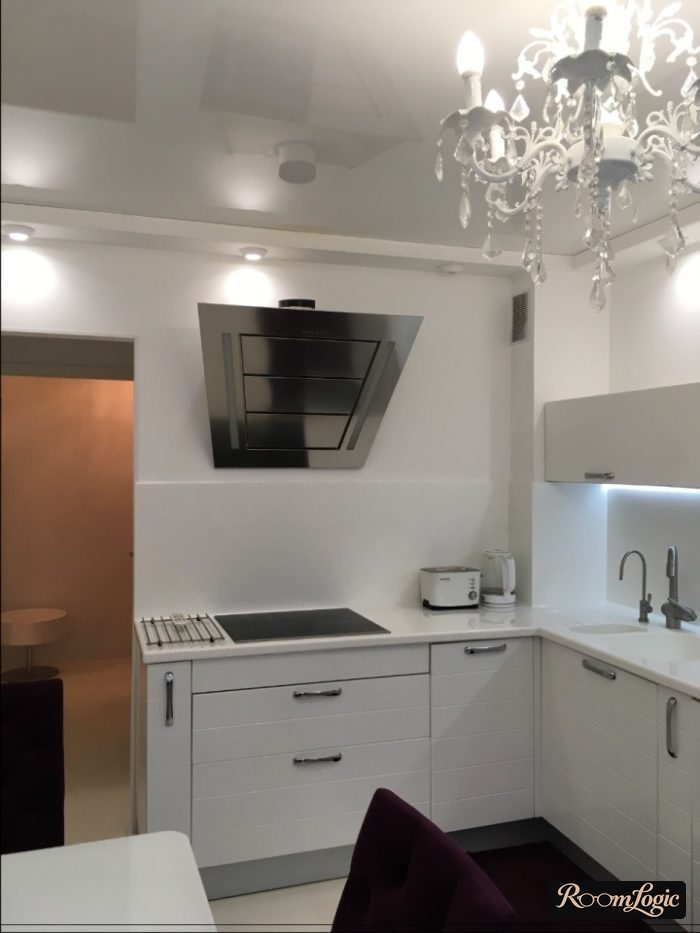
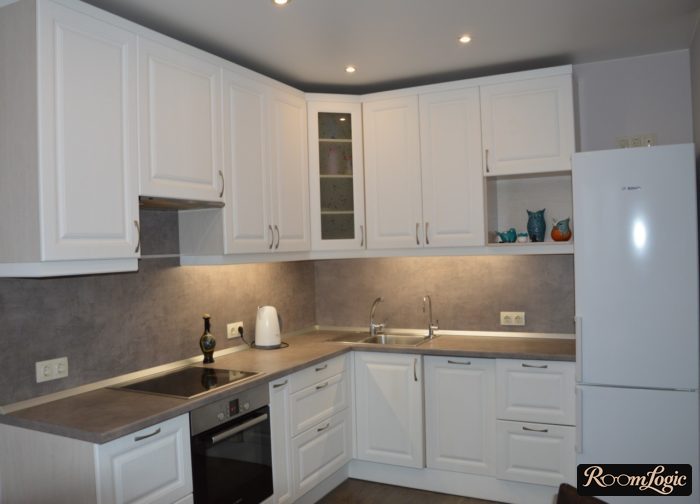
I do not recommend:
- Small square tile and mosaics. They look good from a design point of view, but there are many grout lines. Grout is not durable enough for a backsplash. The less of it, the better.
- Patterns and patchwork. Neoclassical style is still strict and solid, while a bright backsplash draws a lot of attention.
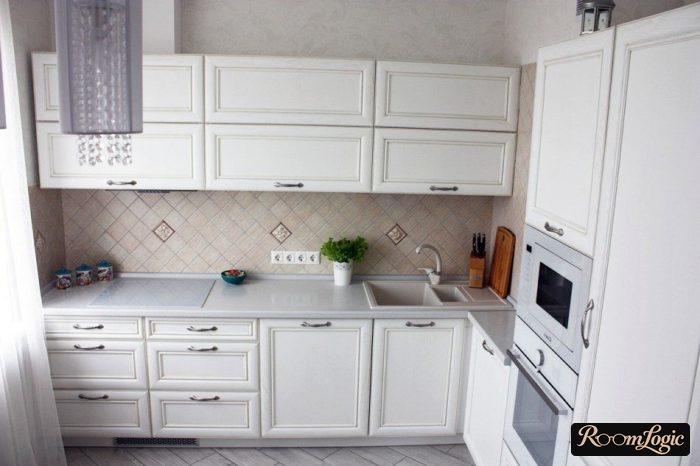
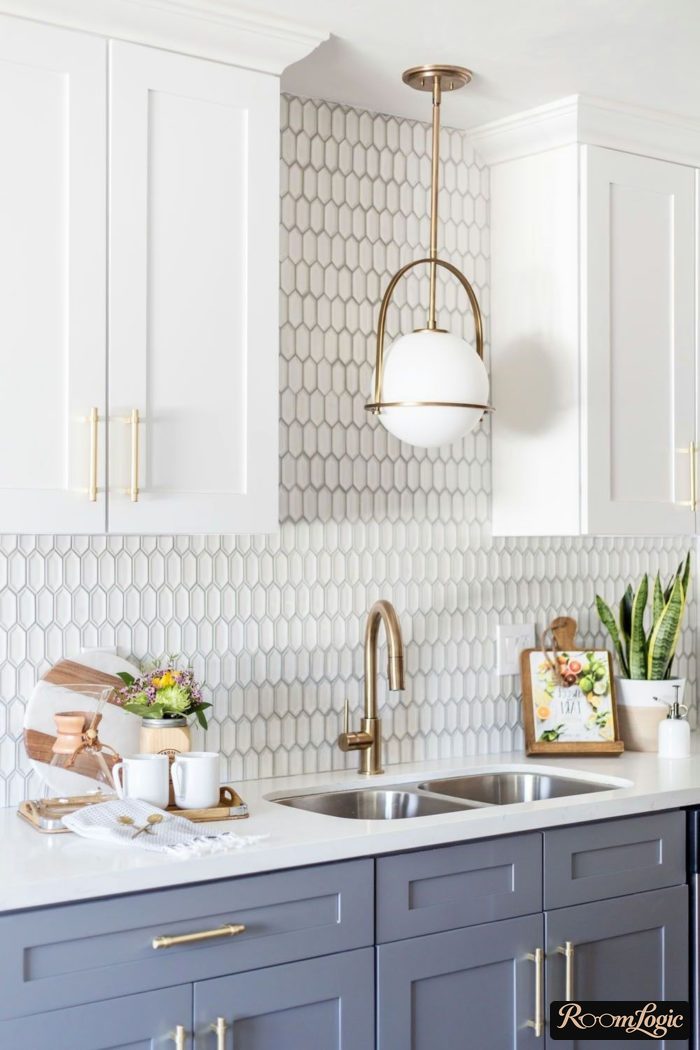
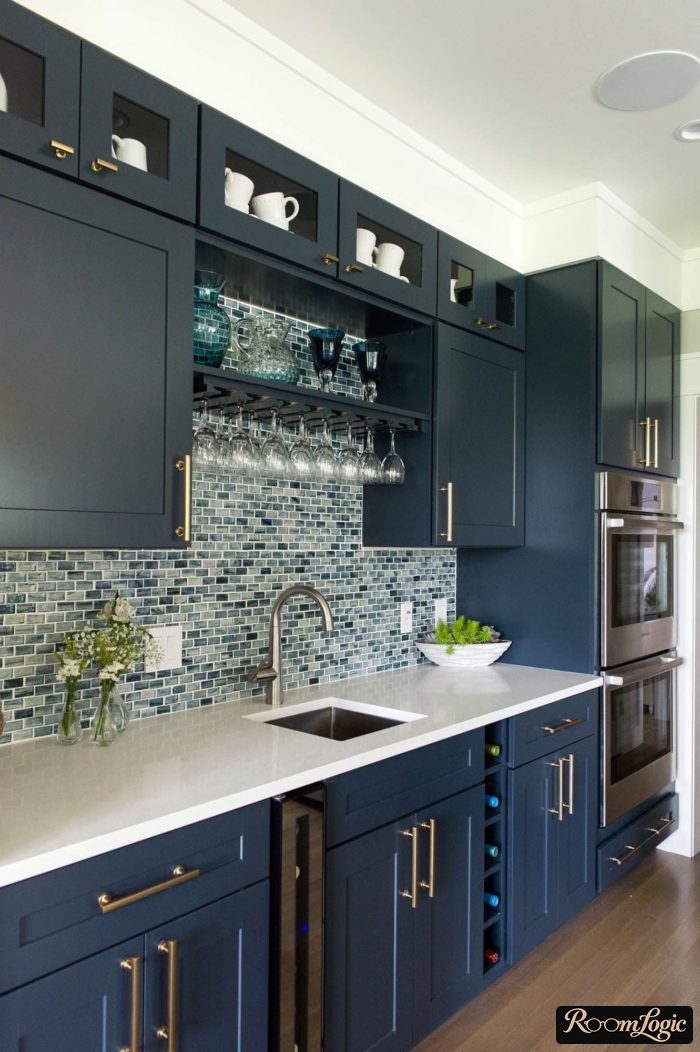
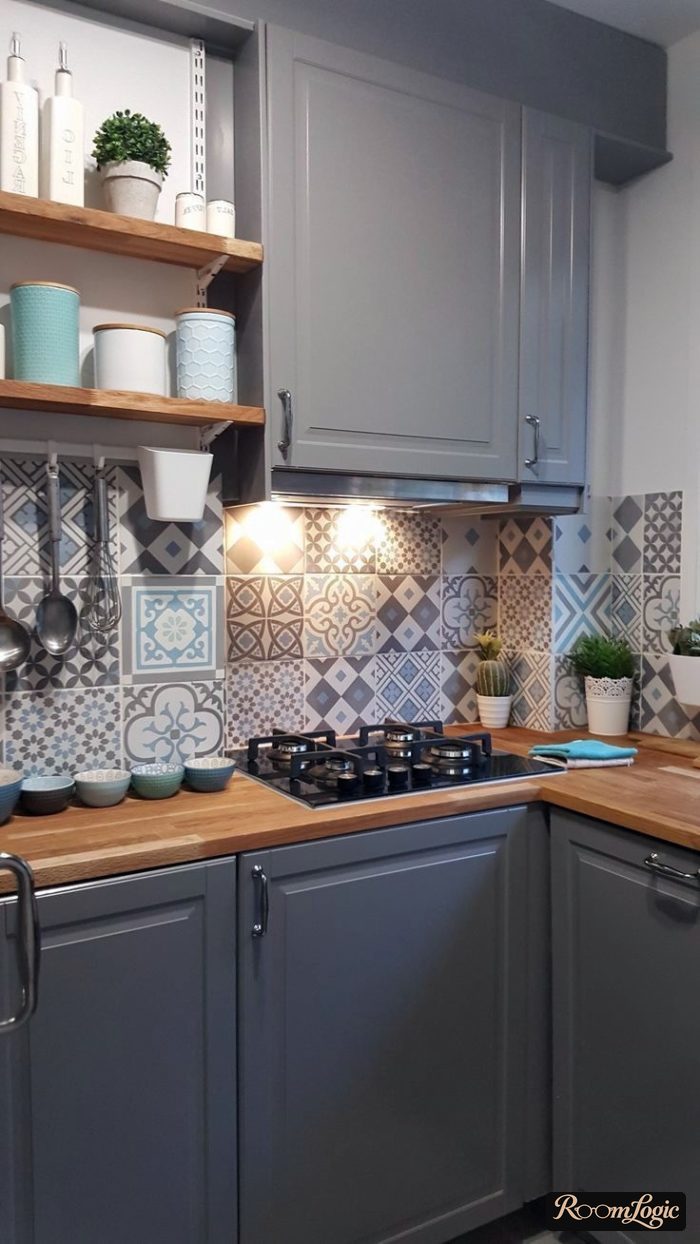
There is a separate article about kitchen backsplashes with more than 100 photos.
Floor
Tile of any type works for the floor of a neoclassical kitchen as long as the color range is natural and the shade is light. In other words, it cannot be bright or dark. A subtle pattern or an offset decorative layout is possible, although I do not recommend either one.
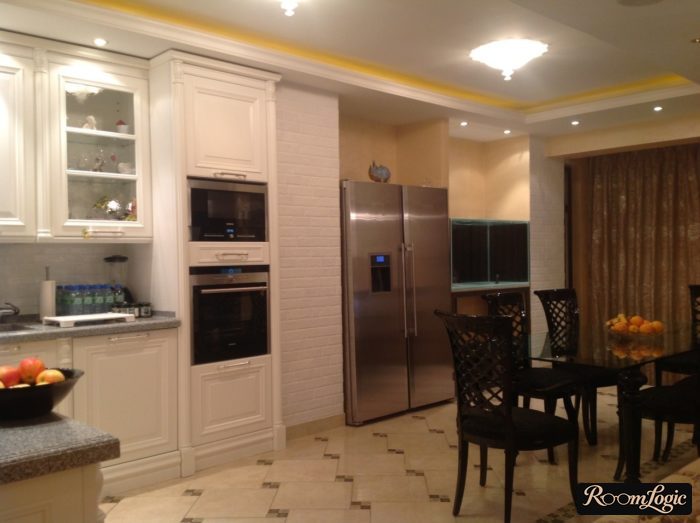
Use beveled laminate in light, muted colors without a strong undertone – neutral rather than warm or cool. This is important. Dark laminate or anything that turns orange, yellow, or brown is guaranteed not to fit. If you want a wood-look floor and countertop, choose either a contrast (a white or gray floor) or a very close match. Anything in between is bad.
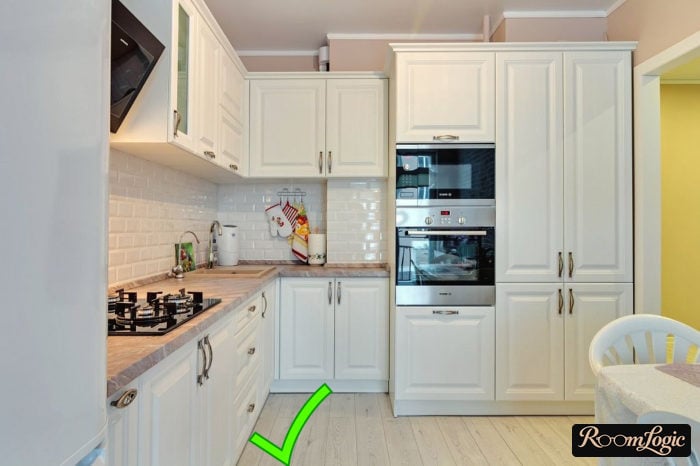
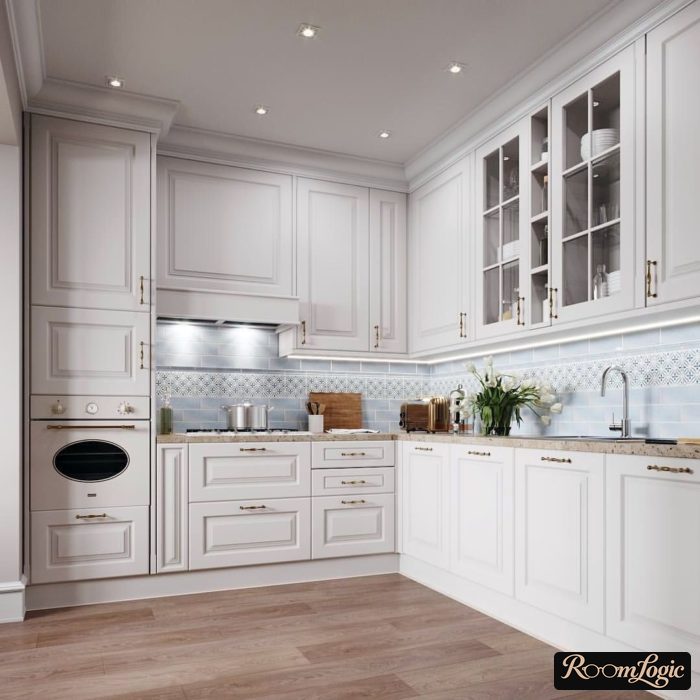
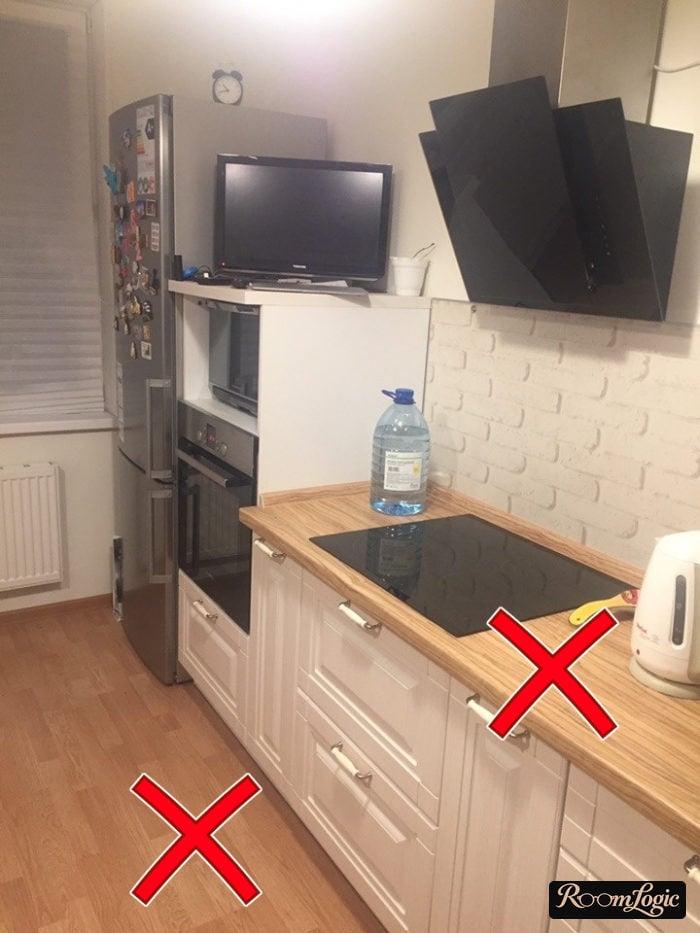
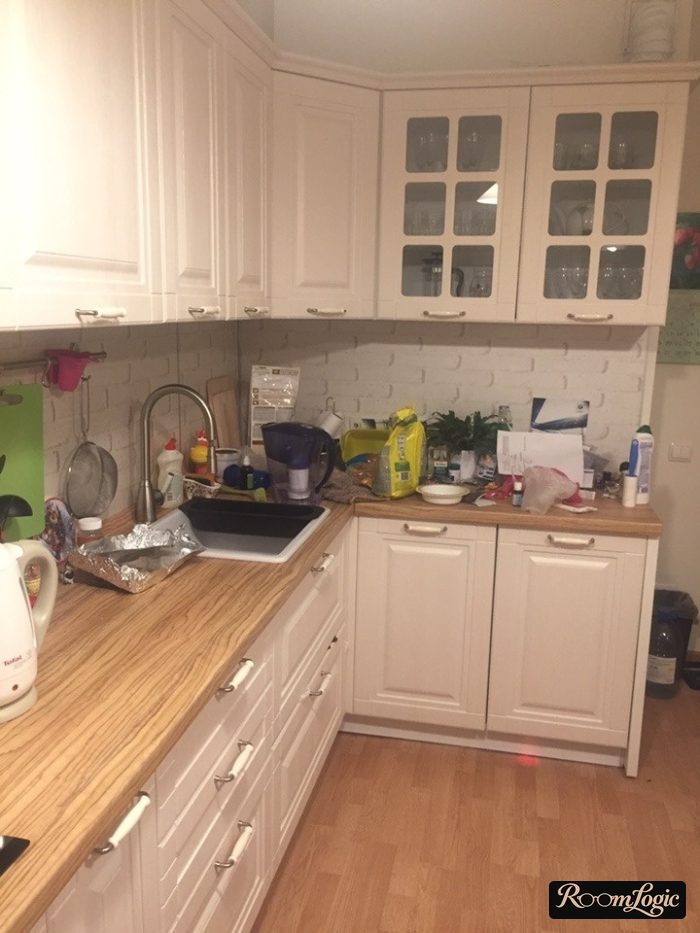
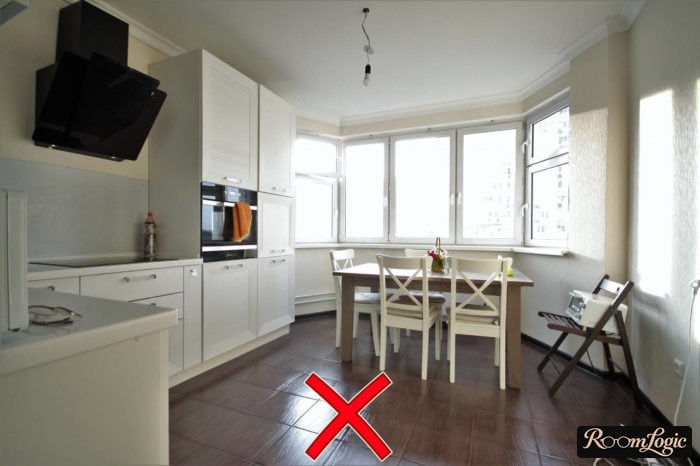
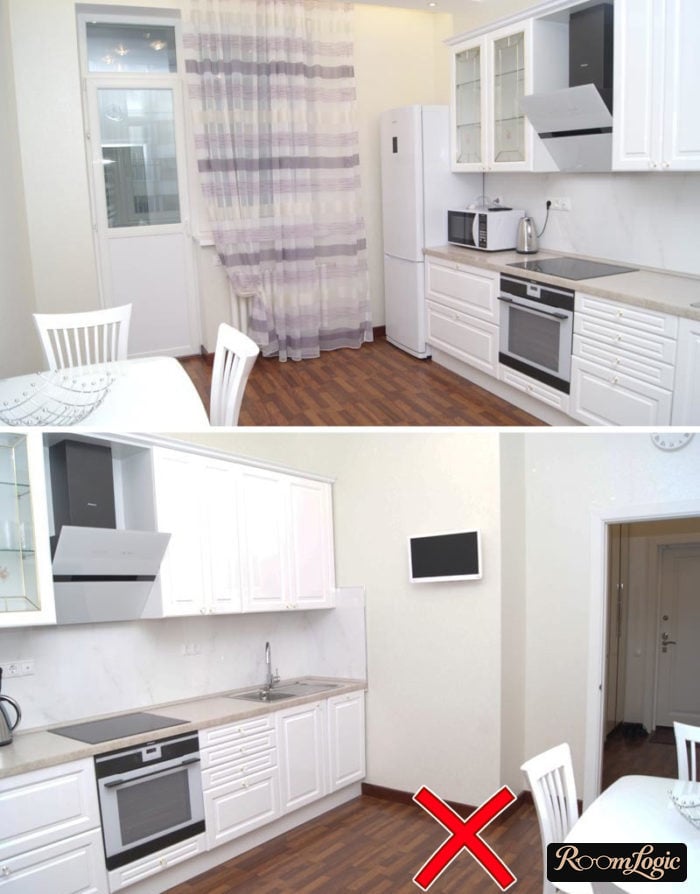
Match the baseboard to the interior doors.
Read about choosing kitchen flooring. It also covers joints and transitions.
Walls
Everyone likes real interior photos of homes with white painted walls, but when it is time to do it themselves, people are afraid for some reason and think it will be boring or “like a hospital.” Do not be afraid. It will not. This is the standard option in a neoclassical kitchen. It is not an accent, so people do not consciously notice it when looking at photos. You should notice it.
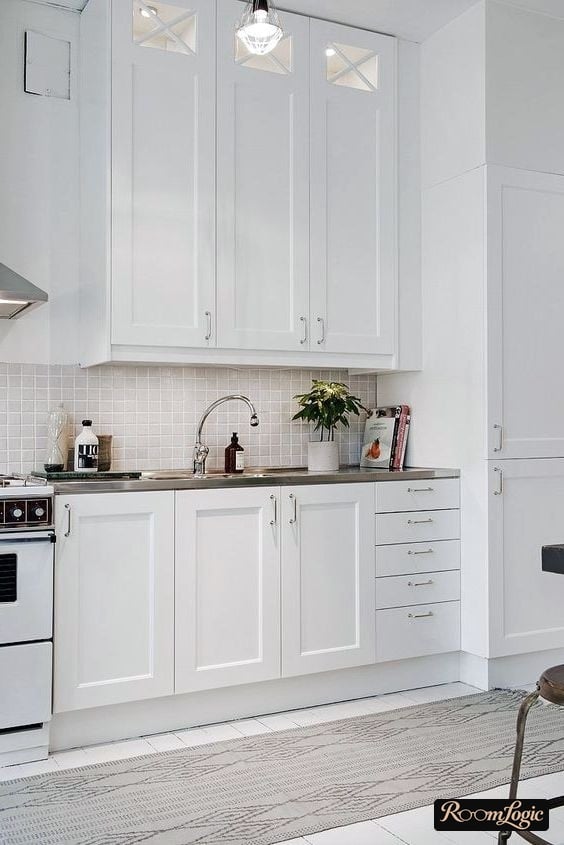
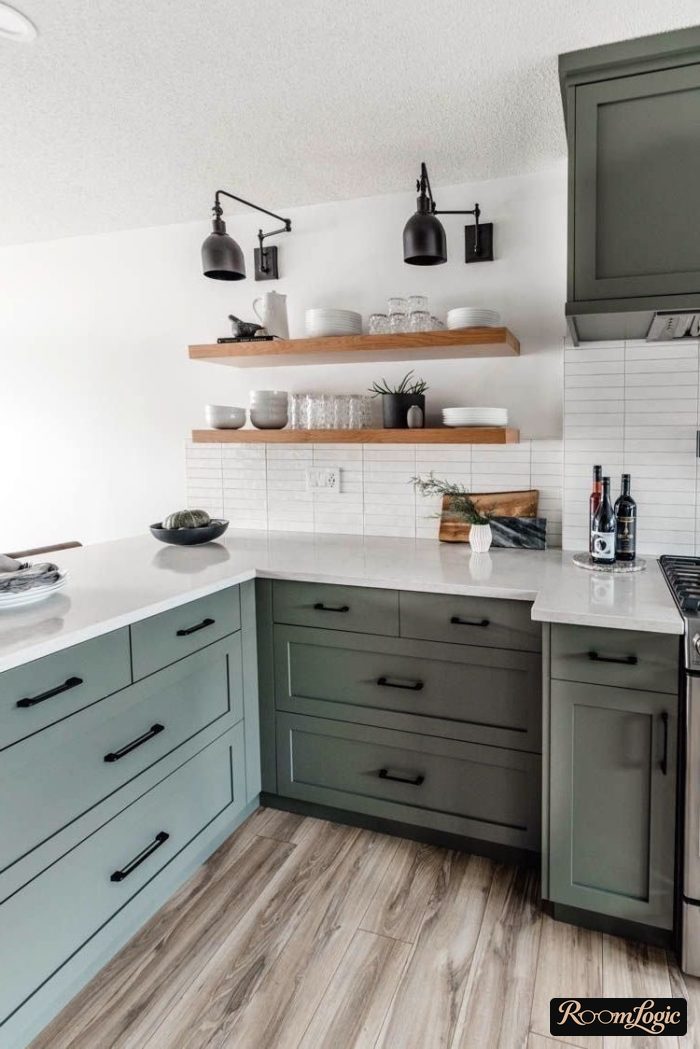
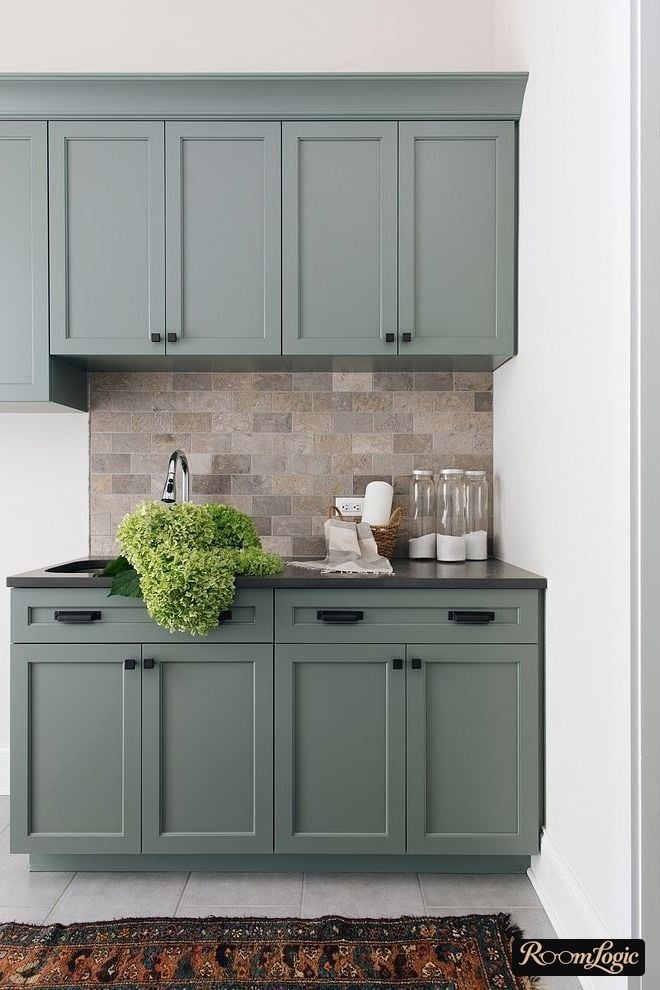
Use decorative plaster and stone as accents, but not on every wall. Try to light them.
Use paintable wallpaper in light colors or monochrome accent wallpaper on 1 wall. More on kitchen wallpaper.
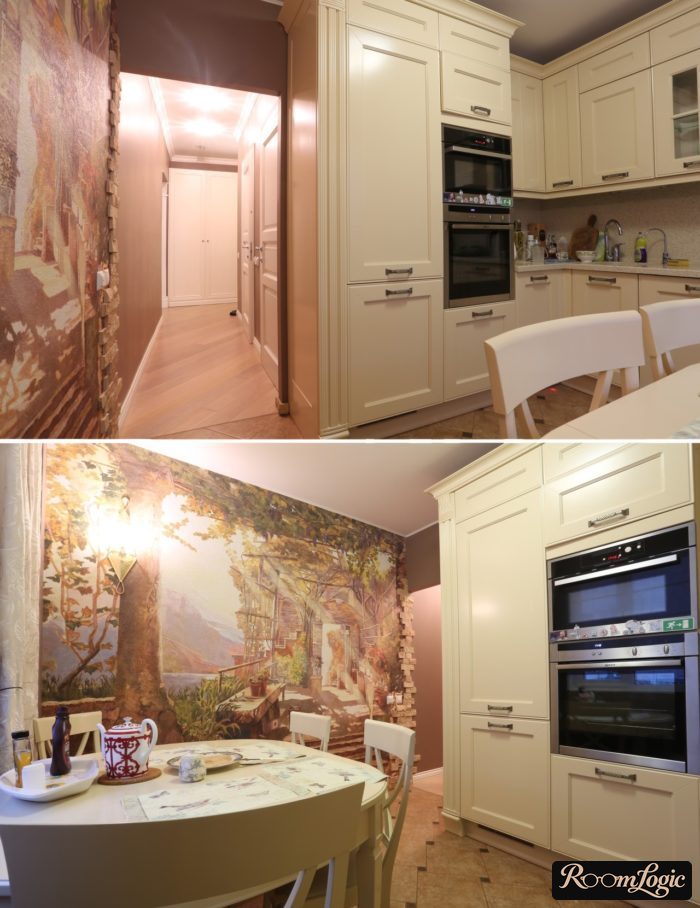
Photo murals and frescoes are a very risky option, but sometimes they work.
Ceiling
I support single-level matte white ceilings when we are talking about an ordinary apartment. If the kitchen is combined with the living room, you can make it more complicated.
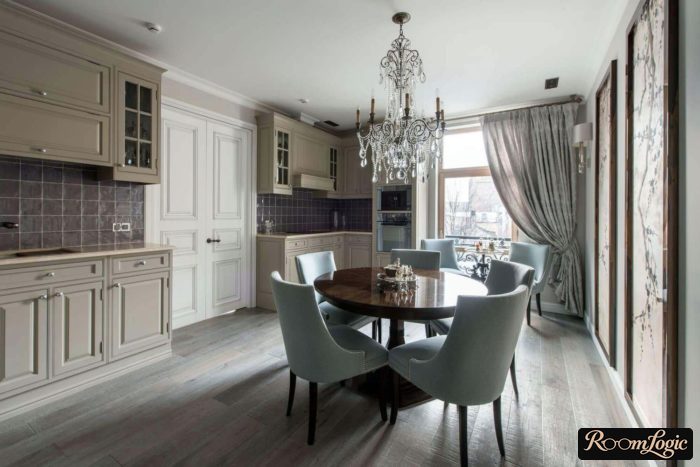
The standard is a dropped section above the upper cabinets so there is no gap between them and the ceiling. Crown molding is also used in a neoclassical kitchen. If you have a lot of money, you can add a second level and decorative molding, without going overboard. Although if the budget is not unlimited, there are more rational ways to spend money during a renovation.
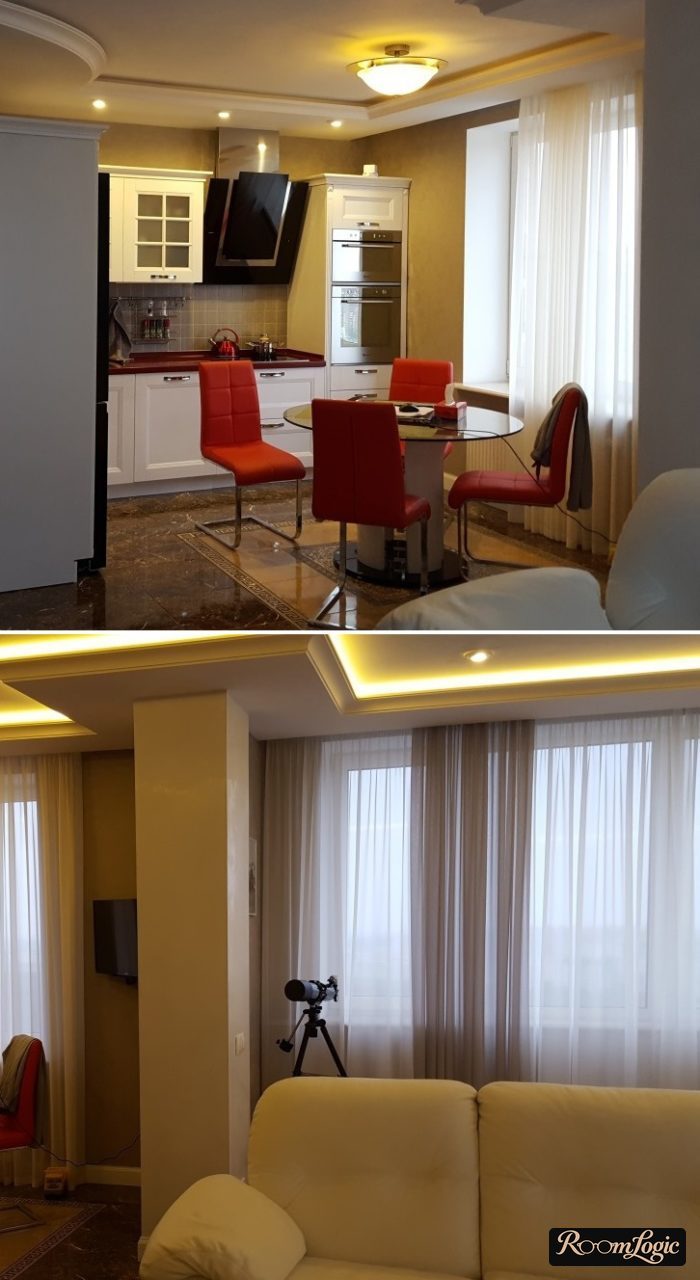
3 Colors for a Neoclassical Kitchen
Most styles are built on a simple principle:
The main area and all the finishes are done in neutral, usually light colors (white and light gray).
Two-color combinations are used in small amounts as accents.
This is the most common option. I covered it and the other options, as well as the main rule, in my best article about interior color combinations (I really recommend reading it).
A neoclassical kitchen is built on a less common principle. It is either a monochrome interior in pastel colors or exactly 1 additional color and its shades.
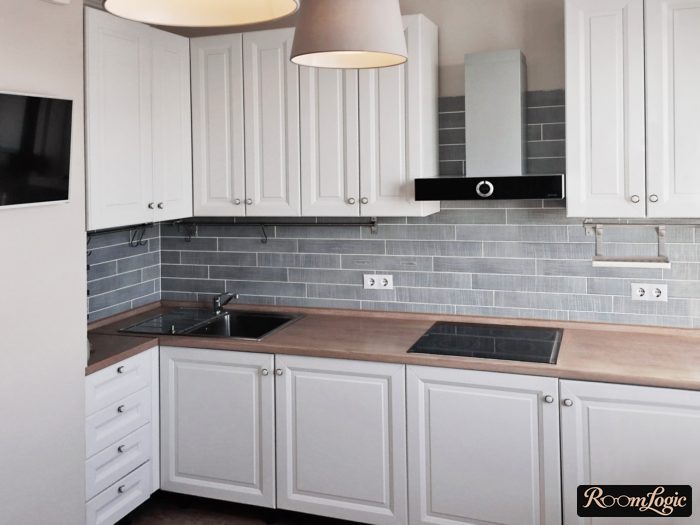
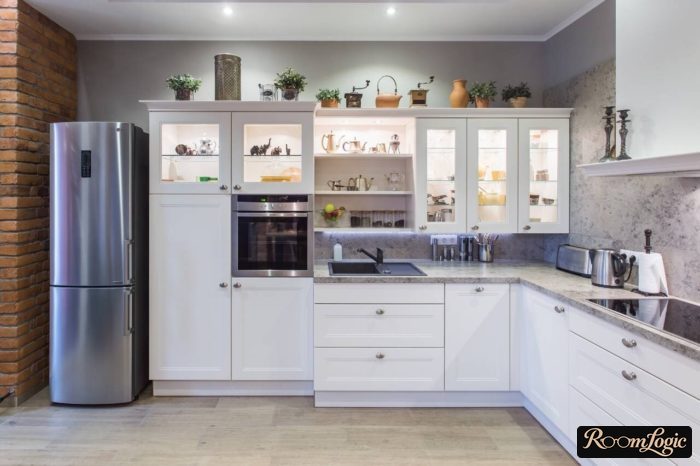
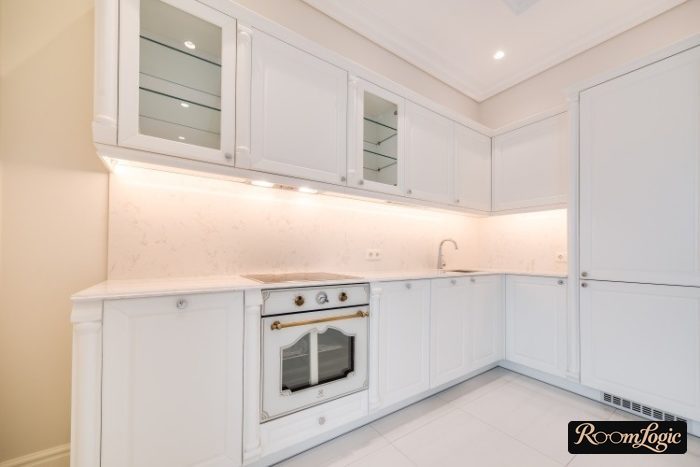
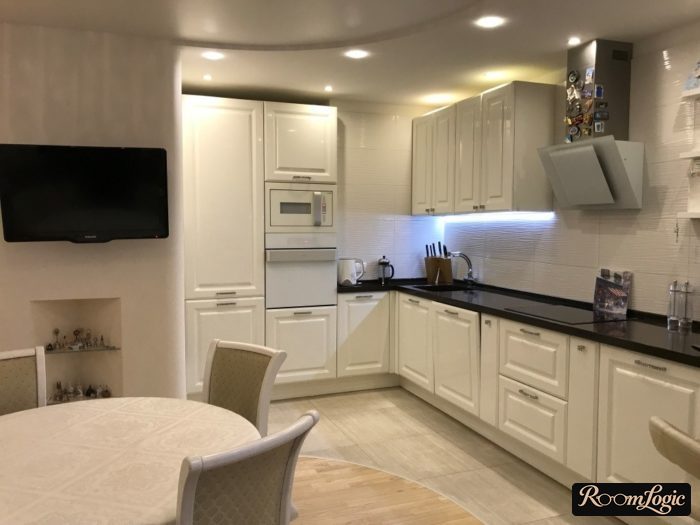
1. White
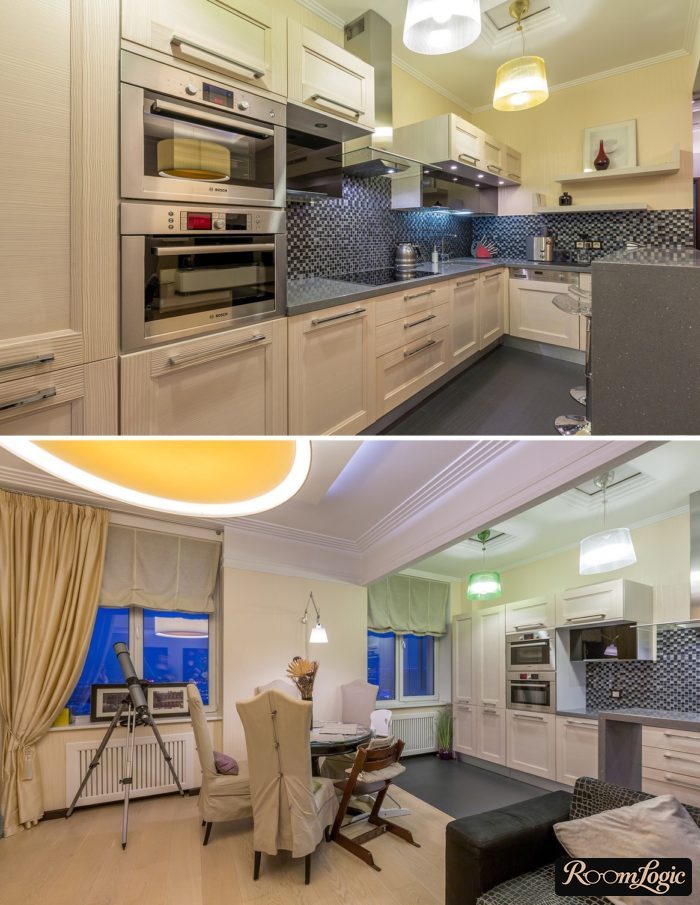
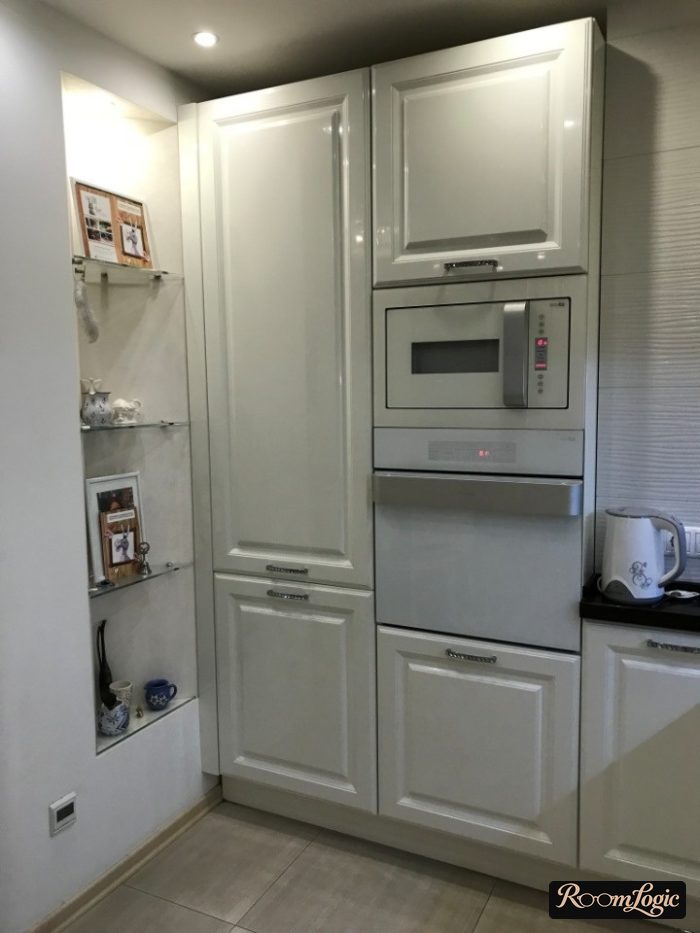
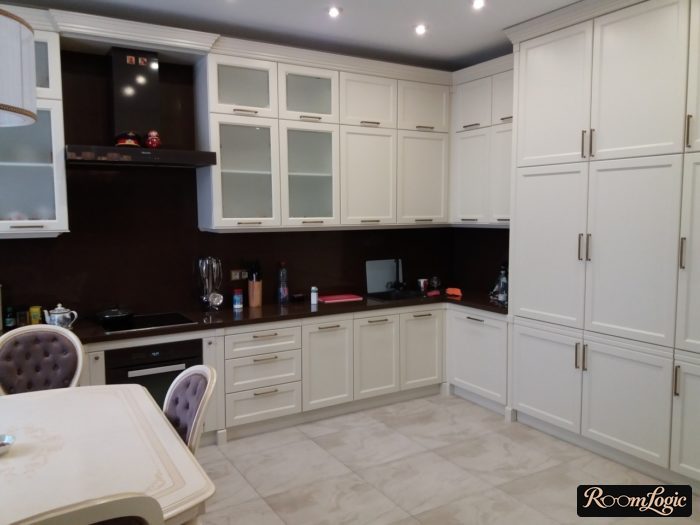
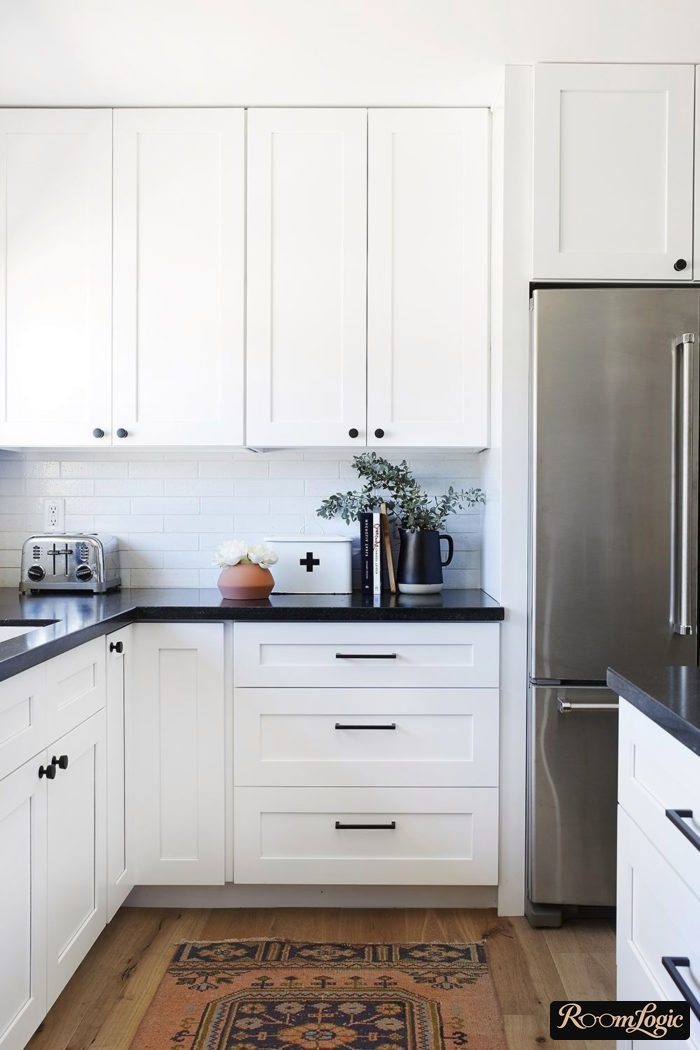
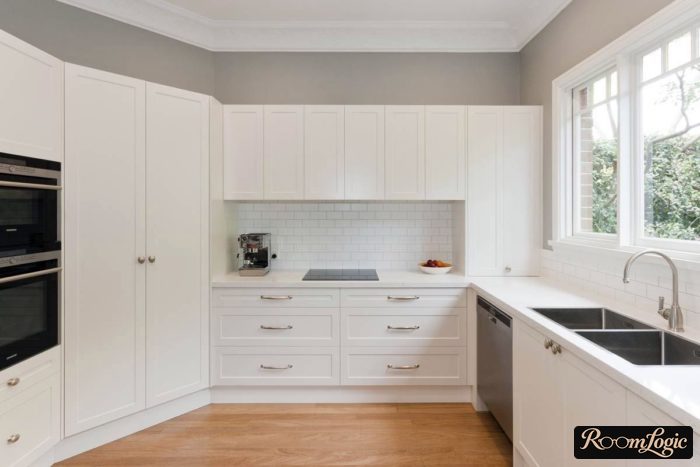
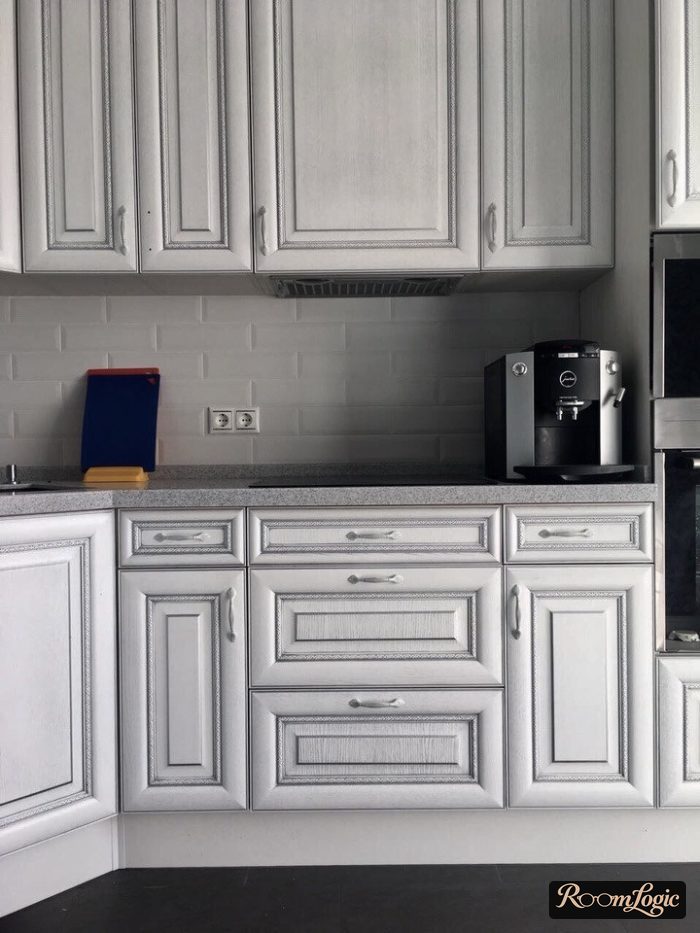
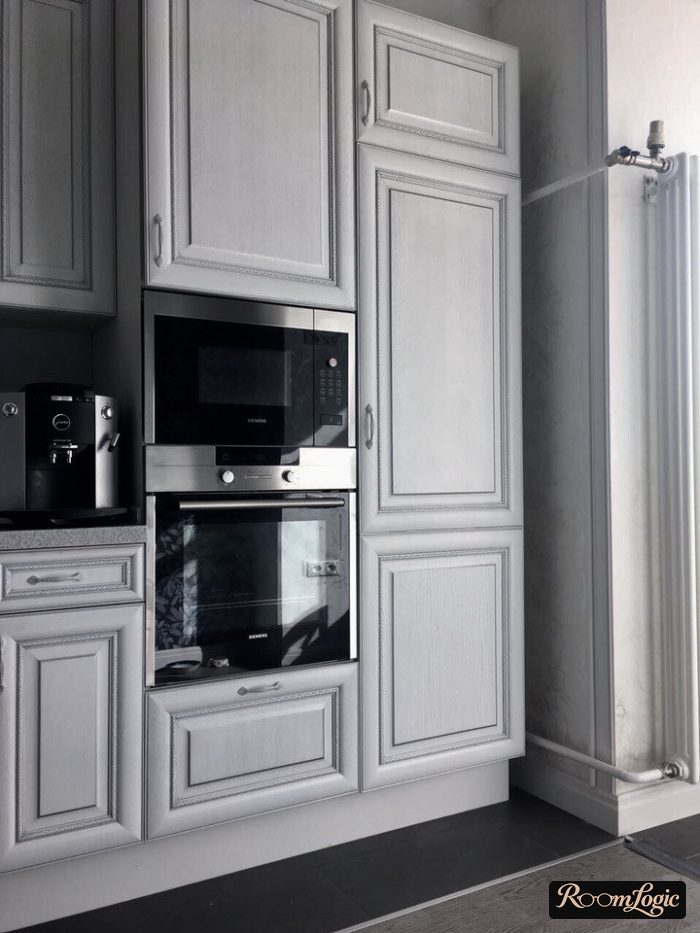
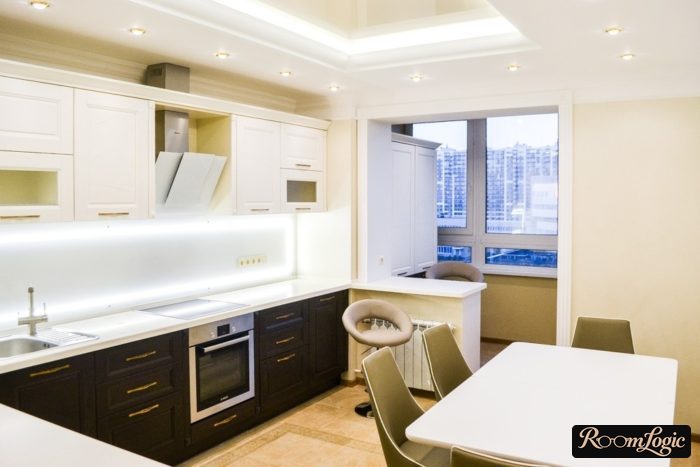
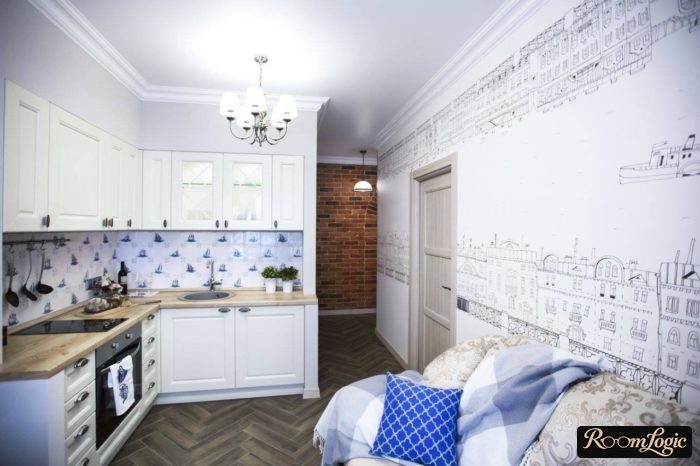
White, beige, and ivory are the most common choices for both furniture and finishes in a neoclassical kitchen. This choice is completely justified, although without photos of real interiors, it would be difficult to argue that it has a right to exist (many people demand something bright).
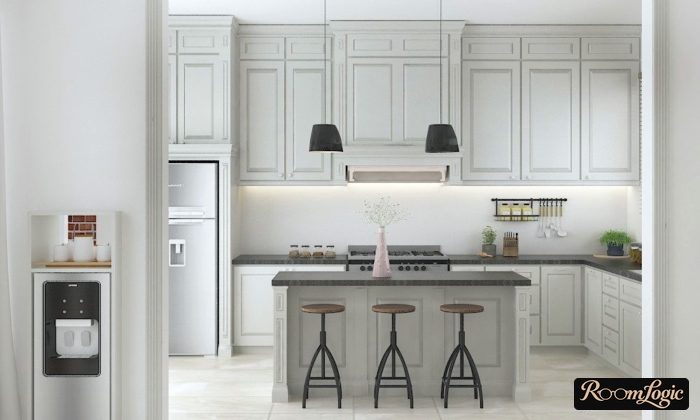
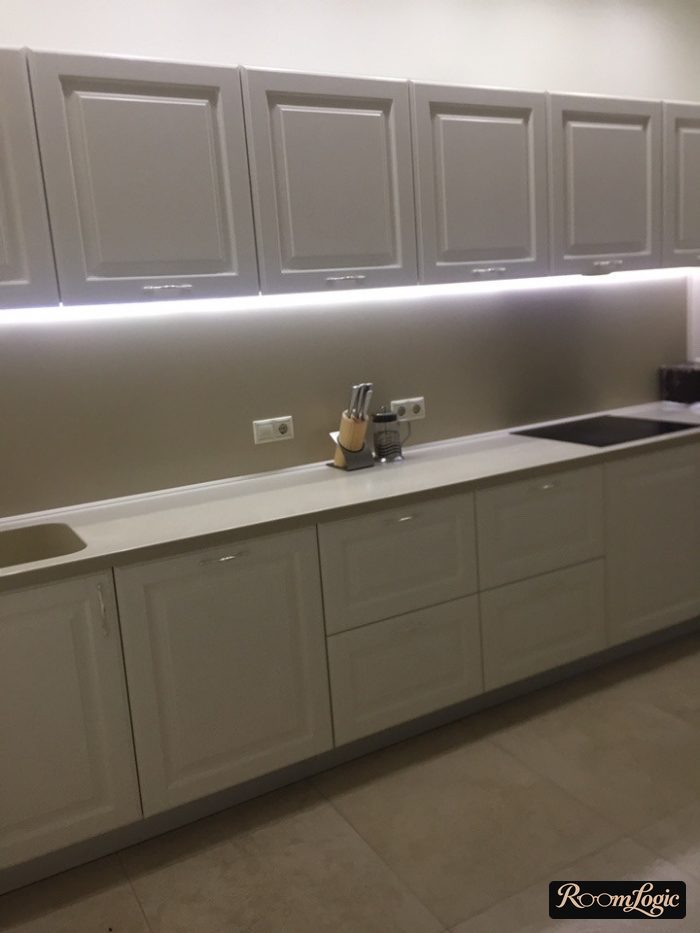
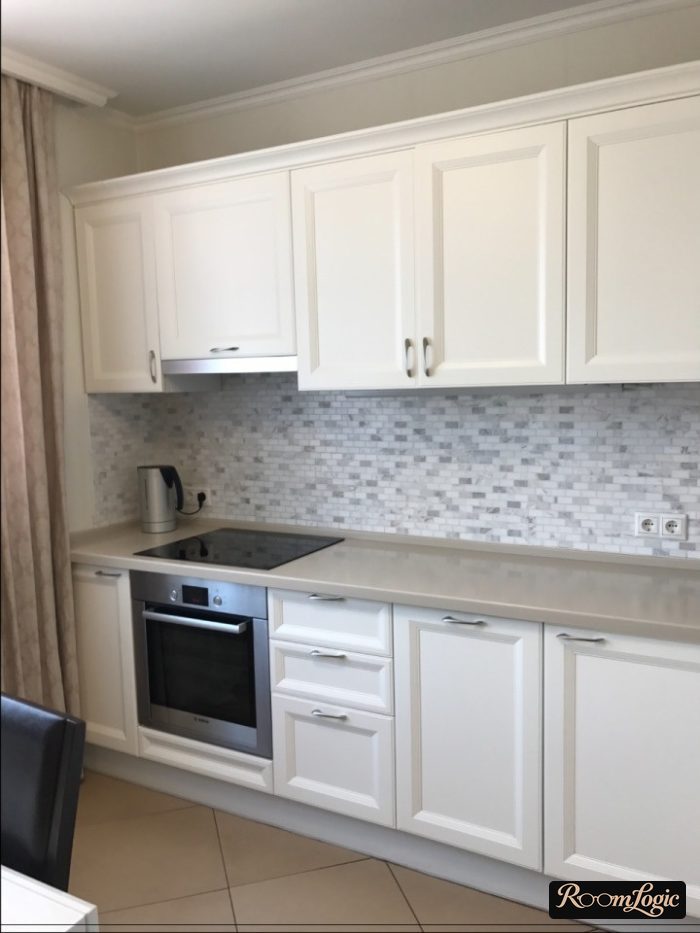
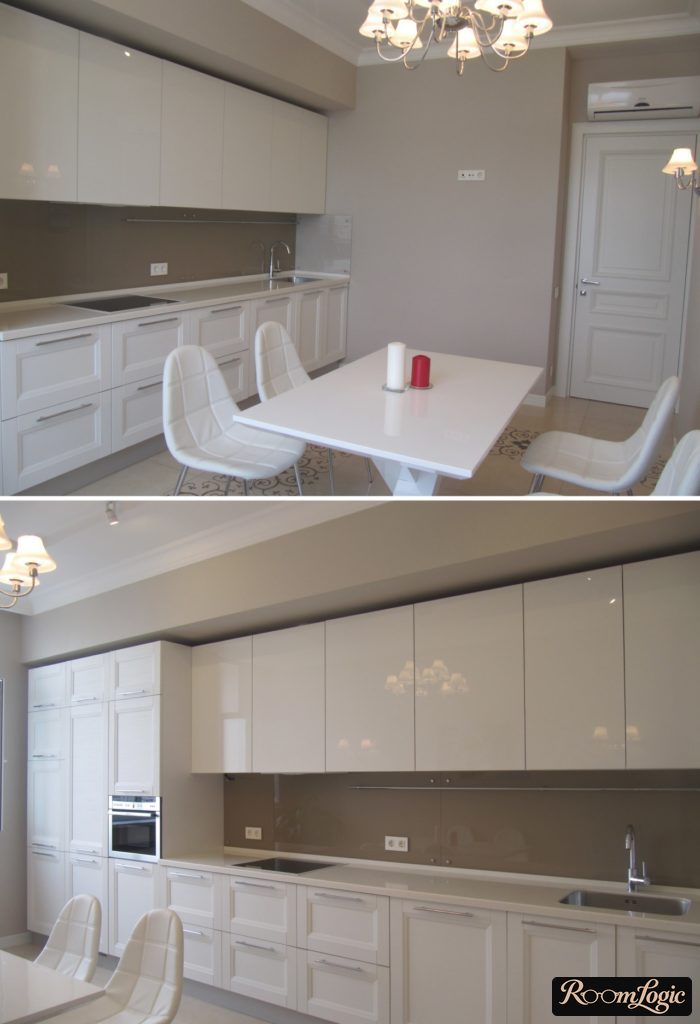
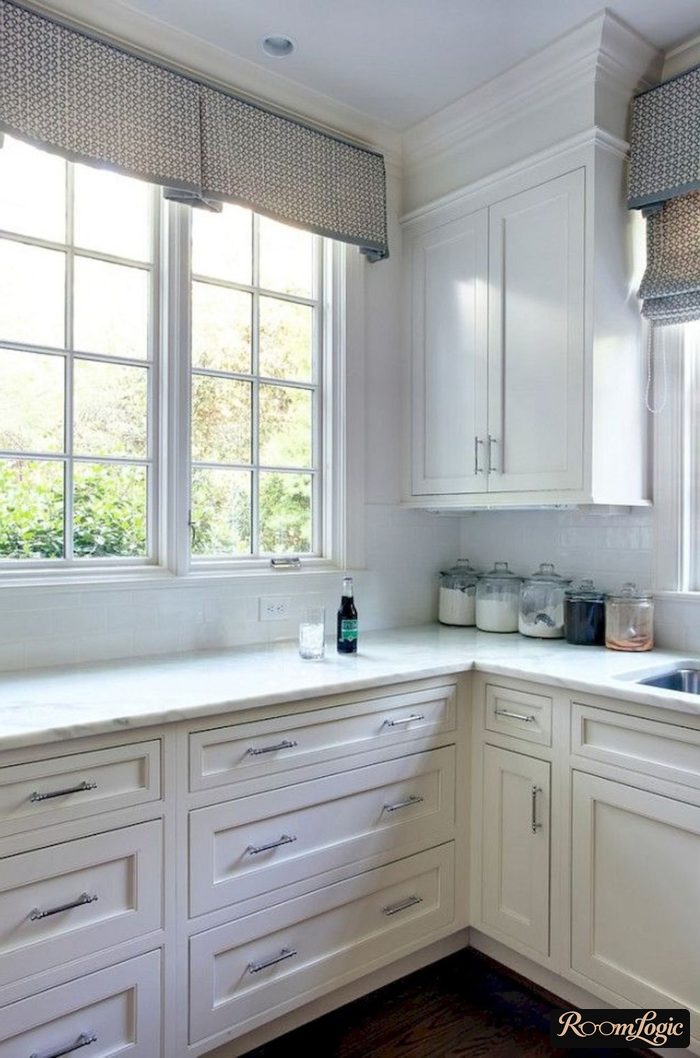
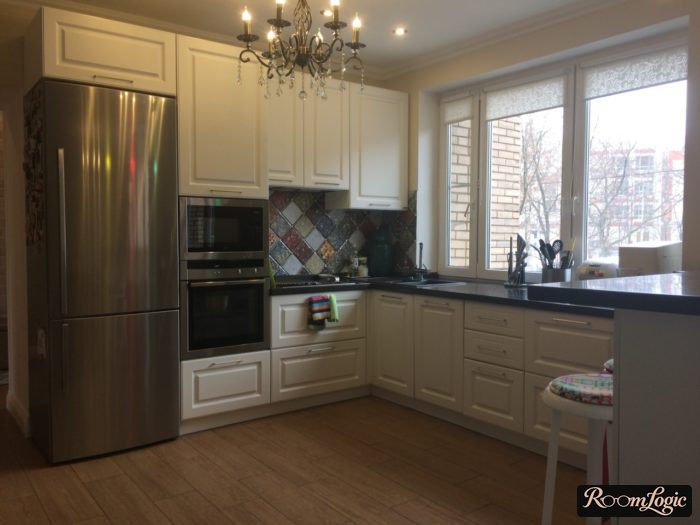
2. Gray
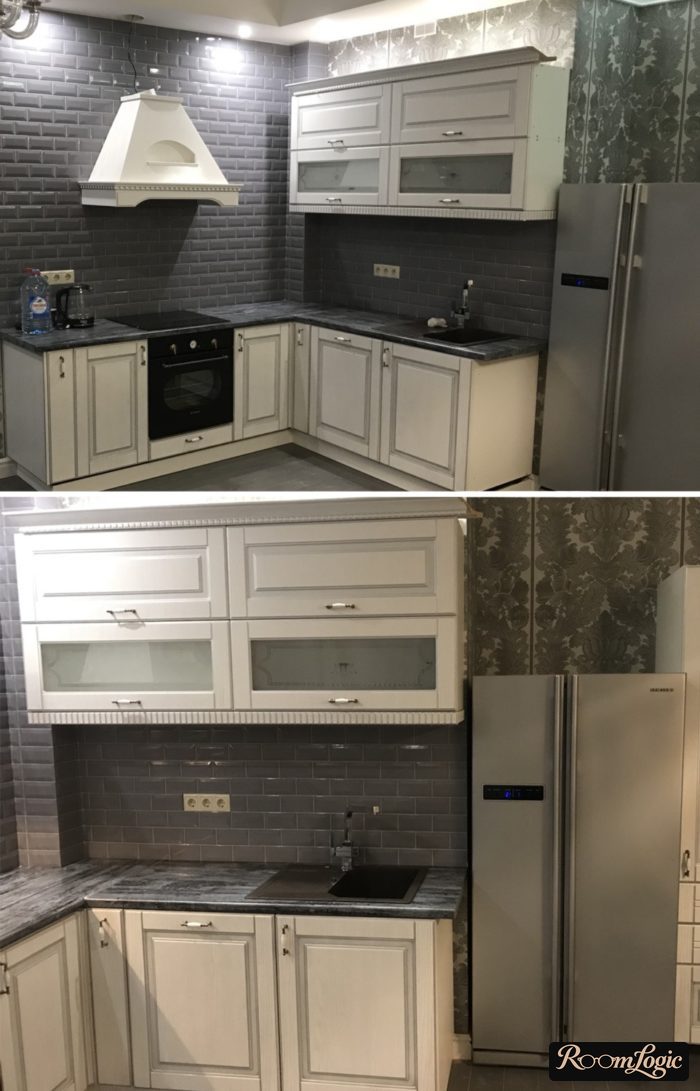
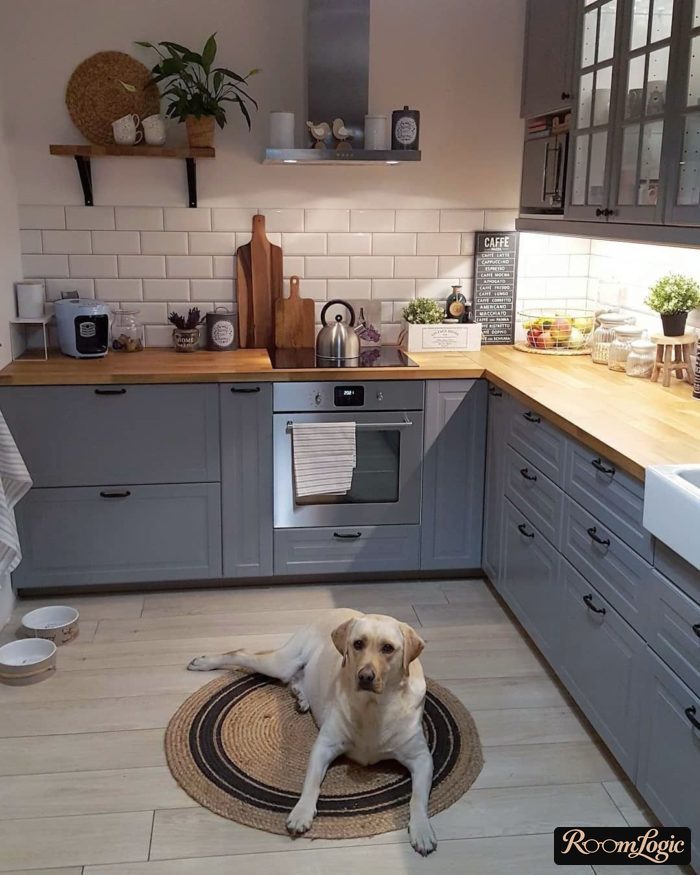
If I were making a neoclassical kitchen for myself, I would choose matte gray cabinets. Subjectively, I would choose graphite, as in the photos:
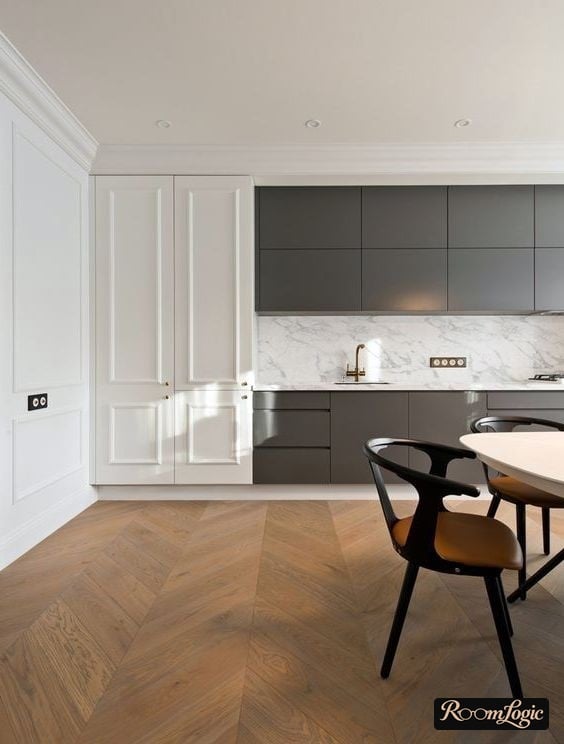
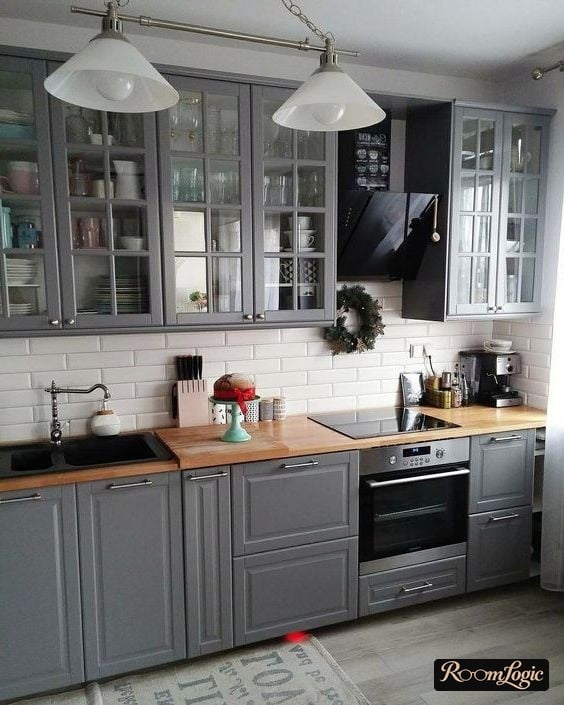
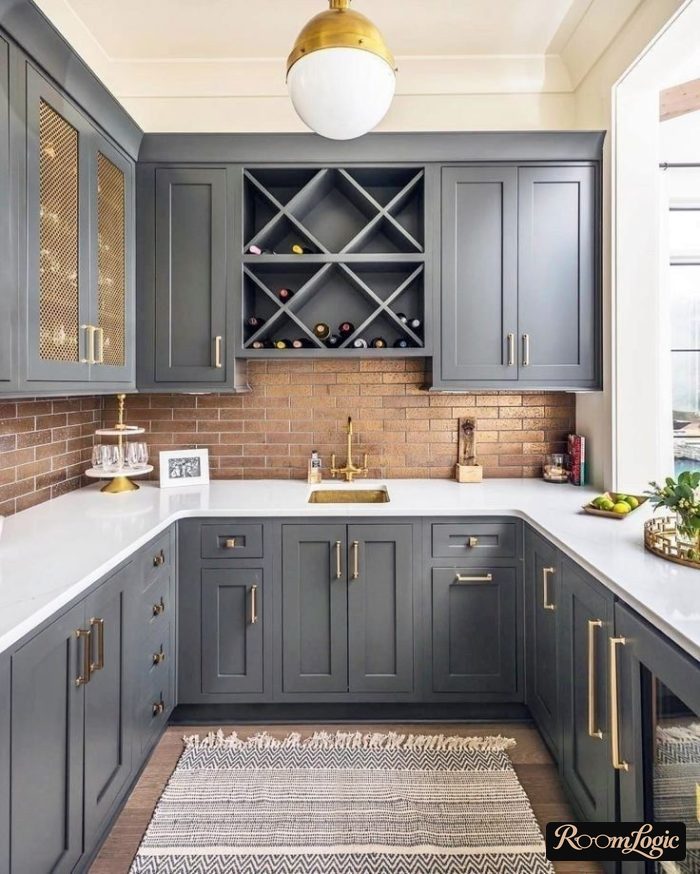
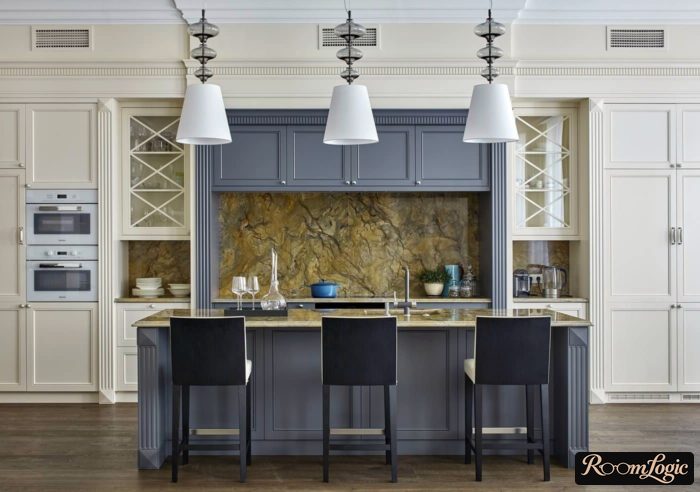
But absolutely every shade of gray works. There are no rules here, although the lighter it is, the more practical it is. If you like this version, go for it. It is cool.
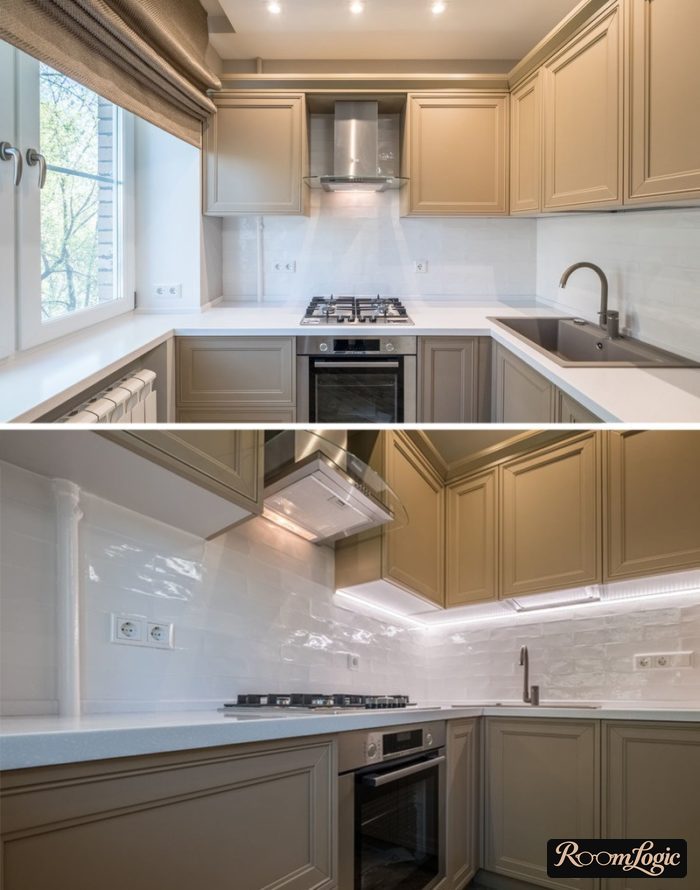
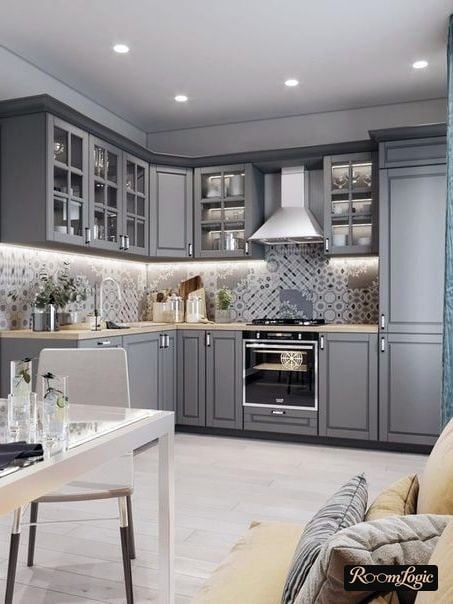
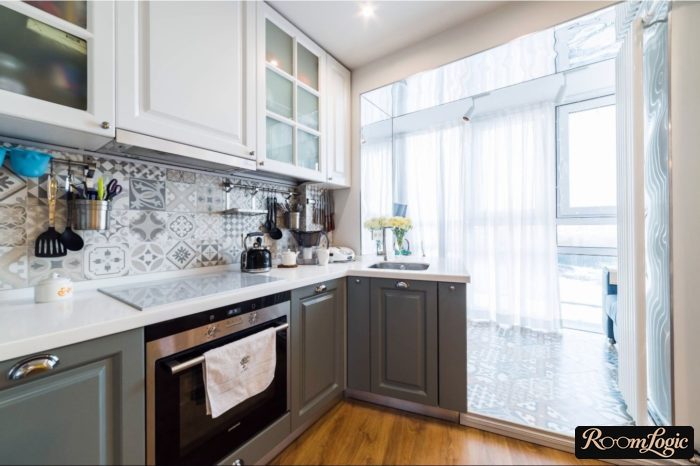
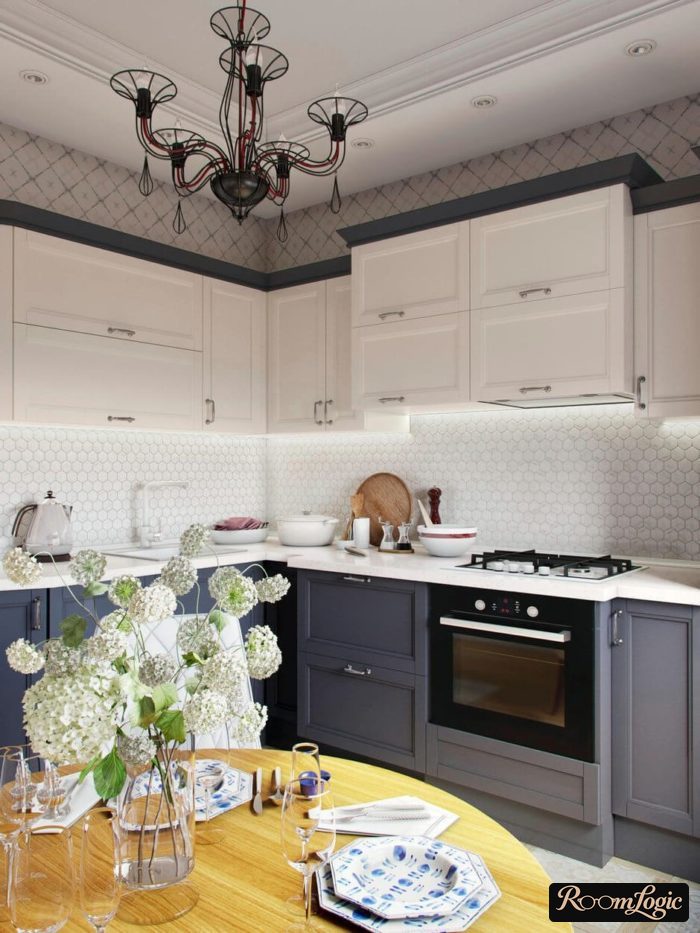
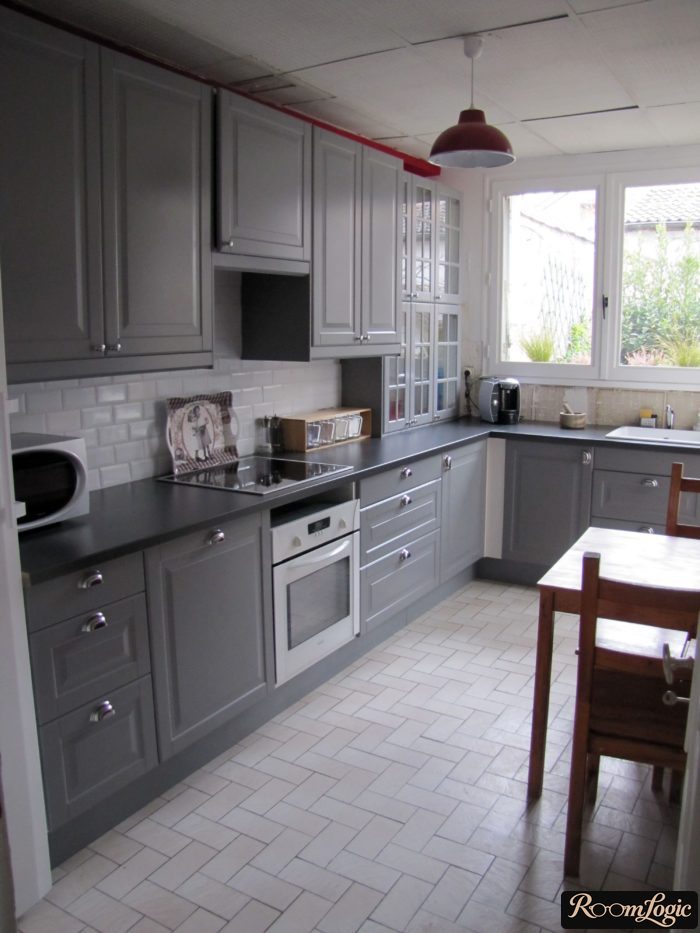
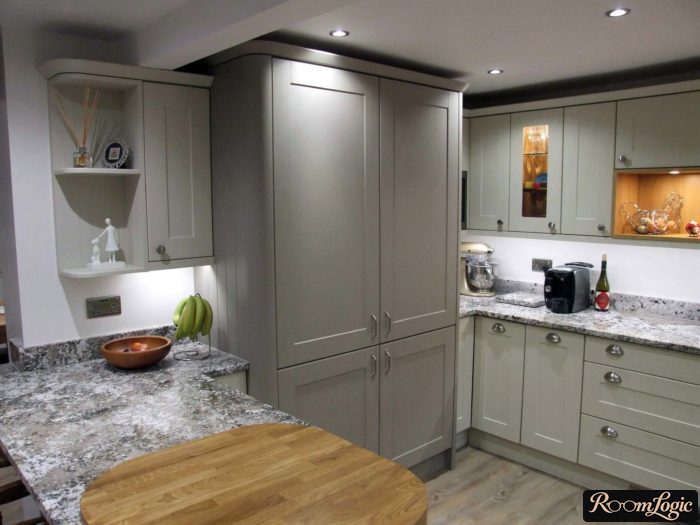
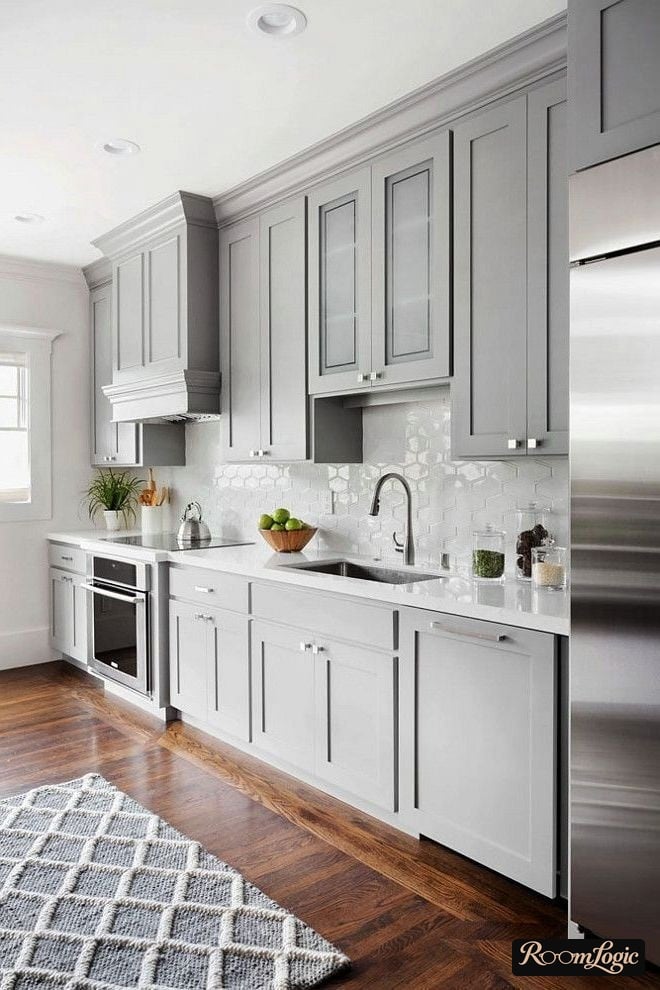
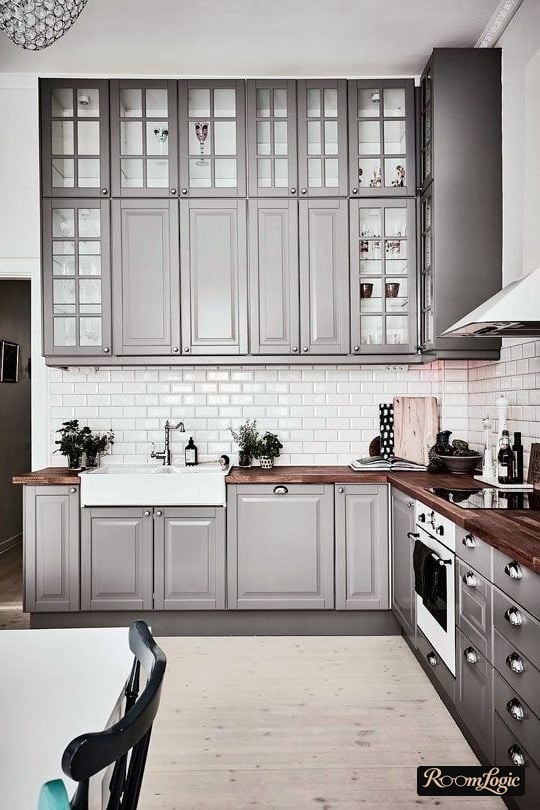
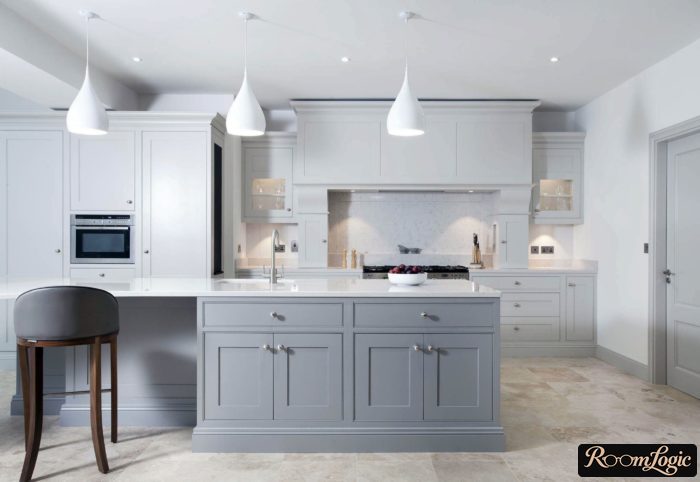
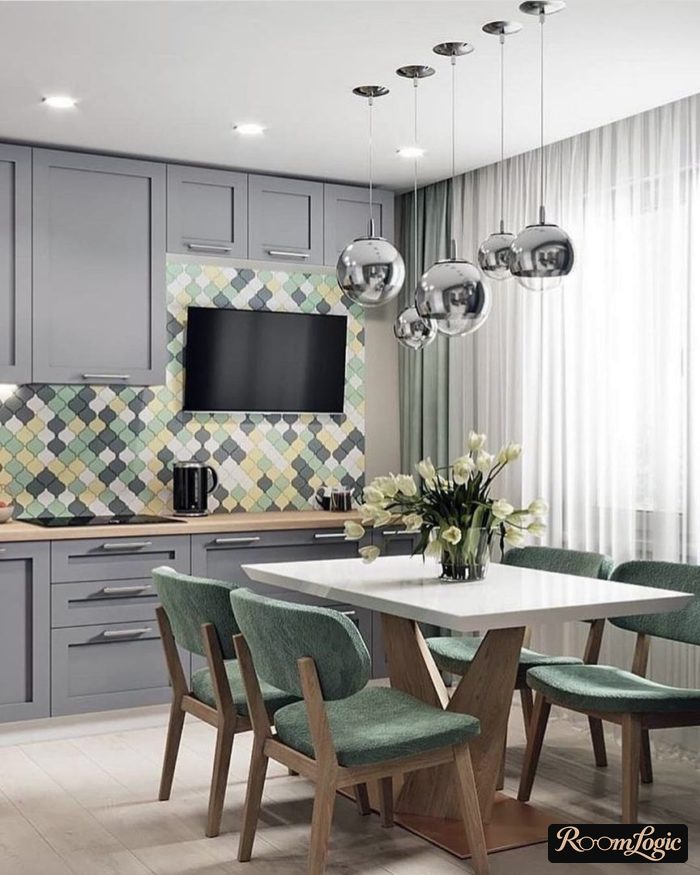
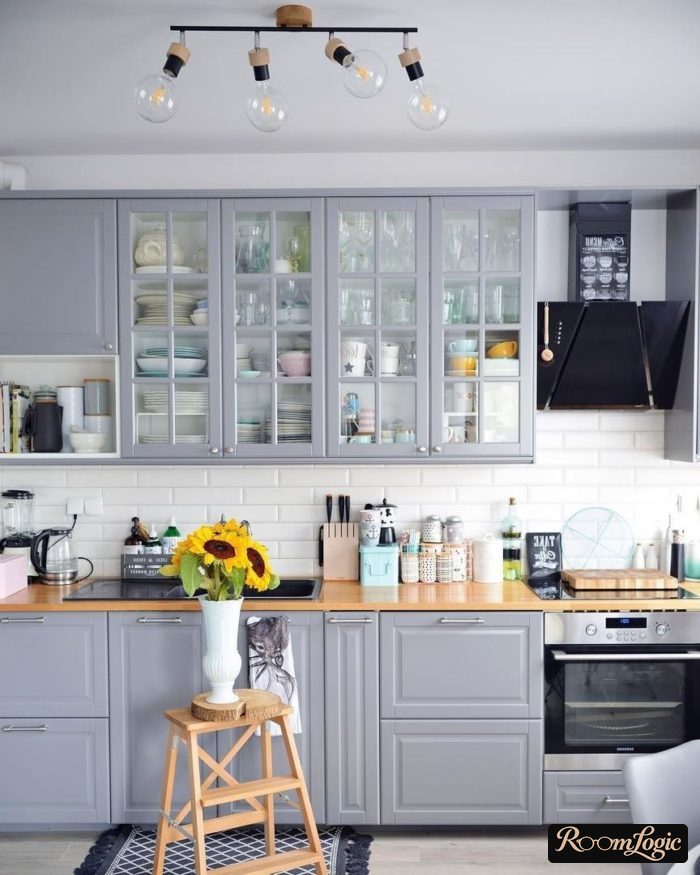
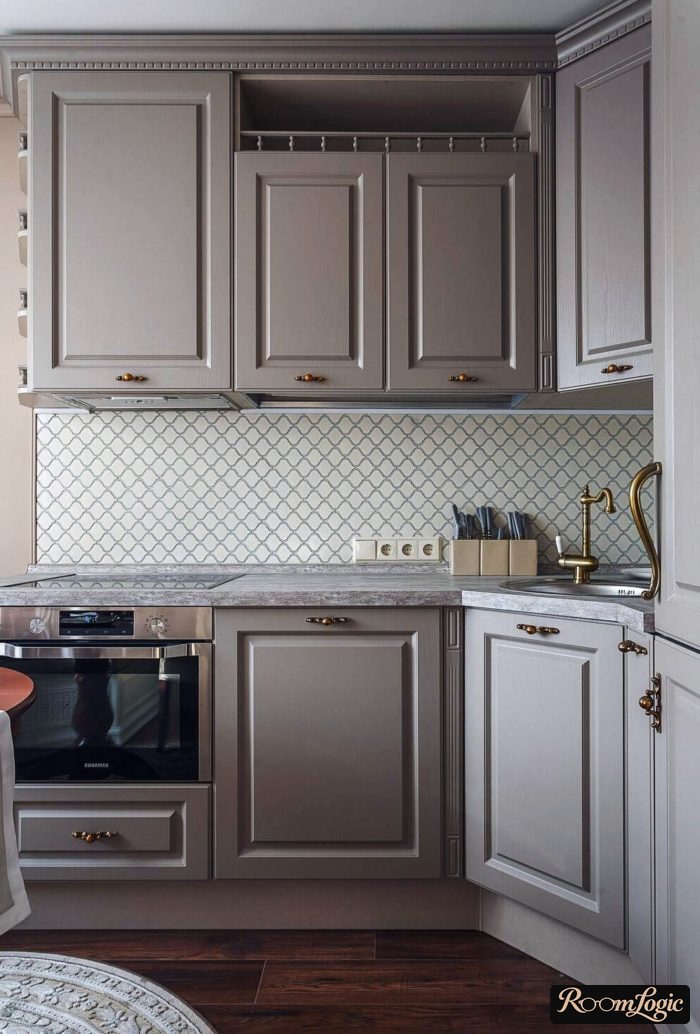
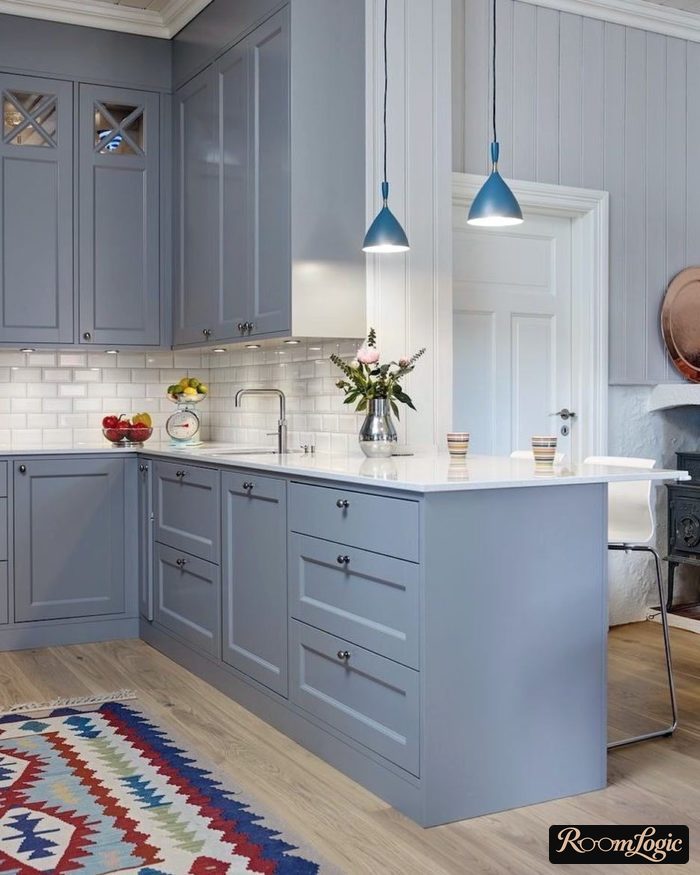
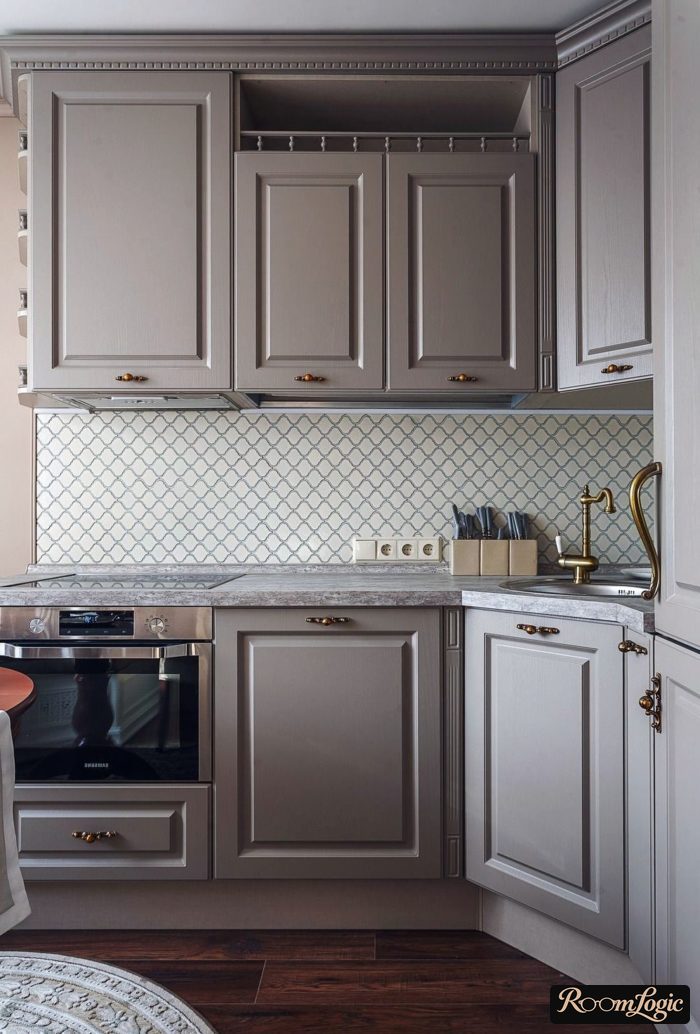
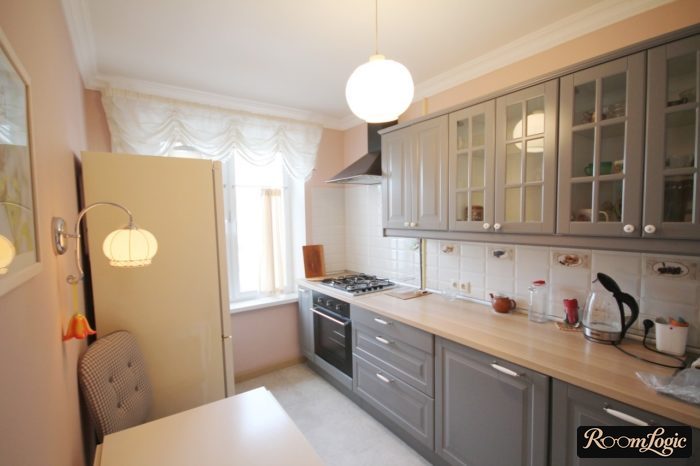
An article about kitchens in gray tones.
3. Blue
Blue for a neoclassical kitchen is heavily diluted with white or gray, and then it works perfectly. In other words, it is more accurate to call it dusty blue or pale blue.
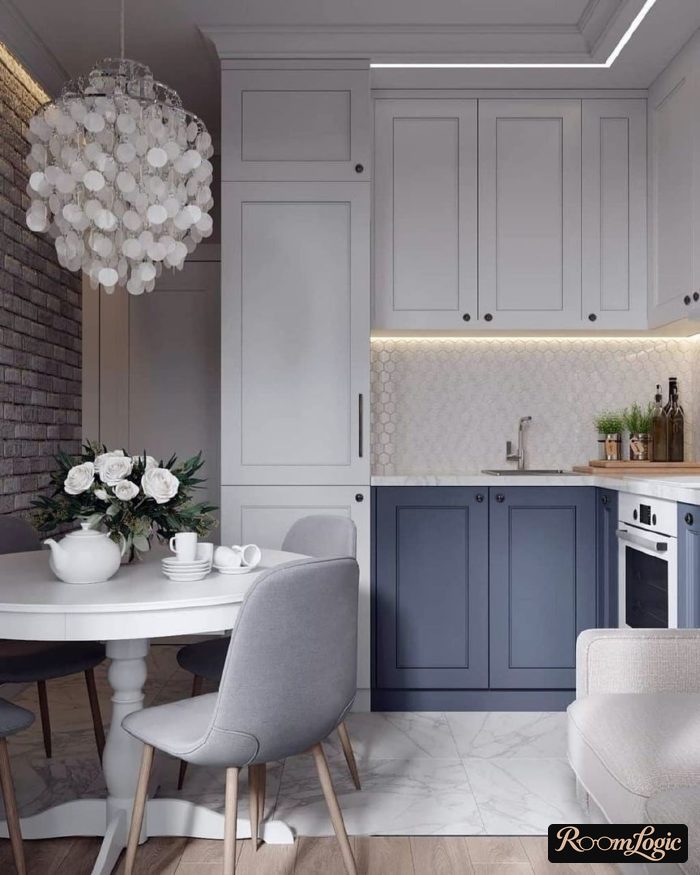
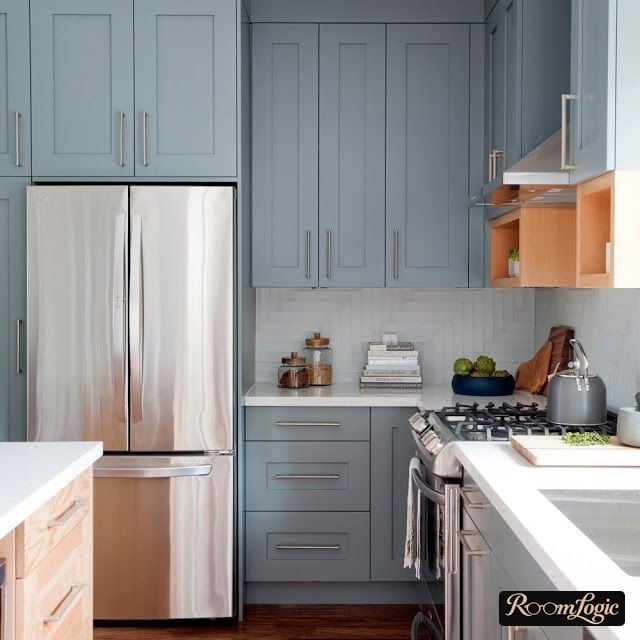
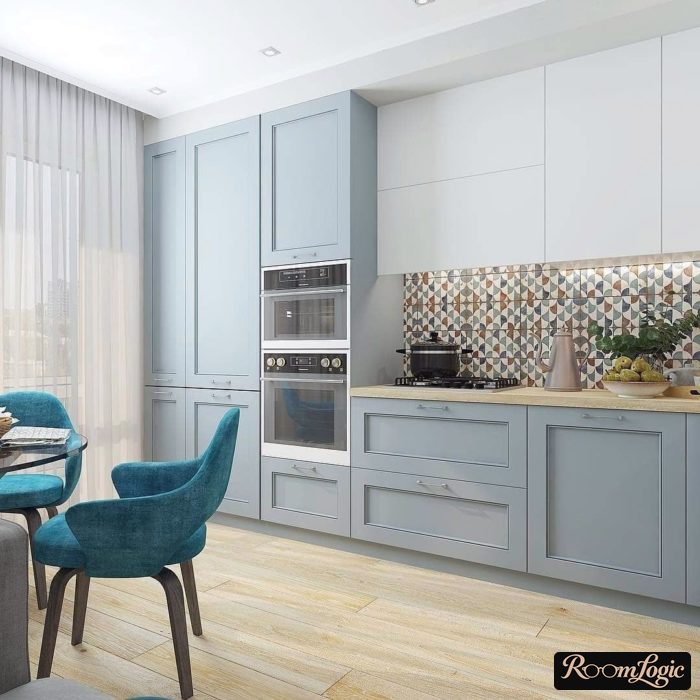
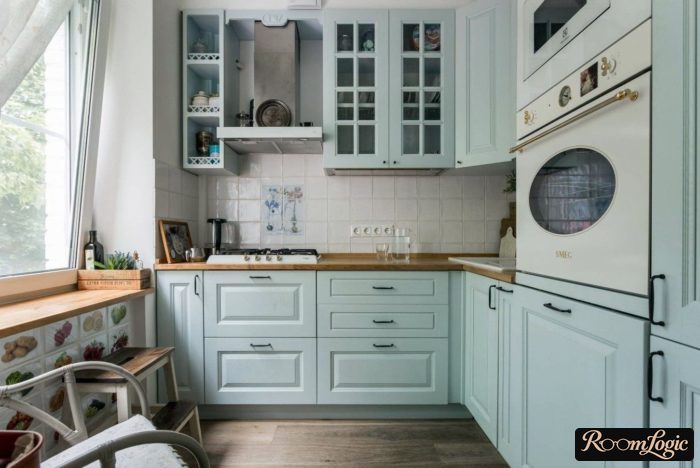
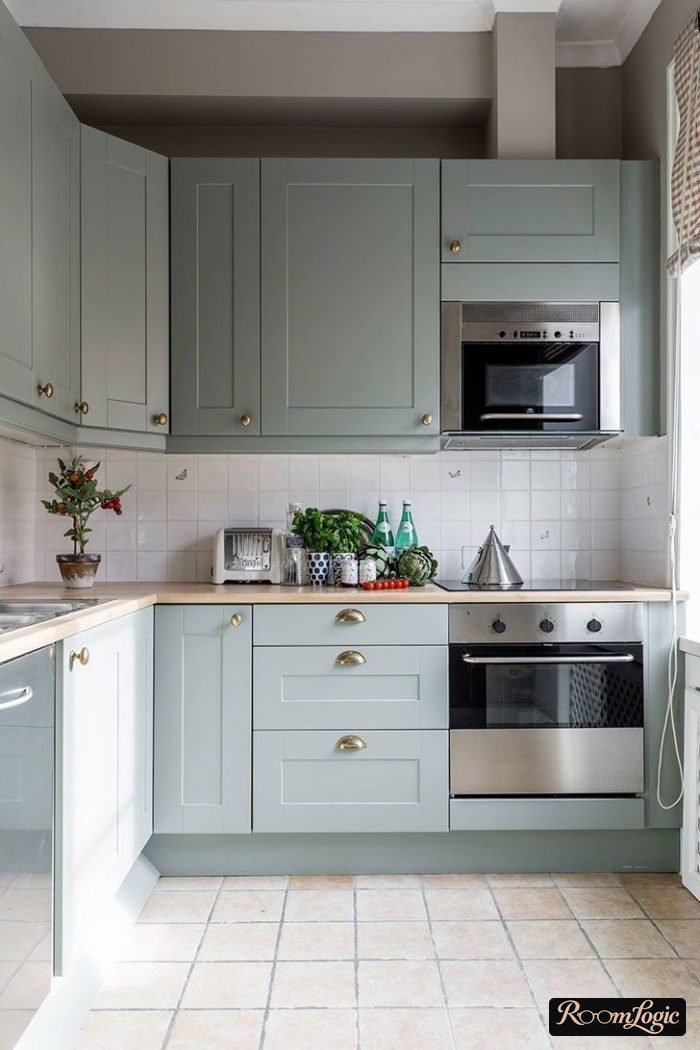
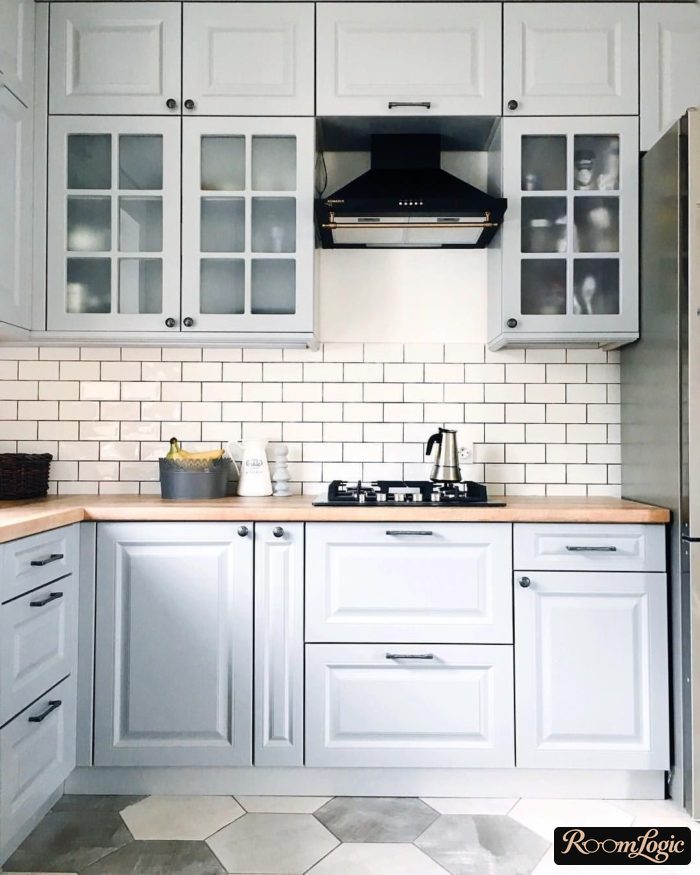
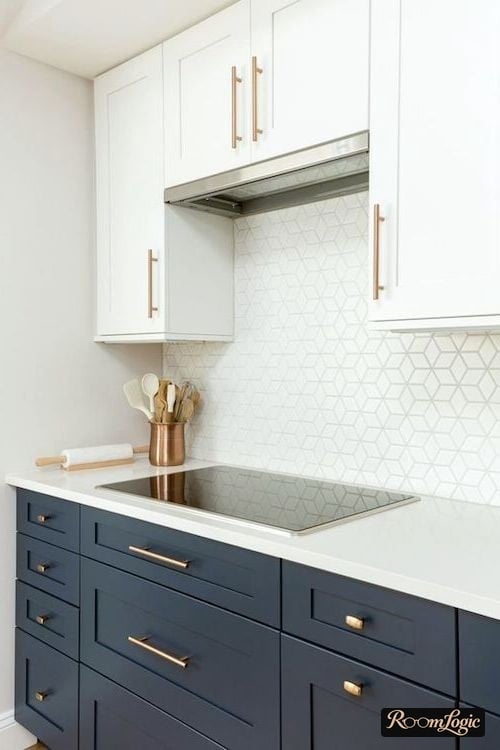
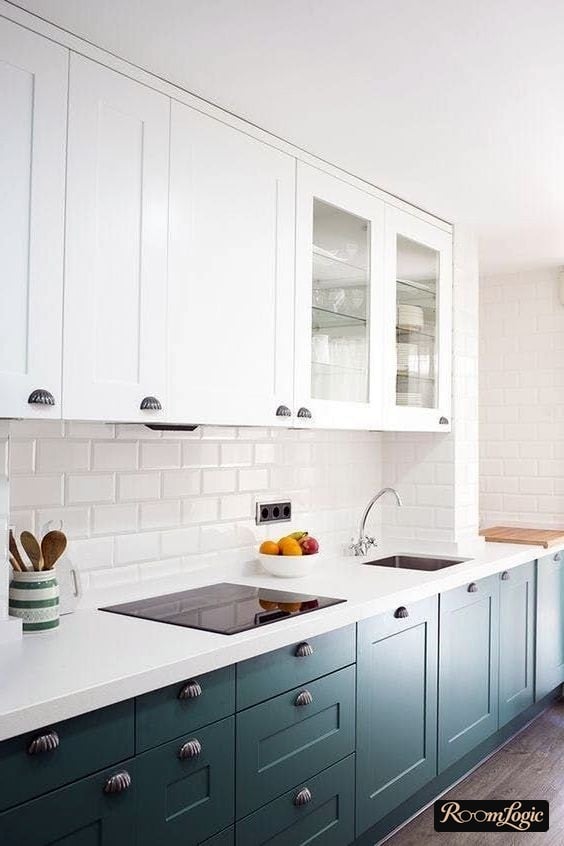
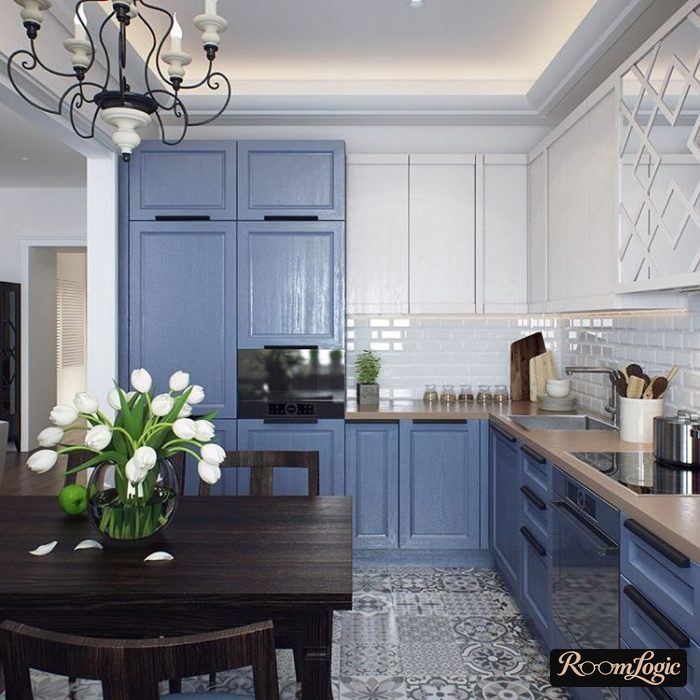
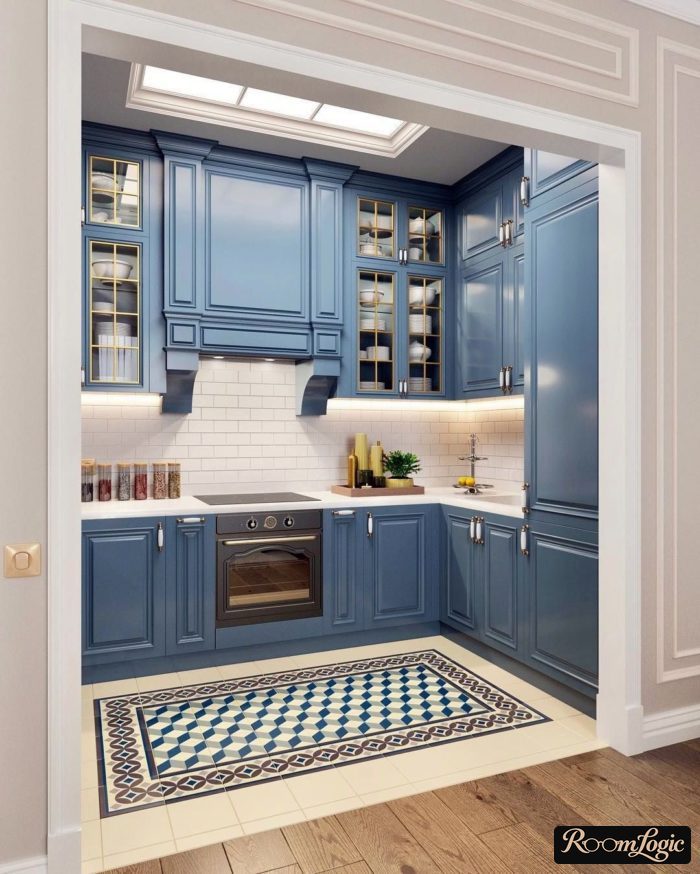
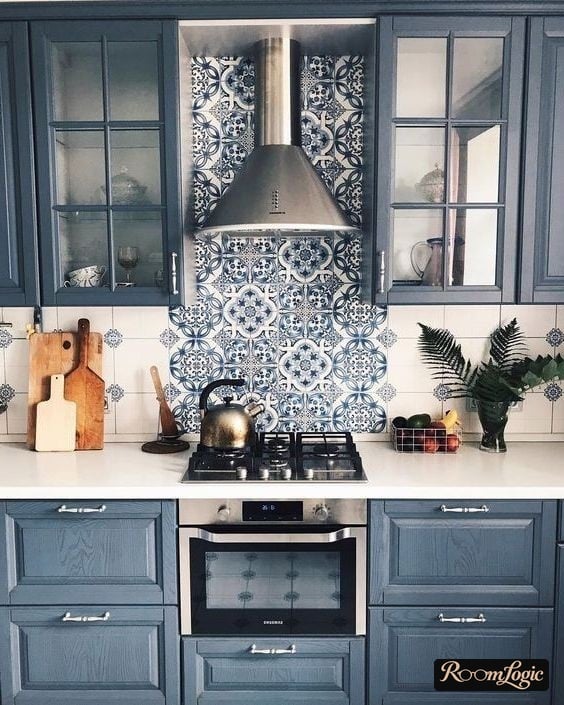
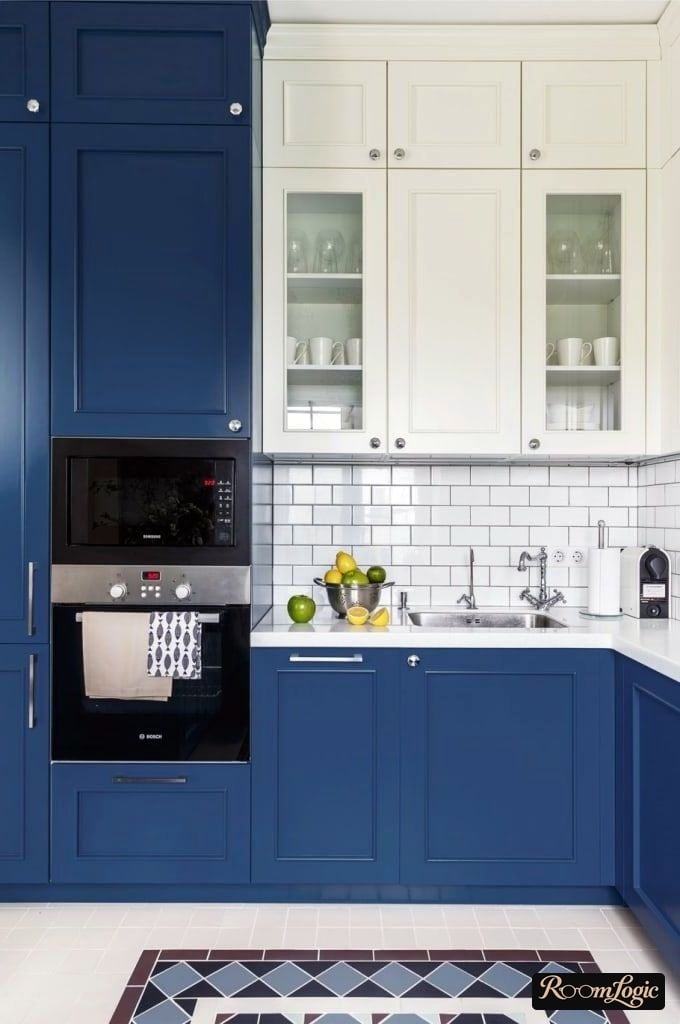
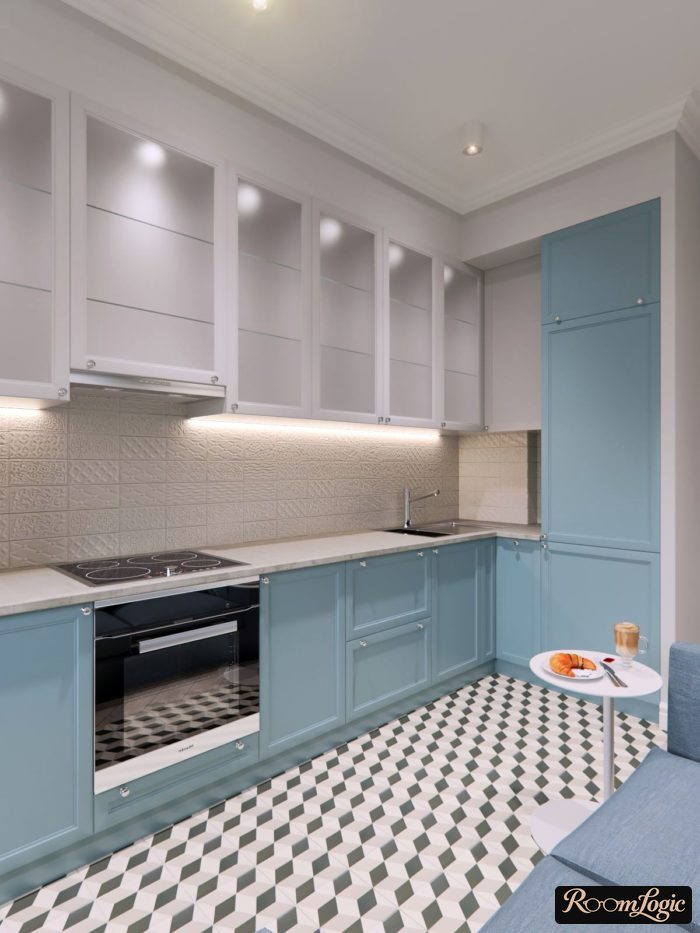
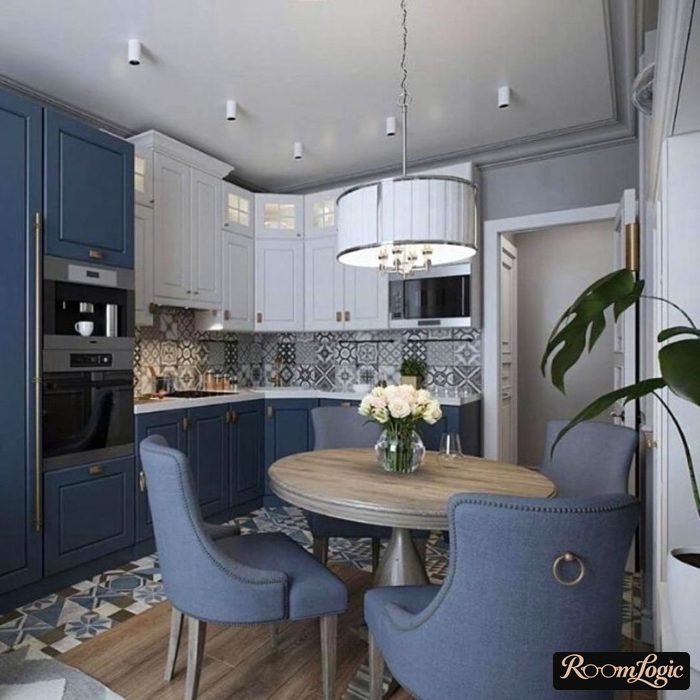
If the cabinets are blue, you can echo them with furniture or curtains, but you do not have to. In a muted version, the color is quite self-sufficient.
Other Colors for Modern Classic Style
Any cool color and some warm ones can be used in a neoclassical kitchen, again in dusty and pale shades.
The less saturated the color, the more area you can use it on. Every pastel has a right to exist: olive, pistachio, cappuccino, and so on.
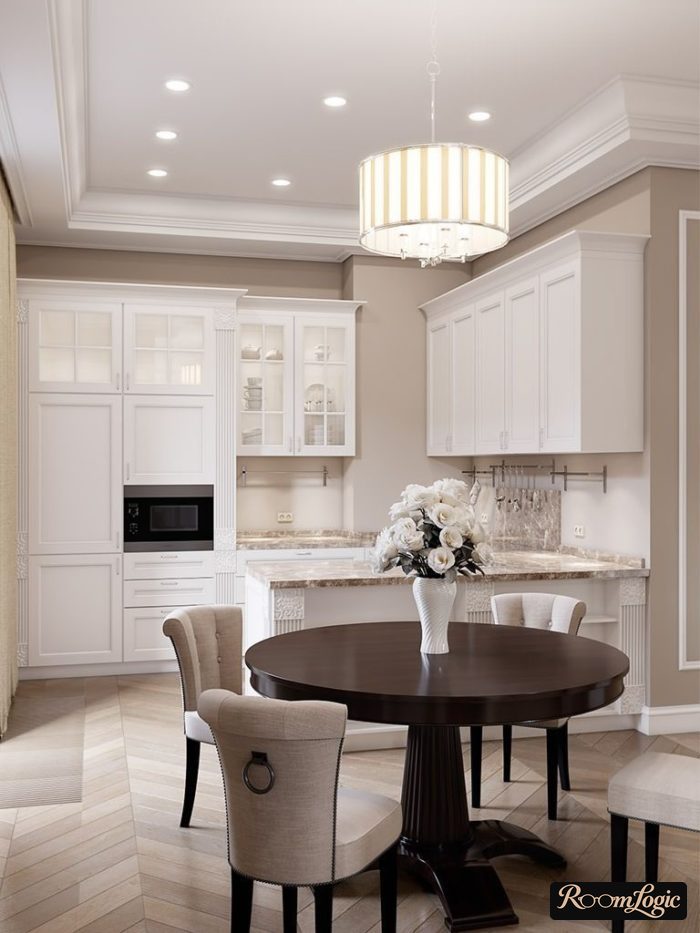
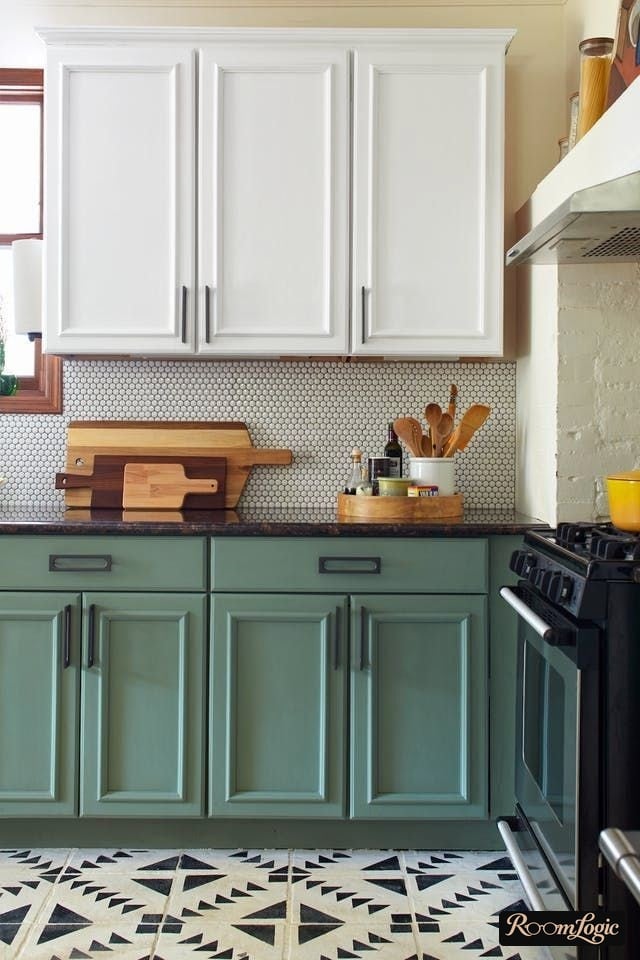
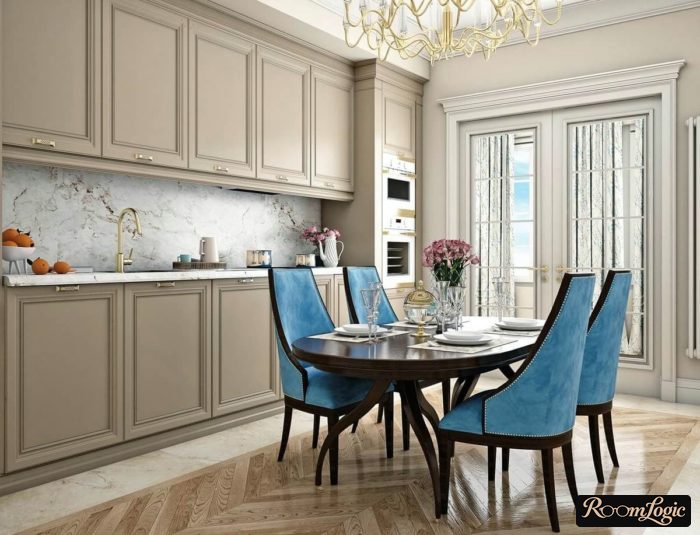
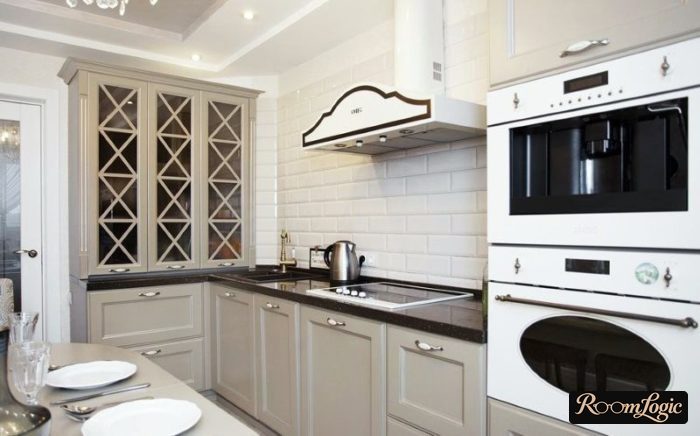
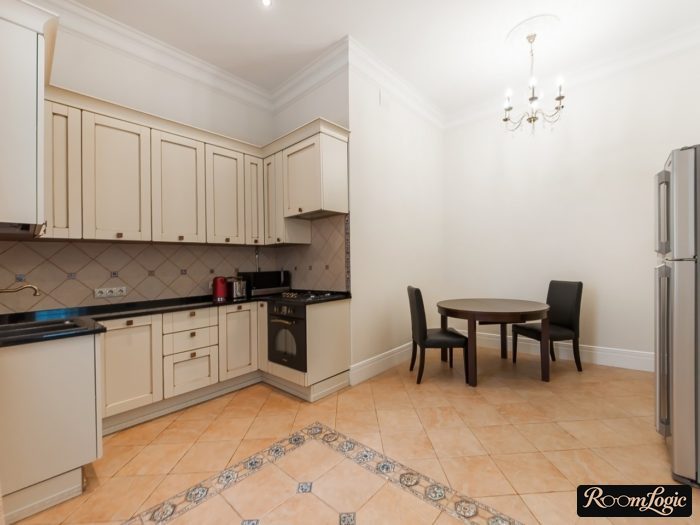
I collected many examples with unusual colors in the article about kitchen design.
You have probably already noticed that the main idea of neoclassical style in a kitchen is variety. You can choose from all modern finishing materials and decor and a significant share of traditional ones.
The main thing is not to lose your head and start overdoing it. If you have a 100-square-foot kitchen, or better yet 110 square feet or more (in the article about a 130-square-foot kitchen, I called this the best style), you can safely choose it. Combine calm, solid things and get a predictably stylish interior. Also read my article about traditional kitchen design, and good luck with your renovation!