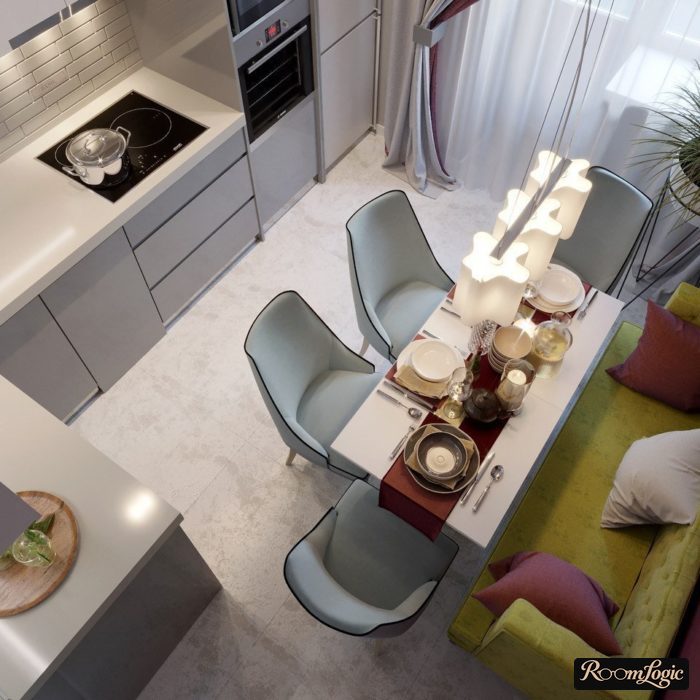
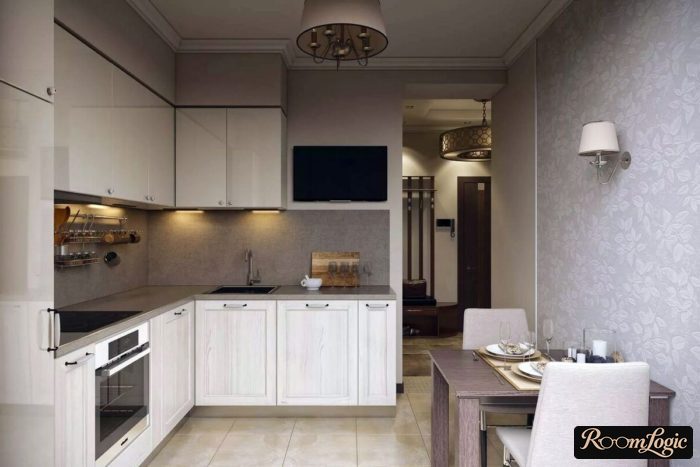
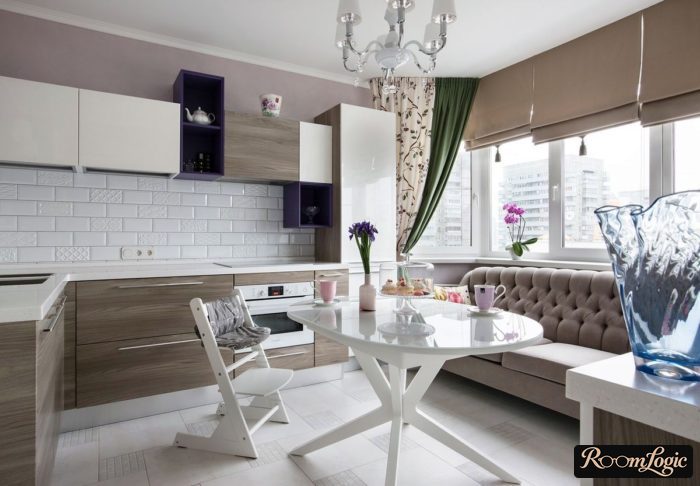
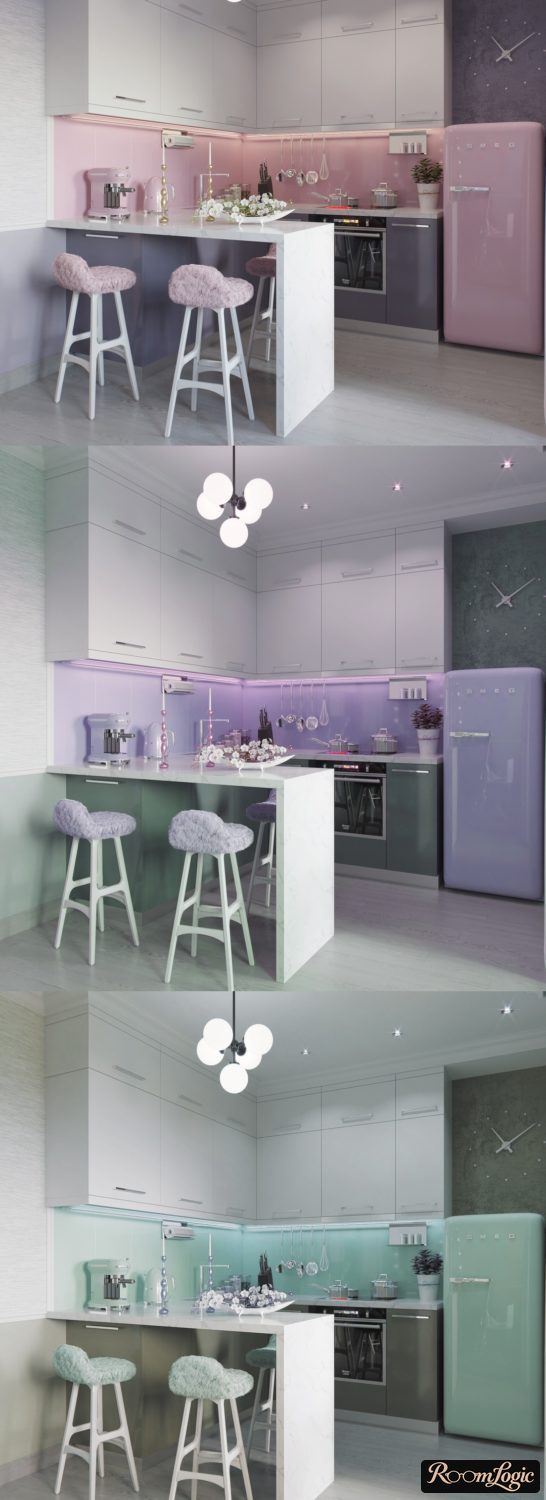
There is one simple, important trick for choosing colors that determines the impression made by a Provence-style kitchen. With the style’s natural overload of details and shades, it matters enormously.
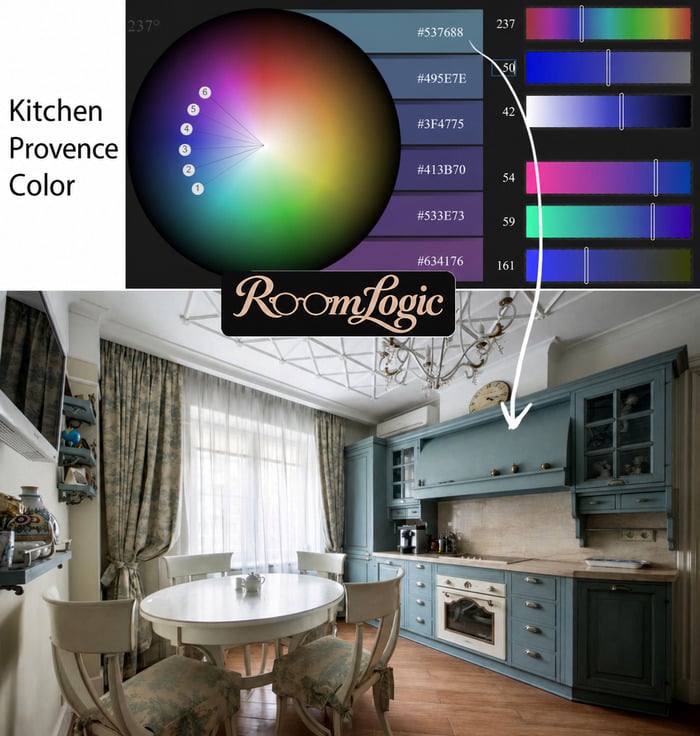
The Provence Palette in a Kitchen
Colorful, but not bright.
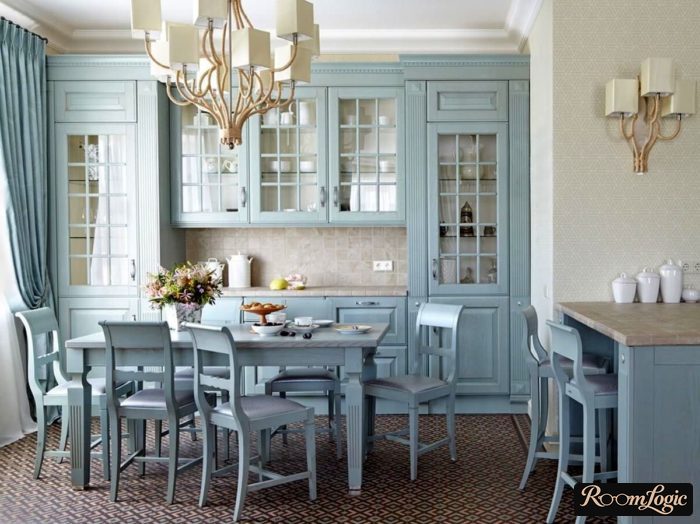
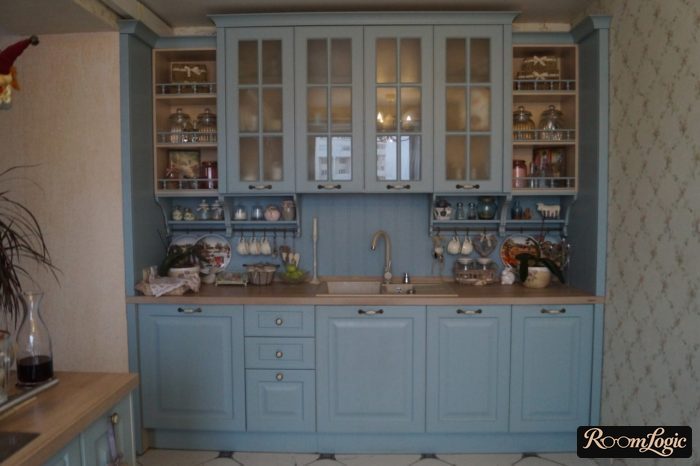
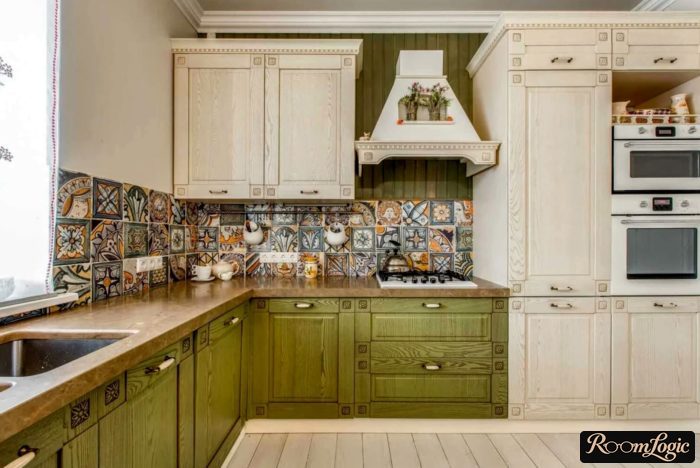
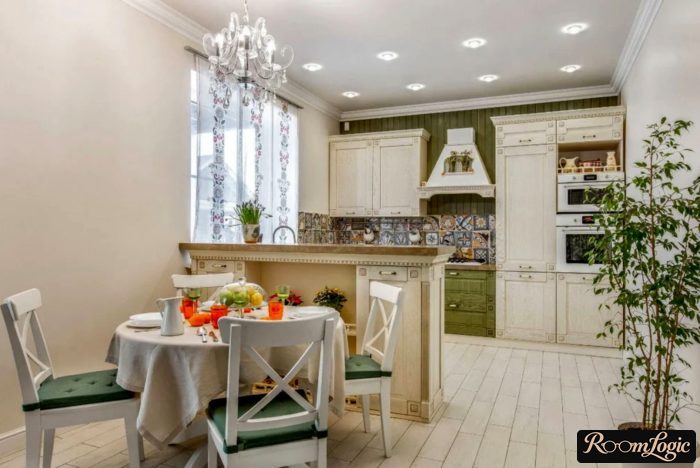
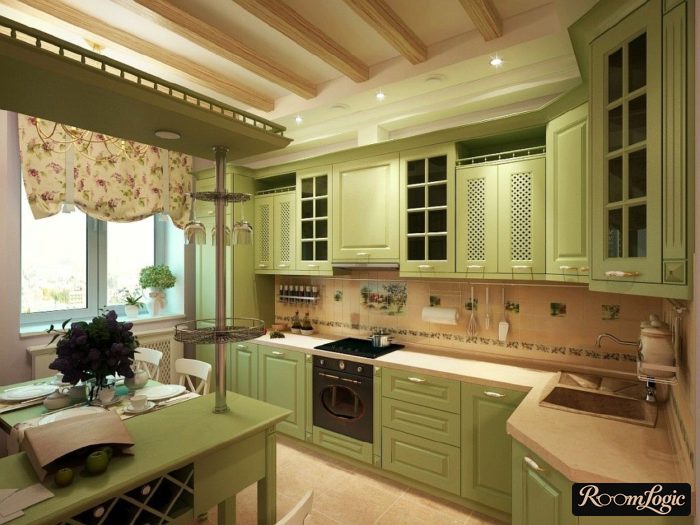
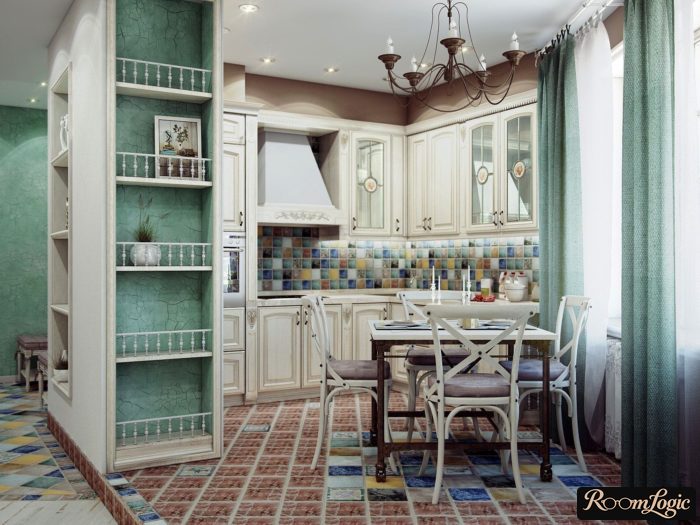
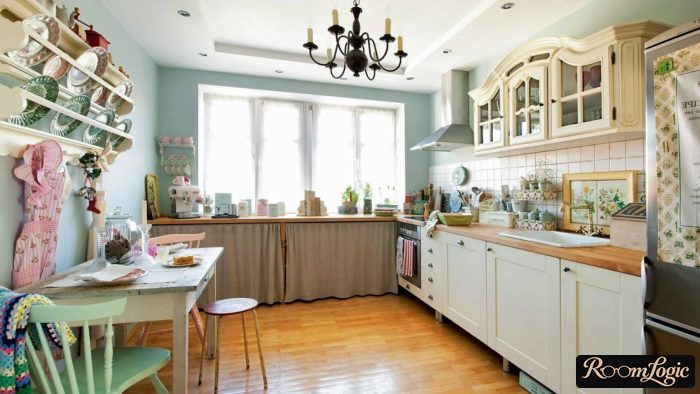
Everyone has heard of pastel colors and has a rough idea what they look like. They are usually described as “pale” and “soft.” Then there are the exotic names: muted blue, pistachio, olive, cream, and so on.
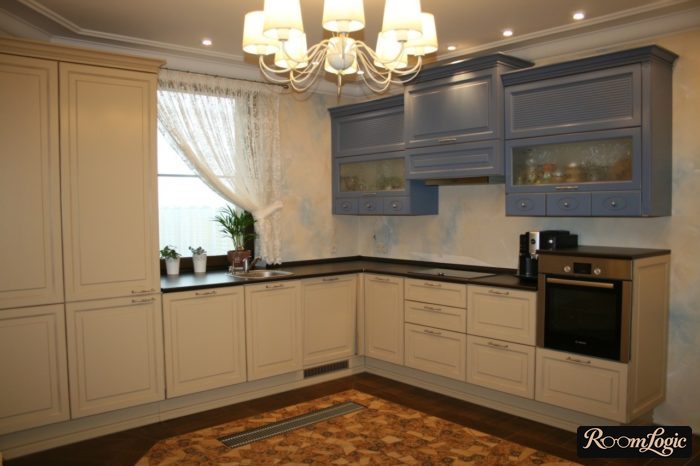
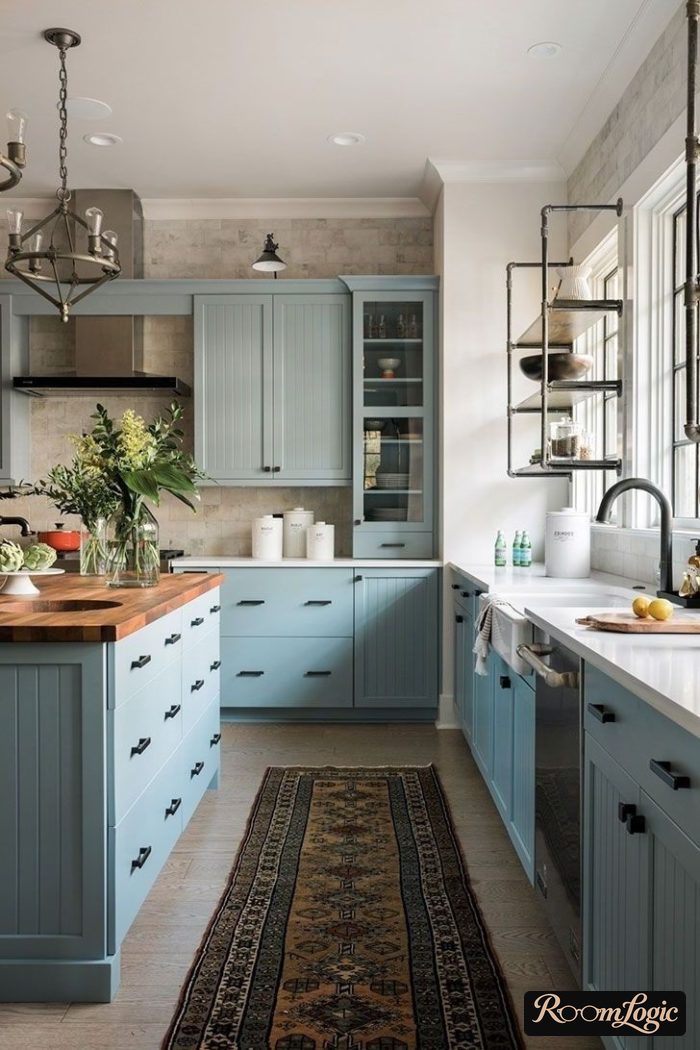
“Muted color” best describes the palette allowed in a Provence-style kitchen interior. The colors are mixed with white and gray. Only shades diluted considerably this way should be used.
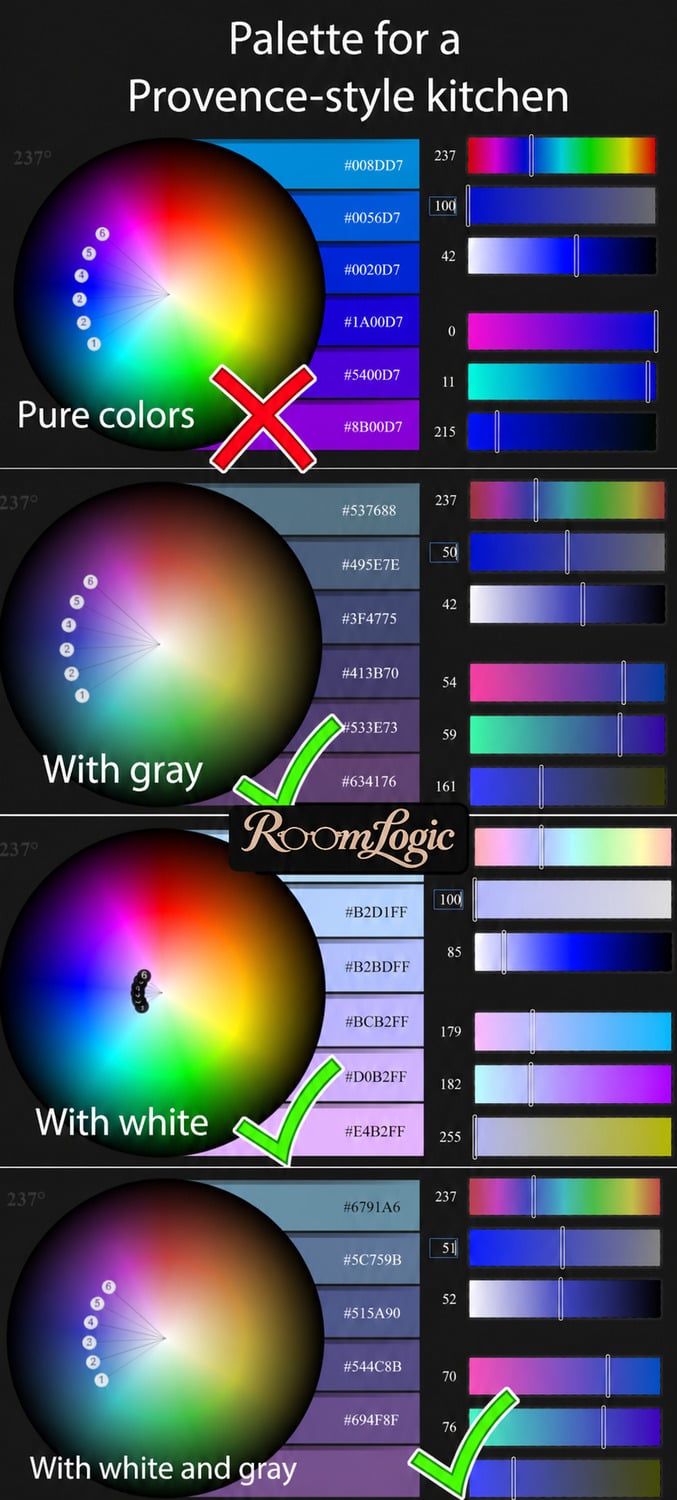
A kitchen is already a room loaded with objects and functions, and Provence style multiplies all of it. Even the limited use of saturated colors upsets the balance and ruins the atmosphere. Plus, they are impossible to combine. I covered this topic in detail in the article about combining colors in an interior.
The more different shades you want to use and the larger the area, the more white and gray those colors should contain.
Important:
Do not fall in love with individual objects. You should not like them separately from the entire interior. Otherwise, they will be too bright and greedy. There are no accents in a Provence-style kitchen – your eye should not catch on anything. This is a serious difference from most modern styles, where the interior is built on the background-accent principle.
2 cool photos:
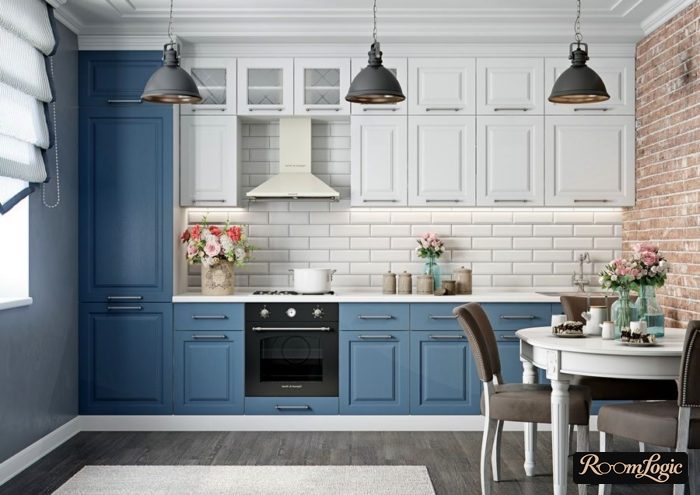
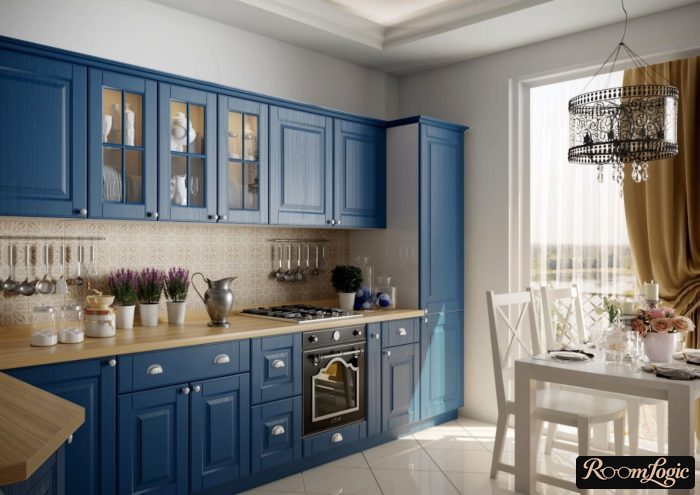
They are beautiful exactly as they are and cannot tolerate added details, but that is another style. In Provence, the kitchen is oversaturated with details – order through chaos. If you are a perfectionist and cannot tolerate disorder, 1 of the styles below will suit you better. They are similar, and sometimes it is impossible to define the boundary exactly.
- Scandinavian kitchen – the same color palette, more wood shades and white, a mix of modern and vintage details, and elements of minimalism and loft.
- Neoclassical kitchen – similar but stricter furniture, no unnecessary accessories, modern appliances without imitating vintage objects, more practical and easier to keep tidy.
- Traditional kitchens – light colors, patina, luxury.
6 Parts of a Provence-Style Kitchen
1. Furniture and Appliances
The 2 main differences in Provence-style kitchen cabinets:
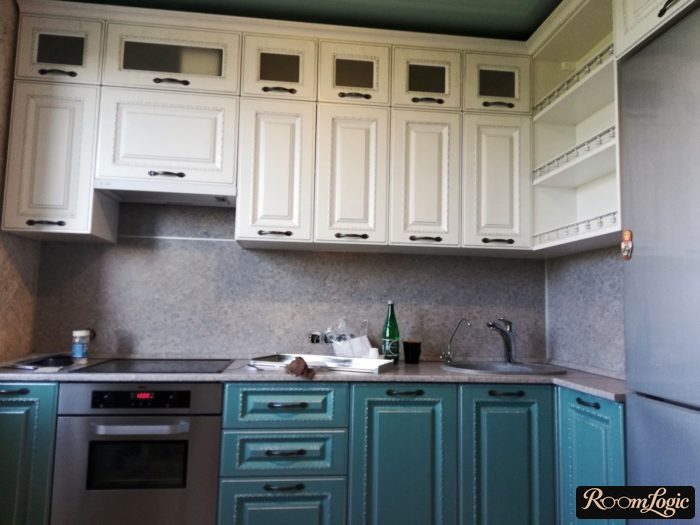
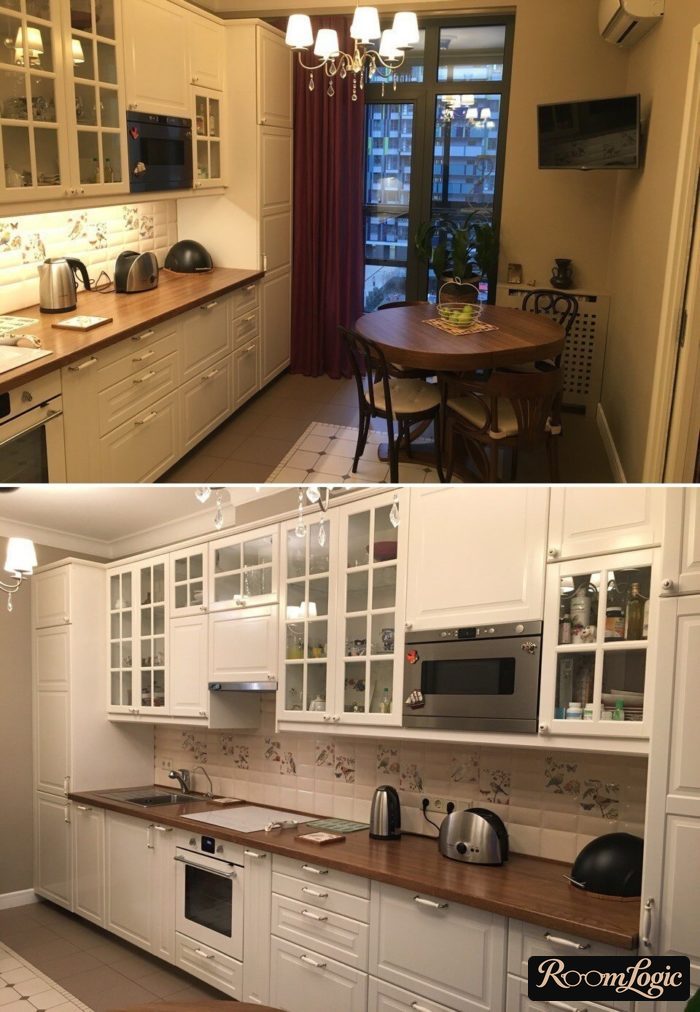
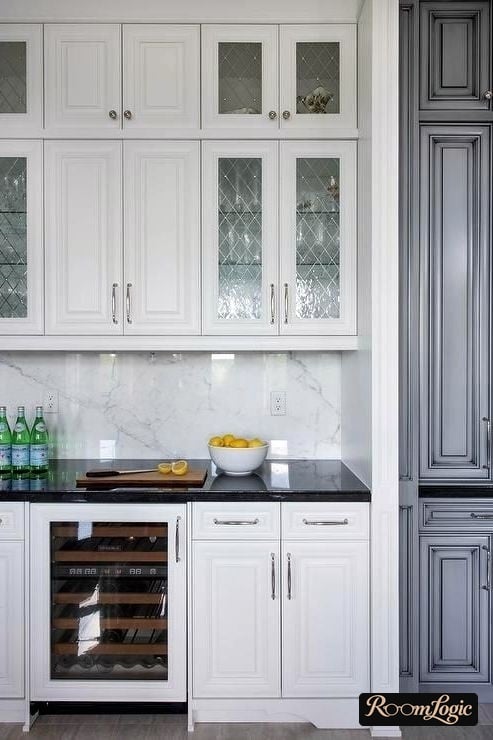
- Milled MDF or solid-wood cabinet fronts.
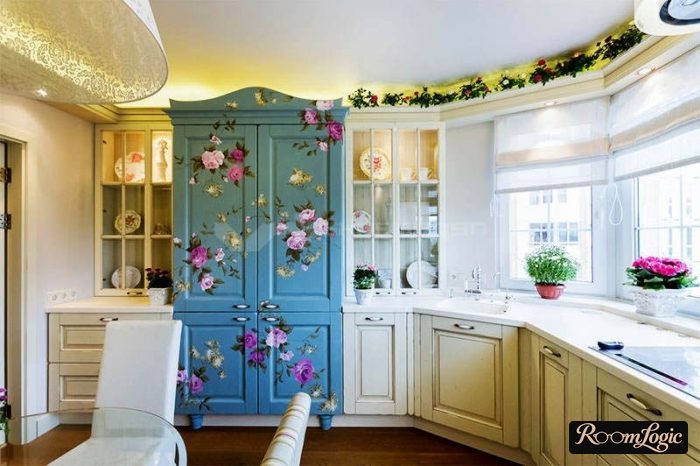
- Cabinets with glass doors (like a hutch).
These two features are enough to fit the style. Then you can follow the rules in the articles about choosing kitchen cabinets and small kitchen design, and the interior will also be practical.
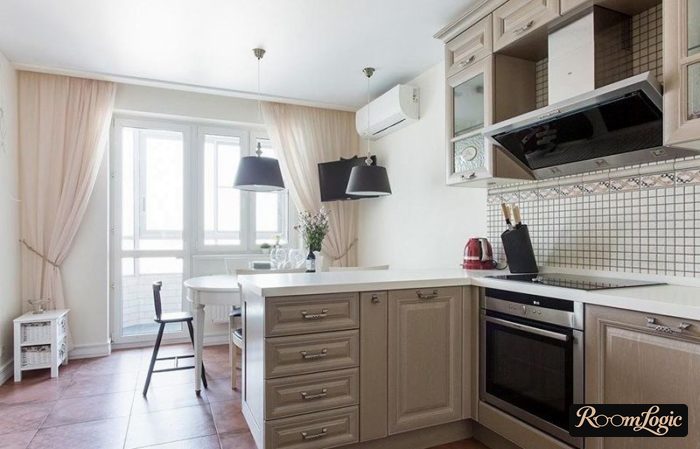
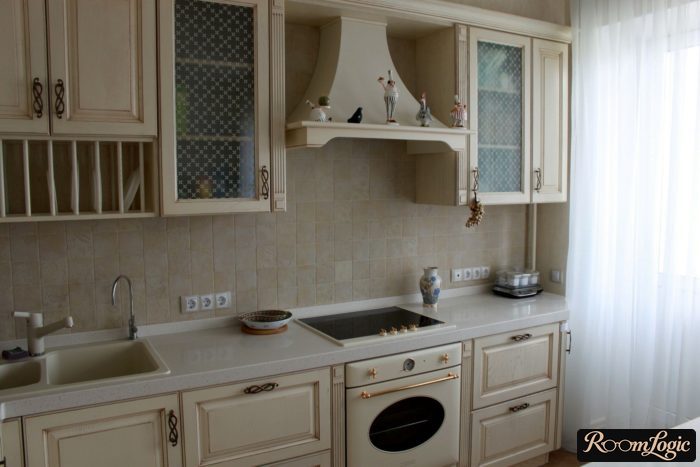
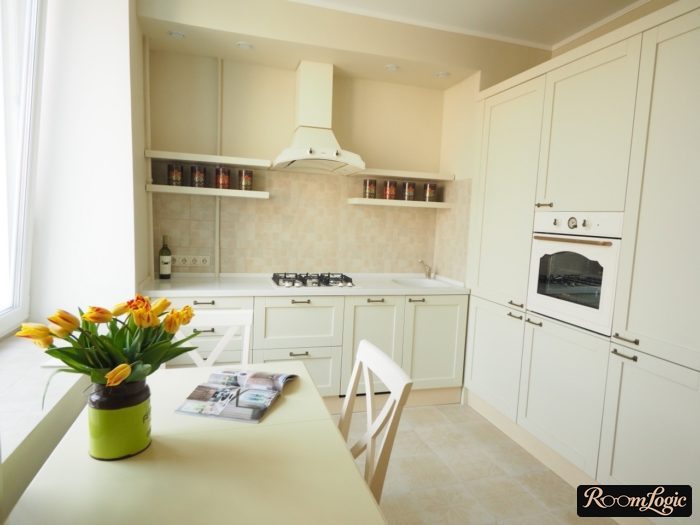
The furniture:
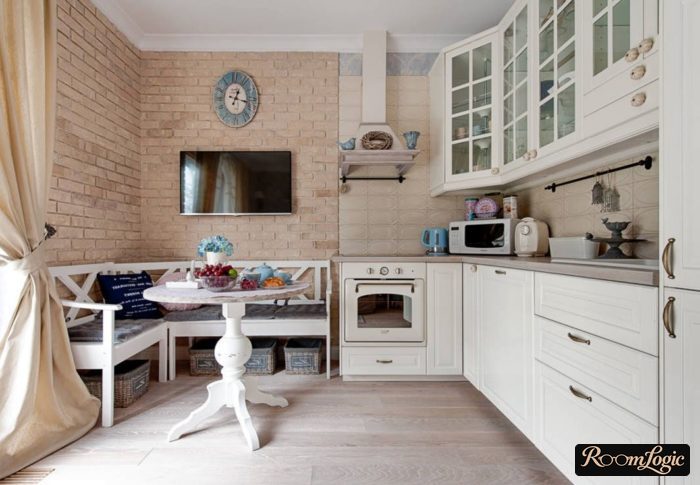
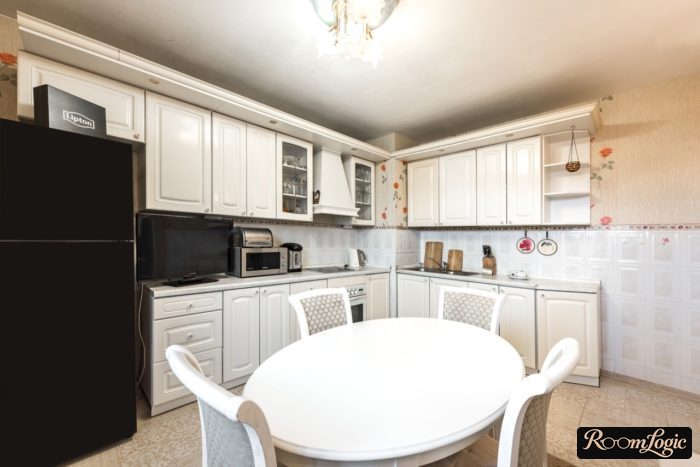
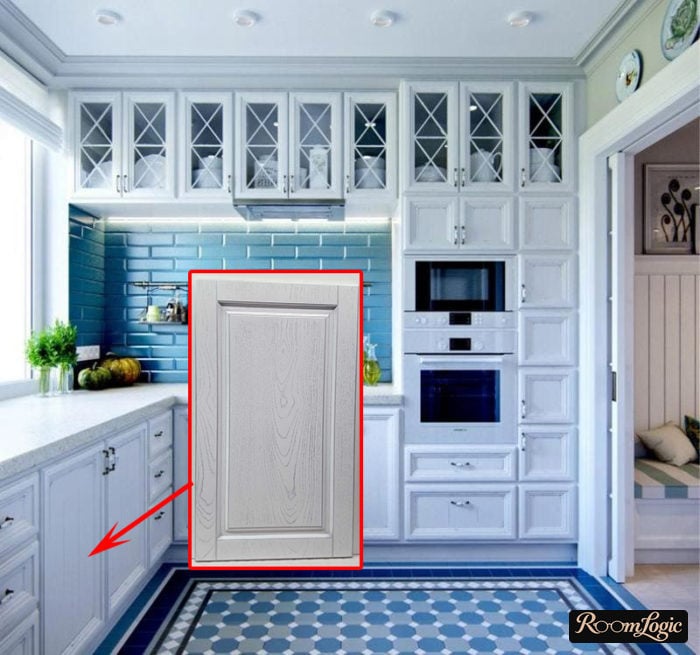
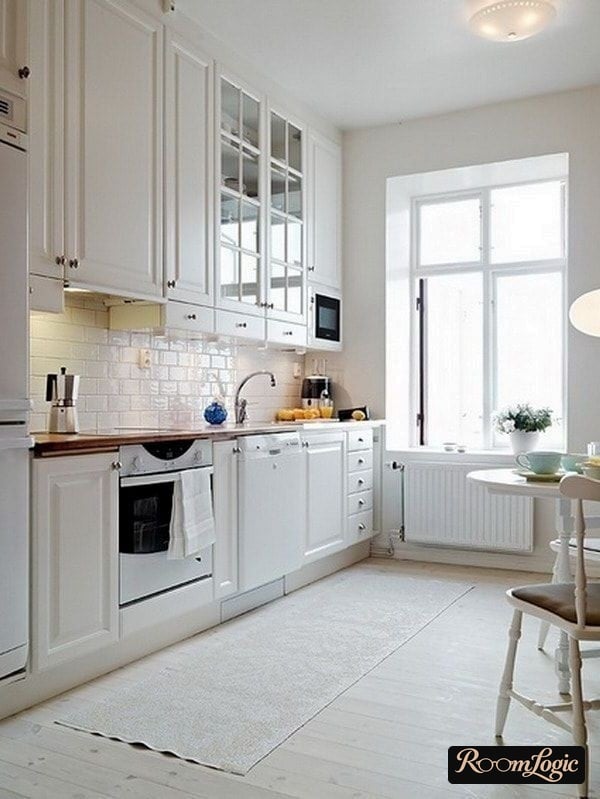
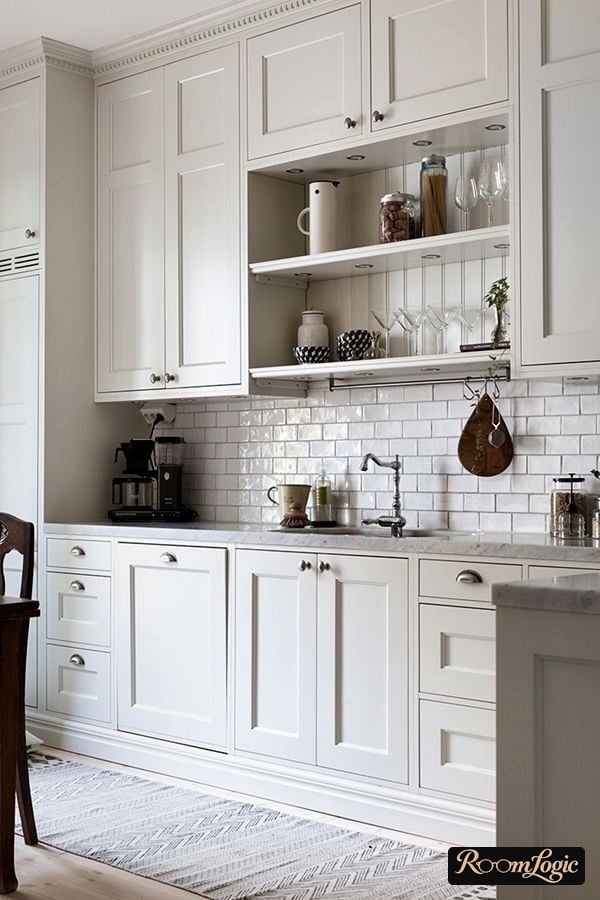
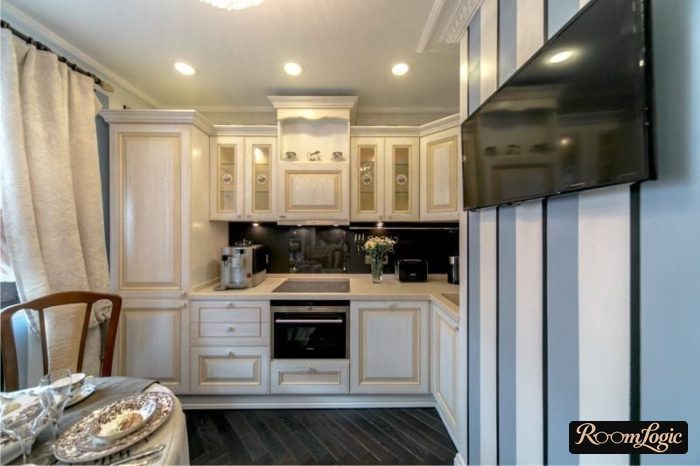
- Up to the ceiling. The upper section can have glass doors. This looks better than cabinets that stop short of the top and is more practical than open shelves. If you still want to skip the upper cabinets, read about the details waiting for a kitchen without upper cabinets.
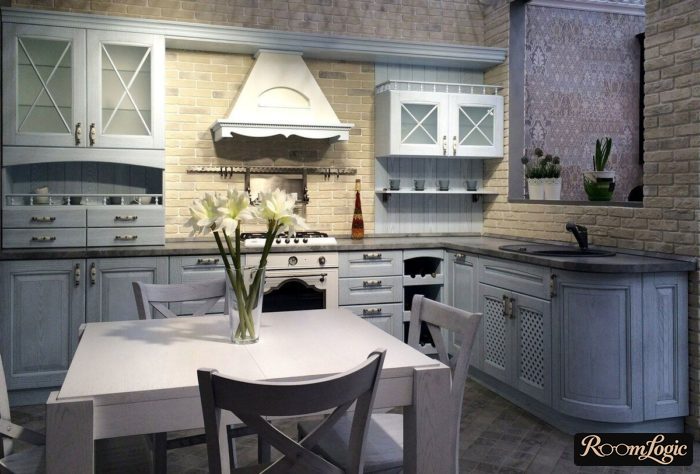
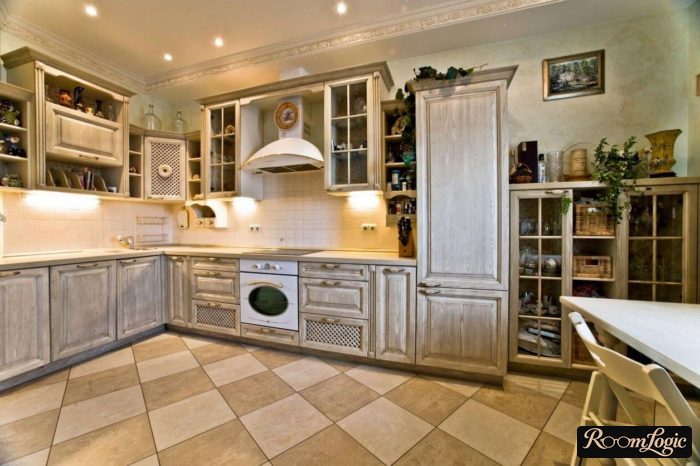
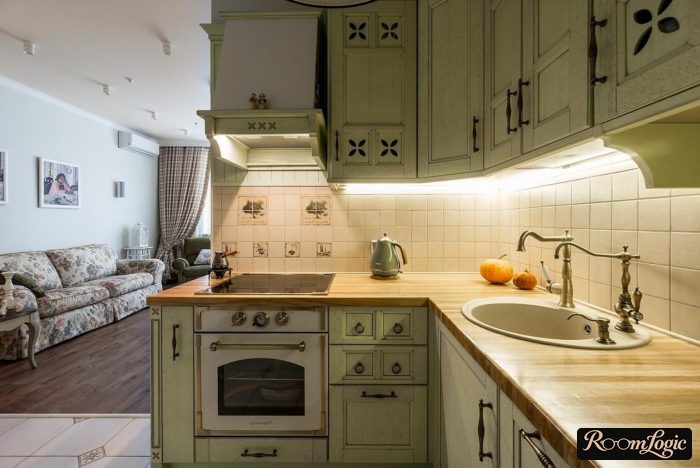
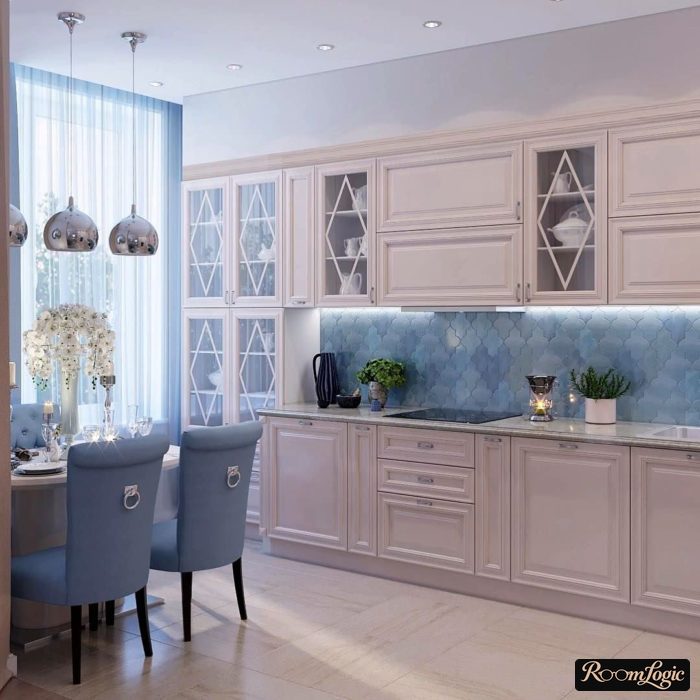
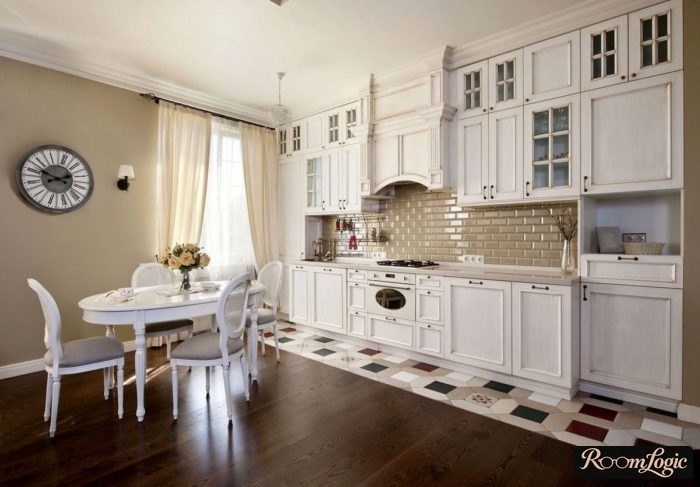
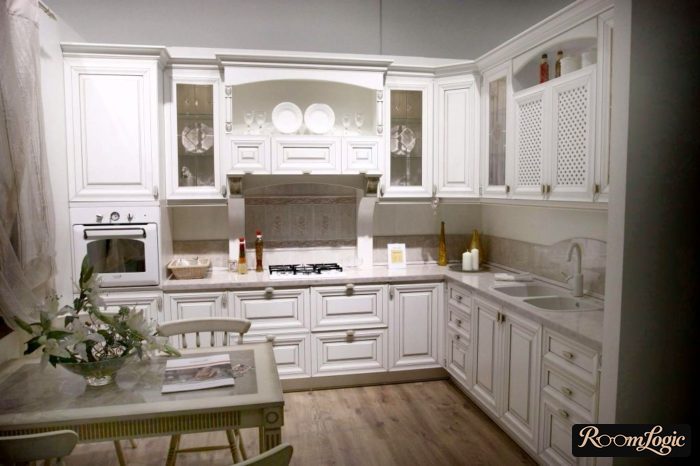
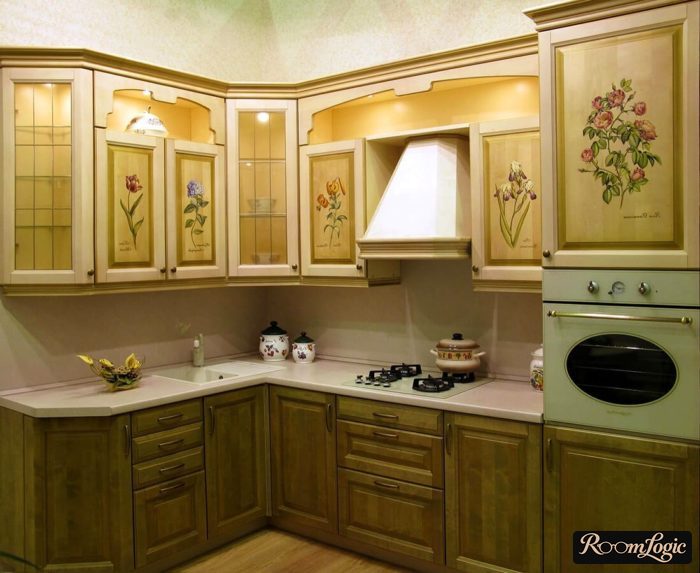
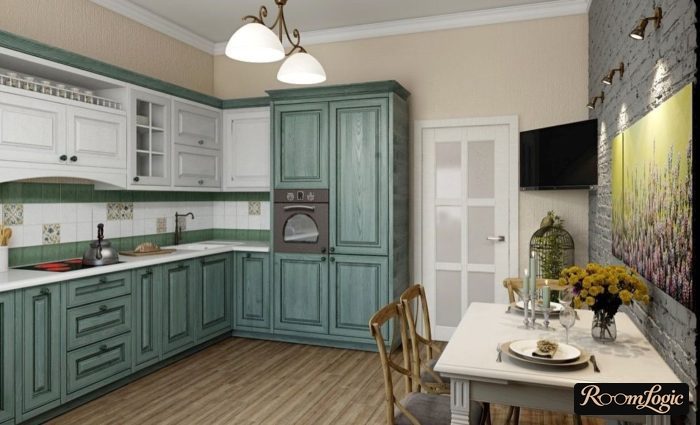
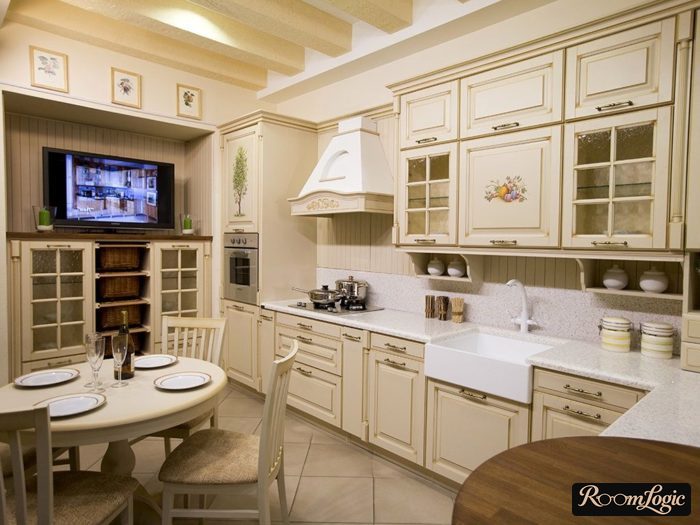
- No natural wood colors – they belong to Scandinavian styles, not French ones. Use either enameled cabinet fronts with no texture at all or solid wood treated and whitewashed (see the photo below).
- Copper and brass instead of aluminum and chrome. This applies to vintage-style appliances (wall oven, microwave, range), handles (doors and cabinets), and the faucet. They can be distressed.
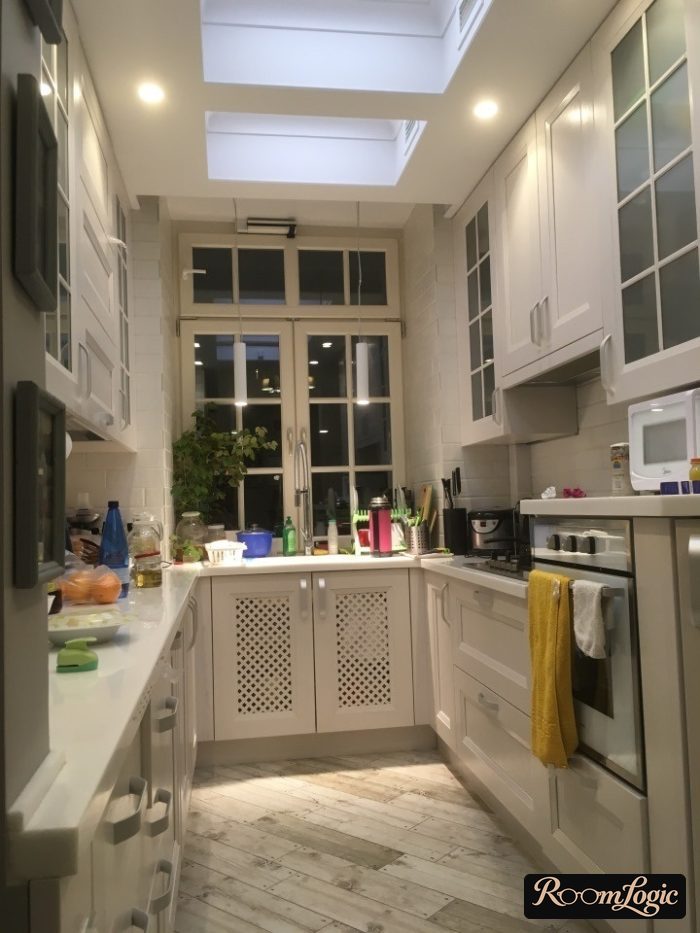
- If the room is large enough to lose storage around the range hood (starting at a 100-square-foot kitchen), you can use a separate hood. Otherwise, use a built-in one. The photos show how to handle it.
- Provence is the only style where a sofa or kitchen corner bench fits naturally.
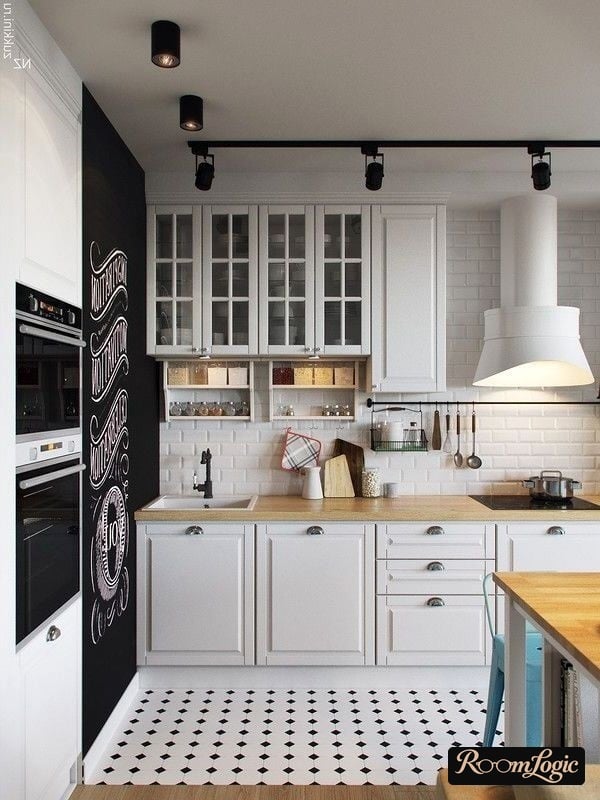
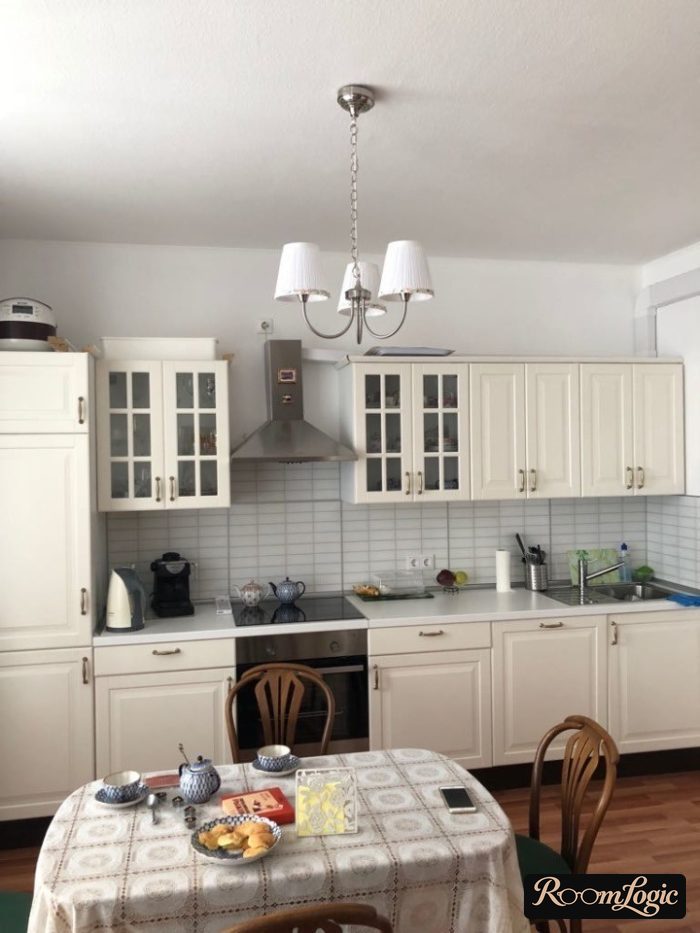
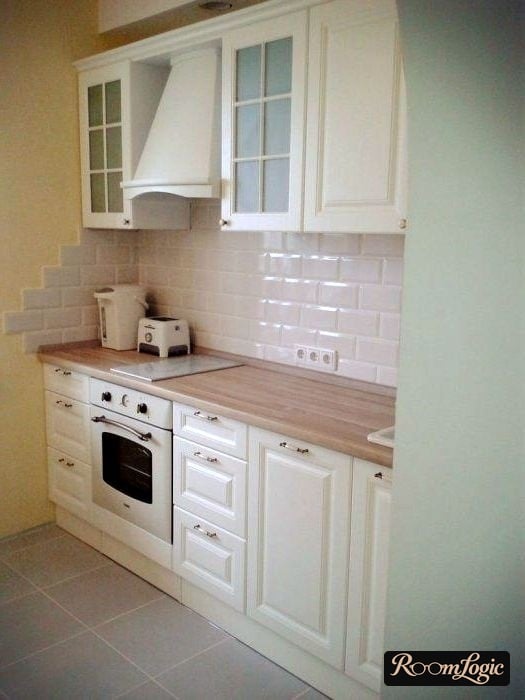
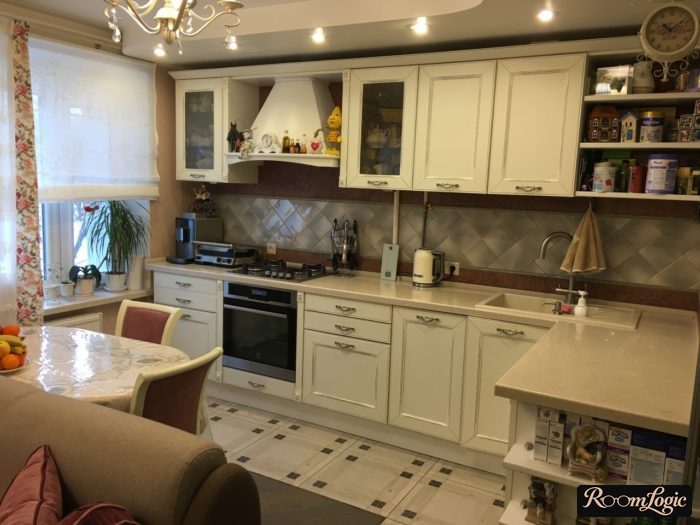
2. Curtains and Tablecloths
Although textiles are not usually a key element of a kitchen interior, in Provence style it is the curtains and tablecloth that create the comfort and mood.
For modern styles, I advise limiting yourself to strict, straight blackout curtains, but there are many options here.
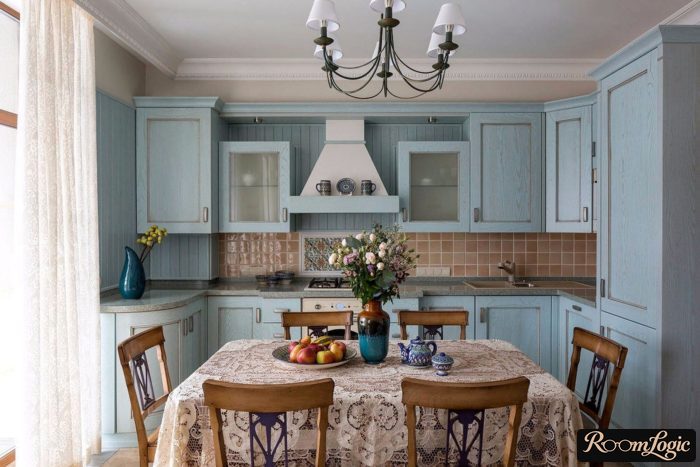
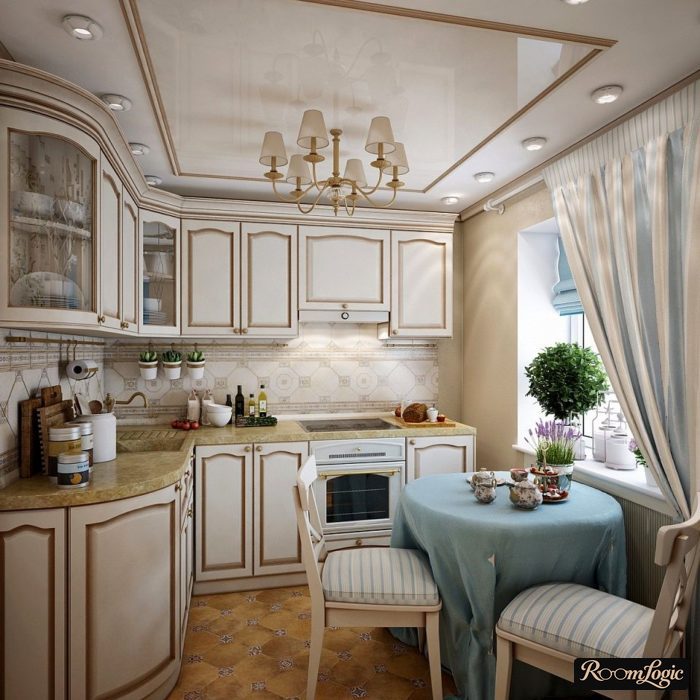
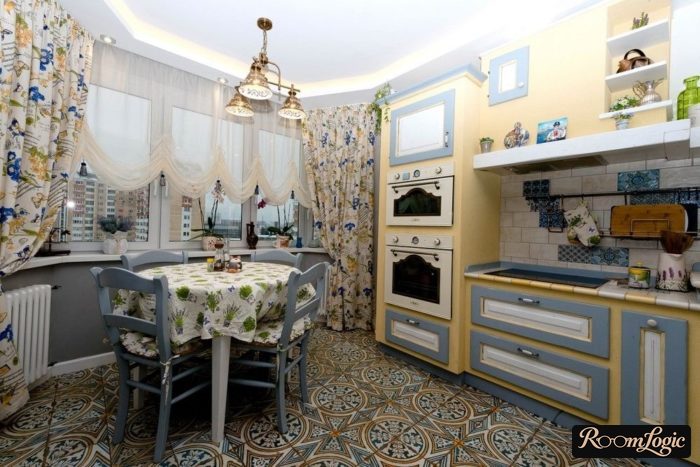
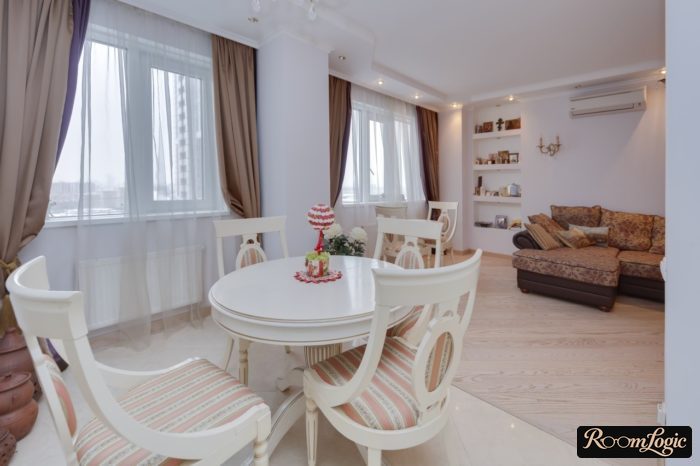
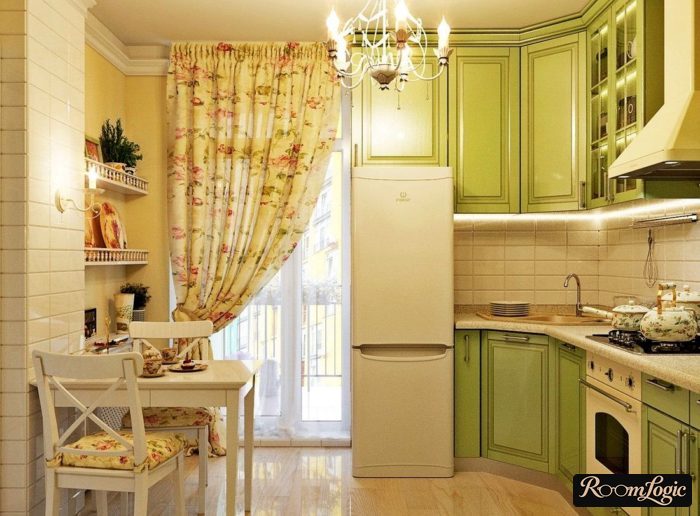
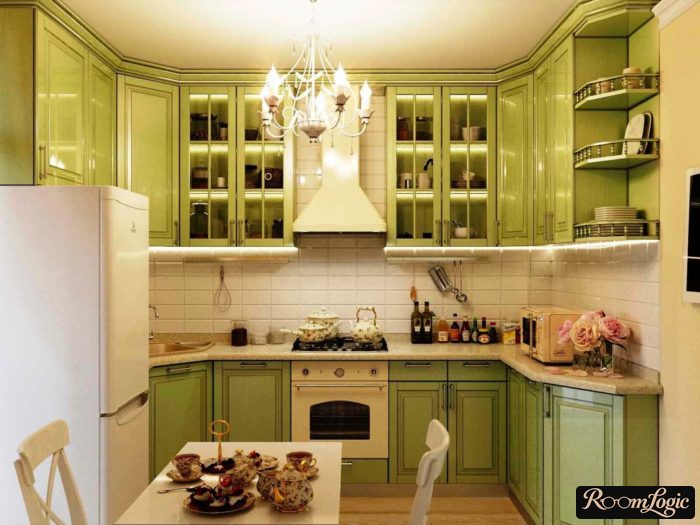
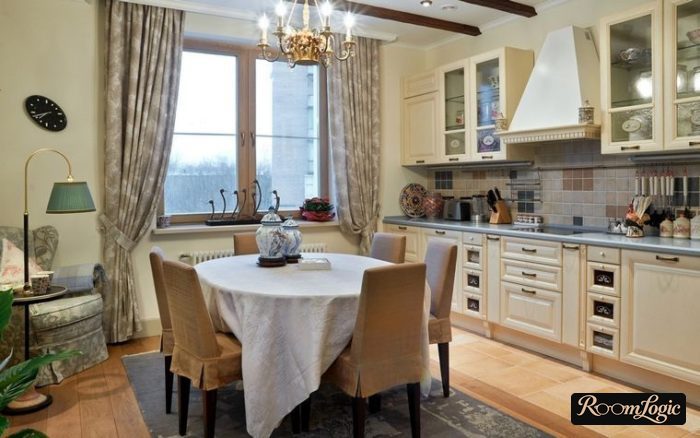
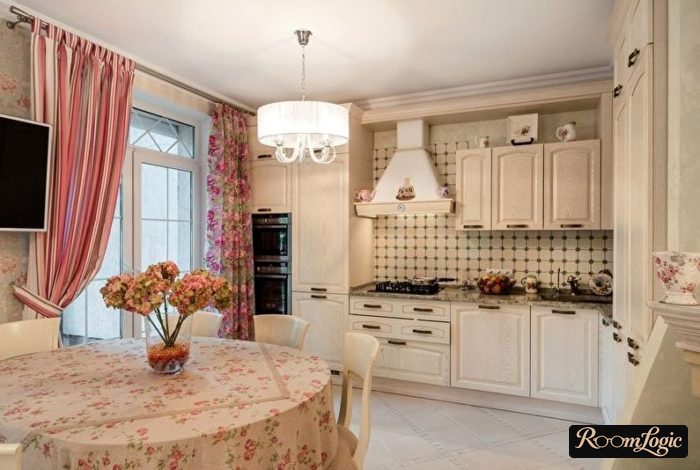
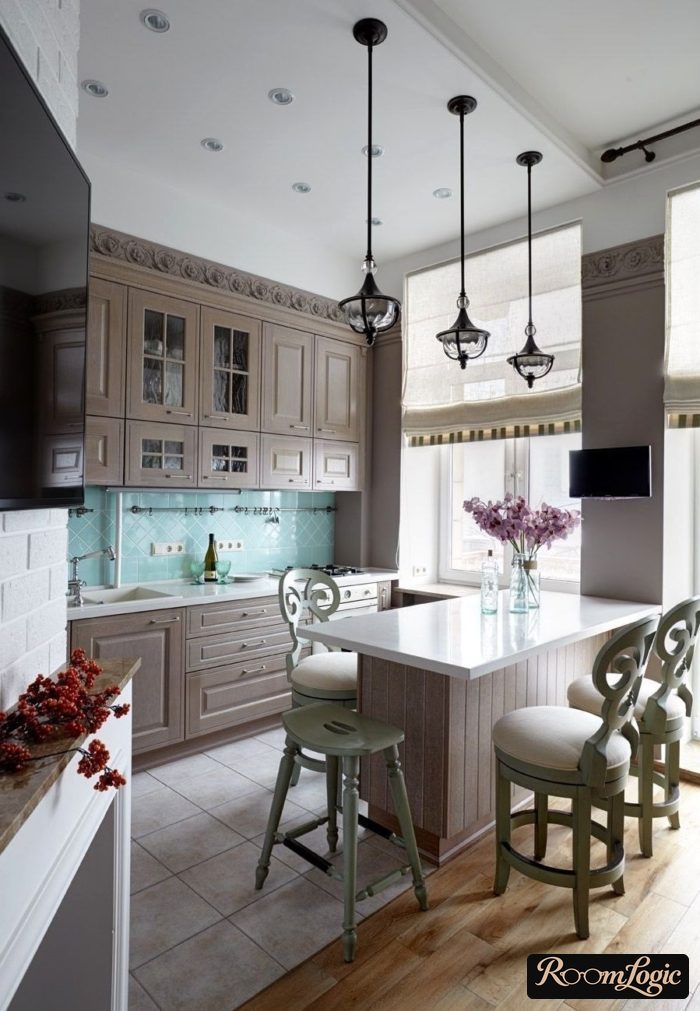
If practicality is the priority, full-window roller shades will work. I do not recommend separate shades on each sash – they look pathetic.
If there is a patio door, only regular curtains remain. Short curtains work in a Provence-style kitchen. Draping (when the fabric gathers in waves) and valances (a horizontal draped section at the top of the window) work too. Sheer curtains and tulle are suitable.
Read the separate article on kitchen curtains and the one on curtains for a kitchen with a patio door – both articles have more than 120 photos, and textiles are important.
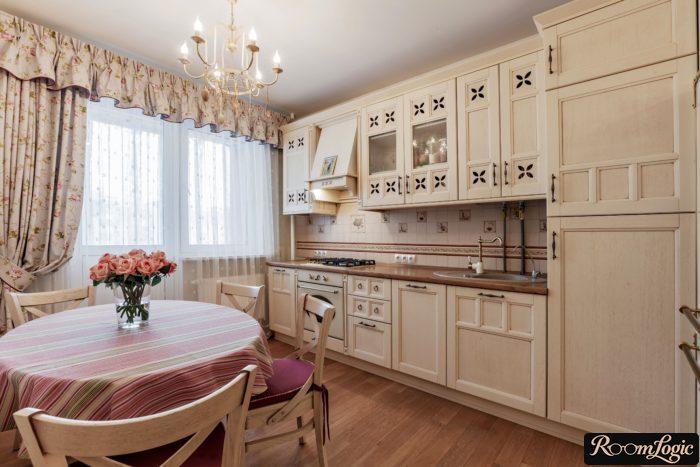
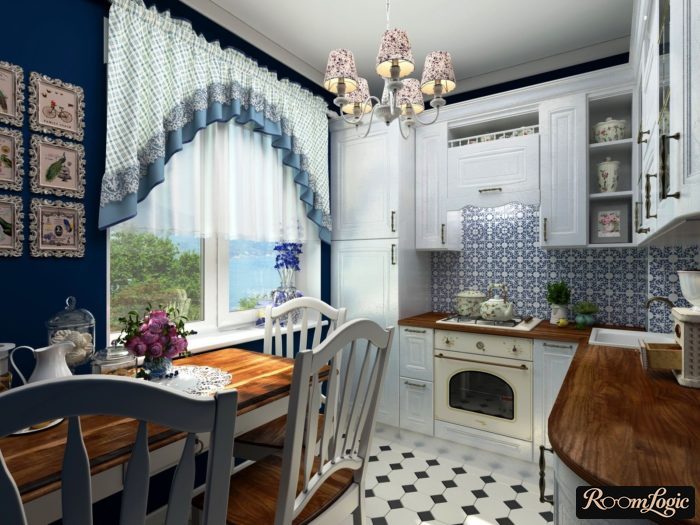
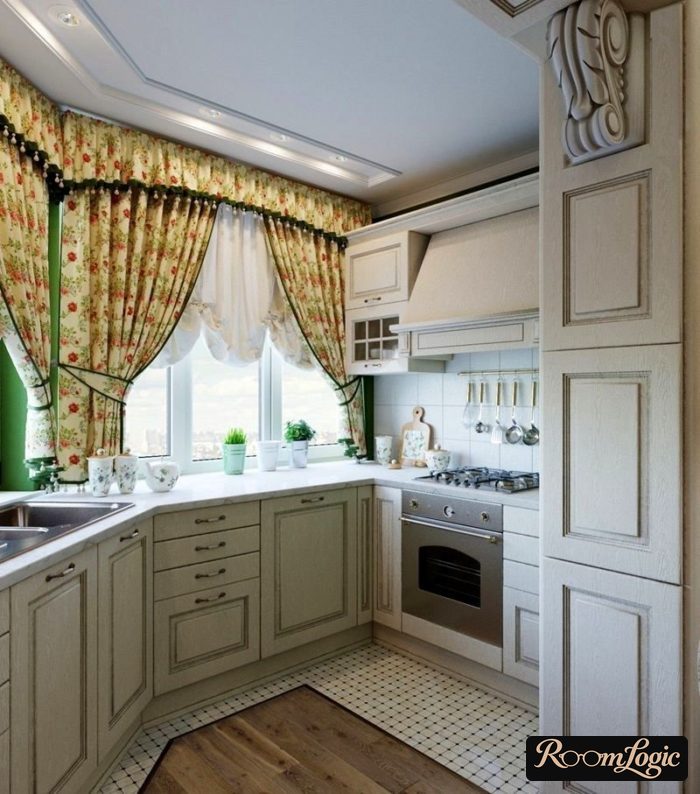
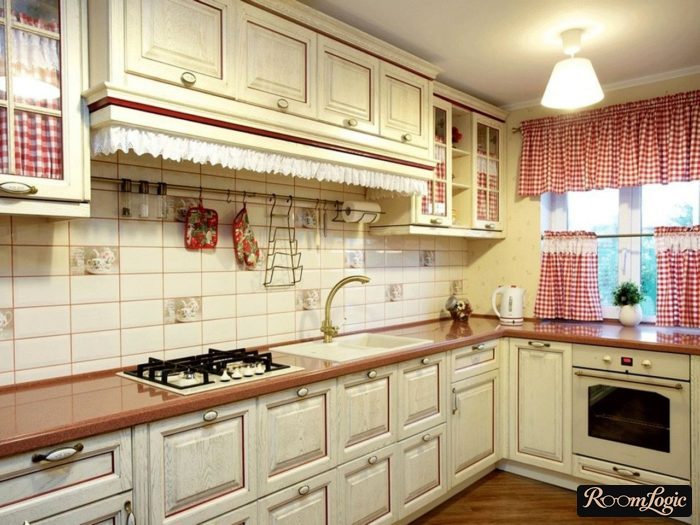
None of this can be used in other styles. But in Provence, that provincial French country spirit is exactly what we need.
People often add the maximum amount of textiles and use chair covers and curtains on cabinet doors. It is important to remember that this is not functional.
3. Wallpaper
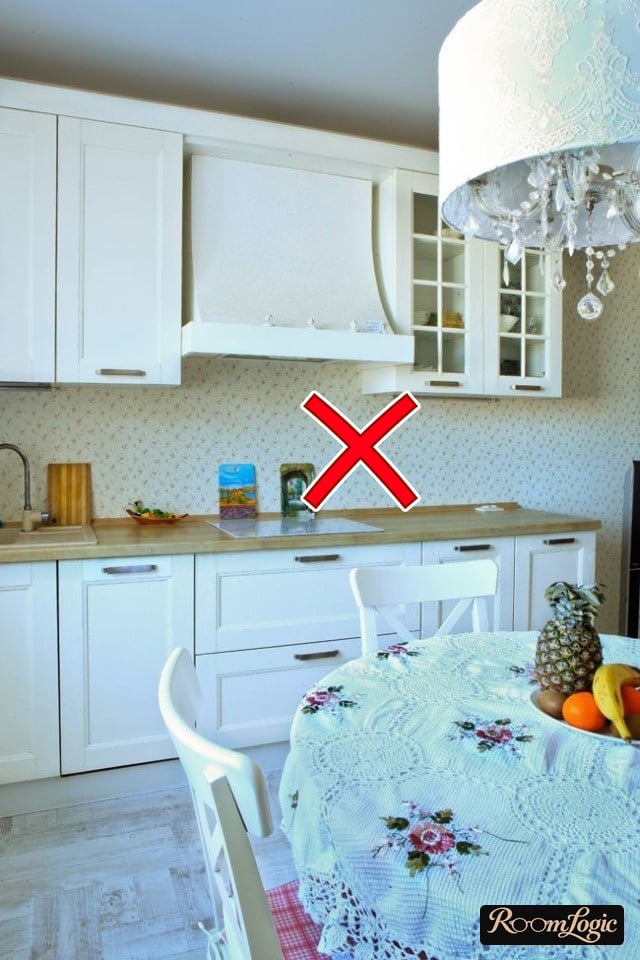
Consider avoiding an overload of textiles in favor of wallpaper – it does not collect dust. There is a separate article on kitchen wallpaper; questions about which types can be used and how to combine accents and backgrounds are already covered there.
Wallpaper with a spread-out floral or plant pattern works well in a Provence-style kitchen. It creates the right mood and echoes the flowing lines of the furniture.
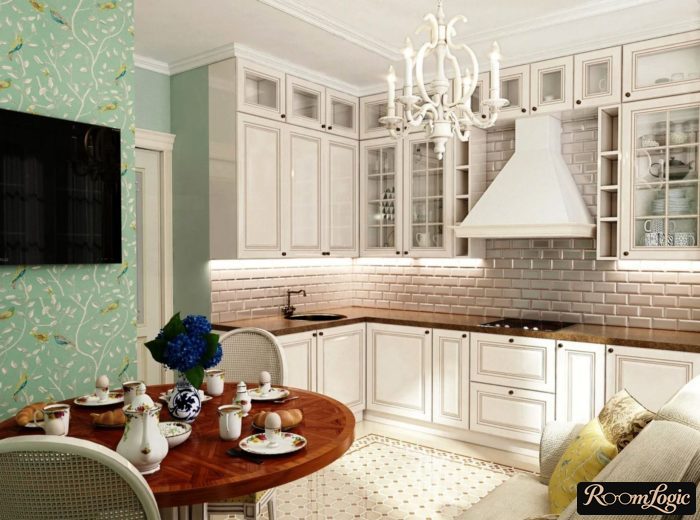
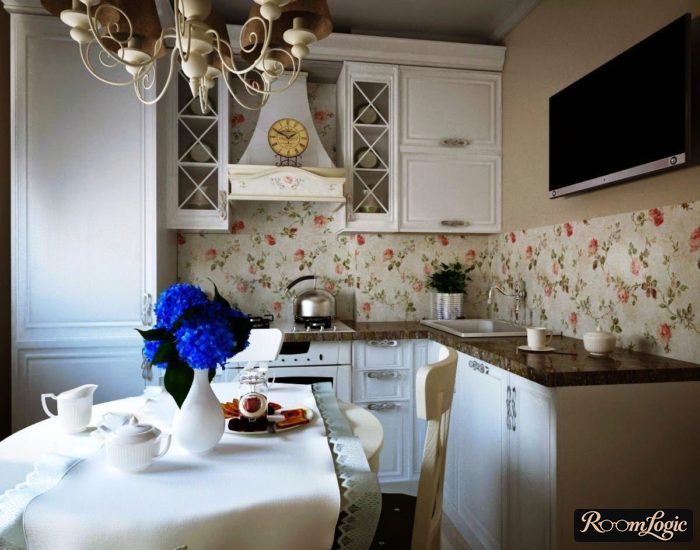
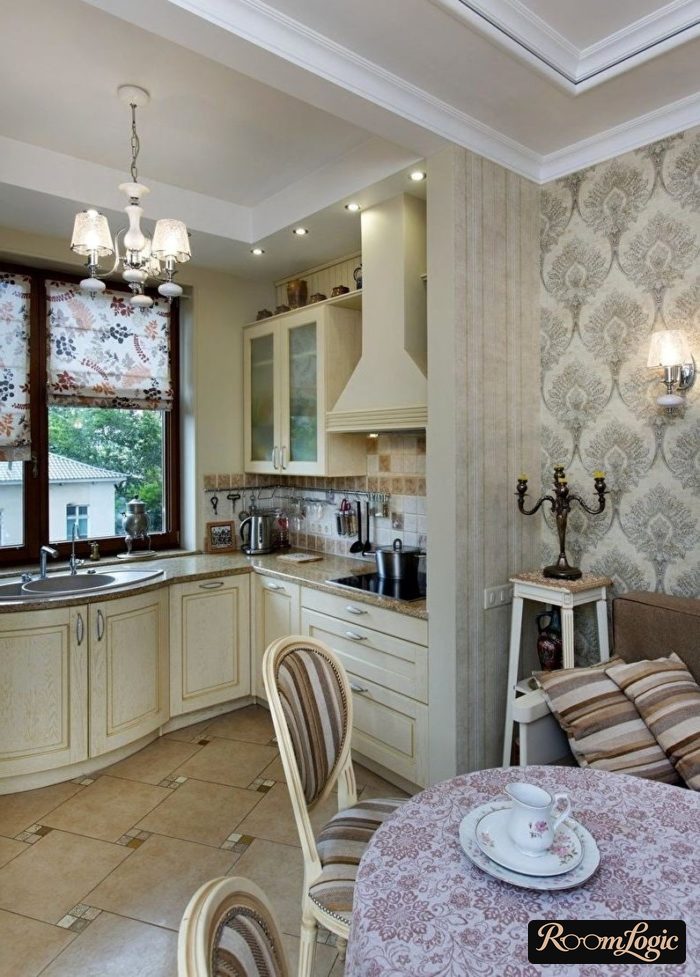
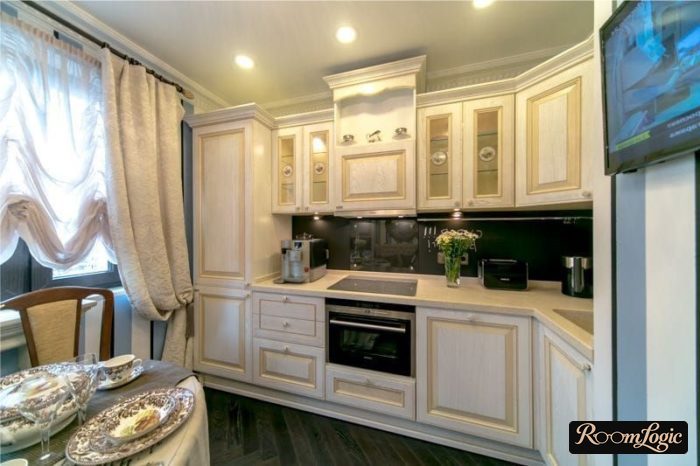
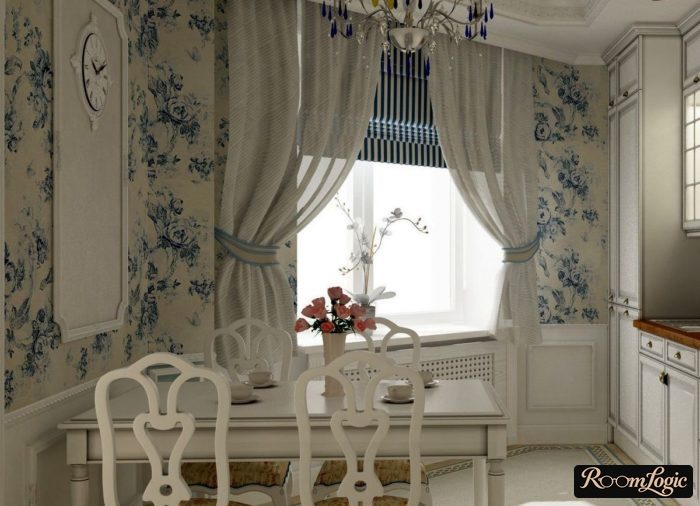
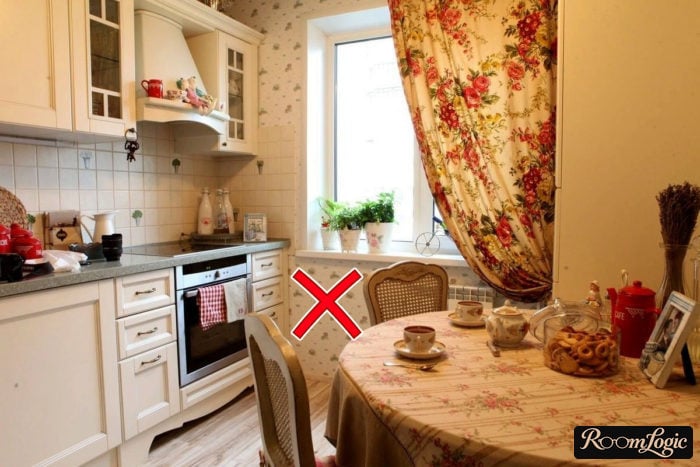
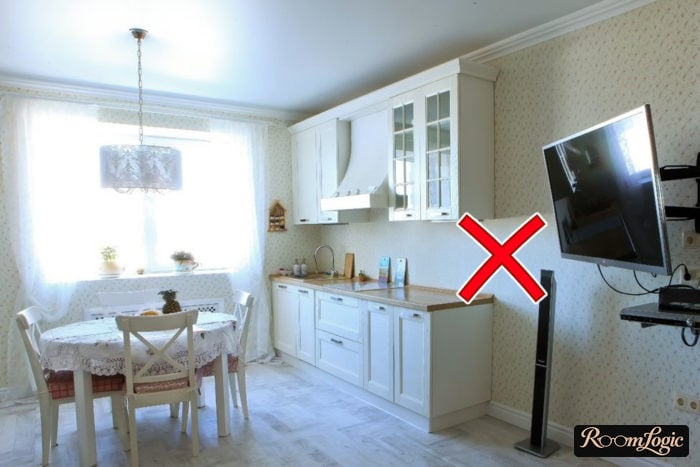
But it is better to avoid a small repeating pattern – it looks cheap in a bad way. Murals are out too – too risky.
4. Tile
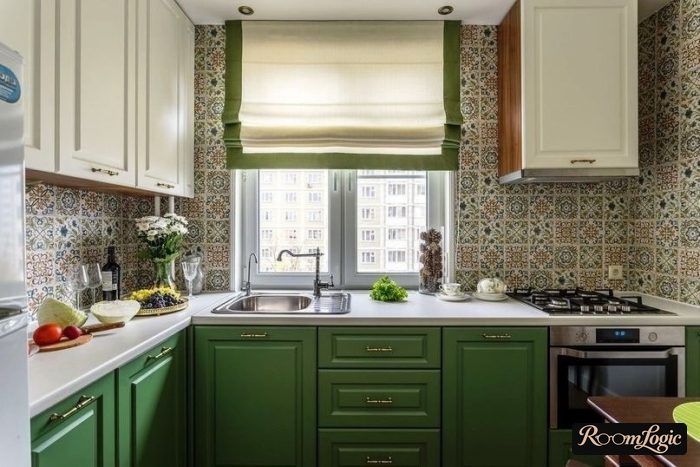
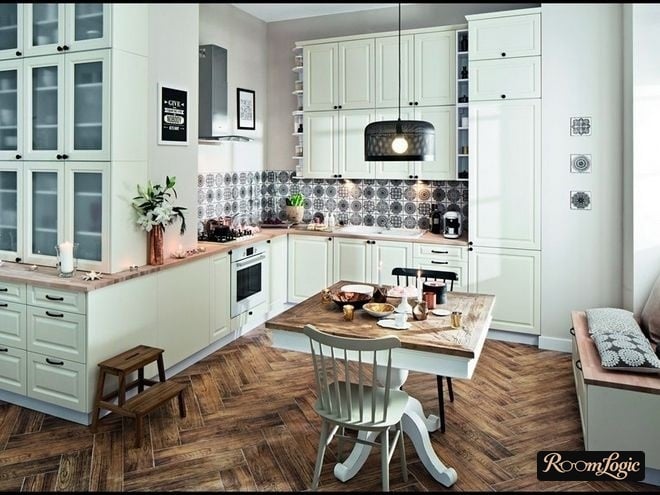
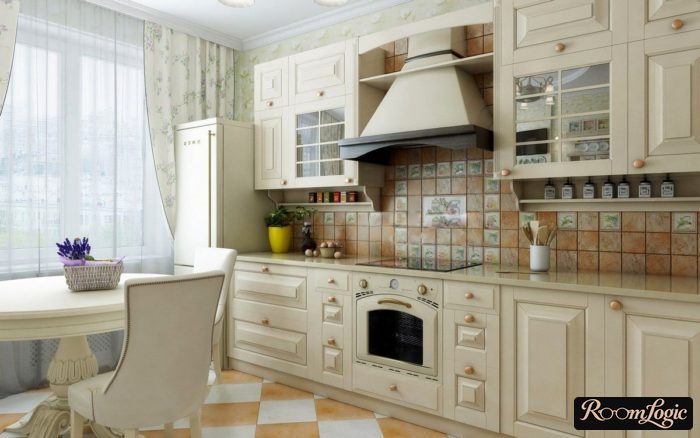
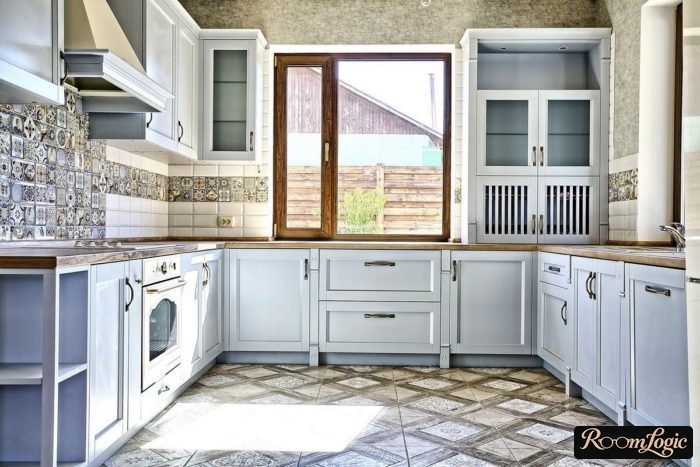
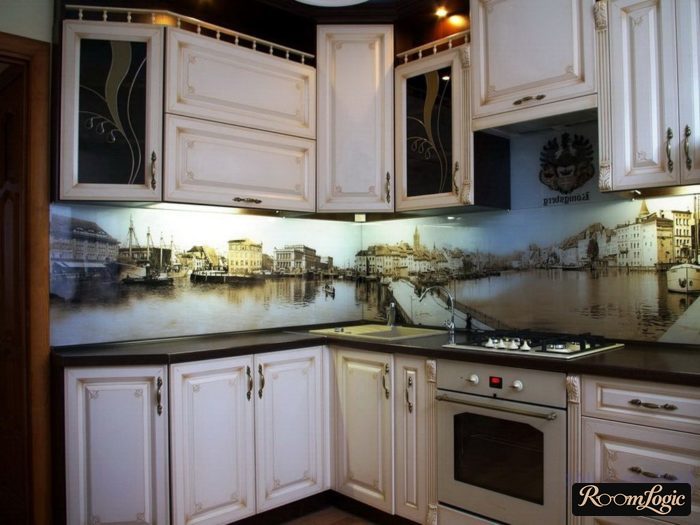
Standard backsplash options for a Provence-style kitchen are patterned tile (patchwork), white brick-shaped tile (white subway tile), and imitation aged stone (travertine, sandy shades).
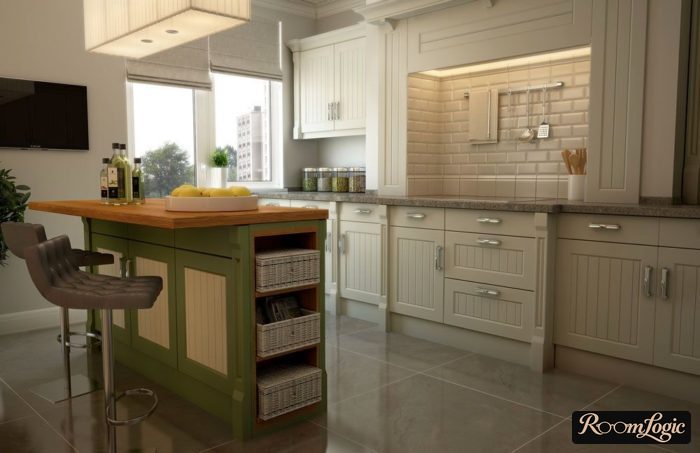
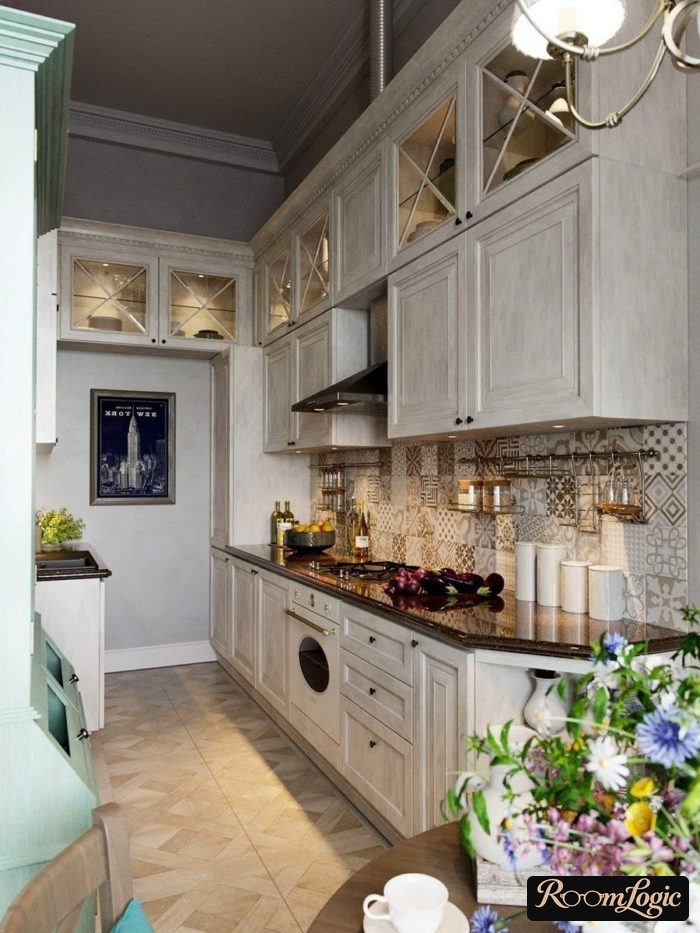
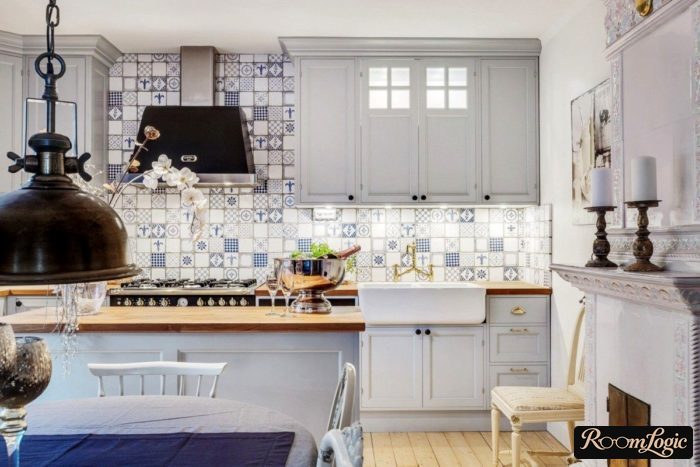
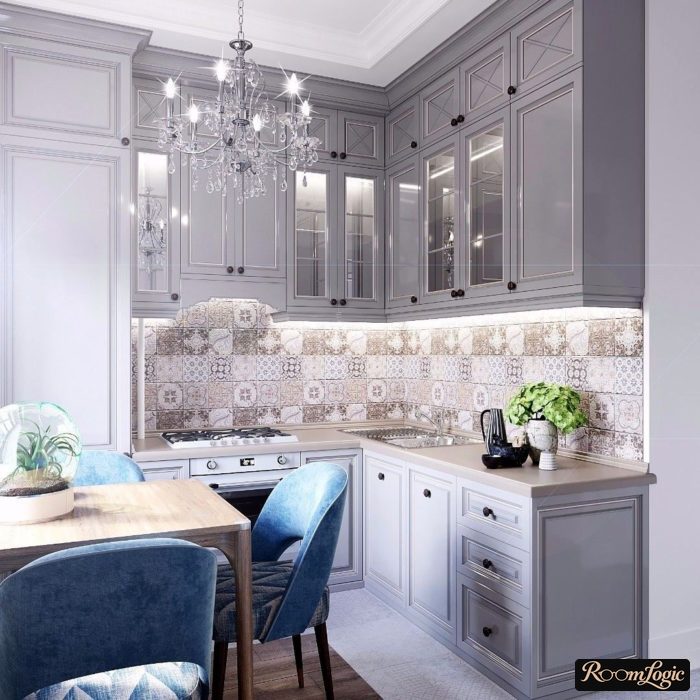
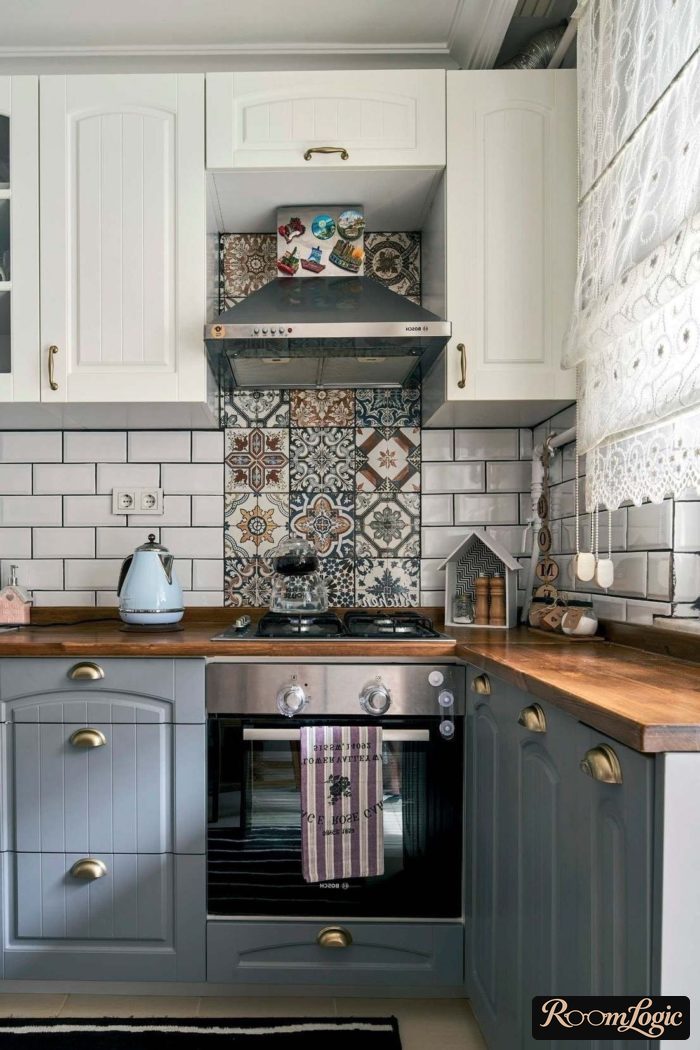
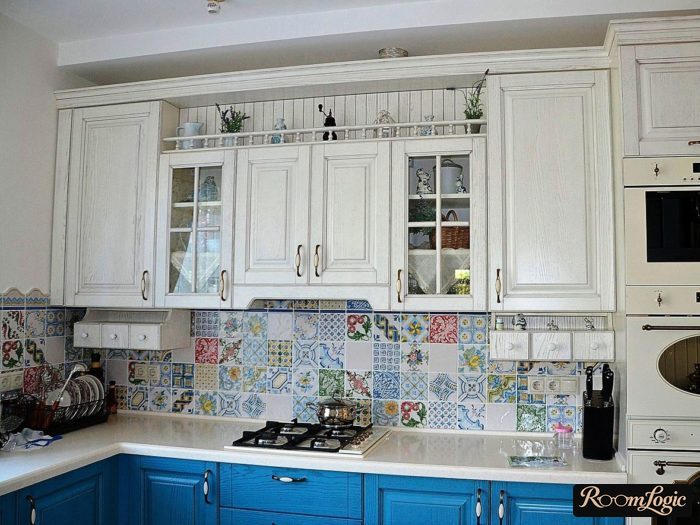
The problem: small square tile is usually used. That means there will be many joints. Although the tile itself is durable, grout is its weak point. Money solves this through epoxy grout. Or choose the grout color correctly.
For the floor, tile in sandy colors and shades with imitation wear works well in both design and practicality – a Mediterranean option. It does not draw attention to itself or conflict in color or texture.
5. Lighting
I usually recommend lots of concealed light, but in a Provence-style kitchen, the only concealed source will be the backsplash lighting.
This style looks fairly good in natural light and when natural light is lacking. So simply having any additional dim lighting will be enough. It is easier here.
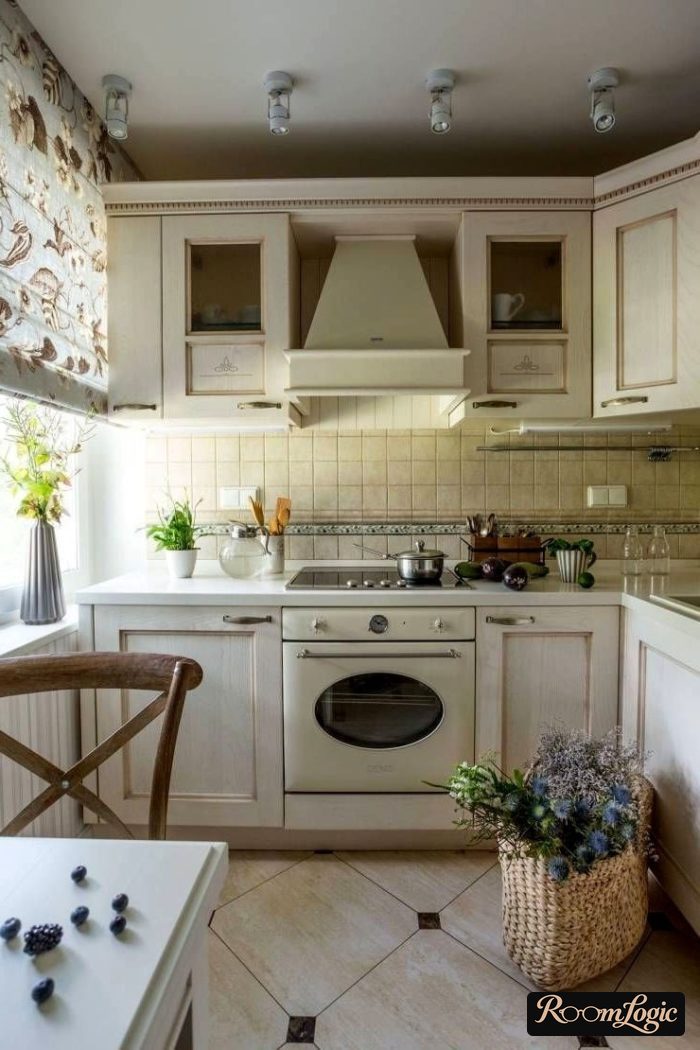
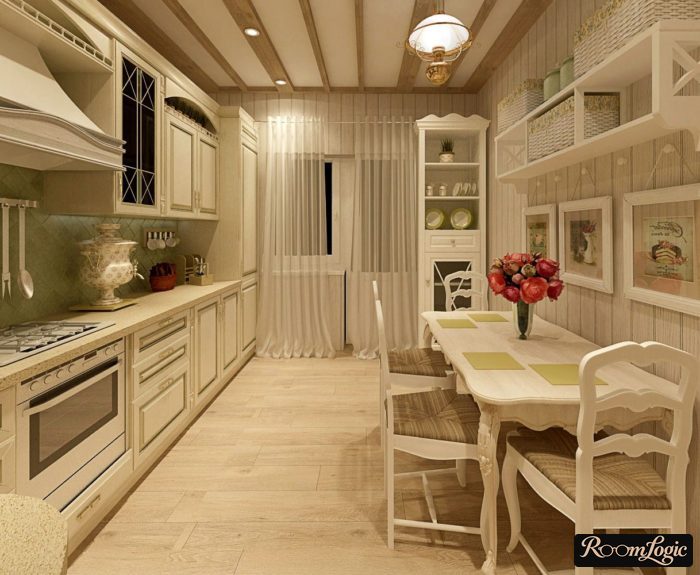
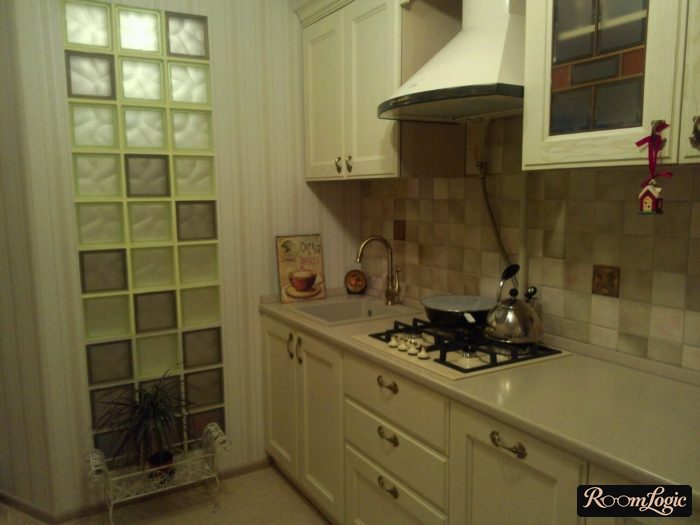
The bulb color temperature should not be higher than 4000K. Otherwise, the light will be too cold for Provence style.
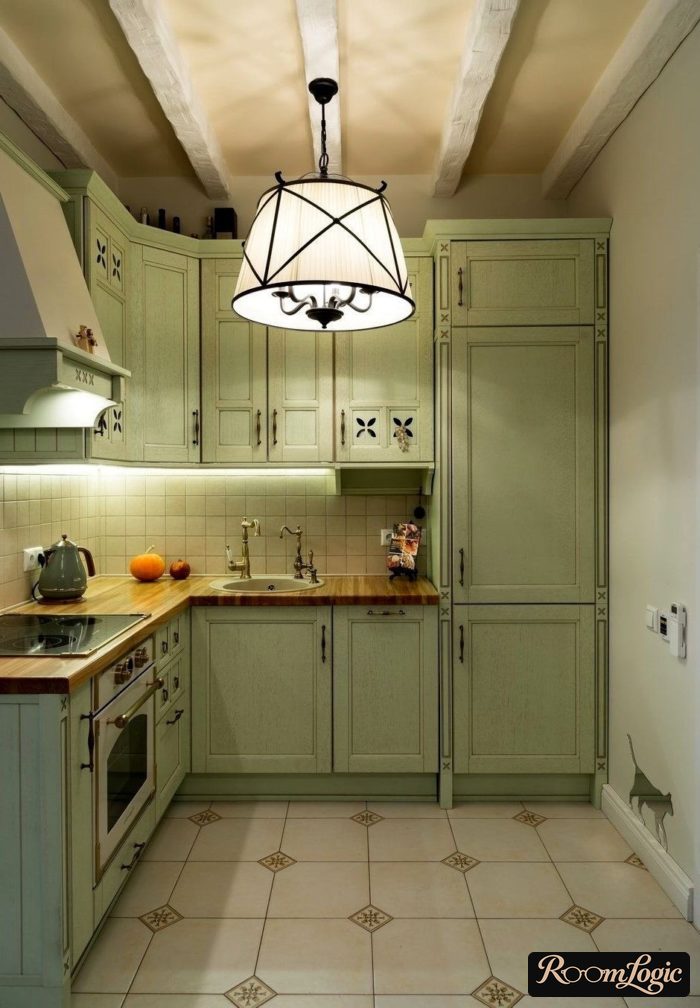
But the appearance of the light sources matters. The fixtures serve a decorative function.
A vintage chandelier, wrought-iron floor lamp, and wall sconces all add romance.
6. Accessories
A counterintuitive point:
Although the photos show a ton of details in the interior and I write that a Provence-style kitchen is heavily loaded with them, there should be no accessories.
Every object required in a kitchen performs the decorative function. You cannot add accessories that take up space and collect dust just for beauty.
Meaning no candelabras (candlesticks), framed photos standing on tables, or baskets filled with fake things.
Instead, use interesting kitchen utensils and dishes, wrought-iron elements in the furniture, and so on. In other words, the objects that are already there are our decor. Do not add extras. Fine, potted flowers are allowed in kitchens of 110 square feet or more.
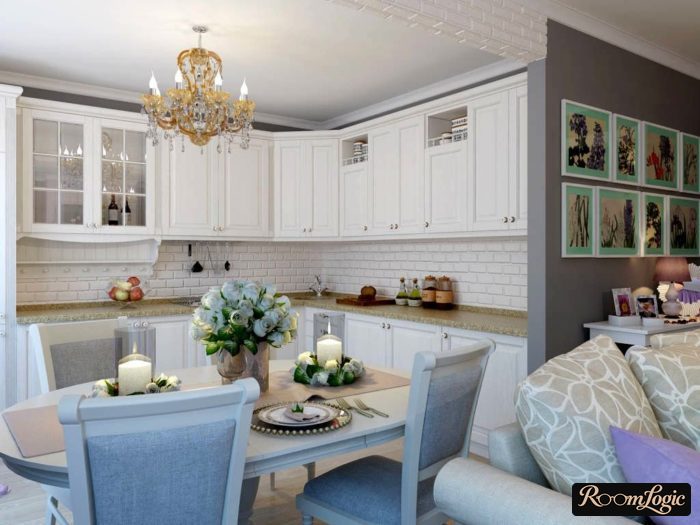
Decor should not stand on the table or collect dust. That means it should hang and be flat. Paintings, murals, and the color palette are our choice.
Differences Between an Apartment and a House
Room size and ceiling height affect whether some wall finishes are rational and differ greatly between an apartment with a small kitchen and a country house.
Small Kitchen
An apartment, except when it has an open kitchen and living room, usually means a small kitchen. That creates limitations:
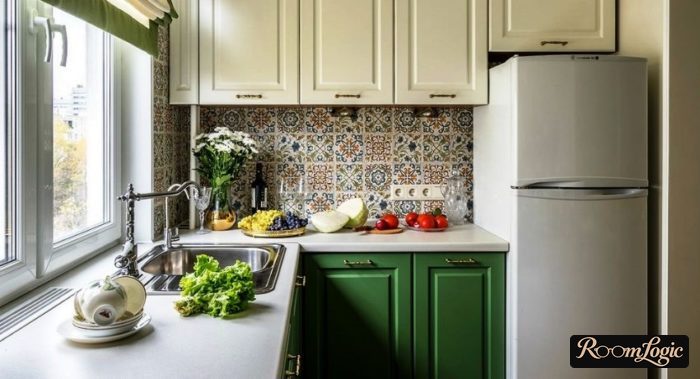
- L-shaped cabinets extending to the ceiling are the gold standard for any small kitchen.
- No accessories or utensils should be stored on the countertops. Countertop space is always lacking. Cleaning while moving things from place to place is torture.
- Glass doors are allowed; open shelves are not.
- The only acceptable textile is curtains. Everything else makes a small apartment kitchen look cluttered, not atmospheric.
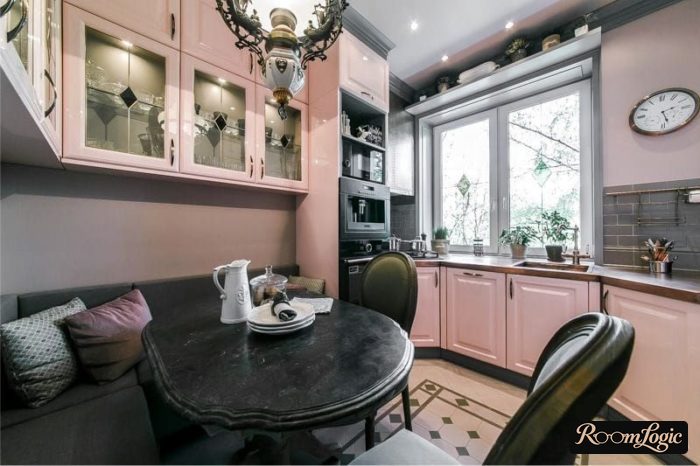
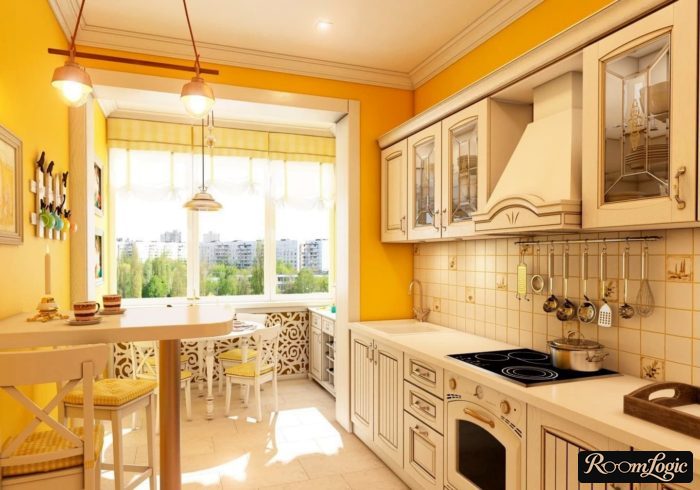
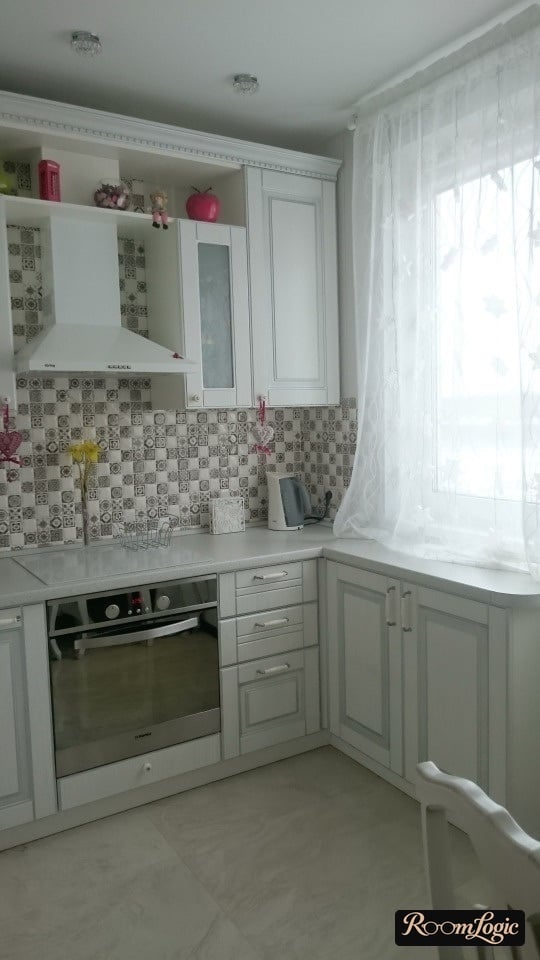
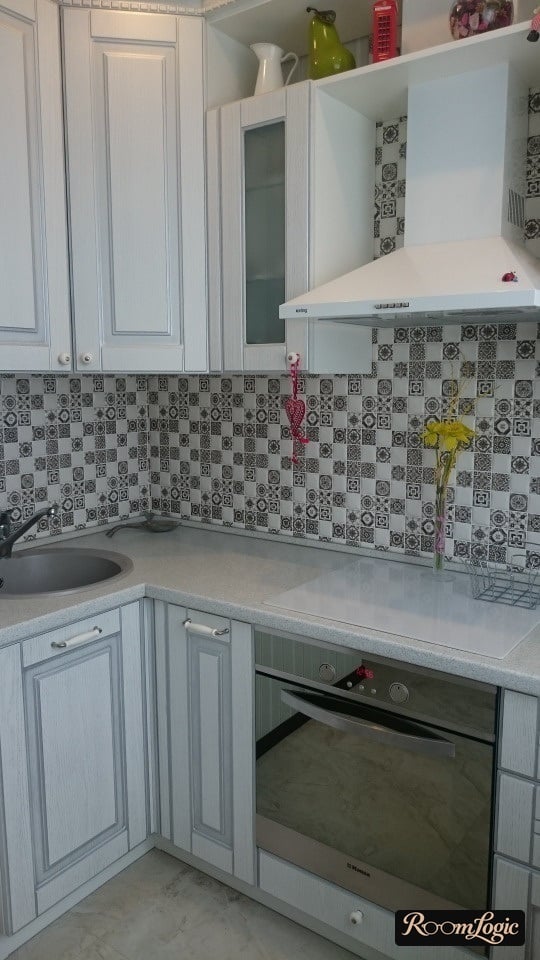
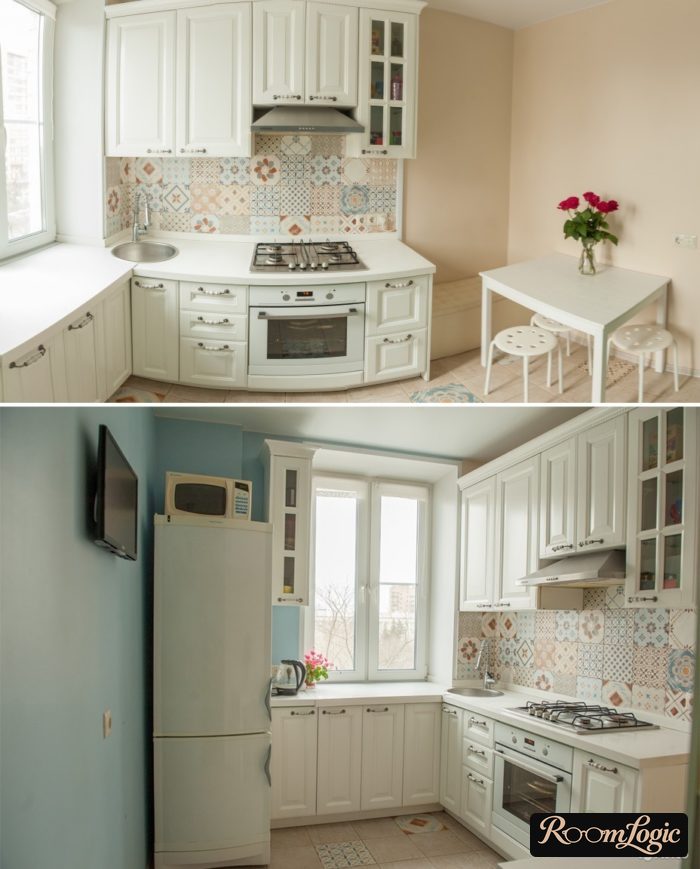
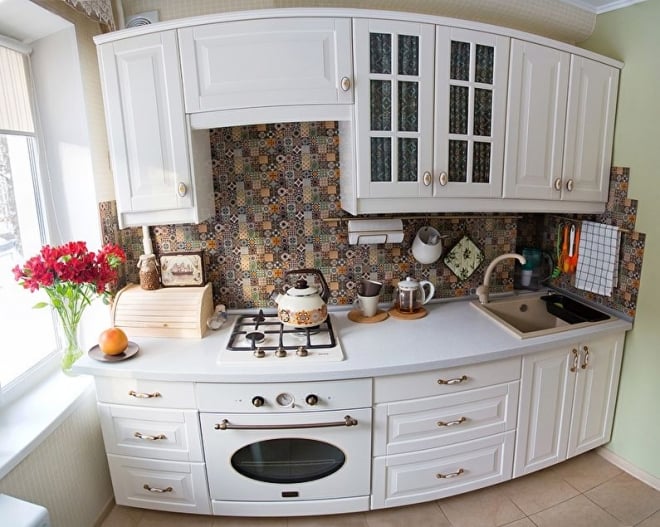
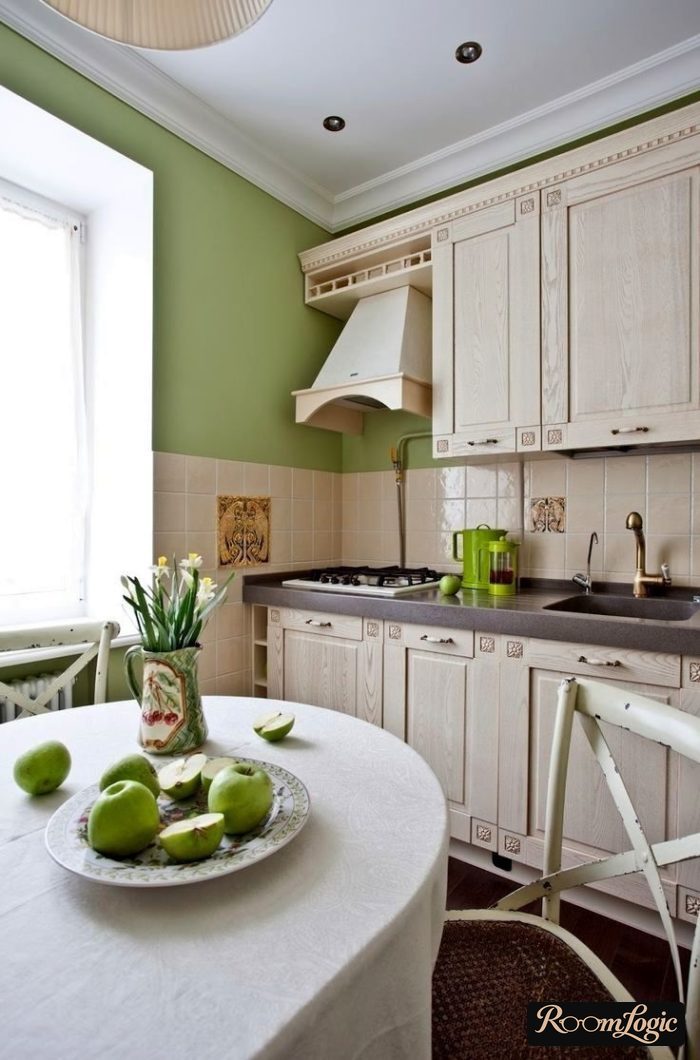
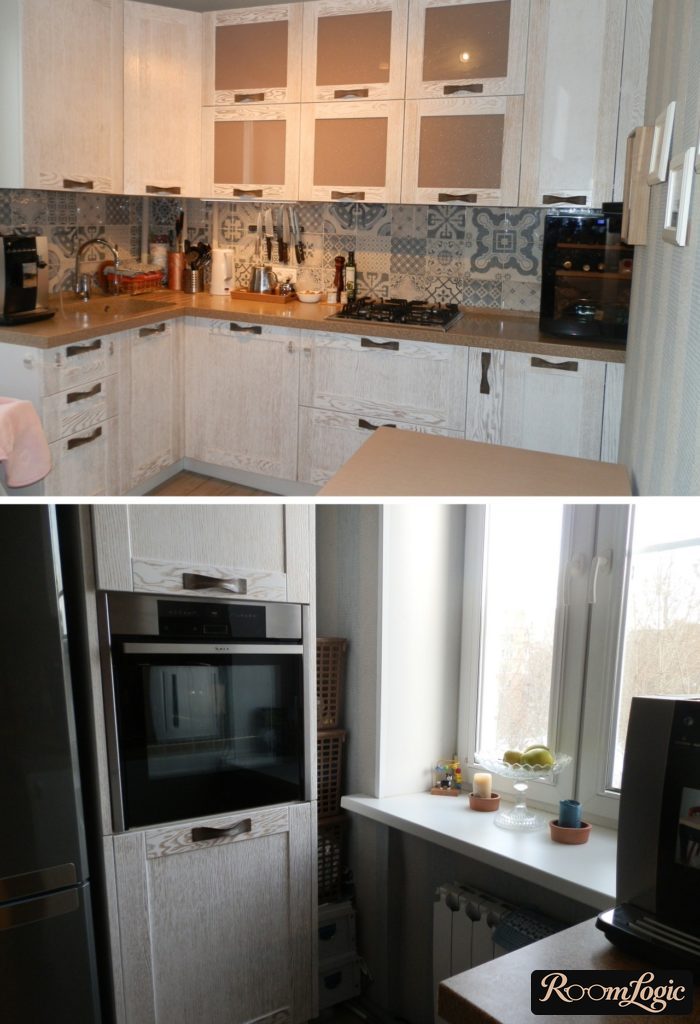
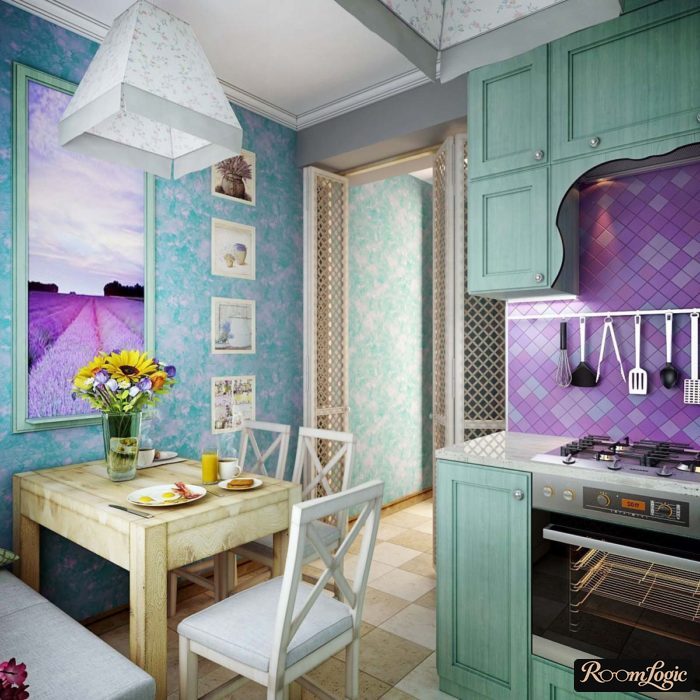
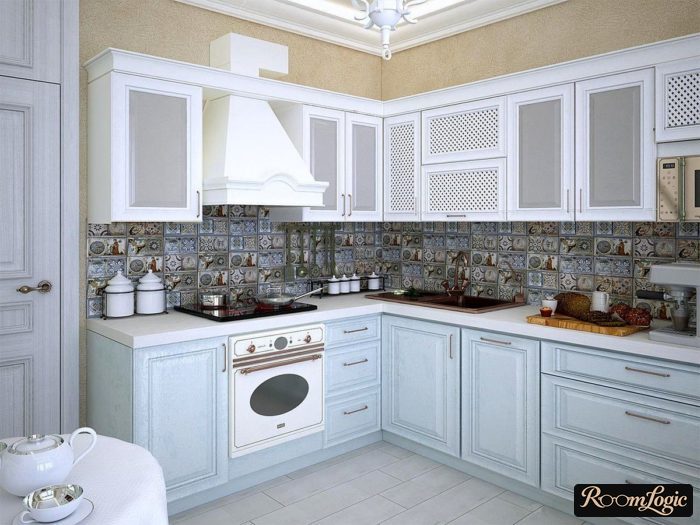
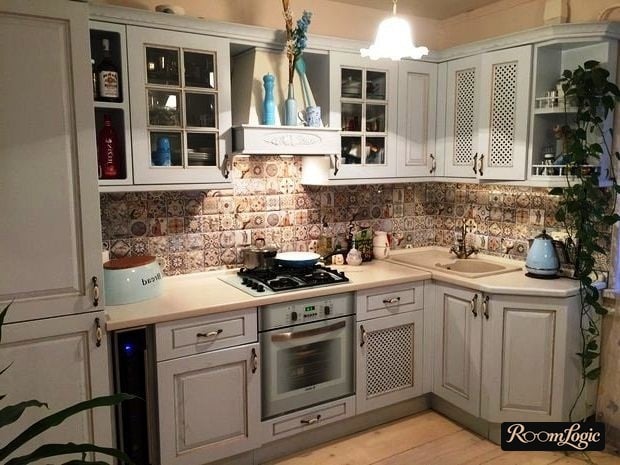
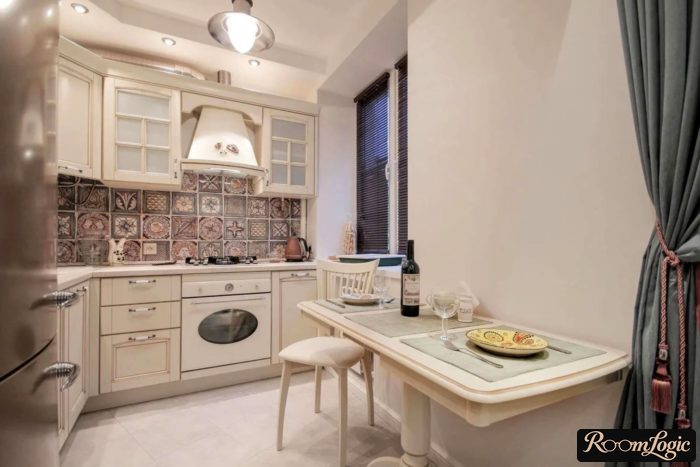
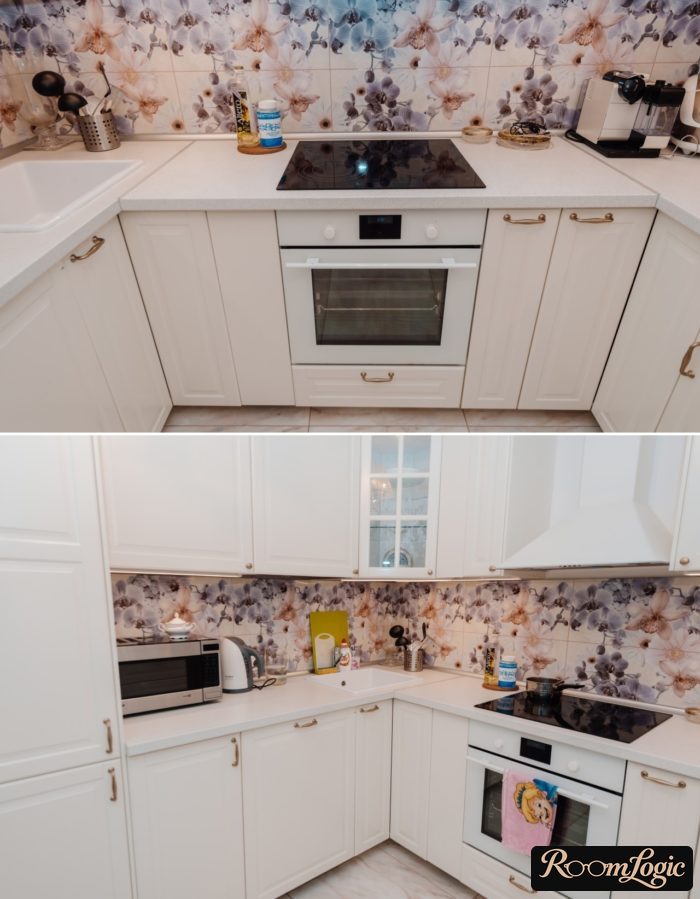
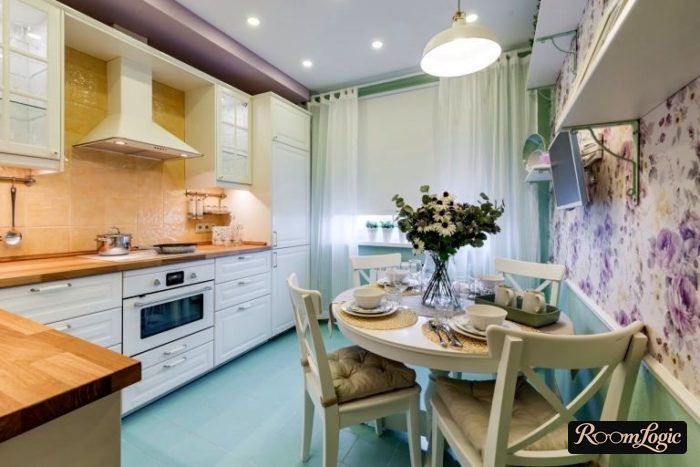
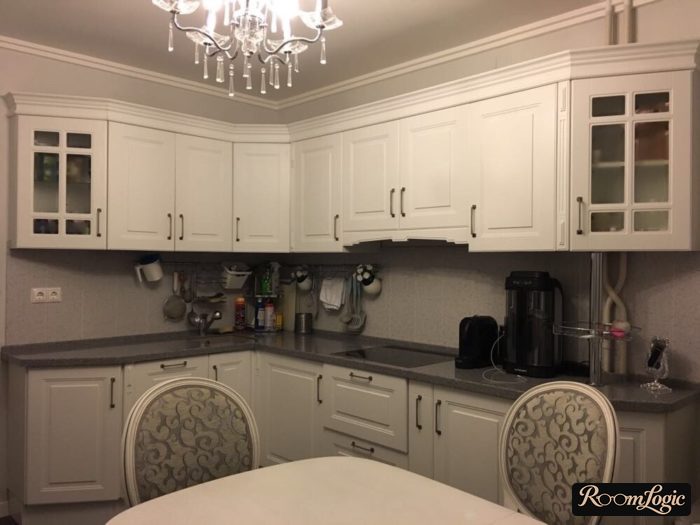
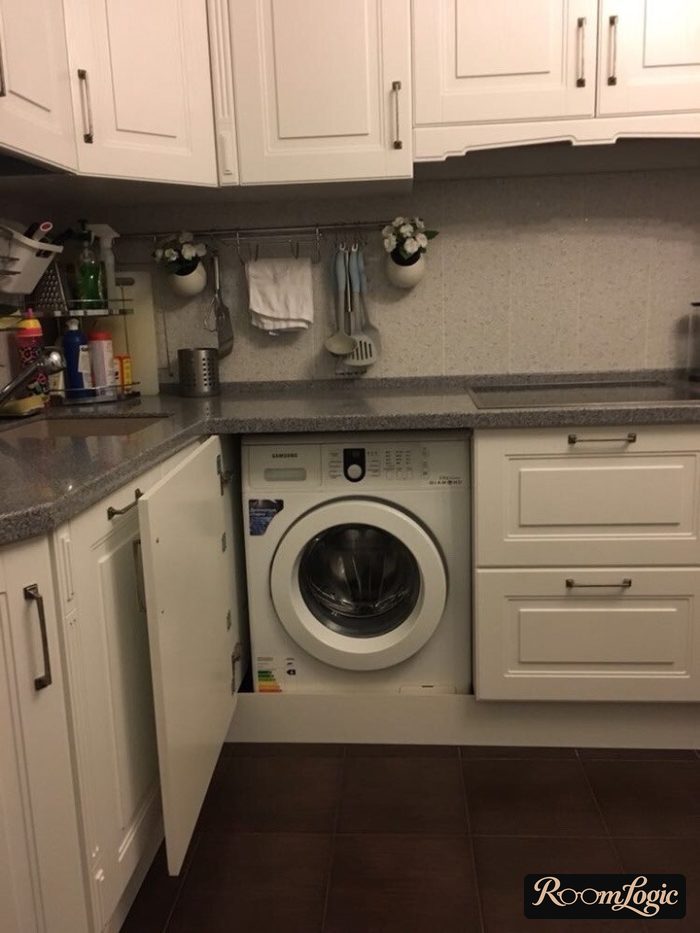
Those are not such great sacrifices. And as you can see in the photos above, Provence style can work perfectly well in a small kitchen.
In a Country House
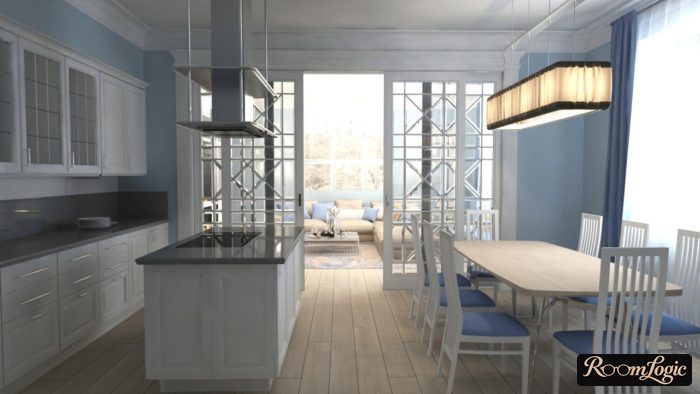
In a house, when space allows, the kitchen expands into a dining area with a dining table or island. Both options fit a country house beautifully.
If the house is wood or has wood elements in the roof and ceiling structure (rafters, beams), there is no point hiding them with finish materials and thick layers of plaster. Although natural wood shades should not dominate, a small share is allowed. Everything else needs to be whitewashed. The result is a kind of country Provence, which is actually the authentic version.
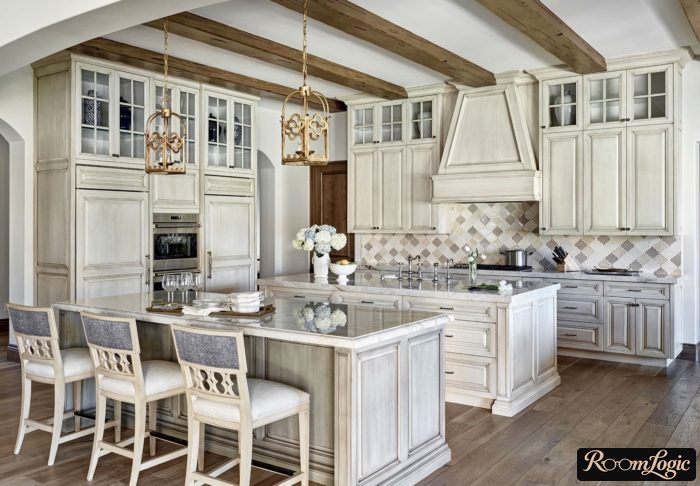
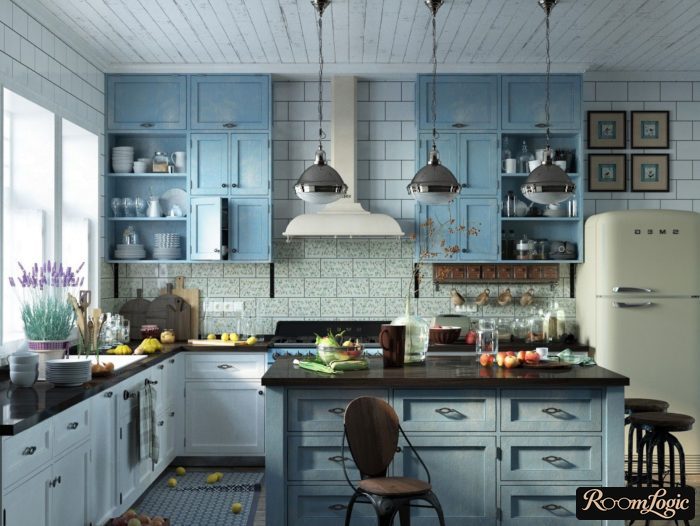
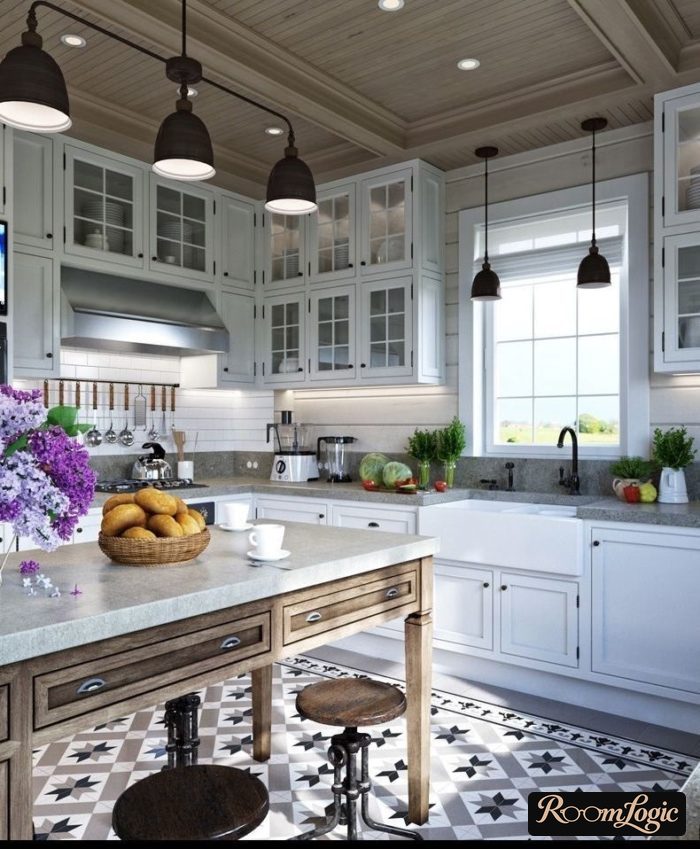
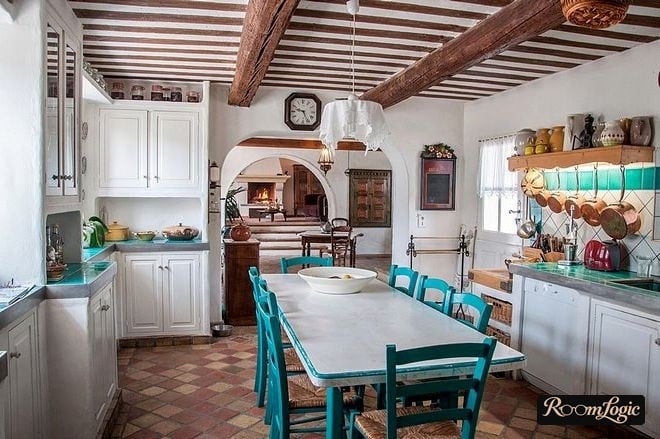
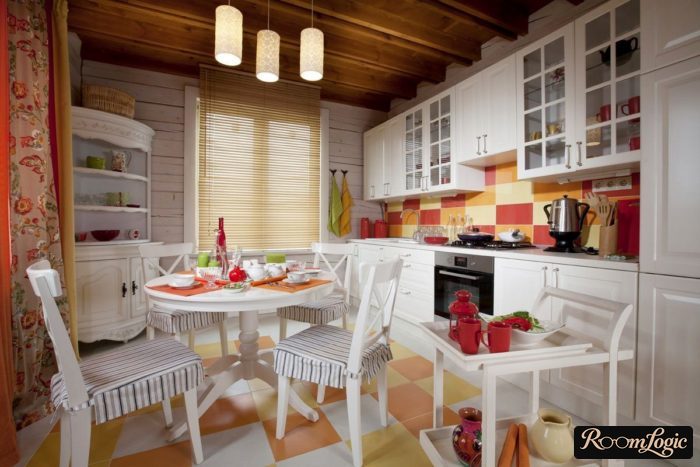
Provence with loft elements, where walls of the original material remain exposed (brick, block, or logs), is acceptable too.
Provence style is ideal for a kitchen remodel that is not being done from scratch (a cosmetic remodel). Otherwise, too much will have to be imitated. That costs money and loses authenticity.
I do not like traditional design because of its pretentiousness and kitsch, its imitation and “fakeness.” But Provence is not about showing that you have money. It is about taste and balance. I hope I gave you at least a couple of interesting ideas.
Do not be afraid of inexpensive things. Be afraid of colors that are too bright and saturated. And good luck with your remodel!