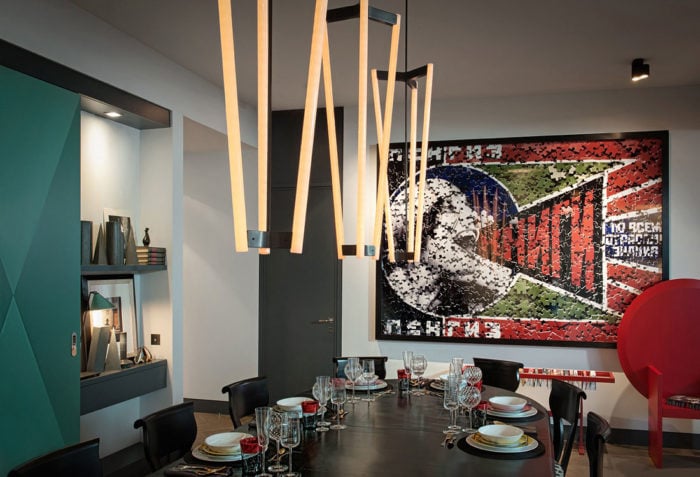
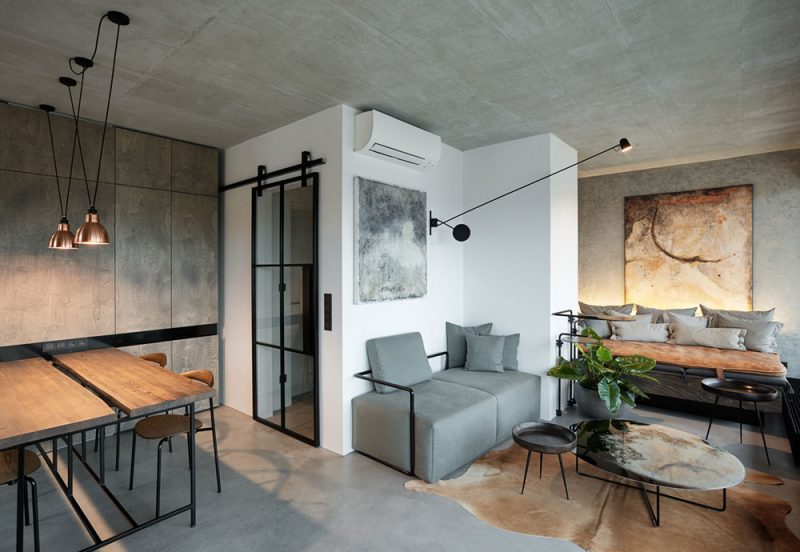
Below are nine interesting ceiling ideas that we will discuss:
- The basic option is a flat matte-white ceiling without complications. There should be a specific reason to make it more complicated, and you should understand that reason clearly.
- The larger the room and the more irregular its shape, the more complicated the ceiling can be. Multilevel ceilings look absurd in long rectangular rooms.
- The more complicated the finishes and furniture, and the more details and attention-grabbing places they have, the simpler the ceilings should be. That is why, in classic styles, most of the ceiling is almost always simply flat.
- Every niche, step, and so on should use only straight 90-degree angles.
- The vertical faces of steps in a two-level ceiling should be about 2.5 inches high in a room with a 9-foot ceiling so they look contemporary.
- If you install lighting along a painted surface, there should be an overlapping light source from the opposite side. Otherwise, the lengthwise grazing light will expose uneven finishes, and even a perfectly made ceiling will look sloppy.
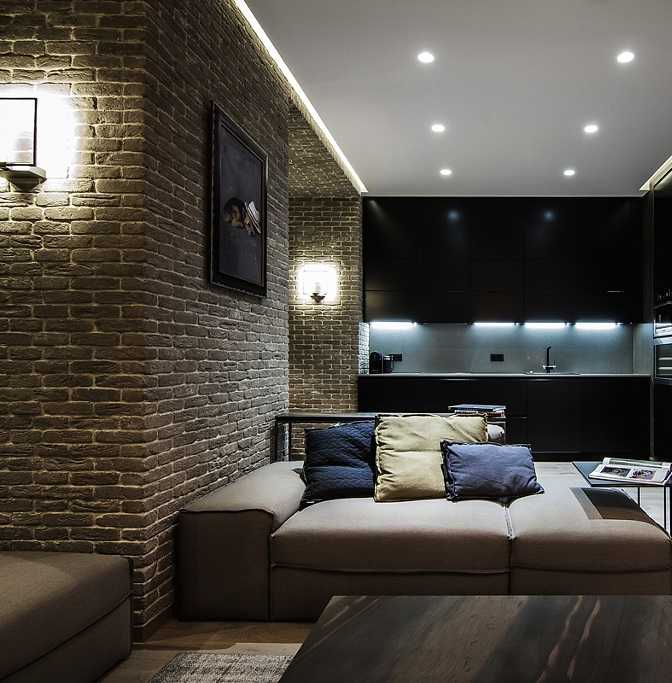
- Contemporary lighting is placed either around the perimeter, as a floating ceiling, or built into the main plane. Different ceiling levels are gradually becoming less common.
- If the idea of decorating the ceiling comes from a fear that it will be “boring,” it is often better to add contemporary light fixtures than to complicate the finish.
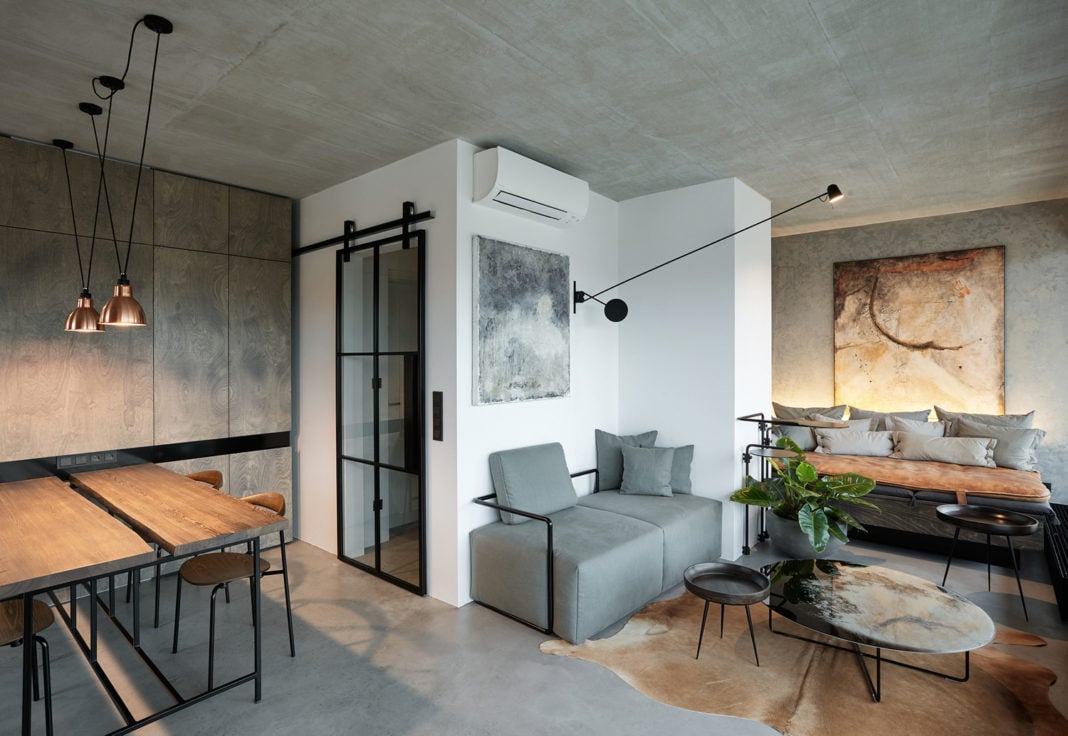
- An interesting idea: decorative plaster can also be applied to ceiling drywall, or bare concrete can be left exposed. That is where lighting looks great.
Choosing a Finish
Choosing the Ceiling Material
There are three main criteria for choosing a ceiling type:
- Budget
- Design style
- Height of the unfinished ceiling
Dropped or framed drywall ceilings give the most freedom, but they are also the most expensive. They can take up as much as 35 percent of all finish labor. Stretch ceilings cost much less in markets where installers are common, but they have limitations; in the U.S., they are a niche product. If you have high ceilings and a contemporary style, a current option is to leave at least part of the ceiling unfinished. If you have not seen this before, it may seem wild. We hope the photos change your mind.
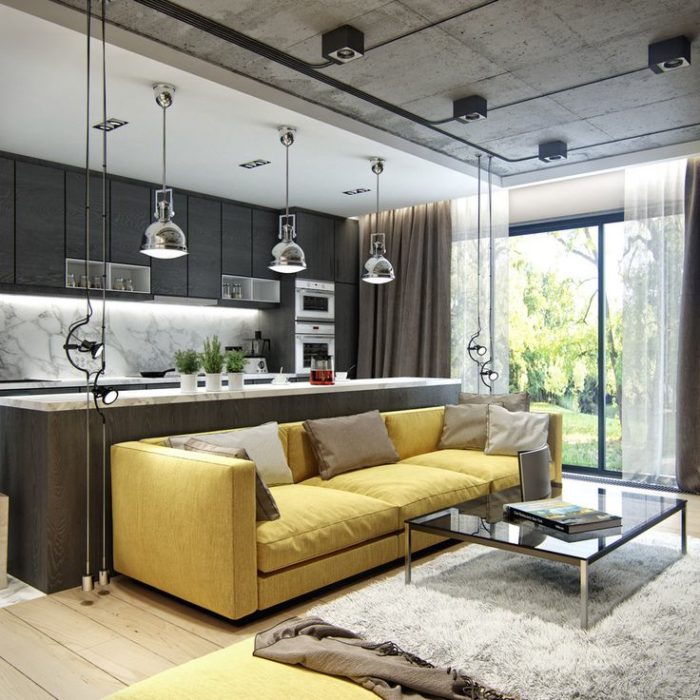
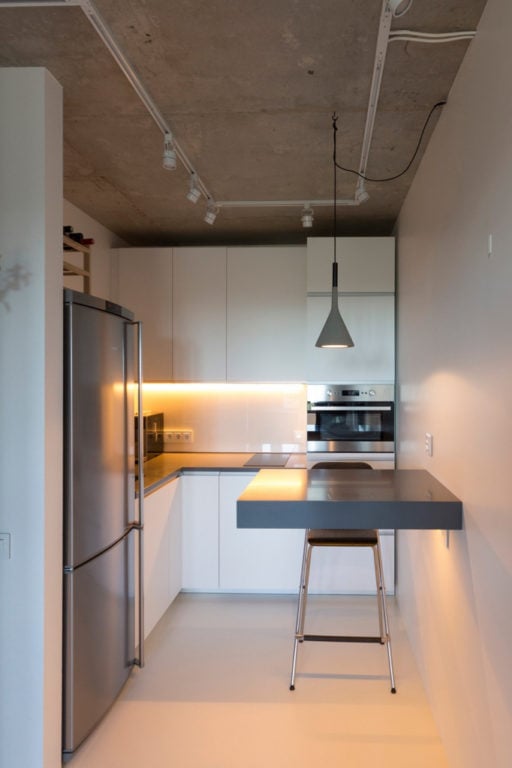
Simple or Complicated
Once you have roughly chosen the ceiling type, you need to answer the most important question: how complicated a ceiling do you need? The first thing you absolutely have to understand is that a flat white ceiling is beautiful.
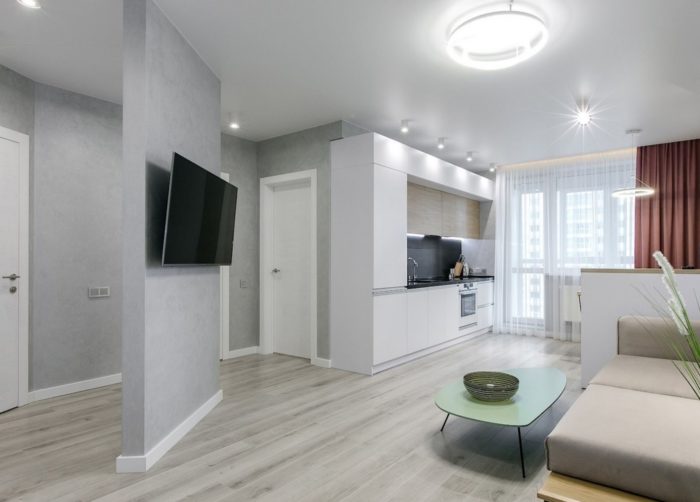
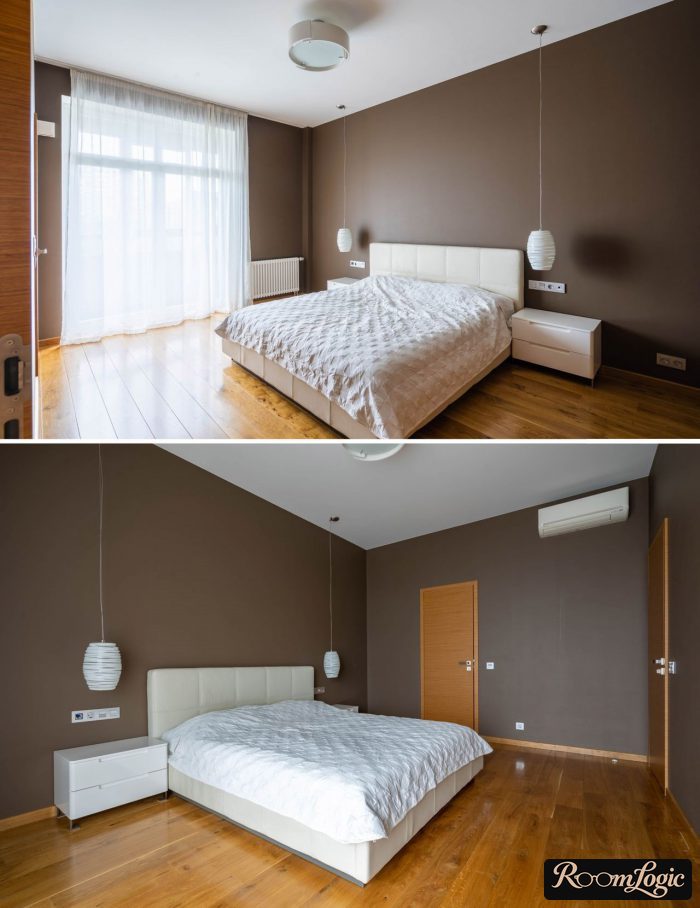
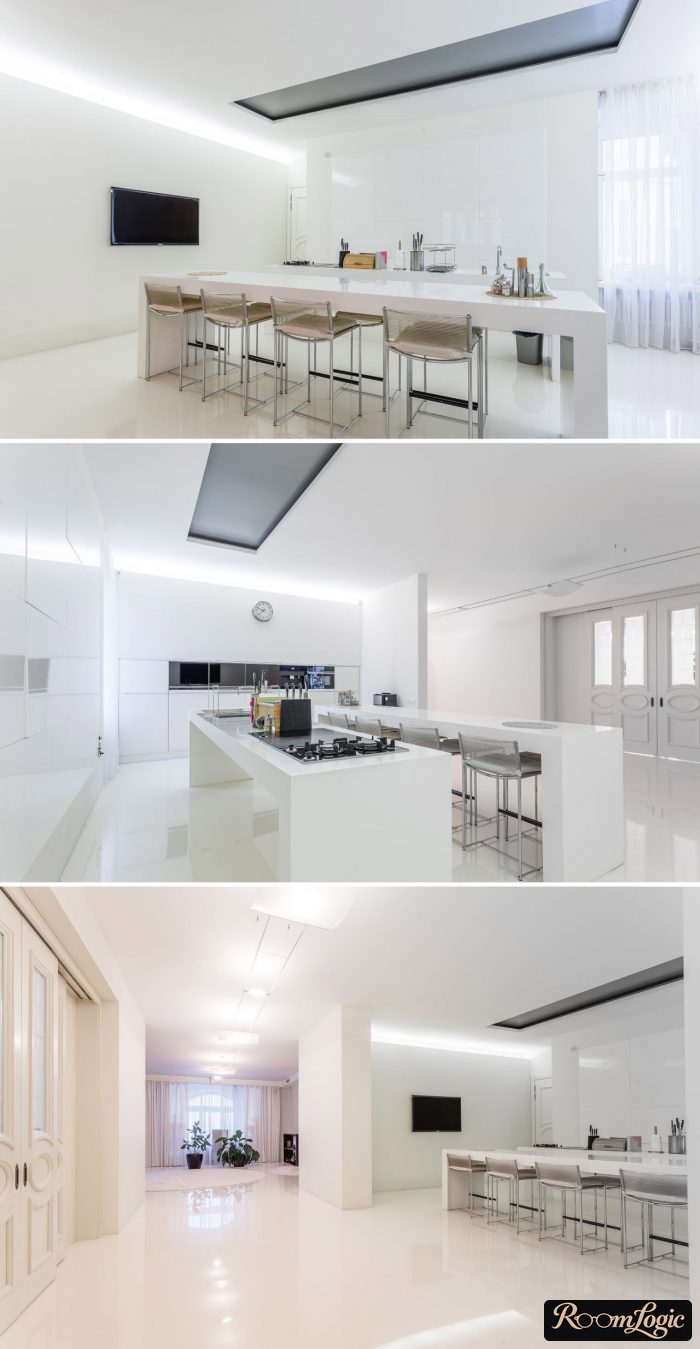
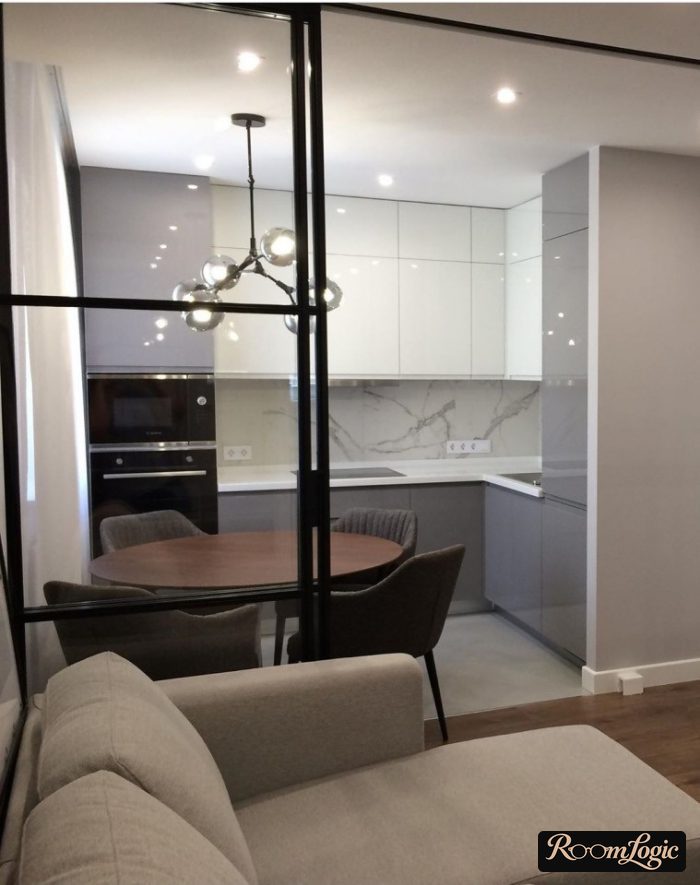
A flat white ceiling is beautiful.
In other words, ceiling design is not about complexity. It is about balance and compatibility.
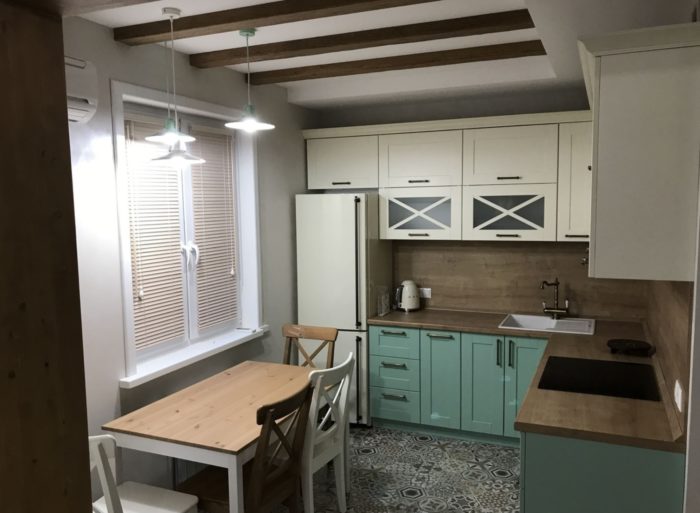
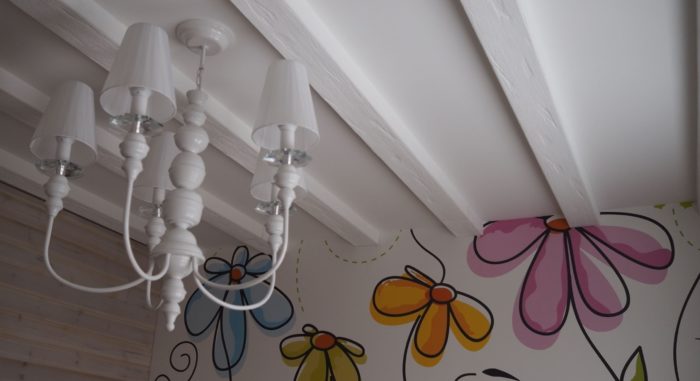
This is easy to describe with two photos. For now, both rooms look decent, but the first one breaks a pile of rules: flowing lines on the ceiling, unnecessary steps, and every wall covered with obvious accent wallpaper. Everything looks good only until appliances and furniture appear. In a classic style, that furniture will clearly not be simple. Even now, the contrasting pattern looks absurd on a small wall broken up by a window, radiator, and curtains. The room in the second photo is done properly.
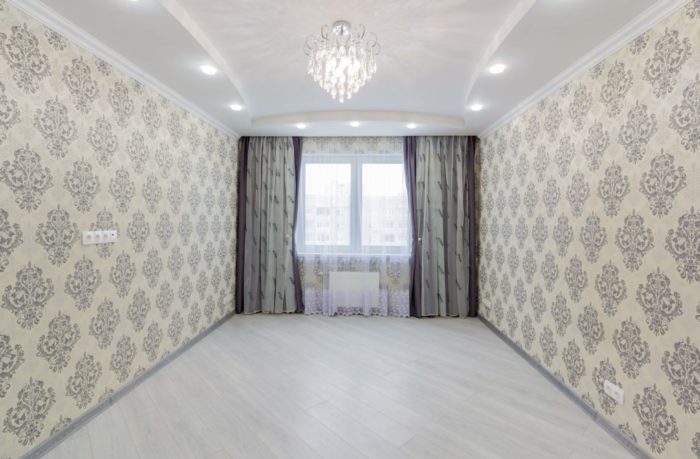
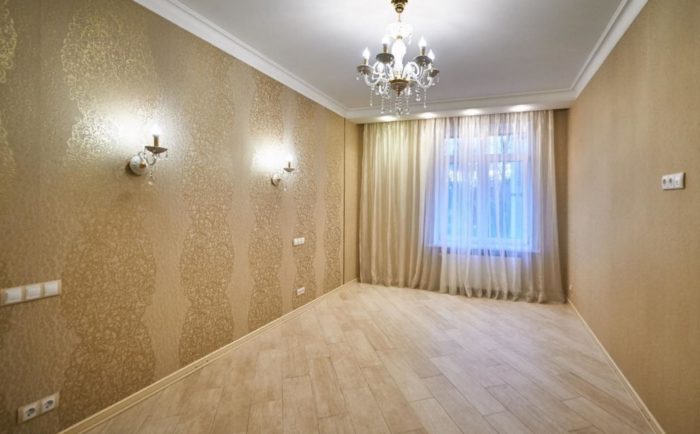
We already wrote about breaking these rules and making tasteless, overly complicated entryway ceilings. Be sure to read it; the first part of that article is sarcasm.
Ceiling complexity is not only different levels and lighting. Gloss and any color other than white are complications too. Here are several photos of inappropriate ceilings that are hopelessly behind the times:
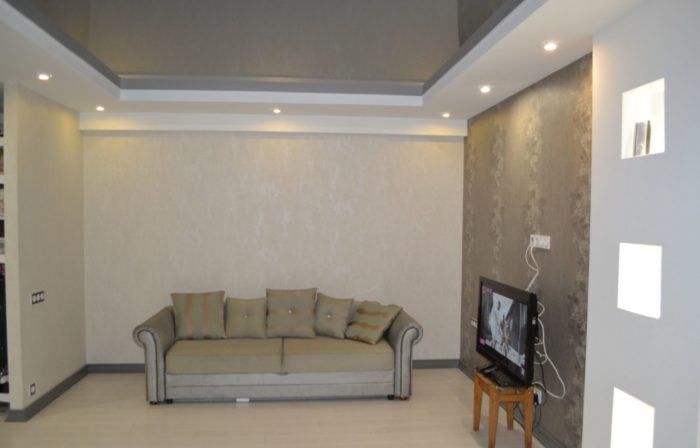
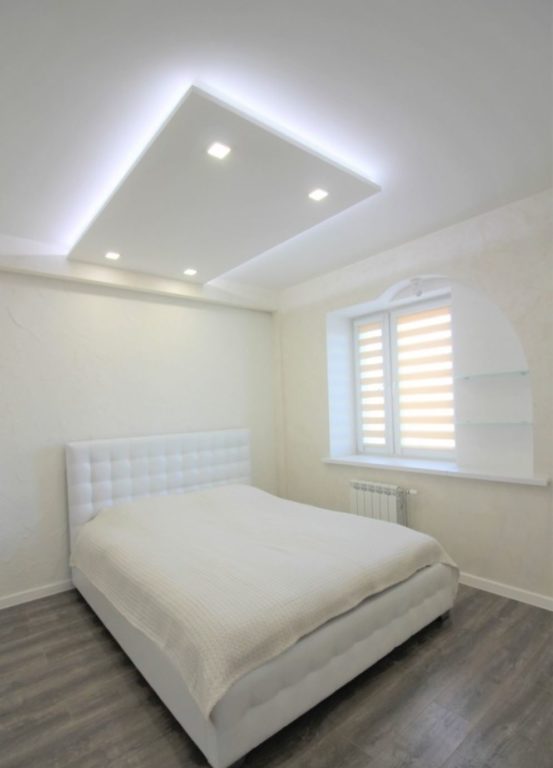
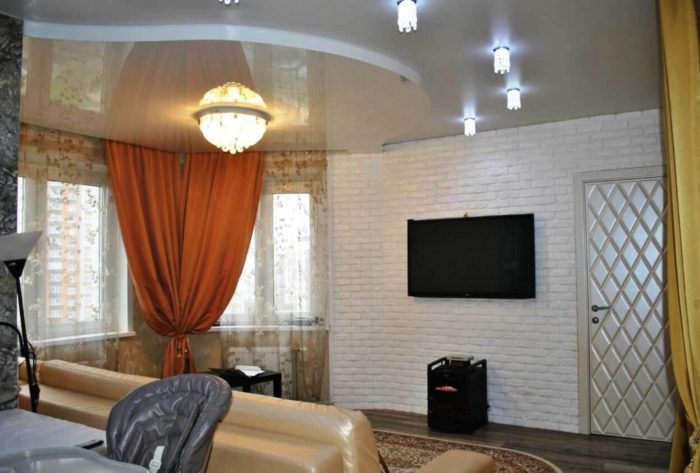
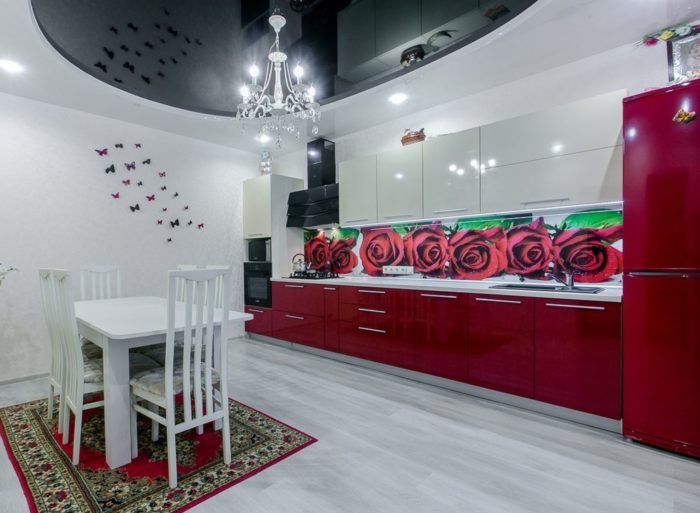
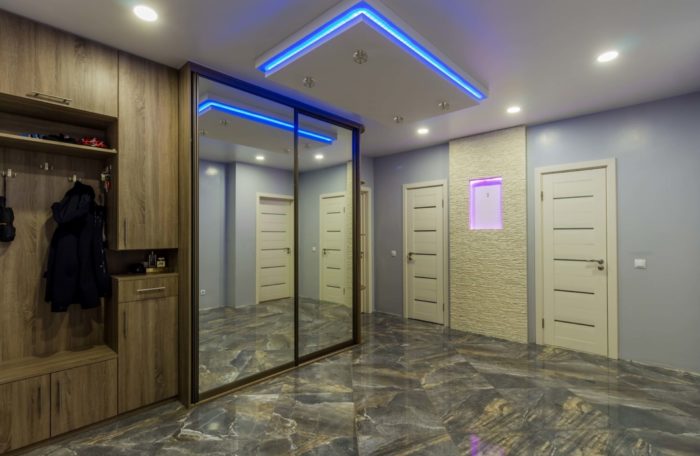
That does not mean every structure or glossy finish is bad. You simply need to feel it precisely, which makes it a risk. Here are several successful but risky ceilings:
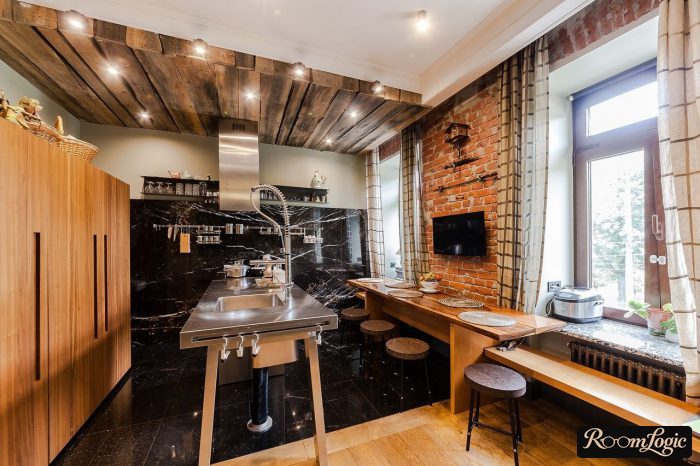
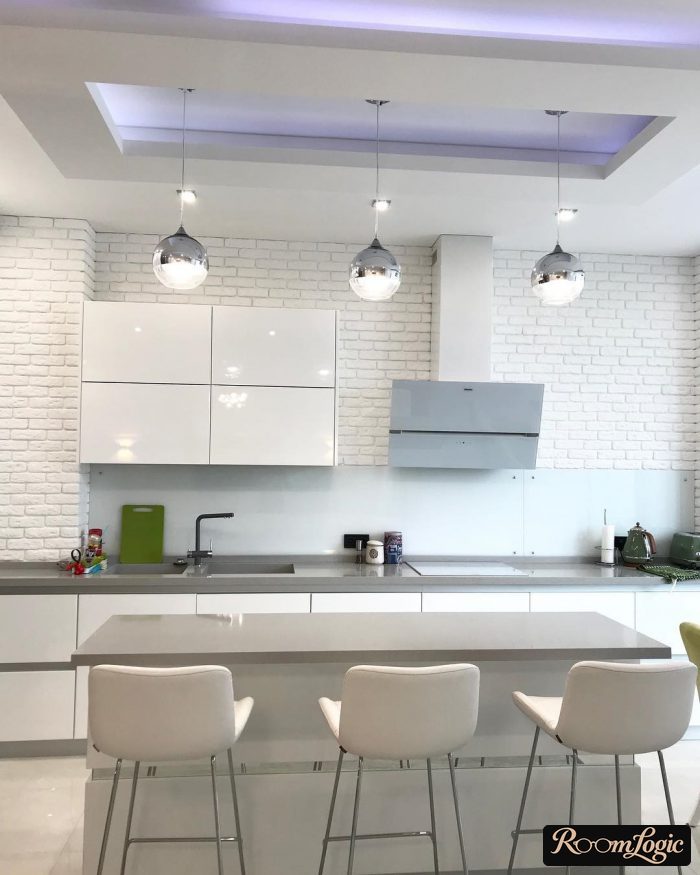
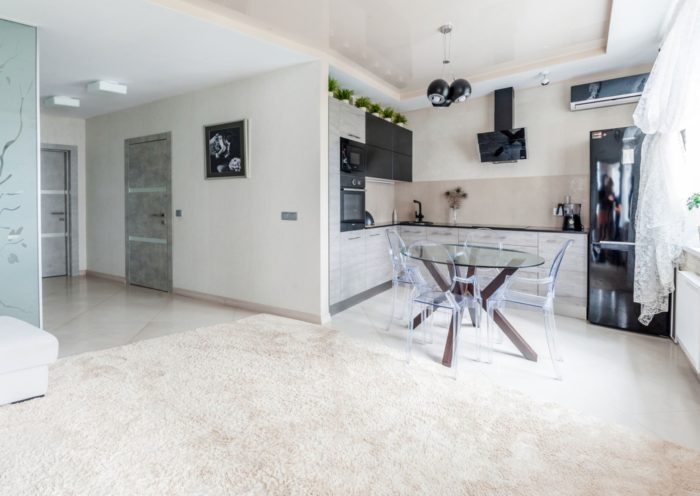
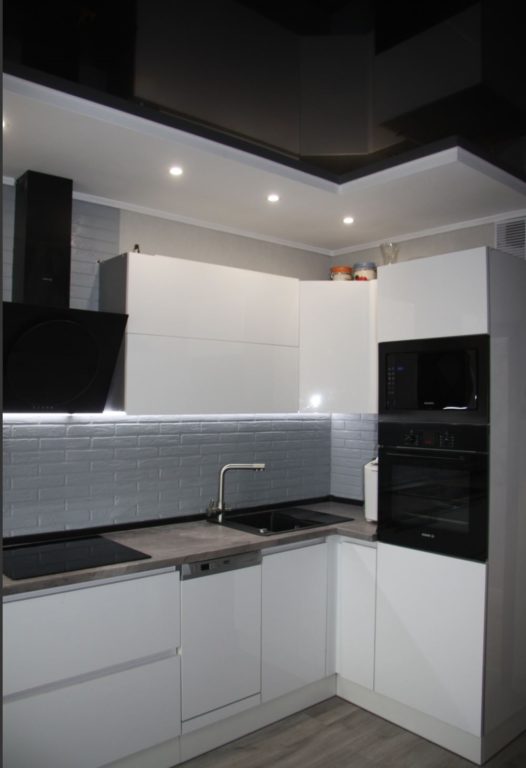
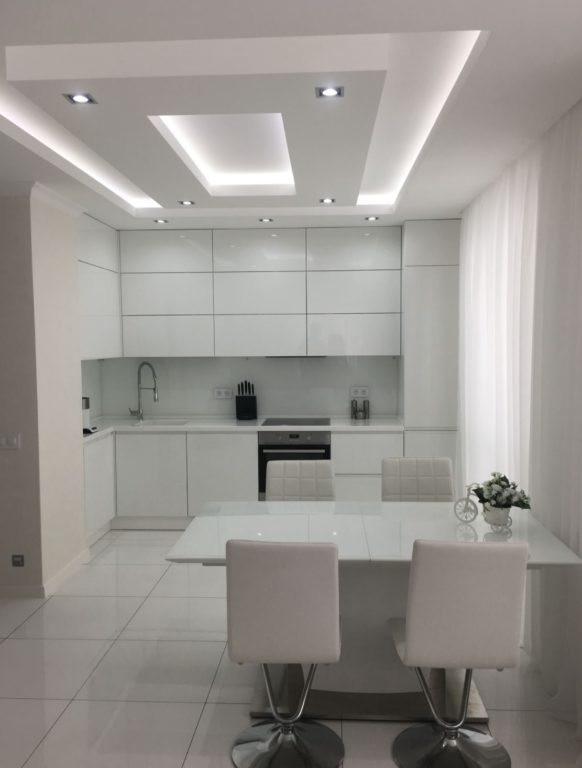
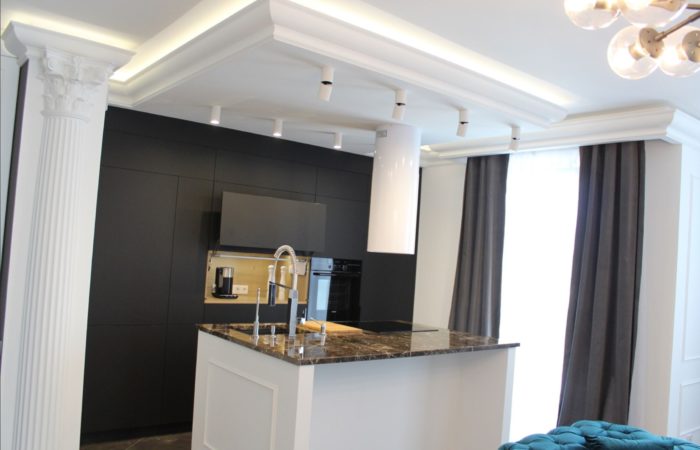
And do not forget the beauty of ceilings that are simply flat:
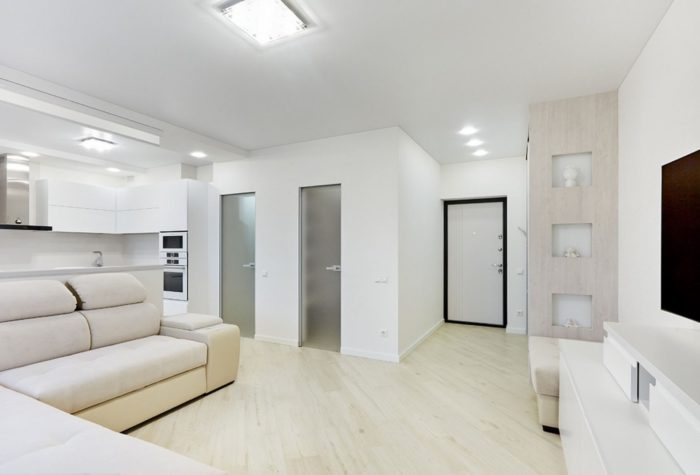
Drywall Ceilings
Advantages of a Drywall Ceiling
Drywall is where the word “design” can be used in the context of ceiling finishes. This option has practically no limits. You can finish huge areas without visible joints and seams, make steps, paint sections different colors, or cover them with decorative plaster. The only limits are your imagination and budget.
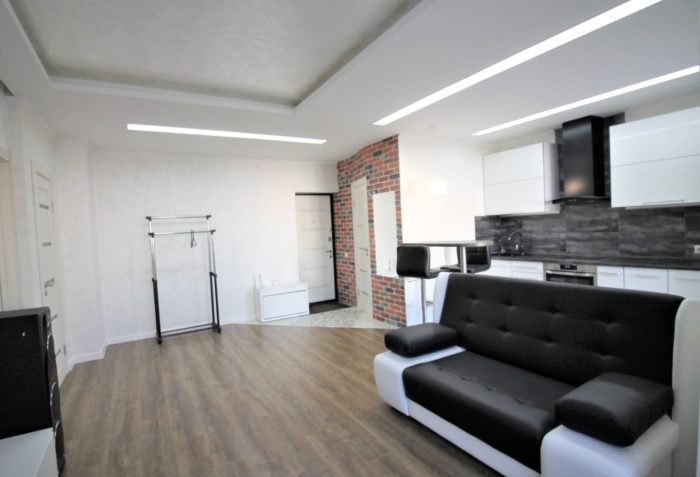
There are many kinds of suspended ceilings, but in apartments this usually means a dropped drywall ceiling. The drywall is attached to metal framing, which creates a buffer between the structure and the visible ceiling. It also gives room to hide wiring. In a typical U.S. home, the basic flat ceiling is already painted drywall attached to framing, so a dropped layer makes sense only when you need that cavity or a designed shape. Can ordinary flat paint let you build in a profile like this?
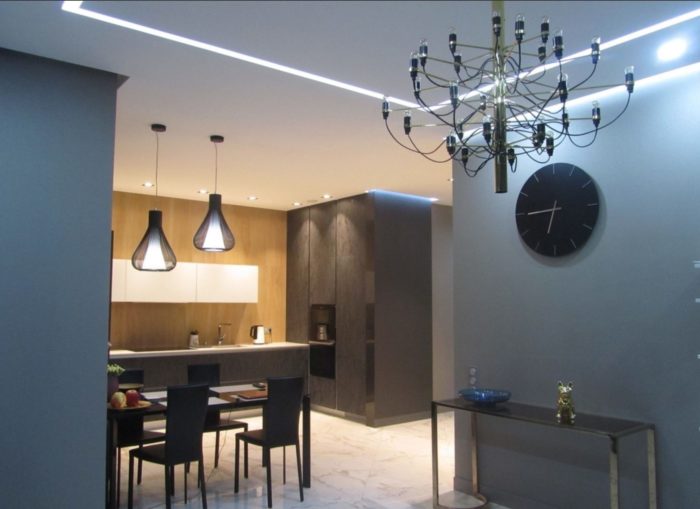
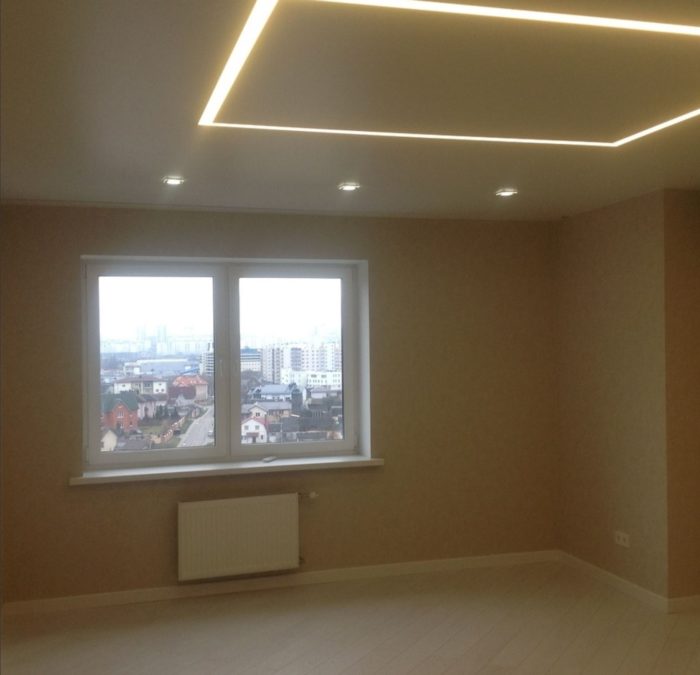
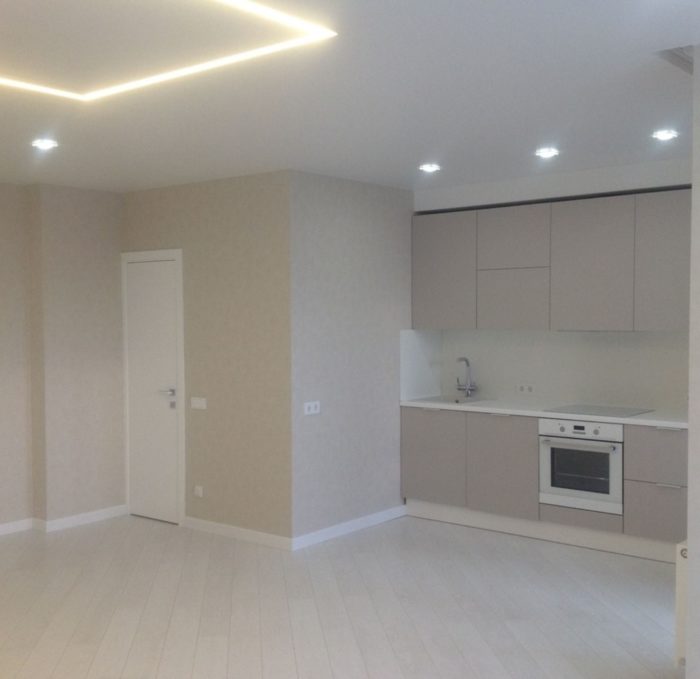
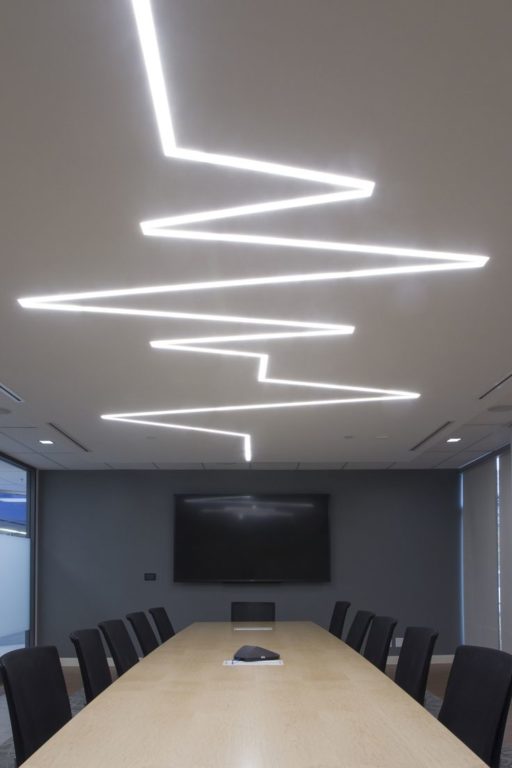
For complex ceiling shapes and concealed services, dropped drywall beats a flat ceiling.
Someone may think this will eat up the room height. In practice, the minimum drop can be only about 1.5 inches, which you simply will not notice.
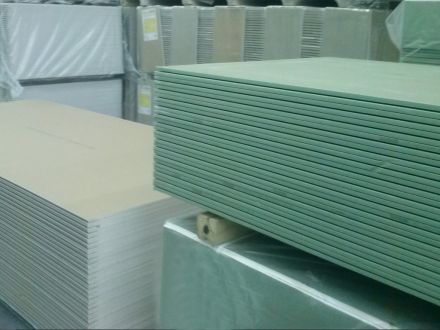
Drywall is afraid of moisture, but special moisture-resistant panels exist; they are greenish in the photo. The price difference used to be substantial and is now much smaller. That is why it can make sense to use the moisture-resistant version even in an ordinary living room.
Drywall Ceiling Design
Although drywall ceilings have practically no technical limits on complexity, that complexity should still be limited. Too many projections or niches can turn the design into a tasteless mess from the 1990s. Contemporary design does not use flowing lines and curves on the ceiling at all. Accept this as an axiom. Below is a photo of what not to do. When someone makes a ceiling like this, a designer cries somewhere.
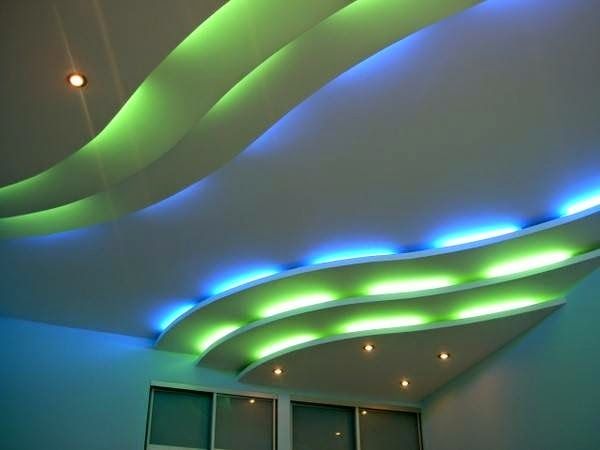
Never, do you hear me, never make flowing curves in a suspended drywall ceiling.
If you have an ordinary apartment with rectangular rooms up to about 215 square feet, you probably do not need any additional drywall ceiling decoration at all. Use a flat matte-white ceiling plus white spotlights or hidden fixtures, without any chrome details, so they are as unobtrusive as possible.
If you have a large open-plan kitchen and living room with a complicated shape, you can make a step and add some lighting tied to the zones. But again, this is only an option.
Remember that lighting looks great on an uneven surface such as decorative plaster, brick, or concrete. It reveals the texture of the material.
Lighting on a painted white ceiling will reveal only imperfect paint, and it is always imperfect; you simply see it only under side lighting. To avoid this, you need opposing light from the other side of the ceiling or light aimed upward from the wall opposite the lighting.
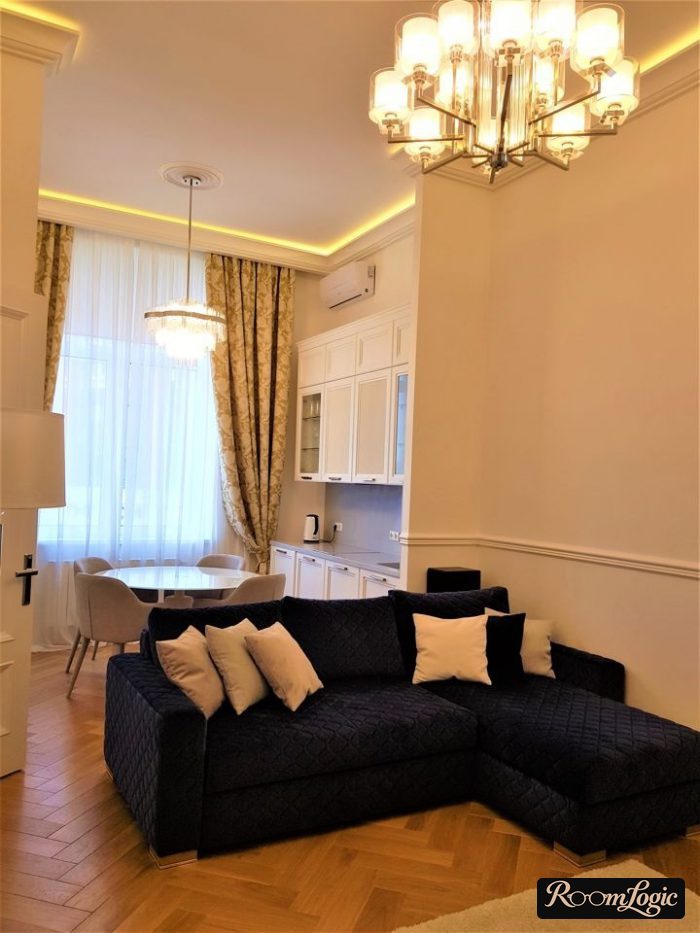
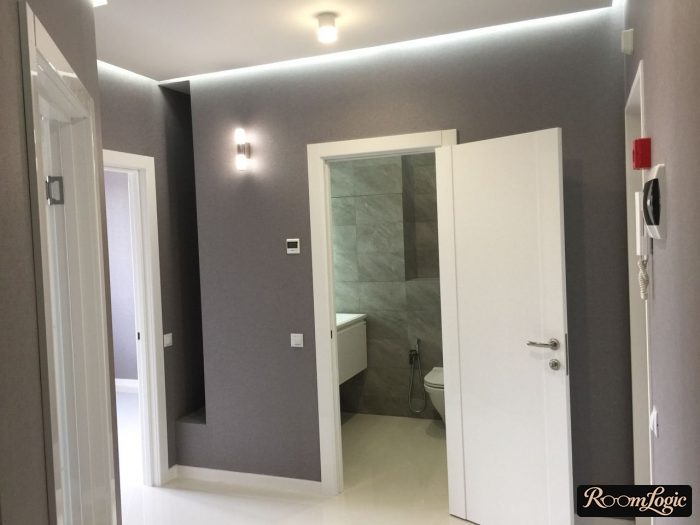
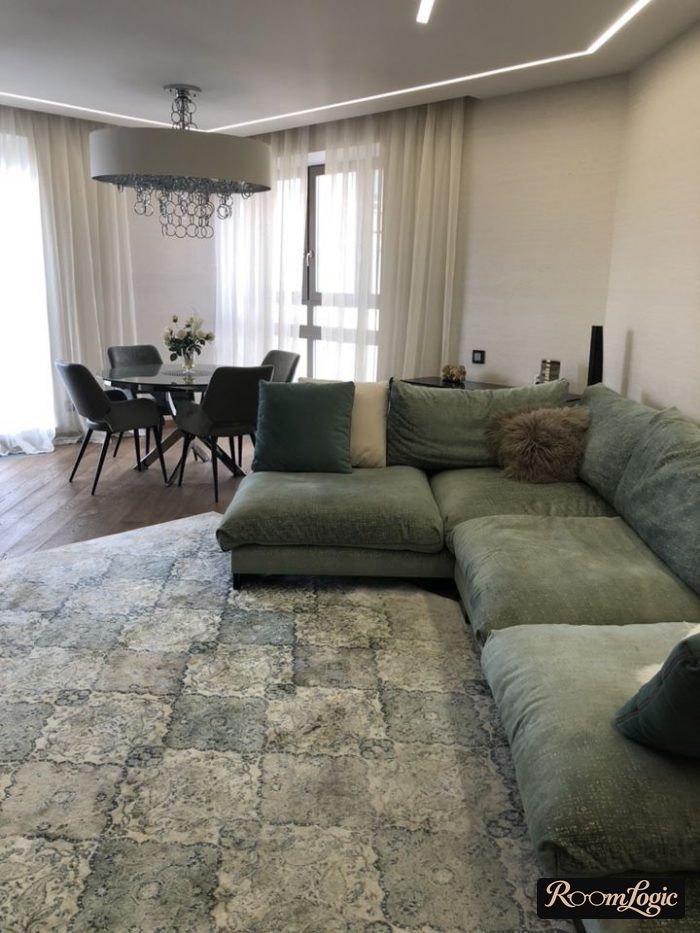
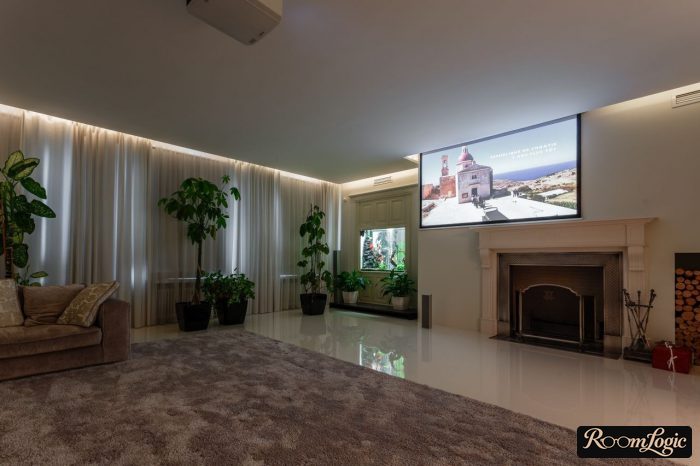
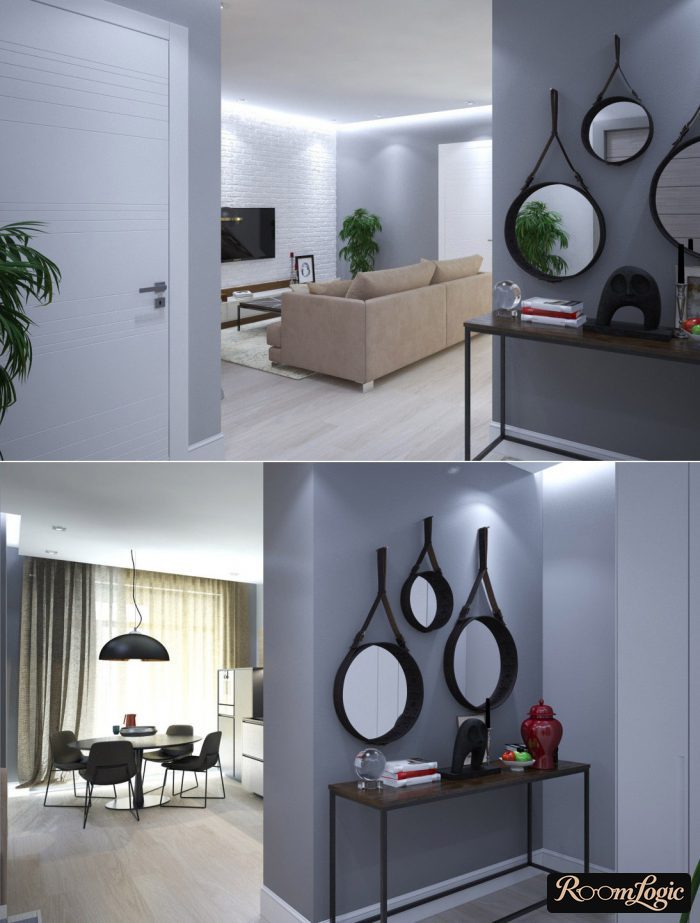
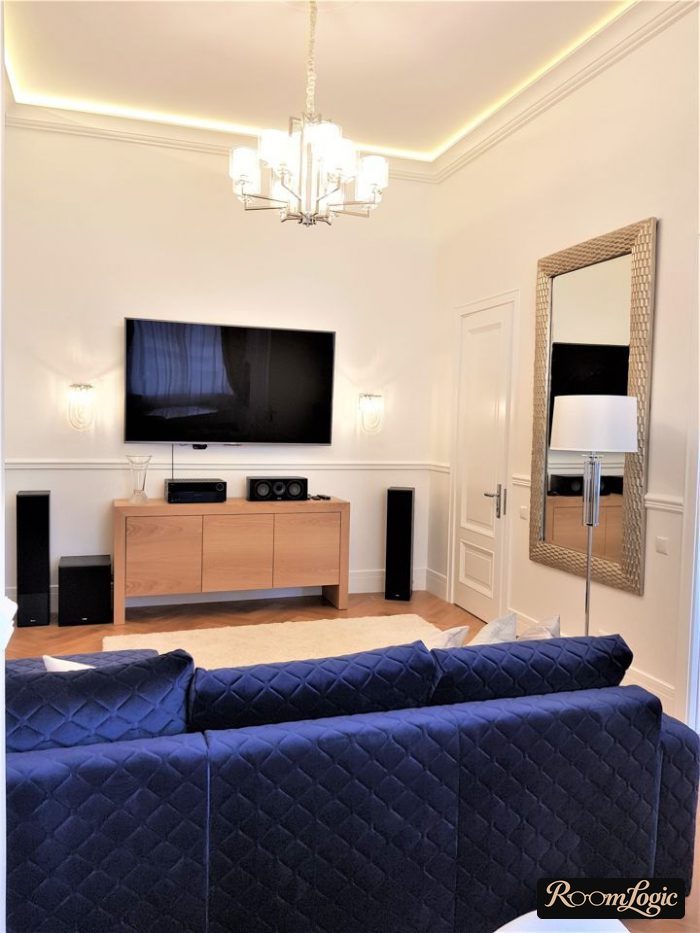
You can make a two-level drywall ceiling without lighting, simply with a step. Keep in mind that only 90-degree corners look contemporary.
The height of the face of the step depends on the room size. In ordinary apartments and rooms up to about 375 square feet with 9-foot ceilings, a drywall step face of around 2.5 inches looks natural. If the ceilings are higher, it can be increased.
Light fixtures are an important part of ceiling design. Maybe you do not need a two-level ceiling. Maybe you simply need stylish pendant lights.
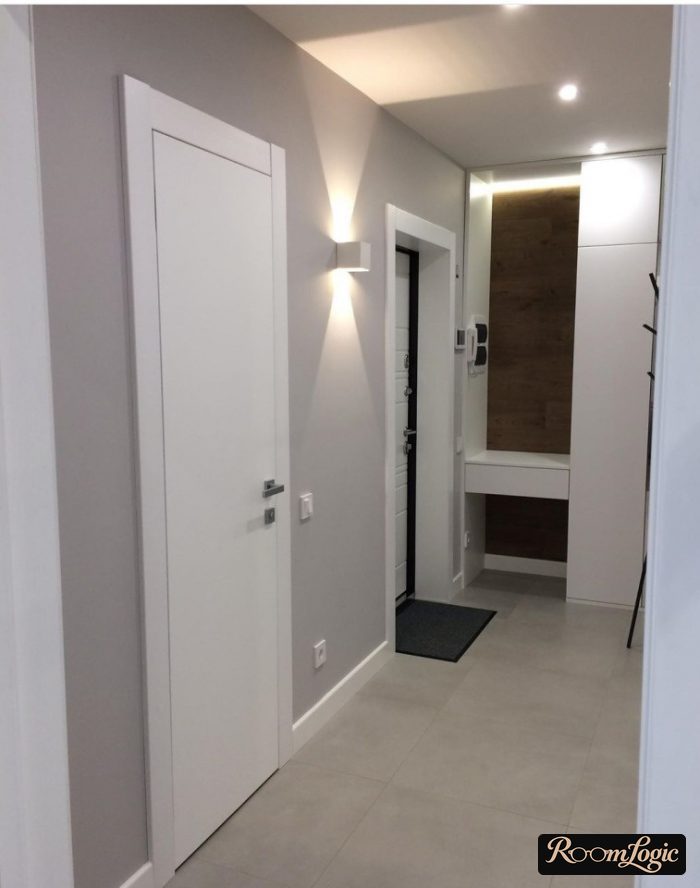
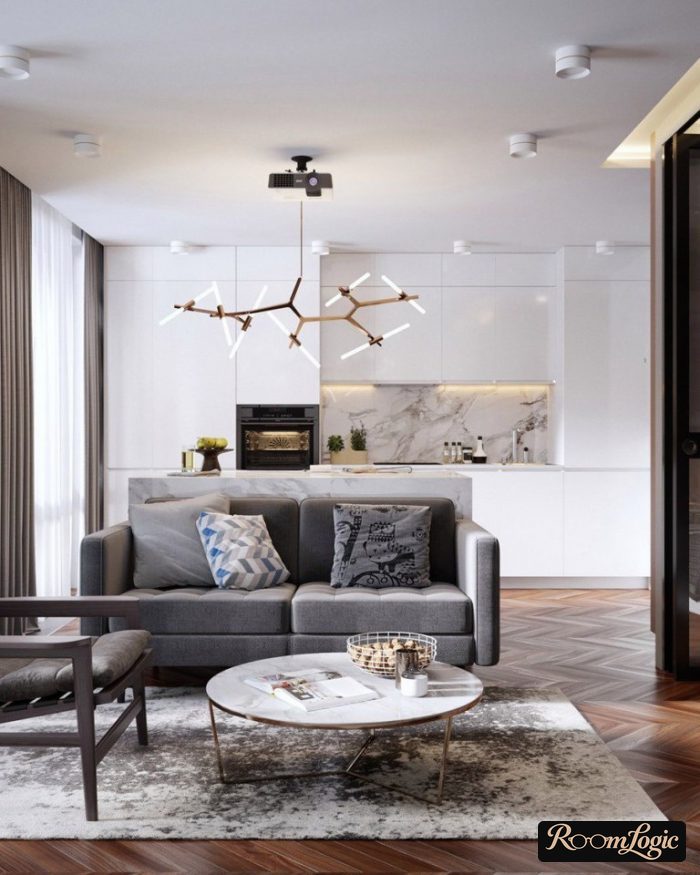
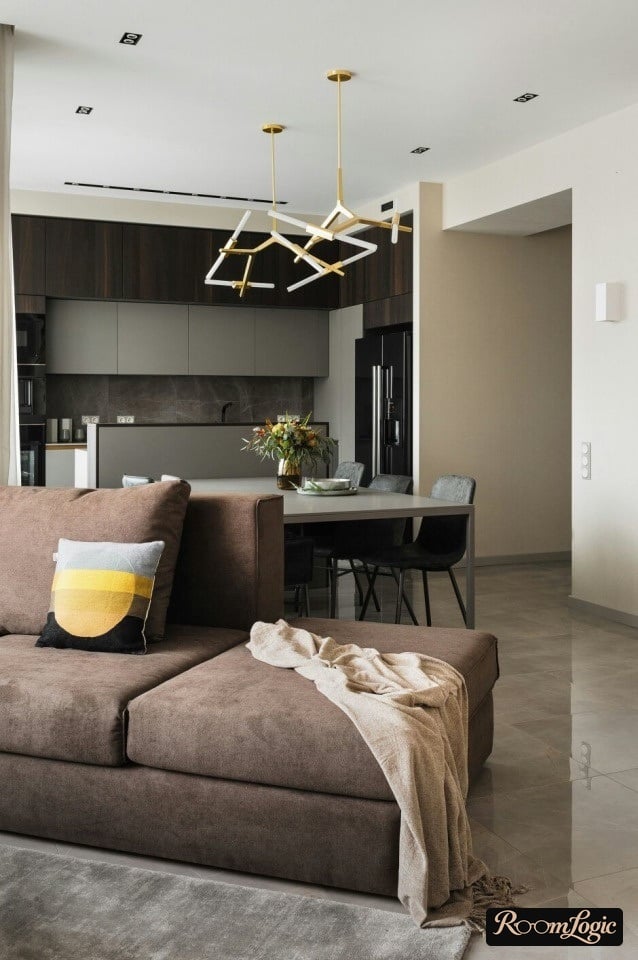
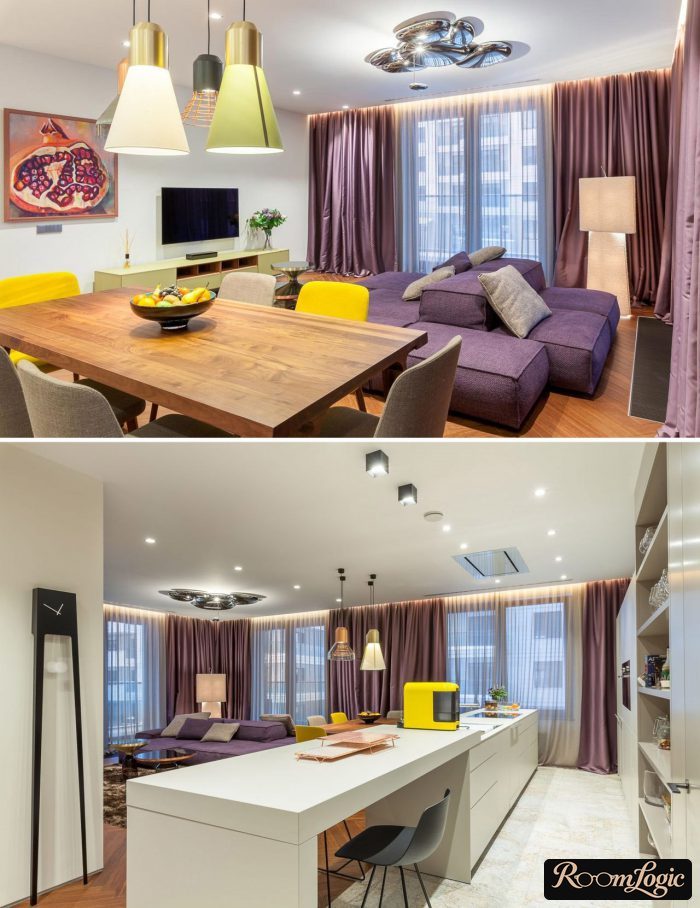
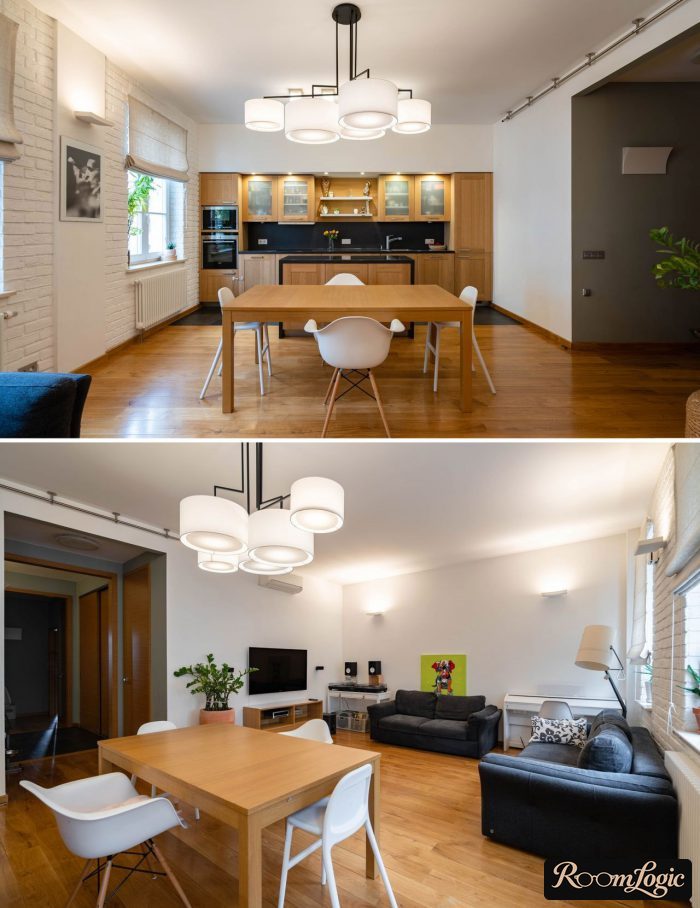
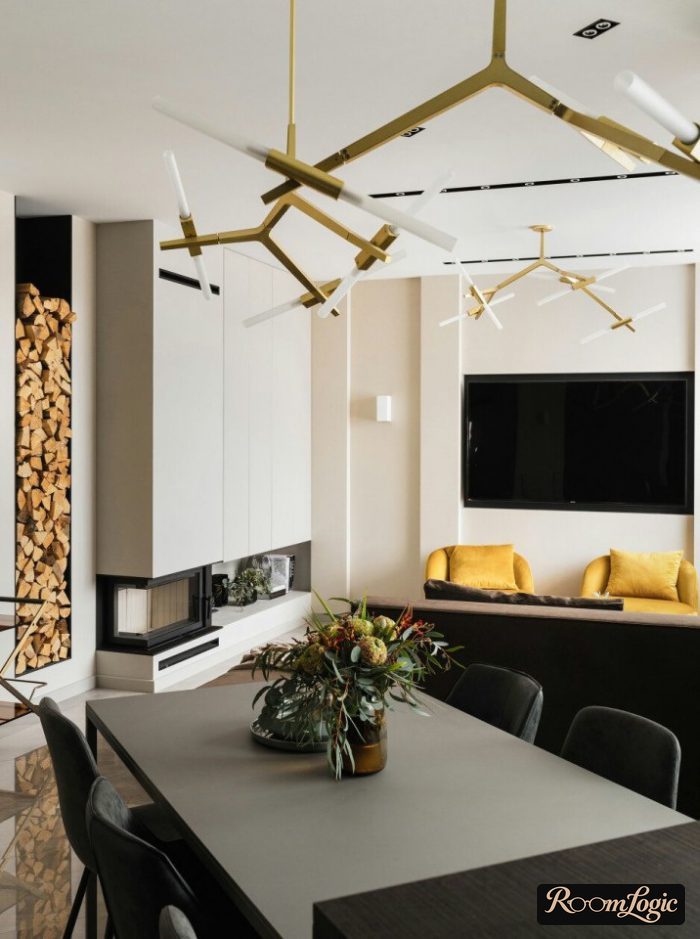
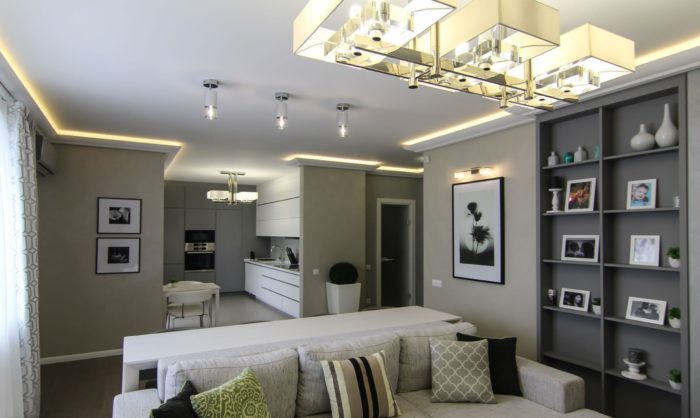
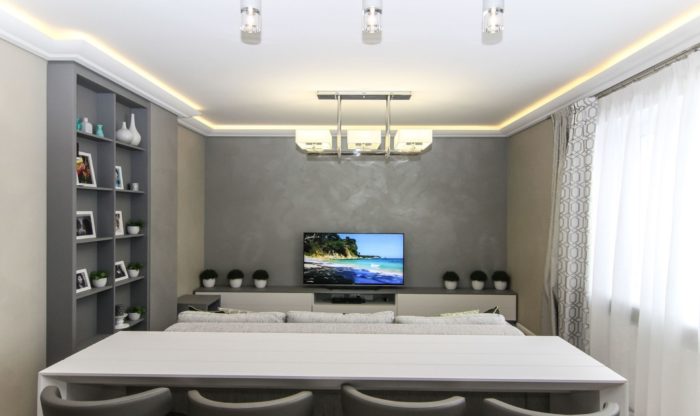
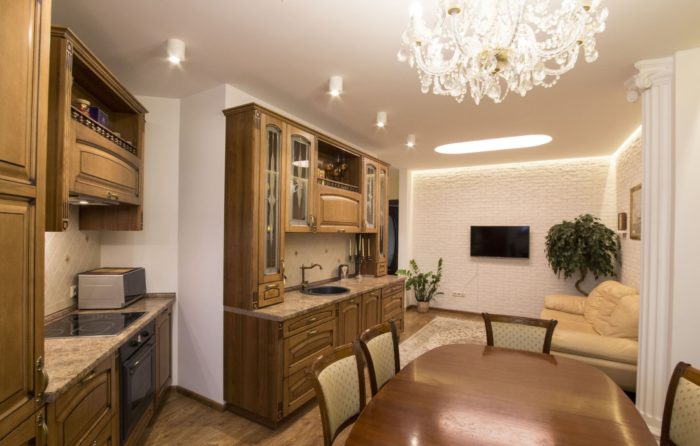
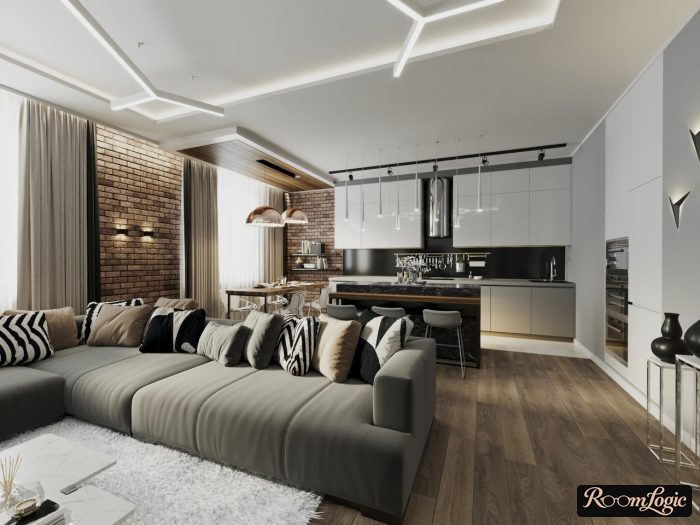
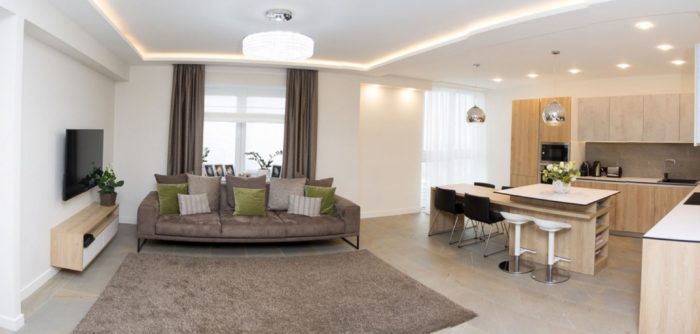
If you have no budget limits, drywall is your choice. If you do have limits, you can consider a stretch ceiling where local installation is available.
Stretch Ceilings
Advantages and One Disadvantage
Older budget ceiling finishes included slatted ceilings, PVC siding, wallpaper on the ceiling, and polystyrene ceiling tiles. Their advantages were low cost and simple installation. Their disadvantages were a terrible appearance and questions about the environmental and fire safety of the materials. In markets where stretch ceilings are common, stretch ceilings made these other options pointless.
Because material costs fell and installers competed, stretch ceilings became so inexpensive in those markets that the other budget options died. Unlike them, stretch ceilings look stylish and do not look cheap. Their disadvantages are visible seams over a large area and the edge track. You will stop noticing both within a month of moving in.
A stretch ceiling in a bathroom is an option with almost no disadvantages where the system is available.
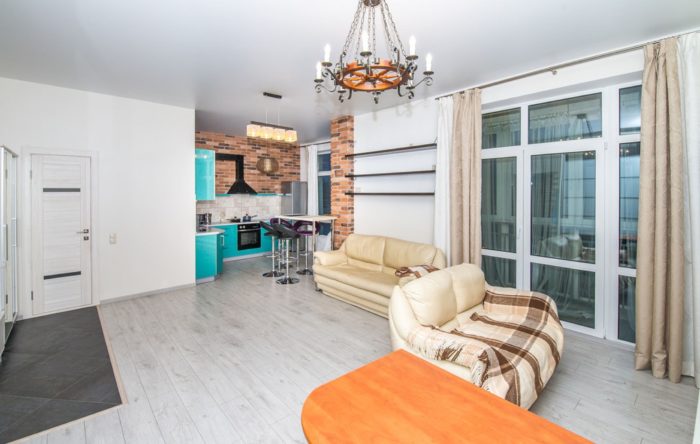
The systems can be combined. Most of the ceiling is stretch membrane joined to a drywall step:
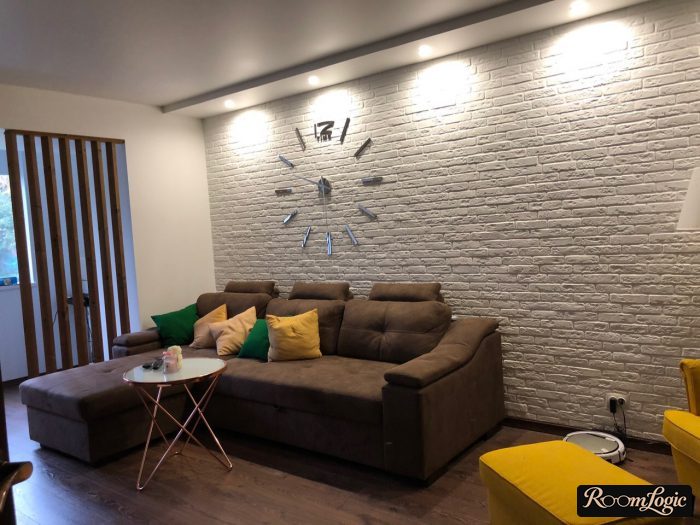
The two options with fundamentally different prices are fabric and PVC ceilings. Fabric is considered more environmentally friendly but costs several times more. There is no point discussing fabric ceilings in detail because their price is roughly equal to a suspended drywall ceiling. In that case, choose drywall.
Stretch Ceiling Design
There are three design options:
- Glossy
- Satin
- Matte
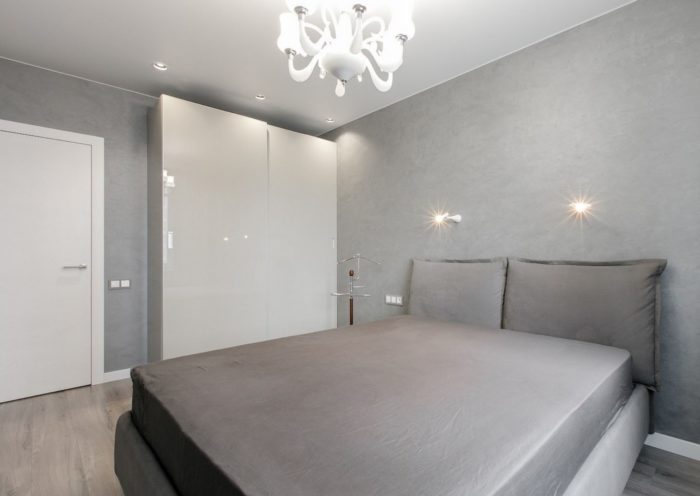
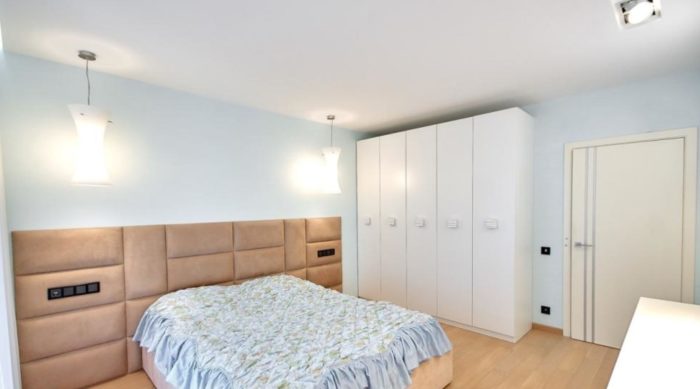
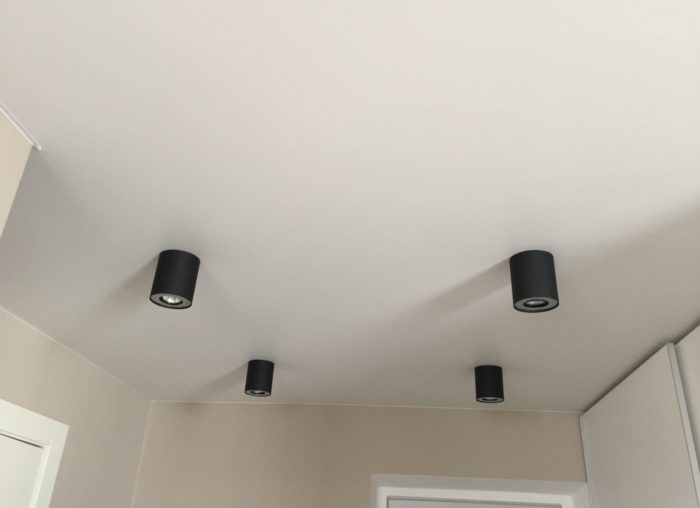
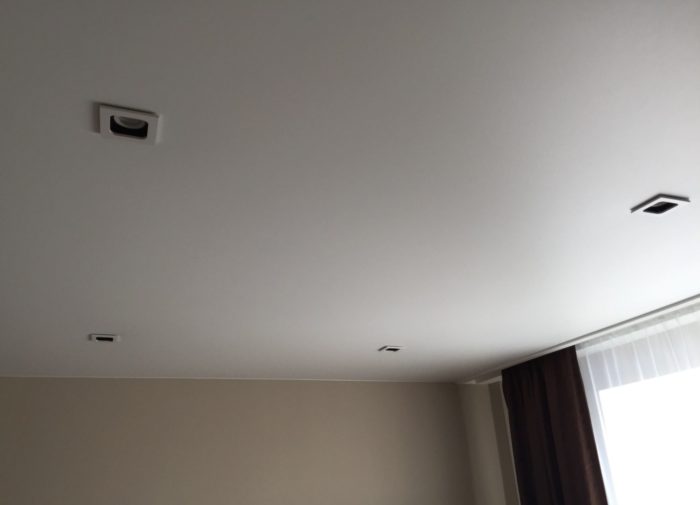
Many people choose the first option, and this is a serious mistake. Glossy stretch ceilings really can visually increase the height and add light to the room, blah blah. Yes, they can look stylish, but for some reason the result is usually the opposite: the gloss ruins everything. If you choose one, understand that you are taking a risk. The photo below shows a standard glossy ceiling that simply screams, “Look at me, I am a stretch ceiling!” The photos show, in order, a glossy ceiling, a satin ceiling, and three matte stretch ceilings:
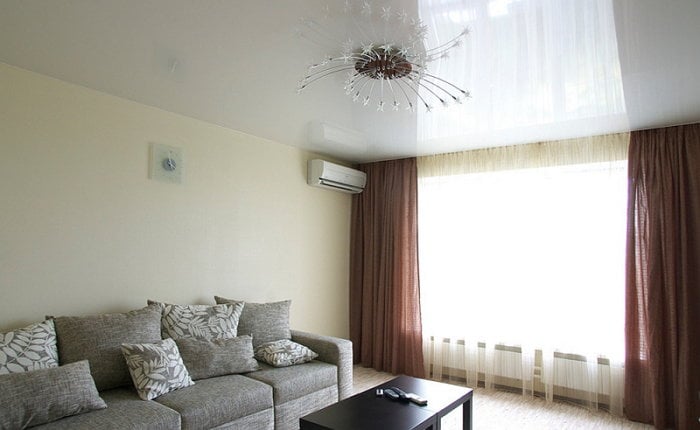
Glossy ceilings are a risky option.
Satin is already better. Matte is the reliable ideal. If not for the edge tracks, matte stretch ceilings would be almost impossible to distinguish from painted or drywall ceilings.
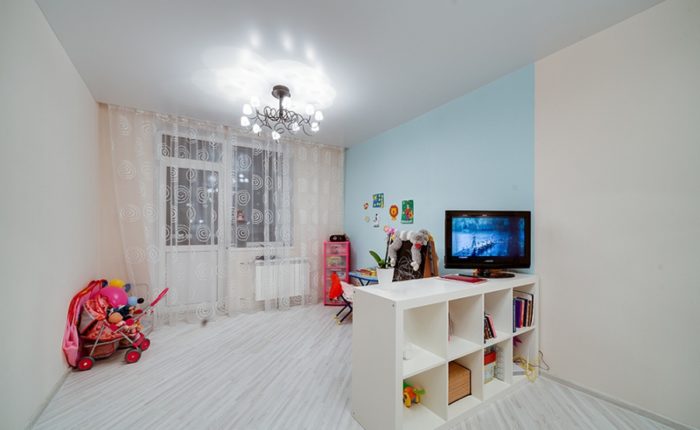
Colored stretch ceilings belong in the same category. This urge to choose glossy and colored stretch ceilings comes from every option costing the same. Greed takes over. If they cost the same but are so striking, why not? Because design is the ability to combine things and place accents, not mix a salad of colorful details.
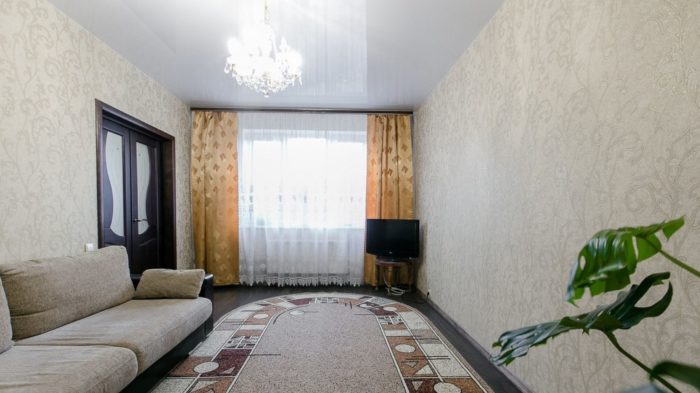
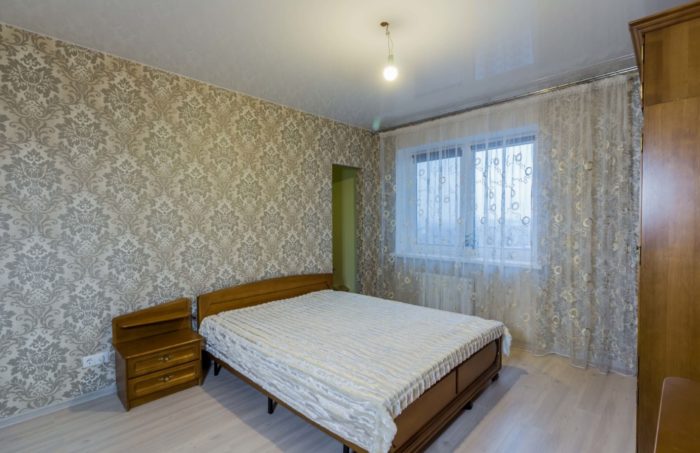
Here are several photo examples where replacing the stretch ceiling with a matte-white one would make the room many times more stylish:
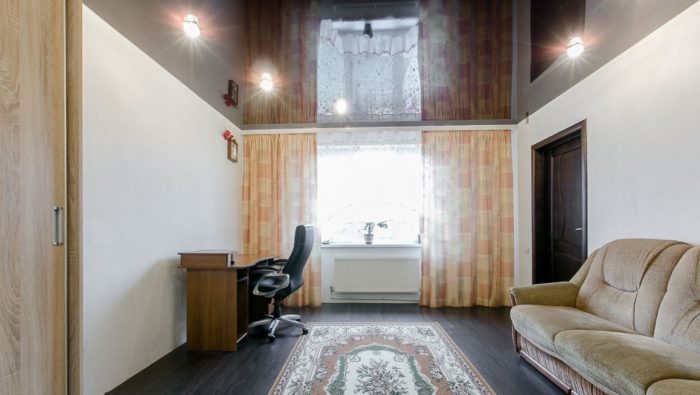
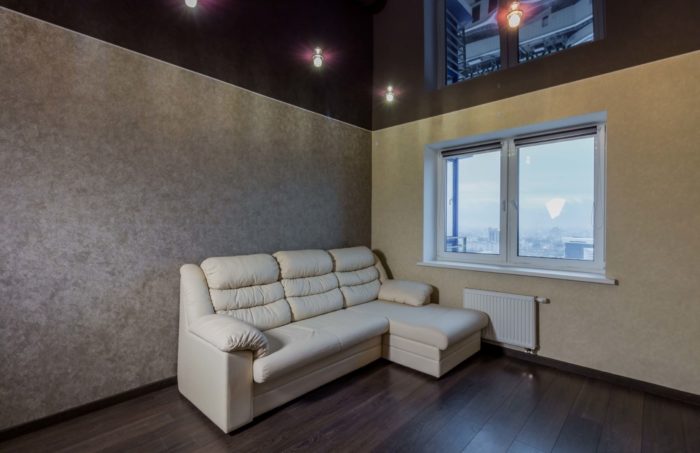
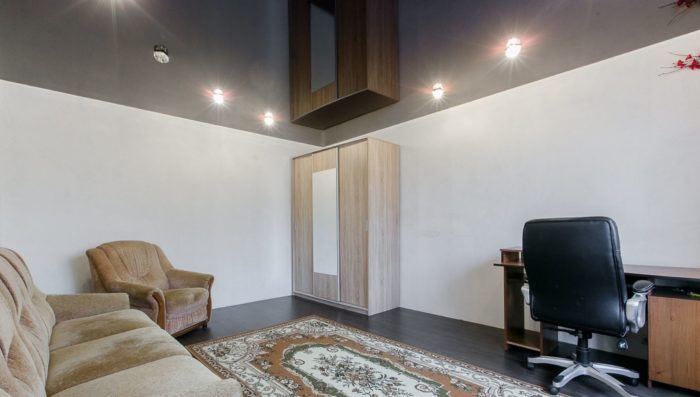
Few people know that stretch ceilings can also be multilevel. The principle is the same: a frame made of profiles, steps and niches made from drywall, and stretch membrane across the main plane. This can save a decent amount of money and looks no different from drywall options, as long as it is not glossy.
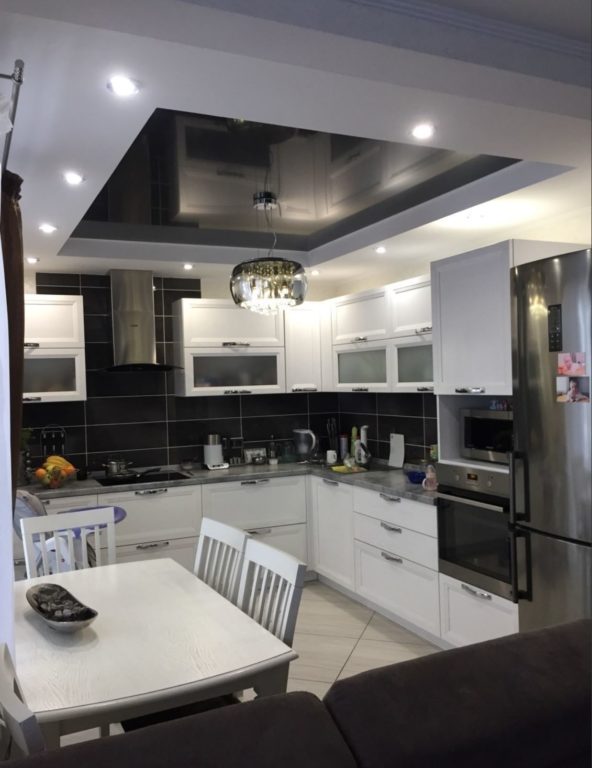
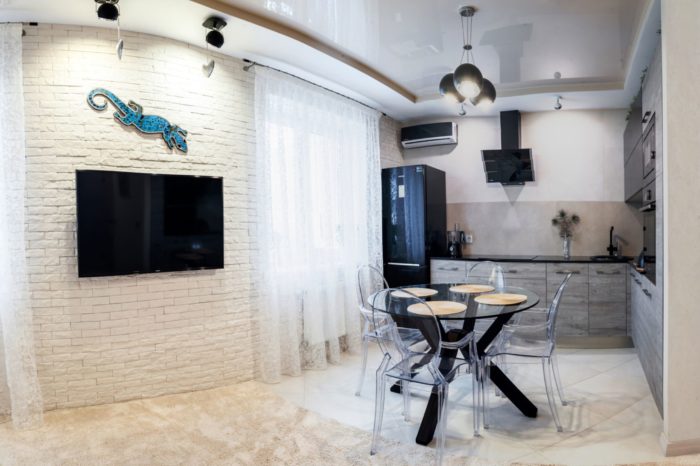
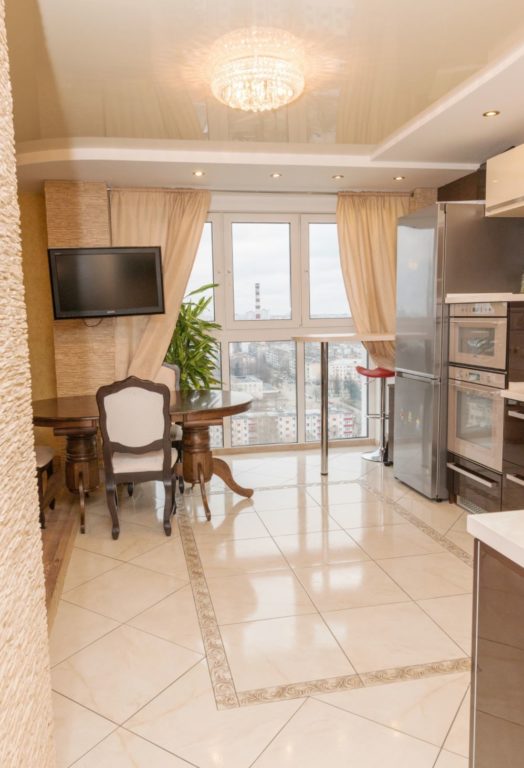
There are many ways to light stretch ceilings. We will not dwell on the standard ones, but there are interesting options too. Usually, the light source is placed directly behind the membrane and shines through it to create diffused light, or the lighting runs around the perimeter.
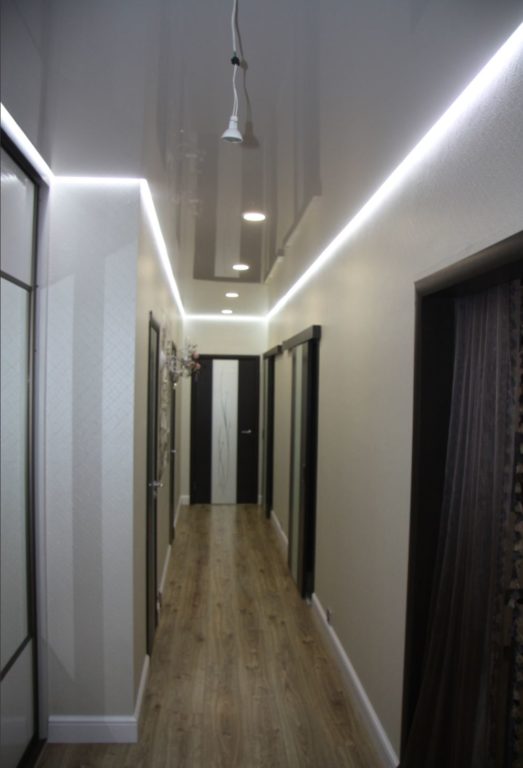
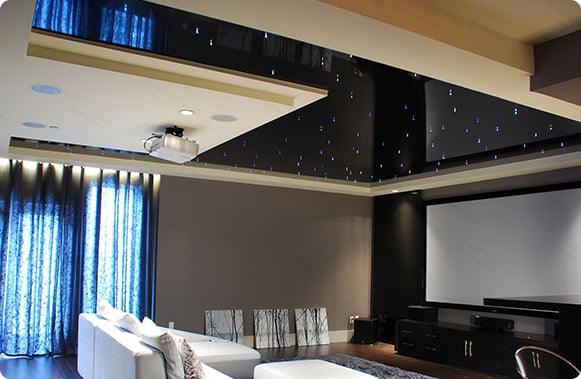
If your budget is limited and installers are available in your area, stretch ceilings are a decent choice.
An Unfinished Concrete Ceiling
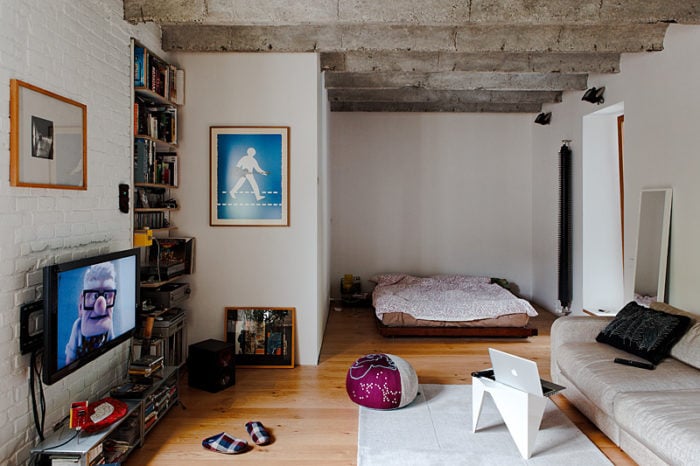
Contemporary design styles no longer try to hide every technical element. Concrete ceilings, columns, and beams moved from loft into every contemporary style. If you are lucky enough to have a ceiling higher than 9 feet, this option is worth considering.
An unfinished concrete ceiling needs only sealer so dust does not fall from it. It can also be lightly tinted by adding color to the sealer. The electrical work is not hidden either. Surface-mounted conduit and boxes need a little more attention because they will be visible, but it is worth it.
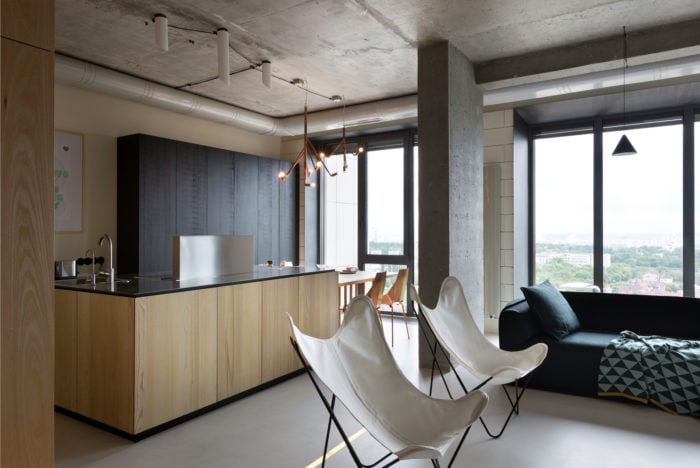
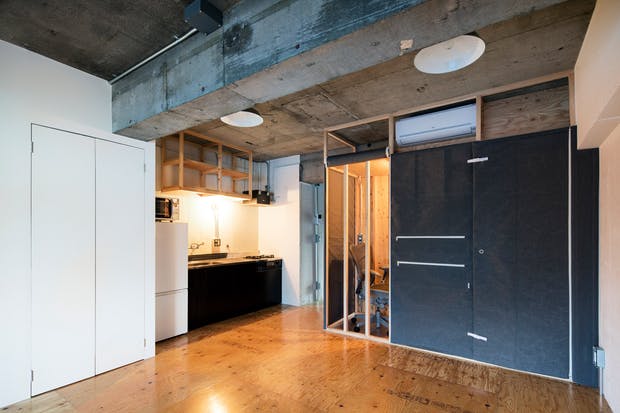
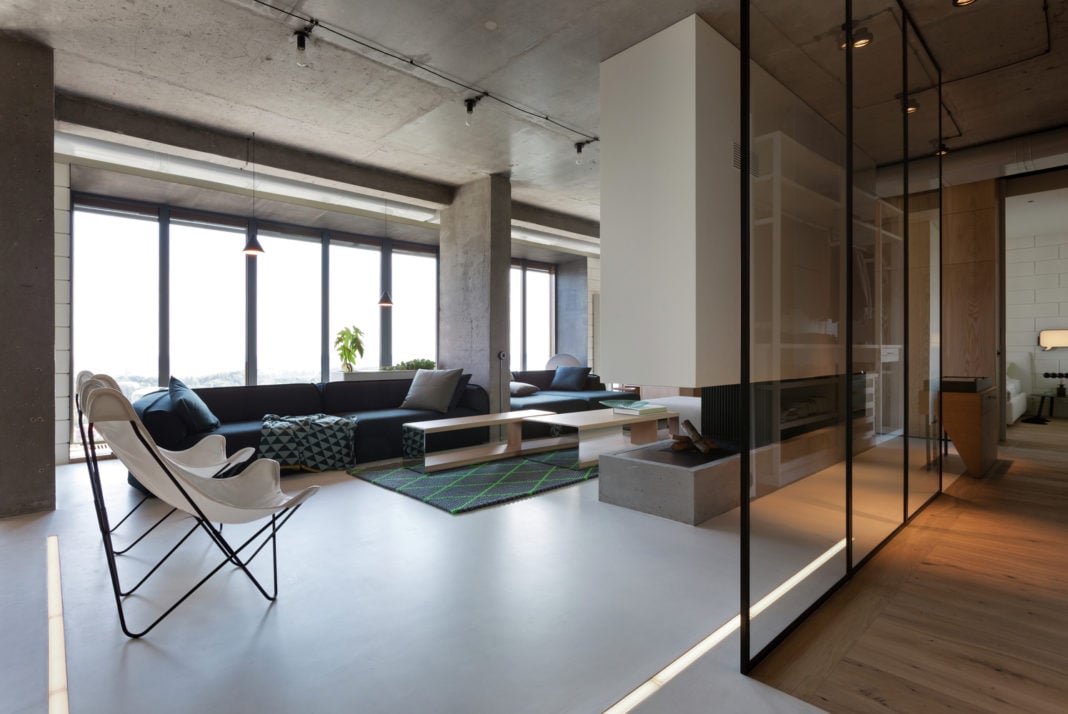
Perimeter lighting looks striking. Unlike a flat painted or stretch ceiling, concrete has texture. In this case, the lighting works fully because the play of light and shadow creates depth. It is hard to explain. It is better to look at the photos.
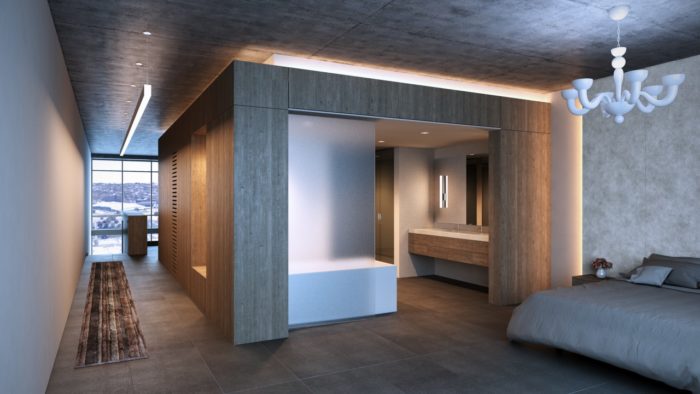
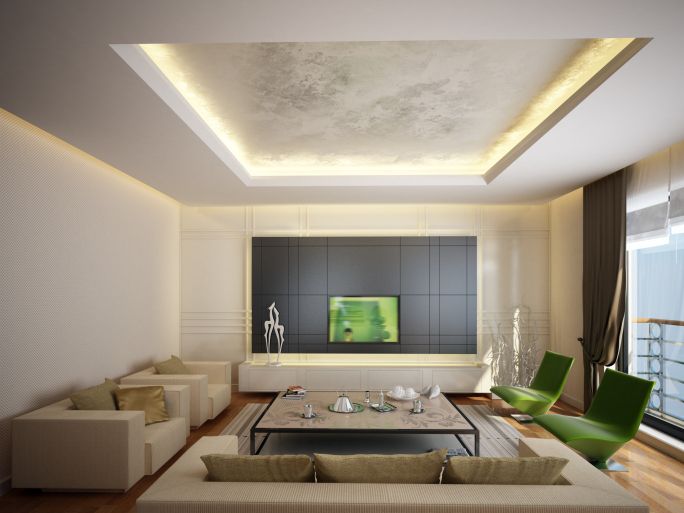
The second photo actually shows decorative plaster, not real concrete, but it conveys the point.
If you are brave and young, at least at heart, we advise considering this option. It looks bold and rough. The solution is now common enough to be more fashionable than unusual.
See more examples in the article about loft-style kitchen design.
Ceilings in Different Rooms
Besides the ceiling, an apartment has a pile of other planes and objects. It is important not to overdo the finishes. Niches, lighting, and so on look great, but only in moderation. A standard practice is to make an interesting ceiling in the main rooms and a normal smooth one in the others.
- In the living room and hallway, you can give your imagination, and the contractors’ wallets, free rein. Make niches with lighting and play with dark colors and decorative plaster. You can, but you do not have to.
- In the kitchen, you can lower the ceiling above the cabinets so there is no gap between the top of the cabinets and the ceiling. This is done for practical reasons too: no space means no dust, dirt, or clutter.
- In bathrooms, a moisture-appropriate flat painted drywall ceiling is the standard U.S. option. A stretch ceiling can also work where installers are available. It is not afraid of splashes and dirt and may contain water from a leak above. And yes, a glossy ceiling can work here.
- In the bedroom and the other rooms, an ordinary flat ceiling is perfectly suitable. It looks good too. There is no need to build structures in every room.
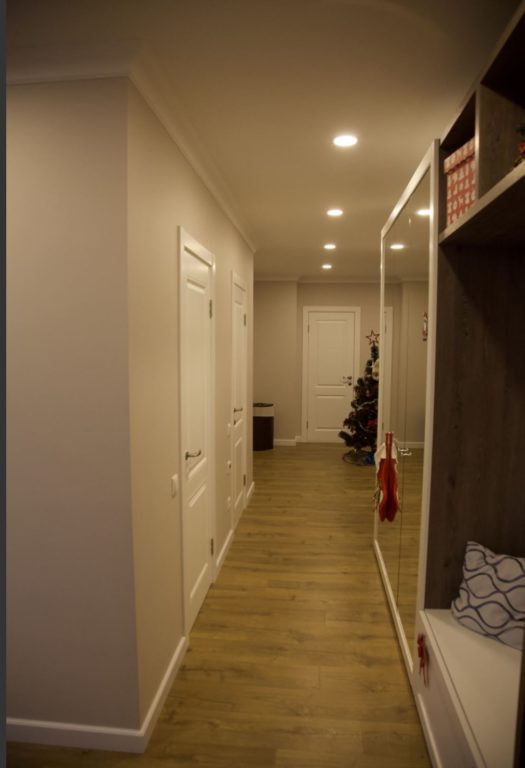
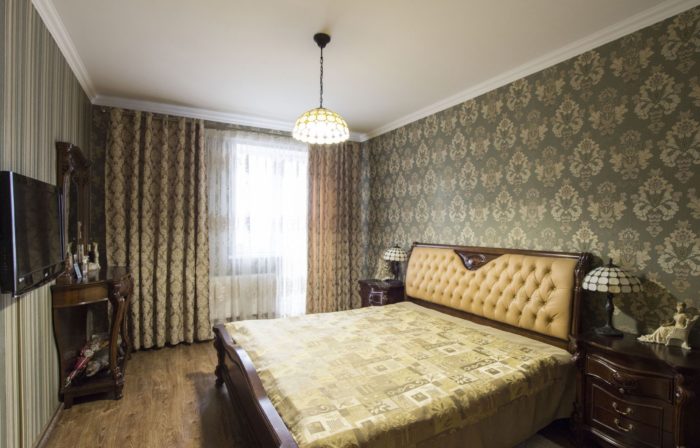
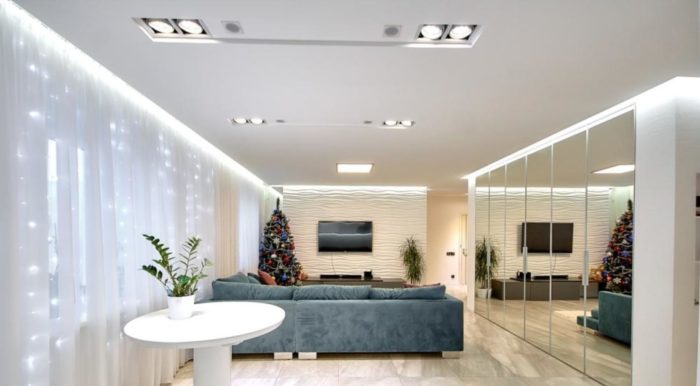
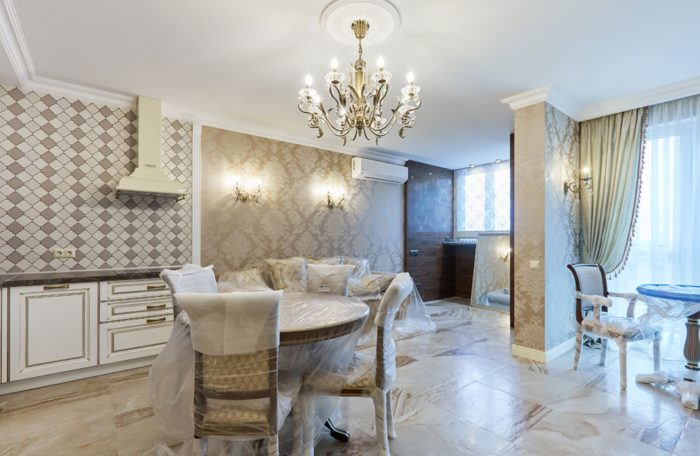
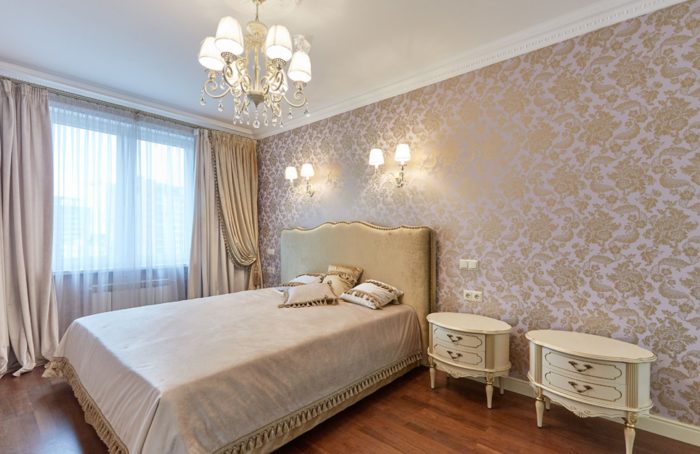
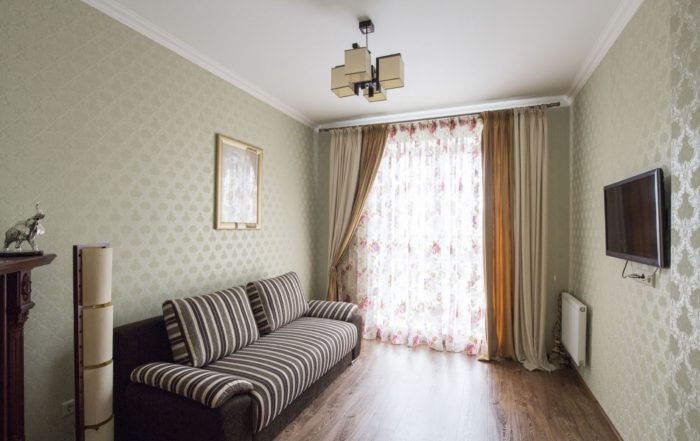
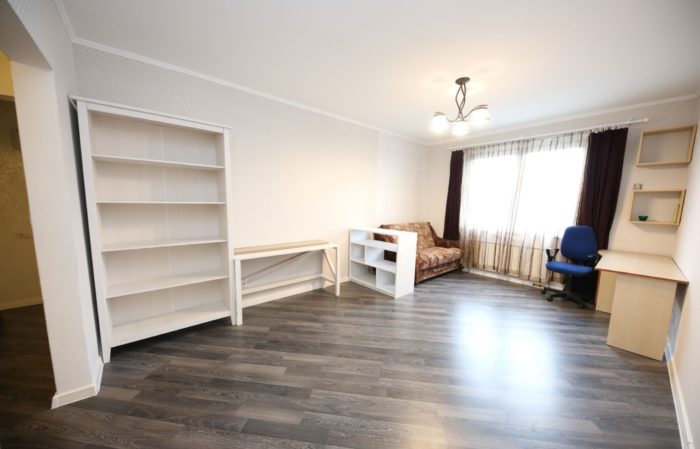
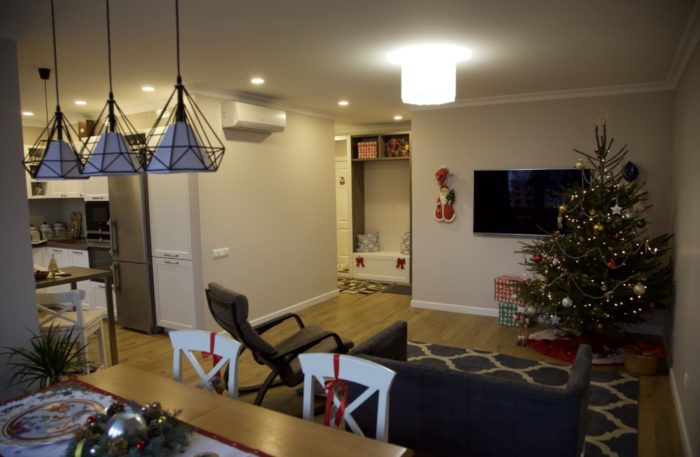
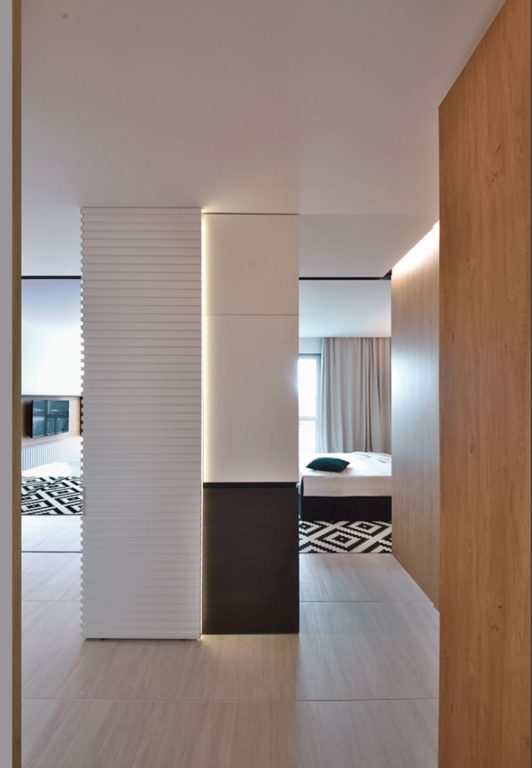
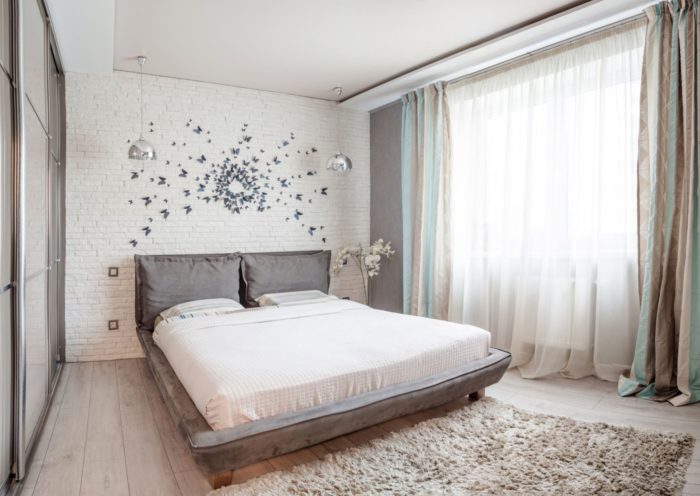
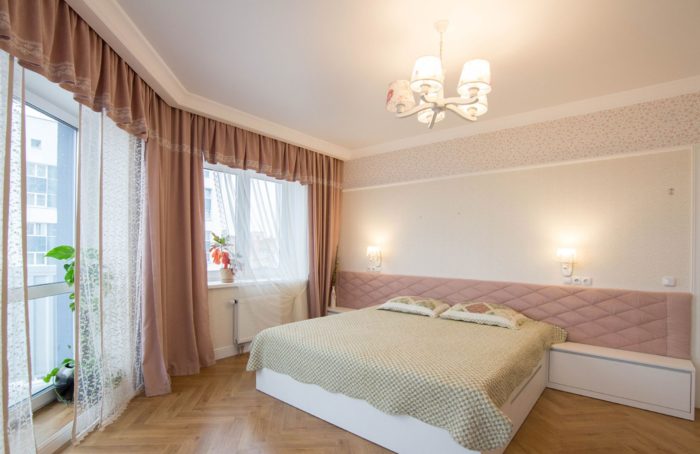
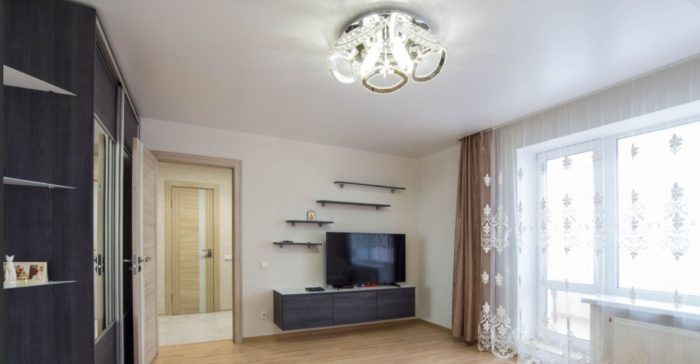
And here are several examples of simple ceiling designs that fit their particular interiors perfectly:
In ceiling design, as in everything else, the main thing is moderation. An ordinary matte ceiling may suit your design style best. Good luck with your remodel, and may a sense of proportion be with you!