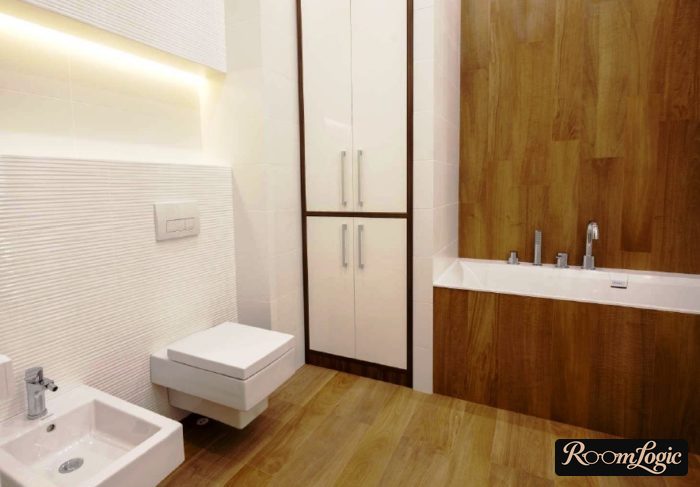
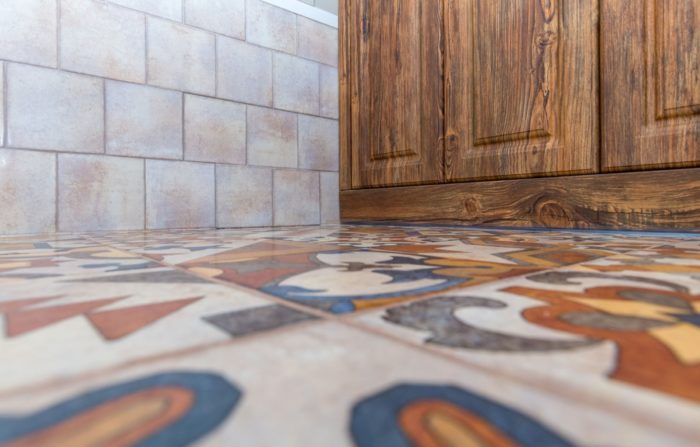
Let’s look at every type of bathroom ceiling, why a stretch ceiling worked best in the market where I remodeled, and its advantages and disadvantages separately. We will also discuss why matte is okay and gloss is not. In the U.S., flat painted drywall is the standard, while stretch ceilings are a niche option.
What Ceiling I Have in My Bathrooms
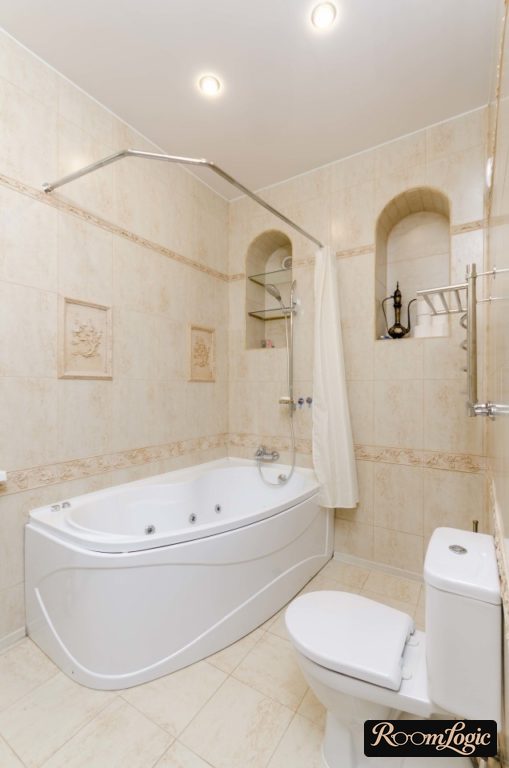
I have two bathrooms of about 54 square feet each, and I used a stretch ceiling in both. The apartment is about 1,130 square feet in total, and I used drywall ceilings in every other room. As you can see, it was not about saving money.
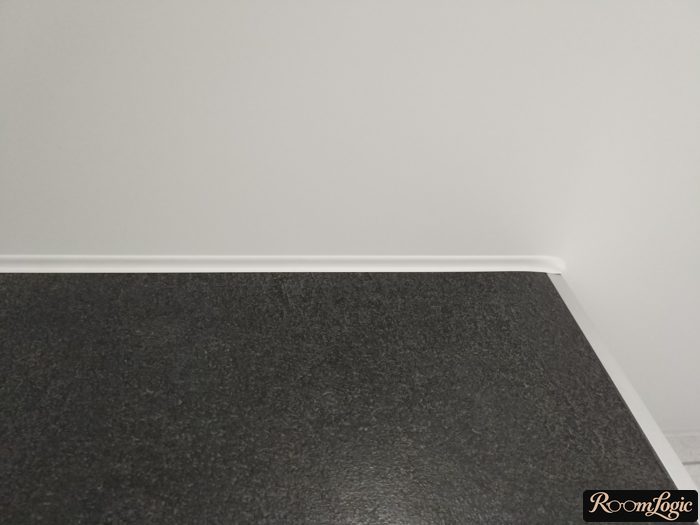
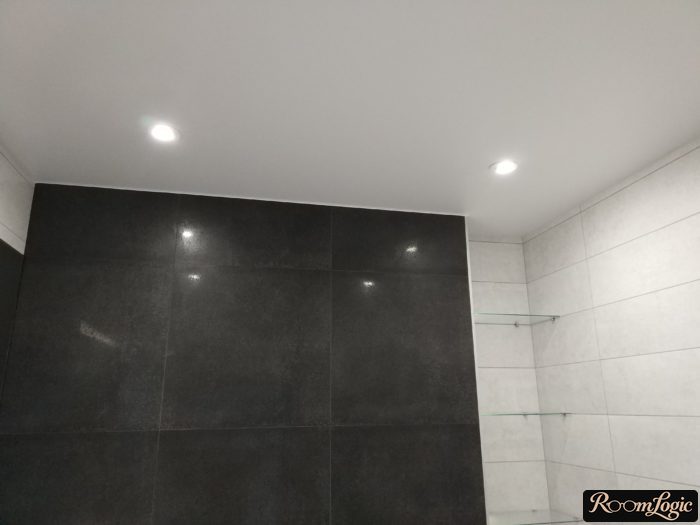
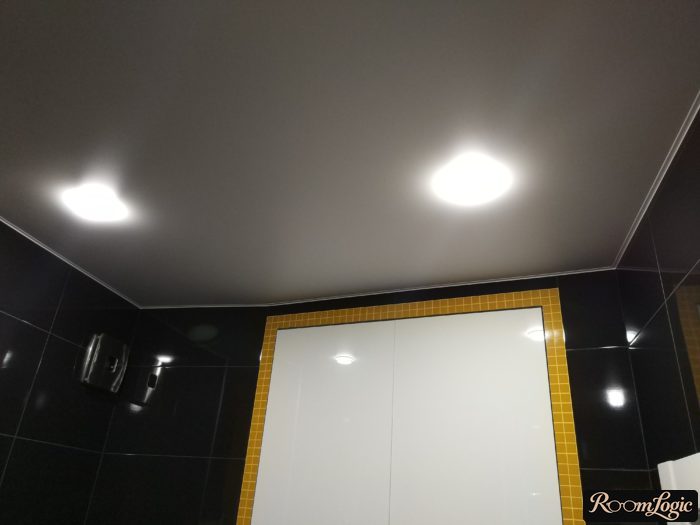
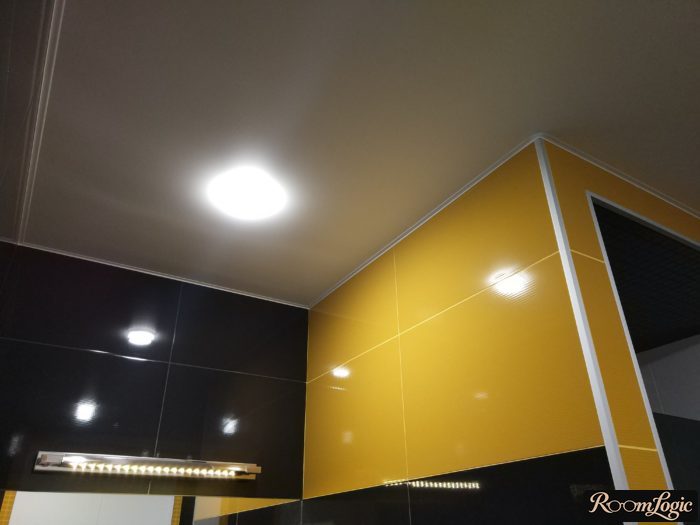
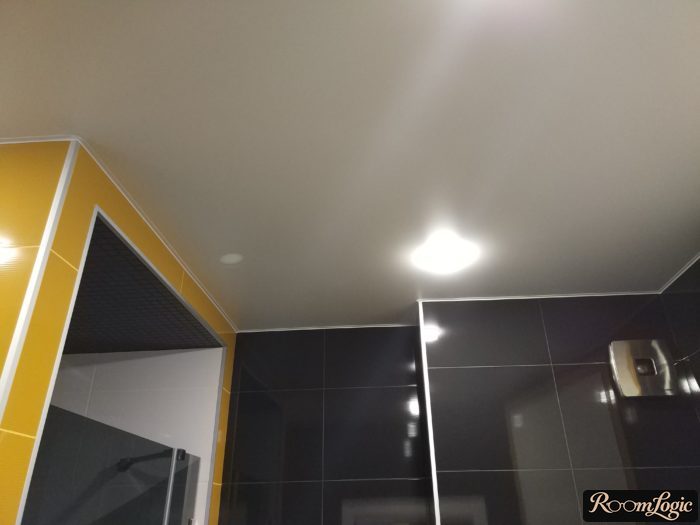
In a market where stretch ceilings are common, asking whether one can be used in a bathroom is like asking whether a car can have round wheels.
In that market, a stretch ceiling is the bathroom standard. In the U.S., the standard is flat painted drywall.
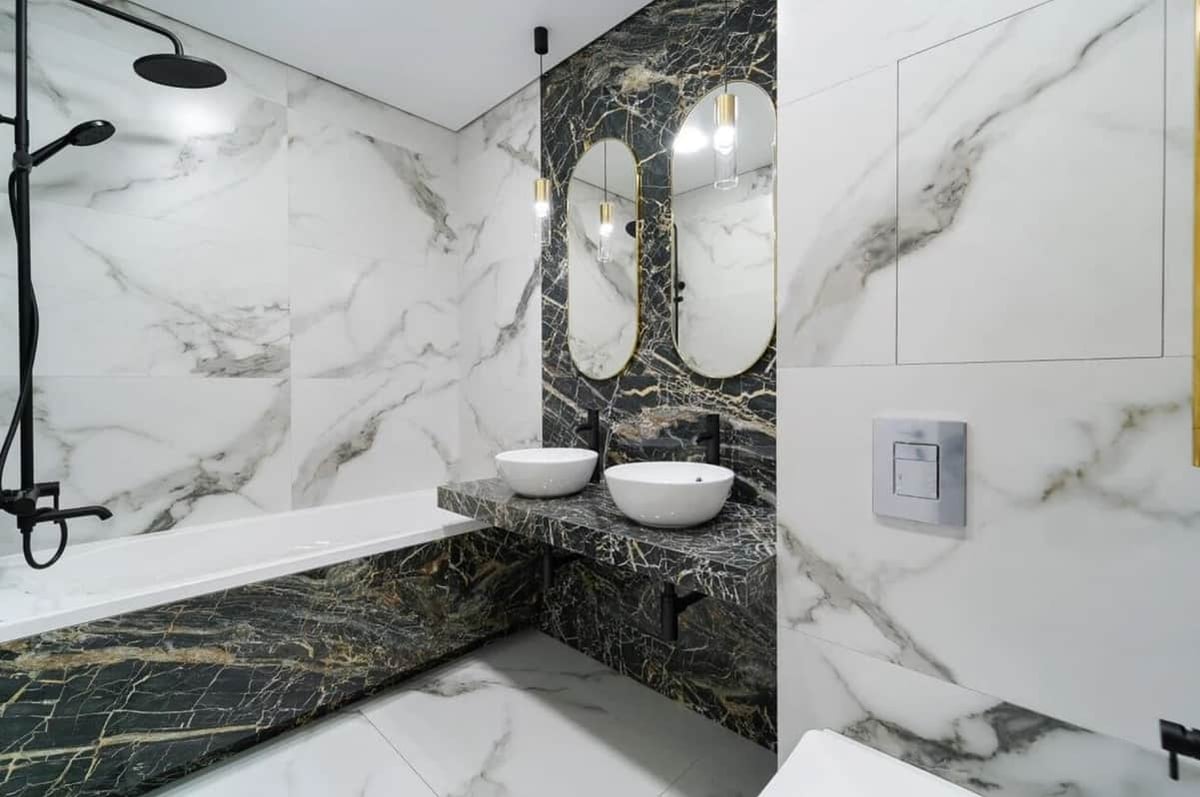
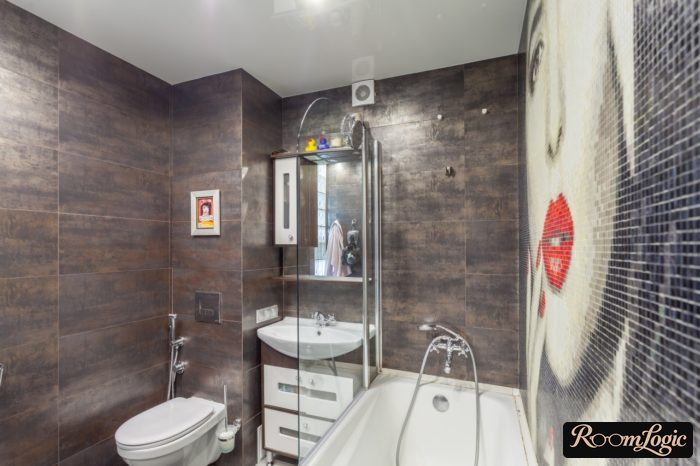
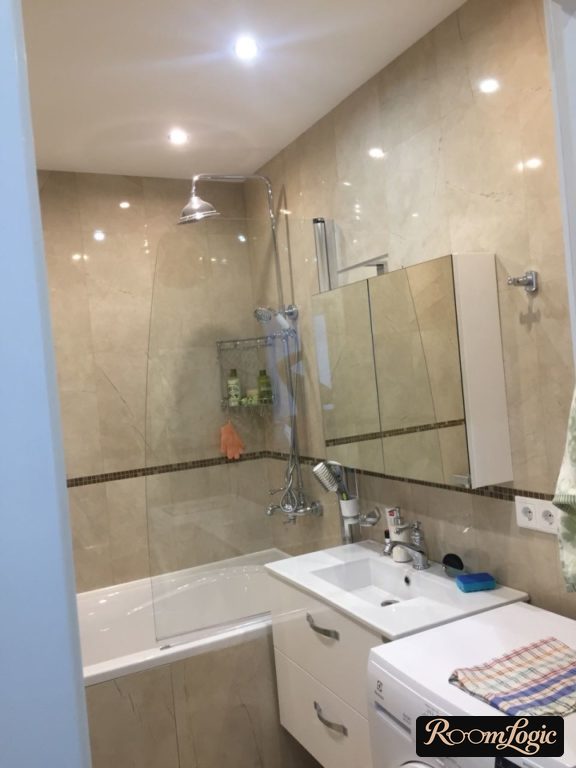
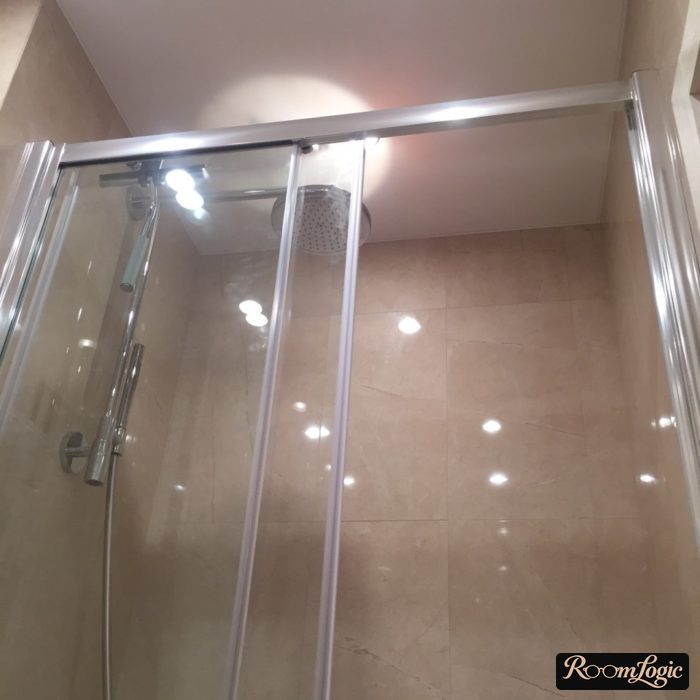
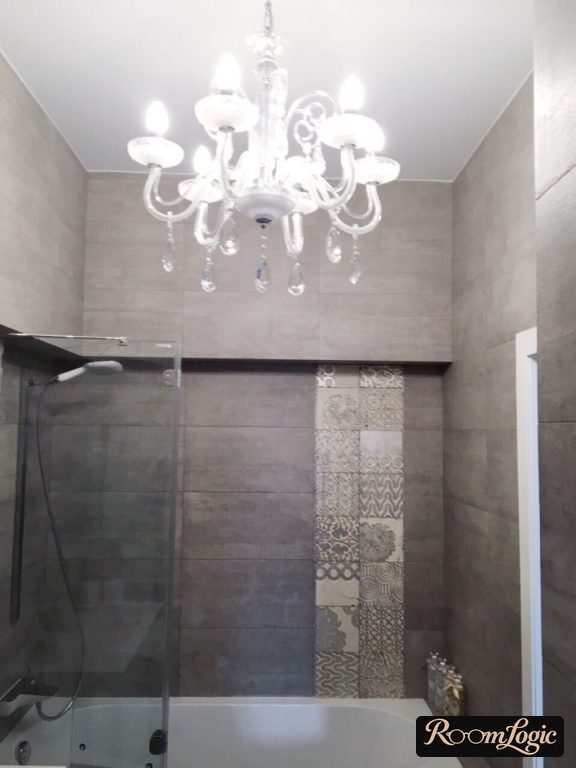
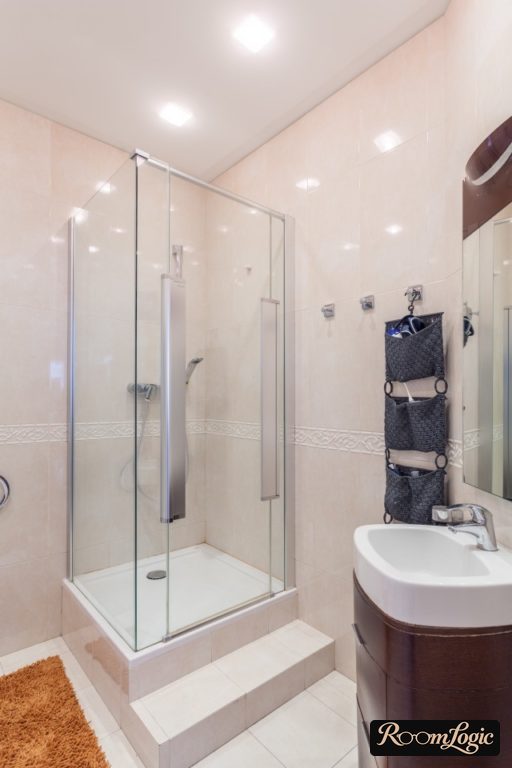
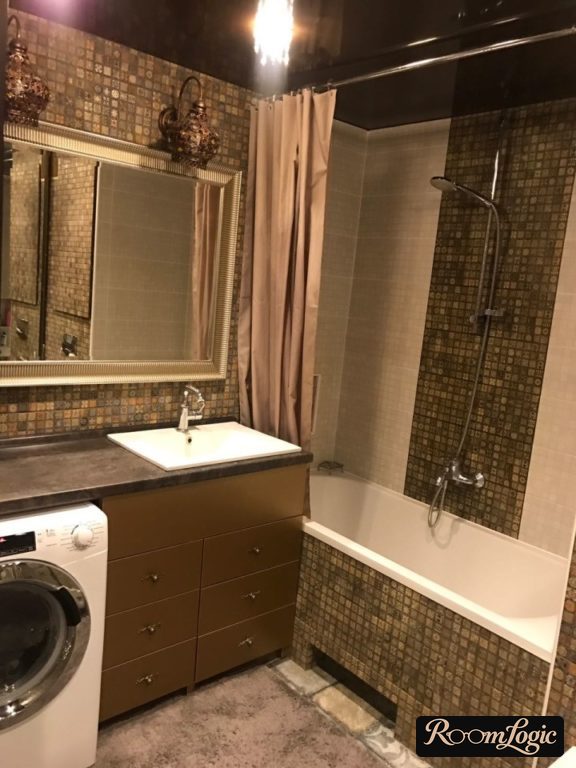
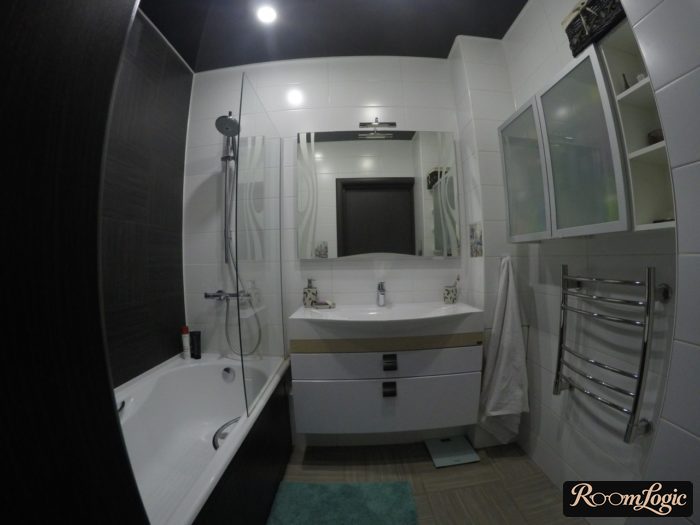
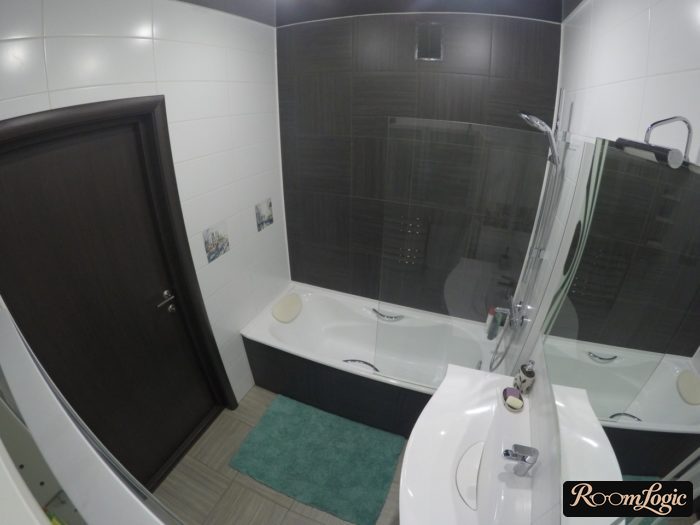
Here are more photos where this option was chosen even for an expensive remodel.
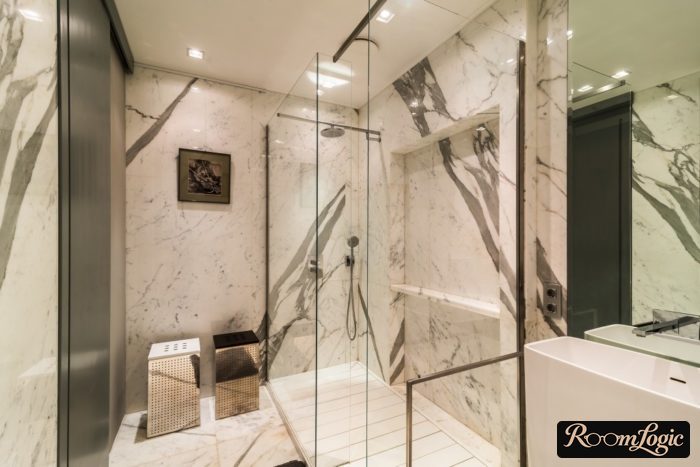
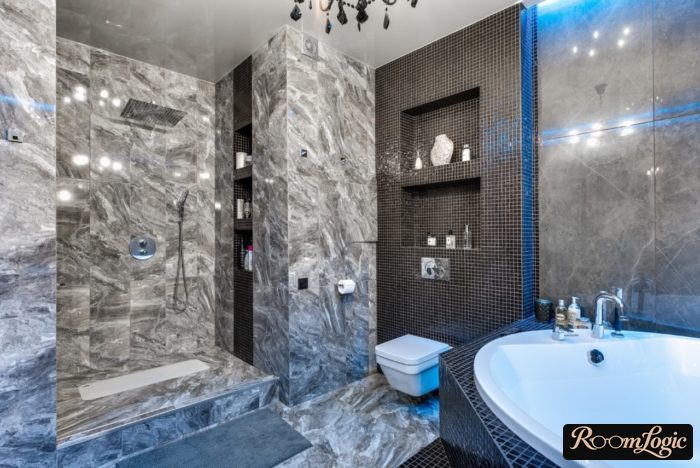
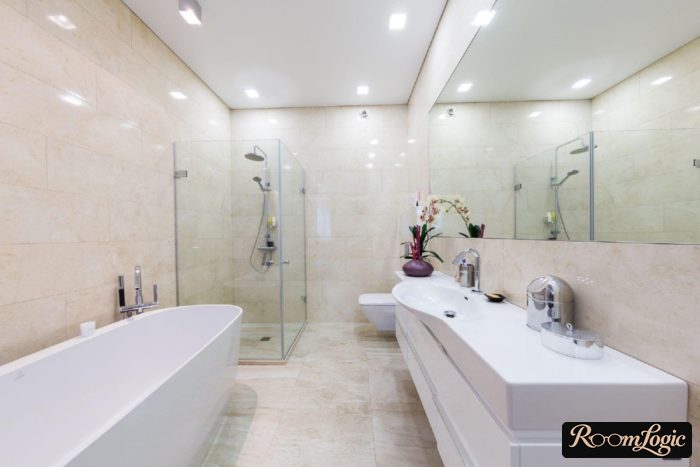
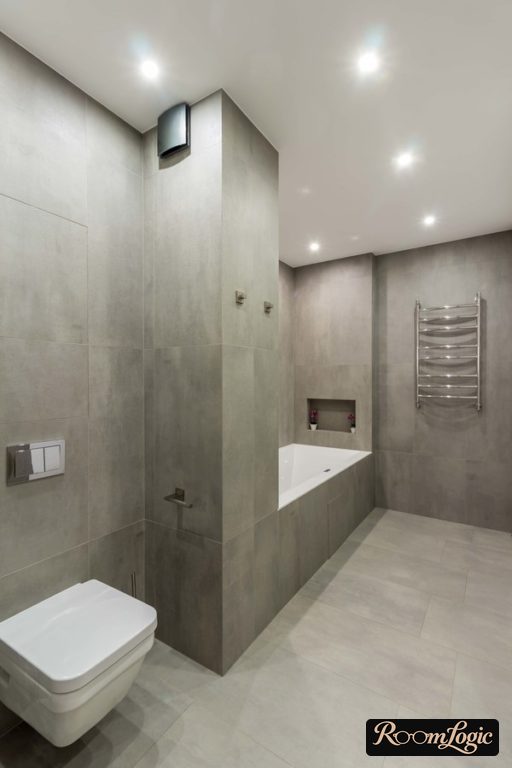
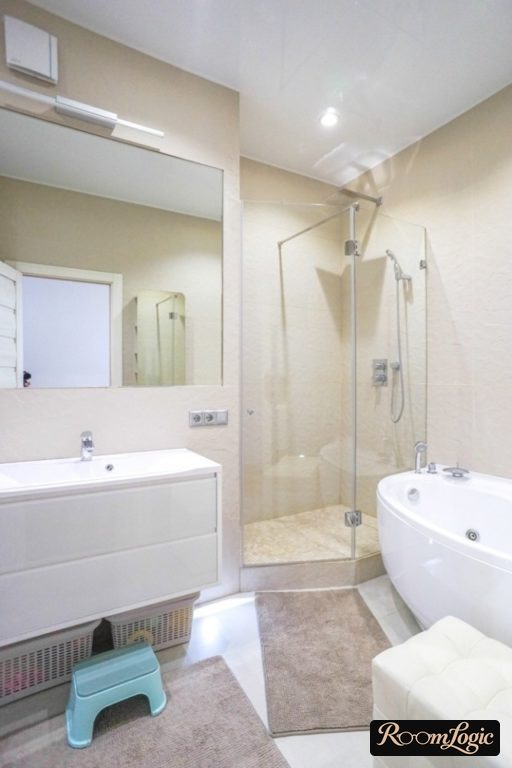
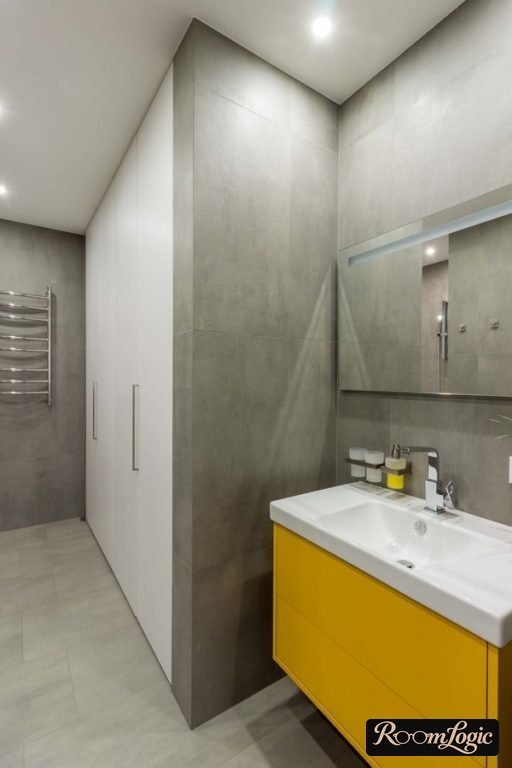
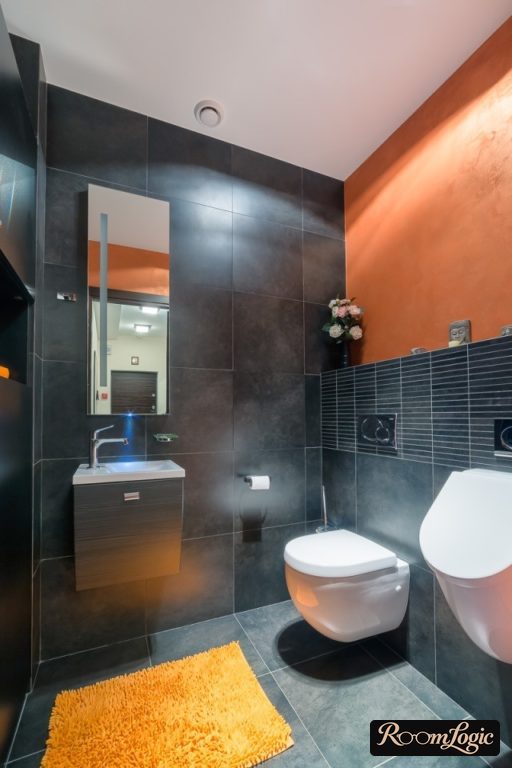
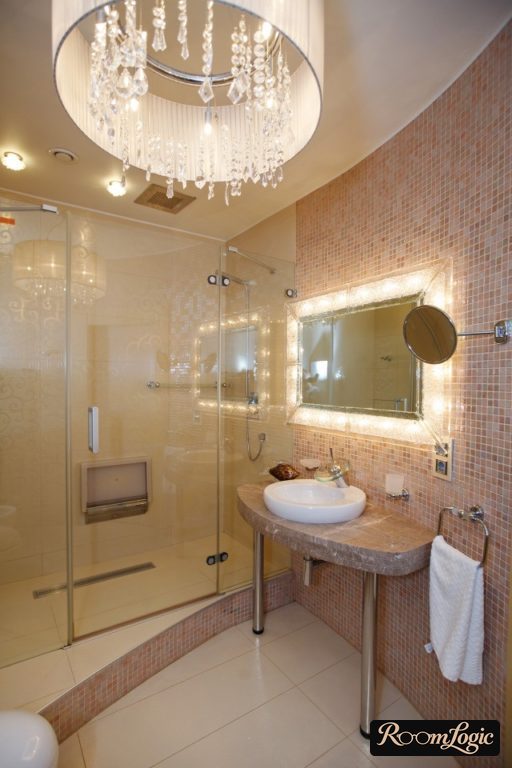
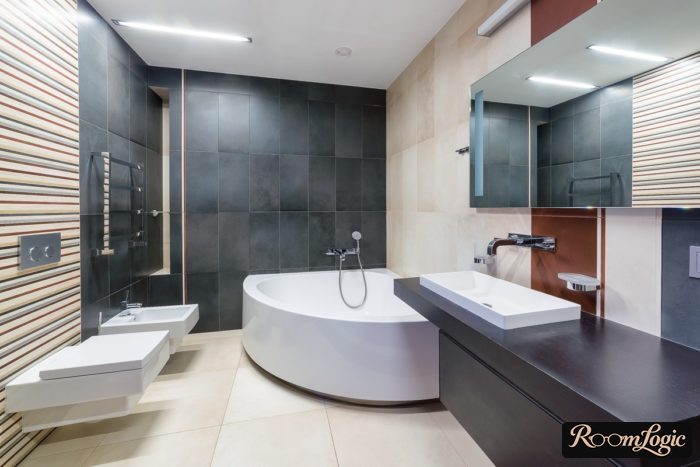
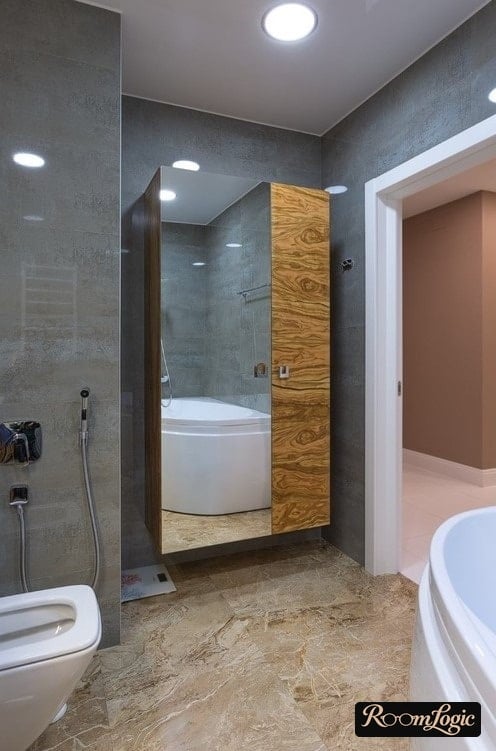
By the way, did you notice there is no bright, colorful tile? See photos of bathroom tile design to understand what it should look like in a contemporary remodel.
What Is the Best Bathroom Ceiling?
Fifteen years before this article was written, stretch ceilings were not available in my local market. At the time, variations of framed slat ceilings were used as an inexpensive bathroom option. Different materials covered the frame, but the appearance was always equally ugly.
Slatted, siding, aluminum, and plastic-panel ceilings are all variations of the same kind of cheap bathroom ceiling structure.
At the other extreme is a custom dropped ceiling made from moisture-appropriate drywall. It is the most expensive type and takes a long time to install.
Let’s compare every type. The criteria:
- Appearance and design
- Practicality
- Price
- Speed and difficulty of installation
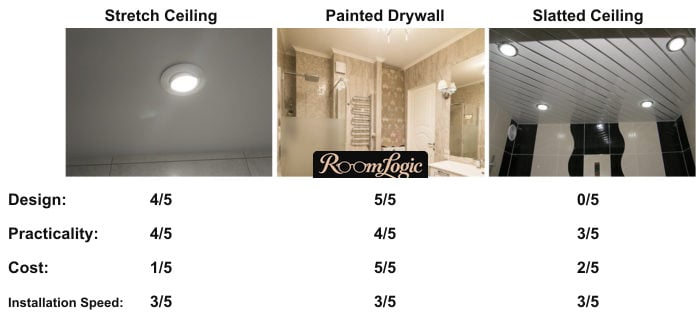
In the U.S., the choice is straightforward: for a normal budget, use a flat moisture-appropriate drywall ceiling with bathroom paint. If the budget is unlimited and the design needs it, build a custom dropped drywall ceiling. Choose a stretch ceiling only if you specifically want one and have an experienced local installer.
The question of what should be used for a bathroom ceiling depends on the local remodeling market. In places with enormous installer competition, PVC stretch ceilings are extremely inexpensive, so other budget options make no sense. That is not the usual U.S. market.
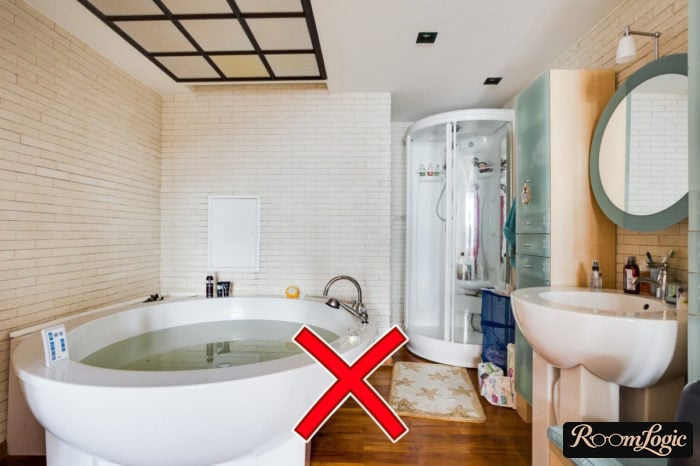
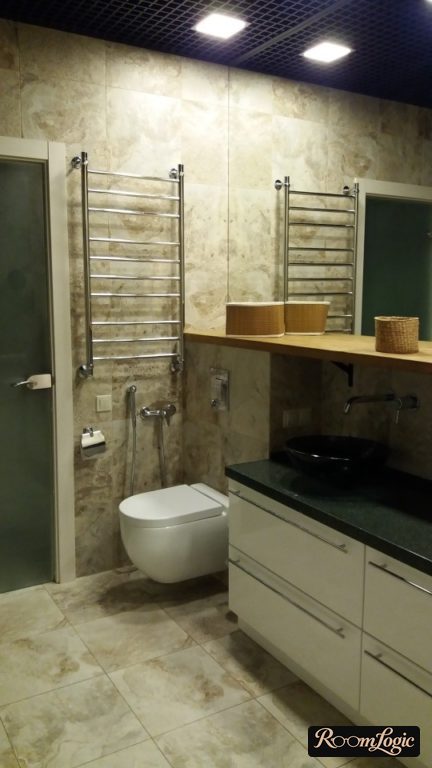
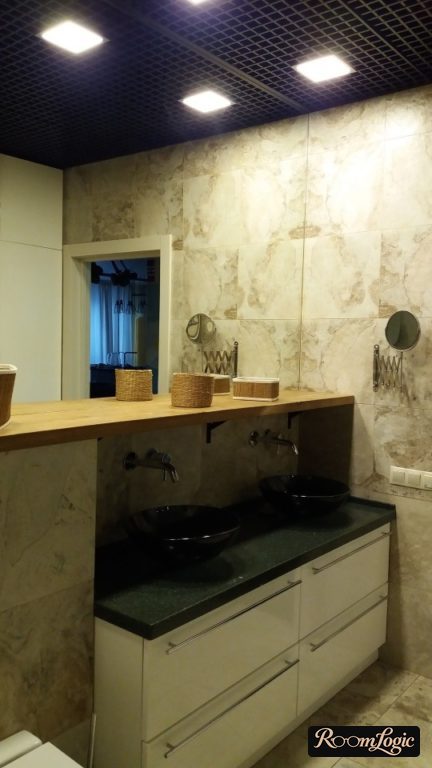
I left out special options. For example, an open-cell grid ceiling can be made for a loft-style bathroom, as in the photo below. But that is already a complication with nothing to do with normal practice.
Stretch Ceilings in a Bathroom: Pros and Cons
There are still some disadvantages. Let’s weigh every advantage and disadvantage of stretch ceilings specifically in a bathroom.
Advantages
Advantages of stretch ceilings:
- Cost. In my local market, I paid $150 total for two 54-square-foot rooms with 16 corners and seven light openings. With the standard four corners per room, it would have been substantially cheaper. U.S. prices and availability are very different.
- Installation time. Less than four hours for two bathrooms, with almost no debris or dirt. This matters because a stretch ceiling is installed at the very end, after the tile.
- Practicality. Absolutely number one. A bathroom finish is made to handle moisture, and the only things that can be damaged by a leak from above are the ceiling and the neighboring rooms if the water reaches them. A stretch ceiling can hold a huge amount of water. The membrane itself is not afraid of water at all. It can be used even in a shower room and, of course, in a half bath.
- Appearance. This also belongs in the advantages. In design, PVC loses only slightly to drywall because of the edge track, while beating every other cheap option by a mile.
- Repairability. After installation, the membrane can easily be removed and installed again. This may be useful, for example, to dry the area after a small leak.
Disadvantages
If everything is so great, why did I choose drywall ceilings throughout the rest of the apartment? Stretch ceilings are the best budget option there, but my remodel was not a budget one.
All the disadvantages of stretch ceilings matter mainly over large areas and in open layouts without separate zones.
- Joints in the middle of the room. The membrane is large but limited in size. When a very large area needs to be covered, joints are unavoidable, and they look very bad. That was exactly my situation, which is why I chose drywall for the rest of the apartment. A bathroom is small, so this point does not matter.
- Movement – the membrane can pull inward, bulge, or shake from air movement. This also happens over a large area. In a bathroom, some movement may happen only when the door is opened or closed sharply, but you will probably never notice it.
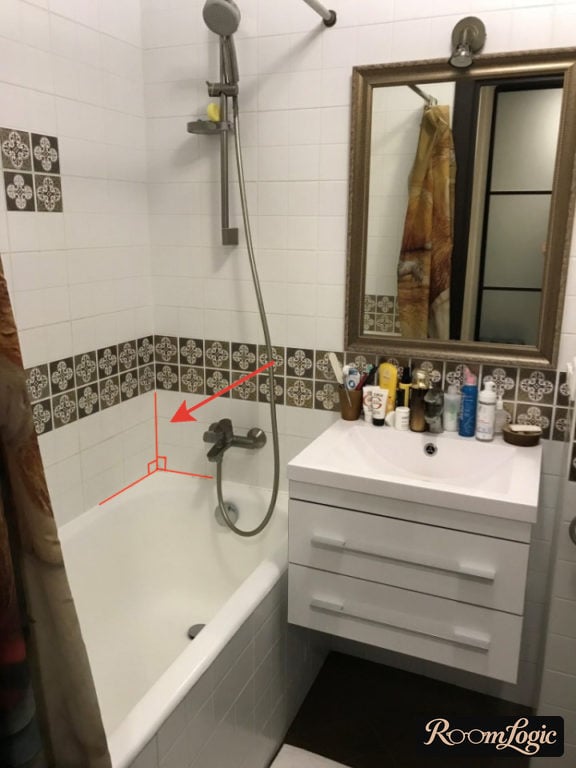
The biggest and practically only disadvantage specifically in bathrooms is the edge track around the perimeter.
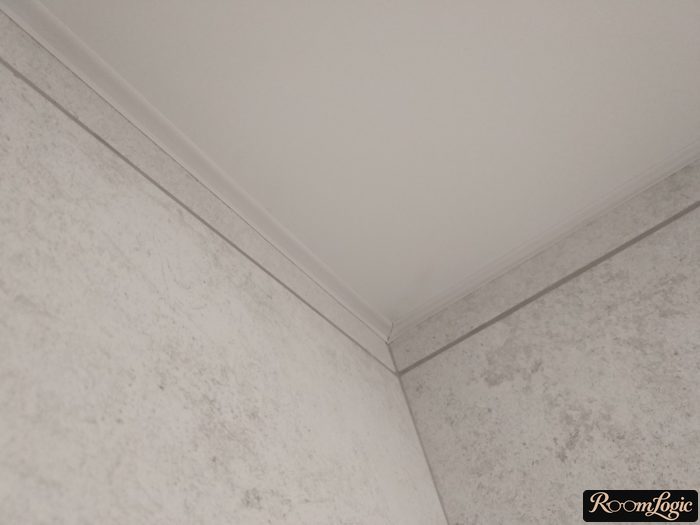
Because almost all of us have small bathrooms, we will not even see this edge until we lift our heads. In other words, the wall joint is outside the field of view because the room is small.
There is also a myth about mold. In fact, it depends on ventilation. If the ventilation works properly, there will be no mold, and vice versa. With even a small leak from above, you will see it on the stretch membrane and can remove the membrane to dry the space. The same cannot be said of every other type.
Environmental and fire safety depend on the specific membrane, not simply the words “stretch ceiling.” For a U.S. project, use a product and installation accepted under the local code. The 2024 International Residential Code sets flame-spread and smoke-developed limits and testing requirements for wall and ceiling finishes.
Glossy or Matte
There are two membrane materials for stretch ceilings: PVC and fabric. Fabric makes no sense in any room because its price is equal to or higher than drywall. It should not be used in a bathroom at all.
PVC ceilings have three options:
- Matte – okay.
- Satin – okay, but keep in mind that it looks grayish rather than white in person because it picks up reflections.
- Glossy – absolutely not.
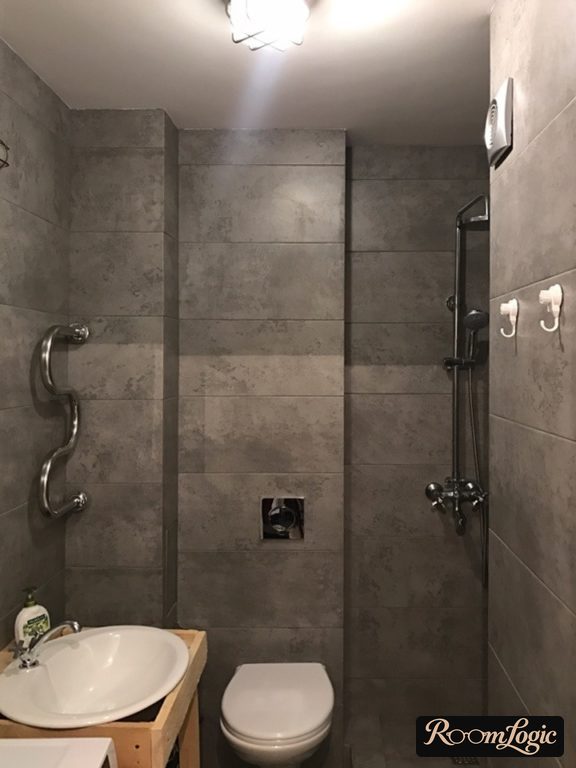
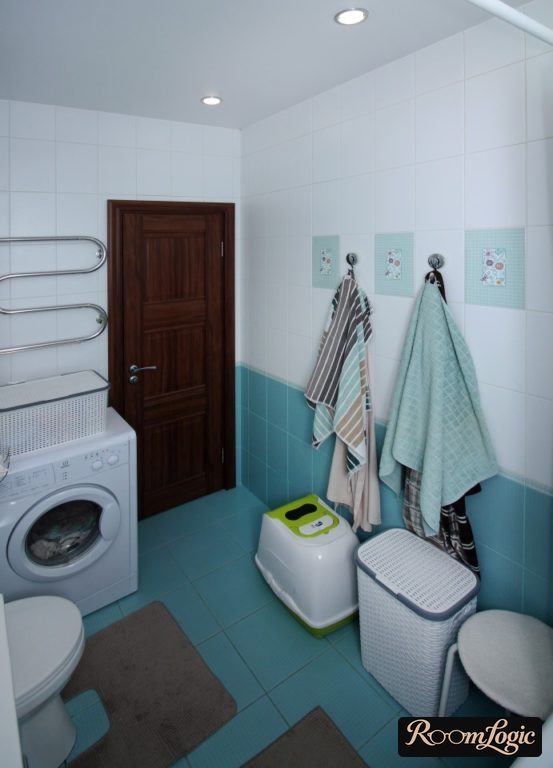
Gloss makes the appearance look much cheaper. In the first section, among the examples of expensive bathrooms, only one had a glossy ceiling. It looks out of place there too.
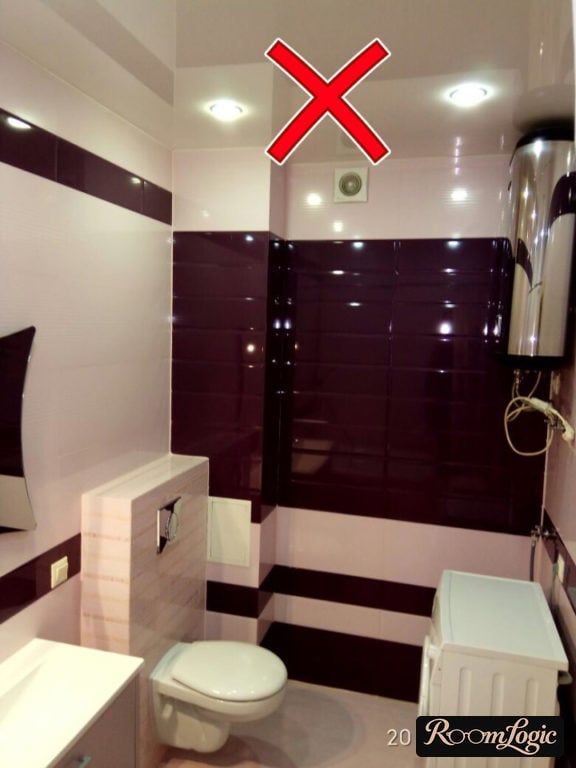
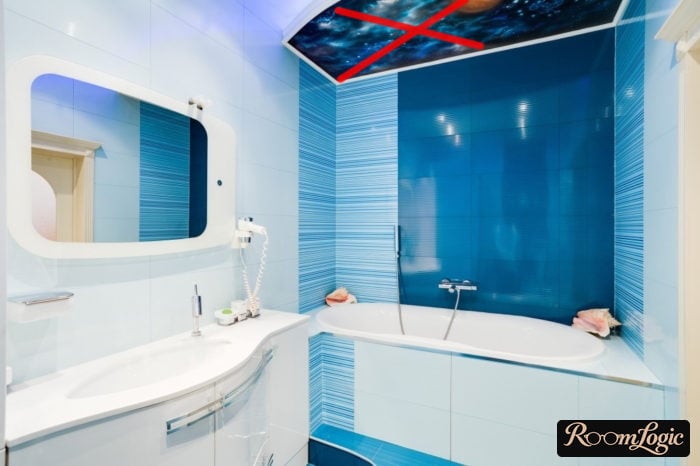
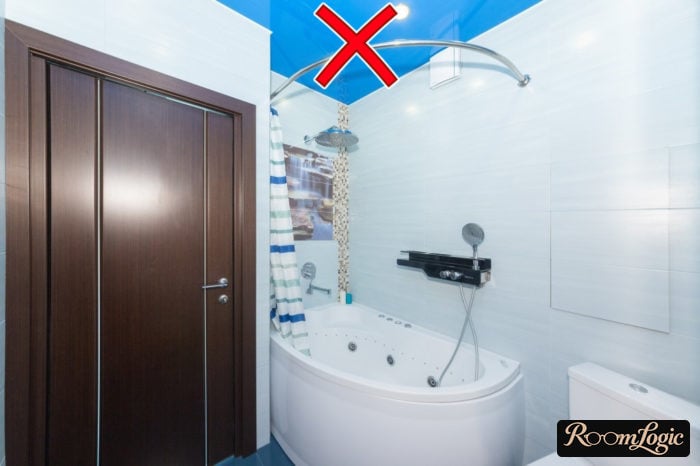
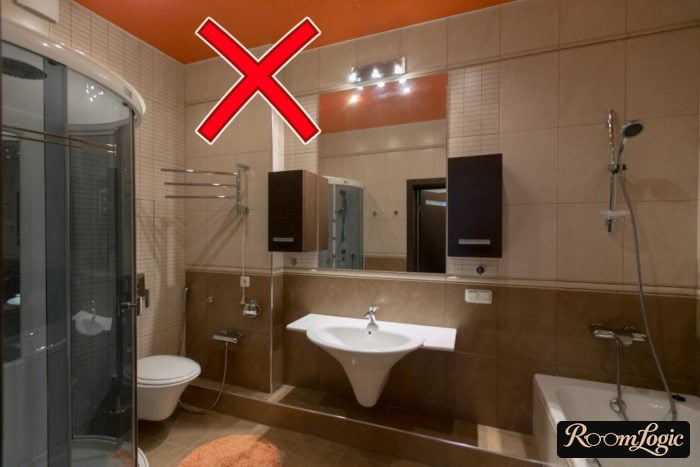
Colored stretch ceilings go in the trash too. In very, very rare cases, a black ceiling may suit a bathroom, but that is always an exception and a risk. Every other color is forbidden under any circumstances. It is a dated, ugly, tacky solution that does not belong in contemporary bathrooms.
The conclusion: for a standard U.S. bathroom, choose a flat matte-white painted drywall ceiling and do not worry. If you deliberately choose a stretch ceiling, use matte white or satin.