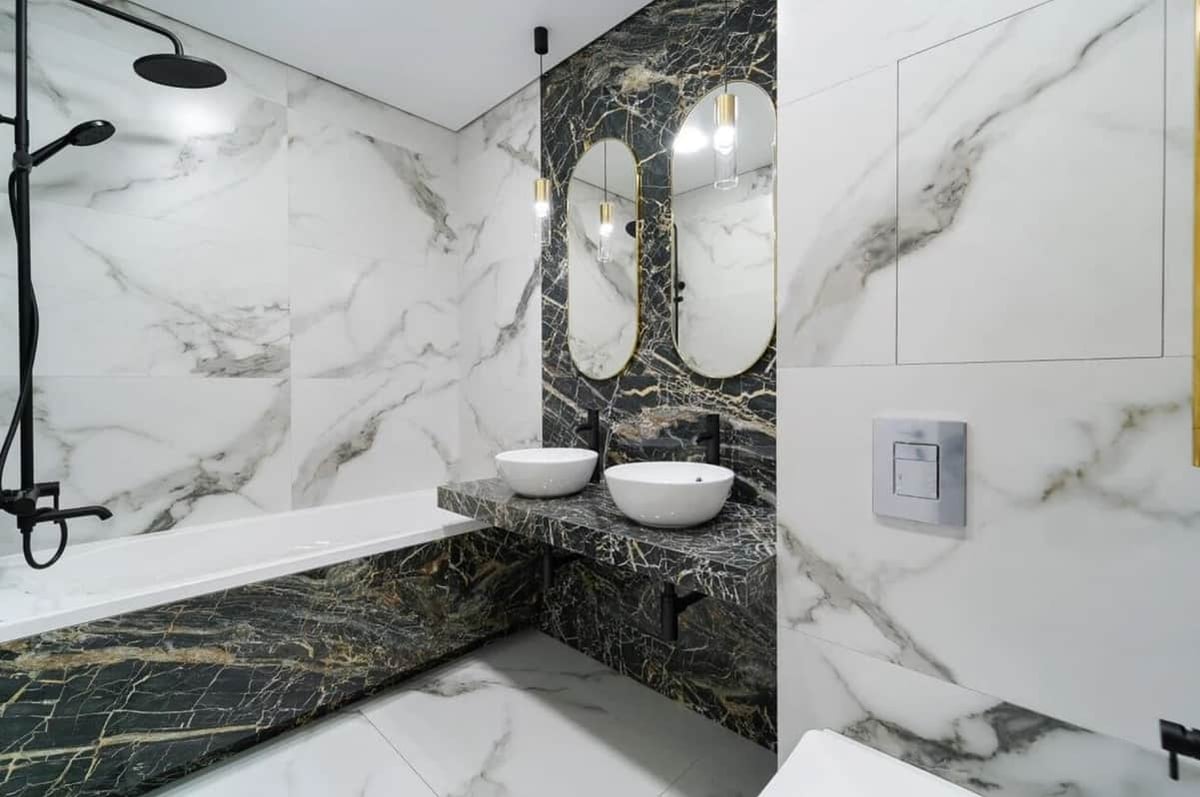
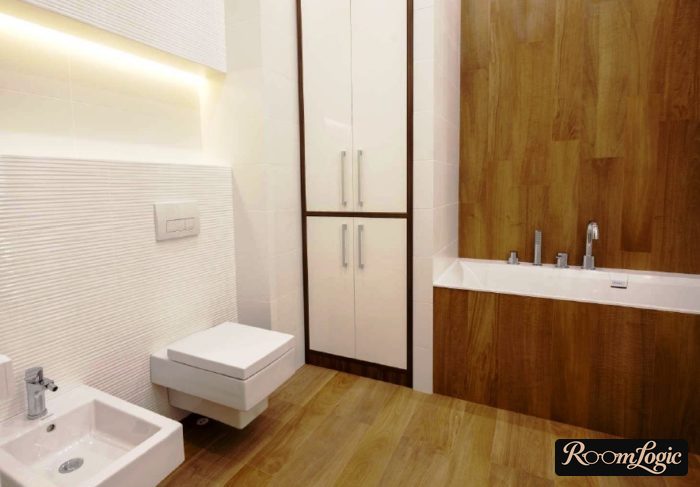
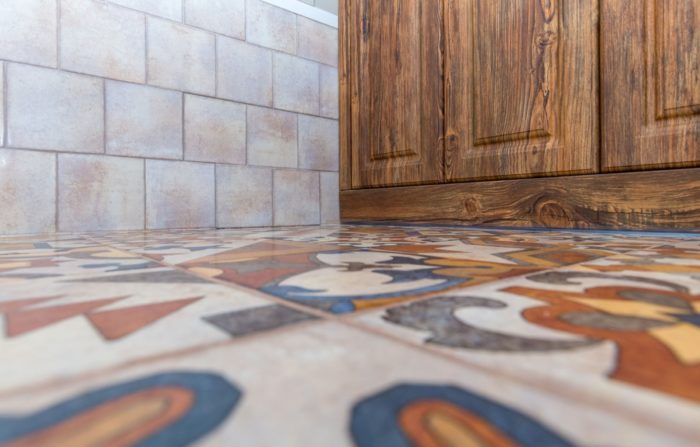
Light colors, wood-look porcelain tile, patterns, and small accents with overall simplicity and function make Scandinavian style ideal for a bathroom.
Authentic Scandinavian Bathroom Style
As usually happens, the authentic style was broken into components that formed an endless number of related styles. These separate elements and ideas work perfectly in ordinary U.S. bathrooms:
- Light colors
- Wood-look tile
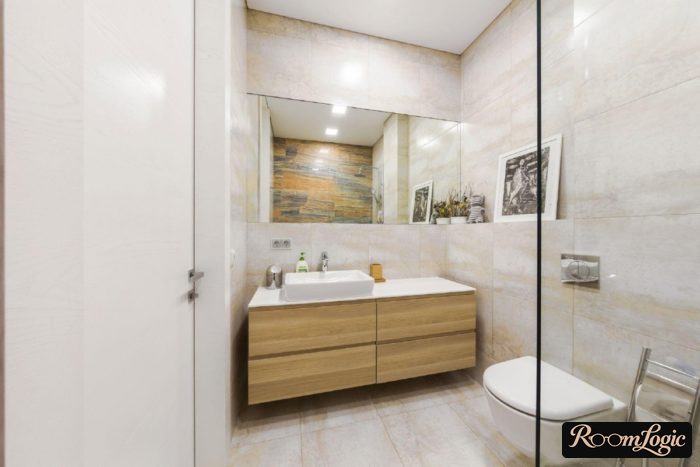
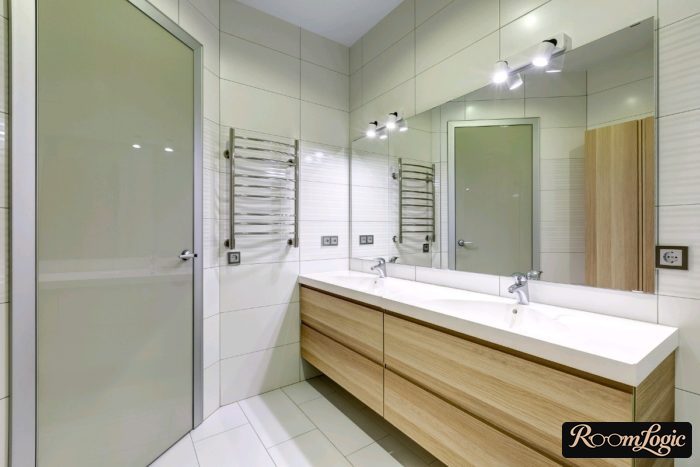
- A wood countertop for the sink
- Patterns and geometric motifs
- Simplicity and function as the main idea
We will discuss each one separately in the second section. But an original Scandinavian bathroom is a little different: minimalism, white tile with black grout because it is practical, a shower instead of a bathtub to save time and water, and a mixture of contemporary and retro objects.
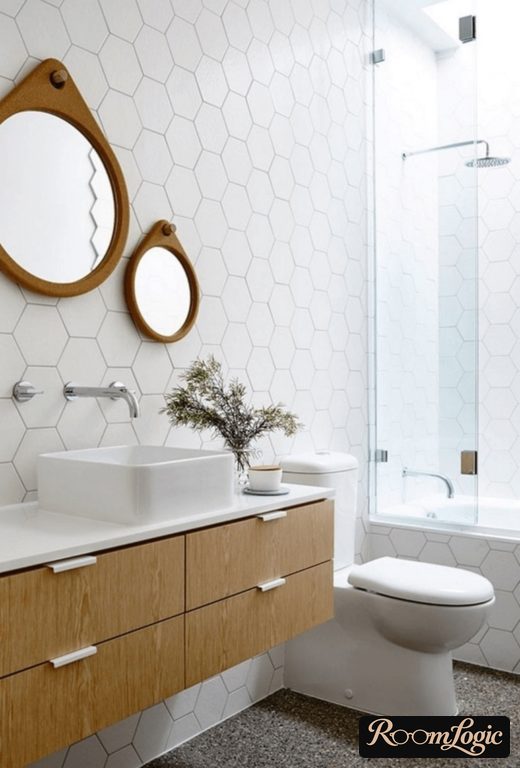
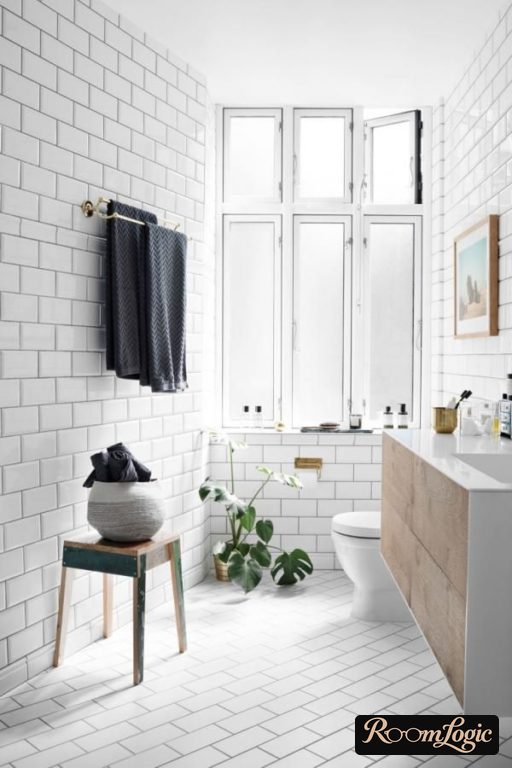
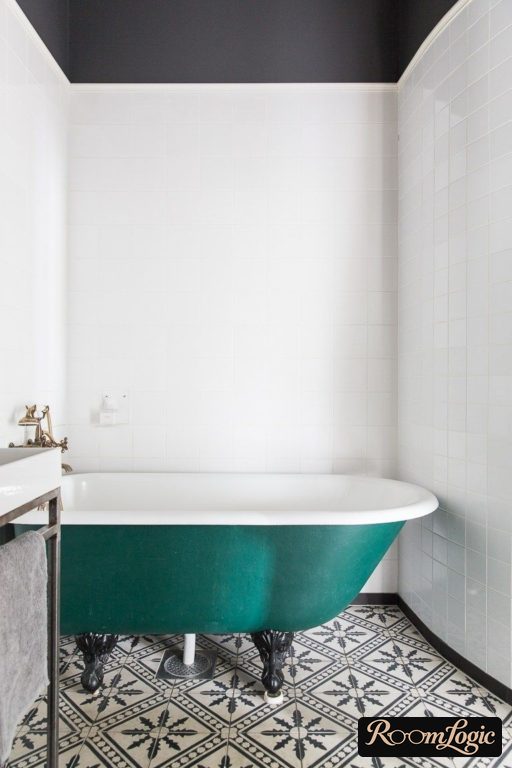
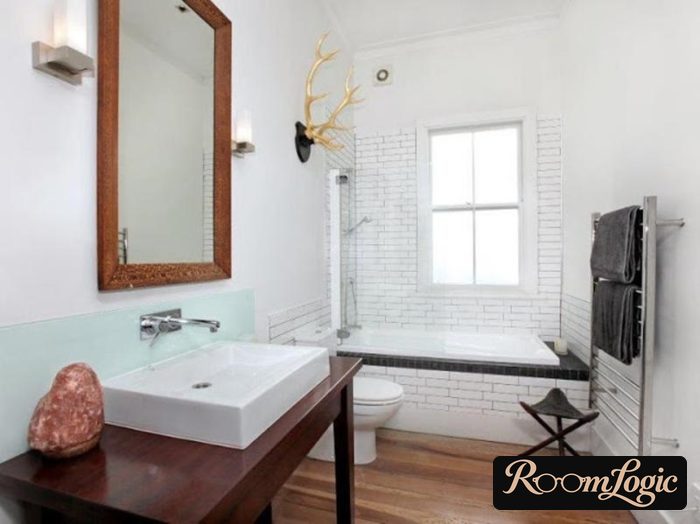
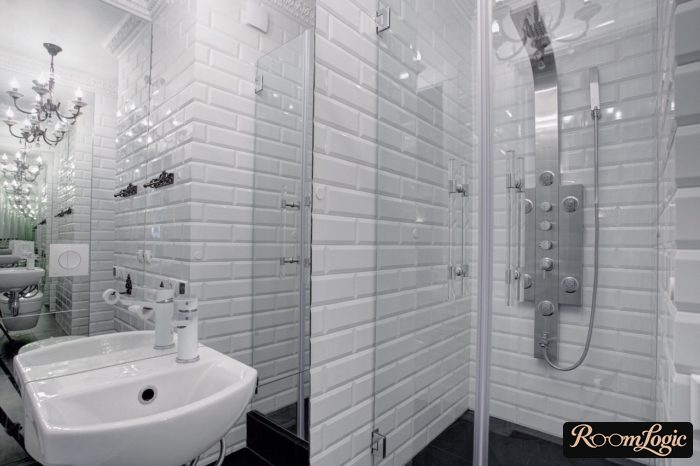
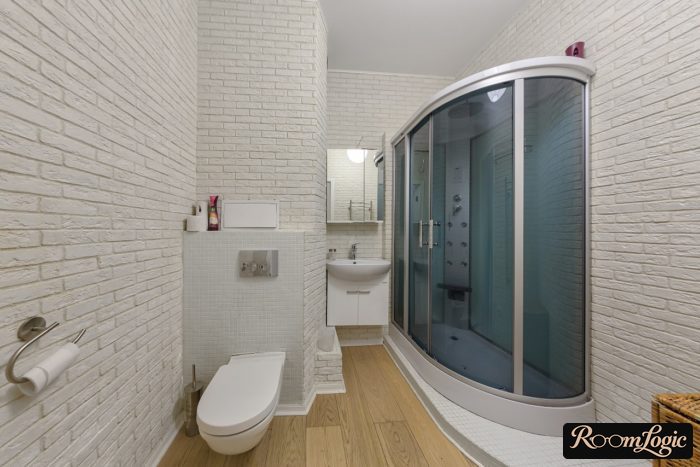
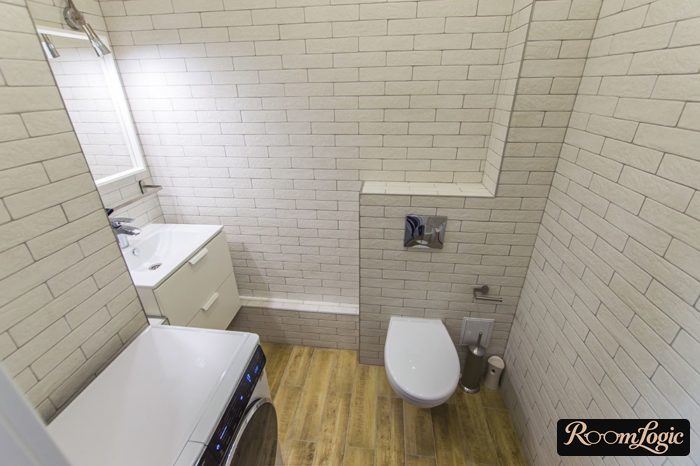
The most common tile is white brick-look tile, including subway tile, plus pentagonal and hexagonal tile. Tile with a monochrome pattern is also common. In countries such as Sweden, this looks great partly because the bathroom has a window and is large. Scandinavian style needs to be adapted for our small bathrooms.
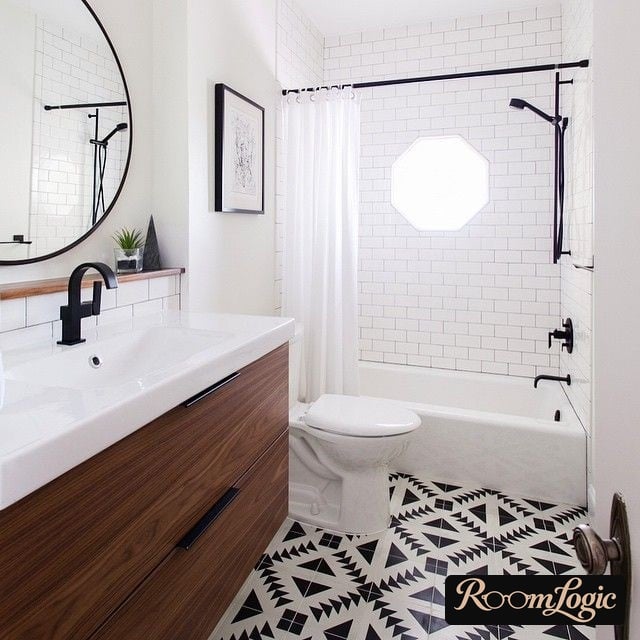
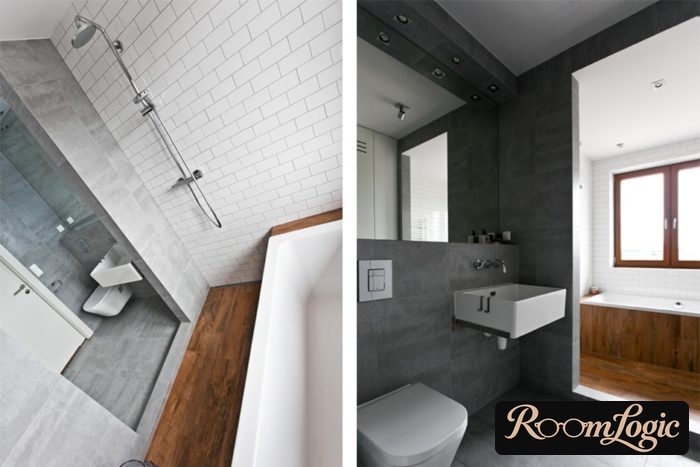
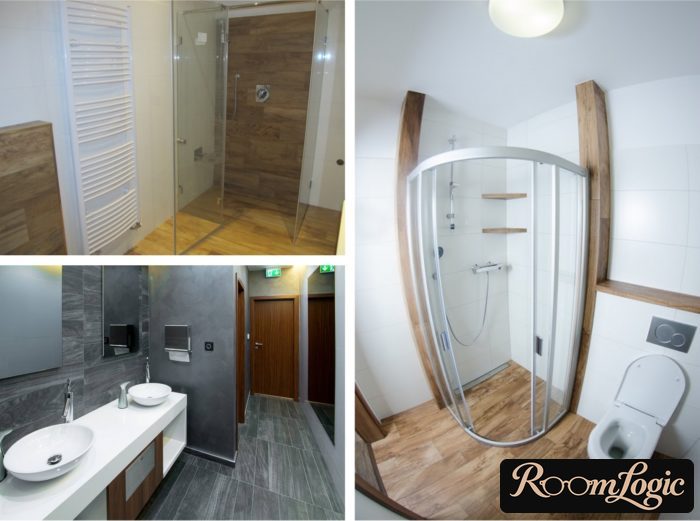
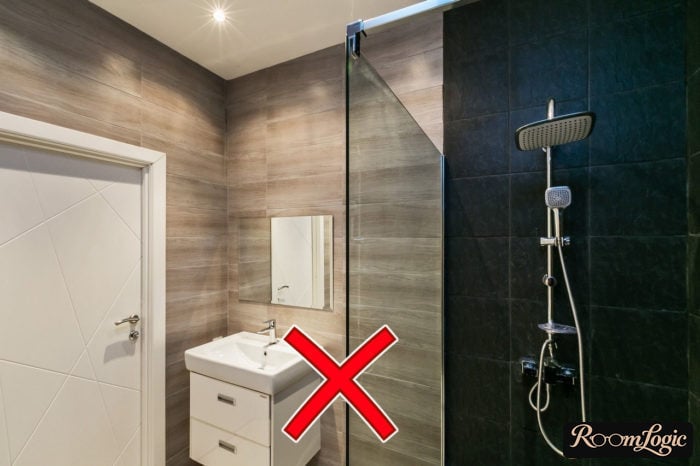
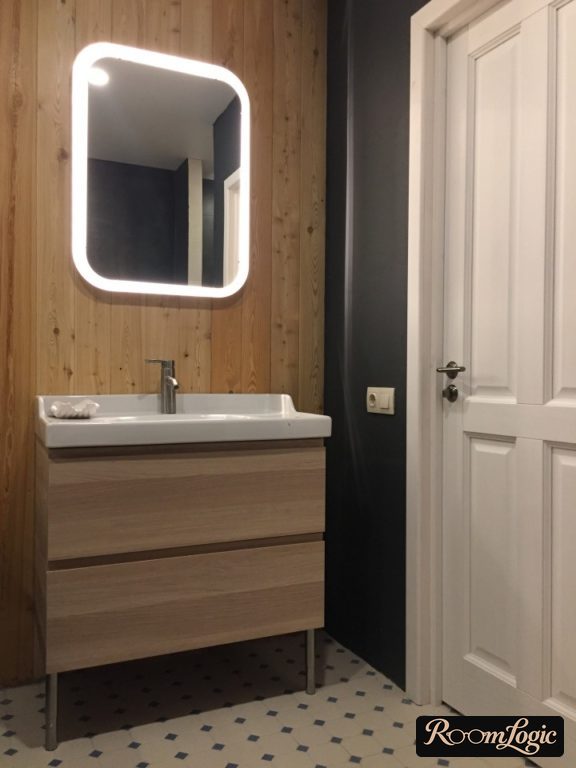
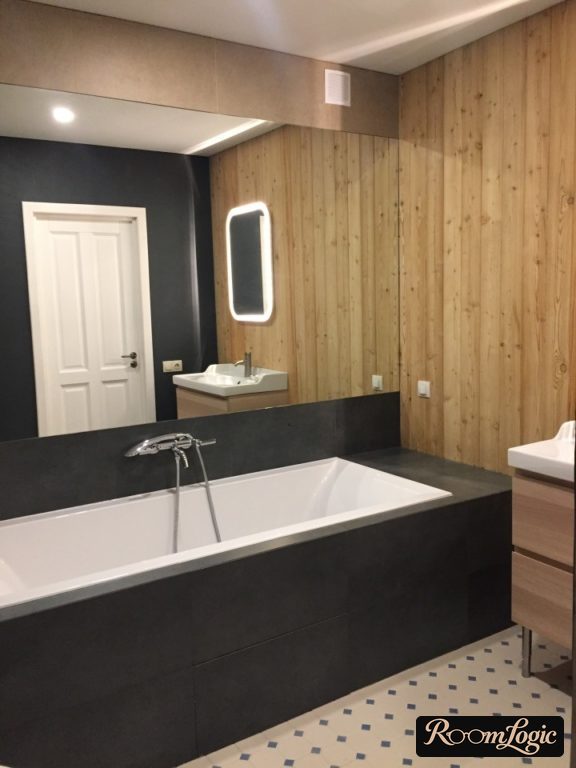
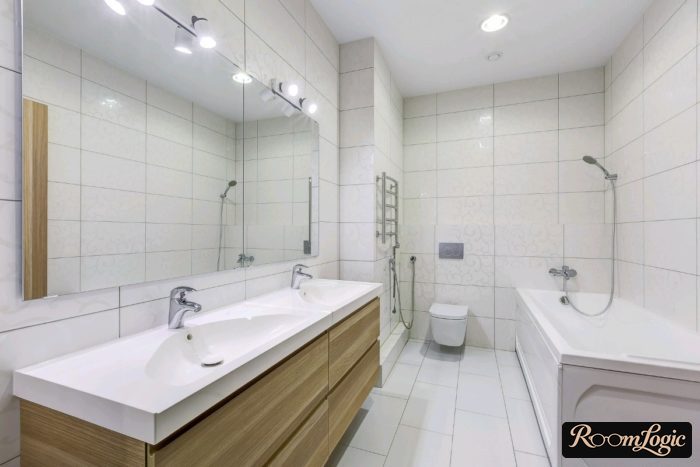
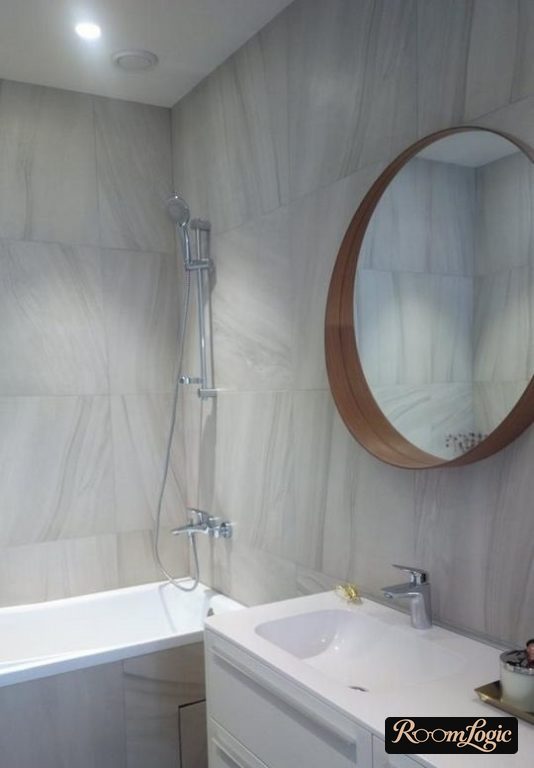
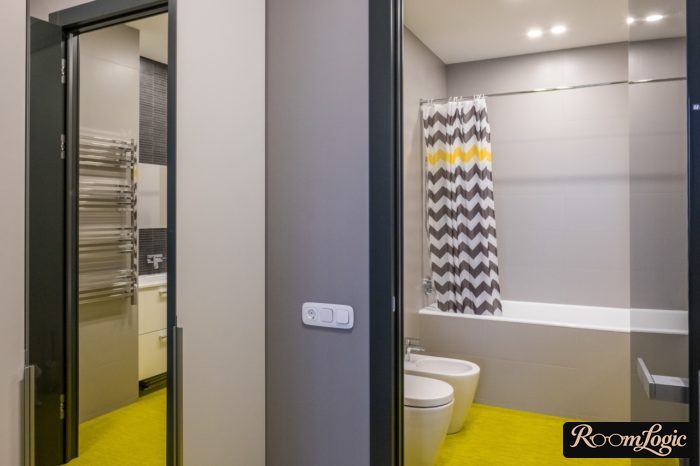
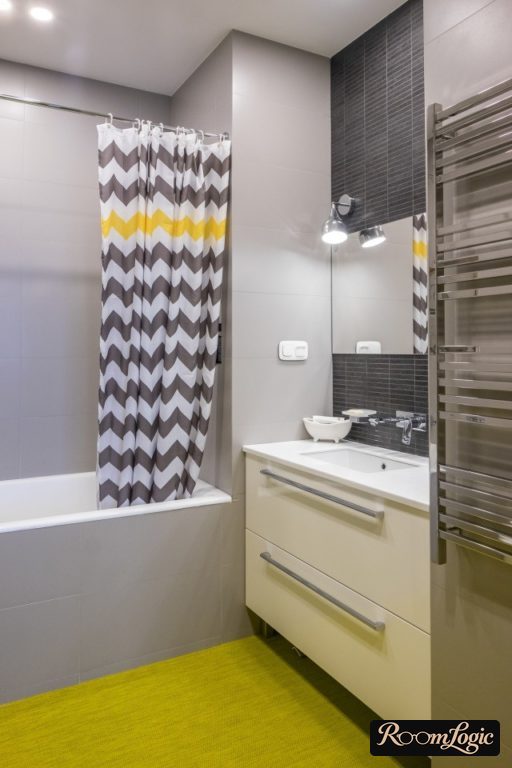
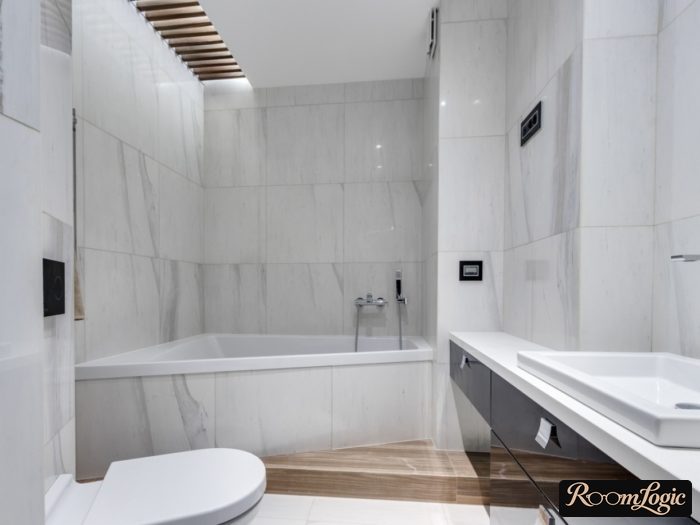
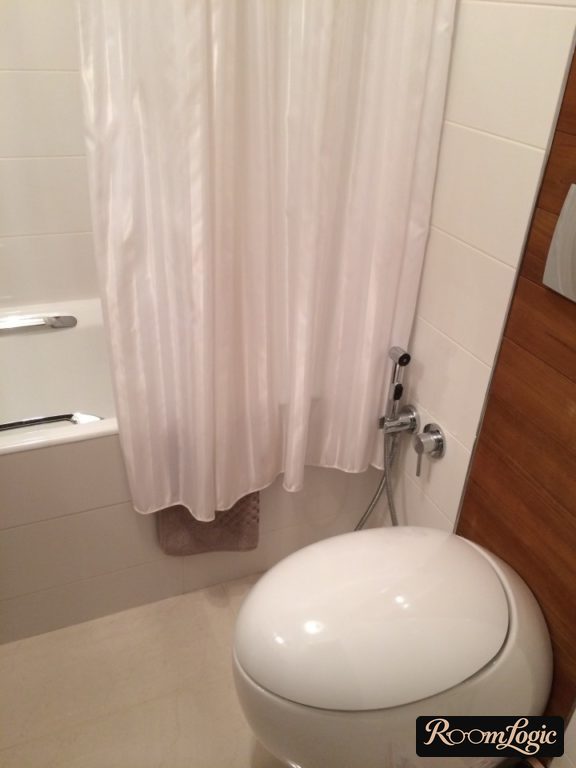
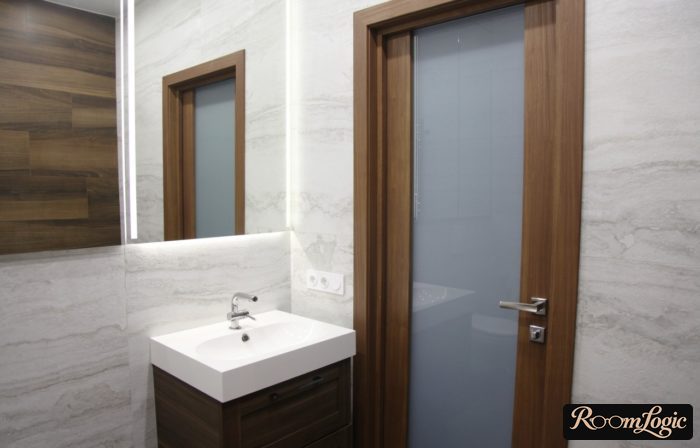
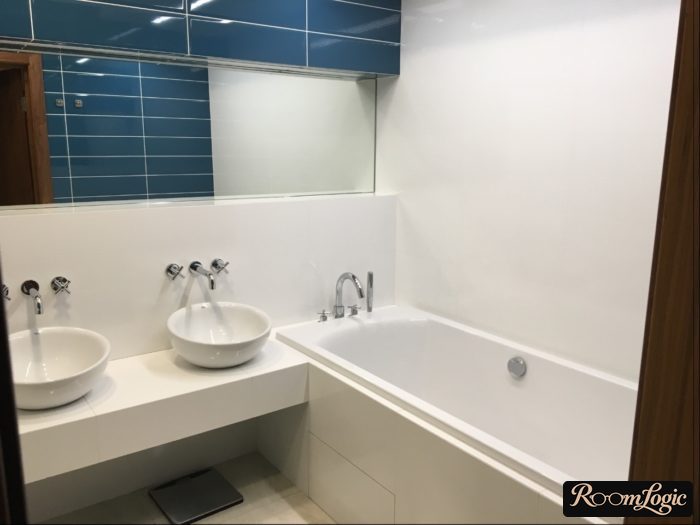
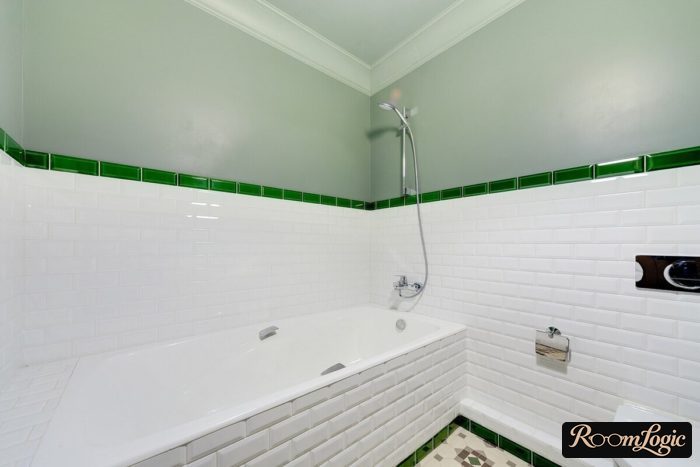
Simply using wood and a few individual details is not enough. The overall impression, open space, and light matter. Photos of decent bathrooms that do not belong to Scandinavian style:
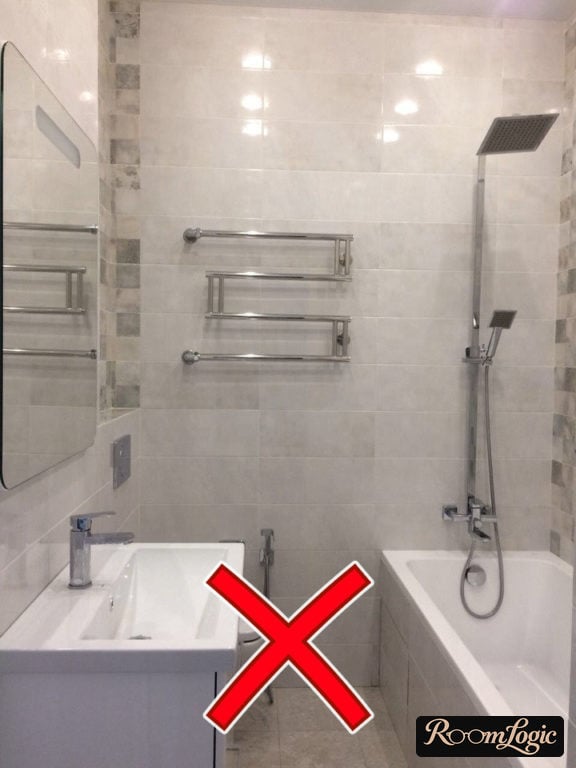
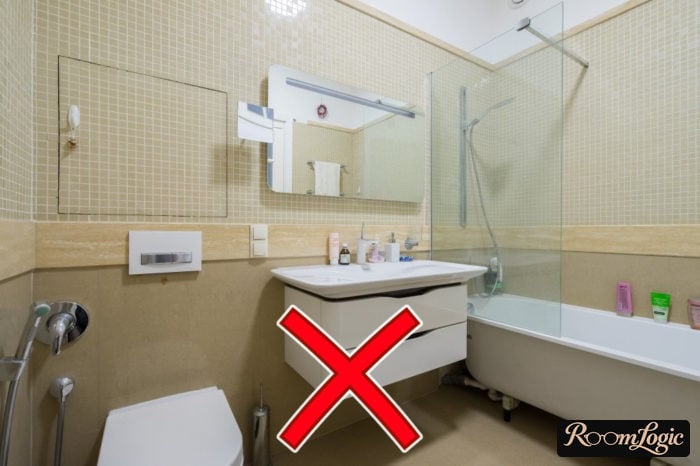
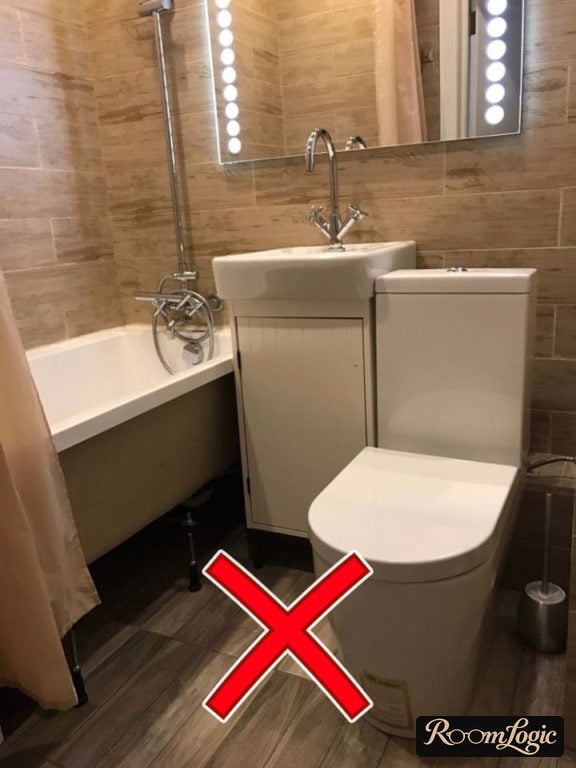
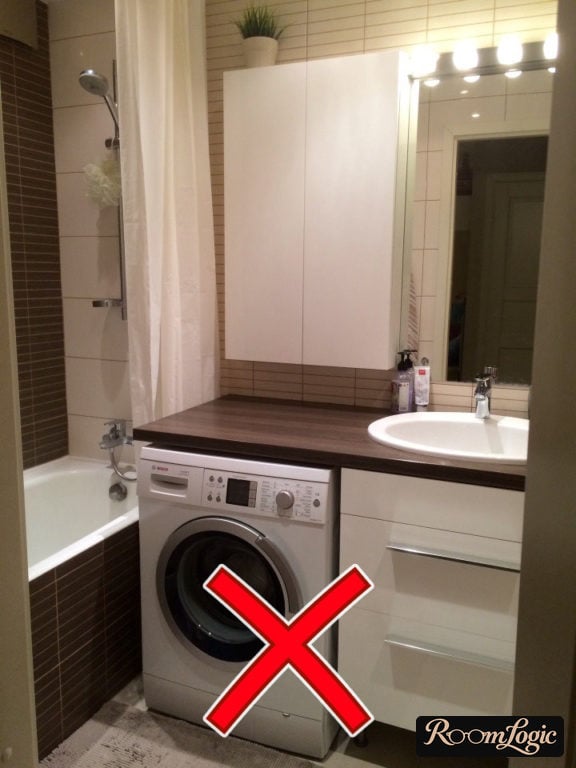
Many photo examples of bathrooms with Scandinavian elements, because the style is great, appeared in earlier articles:
- Bathroom interior with a shower: which two of three shower options make sense.
- Contemporary bathroom tile: what works in ordinary apartments, with many photos of wood-look tile.
- How to choose bathroom tile: if the previous article covers appearance, this one is more about technical details.
- Small bathroom design: many adaptations and Scandinavian elements.
- Bathroom design with a toilet and washer: how to place the washer and why the finishes should not be overcomplicated. Scandinavian style is perfect there.
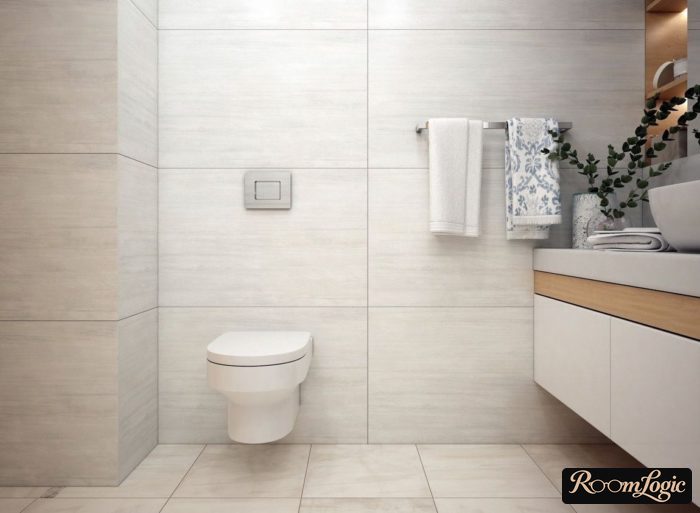
One thing you definitely should not copy is the old floor-mounted toilet. It is a very bad solution. Choose a wall-hung toilet with a concealed carrier, without exceptions. More about full-bath interiors.
Components of the Style
Wood-Look Tile
Wood-look porcelain tile is one of the best things to appear for bathrooms. This tile works in any bathroom style, especially Scandinavian. There is a huge choice of colors, textures, and sizes. There is a rule:
The more the tile resembles real wood, the better.
That means it should imitate not only knots and saw marks but also deep texture. Real bathrooms usually have no windows, so they use artificial light. It creates shadows on the tile texture, adding depth and realism.
Because of the texture, wood-look tile looks very beautiful under angled light. This is especially relevant in a loft-style bathroom, where wood imitation is just as popular.
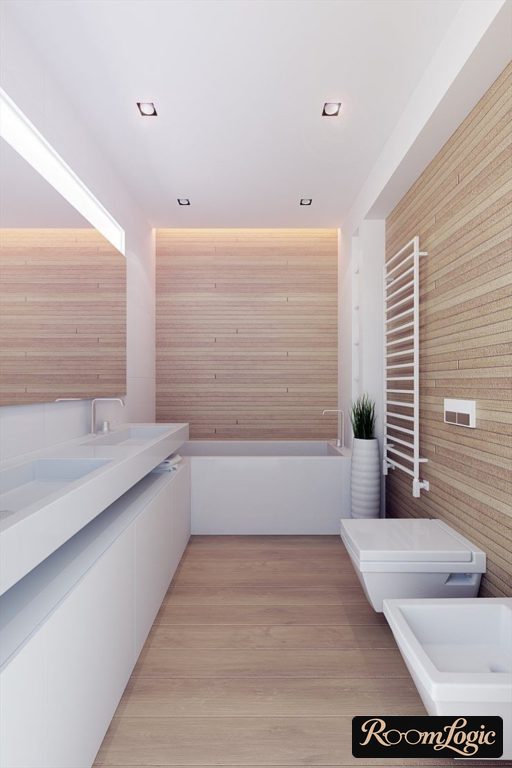
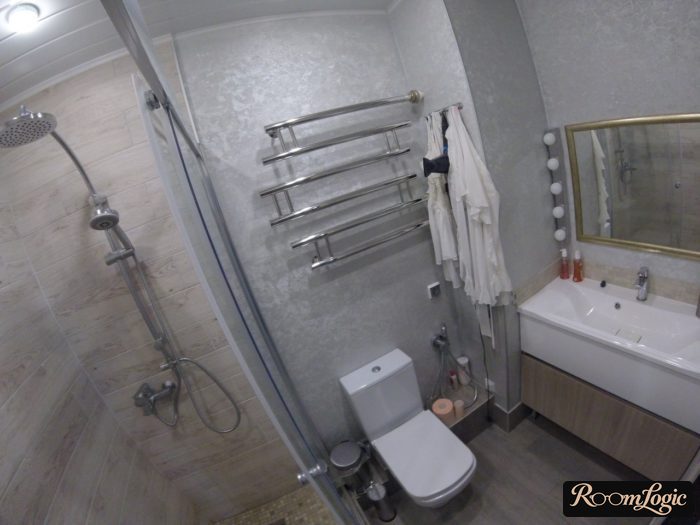
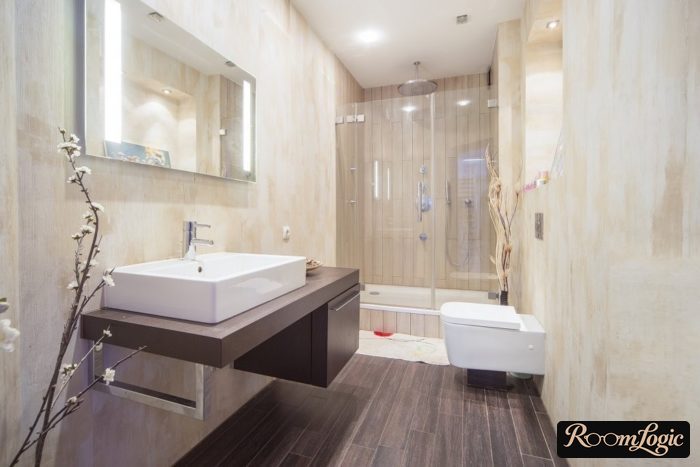
A standard trick with wood-look bathroom tile is continuing it from the floor onto the wall and finishing both surfaces the same way. The effect is interesting, and you do not need to worry about matching. The only disadvantage is that if it is porcelain tile, cutting holes in it is extremely difficult. If many objects will be attached to the wall, this can cause problems.
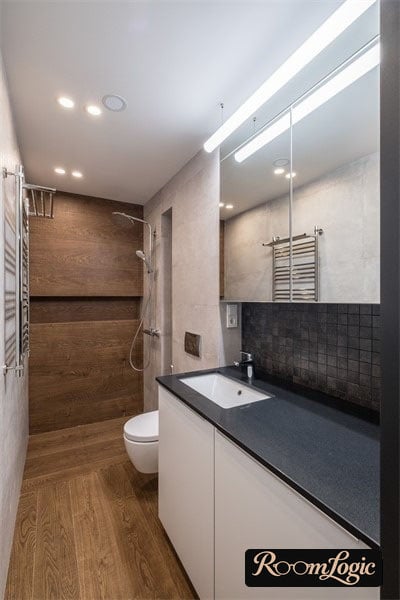
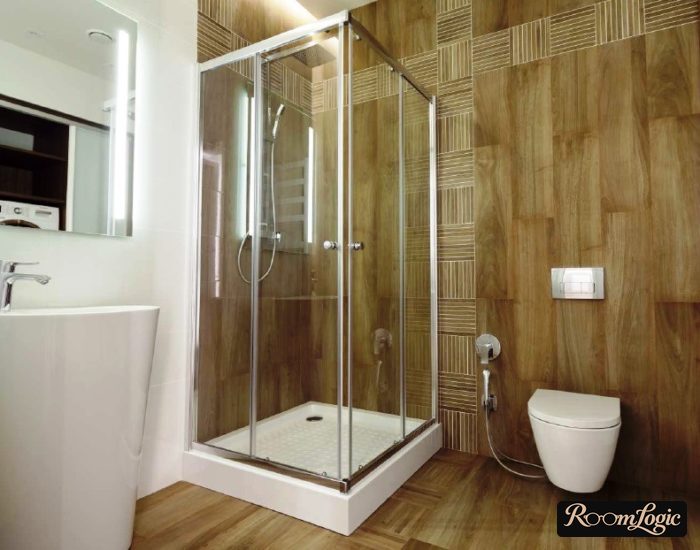
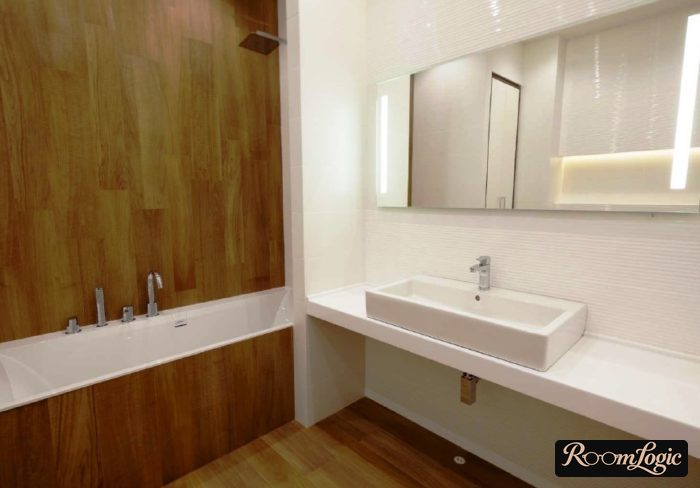
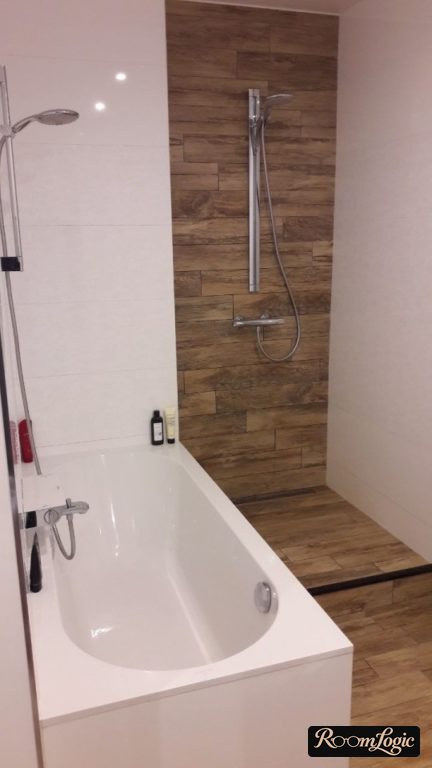
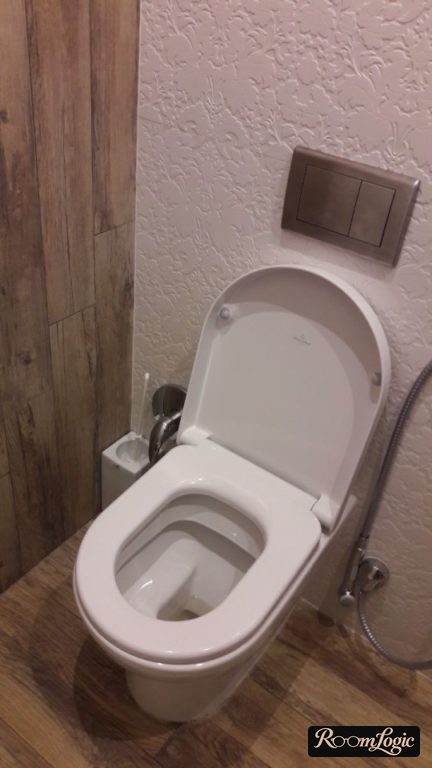
Important: wood-look tile is installed with an offset, like parquet or laminate.
The offset can be half or, better, one-third of a board, creating a running-bond layout. If wood-look tile is installed like ordinary rectangular tile, it will look strange.
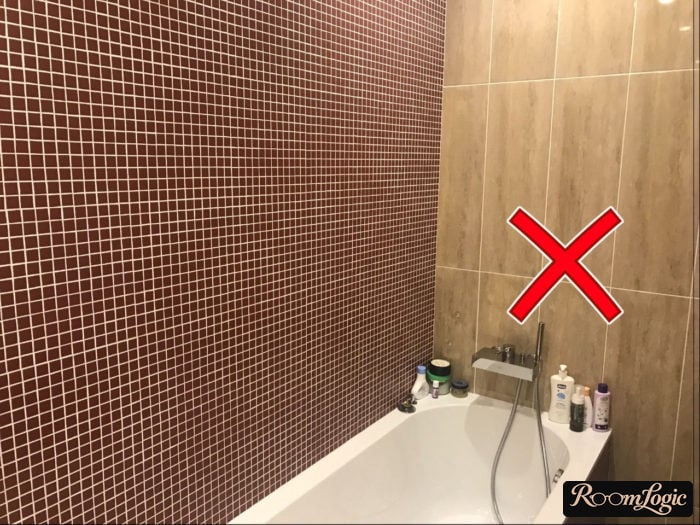
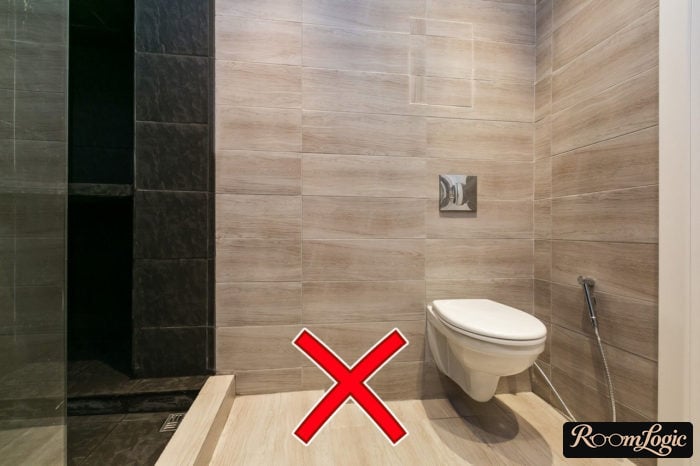
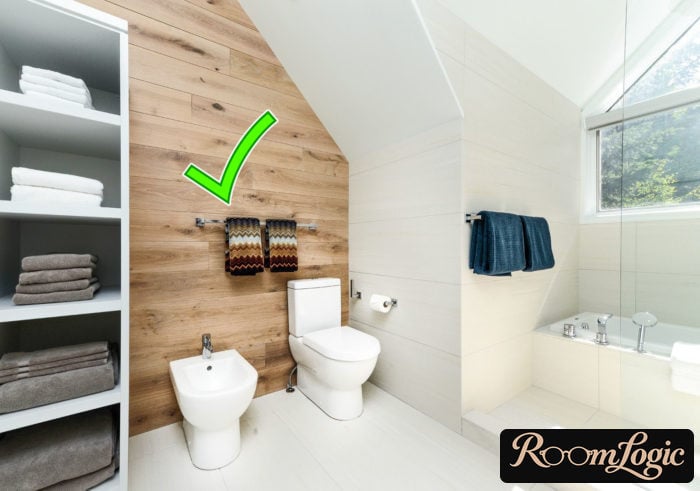
The best colors imitate real wood species, meaning light yellow or brown examples. This tile goes with absolutely everything except large amounts of bright unnatural colors. Muted accent colors are allowed.
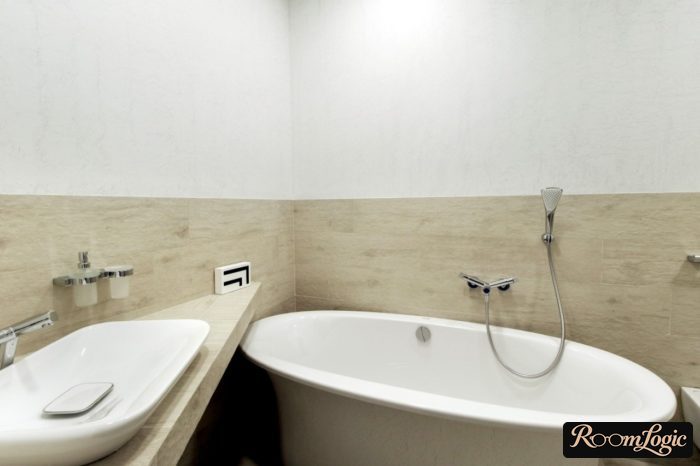
A Wood Bathroom Countertop
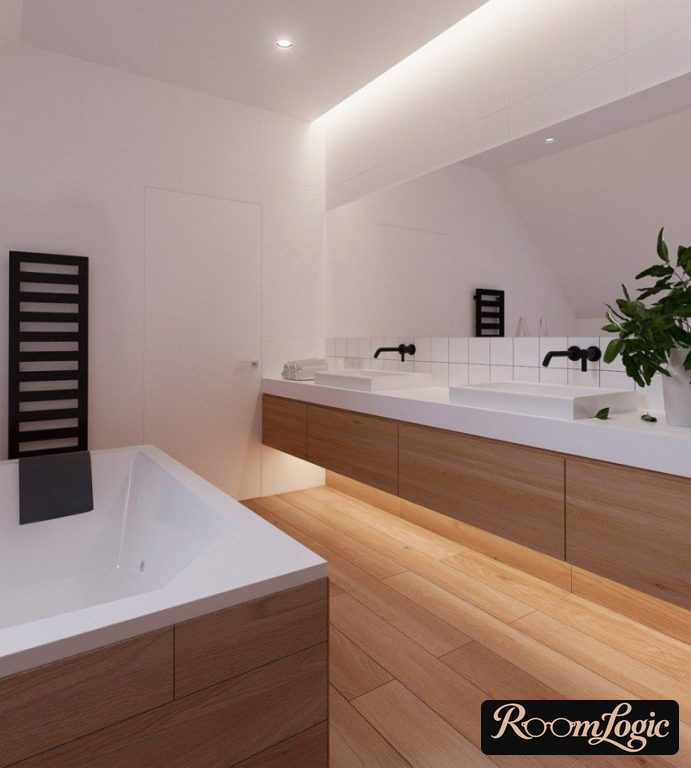
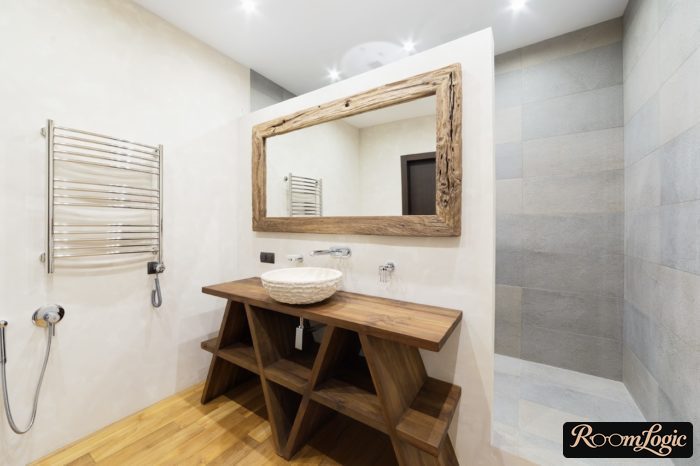
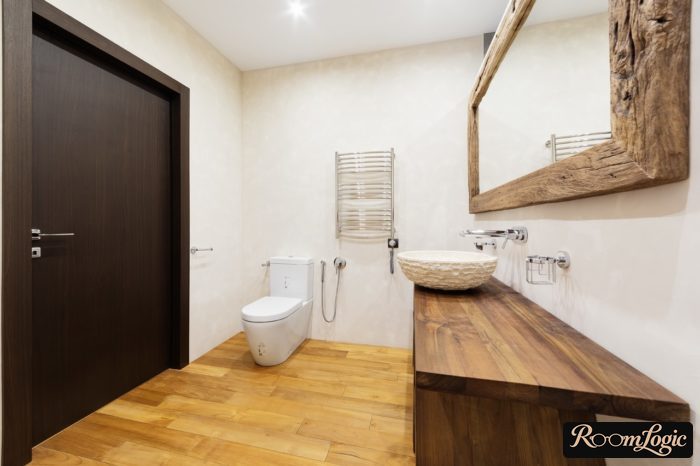
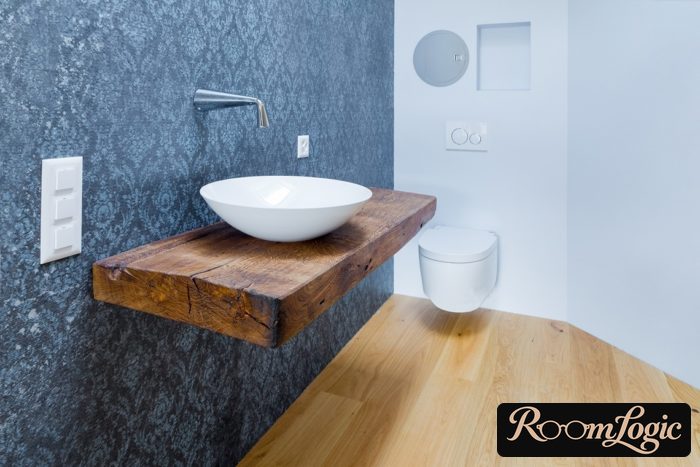
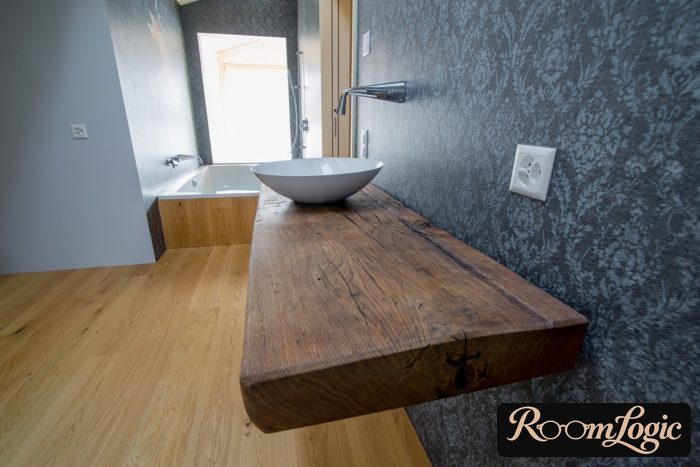
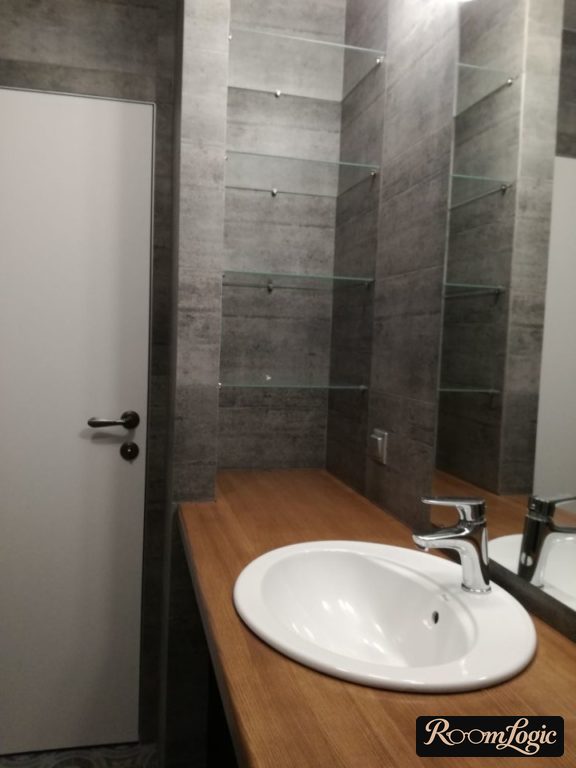
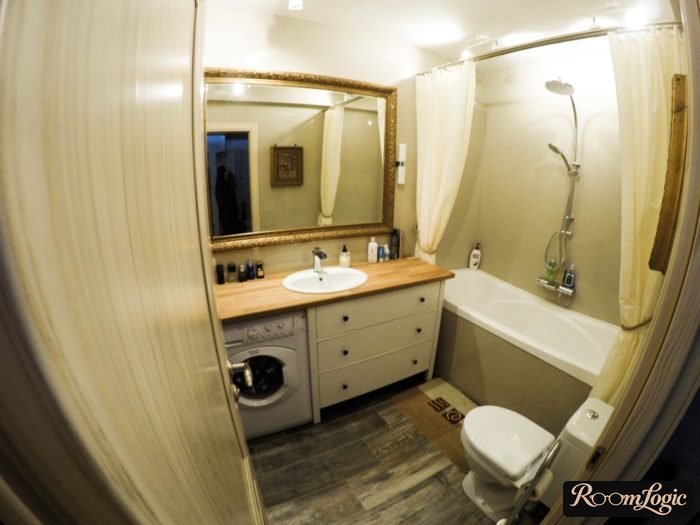
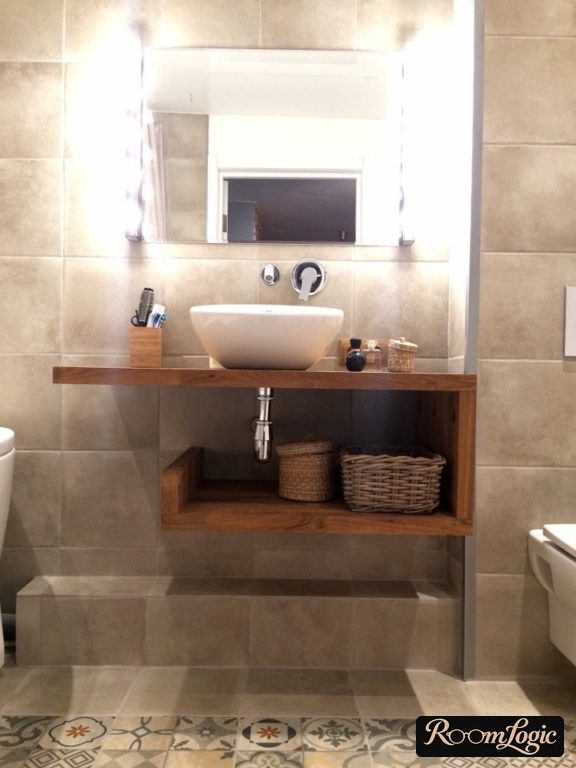
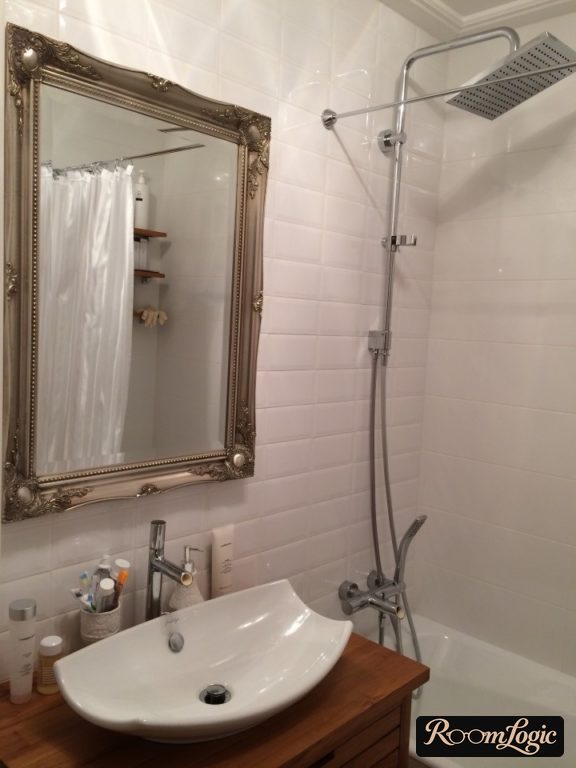
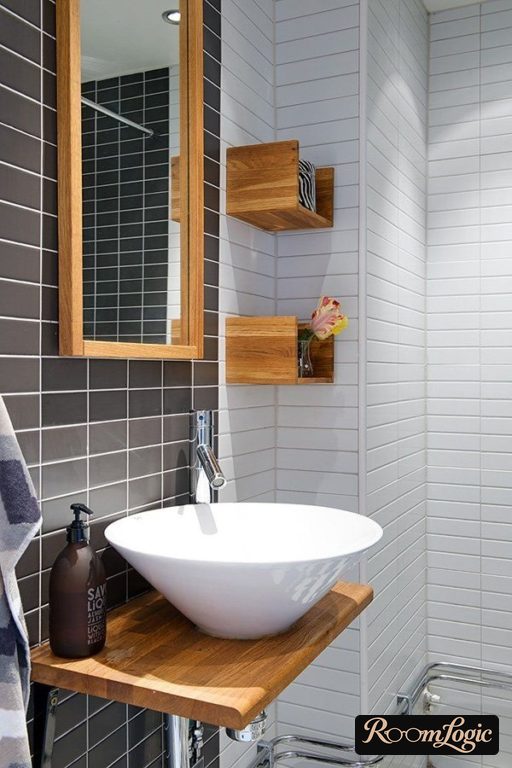
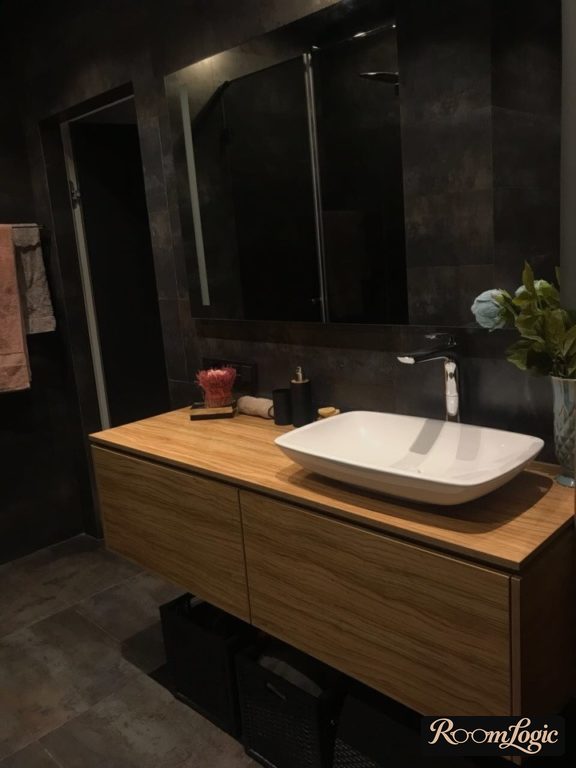
A countertop for an undermount or vessel sink is a great subject. It lets you ignore the dimensions of ready-made solutions and build the sink area without gaps. The result is minimalist and functional, a perfect match for Scandinavian style.
There are two ways to make this countertop in a bathroom. The first is solid natural wood. It is luxurious visually and costs accordingly. Solid wood is always custom work. Because a bathroom has high humidity, constant direct contact with water, and temperature changes, the wood needs serious finishing. In short, the option is as complicated as it is exclusive.
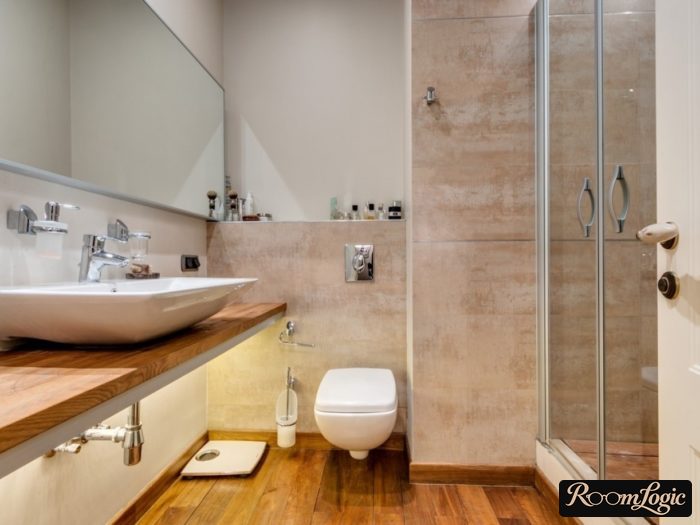
The second option is the furniture standard: particleboard or MDF laminated with film or plastic that imitates wood. Financially and practically, this is a reasonable, trouble-free method. The visual side has problems. Among the options available in the source market, I liked only Natural Nebraska Oak. Some multistrip imitations also work when the surface area is small, because the repeated pattern does not stand out yet. U.S. product names differ, but the same rule applies: inspect the repeat at full counter size.
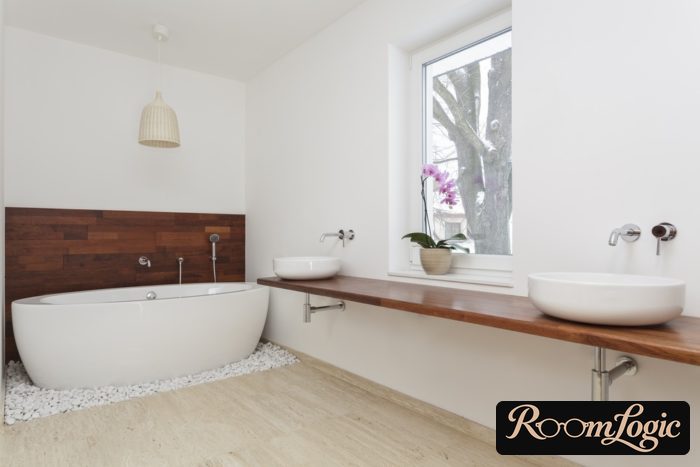
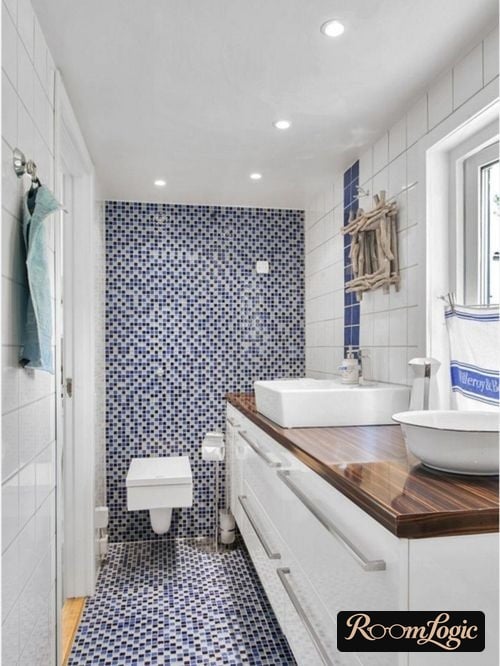
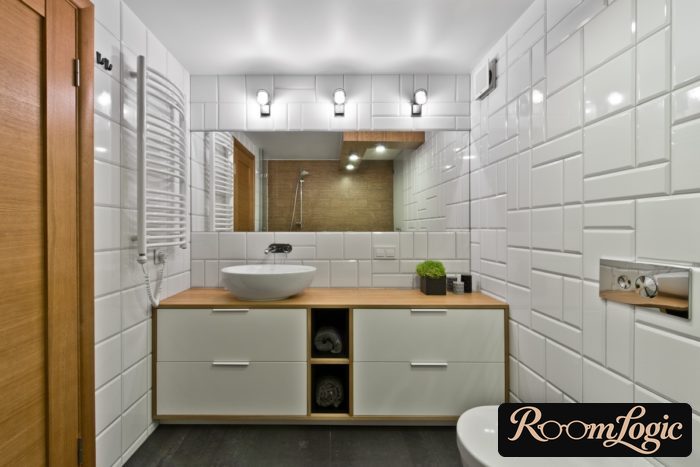
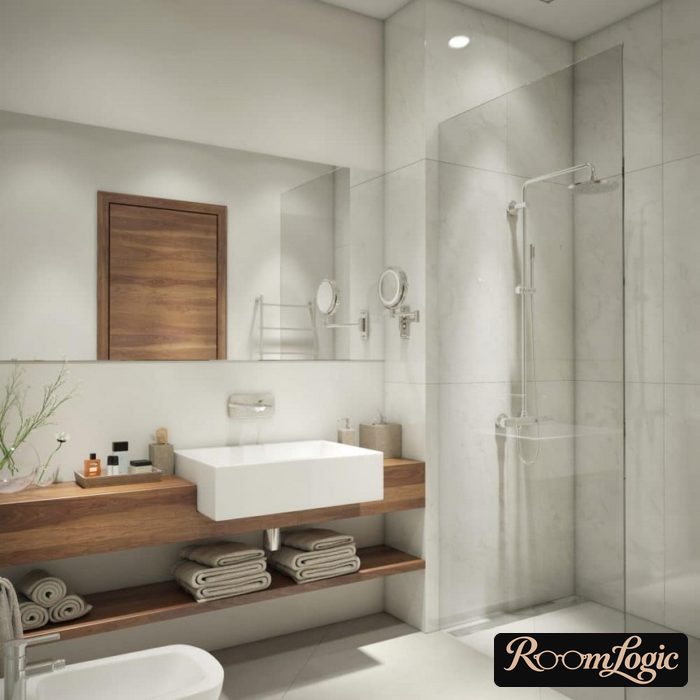
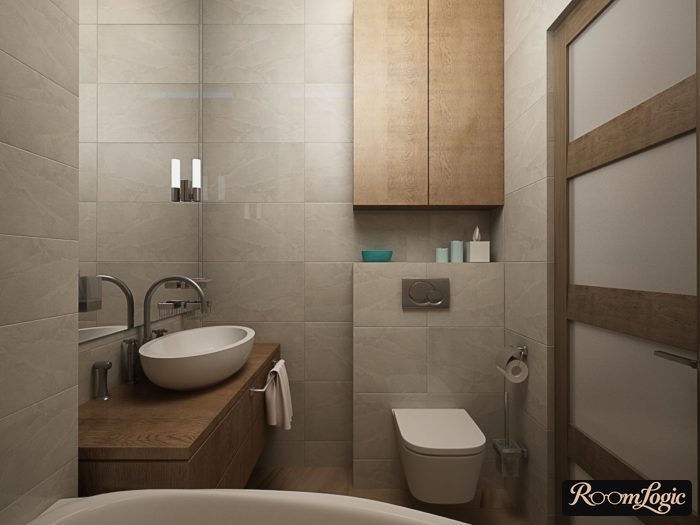
I also advise looking at a vessel sink combined with a wall-mounted faucet. Nothing beats this solution for practicality. The spout is high, so splashes do not reach it, and there is no joint between the faucet and sink where a stain usually forms.
Light Colors
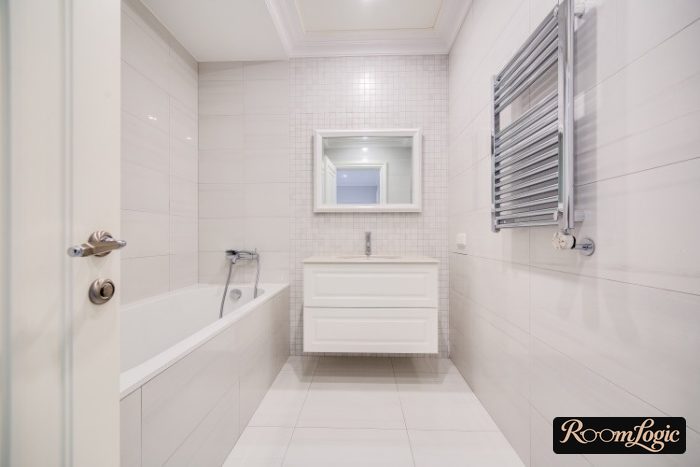
The basic color of any Scandinavian bathroom is white. It is perfectly normal for the floor, walls, and ceiling all to stay within white, beige, and light gray. Because every vitreous-china fixture is white too, we get very few contrasts.
Practicality is excellent too because most spots come from minerals in dried water, and those are light as well. At the same time, do not be afraid to use dark gray grout with white tile. It looks decent and is definitely better than dirty, uneven white. Because of its light palette, Scandinavian style is ideal for a tiny apartment bathroom and is as practical as possible.
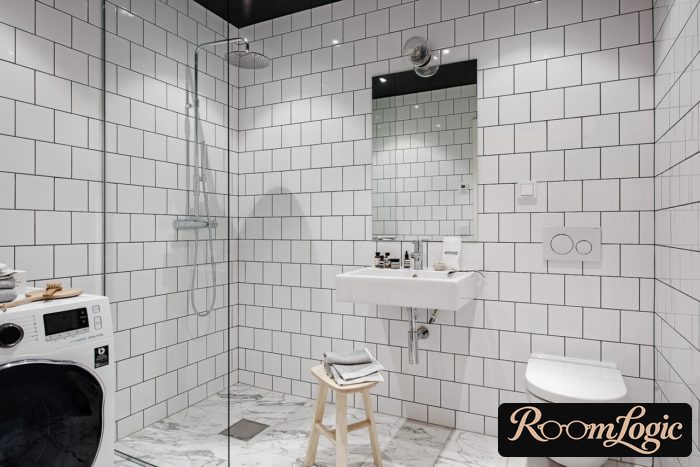
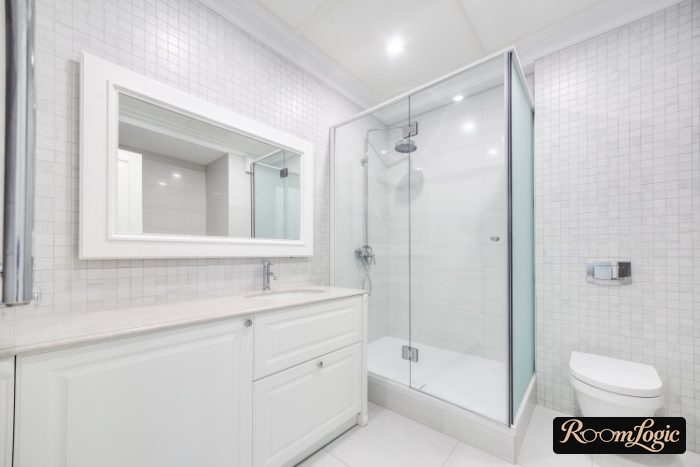
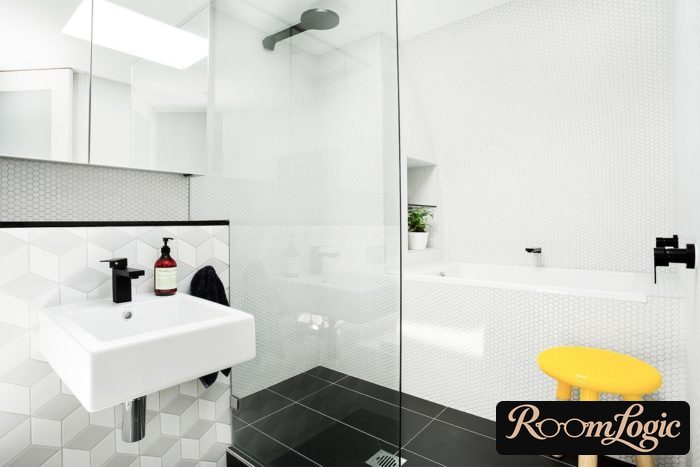
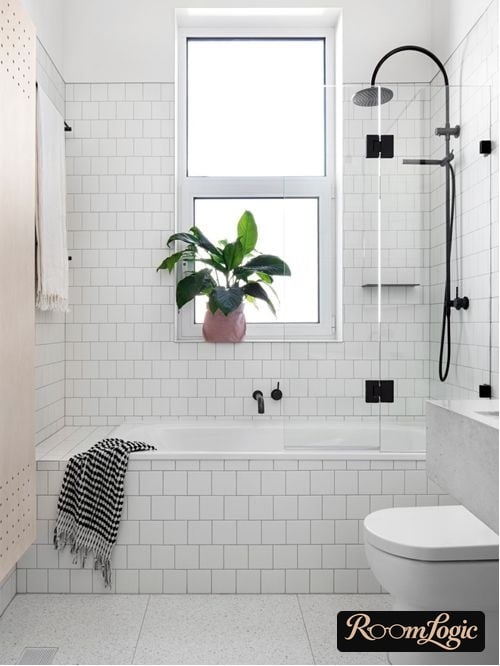
In every bathroom style except Scandinavian, larger tile looks better. But in white, good small brick or square tile works. If you want a bathroom as close as possible to authentic Scandinavian design, choose black grout for this tile. It is slightly less practical than gray, but it is what they use in the style’s home countries.
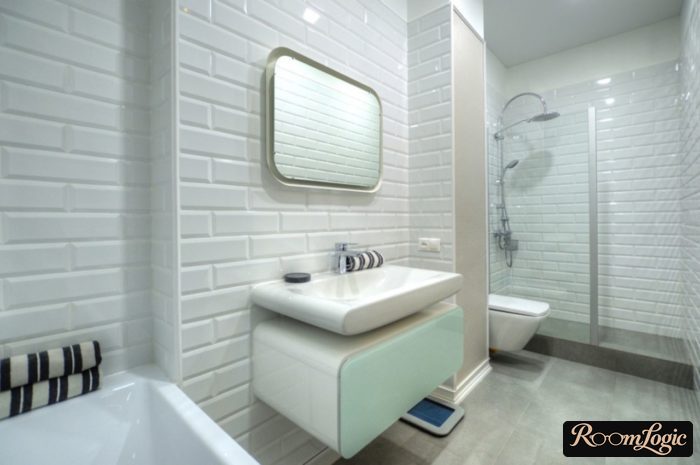
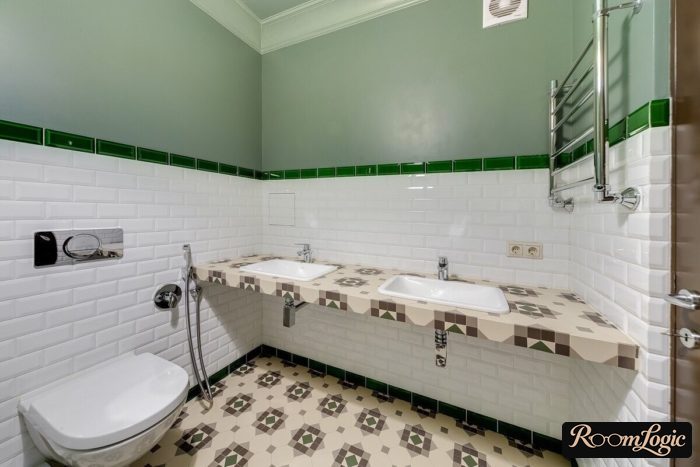
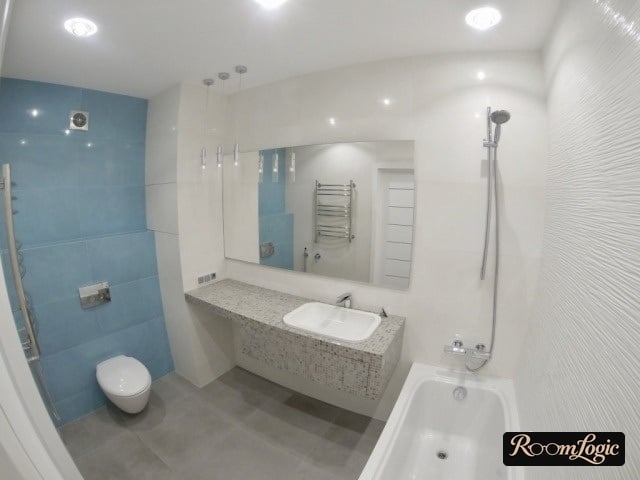
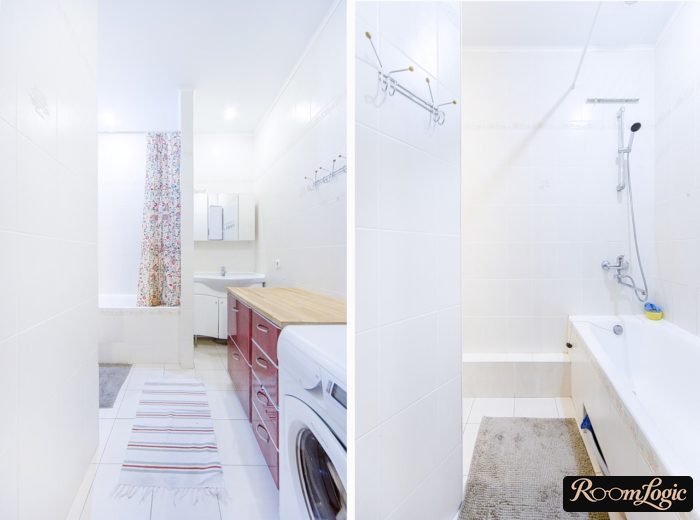
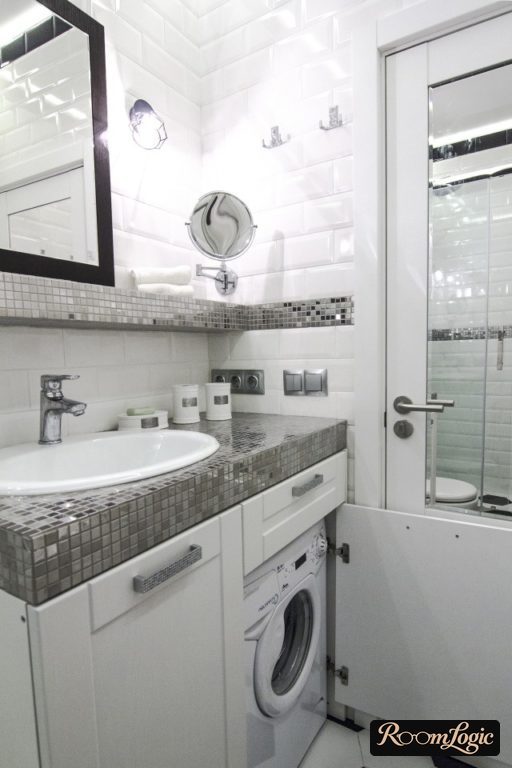
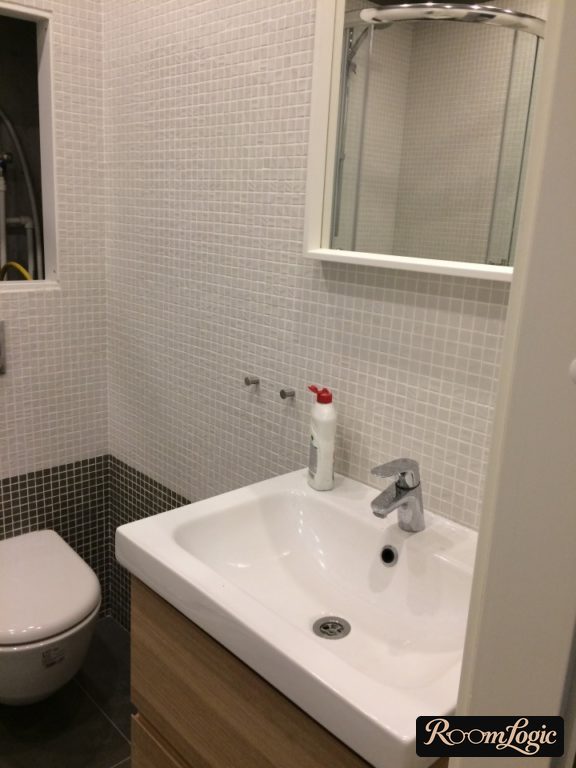
The ceiling should be only white, flat, and matte. In a U.S. bathroom, use moisture-appropriate drywall and matte bathroom paint.
Patterns, Geometry, and Patchwork
Many people outside Scandinavia fell in love with colorful patterned tile where a set consists of different tiles rather than identical ones. It creates a patchwork effect. This is an interesting finish and still works, but it is more of an adaptation.
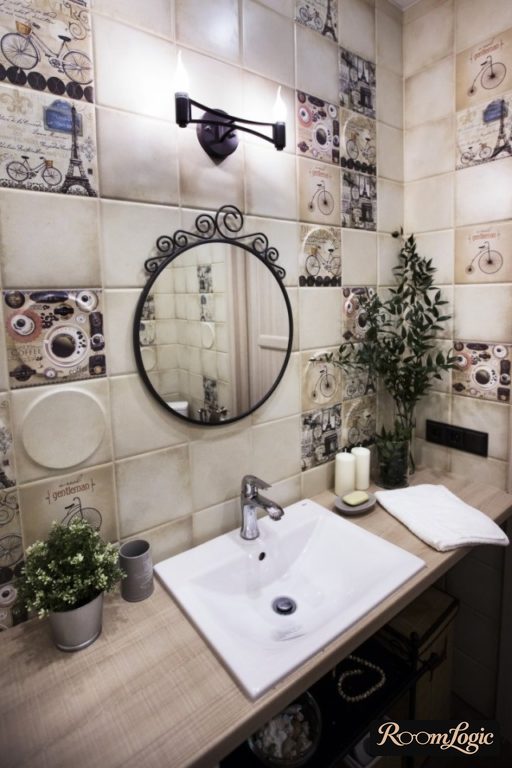
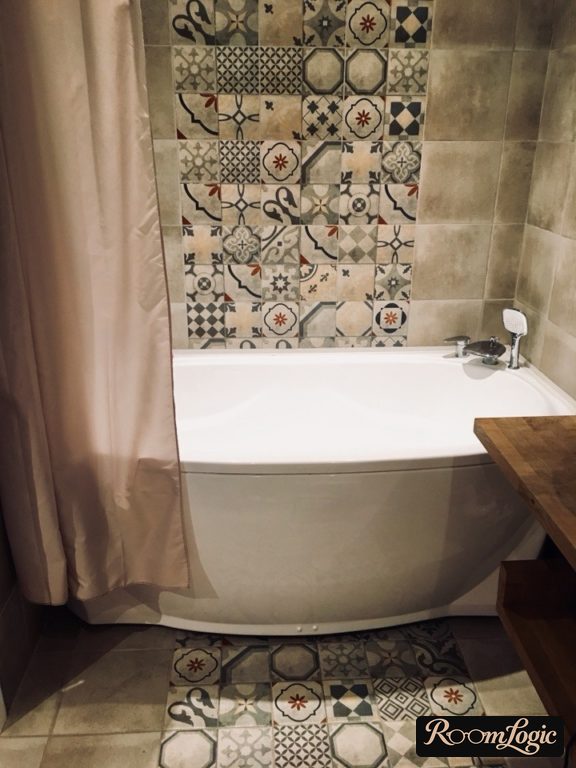
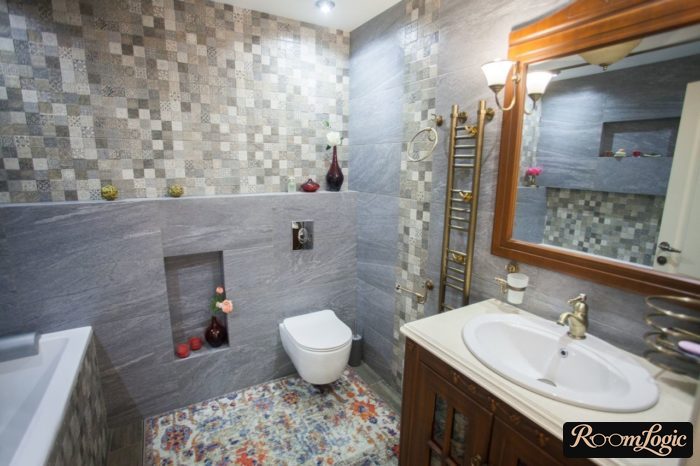
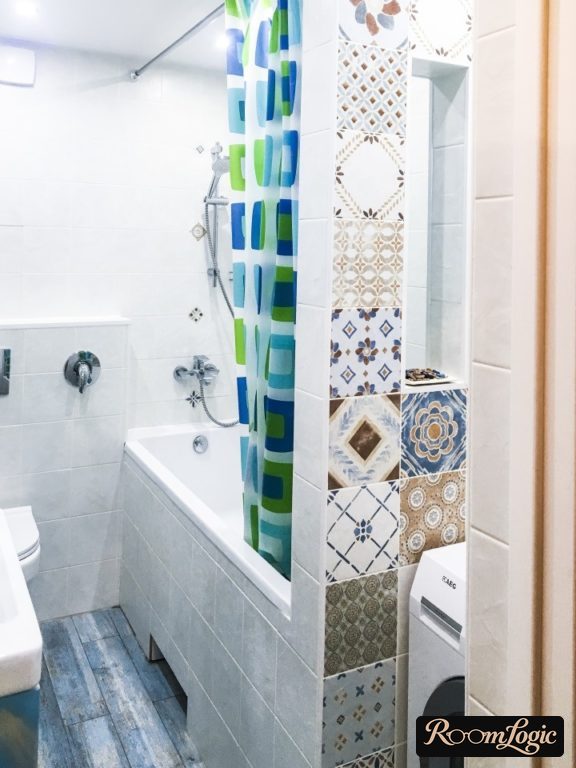
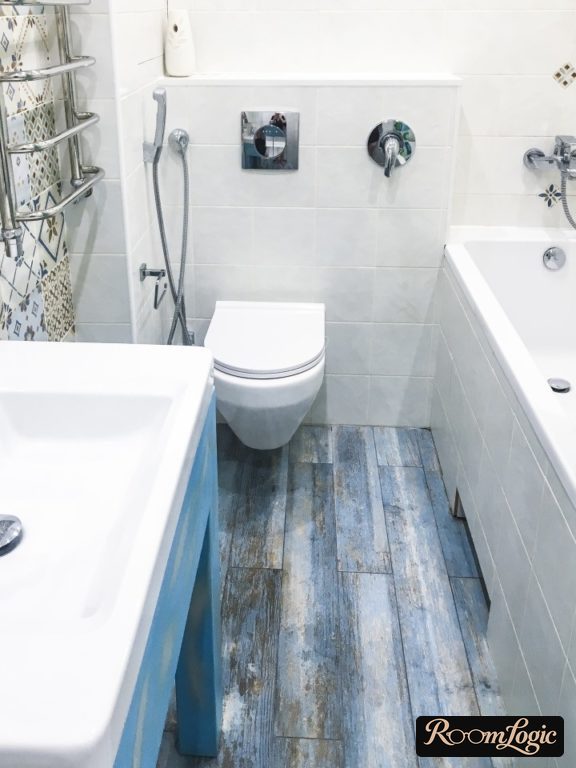
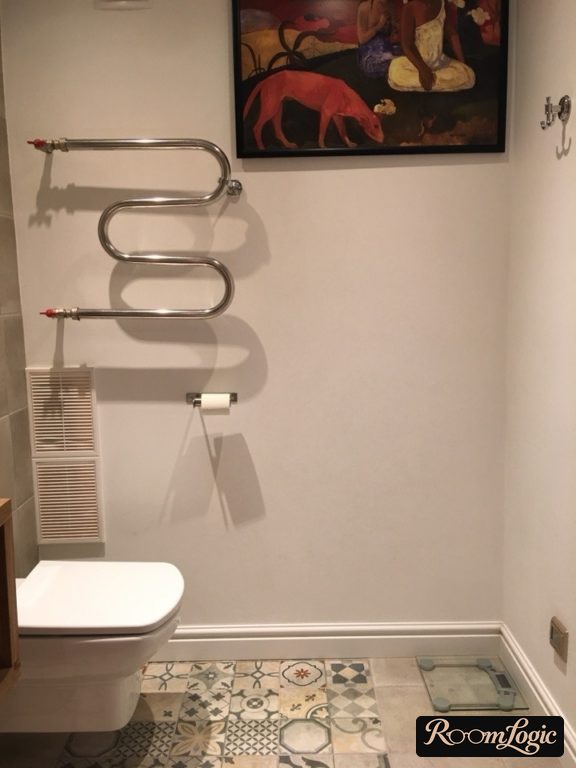
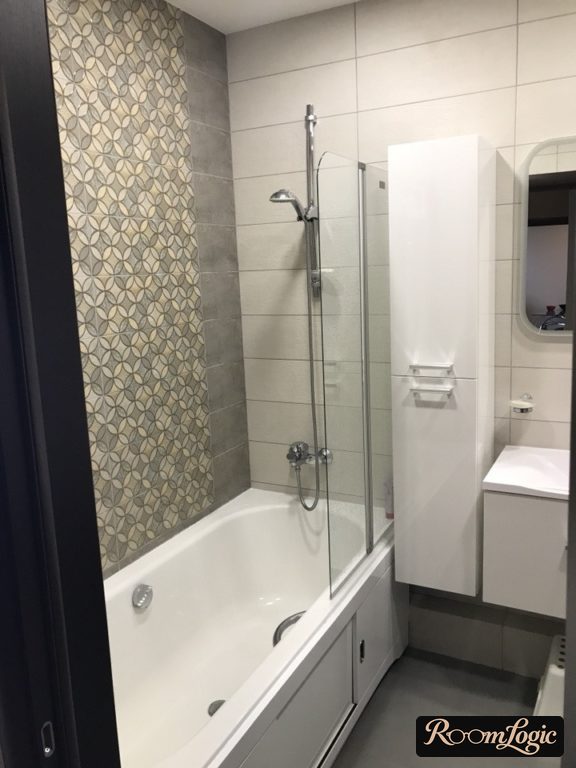
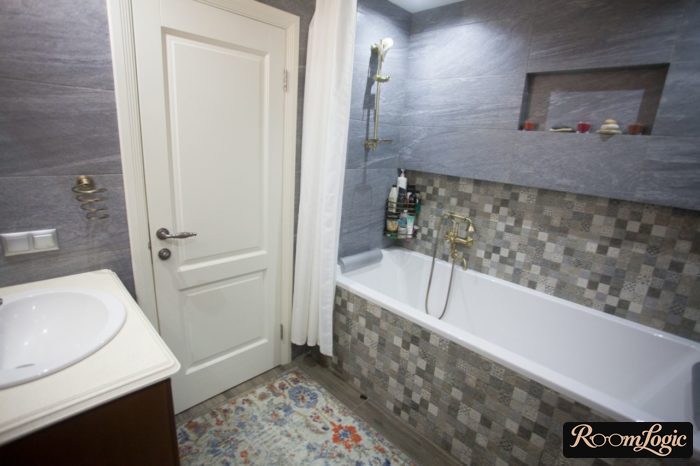
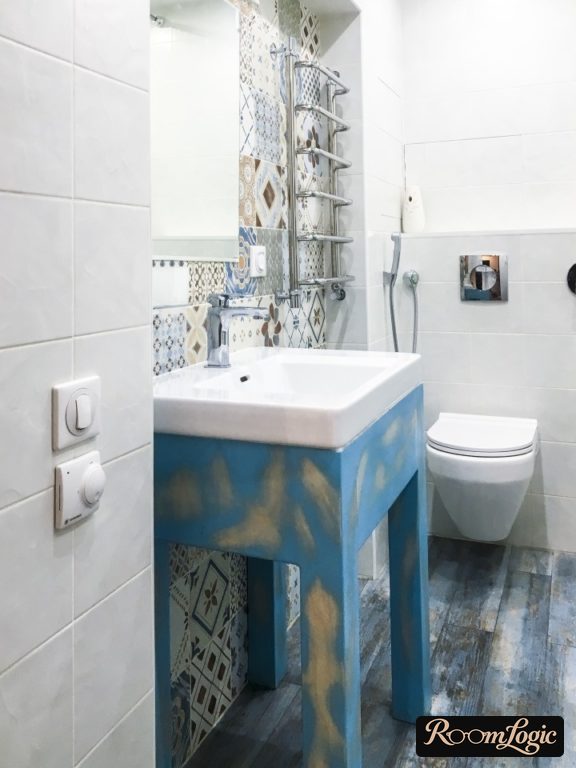
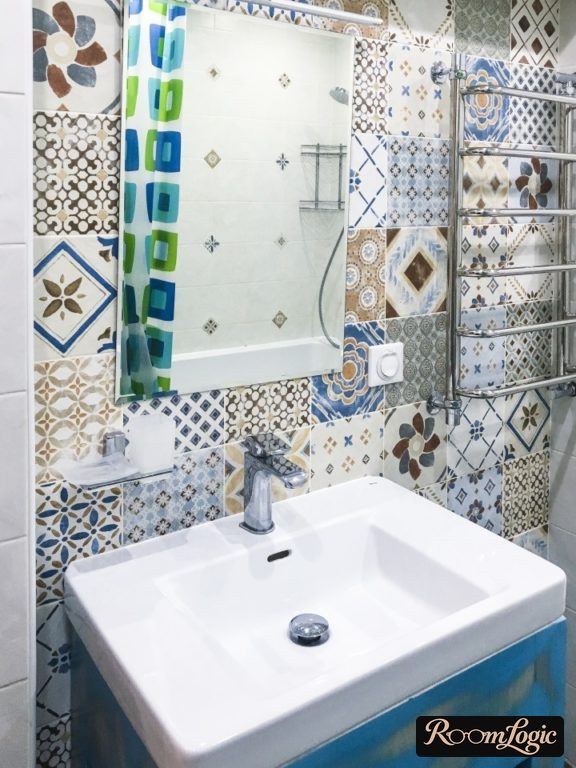
Patterns and geometric motifs really are part of Scandinavian bathroom interiors, but in black-and-white monochrome. A complicated pattern is more than enough to make a bathroom look interesting even in shades of gray.
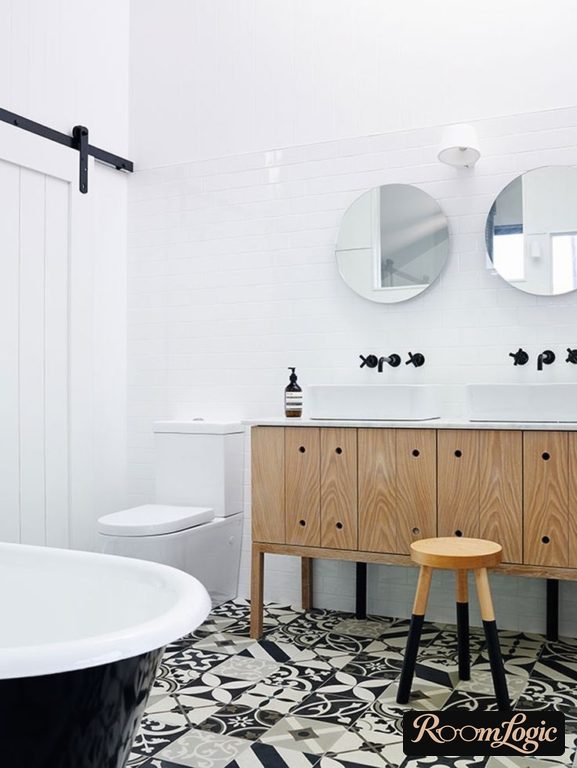
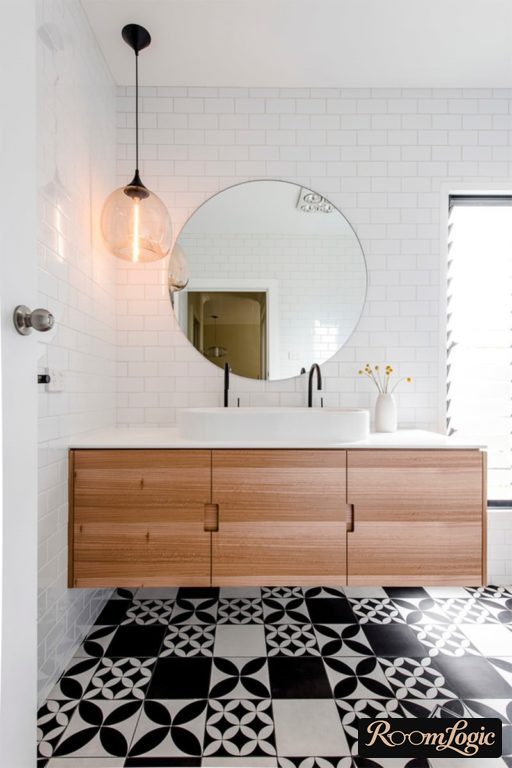
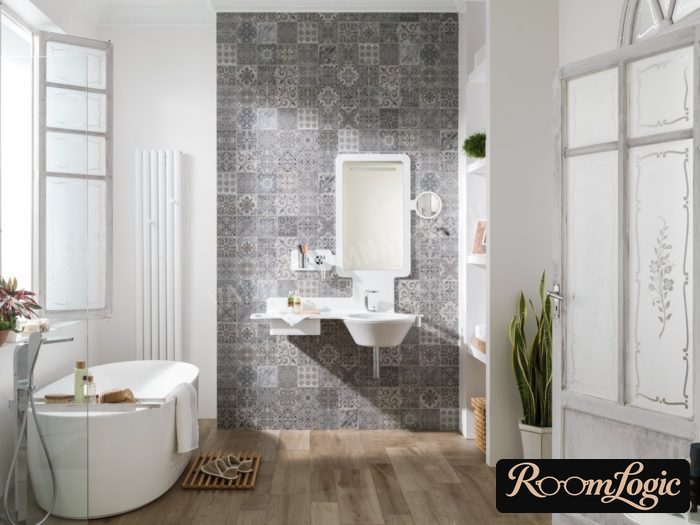
Another unusual feature of Scandinavian style is tile with a 3D effect. But remember that all of these are accents. They should not cover every plane. The base is simply light colors.
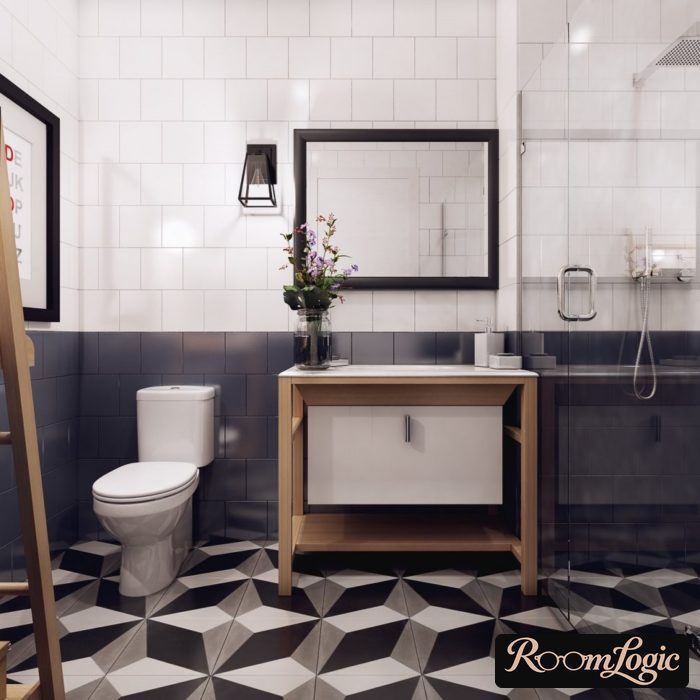
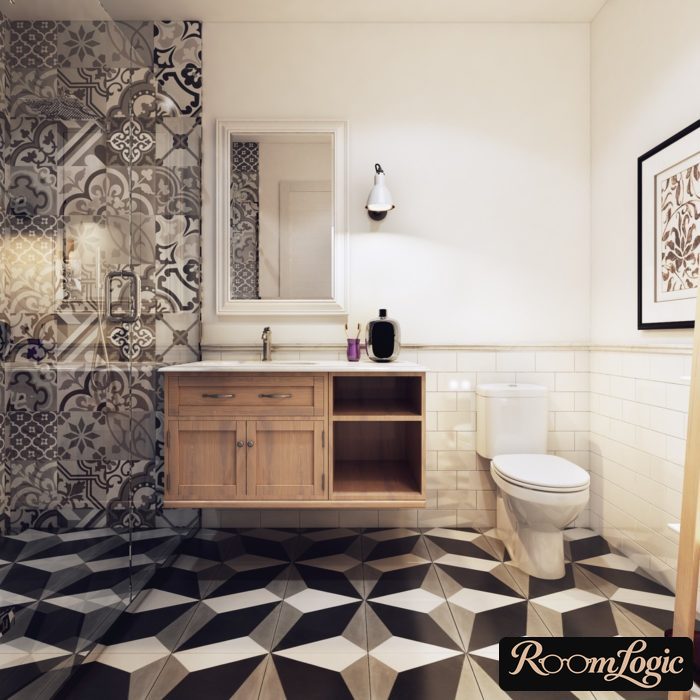
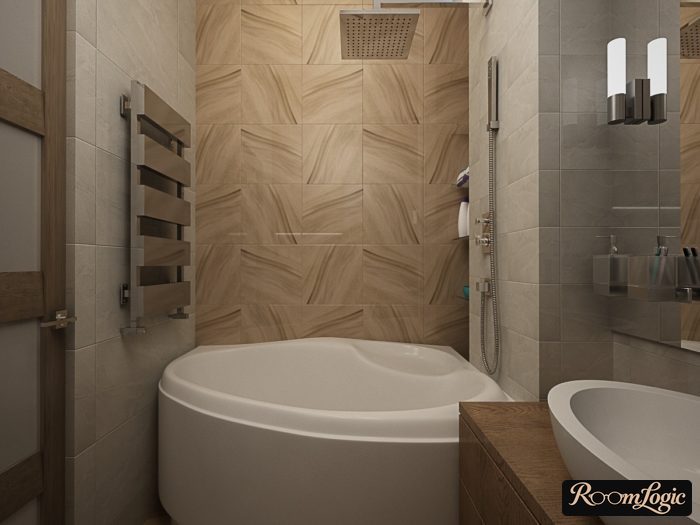
Accent patterns can be used even in a small space. A small Scandinavian bathroom:
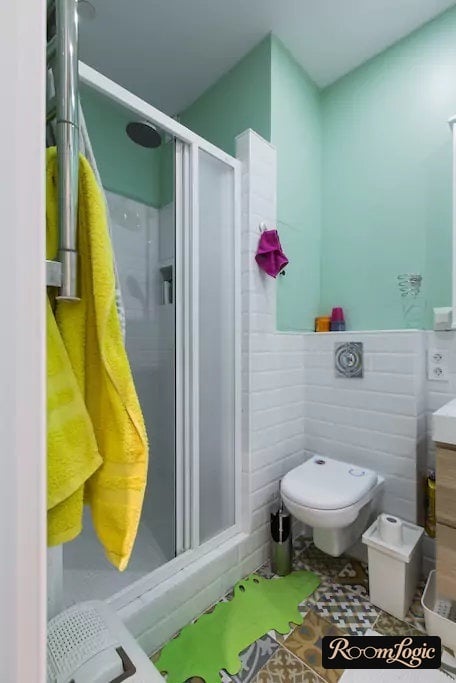
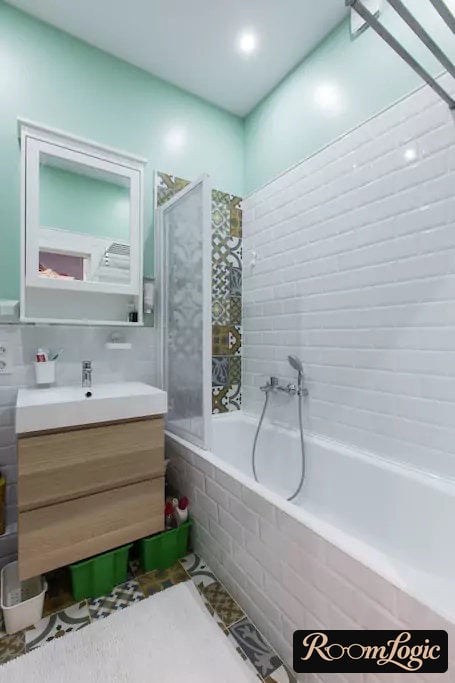
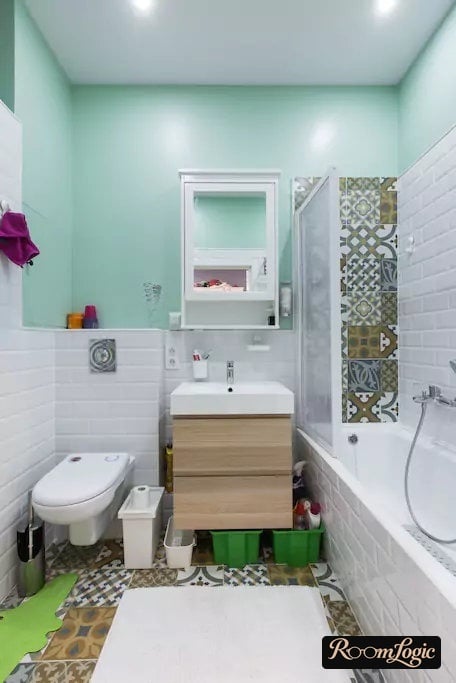
A Contemporary Scandinavian Bathroom
A good idea is not to copy the style completely but simply take Scandinavian elements and make a good contemporary bathroom design. Elements better left out:
- Floor-mounted and other retro toilets.
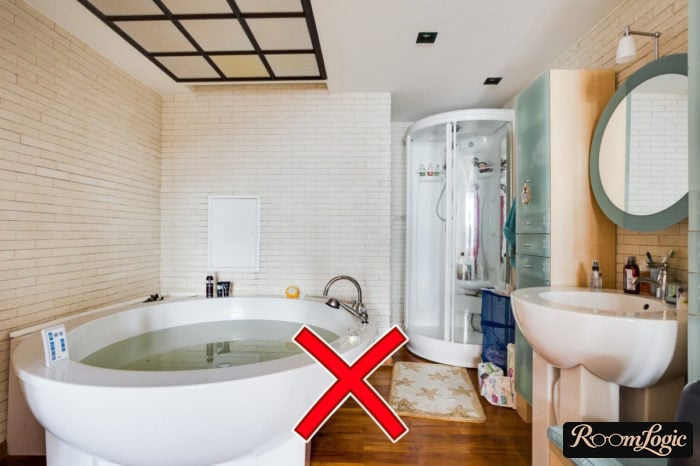
- Freestanding and clawfoot bathtubs that are not enclosed.
- Retro faucets.
- Small tile.
If none of this scares you, a Provence-style bathroom will suit you too. It is the only classic style not built on kitsch and luxury.
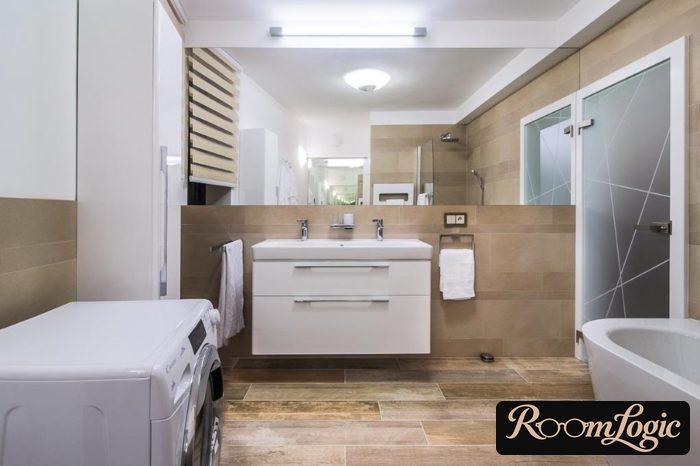
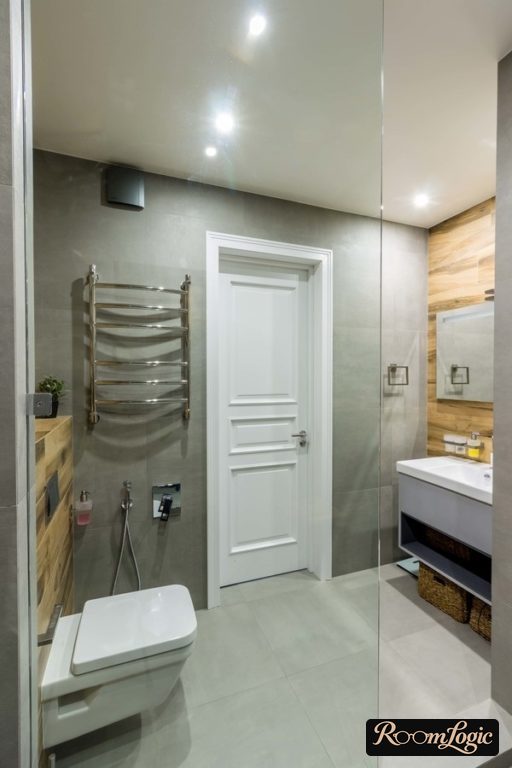
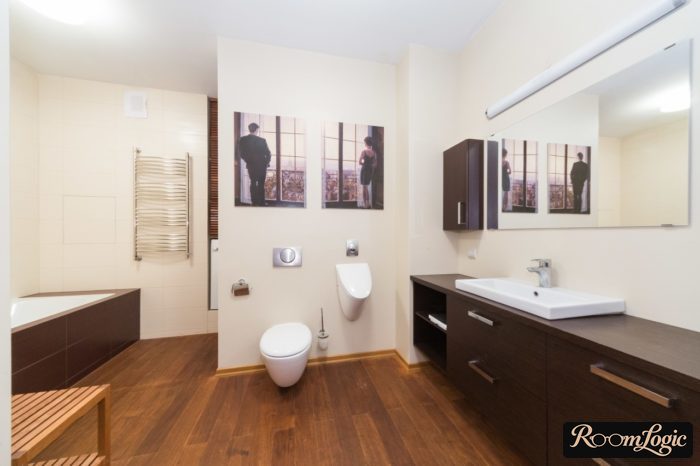
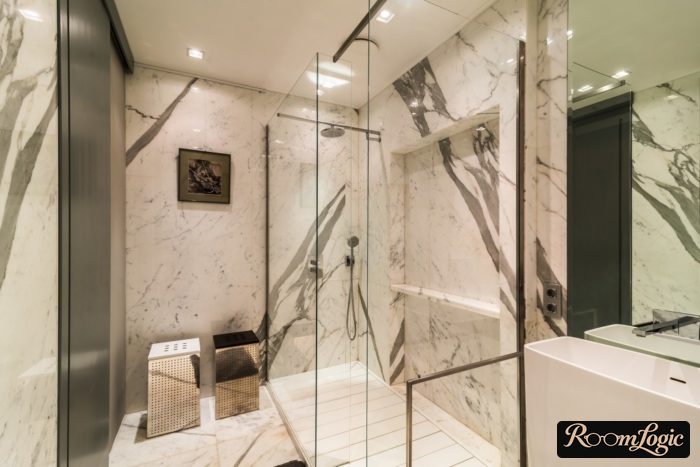
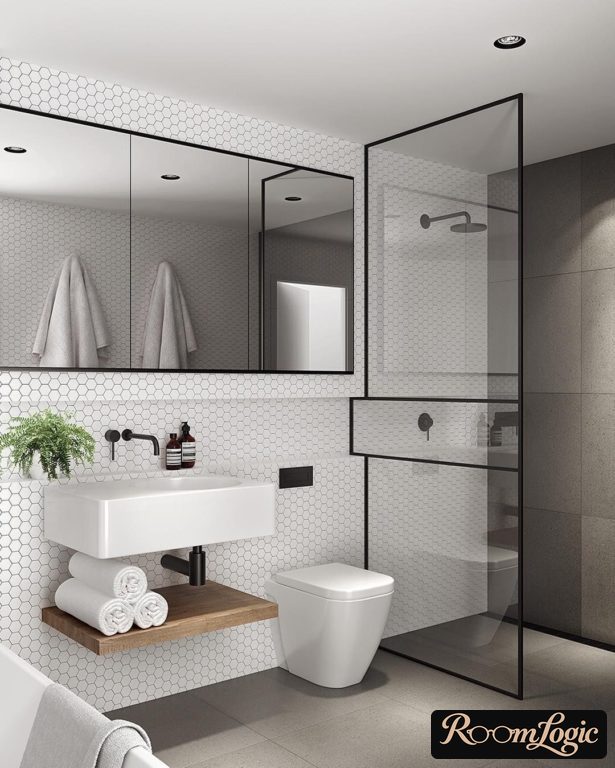
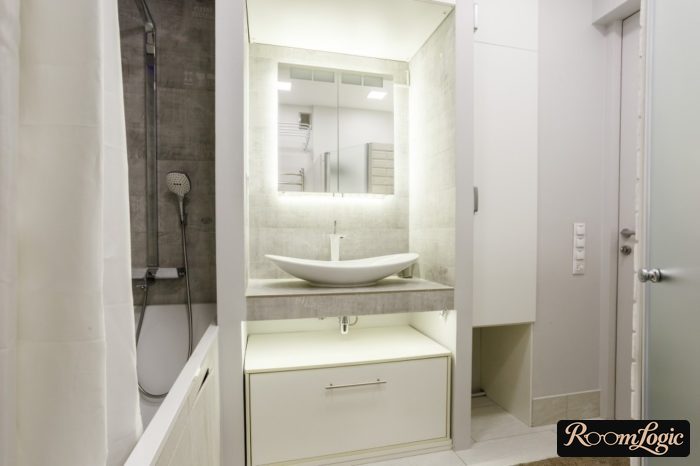
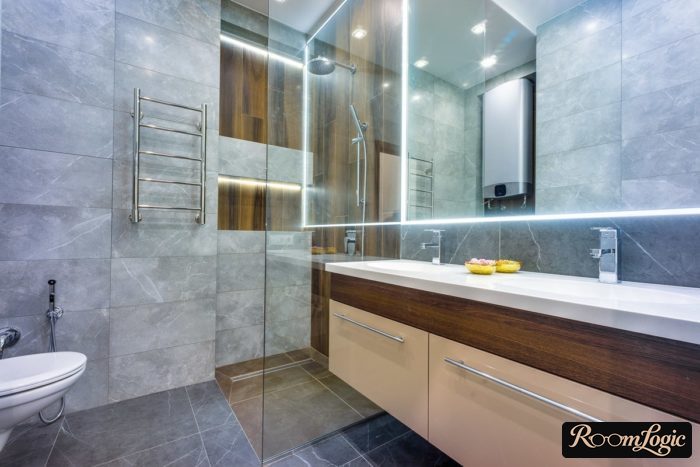
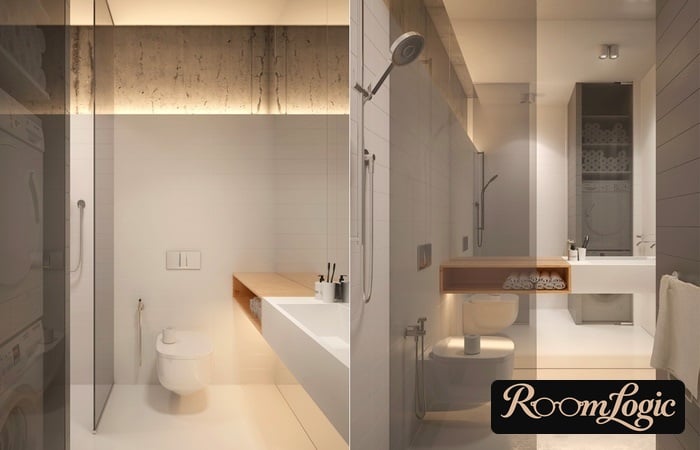
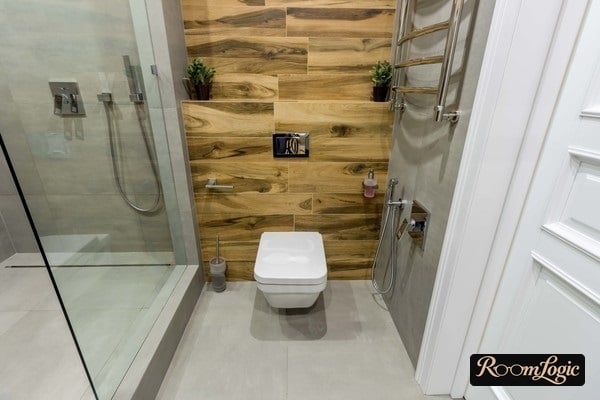
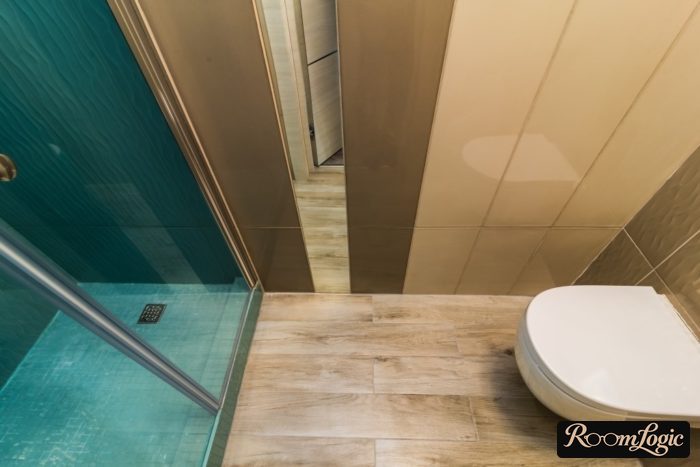
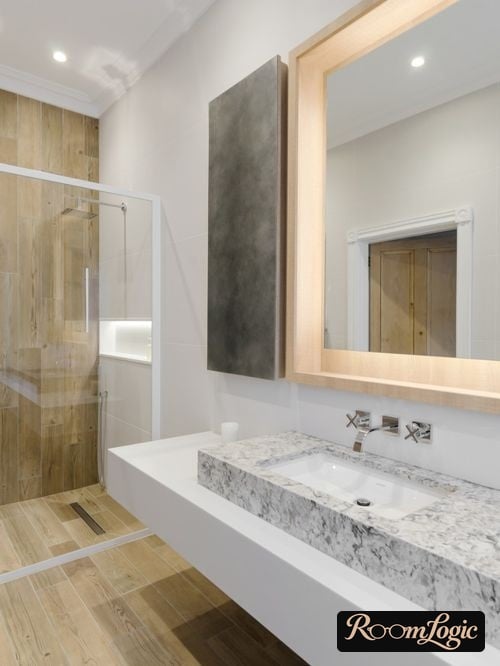
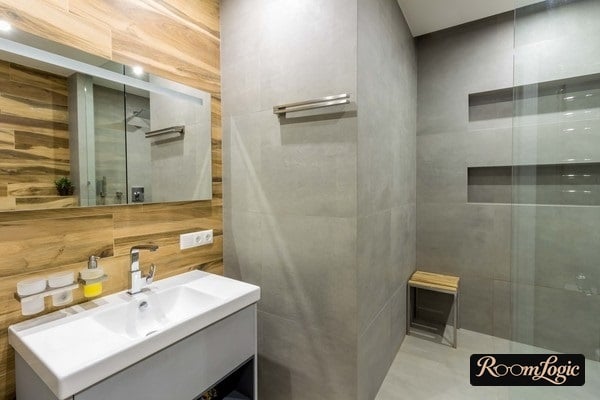
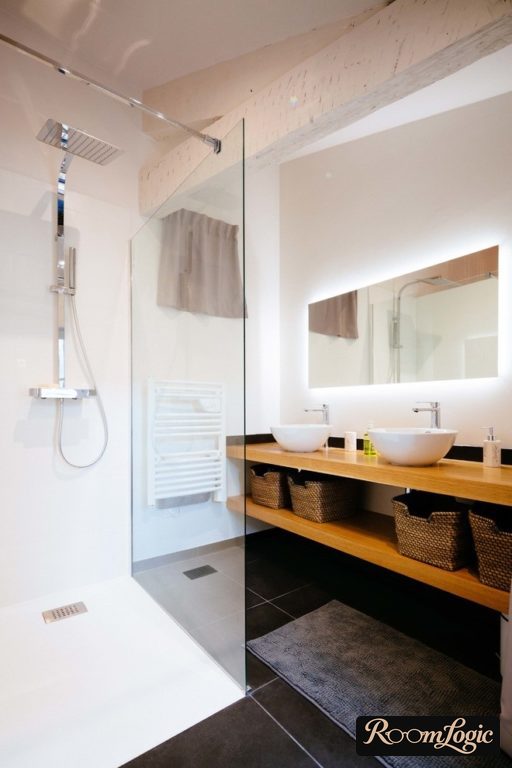
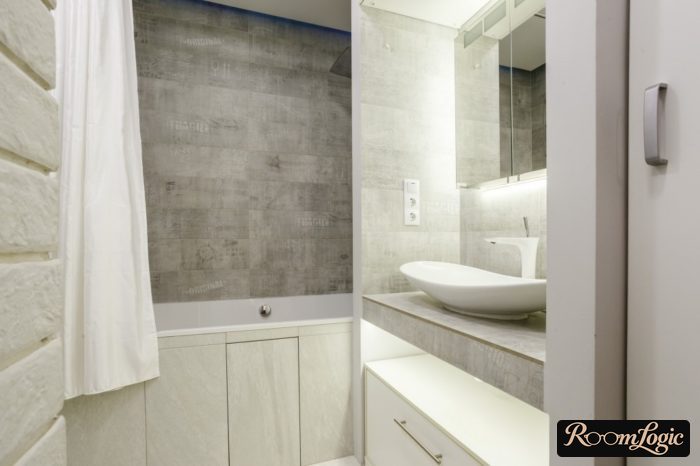
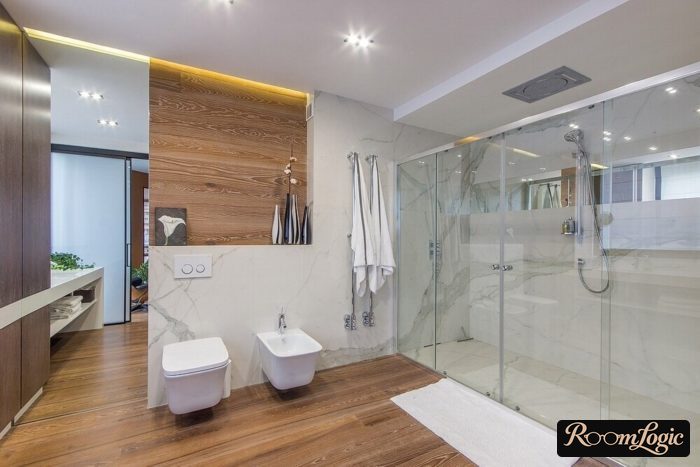
Time and interior fashion do not stand still in northern countries either. Just as we do not live in log cabins, their bathroom interiors do not have to match stereotypes. Everything is affected by globalization. Scandinavian motifs are recognizable, but overall these are simply good contemporary bathrooms:
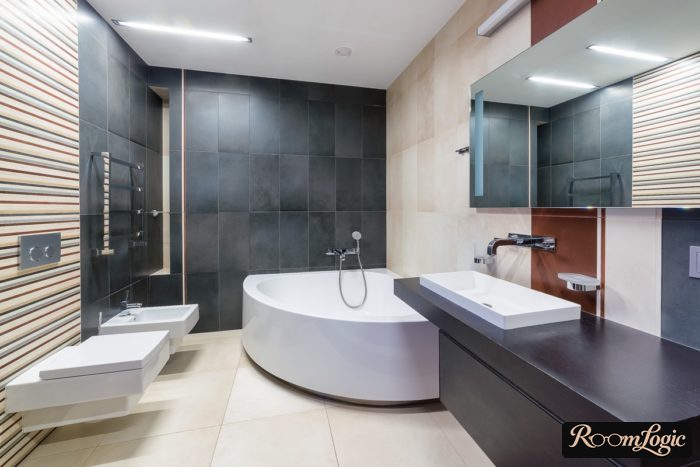
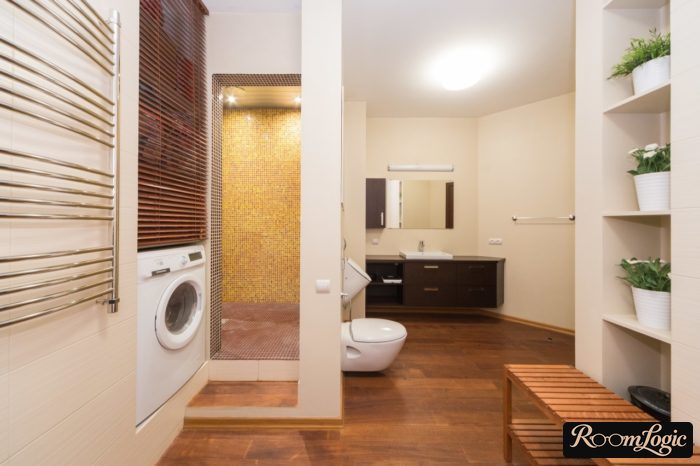
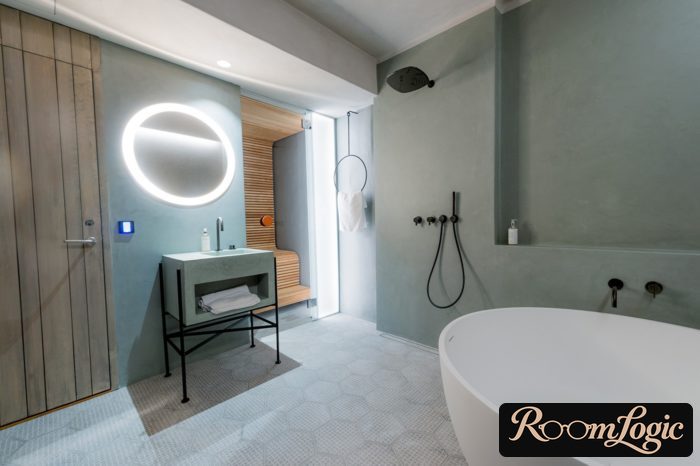
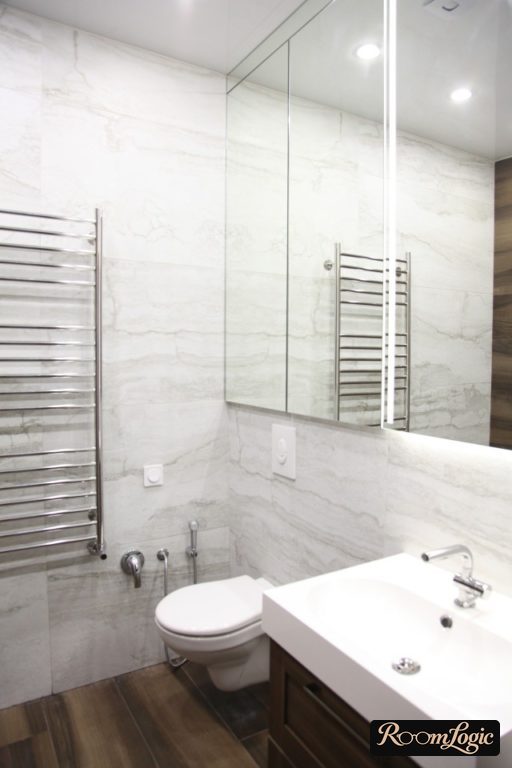
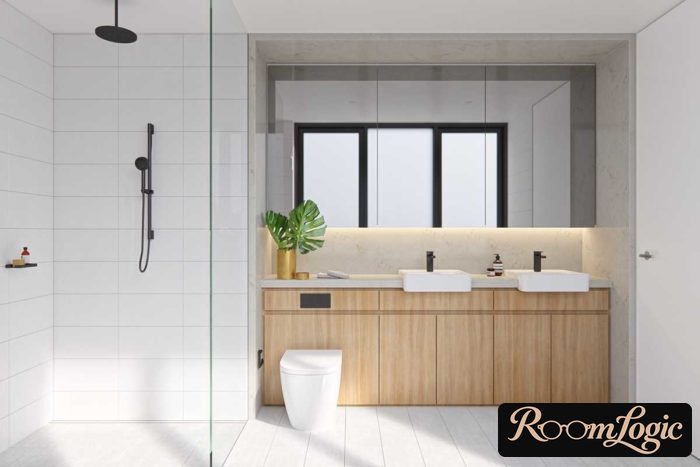
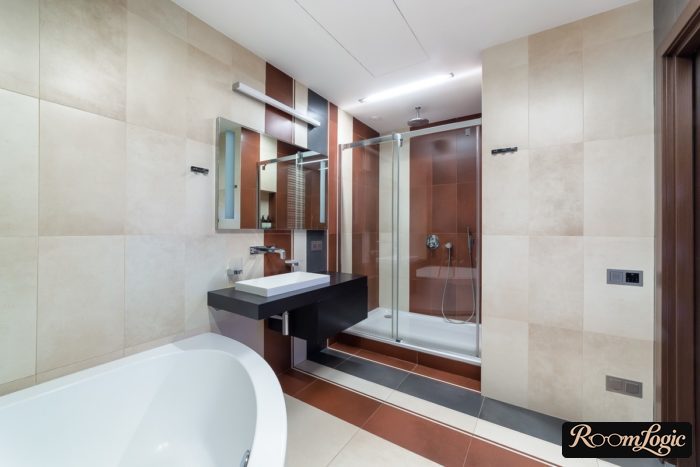
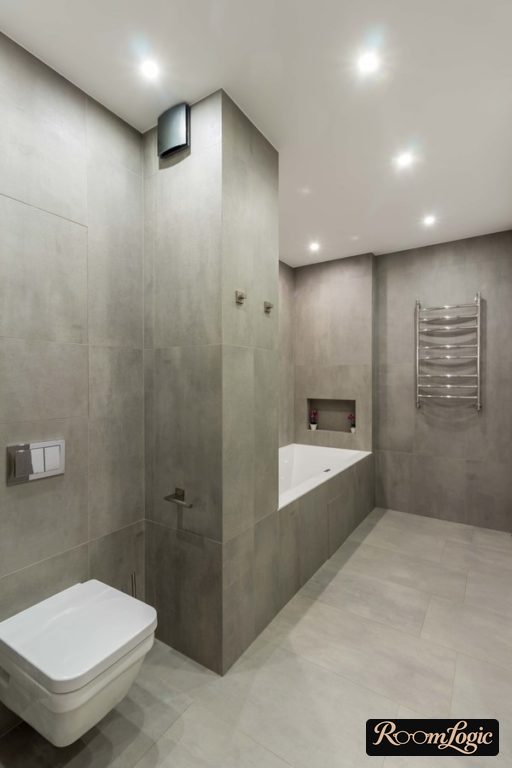
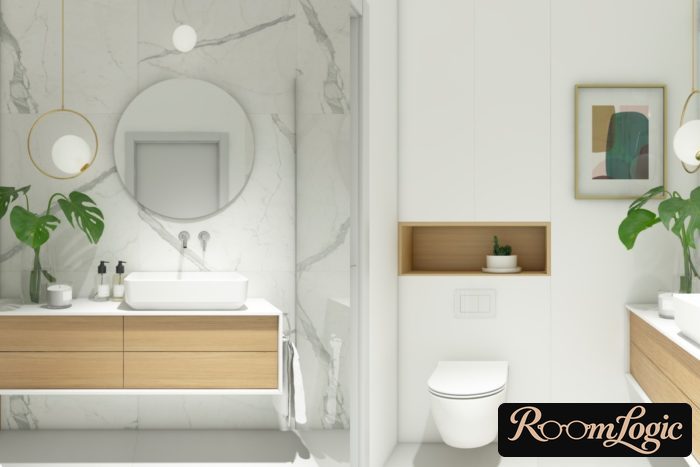
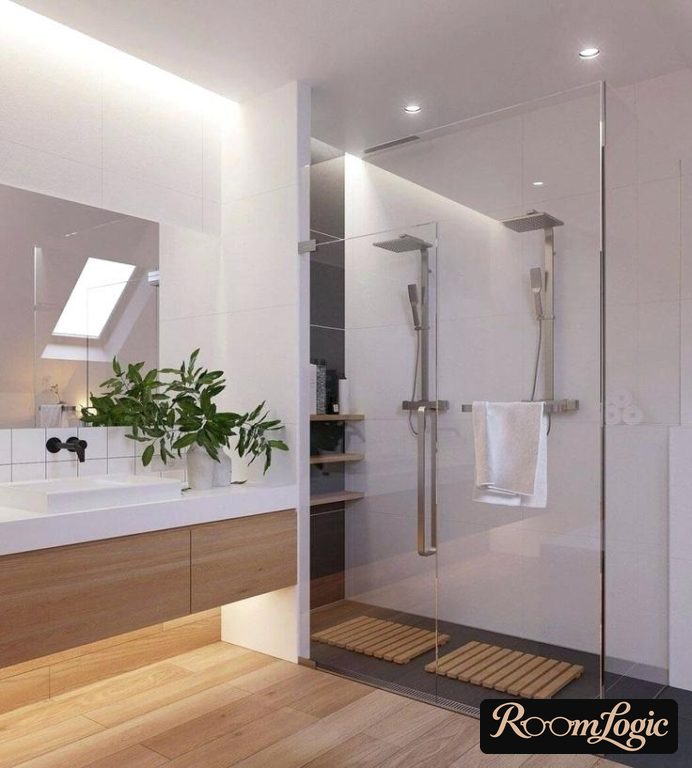
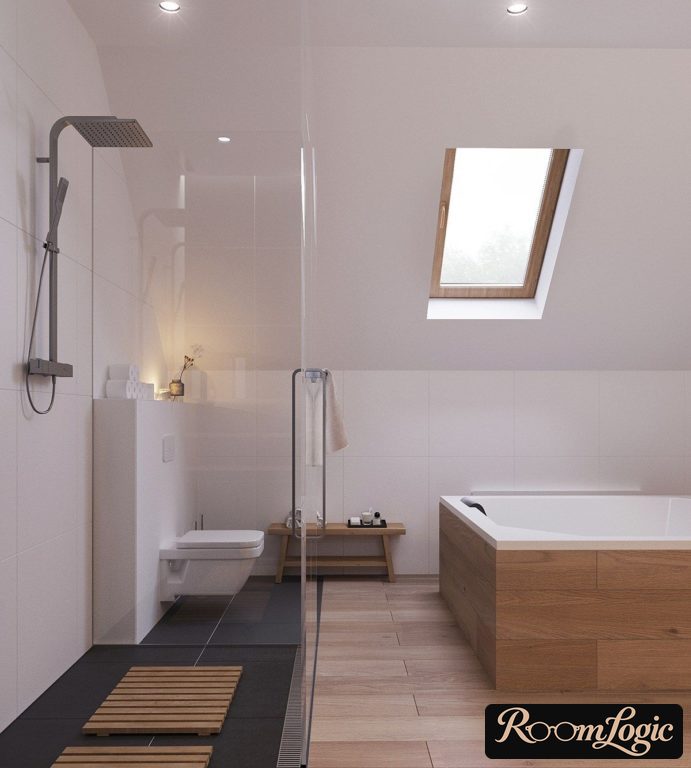
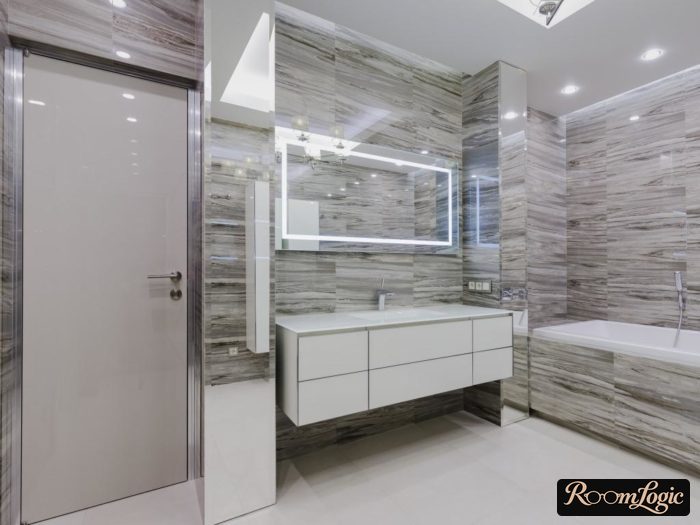
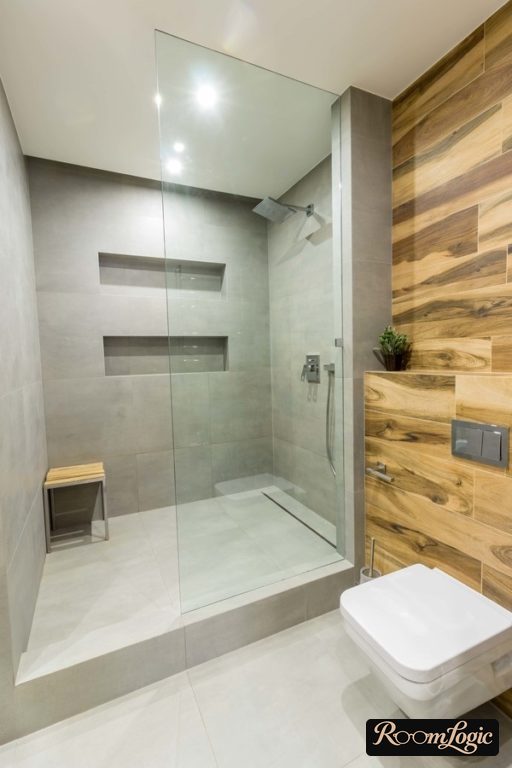
Choose the best parts of Scandinavian style for your bathroom. Do not chase an exact match. Read about a Scandinavian-style kitchen, and good luck with your remodel!