Art Deco is not popular in living room interior design – it is too expensive, bold, and elaborate.
And that is true, but.
Unpopular does not mean bad. Art Deco is valued precisely for its exclusivity. Let’s see how to keep the balance and avoid making it tacky.
Features of Art Deco Design
Style Ideas
Art Deco is fashionable, but only in people’s wishes. Many people want it, many read about it and look at it, but only a few decide to actually do it. And honestly, that is the right choice.
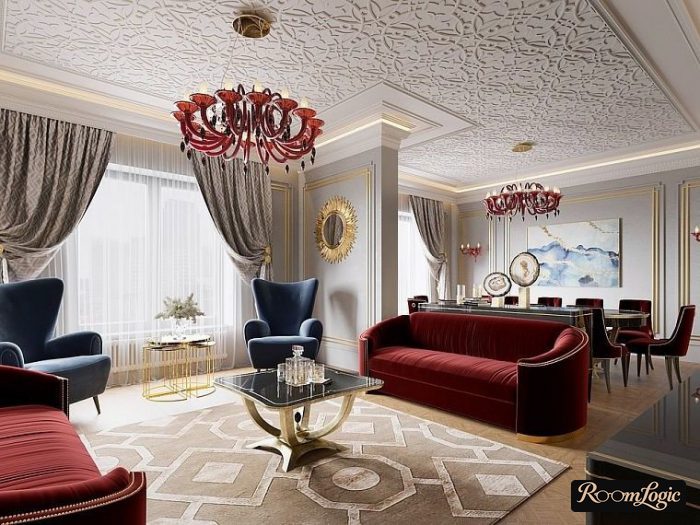
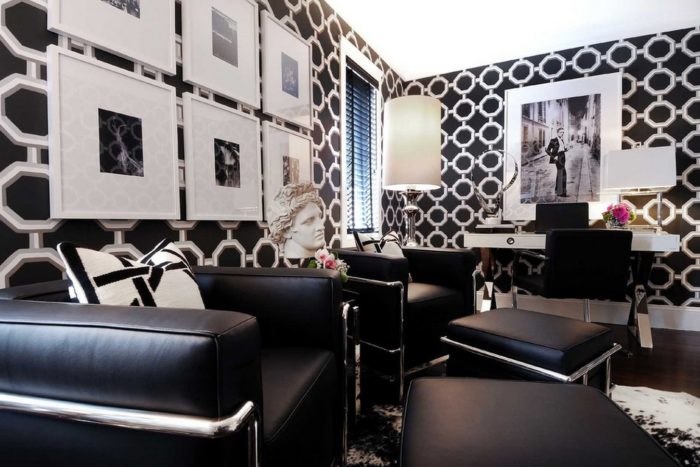
It is a risky and expensive style. An Art Deco living room is original and bold. Despite the variety of patterns and motifs in the finishes, the overall picture looks expensive and sophisticated. The main features of the style:
- A combination of geometric shapes, zigzags, and angular patterns.
- What is usually called “glamour,” but without becoming tacky.
- Beveled mirrors.
- No obviously cheap materials or obvious imitations.
- Glossy surfaces.
- Expensive textiles and furniture. Tufted upholstery.
- A large number of original accessories.
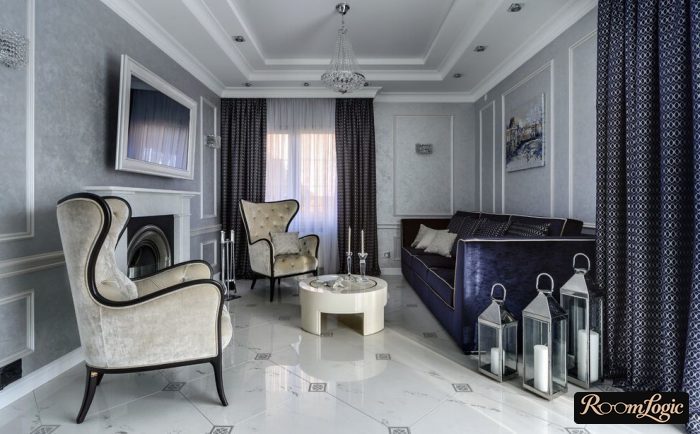
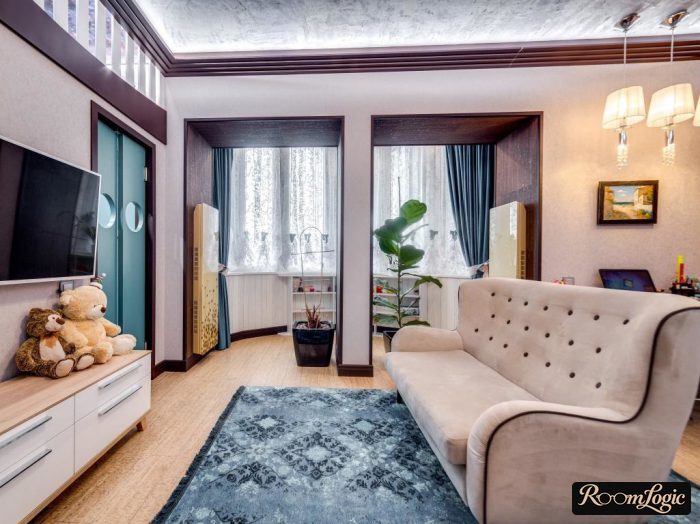
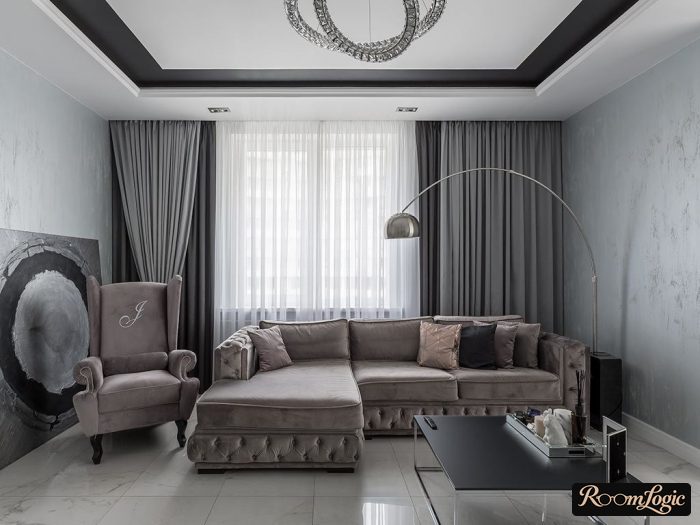
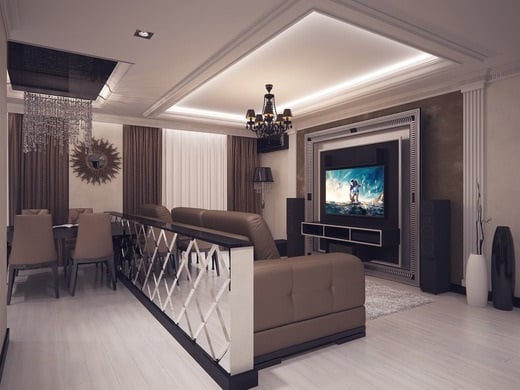
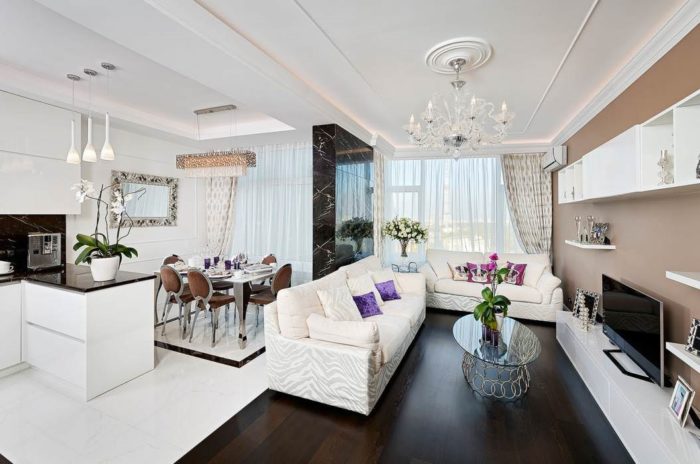
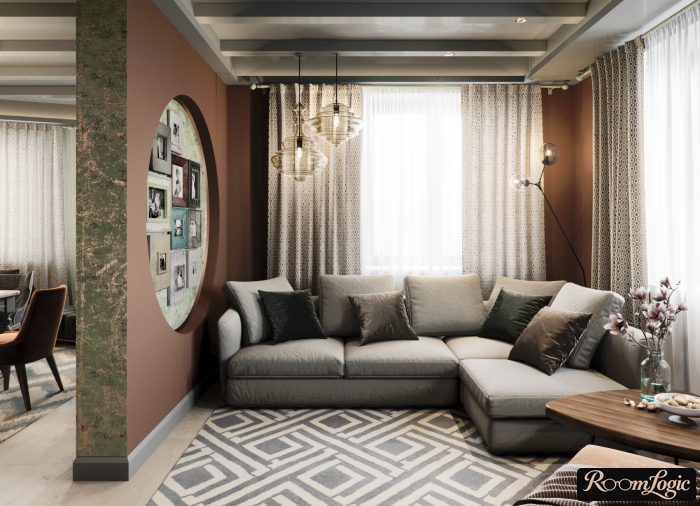
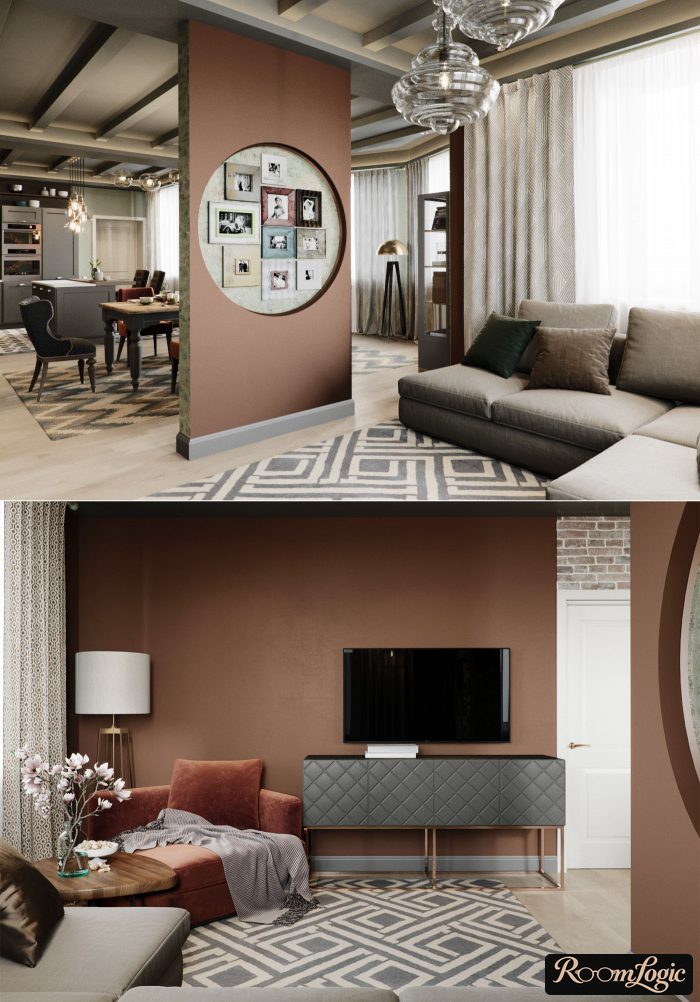
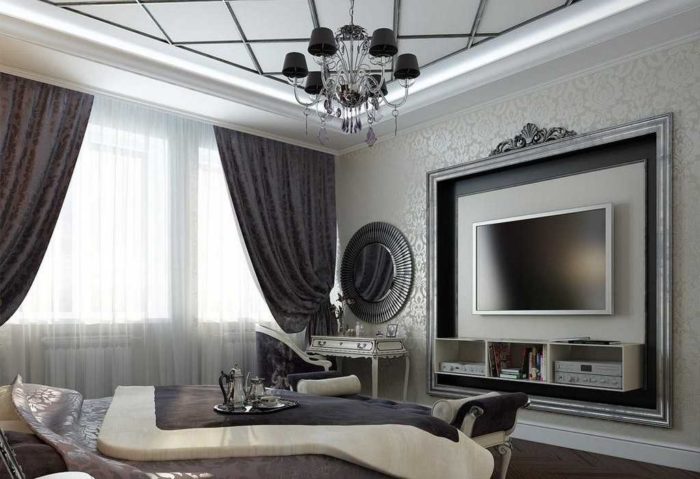
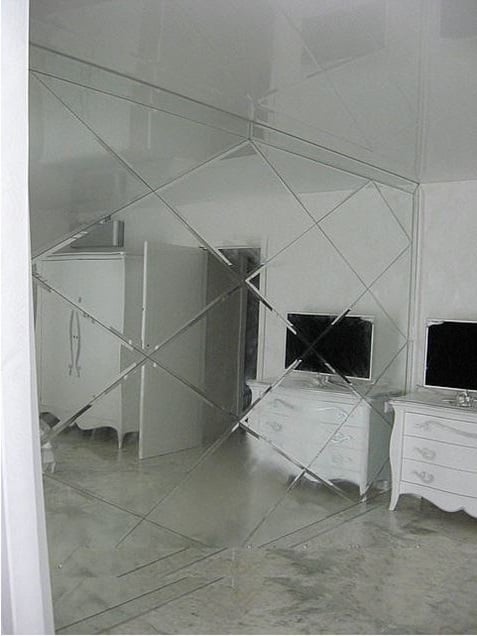
Art Deco is a fairly aggressive style; it cannot be used in just one living room. Also read our article: Art Deco Style in Interior Design: A Warning.
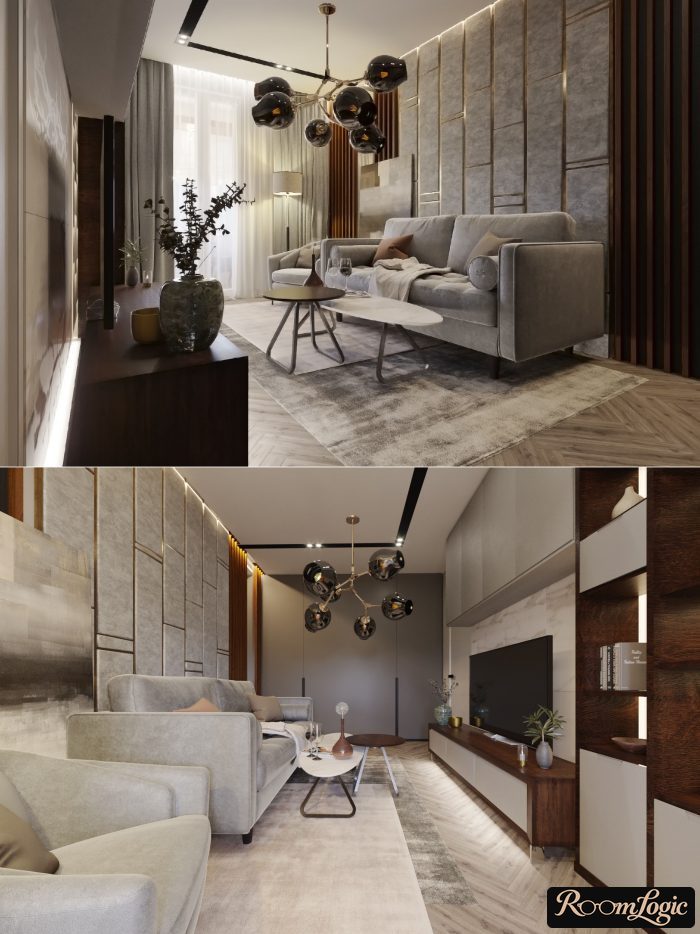
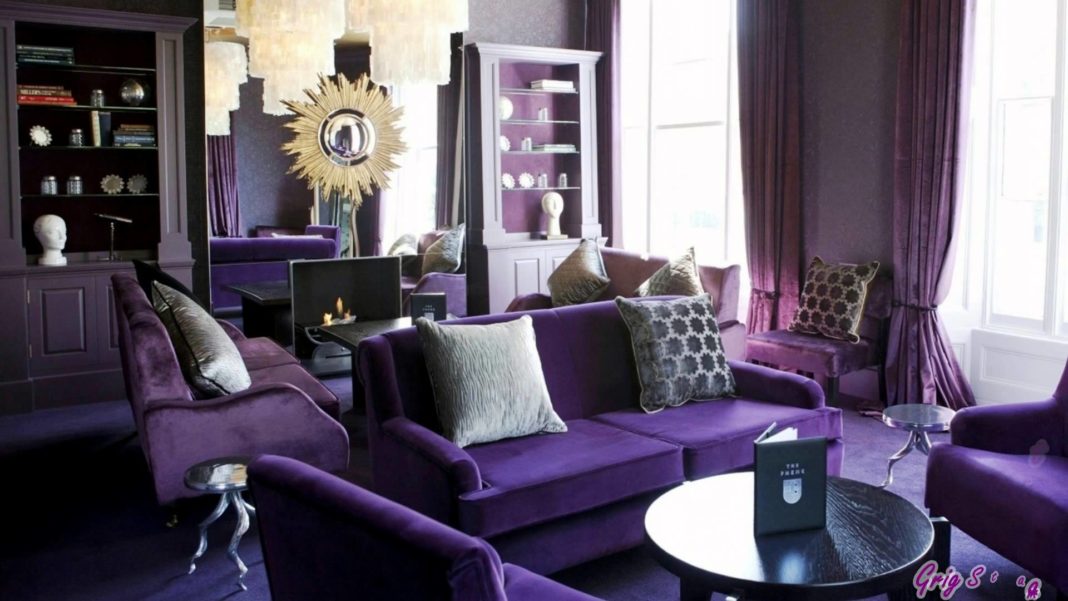
Art Deco Living Room Design
The main shades used to decorate a living room are beige, chocolate, milky white, light blue, young grass green, orange, red, and blue—a mostly warm color scheme. Excessive variegation and an abundance of bright shades are not acceptable, but the accents can be aggressive.
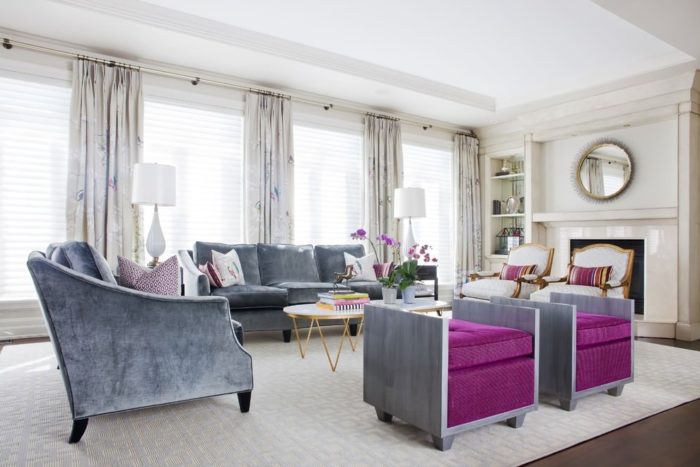
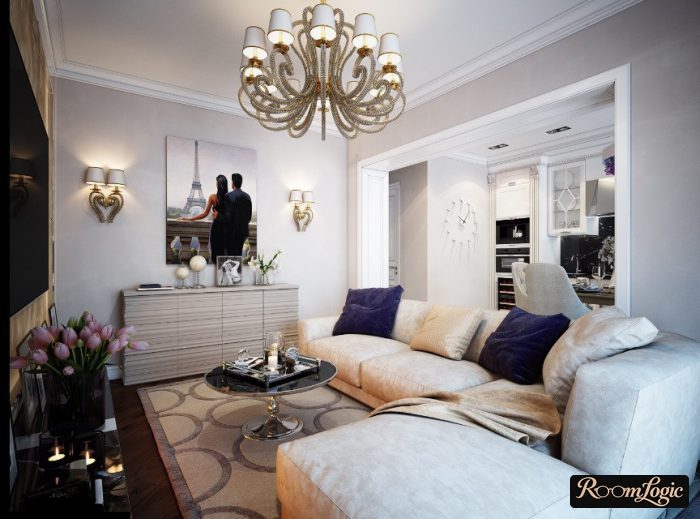
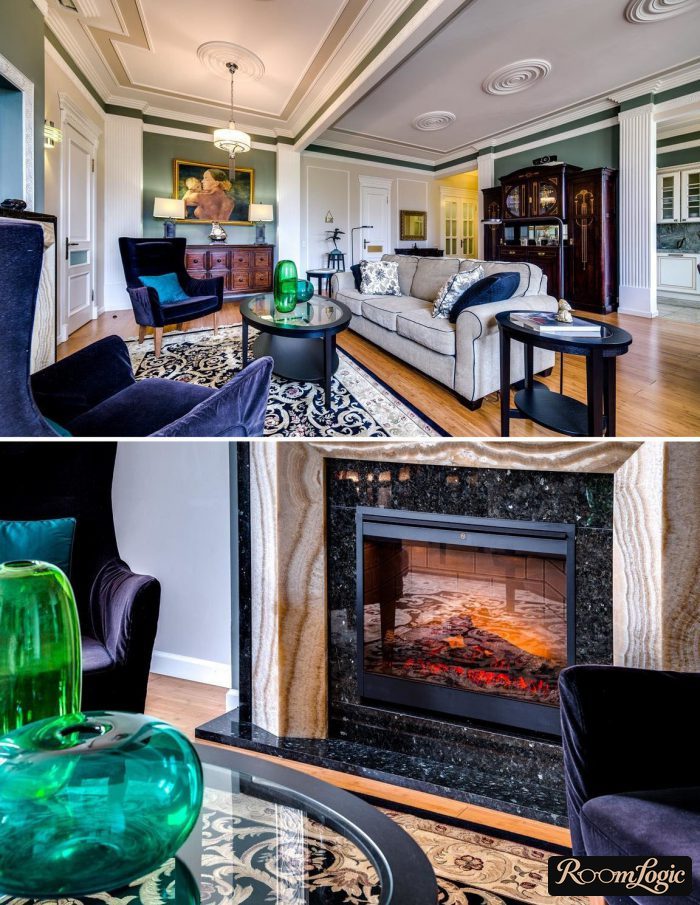
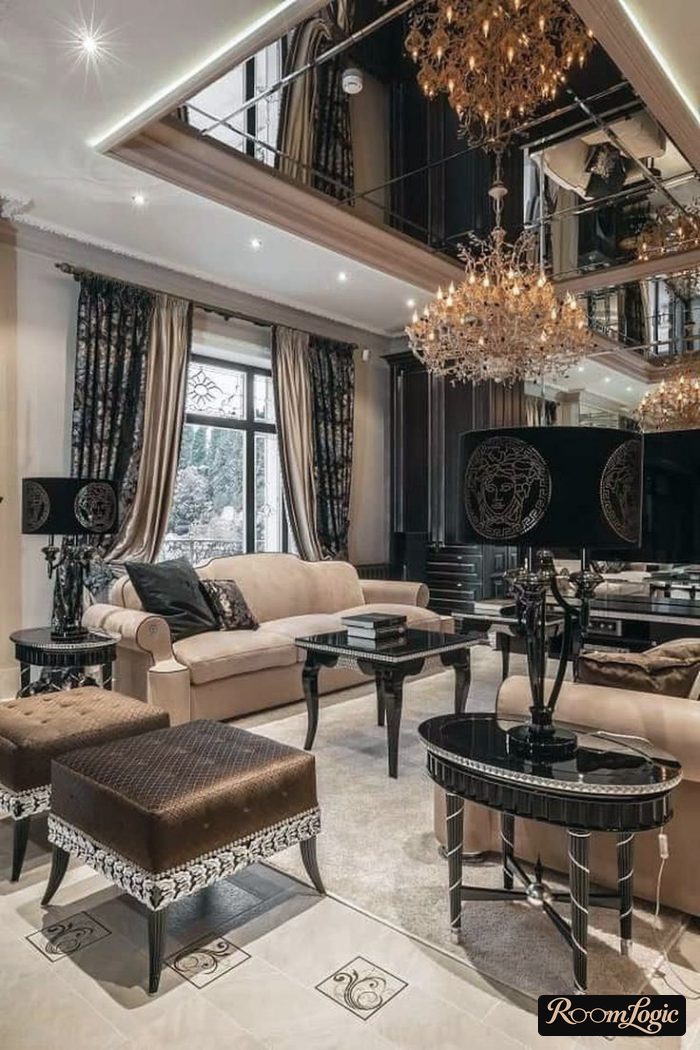
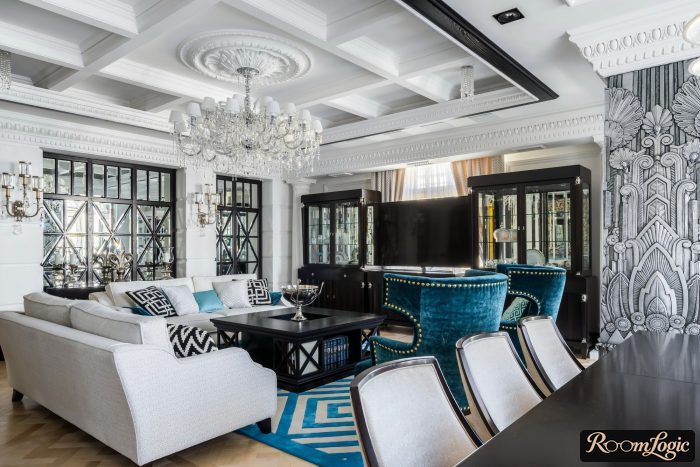
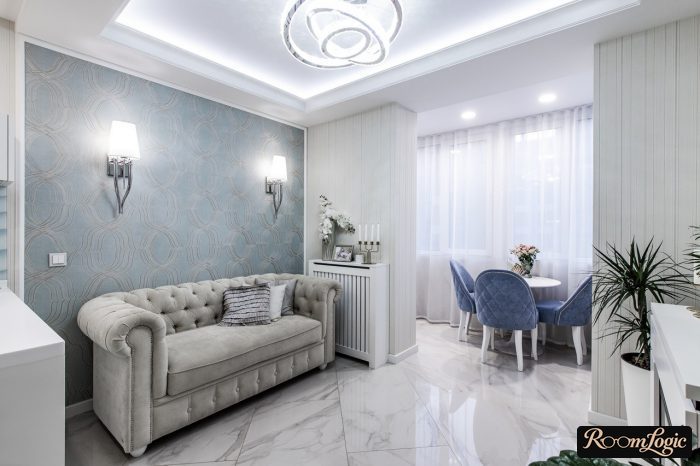
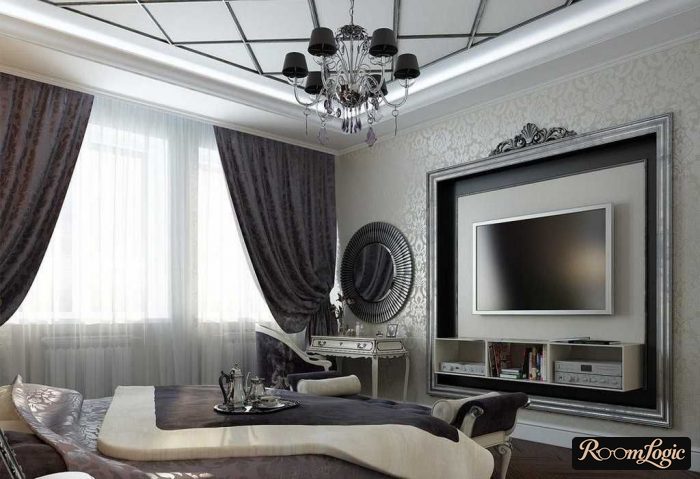
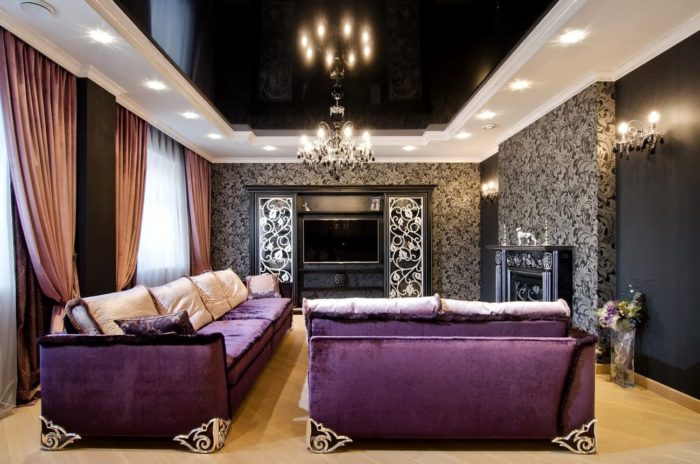
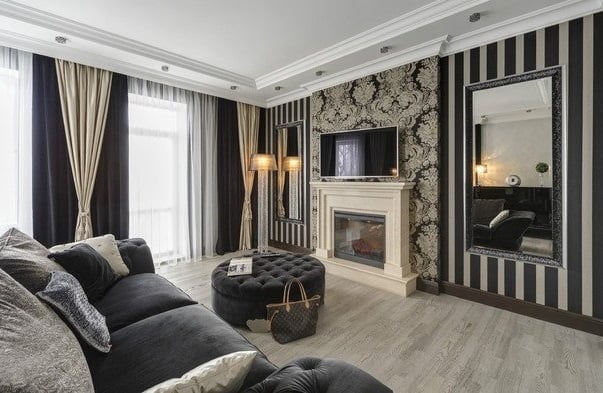
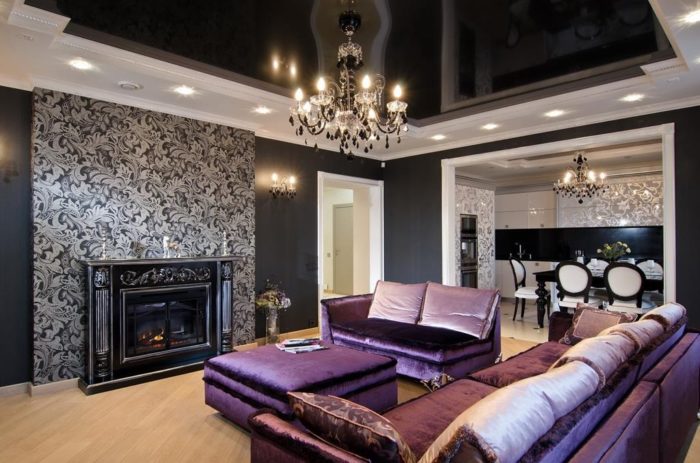
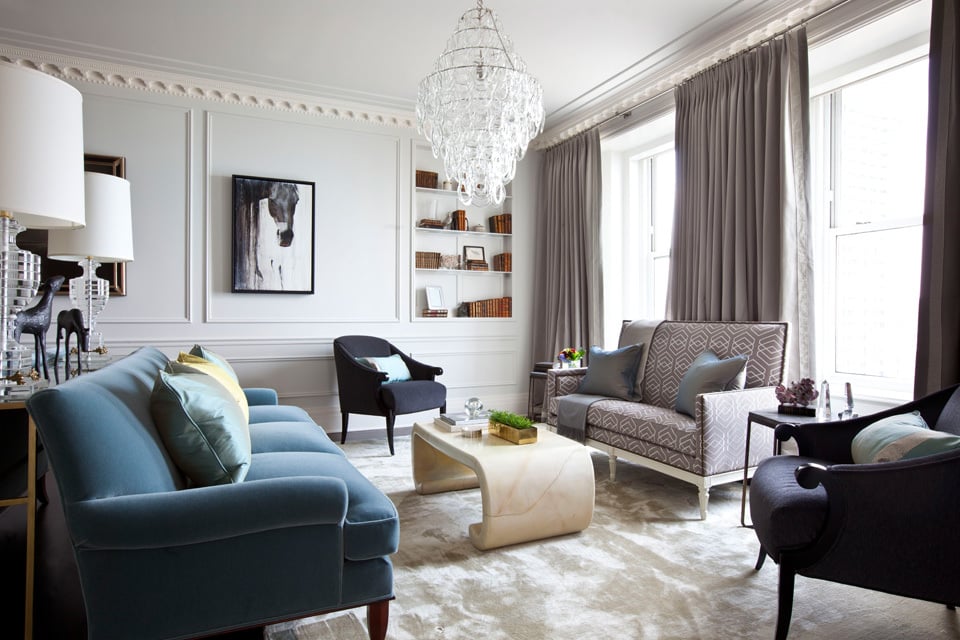
The living room walls serve only as a background that emphasizes the luxury of the surrounding interior. In general, it is important to follow the proper remodeling sequence; there is a lot about this in Modern Living Room Interior Ideas. For that reason, it is better to choose calm neutral shades for the walls. You can decorate them with molding, remembering to repeat the chosen pattern in the furniture upholstery or forged metal elements. By the way, this technique is not used only for molding: any ornament on the walls should be mirrored in other interior items.
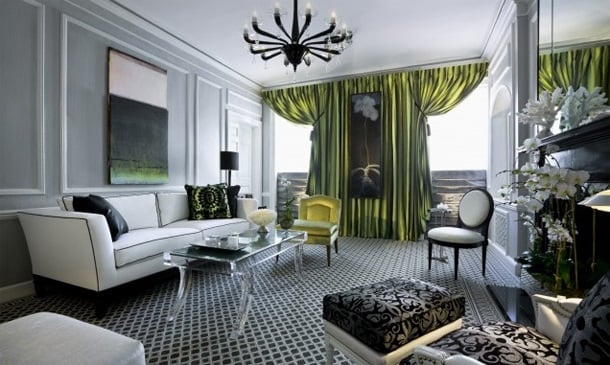
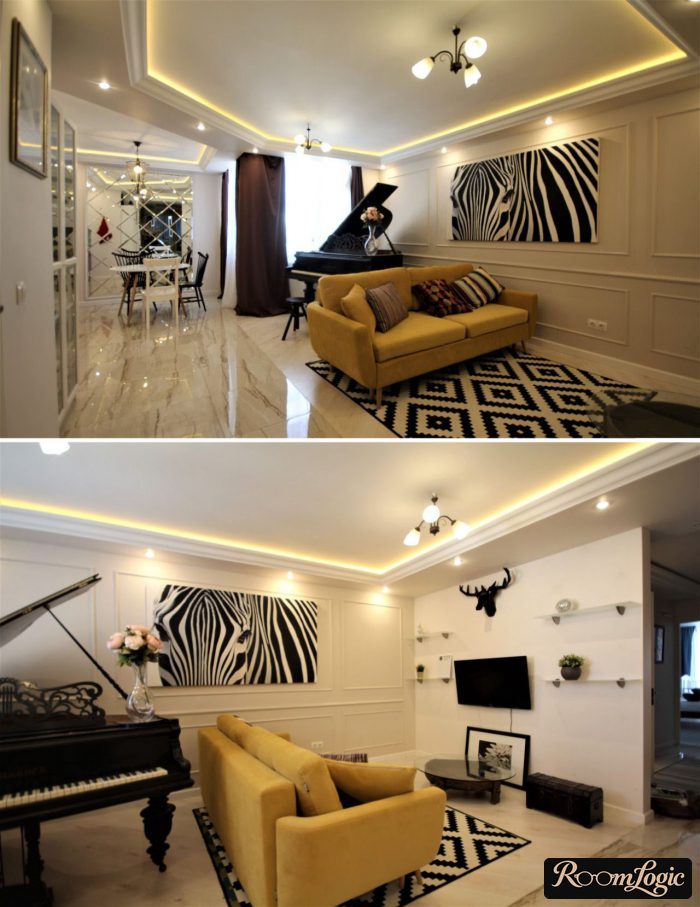
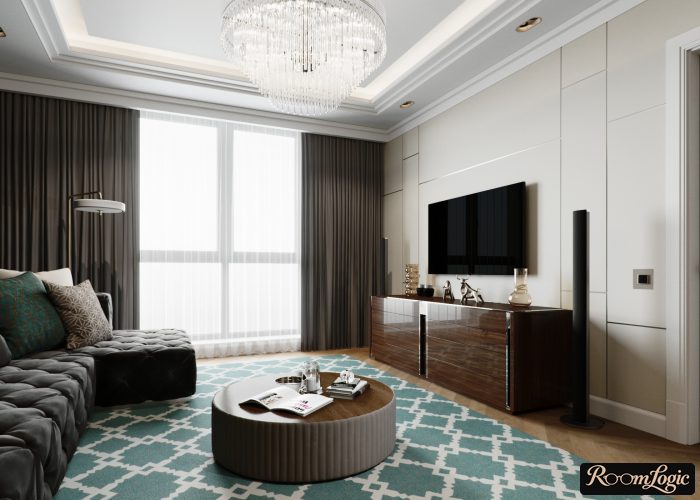
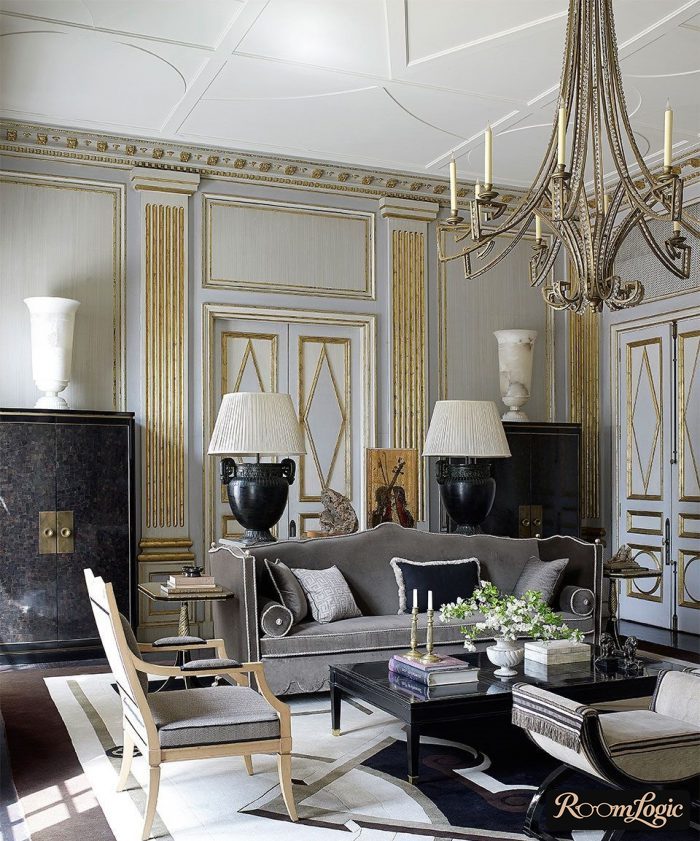
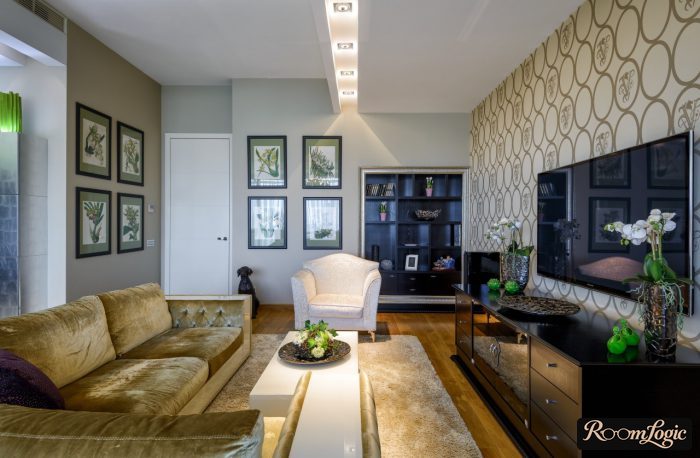
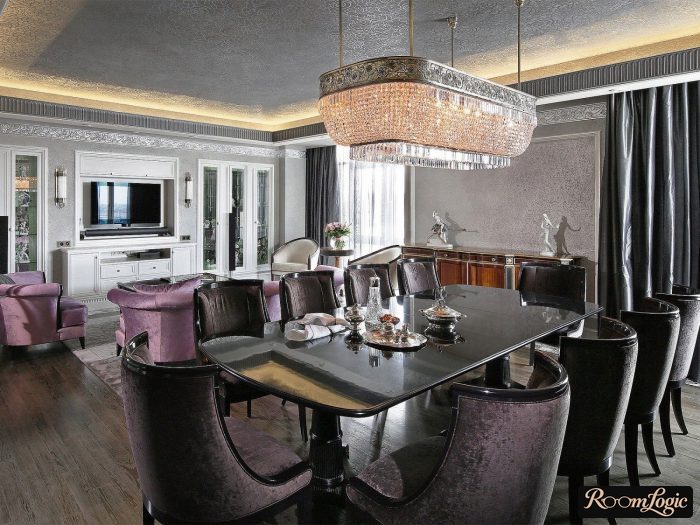
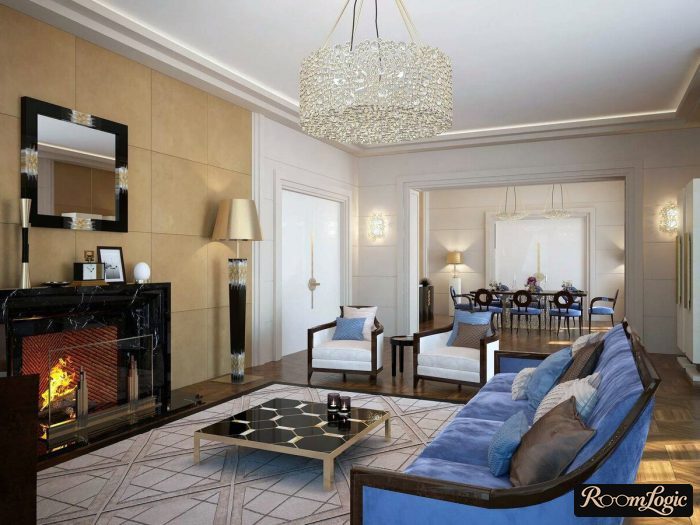
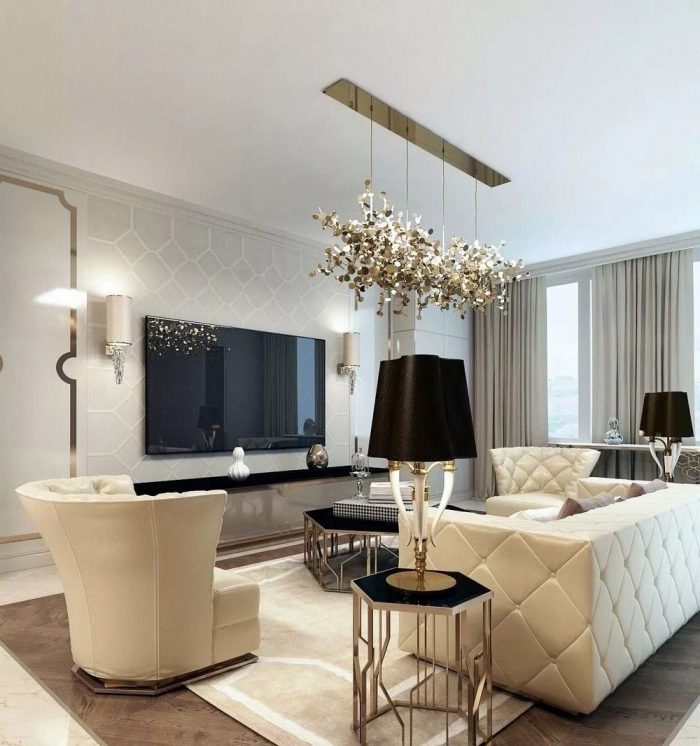
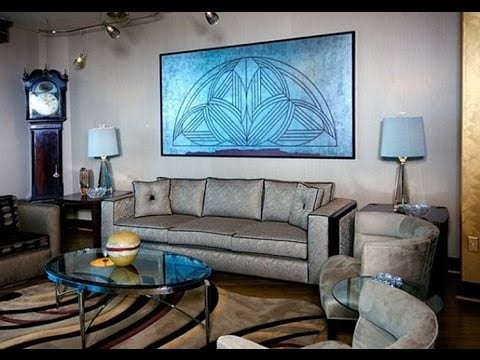
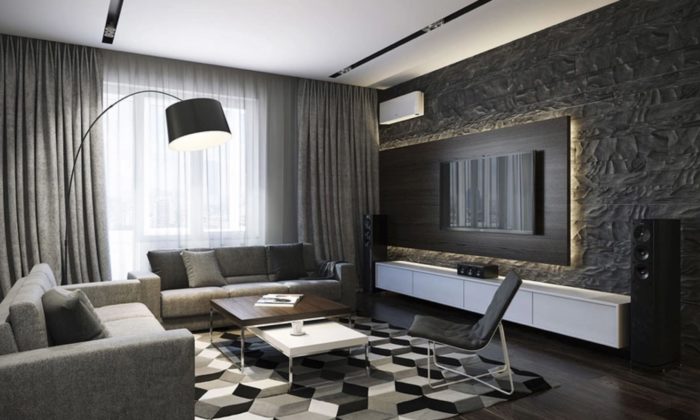
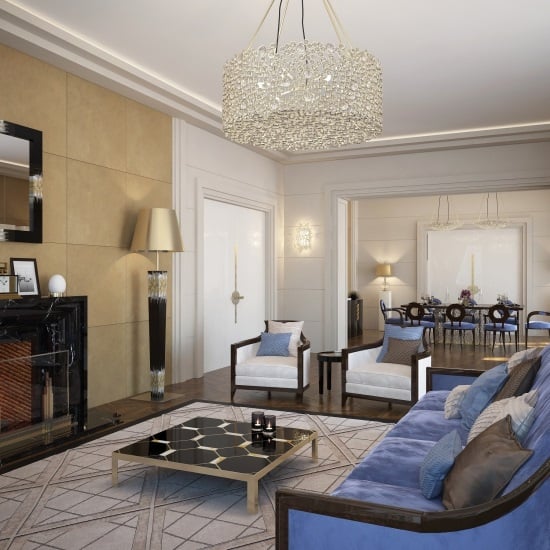
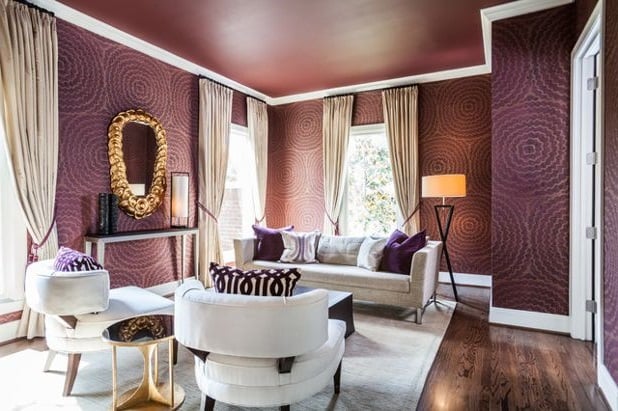
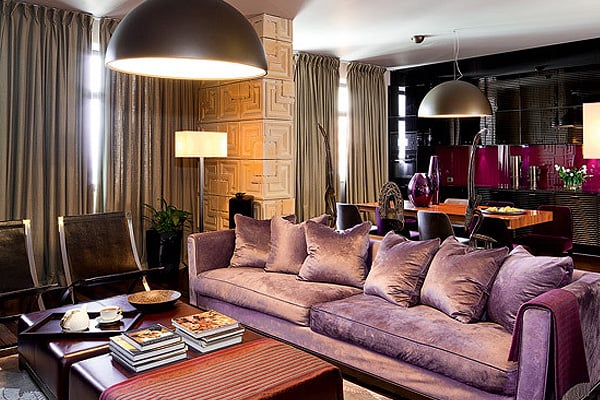
Any modern finishing materials will work for the walls: wood panels, plastic, wallpaper, and decorative plaster. One feature of Art Deco is the ability to combine different materials; the main thing is not to create abrupt transitions at the joints. Textile wallpaper or paper wallpaper with a slight silky sheen looks refined in a living room.
You can let your imagination run wild in the ceiling design by using decorative cornices, molding, and elaborate drywall structures. You can, but you do not have to. In modern remodels, complex ceilings are bad taste.
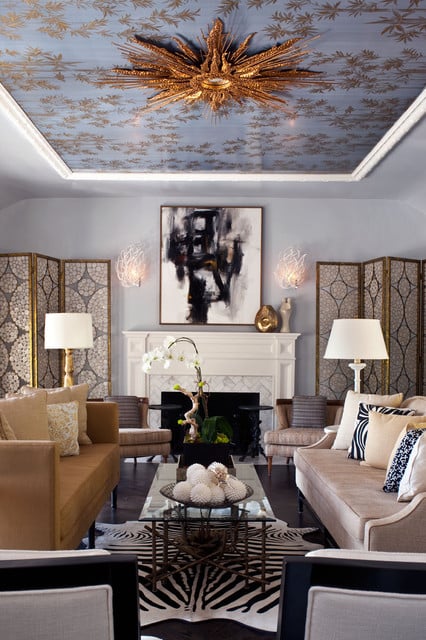
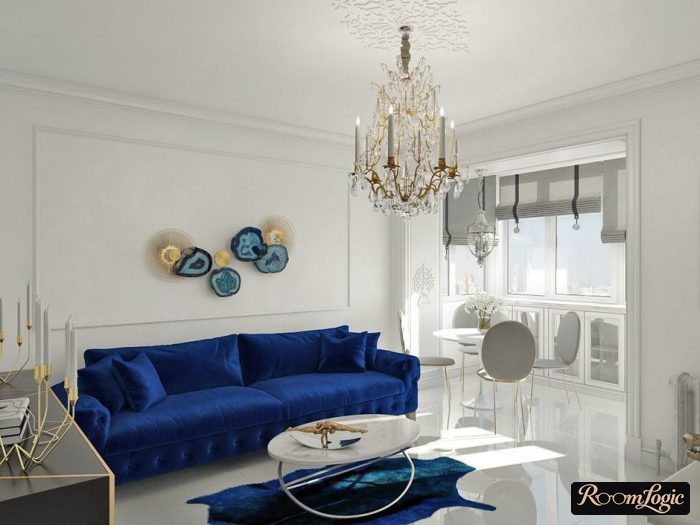
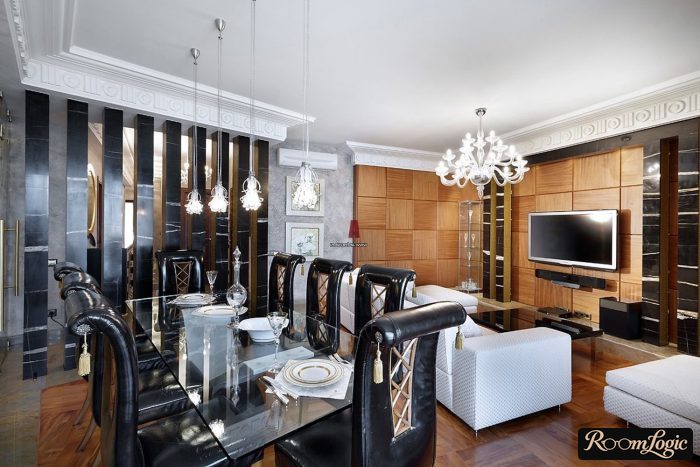
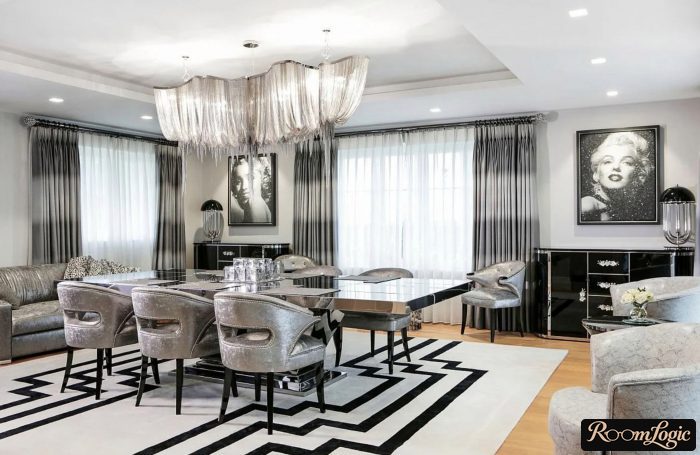
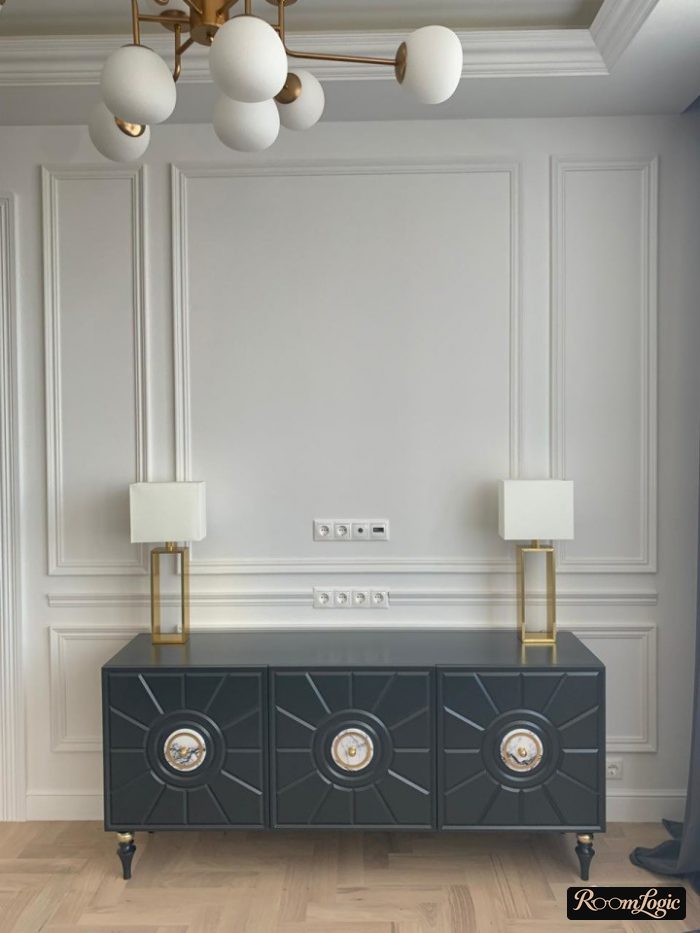
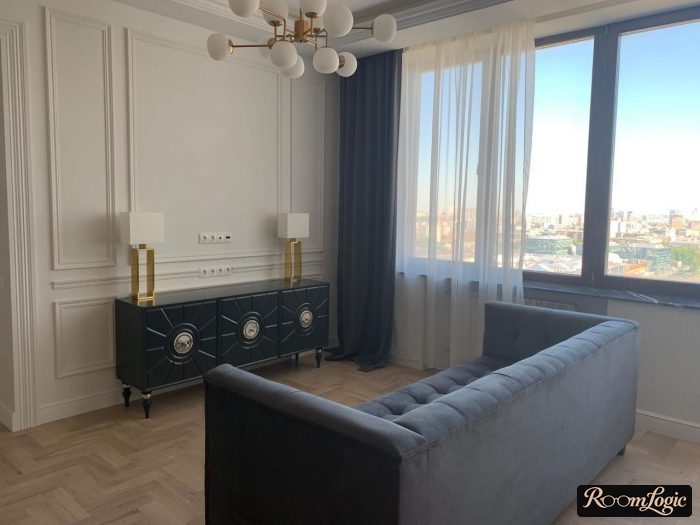
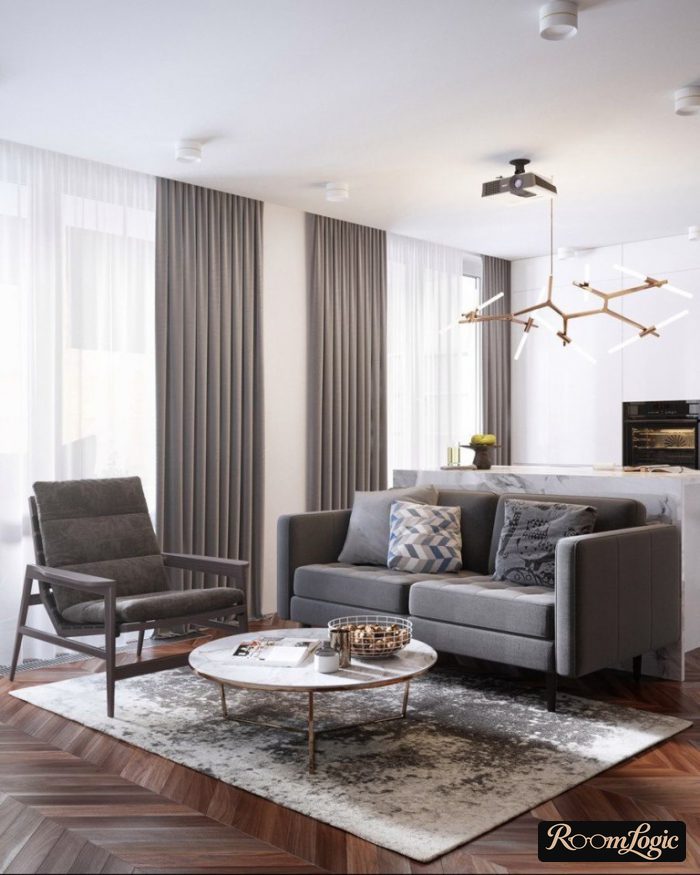
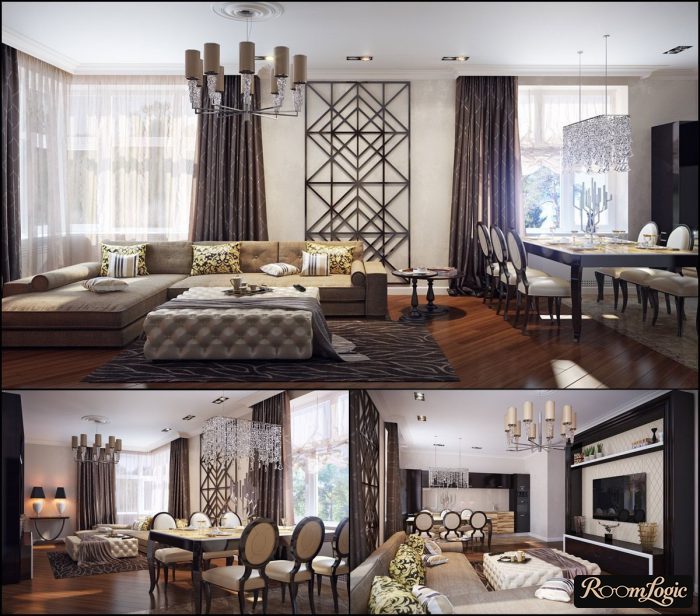
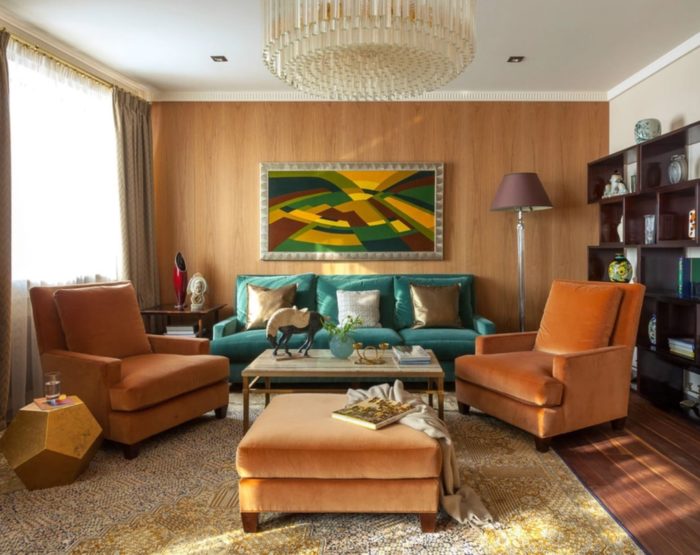
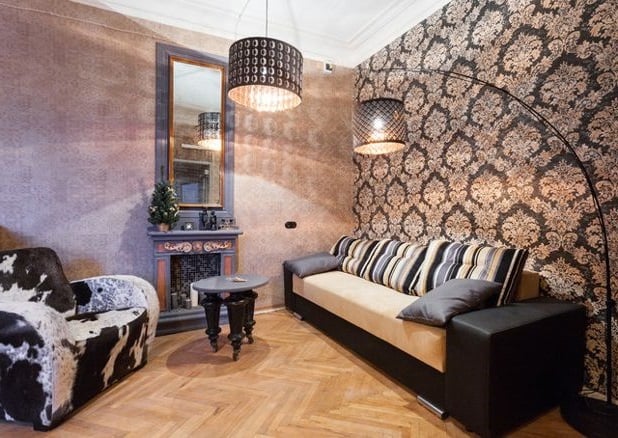
A classic finish works for the floor: natural wood parquet, possibly in a herringbone pattern. If you choose light shades of wood for the floor, they will pair harmoniously with dark elements of the furniture set. But the light wood must not lean yellow. Modern laminate flooring can also be considered, but it must have bevels on all four sides.
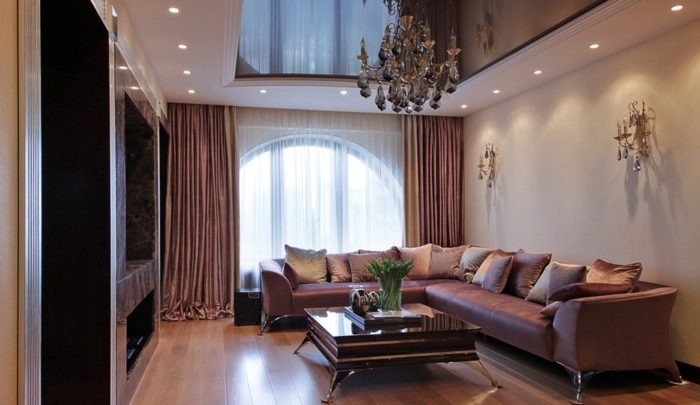
Window and door openings can be remade into arches. Expensive heavy fabrics decorated with valances and tassels are used on the windows.
Furniture, Materials, and Accessories for Art Deco
Unlike other modern styles, Art Deco requires a large number of accessories and other “decorations,” which are not always easy to choose.
Furniture in an Art Deco Living Room
Furniture for such a living room cannot be bought in an ordinary furniture store because the style does not accept mass-produced items. Original pieces of furniture are often custom-made as one-of-a-kind pieces. Expensive materials and exotic wood species are used for this. The furniture can have a very unusual shape, such as a frame in the form of a geometric figure with curved legs and upholstery decorated with ancient Egyptian or Eastern ornaments.
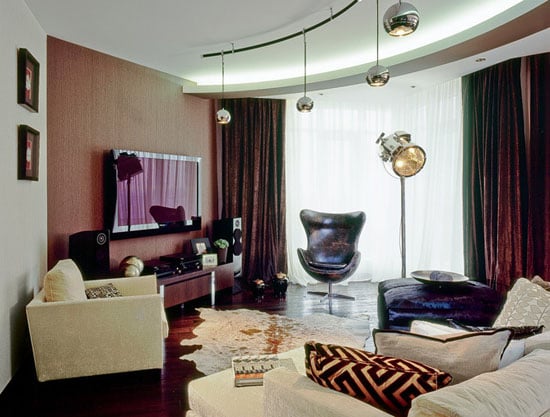
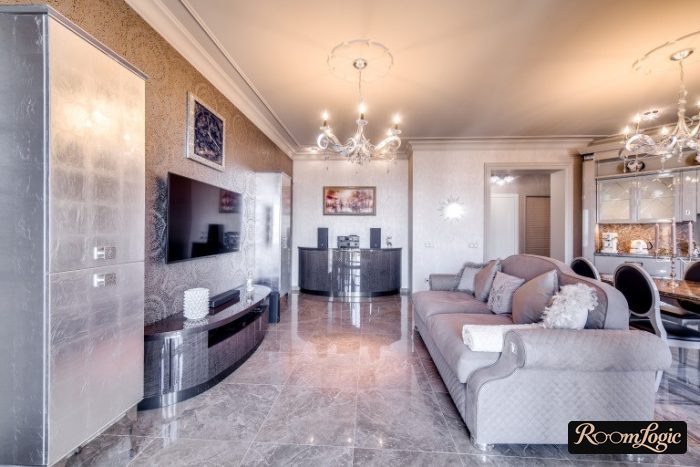
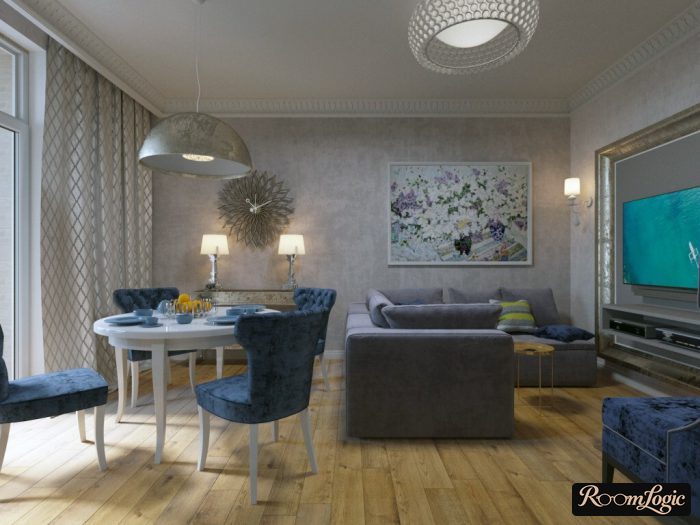
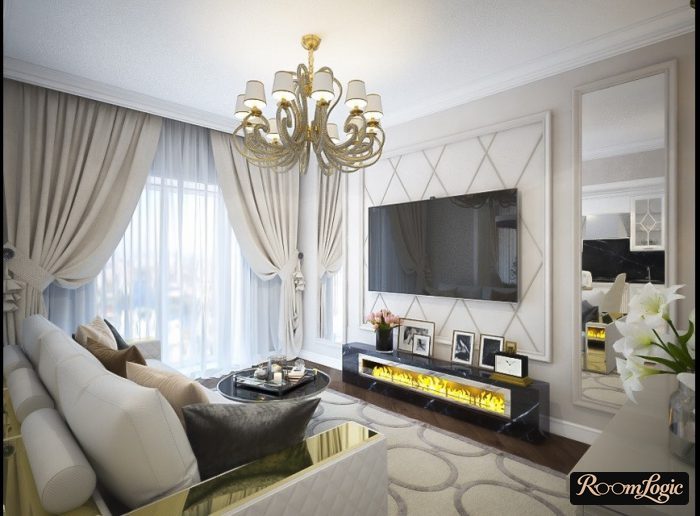
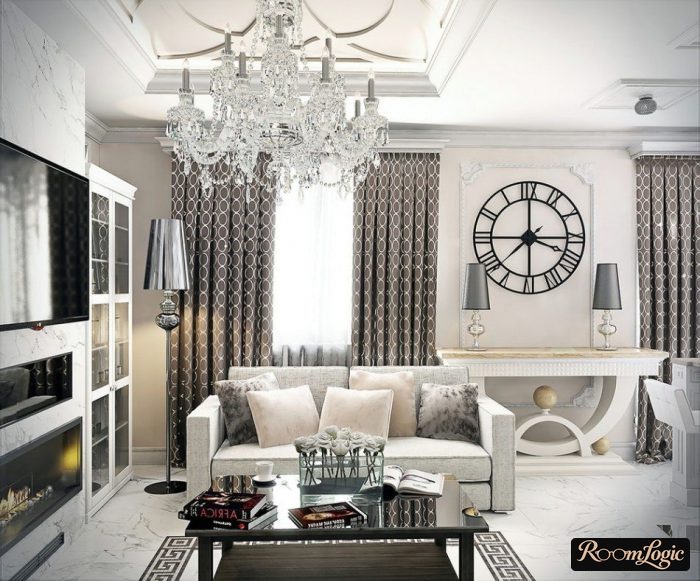
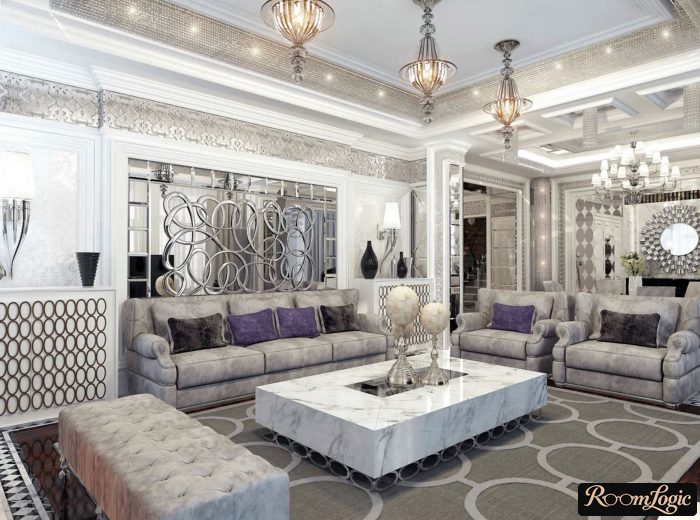
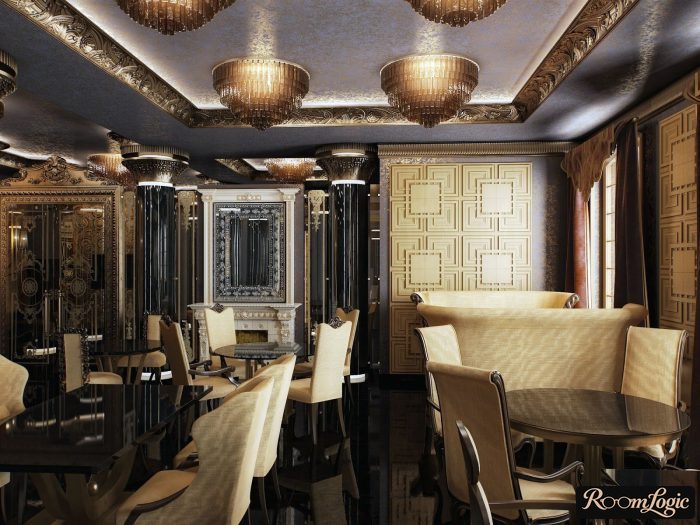
The main piece of furniture in the living room is the sofa, preferably in a classic style, upholstered in natural leather or good-quality fabric. Depending on the size and purpose of the room, the table can be a coffee table or a dining table, made of glass or wood.
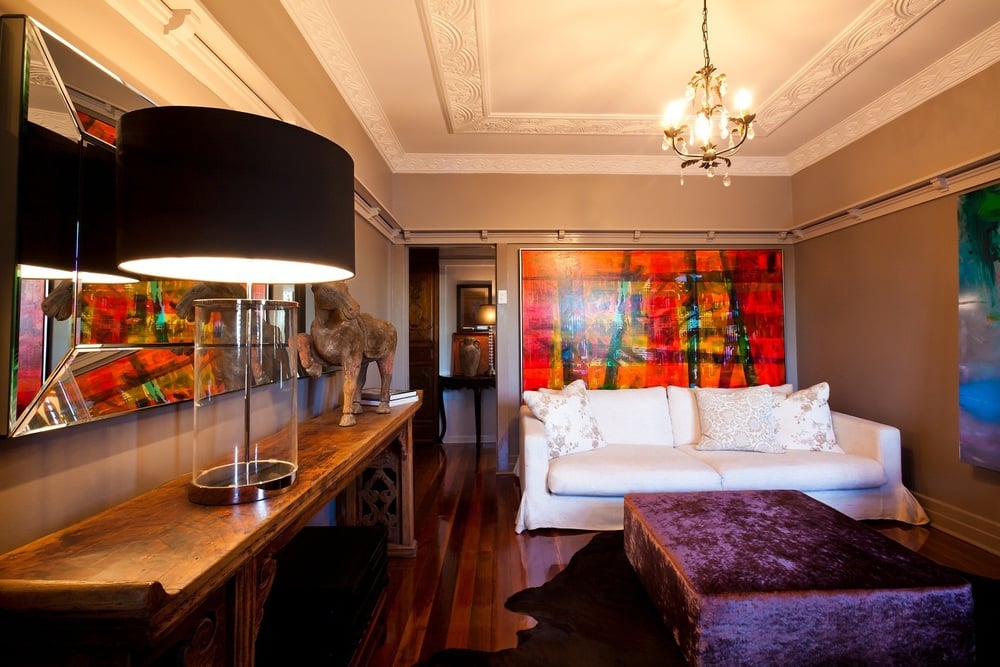
A massive natural wood table with expensive inlay, complemented by tall chairs or royal armchairs, will fit appropriately into the living room design. Reddish or burgundy woods combined with natural white leather, glass, or marble will suit such a set.
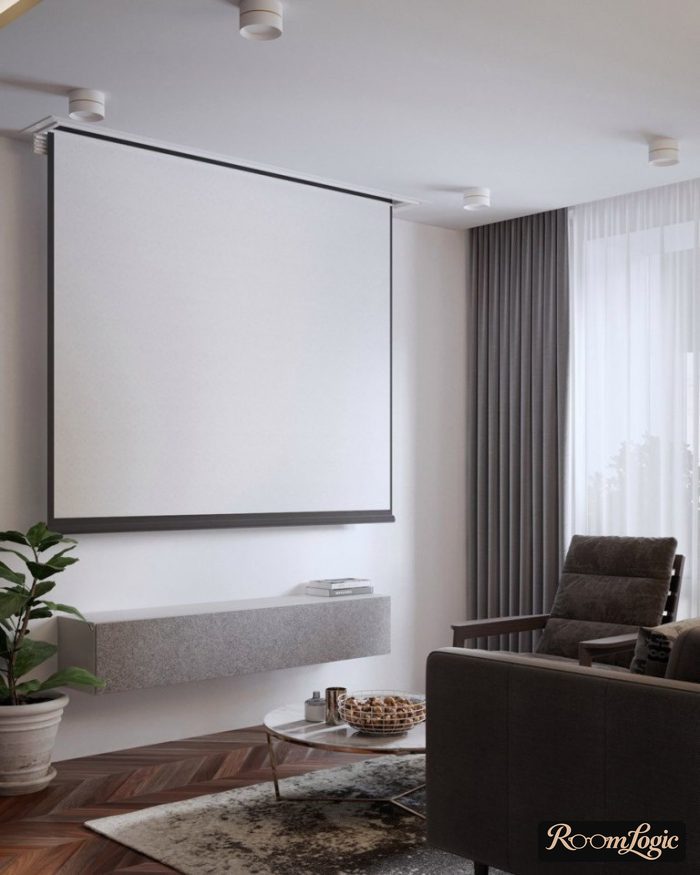
It is hard to imagine a modern living room without high-quality, functional equipment—a home theater or stereo system. In this case, black equipment is chosen to harmonize with the contrasting finishes around it.
Smooth lines can be seen in all the pieces: rounded backs and curved legs—all the elements flow smoothly into one another and merge into a single harmonious picture.
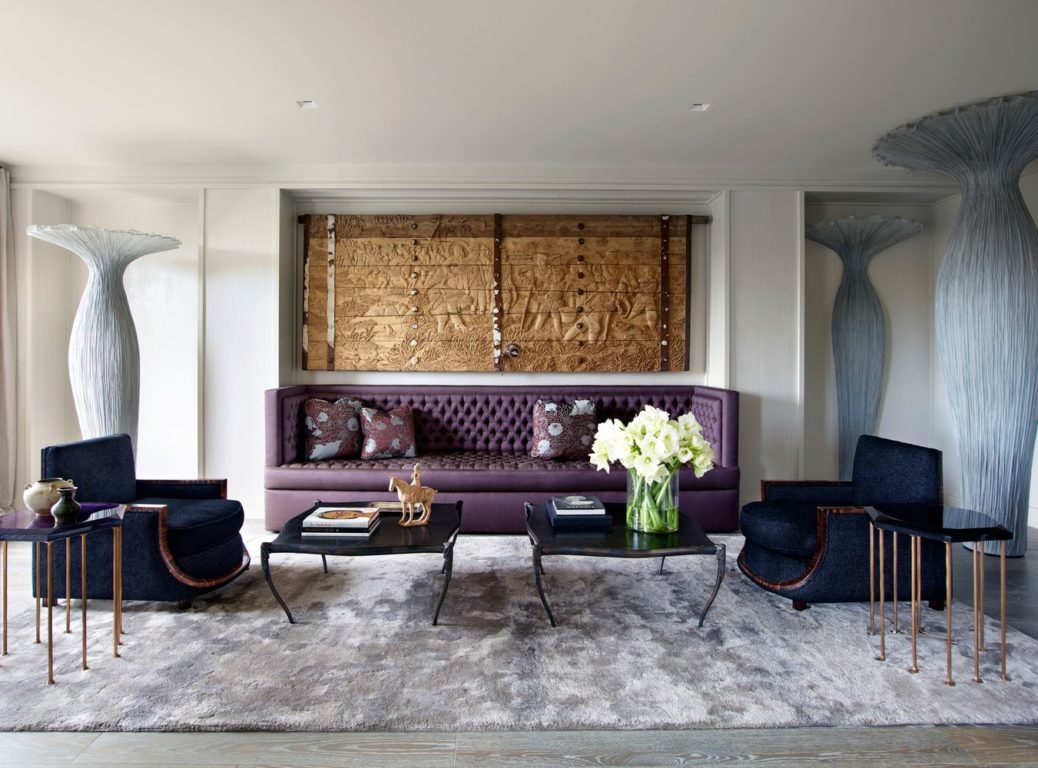
Button tufting is standard for Art Deco furniture.
Furniture arrangement also matters. Instead of the usual placement along the walls, it is better to use well-planned zoning in an Art Deco living room, starting the layout from the center. The coffee table goes there, with the sofa and armchairs arranged around it. Do not forget the principles of symmetry and balance. To complete the effect, you can use duplicate pieces of furniture: chairs or small tables.
Accessories and Lighting
An Art Deco living room design cannot look complete without accessories. Refined silhouettes of young women, with their lightness and grace, depicted in sculptures or paintings; pictures with abstract or animal motifs, wall clocks, and large vases. A display cabinet with transparent doors is convenient for a large number of small figurines or a collection of objects.
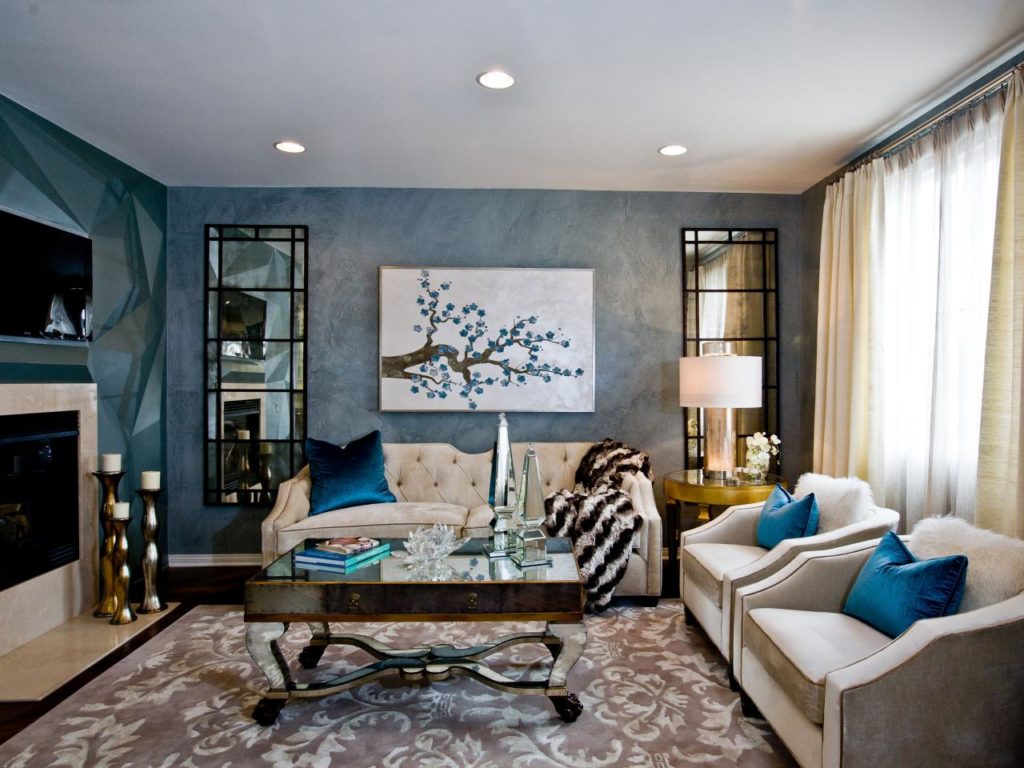
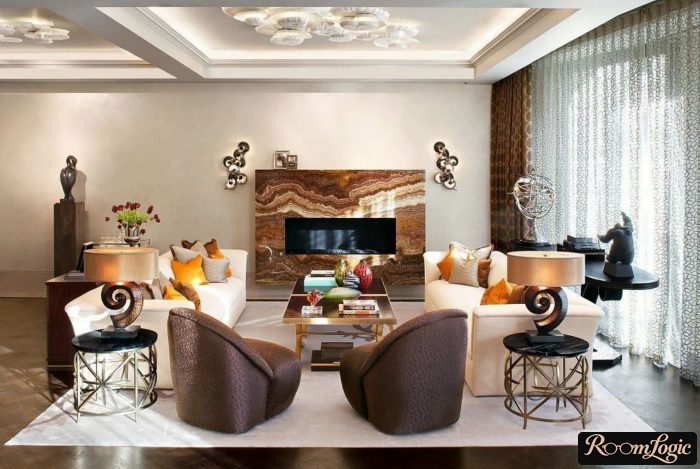
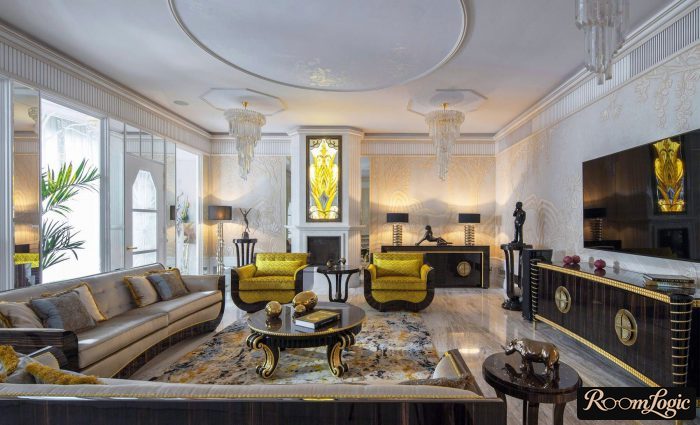
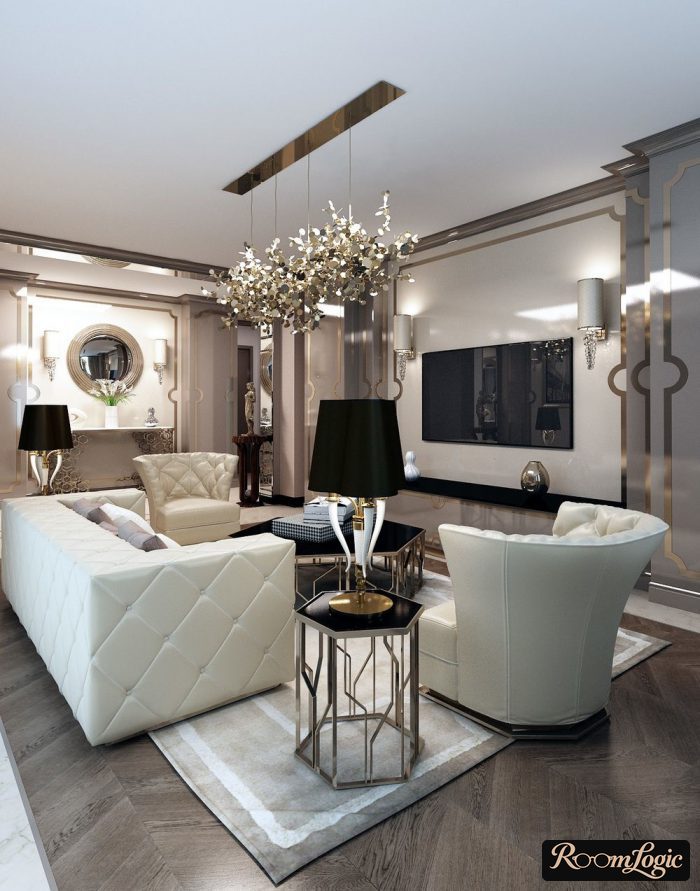
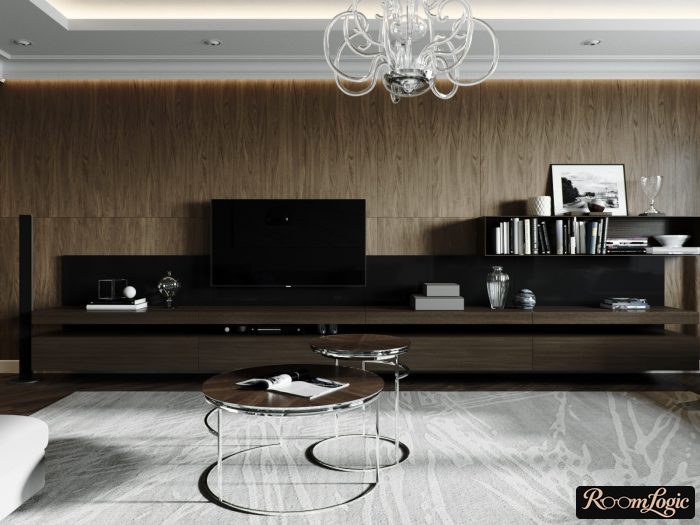
Textiles play an important role in the living room design—satin and velvet window treatments are combined with the furniture upholstery or pillows, and a luxurious handmade rug decorates the floor.
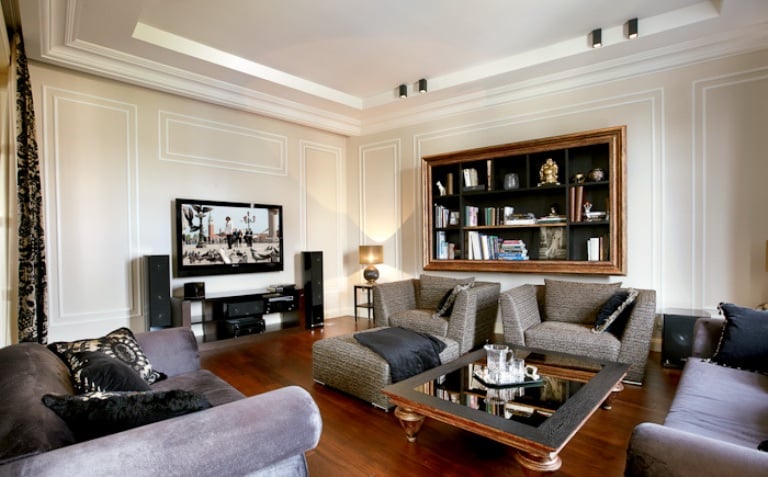
Furniture and accessories are the biggest expense.
In addition to natural light, the interior is supplemented by other light sources: geometric fixtures—spherical, trapezoidal, and rectangular—as well as chandeliers and floor lamps. The glass and crystals in the chandelier and fixtures refract and reflect the light, scattering it throughout the room and creating an interesting optical effect.
Materials in an Art Deco Living Room Interior
All materials used in the living room design are high-quality and luxurious-looking, so they are not inexpensive. The materials are often finished exclusively by hand, so some decorative elements exist as one-of-a-kind pieces.
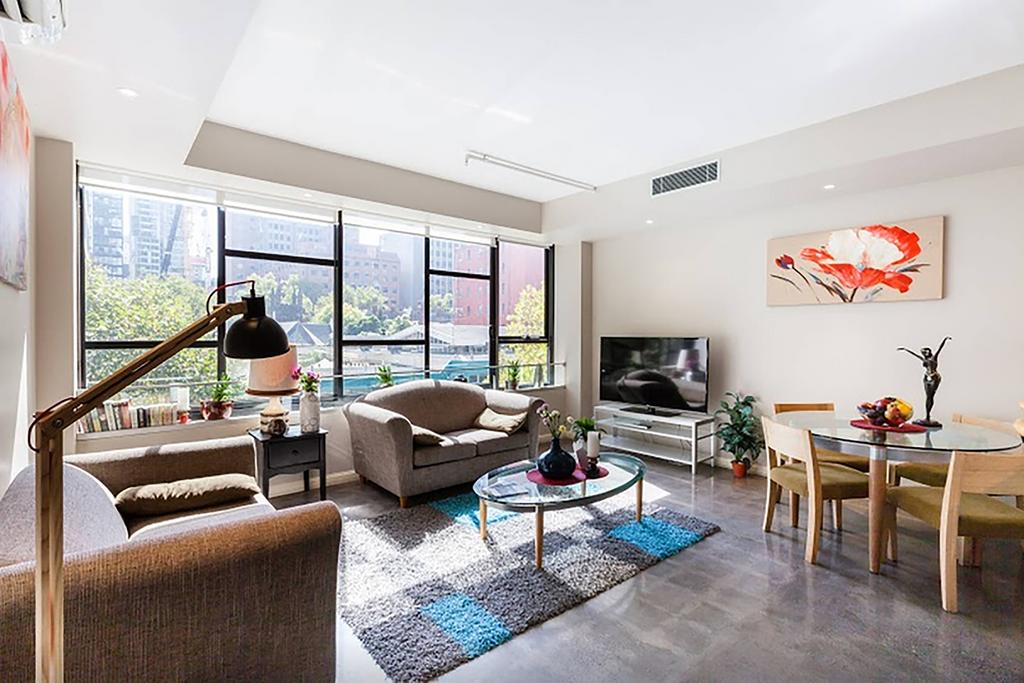
Art Deco loves shine, so there is a lot of glass and other glossy surfaces here—metal, tile, and polished and lacquered wood. The furniture is complemented by metal handles, while stairs and doors are decorated with forged inserts.
You can bring originality and luxury into the interior with unusual materials: exotic animal skins (snake, stingray, crocodile), ivory, and semiprecious stones.
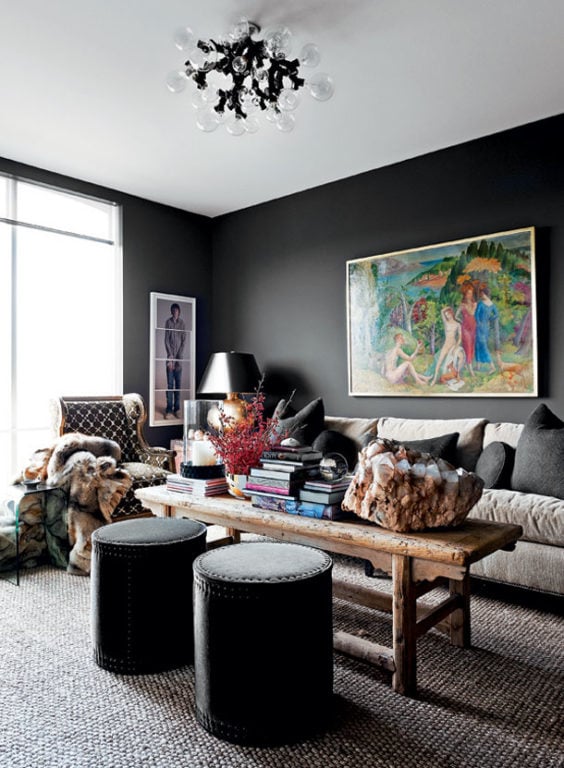
An Art Deco living room is good for creating a wow effect, but it is expensive, difficult to execute, and not the most comfortable to live in. We recommend looking at the list of interior design styles; it includes more balanced styles that are just as bold.