The first thing everyone who enters a home sees, and what shapes the impression of the entire interior, is the living room design. The standard setup includes a TV, which everything is built around, a sofa, and a coffee table. All that remains is to plan how it will look. To do this, decide on the design style and furniture arrangement based on the room’s size, then choose finishing materials, lighting, and accessories.
Choosing a Design Style
The most popular directions in modern living room design are classic style, high-tech, minimalism, and Art Nouveau.
Classic-Style Living Room
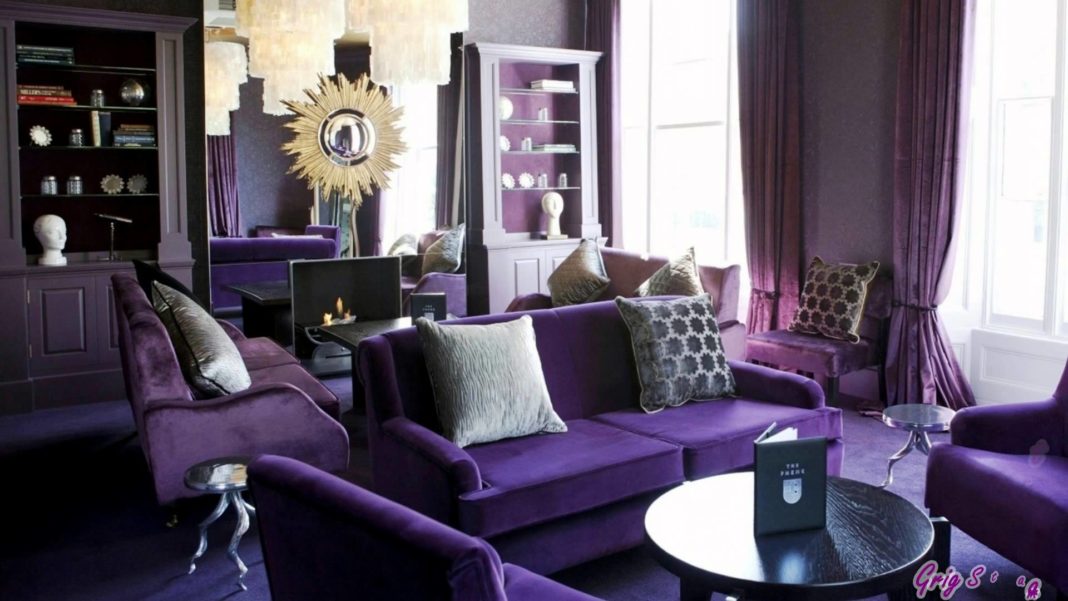
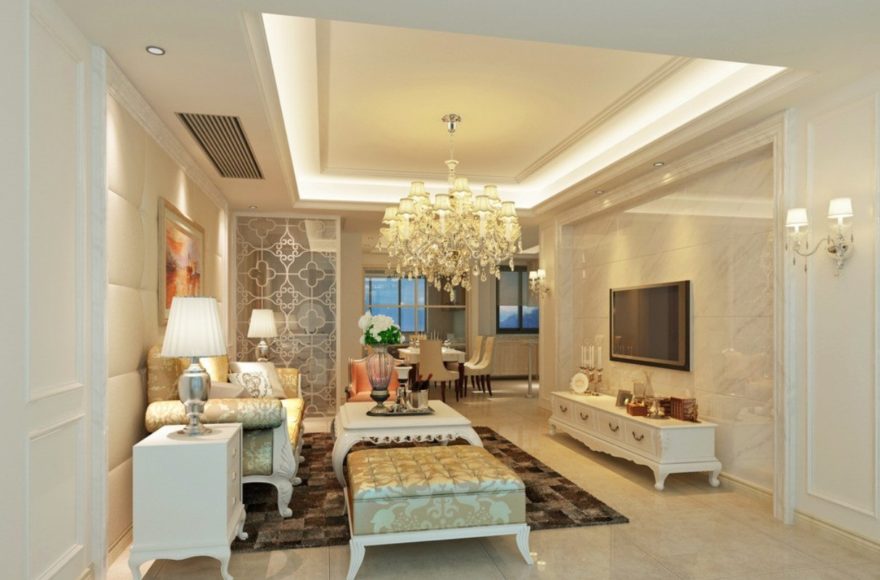
A classic interior is characterized by luxury and the use of only natural materials. To decorate a living room in classic style, you will need expensive finishing materials: hardwood flooring, columns, fabric wallpaper, and molding; natural wood furniture with expensive silk, velour, or velvet upholstery; sculptures; and mirrors. Having at least two or three of these elements in the interior allows it to be considered classic.
High-Tech Living Room
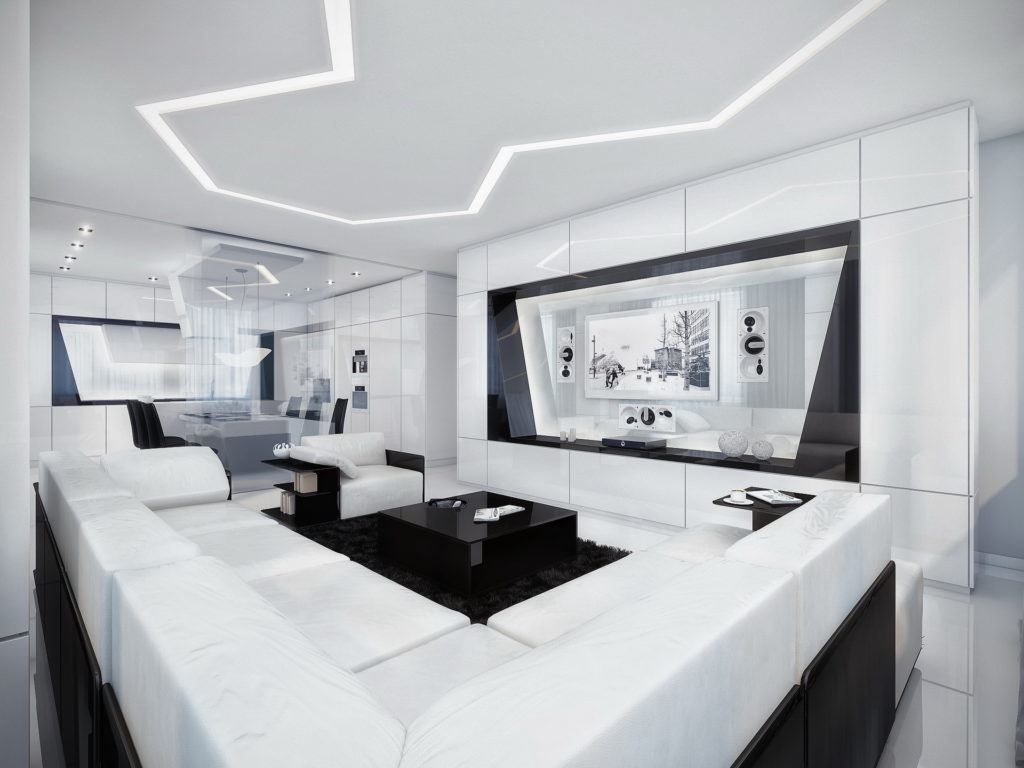
This kind of living room is characterized by restraint, clean lines, glass and metal in the interior, shine, and a certain coldness with a minimal number of accessories. Modern technology, for example, a stereo system or home theater, will become the main decoration of this design. Bright details in the form of a bouquet of flowers, bright pillows, or an interesting vase will bring the living room to life.
Minimalist Living Room
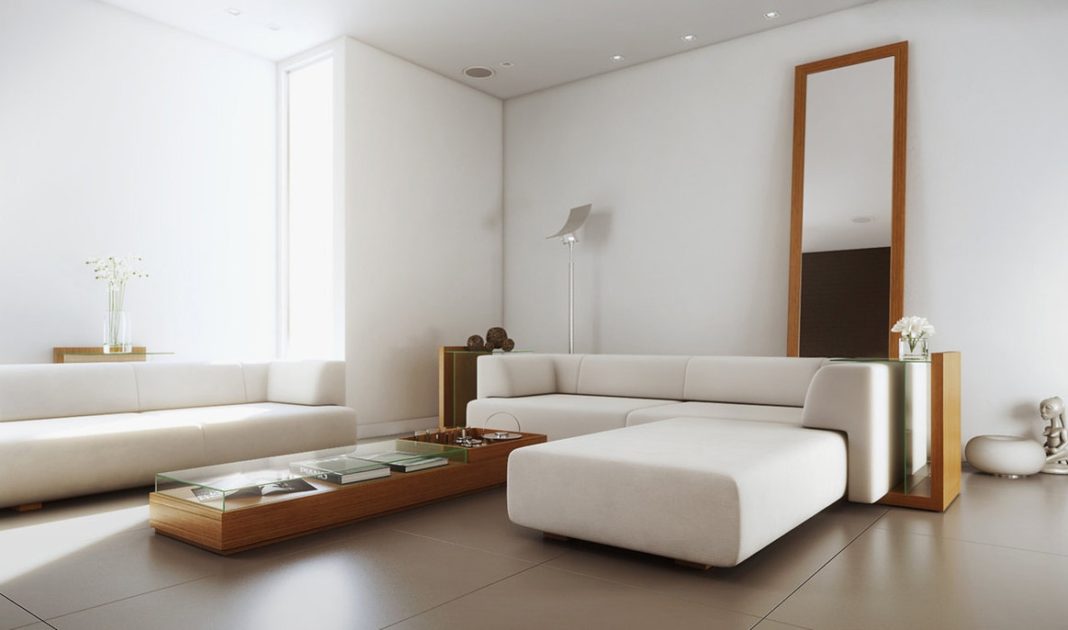
This style is characterized by a limited amount of furniture and a complete lack of decor. Its typical colors include white, gray, black, and light brown. Contrasting combinations are best avoided. Built-in furniture, full-wall sliding-door cabinets with glass doors, and a modular system with steel inserts will replace a traditional wall unit. Two or three modules are enough for storing things, for example: a TV stand, a stand for books or discs, and a wall cabinet or shelf. Upholstered furniture has a simple rectangular shape, with solid-color upholstery or a modest pattern.
Art Nouveau Living Room
It combines elegance and flowing lines with practicality and function. The main requirement is the use of natural materials. Otherwise, Art Nouveau design has no limits. A large sofa spanning the living room, or an asymmetrical sofa with unusual inserts, unexpected patterns, and plant motifs, will look interesting. Chairs or ottomans and a coffee table will complete the set. The wall unit may be spacious or compact, but shelf lighting will be useful in either case.
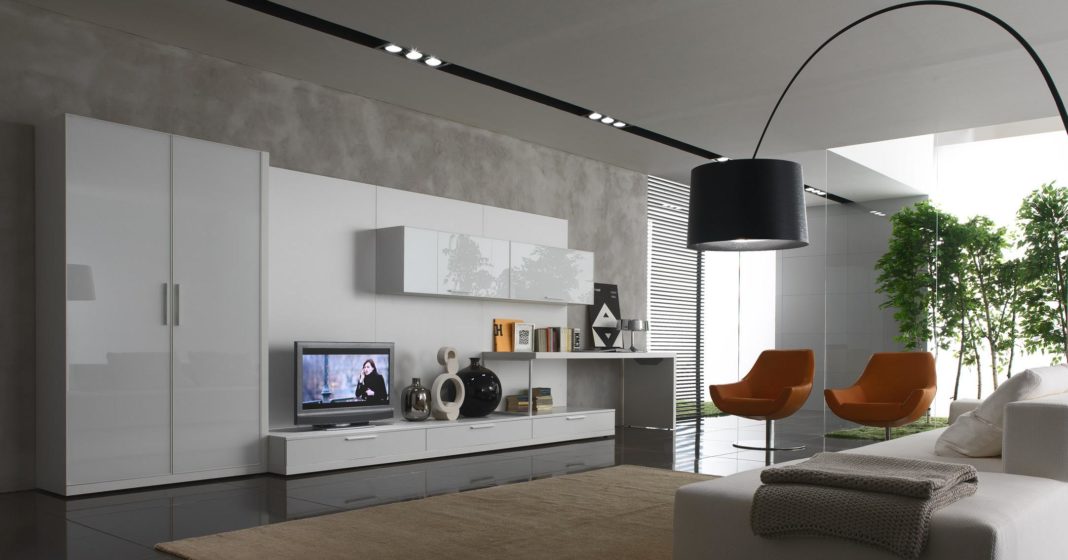
For contemporary styles, any combination of them is allowed. This kind of living room combines elements of minimalism, Art Nouveau, and high-tech or loft style and greatly expands the room for maneuver and fresh ideas.
Regardless of the chosen design and color scheme, the main thing when creating a living room interior is to listen to your own taste and mood.
Living Room Design Based on Size
In a spacious living room, especially if it is in a detached house, the main advantage of the interior is its large windows. They are exactly what should become the main focus when creating the living room design. When the windows and walls are designed well, the other interior details will fit easily into the idea.
For a harmonious design, it is better to distribute furniture evenly throughout the room and avoid creating cluttered islands. There are no limits on color choices, but it is better not to use more than three colors.
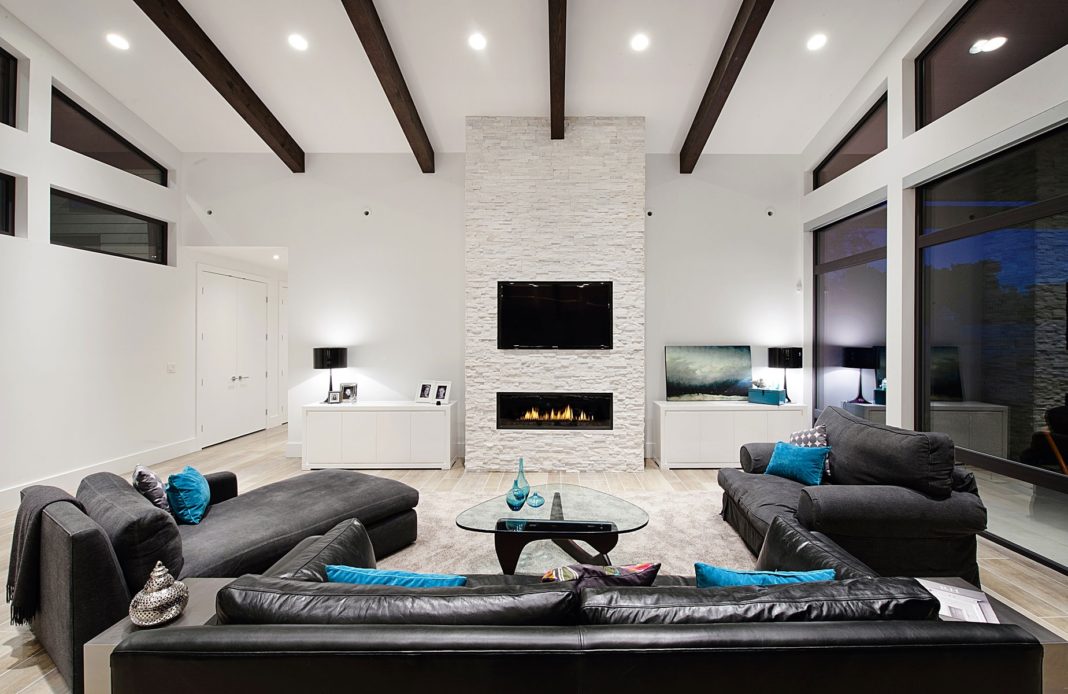
A burning fireplace will decorate a large living room. And this is not only a luxury for a detached house – apartment owners can also equip the living room with an electric fireplace or create a fireplace imitation on the wall with brickwork. In any case, this interior detail will create a special atmosphere of warmth in the home.
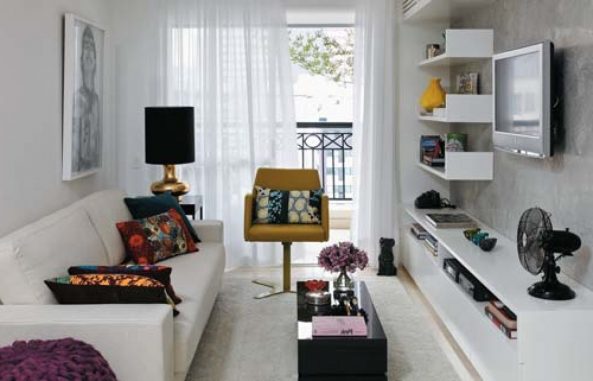
In a small room, you should not draw attention to the walls by choosing a pronounced texture or loud colors and patterns. Light, solid-color walls will hide the boundaries of the room and make it wider. It is better not to use molding, complex shapes, or bright decoration, and to choose simplicity instead. Decentralized lighting, with separate zones lit, simple furniture, and light window curtains will increase the living room’s interior space.
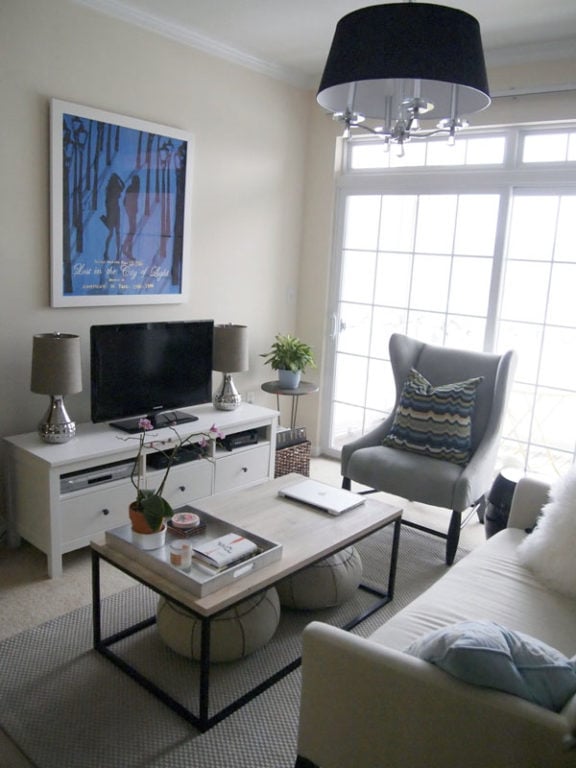
To expand a small room not only visually but also in practice, the living room is combined with adjacent rooms – the kitchen or bedroom.
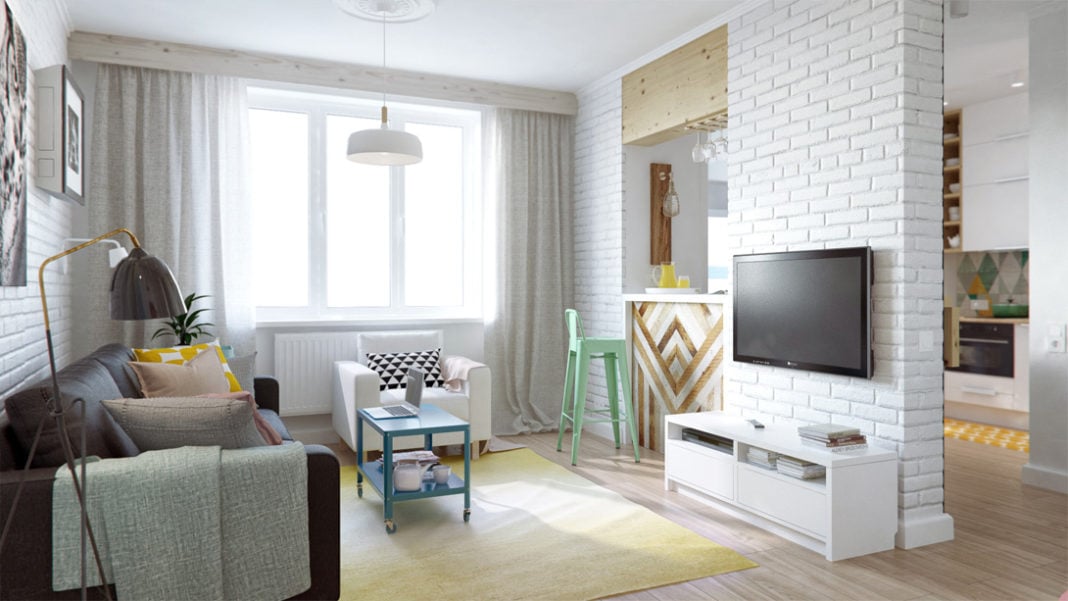
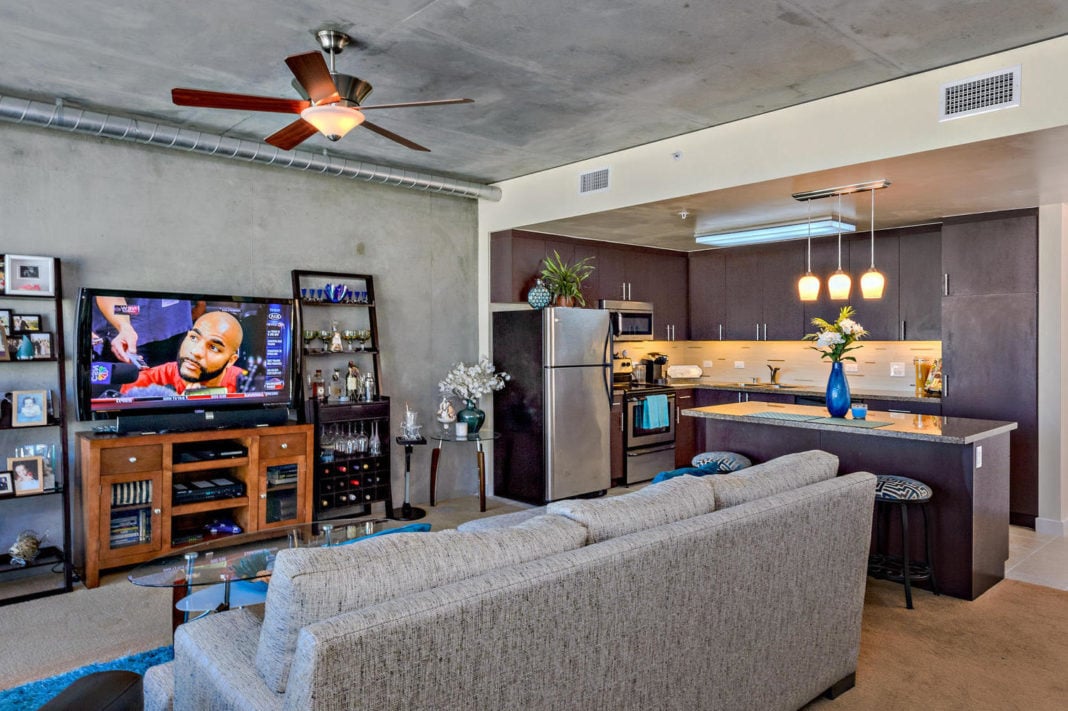
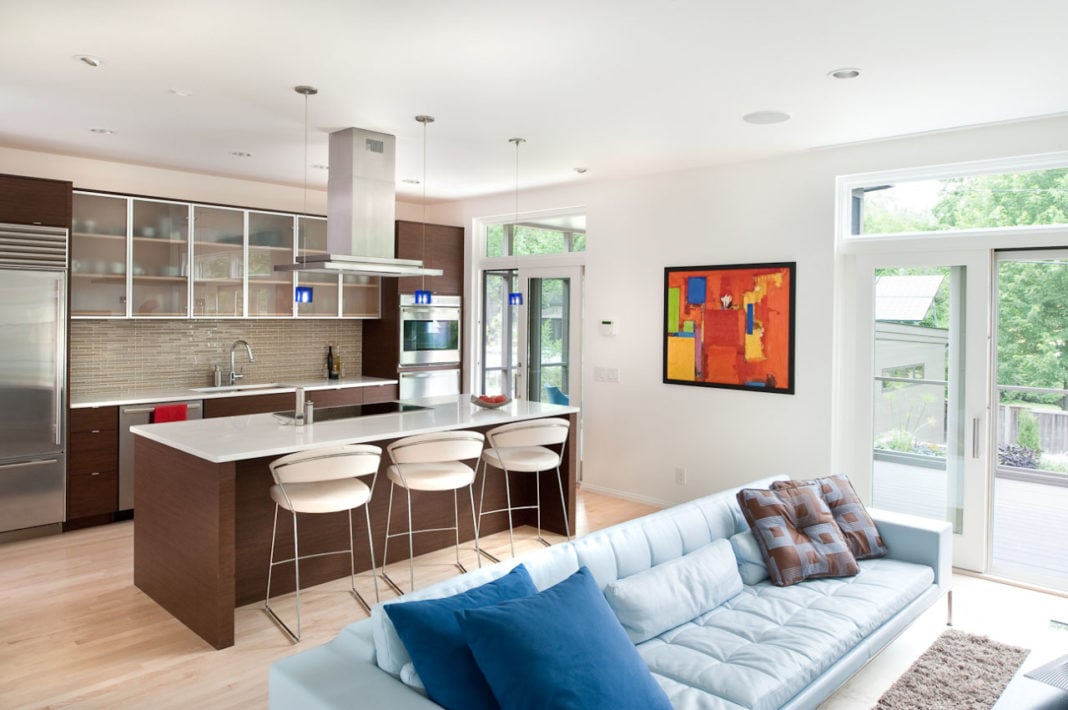
Combining the kitchen with the living room. This design solution is suitable for both large and small apartments. To combine the rooms, part of the dividing wall is removed, but the sitting area and dining area remain conditionally separate. Different wall and floor finishes, decorative partitions, breakfast bars, or furniture are used to separate functional areas.
Combining the living room with the bedroom. This option is ideal for a one-bedroom apartment when there are no separate rooms for sleeping and entertaining guests. With design tricks, one room becomes a bedroom and living room at the same time. A stylized screen or partition can divide the room into zones, and the functional areas can be designed in different styles, for example, a classic bedroom and a contemporary living room. Lighting will strengthen the separation effect.
This option is ideal for a one-bedroom apartment when there are no separate rooms for sleeping and entertaining guests. With design tricks, one room becomes a bedroom and living room at the same time. A stylized screen or partition can divide the room into zones, and the functional areas can be designed in different styles, for example, a classic bedroom and a contemporary living room. Lighting will strengthen the separation effect.
Living Room Wall and Ceiling Finishes
Walls
The wall finish depends first of all on the chosen design style and overall concept, but there are several rules worth considering.
- You should not make the walls too busy or bright. A living room generally contains a lot of electronics, and everything revolves around the TV, so extra details will distract and create chaos.
- You need to imagine how the walls will look under artificial lighting, since this room is used in the evening.
- If you plan to hang pictures, think about lighting them in advance.
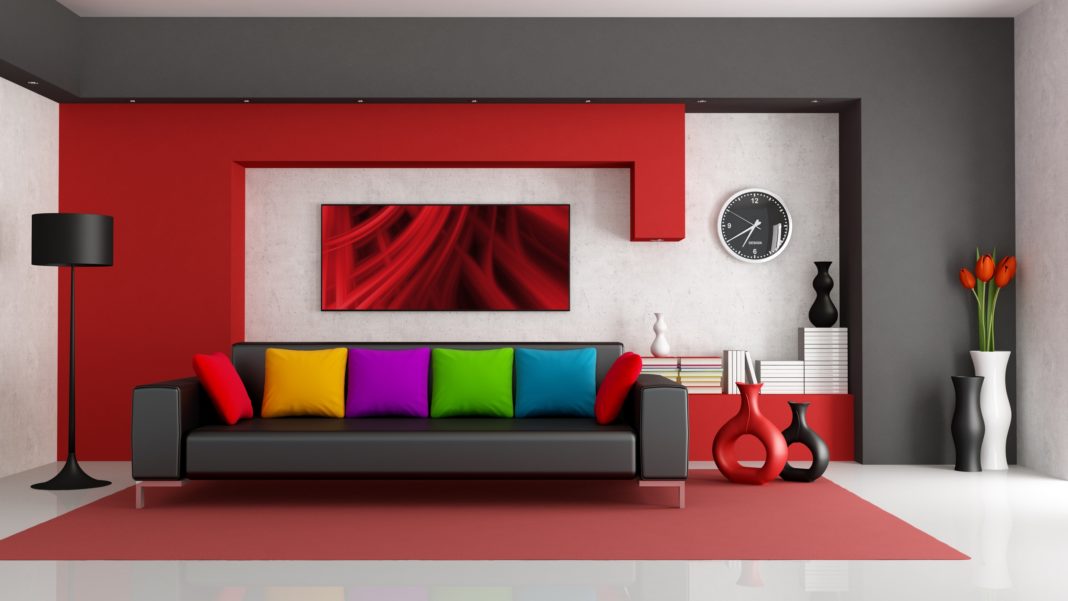
Wallpaper is often used for walls, and its range is striking in its variety. The main types found in stores are vinyl, nonwoven, natural, metallic, and fabric wallpaper. A separate type of finish is chosen for each style.
- Light, solid-color wallpaper serves as a neutral background and sets off the furniture and accessories without drawing attention to itself.
- Floral patterns on wallpaper bring lightness into the room and are ideal for country style in the living room.
- Wallpaper with vertical stripes visually raises the ceiling and creates a feeling of spaciousness. It is a universal option for a contemporary or Art Nouveau living room.
- Fabric wallpaper will decorate a classic-style living room and create an atmosphere of luxury.
- Wall murals are custom-made with a selected image or photograph.
- Natural wallpaper is an unusual wall finish. Bamboo, straw, reeds, and cork are used to make it. In addition, it is practical and easy to care for. This finish is suitable for contemporary and high-tech styles.
When choosing a color scheme for the living room, you need to listen to how you feel and decide what tasks the room has. Warm shades suit a cozy home atmosphere, cool shades suit relaxation, and bright, energizing shades suit frequent get-togethers with friends.
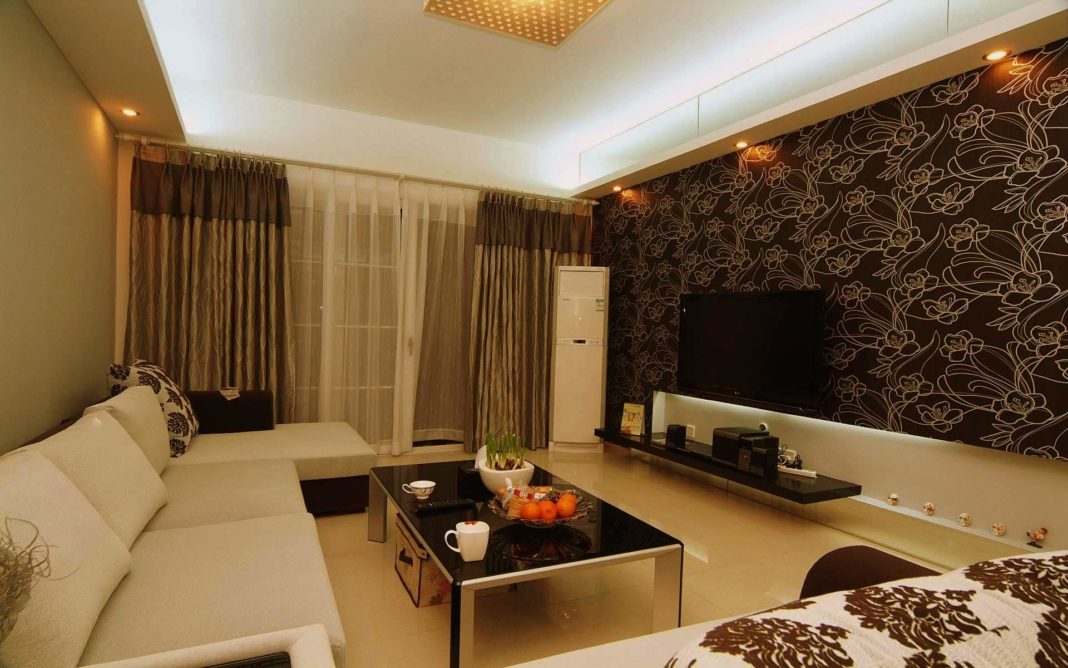
Ceiling
When creating a living room design, you cannot overlook the ceiling because, along with the other details, it plays a role in creating a complete interior. There are different ceiling design options: it can be a white, even surface whose glossy shine brings a restrained minimalist design to life, or a sculptural composition with rich molding. It is only a matter of the owners’ taste and preferences.
The main types of ceilings are stretch, suspended, or simply plastered. The main rule when choosing a ceiling is coordinated colors and unity with the chosen style. For a small room, it is better to rule out complex options – suspended or two-level ceilings.
Because the living room design shapes the overall impression of the remodel, if you want hidden lighting or a ceiling with an unusual shape, it makes sense to do it here. But it is important to remember that a standard white matte ceiling is always a good solution, while any deviation can ruin everything, and to play with this, you need to be one hundred percent sure.
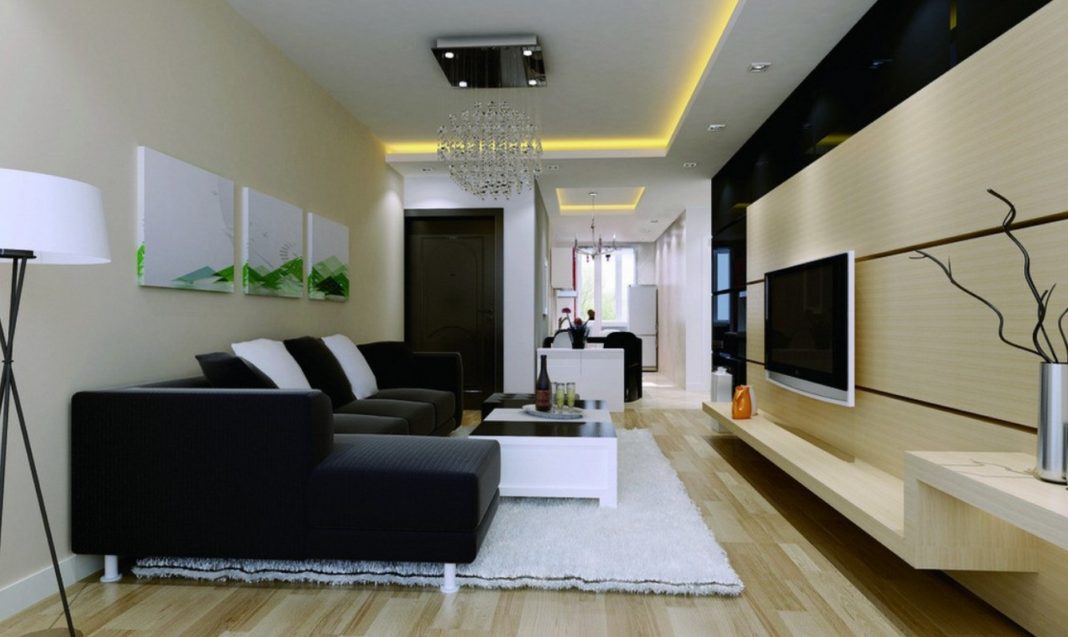
Lighting
It is especially important to have several types of lighting in the living room because, depending on the time of day and the situation, this room serves different functions.
Natural lighting plays a secondary role in living room design because people generally gather there in the evening. It is important to consider which direction the windows face and whether direct sunlight enters during the day. If it does, curtains are absolutely necessary – without them, watching TV during the day will be difficult. In a harmonious living room design, the curtains match the color of the furniture, wallpaper, or bright decorative elements. And so they do not blend into the overall picture, their color should differ from the wallpaper by two or three shades.
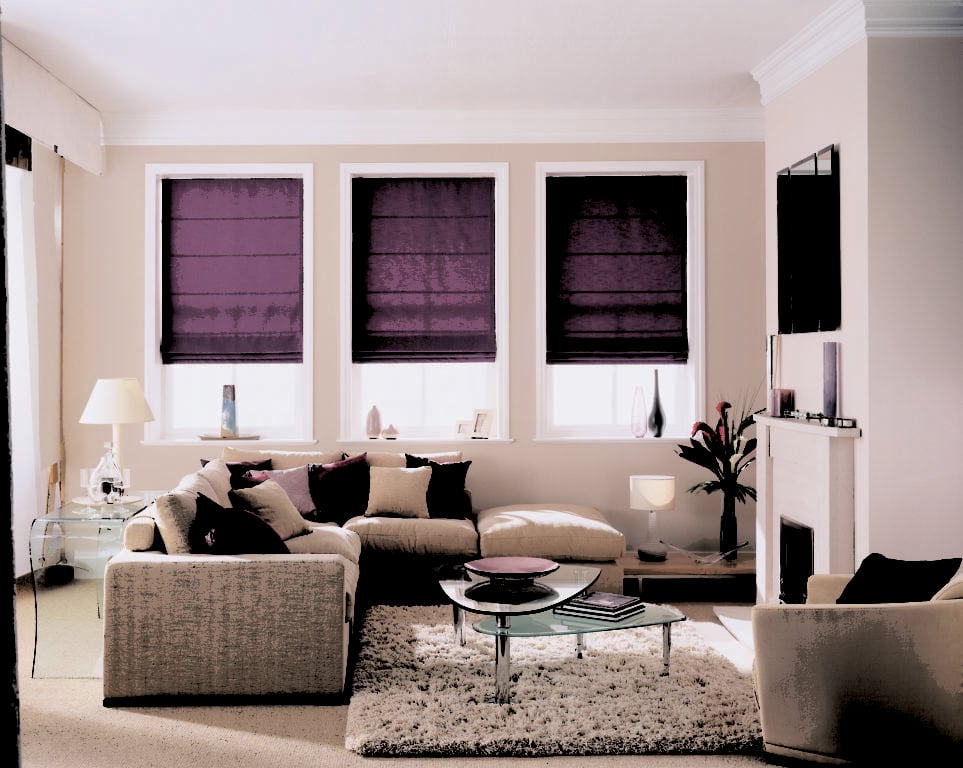
For the interior to look well planned and complete, the window treatment should match the chosen design style. Grommet curtains, Roman shades, or Japanese-style panels suit an Art Nouveau or minimalist interior. Country style does not accept an abundance of decoration, so a regular curtain works best. Heavy curtains with valances or fringe are suitable for classic style.
When choosing curtains, you should consider the direction of the pattern because vertical patterns stretch and narrow the living room, while horizontal ones widen and shorten it.
Artificial lighting, on the other hand, should be planned in advance and have several levels. Contemporary design rarely uses one light source in the form of a chandelier or fixture because this lights the center of the room and its corners unevenly. That is why local, recessed, or directional lighting is used to distribute light rationally and place accents.
Local lighting highlights lit niches, platforms, pictures, and walls. It is important to plan lighting for the wall behind the TV to take care of your eyes in the evening. Not everyone knows that watching TV in complete darkness is harmful. Recessed lights are used for this purpose.
Table lamps, floor lamps, sconces, pendant lights, and recessed lights serve as additional light sources. Mixed lighting is often used, where other types of fixtures are present in addition to a chandelier.
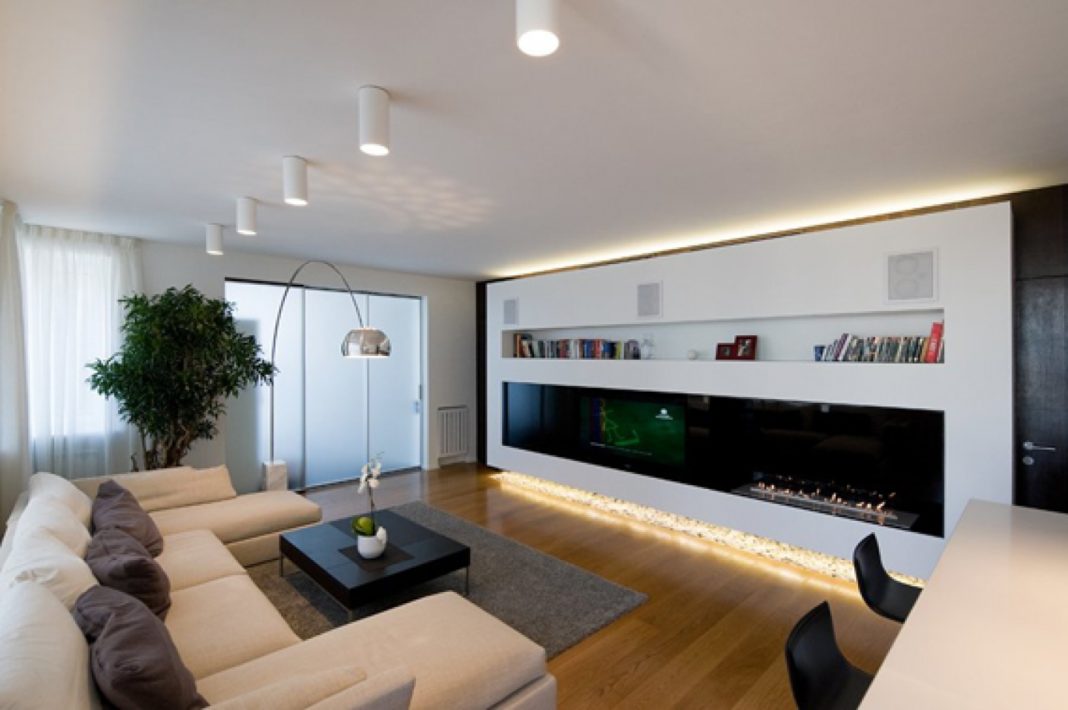
Large futuristic sconces fit very well in a contemporary-style living room.
Furniture and Accessories
The standard required set for a living room includes a TV, sofa, and coffee table. This is the foundation, and everything else is meant to complement it.
To make the room look cozy, place a medium- or high-pile rug under the coffee table and several pillows on the sofa. Choosing the rug and pillows in the same accent color is a great idea. It will balance the room’s appearance and allow you to change its mood in the future by changing only the color of these accessories, without changing the remodel.
To avoid cluttering the room, place a console under the TV, and if the apartment is small and does not have enough storage, you can put shelving units on the sides. Wall-mounted consoles that seem to float in the air look contemporary and stylish.
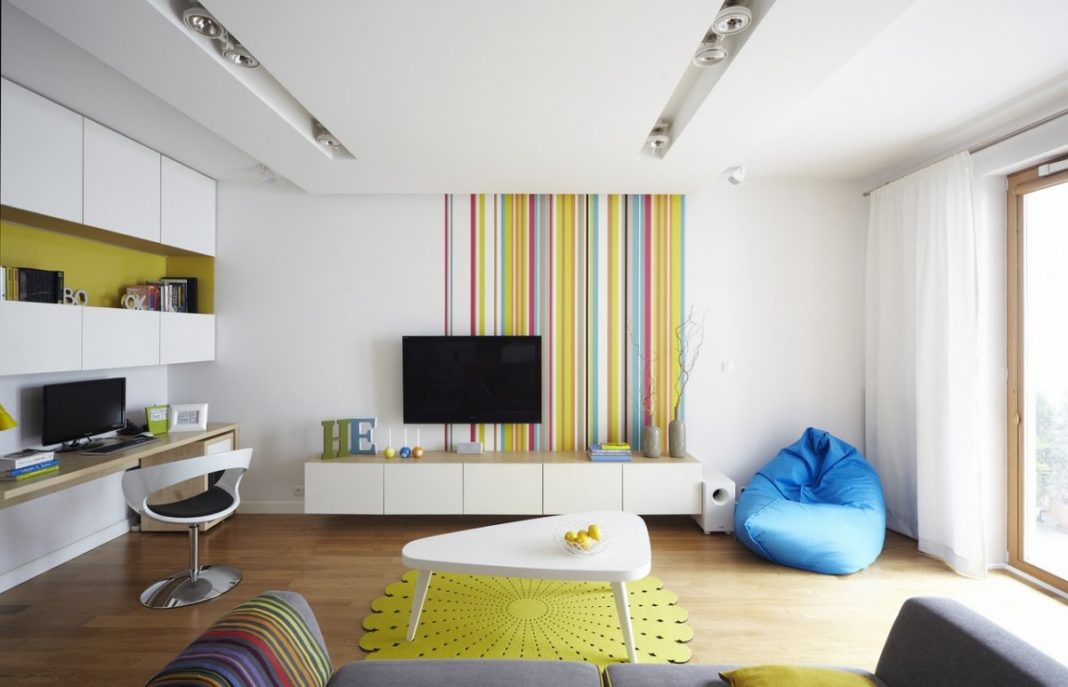
If you like entertaining guests and have a wide social circle, you should plan for more seating. Beanbag chairs or ottomans will work for this.