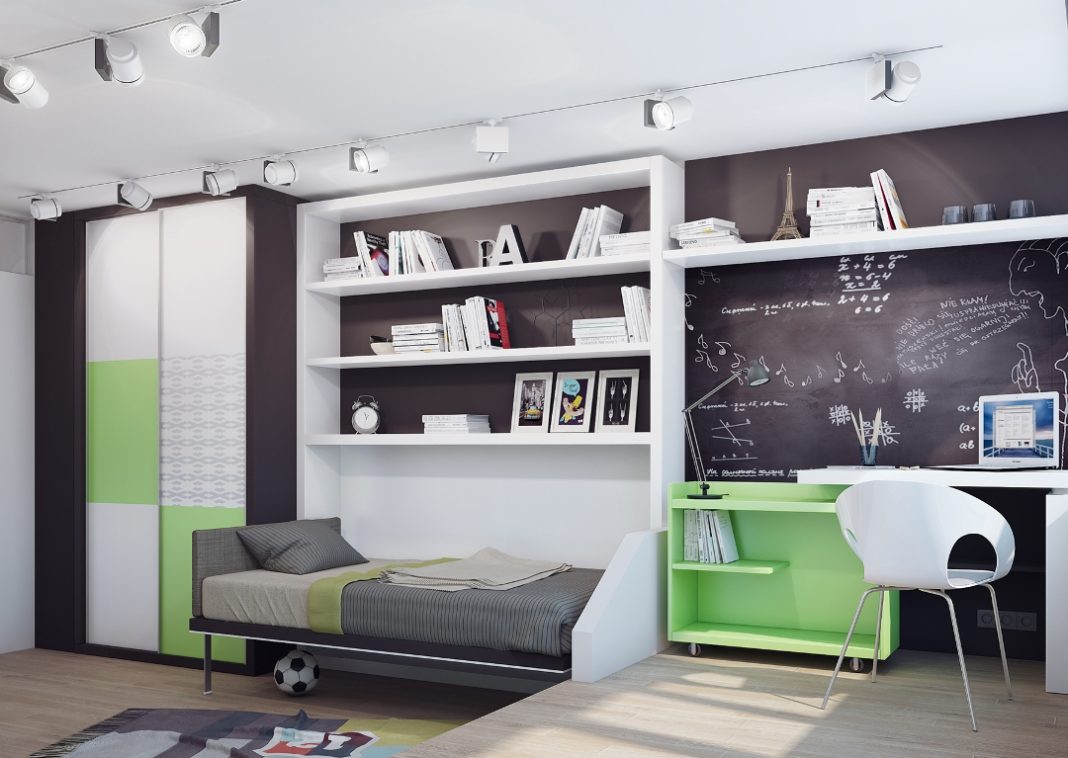
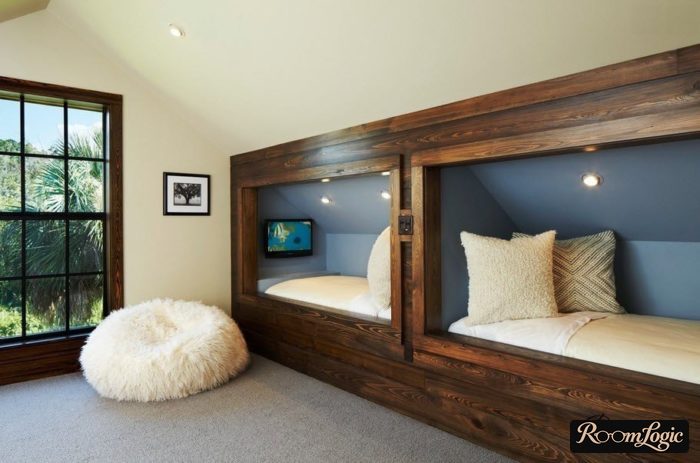
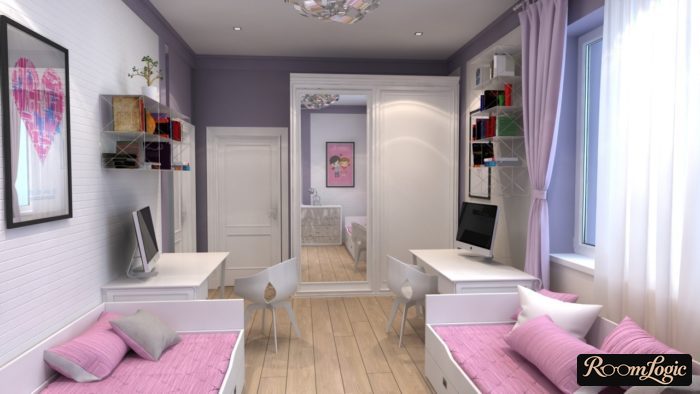
I will describe the approach and principles of designing a girl’s room – I will give you an understanding.
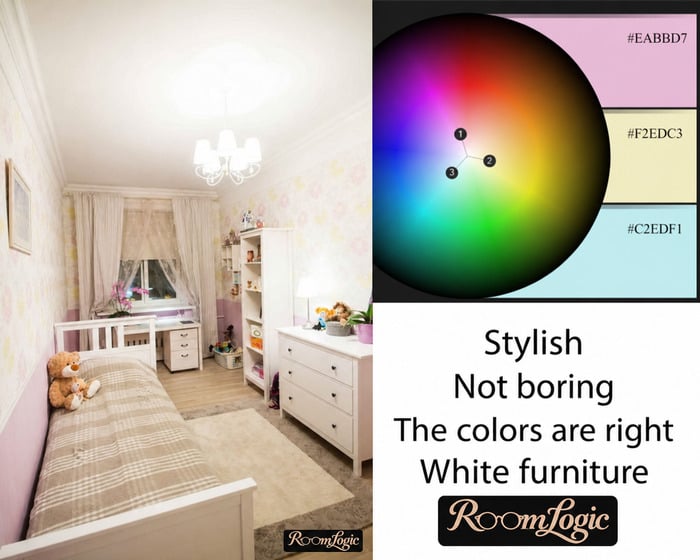
For a girl, room design is not just a beautiful interior. It is an important factor in shaping her taste and sense of aesthetics in the future, for which the parents are now responsible.
Let’s go!
Design Approach
What is our goal? Here are four ideas that distinguish a great, properly planned girl’s room from an ordinary one:
- An original design with different colors that still work together. One that both a child and an adult like.
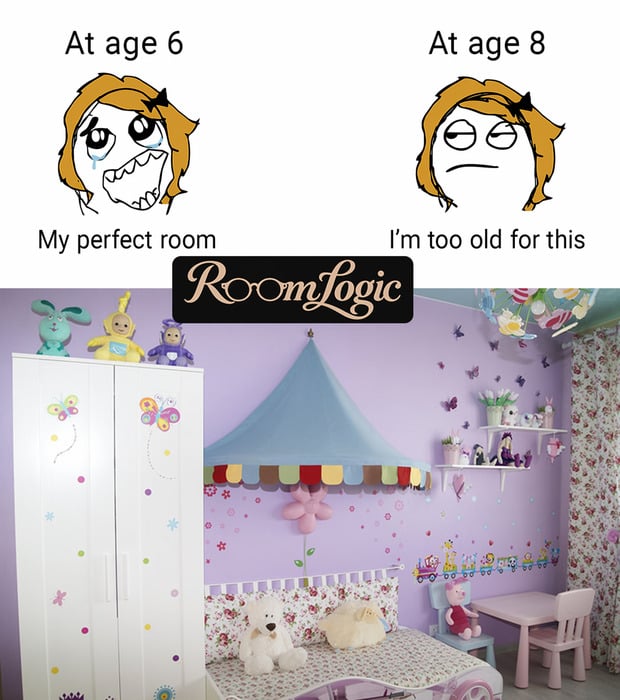
- No need to redo the remodel as she gets older. Read and look at photos of a teen girl’s room so you make a remodel from the start that can be easily transformed as she grows.
- It gives room for changes. If the girl wants to hang up her drawings, decals, and posters, arrange toys, and so on, all of it should fit harmoniously.
- It tolerates disorder. The room should look acceptable, not only when it is perfectly tidy.
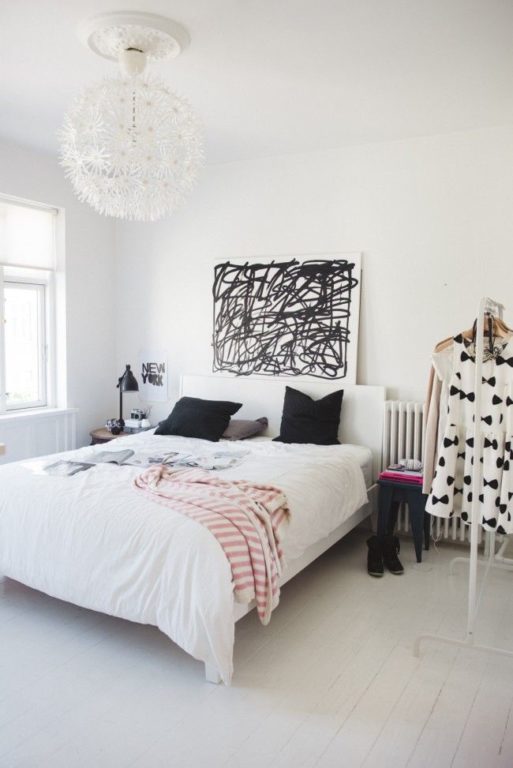
Here is a photo of a perfectly designed girl’s room. The next section is about colors:
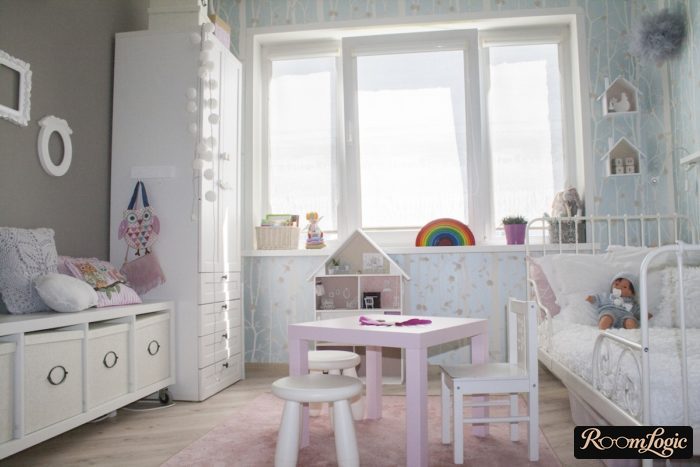
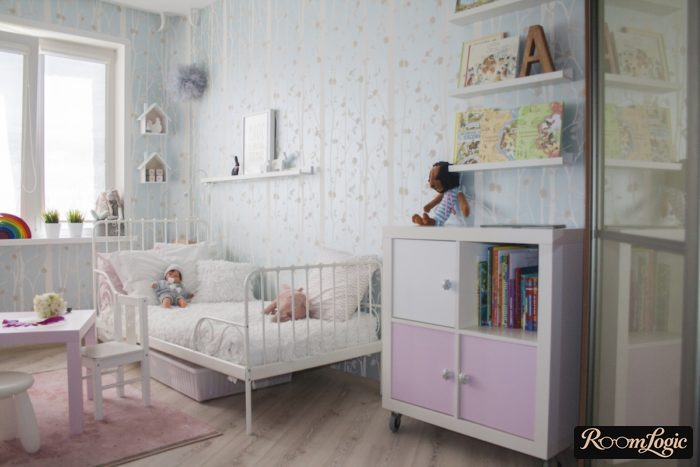
The room should be comfortable specifically for the person who lives in it. Even at a young age, when children do not yet know the word design, they will be drawn to change something around them. At first it will be drawings on the wallpaper, then posters of favorite performers on the walls. You can be clever and give the child the illusion of independently transforming the room by leaving opportunities for inexpensive updates over time.
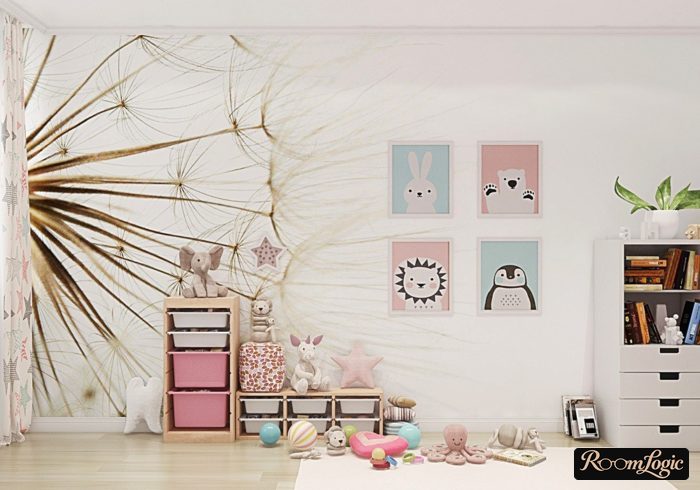
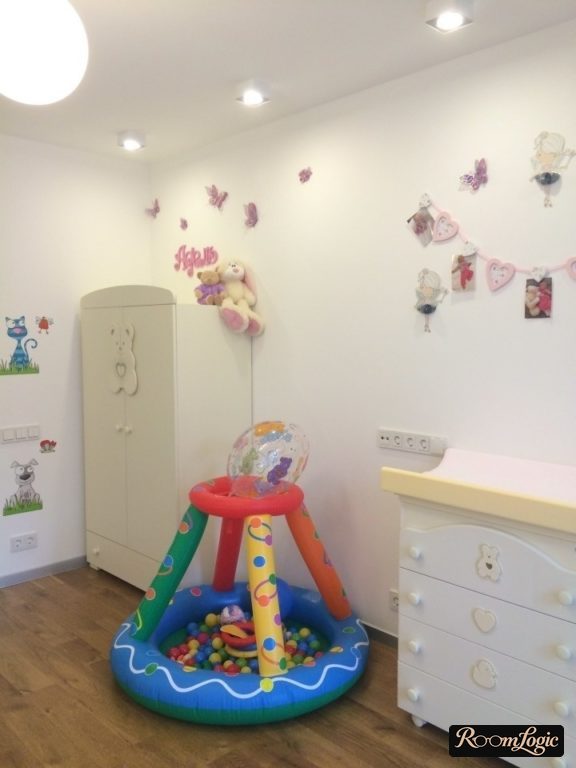
The general approach to designing a girl’s room is calm, neutral finishes and furniture; bright colors, accents, and the overall mood through accessories, textiles, and posters – everything that is easy to add or remove and that can be entrusted to the child without worrying about the overall design. This approach will make it easy to adjust the room to the girl’s age, and tastes depend very strongly on age.
Colors in a Girl’s Room
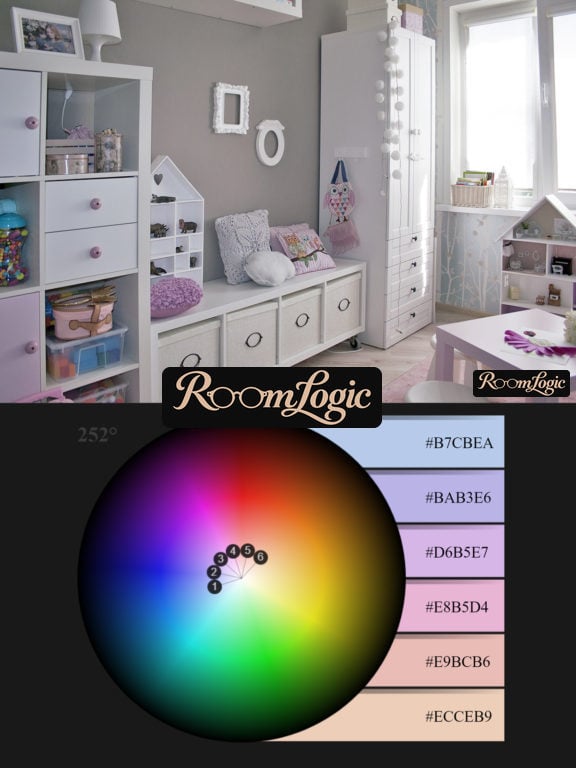
Be sure to read about the rules for combining colors in an interior. It covers the wheel in the photo above and how colors are chosen for interiors in general.
This is important for shaping good taste from childhood. There is still no single opinion, but it strongly appears that a sense of taste can be developed, and it would be great if you helped your daughter with this.
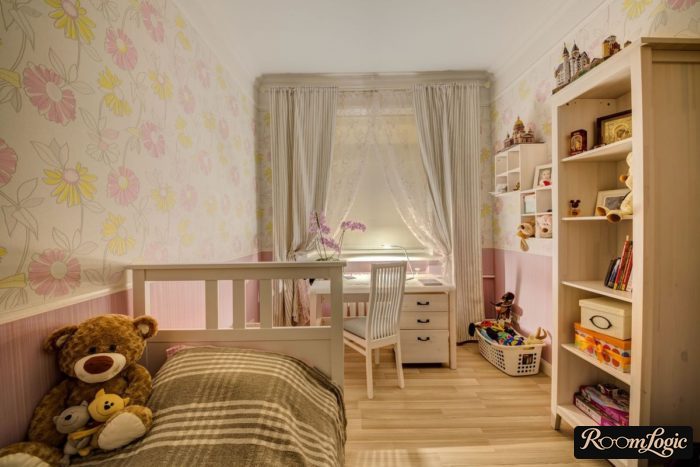
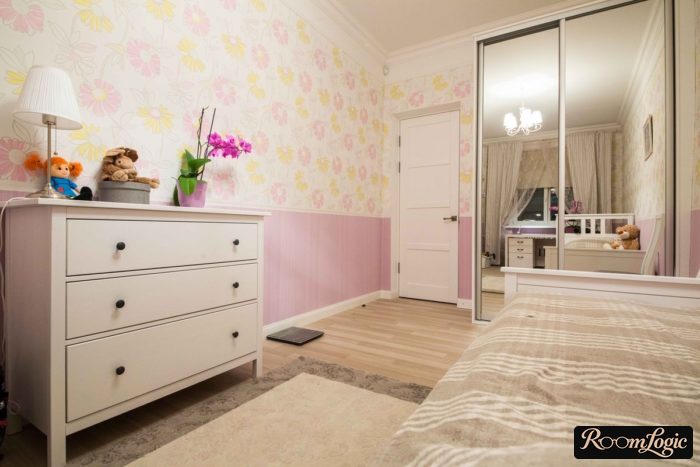
The point:
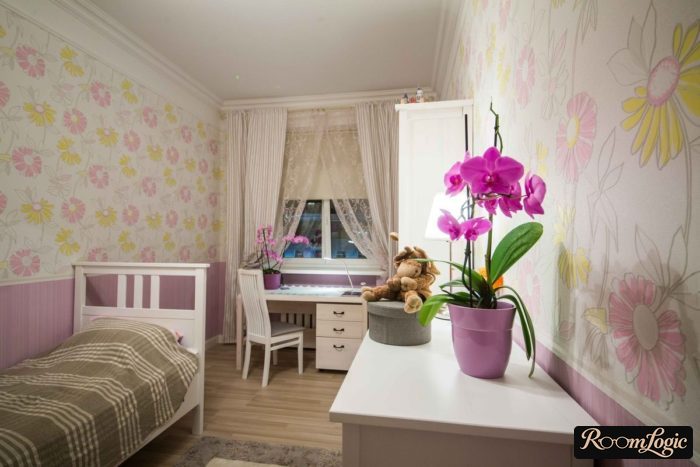
You can use as many different colors as you like, but choose calm pastel tones and do not cover a large area with them.
A child has to live there, not look at the picture once. It is important that the girl can relax and rest.
Bright, toxic colors are good only in very early childhood, when children simply like everything bright. Then they quickly lose their relevance. Do not think less saturated shades will make the room gray or boring. Brightness can be added with accessories, rugs, pictures, photographs, and toys, after all.
That is how Scandinavian-style design is done, for example – take a look. It is great, current, and inexpensive.
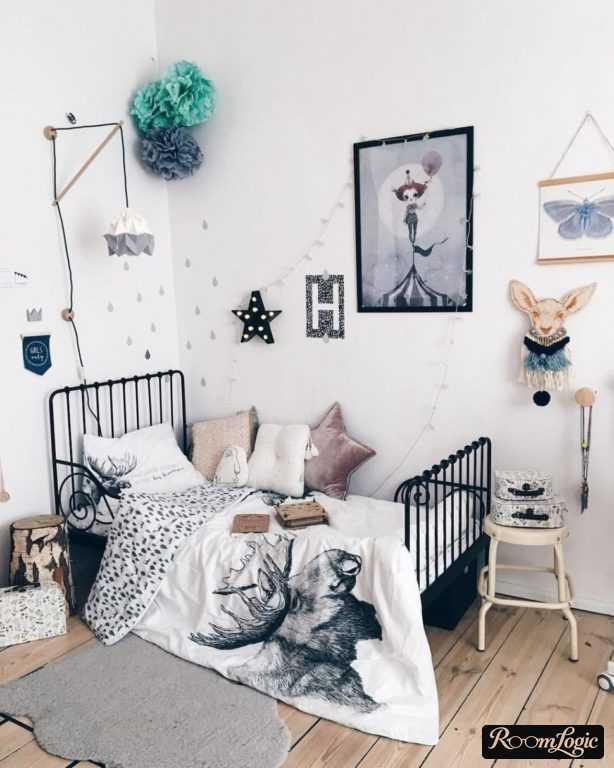
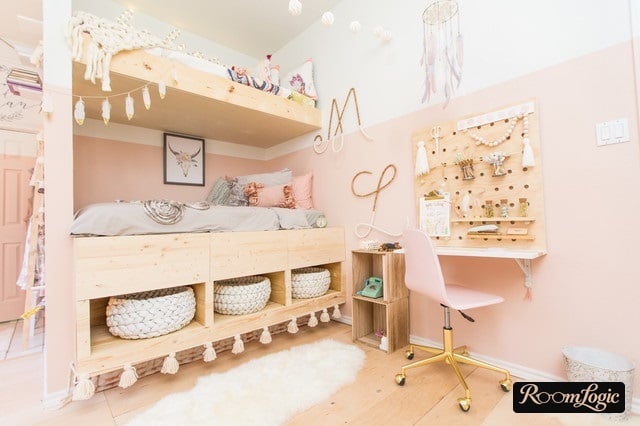
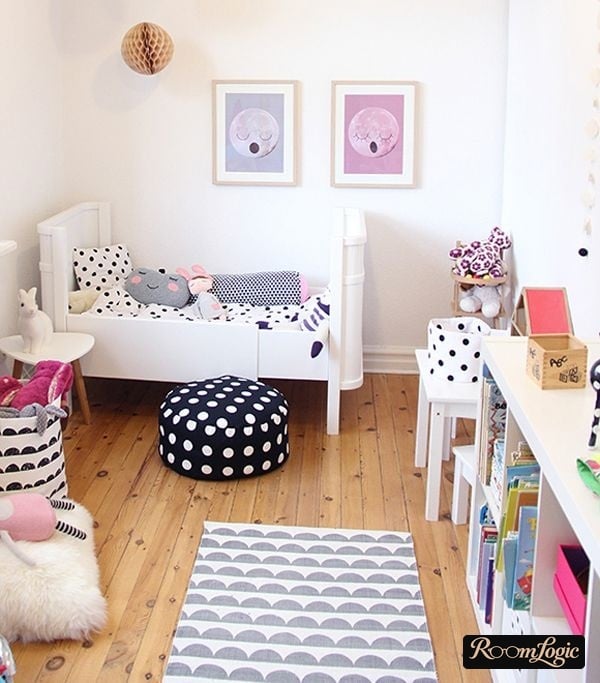
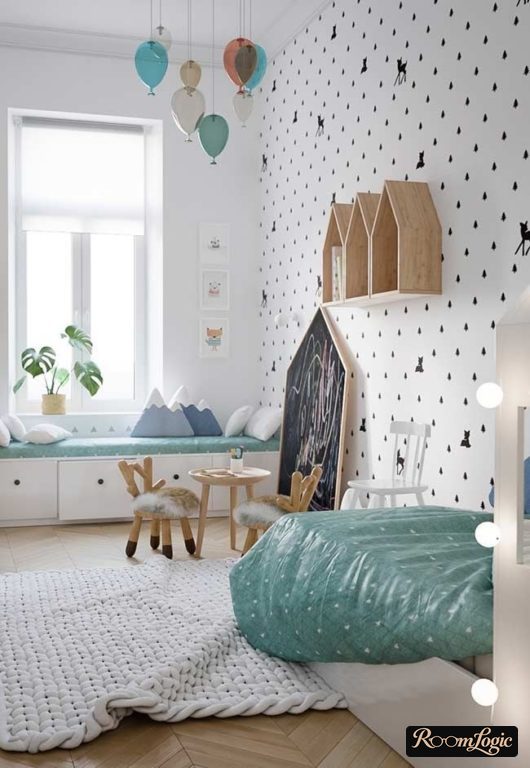
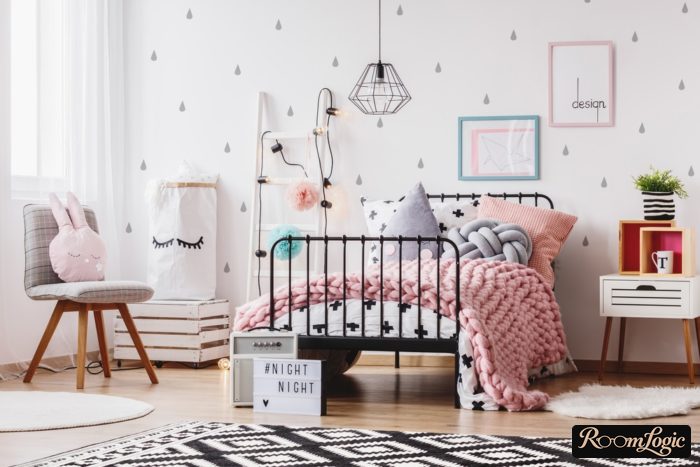
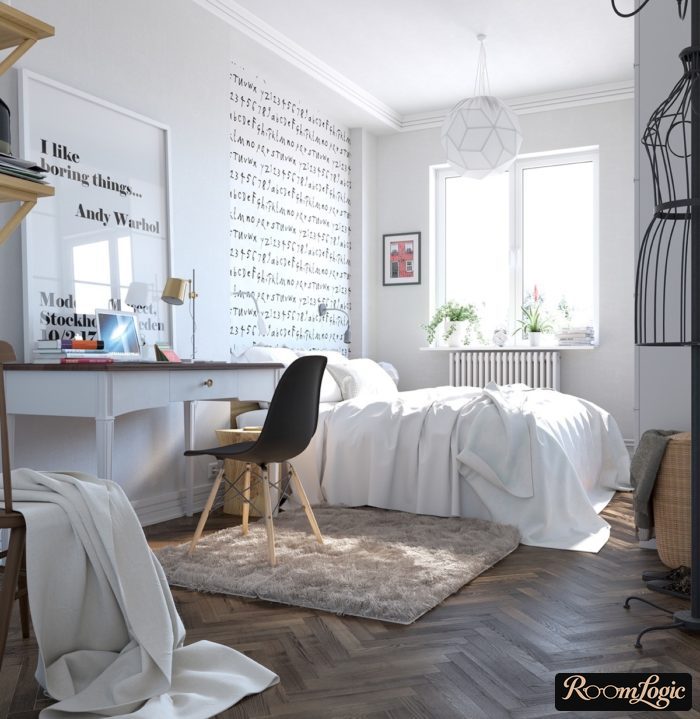
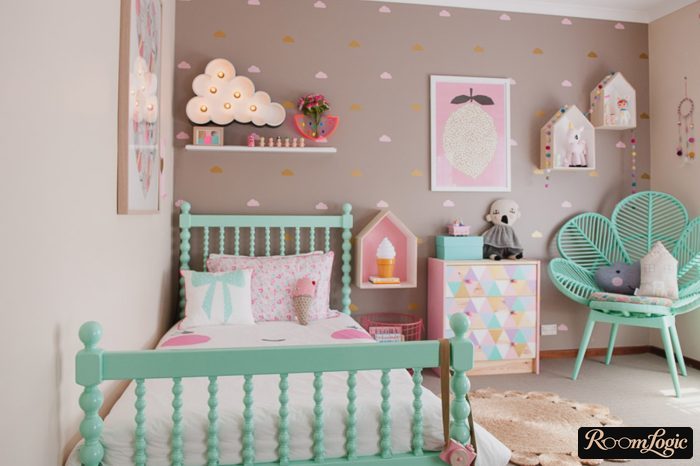
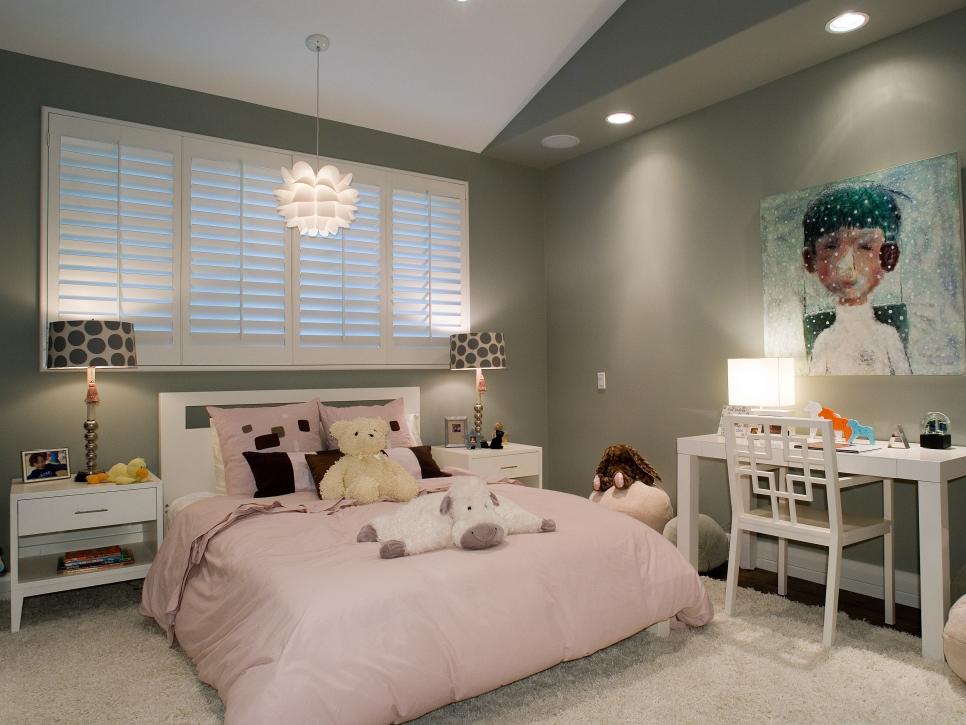
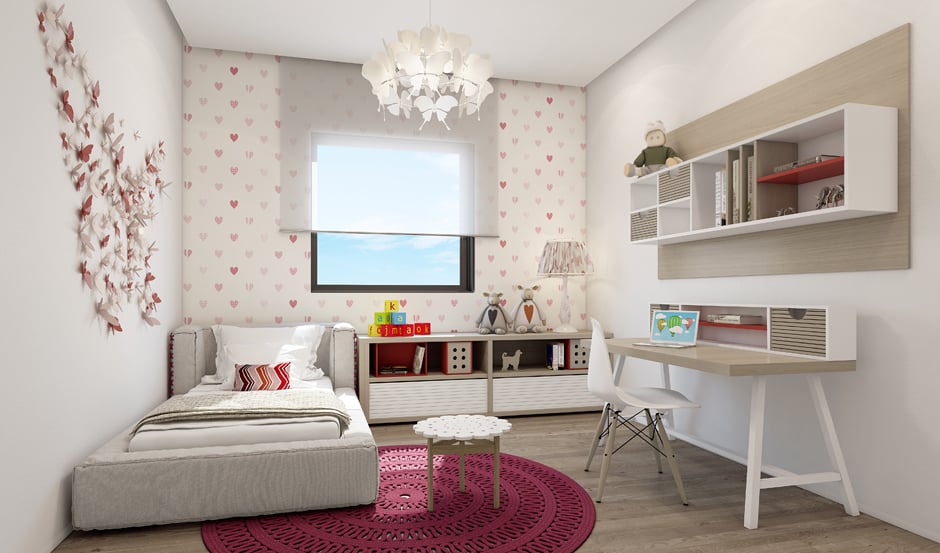
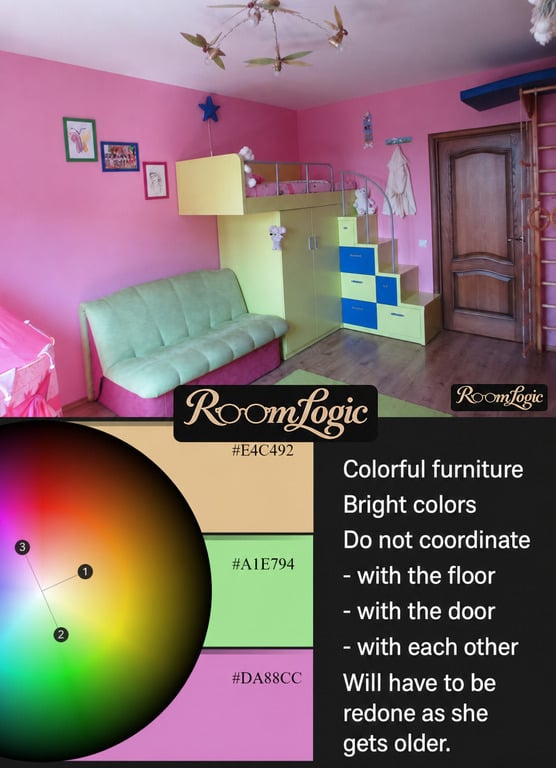
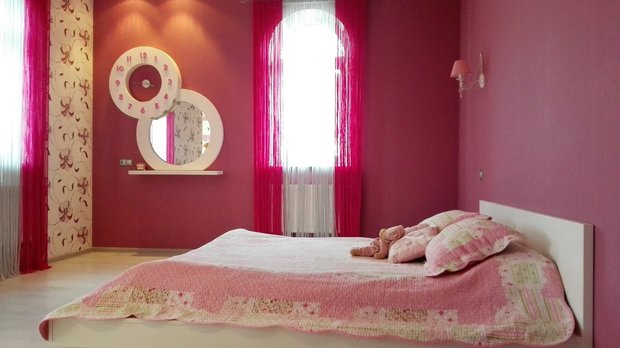
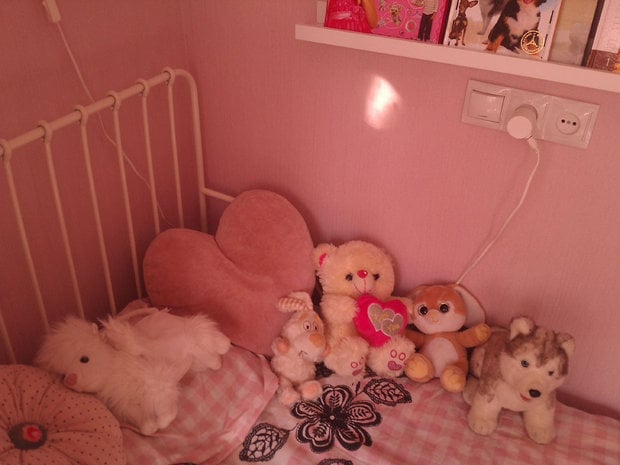
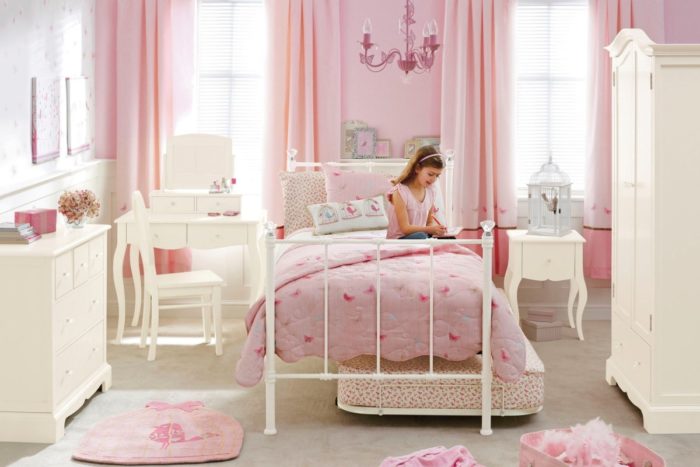
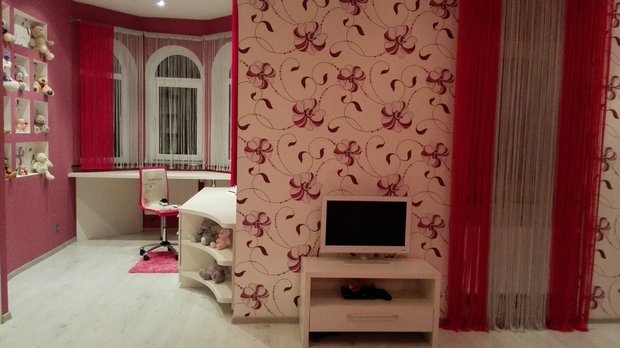
In general, girls’ room designs are not made with pink alone. Although this makes sense from a psychological standpoint – pink is calming and gives a feeling of security. But keep in mind that there are different kinds of pink. Just compare:
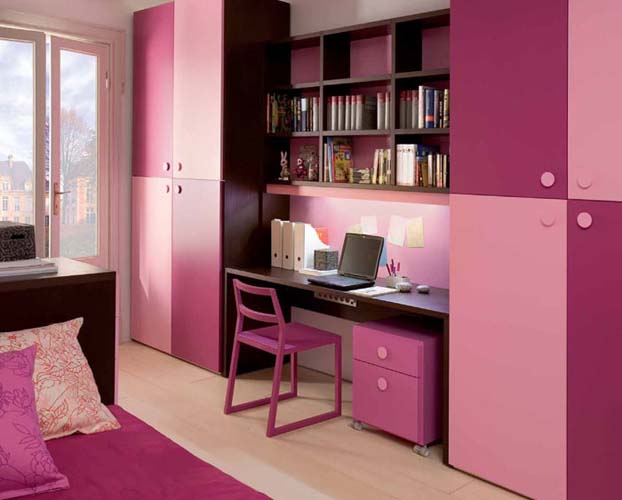
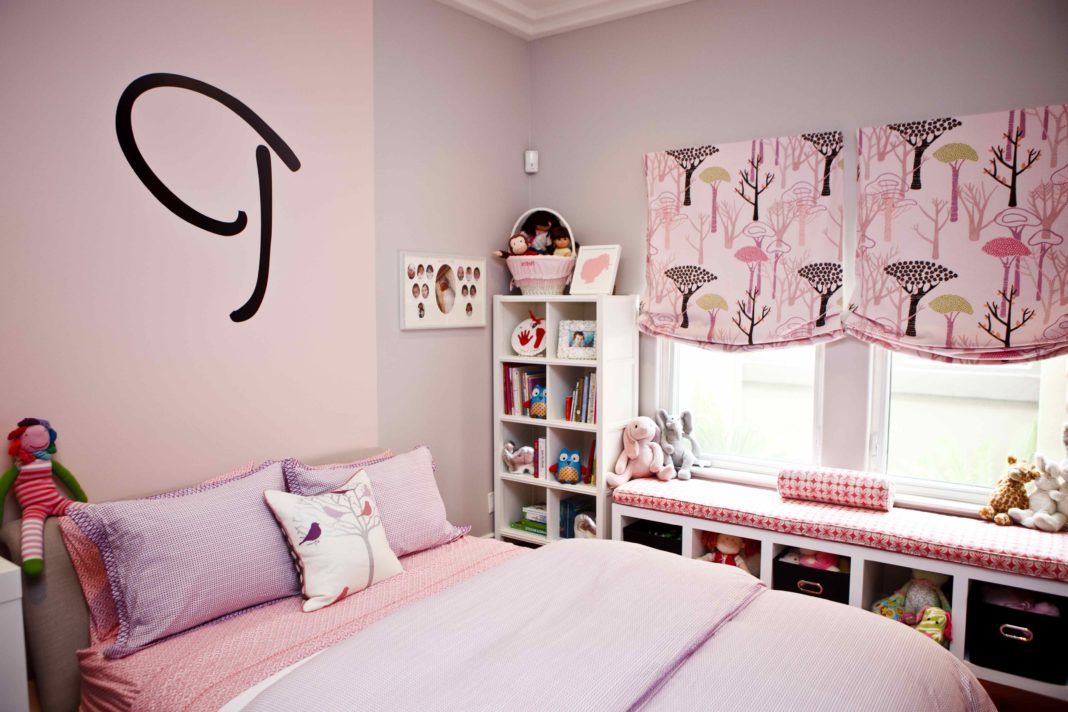
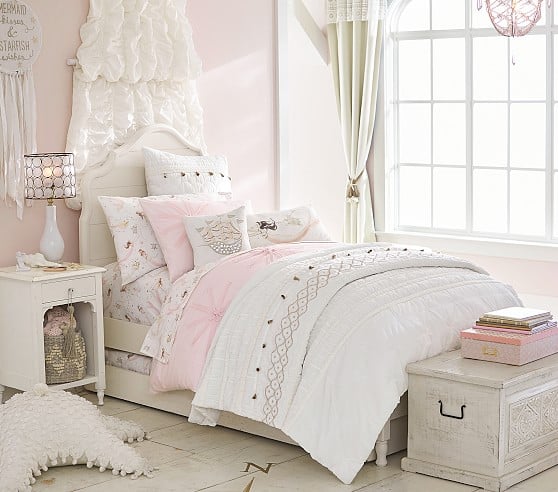
The first is an obvious excess in both quantity and brightness – a child needs to rest too. The pastel pink in the second kids’ room feels comfortable and gentle.
Forget toxic pink. Choose a gentle, pale pink. It is much more stylish and does not lose relevance with age.
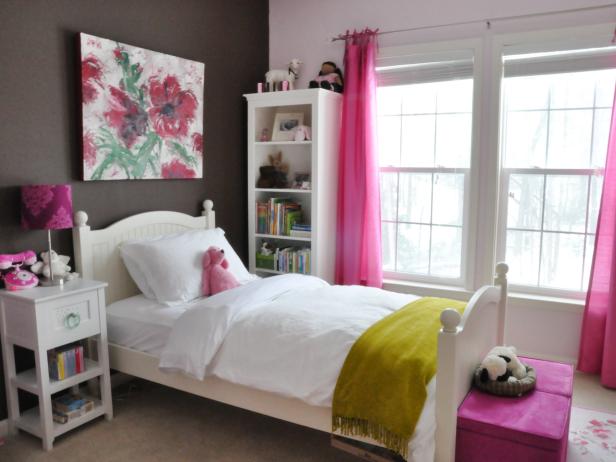
Or if you really want bright pink, use it in small amounts and in accessories:
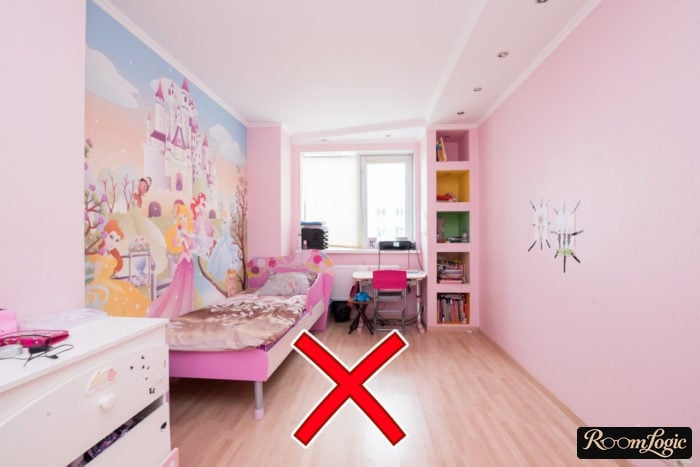
Even pastel pink should not be used in the finishes:
Other good colors for girls:
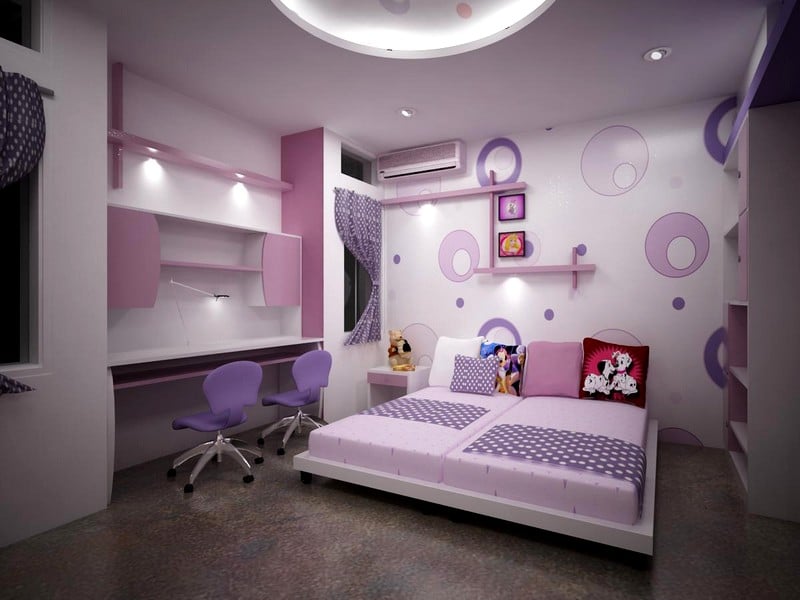
- Purple
- Cream
- Orange
- Green
- Combinations of white with gold and silver
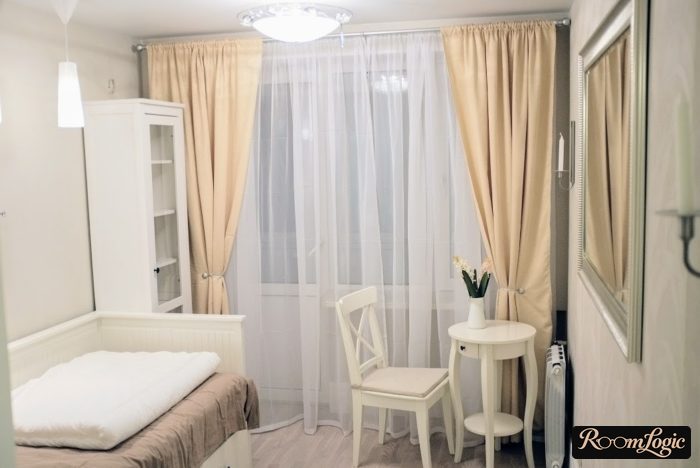
It is better NOT to create the intended colors through furniture. Of course, particleboard can now be laminated in any color, but this furniture will look specifically childish. It costs a lot, and in a few years it will have to be replaced completely. The ideal furniture color for a girl’s room is white.
Furniture for a Girl
We have settled the color – white or other neutral colors so the child does not outgrow them over time. You should also think about furniture safety. I discussed practicality in detail in the article about kids’ room design.
The bed takes the main place in a girl’s room because, unlike boys, who play on the floor more often, girls like to play specifically on the bed. Here they talk on the phone, share secrets with friends, read books, brush their dolls’ hair, or simply dream. That is why the larger the bed, the better.
There are many ready-made sets with a loft bed and a cabinet, desk, or sofa on the first level – a cool option. You can see many of these in the article about a room for two girls.
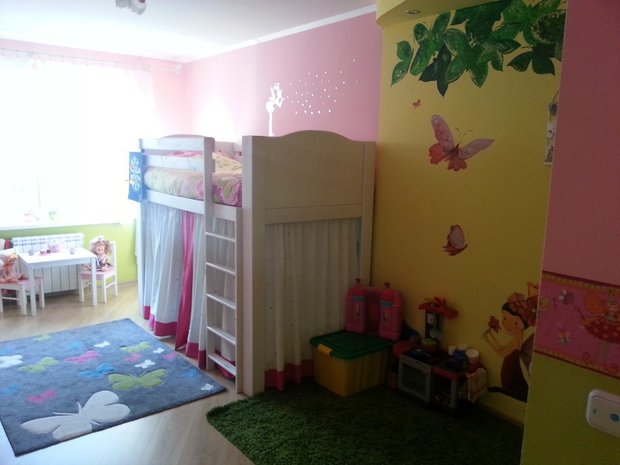
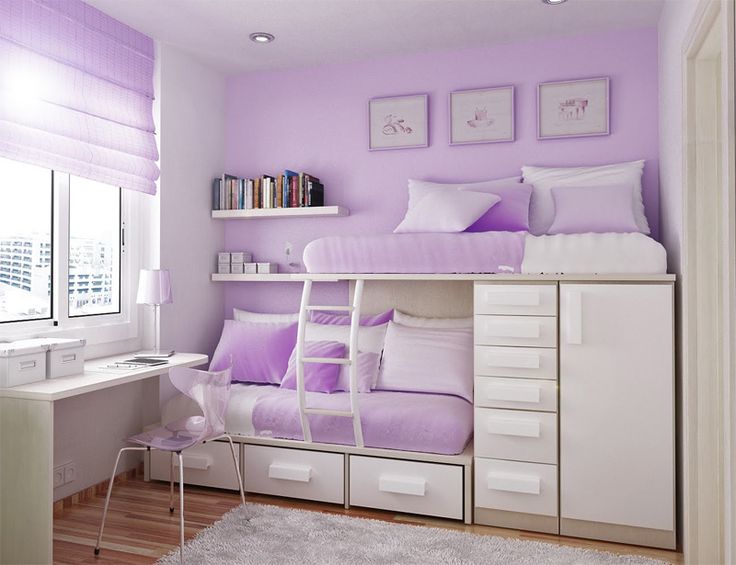
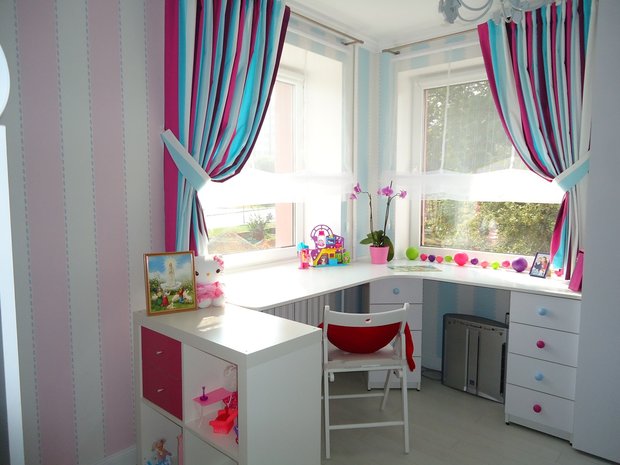
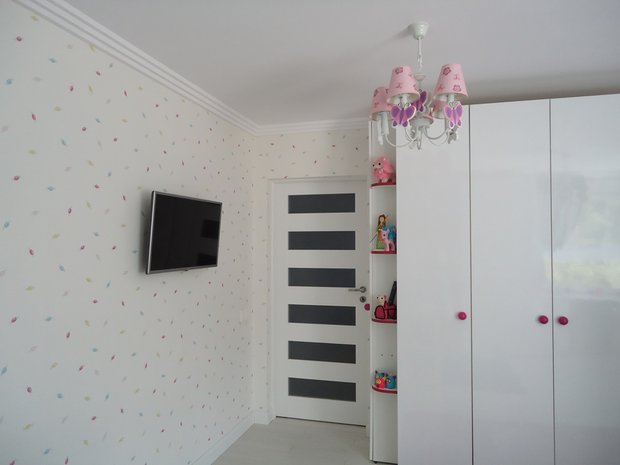
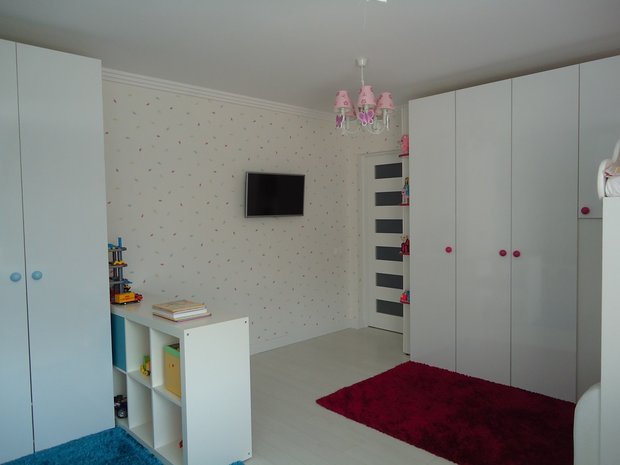
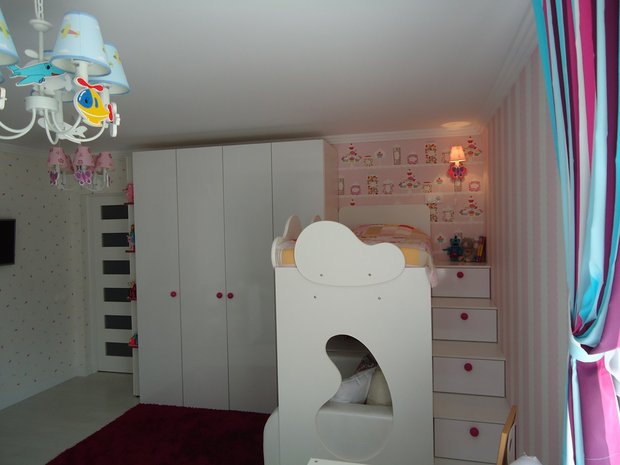
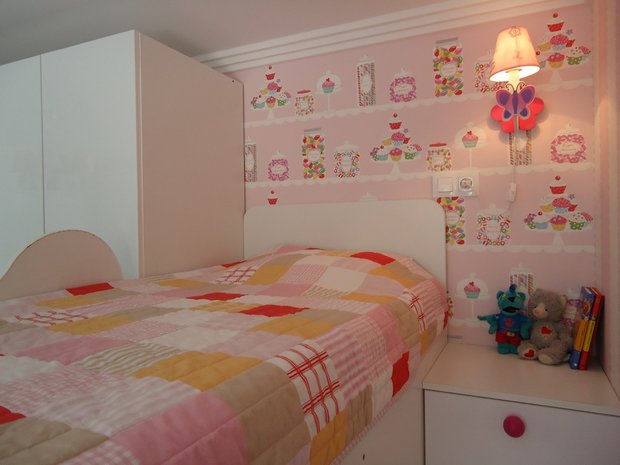
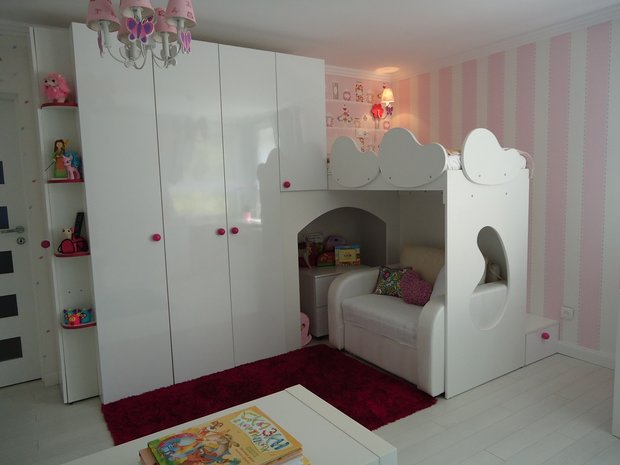
You can learn a lot from the posts about a small bedroom and a teen bedroom – the interior is also built around the bed.
Besides the bed, you will need cabinets for storing things, bookshelves, and a desk. If the girl is young, a small table for crafts, board games, or doll tea parties will be a good purchase.
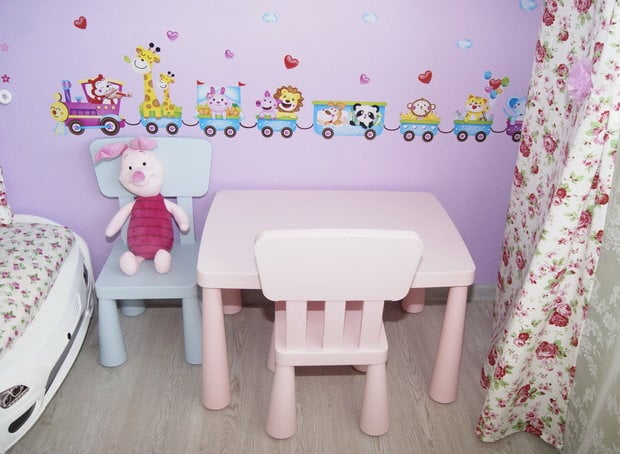
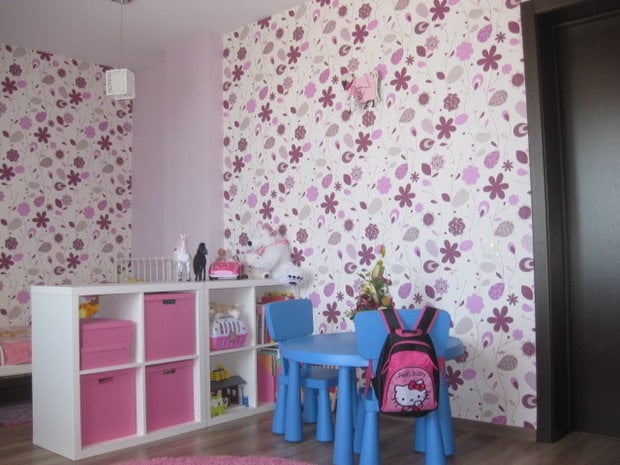
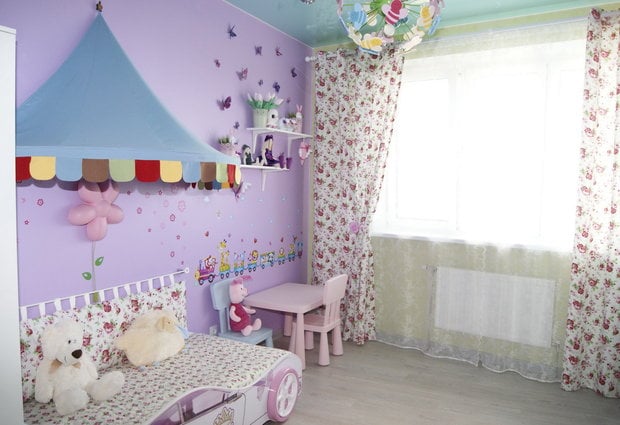
For a little girl to get used to order from childhood, the room needs places for storing toys, such as special baskets, boxes, or cabinets. It would be strange to urge a child to be tidy without giving her the ability to maintain that order.
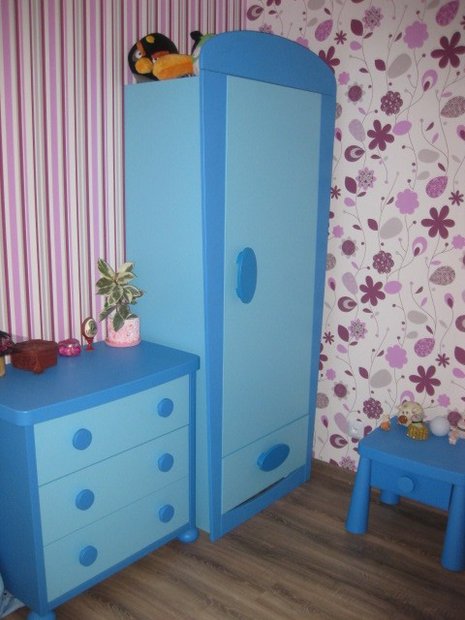
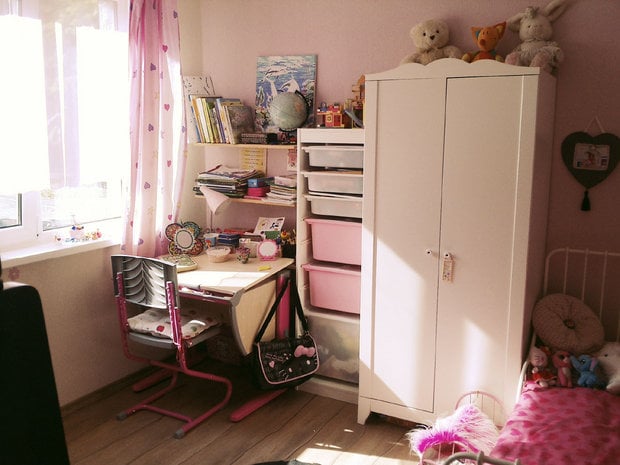
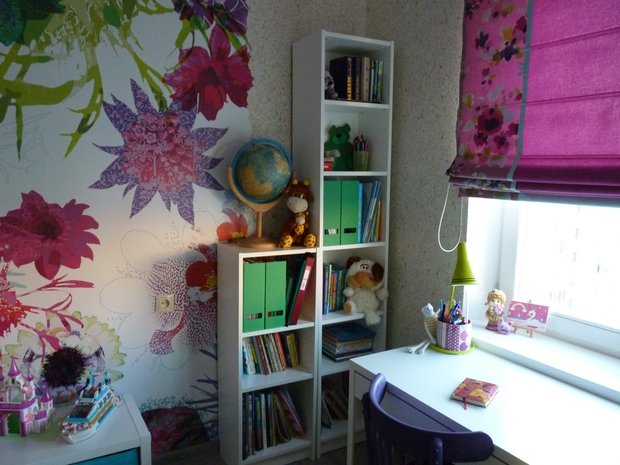
Girls are usually more able to sit still than boys, but even for girls it can be useful to move the play and study areas as far apart as possible. It is ideal when the sleeping area separates them.
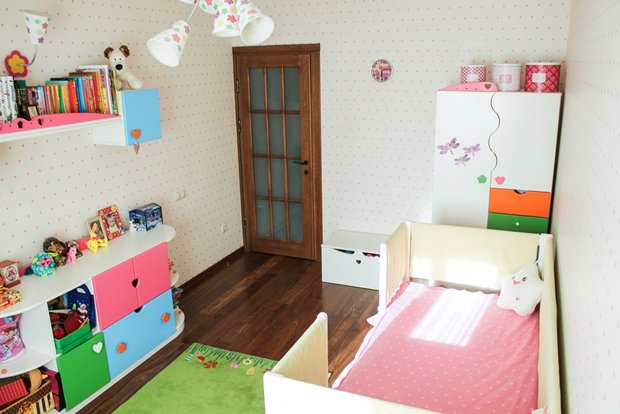
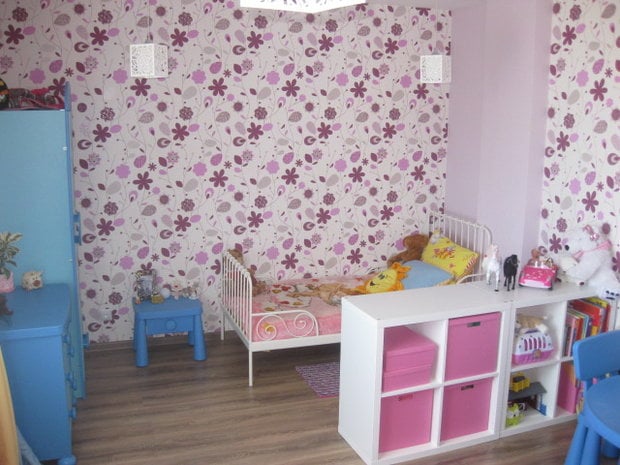
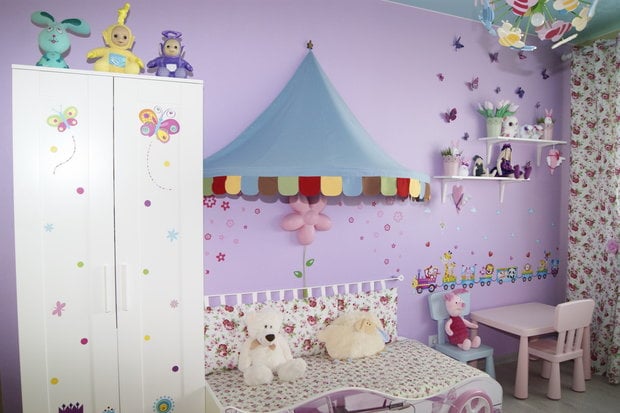
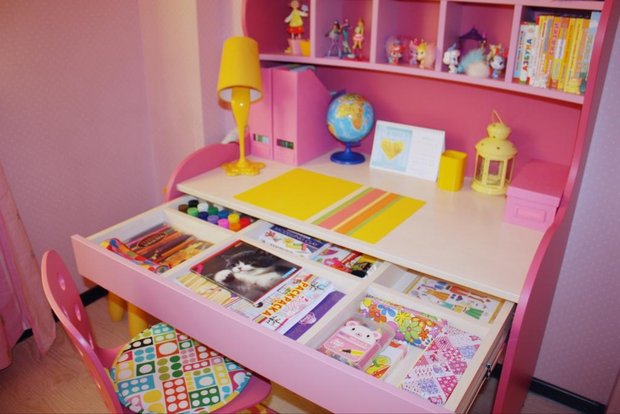
Themed Kids’ Room Design
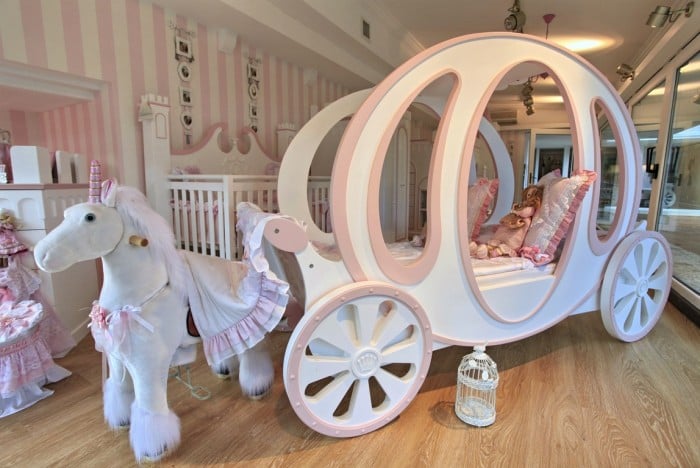
Princess Kids’ Room Design
If you look closely at her favorite fairy-tale character, the room design idea will come by itself. For example, the mermaid princess Ariel suggests a nautical design in blue and green tones, Princess Jasmine inspires Arabian motifs, and Cinderella or Belle is associated with castle luxury.
Give your daughter an interior in the style of her own favorite cartoons.
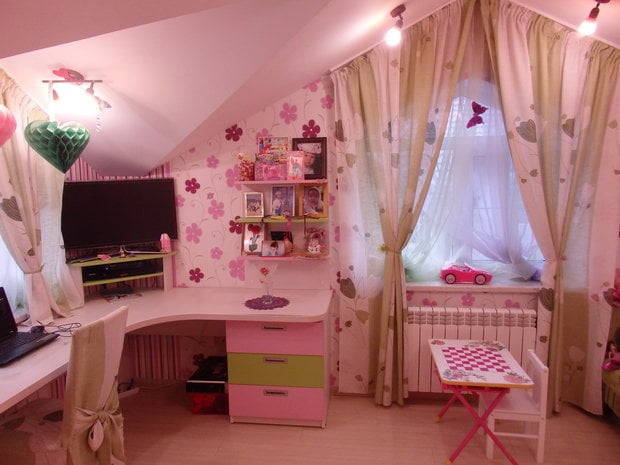
Barbie Room
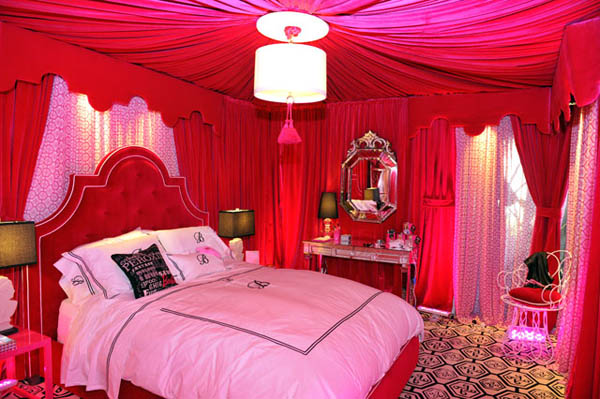
I strongly advise against this style. It is very risky and limited and can lead to one-sided development of a worldview. The task of all parents is to let a child develop into a complete person. It involves a lot of pink, especially bright, loud pink. The decor includes drawings or clothing elements, rhinestones, and other glamorous elements. A lot of bright and varied textiles.
Classic-Style Kids’ Room
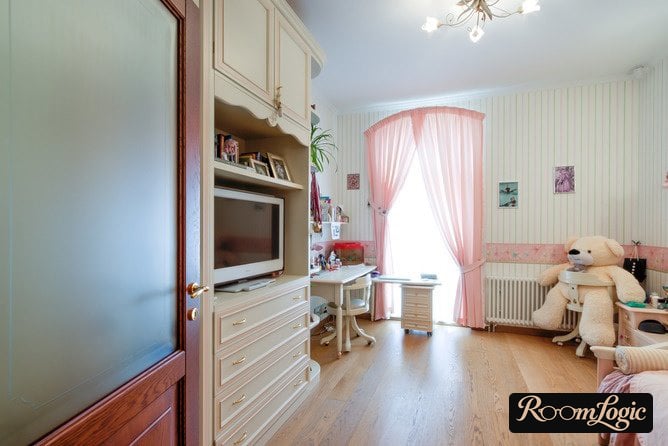
An interesting approach where the fairy-tale style is conveyed not with cartoon characters but with a typical classic design style. It suits any age, does not become boring, and is the only kids’ room style that both children and adults like. The downside is the high cost. And if the child is still young, she may damage it.
Forest Fairy Tale
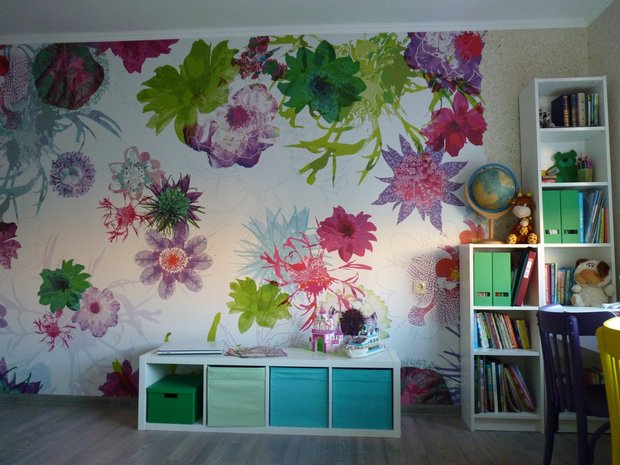
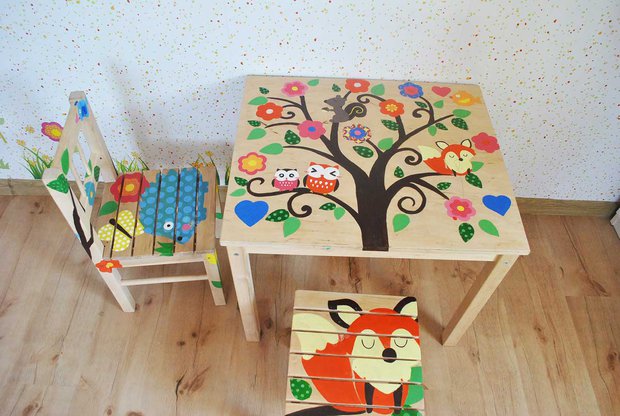
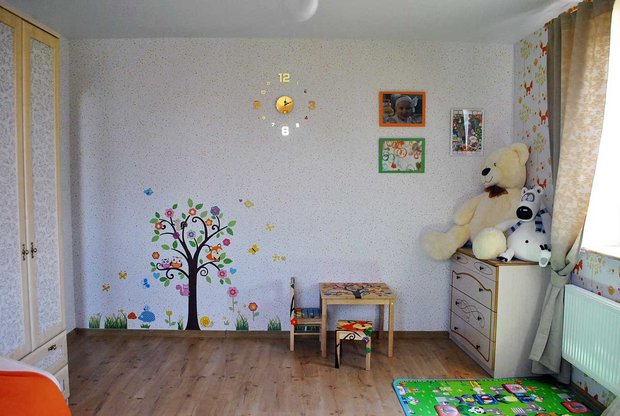
Natural shades: green, brown, and blue. Furniture made of natural wood, or an imitation – the closer to real wood, the better. The walls can be decorated with wall murals of natural landscapes or with drawings. Put a grass-green rug on the floor. Fairy-tale fairies and elves attached to the walls, painted furniture, and flowers will bring the room to life.
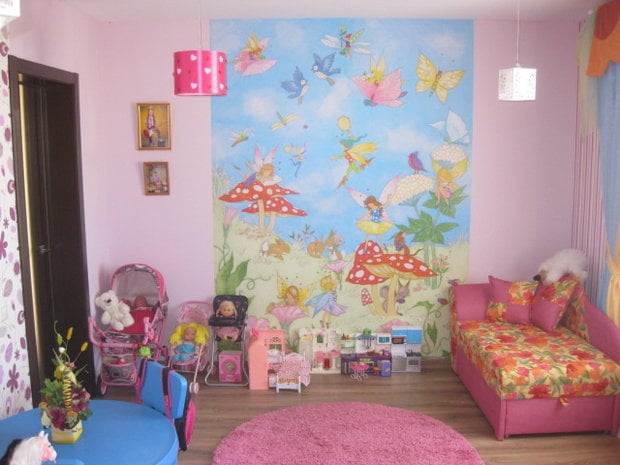
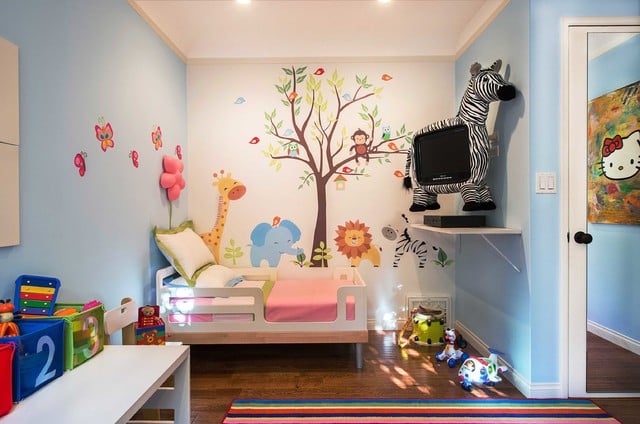
Cartoon Theme
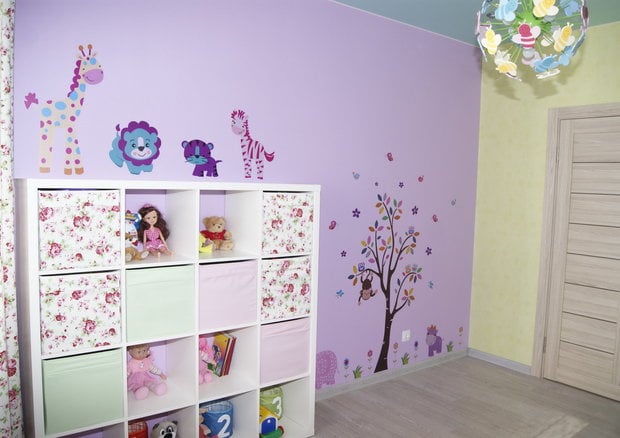
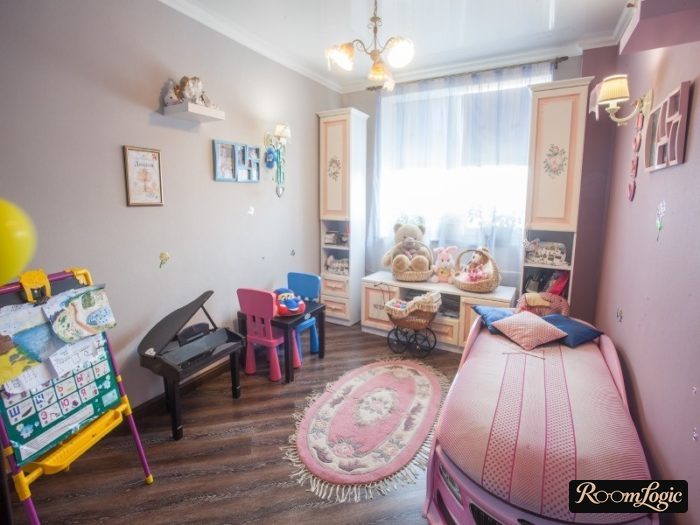
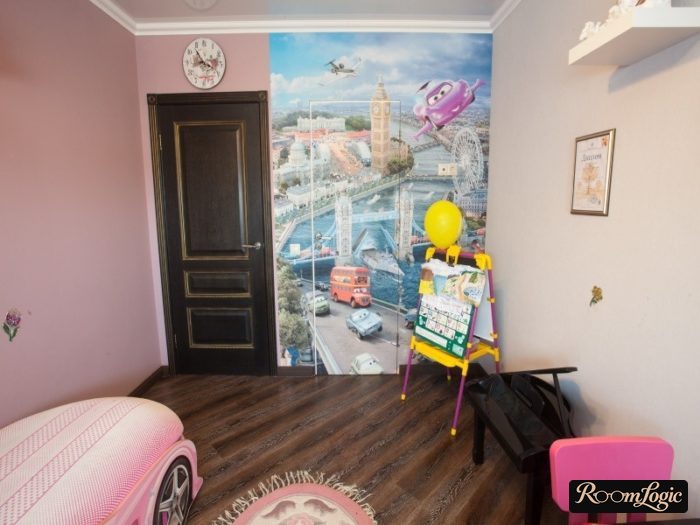
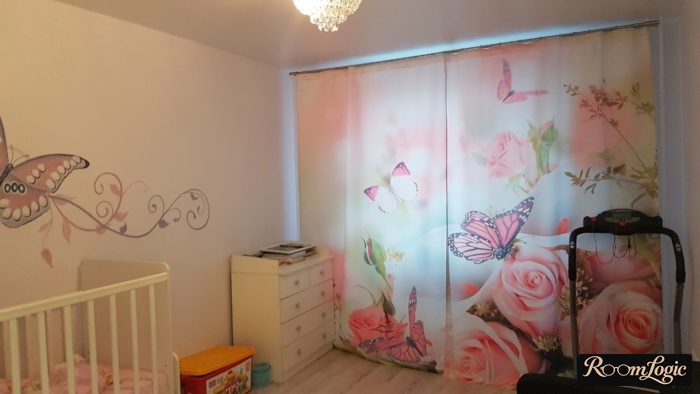
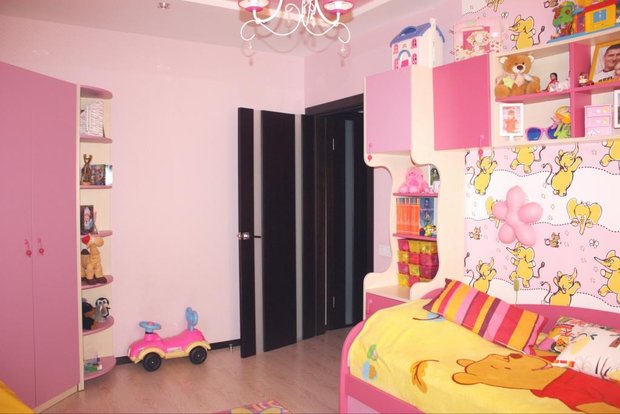
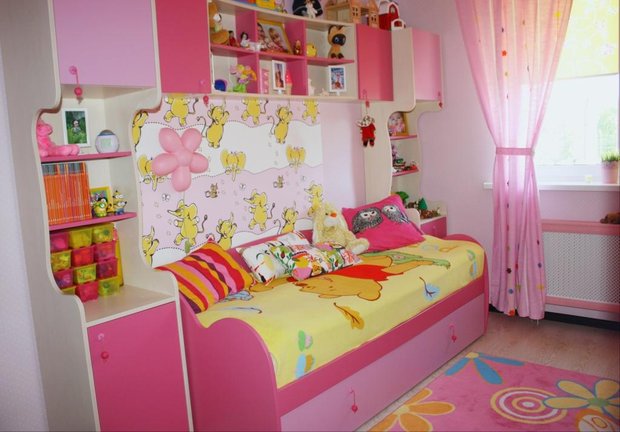
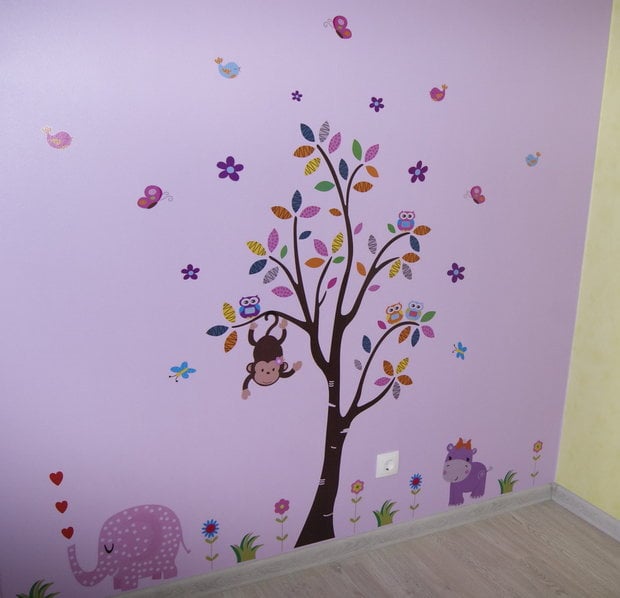
All children love cartoons, and not only children. It is not difficult at all to add favorite characters to the room and make the girl’s life a little brighter.
Designing a Girl’s Room at Different Ages
Kids’ Room for a 3–5-Year-Old Girl
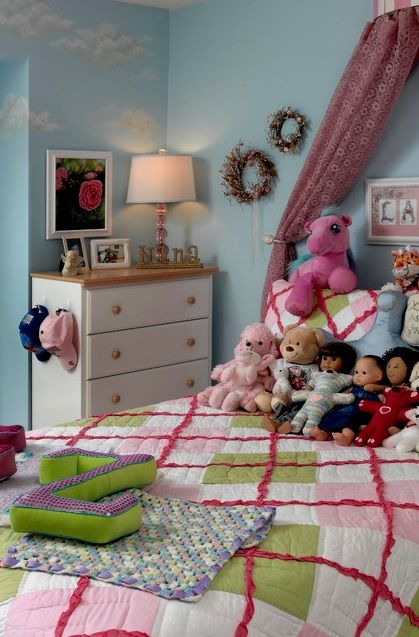
At this age, girls simply like everything bright, and the brighter the better. But remember that they will pass through this age very quickly, and completely redoing a kids’ room design is expensive. Use the old tactic – neutral finishes and furniture, bright toys and accessories.
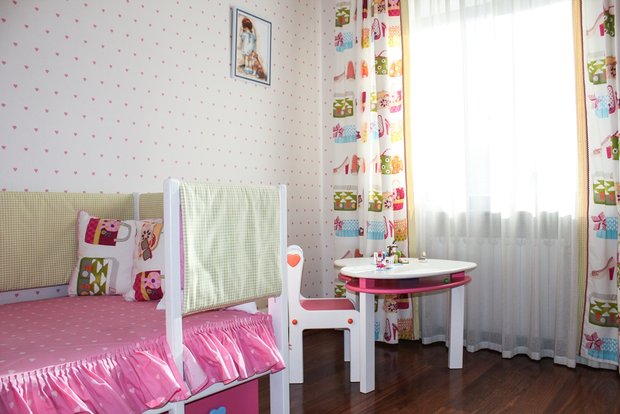
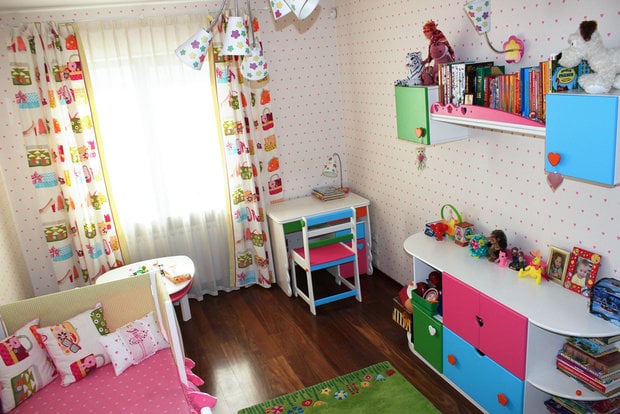
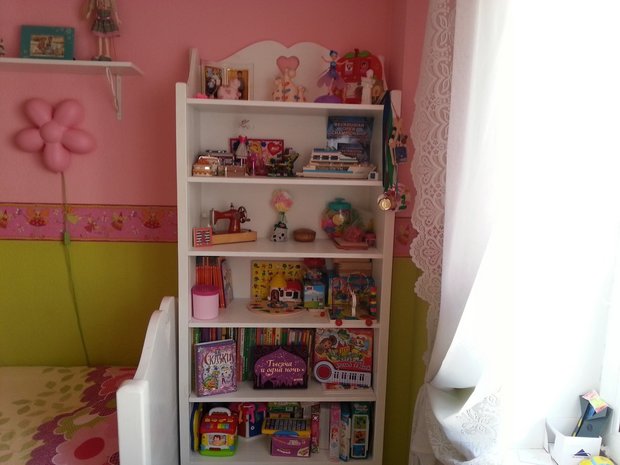
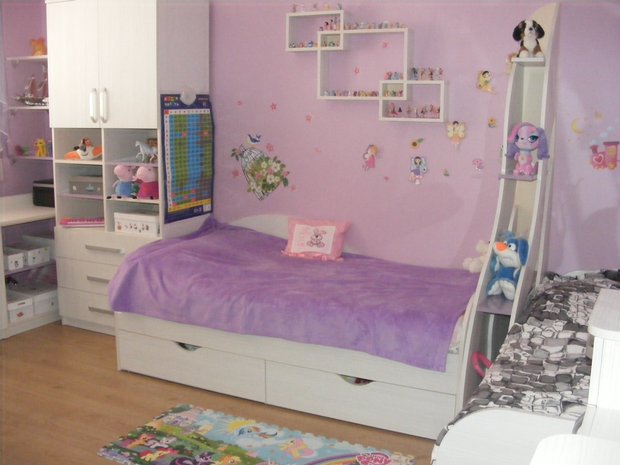
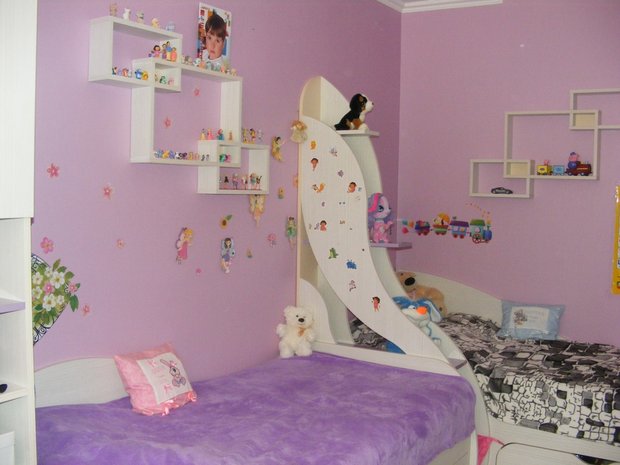
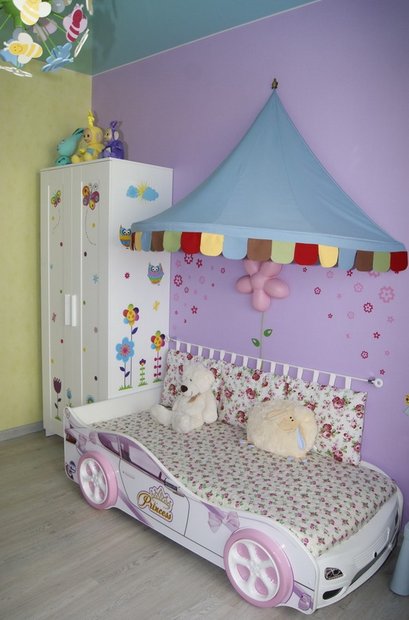
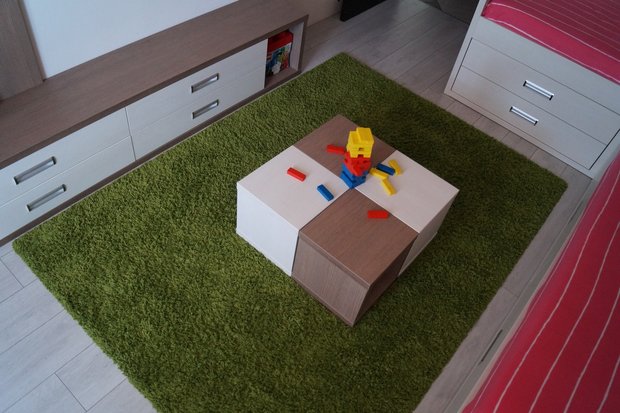
Children like to play on the floor, so the flooring should be warm, soft, and easy to care for. More open space should be left for the play area, without cluttering it with unnecessary items.
A young girl’s room should not have high-pile rugs, heavy curtains, or an excess of stuffed animals. These items collect dust and can aggravate asthma or allergies. This is not a strict requirement; just do not overdo the dust collectors.
Kids’ Room for a Girl Age 6+
This is the age when school begins. Set up a study area with a desk and bookshelves. Young fashion lovers need a roomy closet for storing things because there can be a lot of them: everyday clothes plus school clothes or a uniform. If there is enough open space in the room, the sitting area can be set up for guests with a soft ottoman, chair, or a small table-and-chair set. A toy-storage area is still needed.
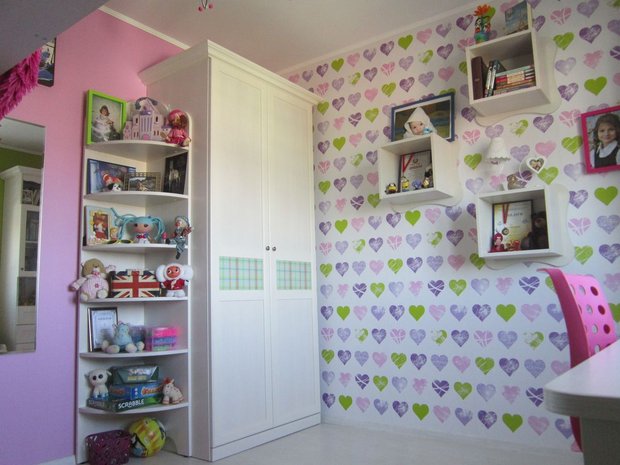
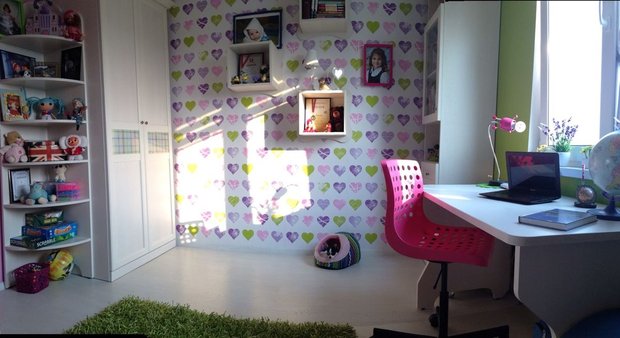
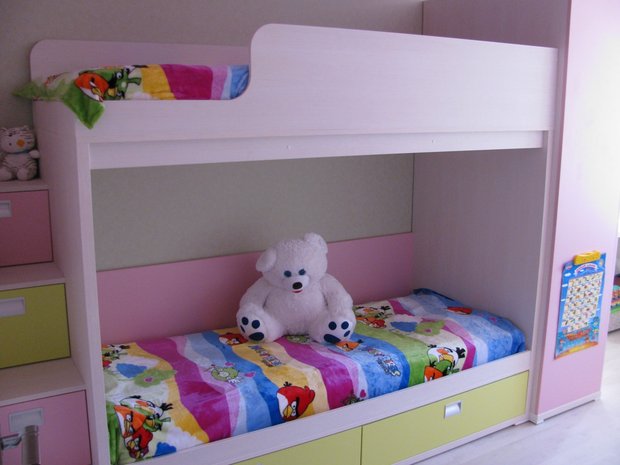
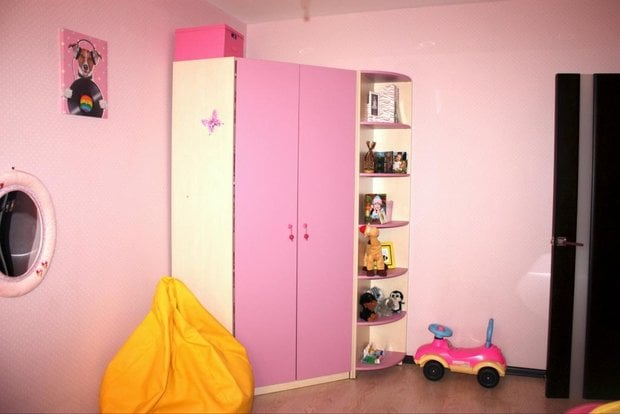
At this age, children cannot be pulled away from devices – they literally grow into their tablets. Banning them is undesirable, but we recommend setting rules about this.
Room for a Girl Age 8+
It differs significantly from a young girl’s room. Games and dolls give way to new interests that parents do not always understand or share. This is the most important stage of growing up, and whether a friendly, trusting relationship develops between the child and parents depends on it.
I advise trying to understand and hear your child without attempting to correct her behavior too harshly. In the design, you can completely entrust the decoration to the girl and help only with advice. This will both teach some independence and save you from complaints and headaches.
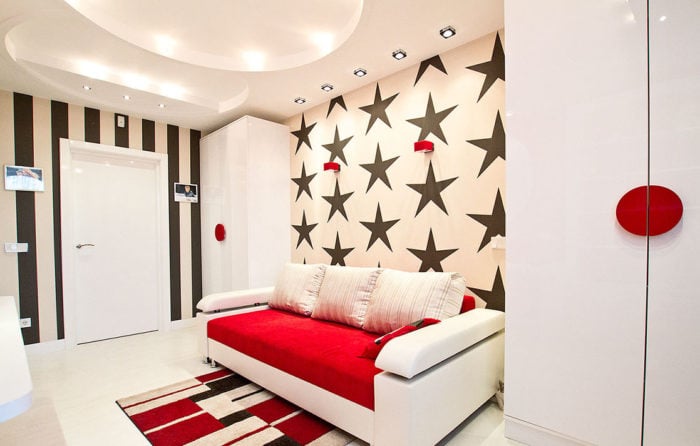
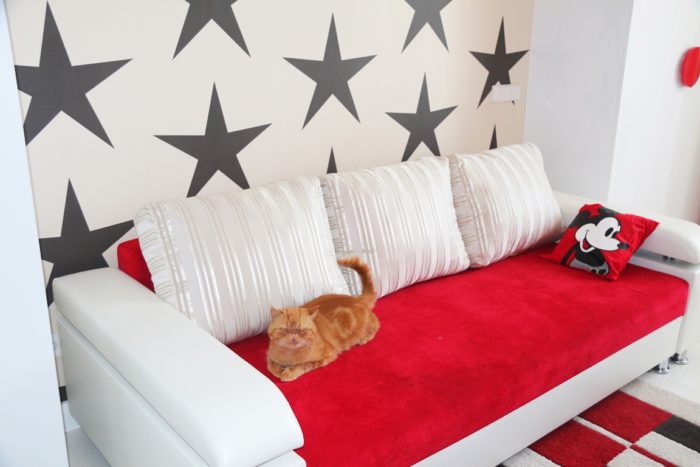
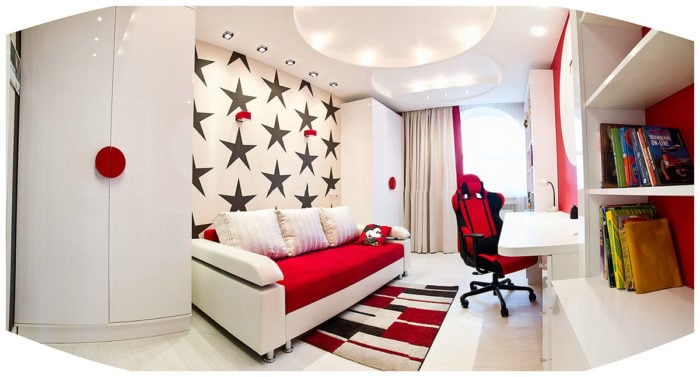
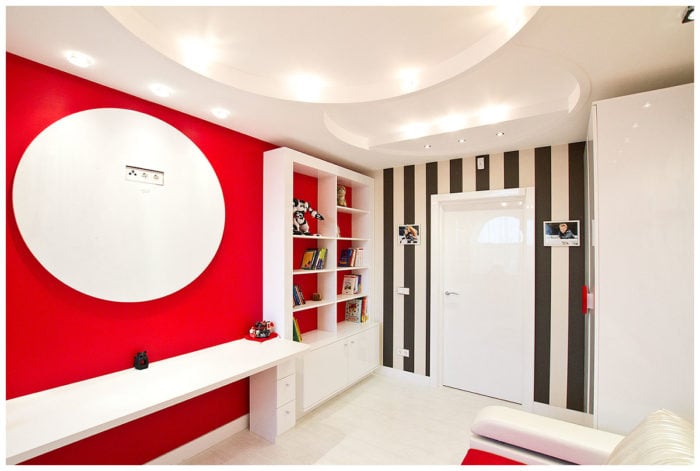
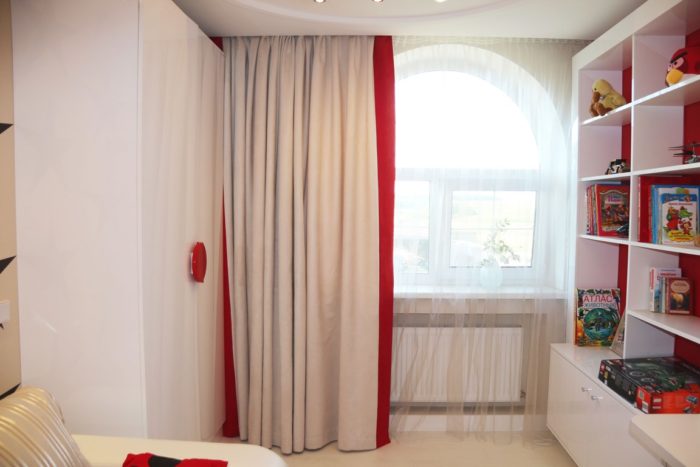
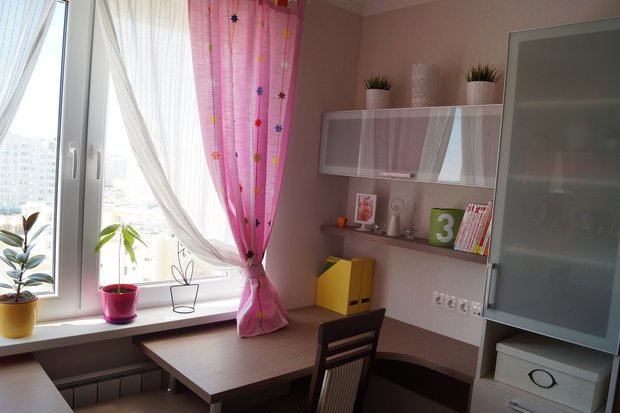
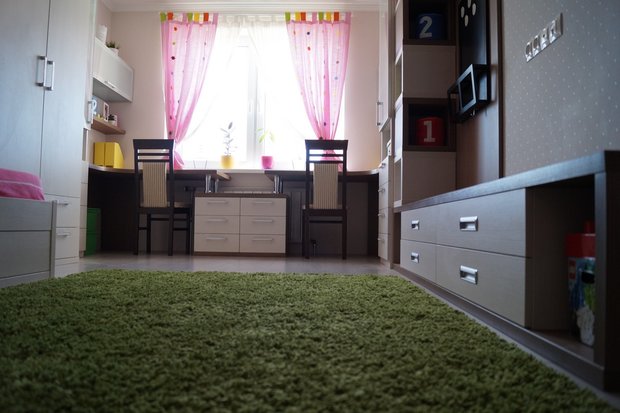
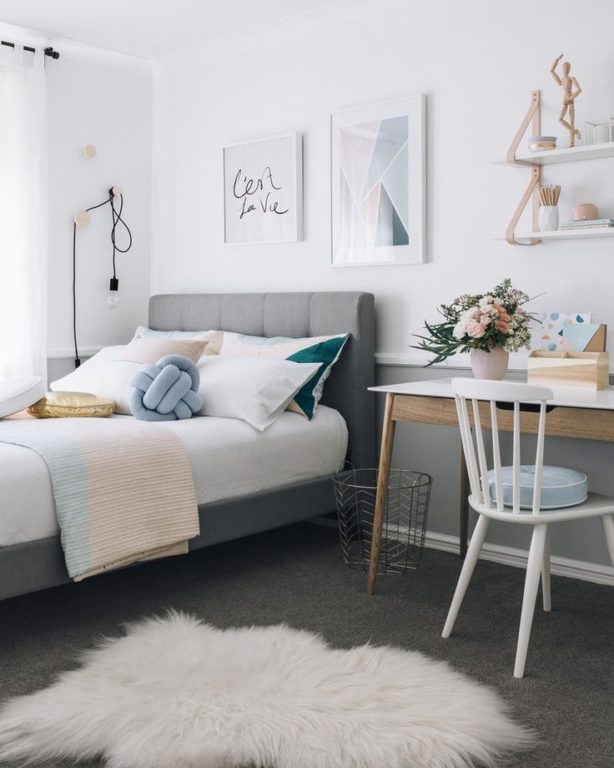
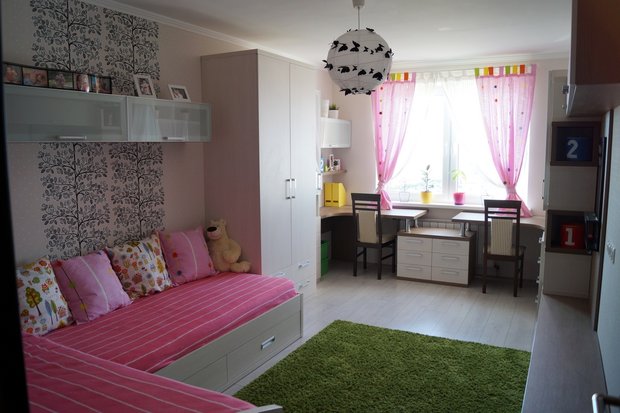
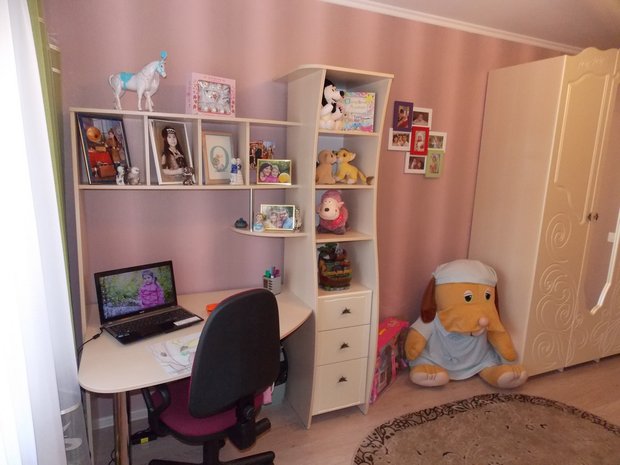
Do not be afraid to let the room’s own occupant “drive” the design. It teaches responsibility!
There is no place for cartoon characters, dolls, or toys in a more grown-up room. Although a love for stuffed animals can remain for many years and even into adulthood.
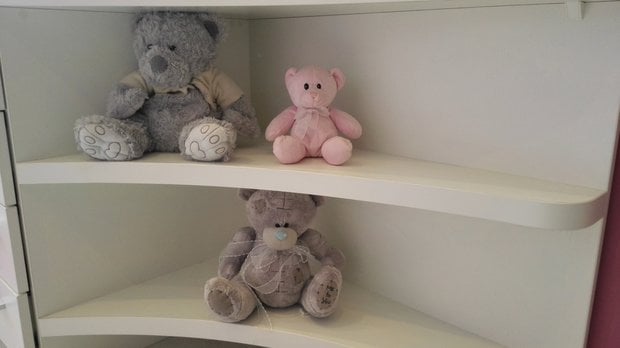
Girls at any age are interested in decorating the world around them. Do not deprive her of the pleasure of taking part in creating her room’s design.
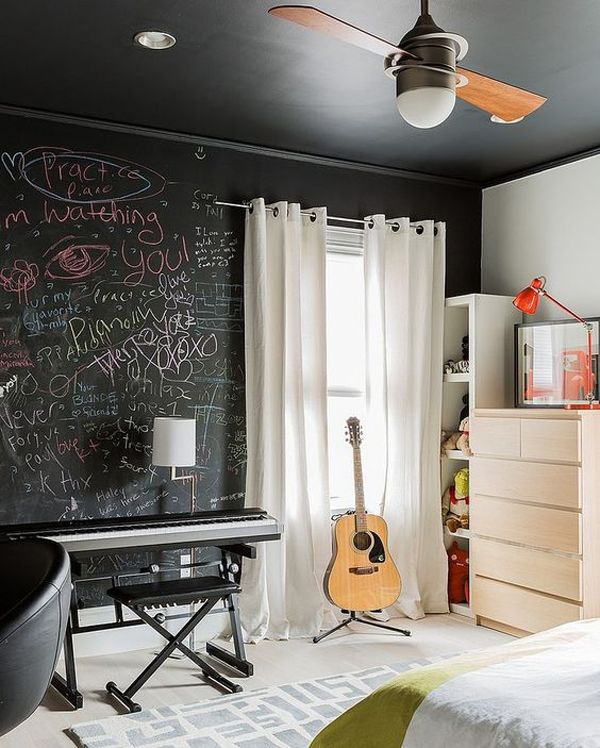
And believe me, even if your grown daughter wants to cover the entire room with posters of performers you do not know, it is better not to resist. Perhaps she does not need the posters as much as she needs to rebel a little, and your resistance will only increase their number! Besides, even scribbles can look great! Do not believe me?